1775 Results for "

protonatable backbone amines

" in MedChemExpress (MCE) Product Catalog:
Products (1775)

1775 Results for "protonatable backbone amines" in MCE Product Catalog:

Art. -Nr.: HY-162606
CAS. Nr.: 315210-31-2
Forschungsgebiete:  

Neurological Disease

MAO-A/B-IN-3 (Compound 12) stands out as a key dual MAO-AChE inhibitor, displaying excellent multi-target efficacy against MAO-A, MAO-B, and AChE with IC50 values of 67 nM, 29 nM, and 1370 nM respectively. MAO-A/B-IN-3 is adept at altering the A site (hydrophobic ring) and C site (semicarbazone chain) within ketone amine-based MTDLs to bolster the inhibitory potential against MAO-A/B while notably diminishing activity against AChE. MAO-A/B-IN-3 is poised for research applications in the field of neurodegenerative diseases .
loading...
    loading...
Art. -Nr.: HY-16731
CAS. Nr.: 676479-06-4
Synonyms: EVT 302; RG1577; RO4602522
Sembragiline (EVT 302) is a potent, selective and reversible monoamine oxidase B (MAO-B) inhibitor. Sembragiline reduces the metabolism of dopamine and other amine neurotransmitters by inhibiting the activity of the MAO-B enzyme, thereby potentially increasing the concentration of these neurotransmitters in the brain. Inhibition of the MAO-B enzyme also reduces the formation of toxic reactive oxygen species (ROS) that play a role in the pathological process of AD. Sembragiline has good oral activity and blood-brain barrier permeability. Sembragiline can be used in studies of AD, especially in patients with AD who show increased MAO-B activity .
loading...
    loading...
Art. -Nr.: HY-B1231R
CAS. Nr.: 543-15-7
Synonyms: RP-2831 hydrochloride (Standard)
Heptaminol (hydrochloride) (Standard) is the analytical standard of Heptaminol (hydrochloride). This product is intended for research and analytical applications. Heptaminol (RP-2831) hydrochloride is a vasoconstrictor used in the study of hypotension, especially orthostatic hypotension. Heptaminol is also a skin cancer proliferation inhibitor that inhibits immune inflammation induced by the tumor promoting factor 12-O-tetradecanoylphorbol-13-acetate (TPA) in an NO-dependent manner. Heptaminol also acts as a sympathomimetic amine, exerting indirect sympathetic effects. Heptaminol is also an antagonist of catecholamine release and uptake and can increase intracellular free calcium levels .
loading...
    loading...
Art. -Nr.: HY-W010973S
CAS. Nr.: 2687960-56-9
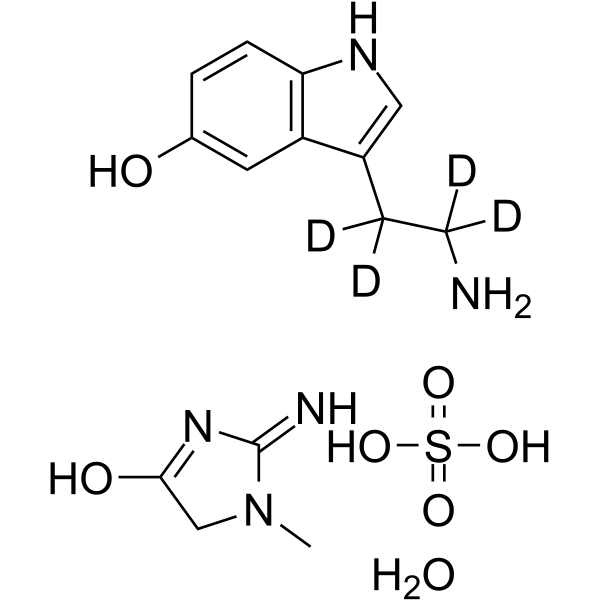
5-Hydroxytryptamine-d4 creatinine sulfate monohydrate is the deuterated-labeled 5-Hydroxytryptamine creatinine sulfate monohydrate (HY-W010973). 5-Hydroxytryptamine creatinine sulfate monohydrate is a 5-HT receptor agonist and amine oxidase substrate that acts through multiple physiological responses, including induction of vasoconstriction, pressor effects, acceleration of platelet potassium exchange, and endothelium-dependent relaxation, and can serve as a radiolabeled substrate for organelle uptake assays. 5-Hydroxytryptamine creatinine sulfate monohydrate can be used in research on burns, tourniquet and botulinum shock .
loading...
    loading...
Art. -Nr.: HY-W1049011
3-Arm PEG2000-SG is a three-armed PEG derivative. The core structure of 3-Arm PEG2000-SG consists of three PEG chains, each terminal of which is modified with a succinimide glutarate (-SG) group. The succinimide glutarate in 3-Arm PEG2000-SG can undergo rapid addition reactions with molecules containing primary amine groups to form stable amide bonds, which can be used in applications such as constructing targeted drug delivery systems and nanoparticle modification.
loading...
    loading...
Art. -Nr.: HY-W1049011A
3-Arm PEG5000-SG is a three-armed PEG derivative. The core structure of 3-Arm PEG5000-SG consists of three PEG chains, each terminal of which is modified with a succinimide glutarate (-SG) group. The succinimide glutarate in 3-Arm PEG5000-SG can undergo rapid addition reactions with molecules containing primary amine groups to form stable amide bonds, which can be used in applications such as constructing targeted drug delivery systems and nanoparticle modification.
loading...
    loading...
Art. -Nr.: HY-W1049011B
3-Arm PEG10000-SG is a three-armed PEG derivative. The core structure of 3-Arm PEG10000-SG consists of three PEG chains, each terminal of which is modified with a succinimide glutarate (-SG) group. The succinimide glutarate in 3-Arm PEG10000-SG can undergo rapid addition reactions with molecules containing primary amine groups to form stable amide bonds, which can be used in applications such as constructing targeted drug delivery systems and nanoparticle modification.
loading...
    loading...
Art. -Nr.: HY-W1049011C
3-Arm PEG20000-SG is a three-armed PEG derivative. The core structure of 3-Arm PEG20000-SG consists of three PEG chains, each terminal of which is modified with a succinimide glutarate (-SG) group. The succinimide glutarate in 3-Arm PEG20000-SG can undergo rapid addition reactions with molecules containing primary amine groups to form stable amide bonds, which can be used in applications such as constructing targeted drug delivery systems and nanoparticle modification.
loading...
    loading...
Art. -Nr.: HY-W1049011D
3-Arm PEG40000-SG is a three-armed PEG derivative. The core structure of 3-Arm PEG40000-SG consists of three PEG chains, each terminal of which is modified with a succinimide glutarate (-SG) group. The succinimide glutarate in 3-Arm PEG40000-SG can undergo rapid addition reactions with molecules containing primary amine groups to form stable amide bonds, which can be used in applications such as constructing targeted drug delivery systems and nanoparticle modification.
loading...
    loading...
Art. -Nr.: HY-184563S
CAS. Nr.: 3086790-98-6
(2S,10S,19S)-Amine-(CO-CH2-N-Me)9-CO-CH2-CH(NH-CO-CH2-CH2-2-piperidone-tetrahydropyran-pyrimidine-SO2-cyclopentane)-(CO-NH-CH2)2-CO-NH-CH(CH2-benzene)-(CO-NH-CH2)2-O-CH(cyclopropane)-COOH-7-MAD-MDCPT-d2 is the deuterium labeled (2S,10S,19S)-Amine-(CO-CH2-N-Me)9-CO-CH2-CH(NH-CO-CH2-CH2-2-piperidone-tetrahydropyran-pyrimidine-SO2-cyclopentane)-(CO-NH-CH2)2-CO-NH-CH(CH2-benzene)-(CO-NH-CH2)2-O-CH(cyclopropane)-COOH-7-MAD-MDCPT.
loading...
    loading...
Art. -Nr.: HY-118716S
CAS. Nr.: 210049-13-1
Synonyms: 2-Amino-1-methyl-6-phenylimidazo[4,5-b]pyridine-d3
PhIP-d3 (2-Amino-1-methyl-6-phenylimidazo[4,5-b]pyridine-d3) is the deuterium labeled PhIP (HY-118716). PhIP (2-Amino-1-methyl-6-phenylimidazo[4,5-b]pyridine) is the most abundant of generation of heterocyclic amines (HCA), resulted in the cooking of meat . DNA damaging and mutagenic activities. PhIP also has oestrogenic activity that could contribute to its tissue specific carcinogenicity .
loading...
    loading...
Art. -Nr.: HY-147319
CAS. Nr.: 825658-63-7
Reinheit:  99.85%
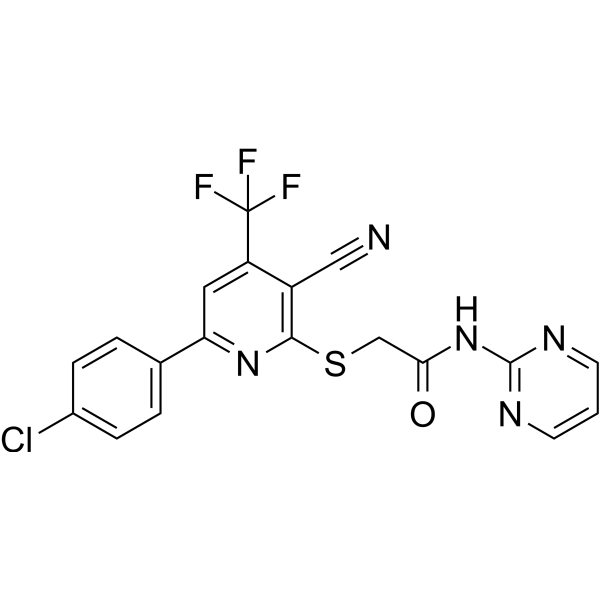
RTI-7470-44 is an orally active and blood-brain barrier-permeable antagonist of trace amine-associated receptor 1 (hTAAR1) with a Ki of 0.3 nM. RTI-7470-44 inhibits hTAAR1-mediated cAMP production and signal transduction (IC50 = 8.4 nM), and blocks hTAAR1-mediated GIRK current responses. RTI-7470-44 increases the spontaneous firing frequency of dopaminergic neurons and reduces collagen-induced platelet aggregation. RTI-7470-44 can be used in studies related to Parkinson's disease and gastric emptying .
loading...
    loading...
Art. -Nr.: HY-148840
Forschungsgebiete:  

Others

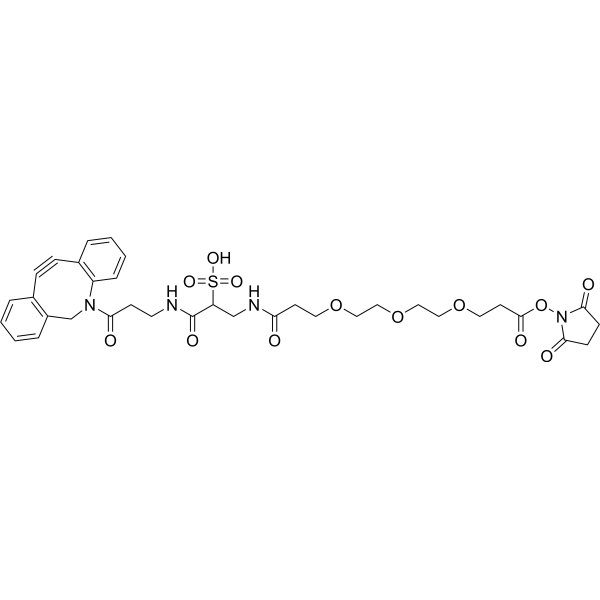
Sulfo DBCO-PEG3-NHS ester is a click chemistry reagent containing an azide group. Sulfo DBCO-PEG3-NHS ester is an analog of DBCO-Acid with PEG linker and a DBCO group. The DBCO group is commonly used for copper-free Click Chemistry reactions due to its strain promoted high energy. The hydrophilic PEG chain and sulfo group increase water solubility. The terminal carboxylic acid can react with primary amine groups in the presence of activators (e.g. EDC, or HATU) to form a stable amide bond. Reagent grade, for research use only .
loading...
    loading...
Art. -Nr.: HY-148840A
Forschungsgebiete:  

Others

Sulfo DBCO-PEG3-NHS ester TEA is a click chemistry reagent containing an azide group. Sulfo DBCO-PEG3-NHS ester (TEA) is an analog of DBCO-Acid with PEG linker and a DBCO group. The DBCO group is commonly used for copper-free Click Chemistry reactions due to its strain promoted high energy. The hydrophilic PEG chain and sulfo group increase water solubility. The terminal carboxylic acid can react with primary amine groups in the presence of activators (e.g. EDC, or HATU) to form a stable amide bond. Reagent grade, for research use only .
loading...
    loading...
Art. -Nr.: HY-151647
CAS. Nr.: 1240801-10-8
Forschungsgebiete:  

Others

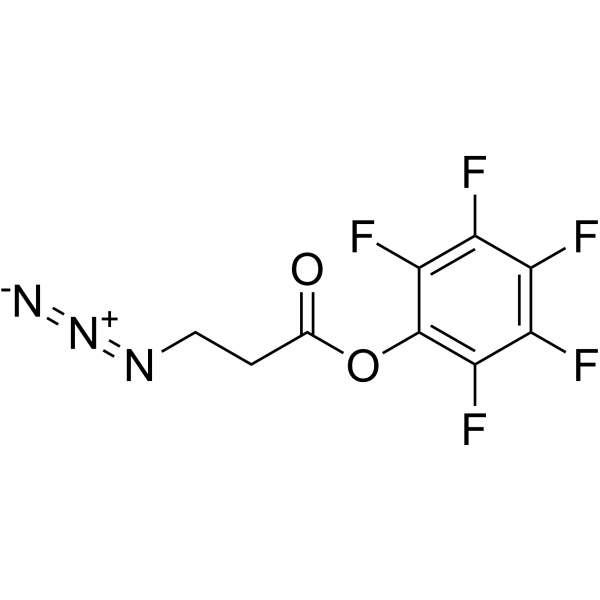
3-Azidopropanoic acid-PFP ester is an azidopropanoic acid linker that contains an activated PFP ester. The azide group can undergo copper-catalyzed Click Chemistry reactions with alkynes, DBCO and BCN to form triazole linkages. The activated PFP ester can react with amine groups to form stable amide bonds . 3-Azidopropanoic acid-PFP ester is a click chemistry reagent, it contains an Azide group and can undergo copper-catalyzed azide-alkyne cycloaddition reaction (CuAAc) with molecules containing Alkyne groups. It can also undergo strain-promoted alkyne-azide cycloaddition (SPAAC) reactions with molecules containing DBCO or BCN groups.
loading...
    loading...
Art. -Nr.: HY-151835
CAS. Nr.: 2765066-38-2
Reinheit:  95.25%
Target:  

ADC Linkers

Forschungsgebiete:  

Others

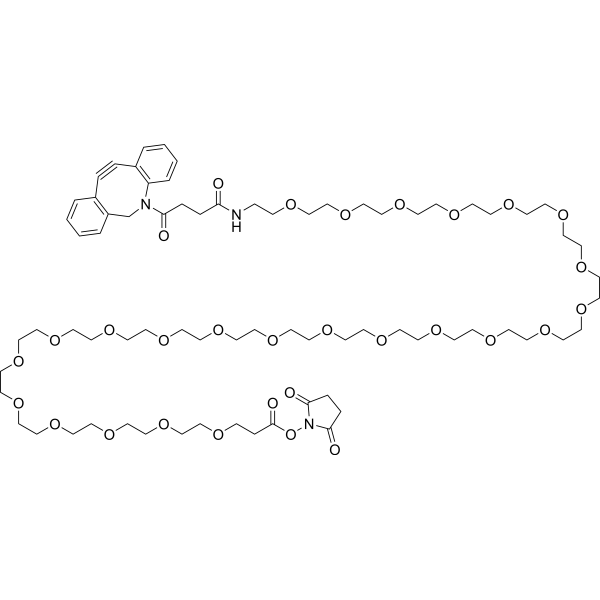
DBCO-PEG24-NHS ester is a click chemistry reagent. DBCO-PEG24-NHS ester is a click chemistry PEG reagent containing NHS ester that is able to react specifically and efficiently with primary amines (e.g. the side chain of lysine residues or aminosilane-coated surfaces) at neutral or slightly basic condition to form a covalent bond. The hydrophilic PEG spacer arm improves water solubility and provides a long and flexible connection that minimizes steric hindrance involved with ligation. DBCO is commonly used for copper-free Click Chemistry reactions. Reagent grade, for research use only .
loading...
    loading...
Art. -Nr.: HY-162874
CAS. Nr.: 3035557-60-6
Target:  

STING IFNAR

Forschungsgebiete:  

Cancer

diABZI-V/C-DBCO is a STING agonist with an EC50 of 1.47 nM. diABZI-V/C-DBCO activates the STING pathway, induces the production of IFN-I, and stimulates the secretion of IFN-β. diABZI-V/C-DBCO serves as a substrate for cathepsin B, and releases active diABZI-amine via cathepsin B-mediated cleavage. In an orthotopic mouse model of breast cancer, diABZI-V/C-DBCO increases serum IFN-β levels and the frequency of granzyme B + CD8 + T cells. diABZI-V/C-DBCO is applicable to research related to triple-negative breast cancer .
loading...
    loading...
Art. -Nr.: HY-33948S
CAS. Nr.: 1953176-77-6
Synonyms: 1,1-Dimethylethanolamine-d6; 2-Amino-α,α-dimethylethanol-d6; 2-Hydroxy-2-methyl-1-propylamine-d6; 2-Hydroxy-2-methylpropan-1-amine-d6
Forschungsgebiete:  

Others

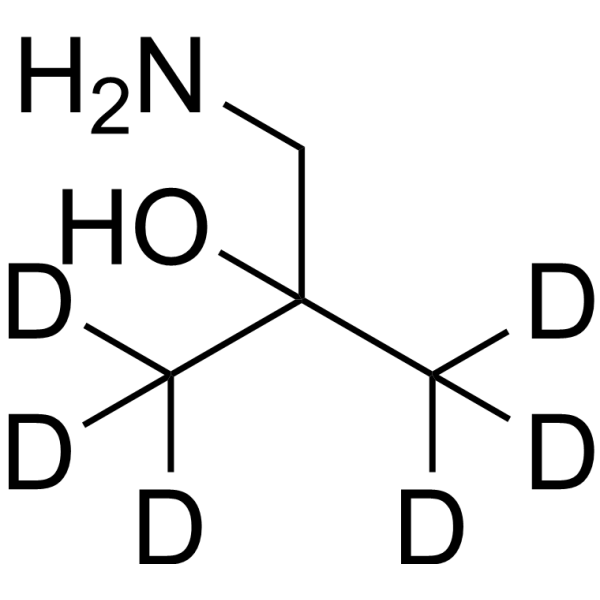
1-Amino-2-methylpropan-2-ol-d6 (1,1-Dimethylethanolamine-d6) is the d6-labeled 1-Amino-2-methylpropan-2-ol (HY-33948). 1-Amino-2-methylpropan-2-ol is a primary amine and intermediate. 1-Amino-2-methylpropan-2-ol can be used in the synthesis of ROCK1/2 inhibitors .
loading...
    loading...
Art. -Nr.: HY-79647
CAS. Nr.: 82911-69-1
Synonyms: N-(Fmoc-oxy)succinimide
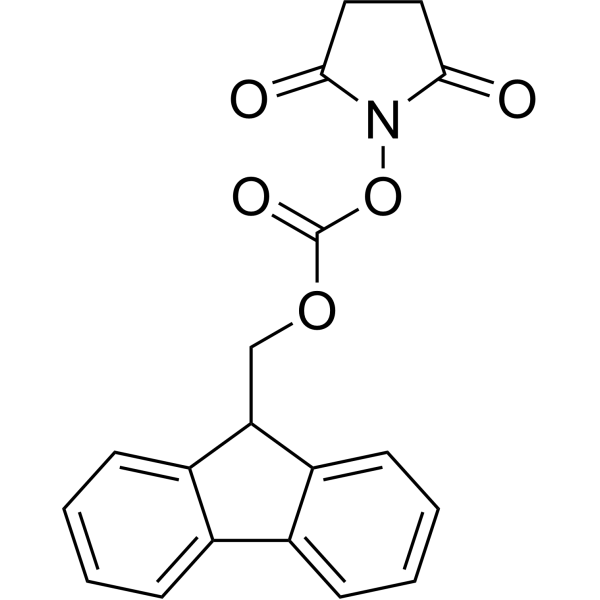
Fmoc-OSu (N-(Fmoc-oxy)succinimide) is an acylating agent that targets amino groups (-NH2). It can selectively protect the amino groups of amino acids by covalently binding with primary or secondary amines through nucleophilic substitution reactions. Fmoc-OSu forms a stable amide bond with the amino group to avoid side reactions of the amino group in peptide synthesis. It can also be used as a fluorescent labeling reagent to react with glycosylamines for efficient labeling of N-sugar chains. Fmoc-OSu can be used as an Fmoc protection strategy in peptide synthesis, and as a fluorescent labeling and analysis method for N-sugar chains .
loading...
    loading...
Art. -Nr.: HY-DY1009
CAS. Nr.: 150347-59-4
CFDA-SE (solution) is a fluorescent dye that can penetrate the cell membrane. It can react with the free amine group in the cytoskeleton protein inside the cell, and finally form a protein complex with fluorescence. After entering the cell, CFDA-SE locates in the cell membrane, cytoplasm and nucleus, and the fluorescence staining is strongest in the nucleus . CFDA-SE dye can be uniformly inherited by the cells with cell division and proliferation, and its attenuation is proportional to the number of cell divisions. This phenomenon can be detected and analyzed by flow cytometry under the excitation light of 488 nm, and can be used to detect the proliferation of cells .
Solvent and concentration: DMSO: 5 mM
loading...
    loading...

