1775 Results for "

protonatable backbone amines

" in MedChemExpress (MCE) Product Catalog:
Products (1775)

1775 Results for "protonatable backbone amines" in MCE Product Catalog:

Cat. No.: HY-125372
CAS No.: 16348-49-5
Purity:  99.85%
Synonyms: ABAO
Research Areas:  

Others

2-Amino benzamidoxime (ABAO) acts as a bioconjugation reagent precursor and a fluorescent probe precursor. 2-Amino benzamidoxime contains an aniline group for imine activation of aldehydes, as well as a nucleophilic group (Nu:) located at the ortho position of the amine, which is responsible for intramolecular cyclization. 2-Amino benzamidoxime reacts with glyoxal at the N-terminus of phage-displayed peptide libraries. Derivatives of 2-Amino benzamidoxime can be used for protein bioconjugation. Derivatives of 2-Amino benzamidoxime serve as fluorescent probes .\n


loading...
    loading...
Cat. No.: HY-140698
CAS No.: 92451-01-9
Purity:  ≥95.0%
Synonyms: mPEG5000-SC; mPEG5000-Succinimidyl ester
Research Areas:  

Cancer

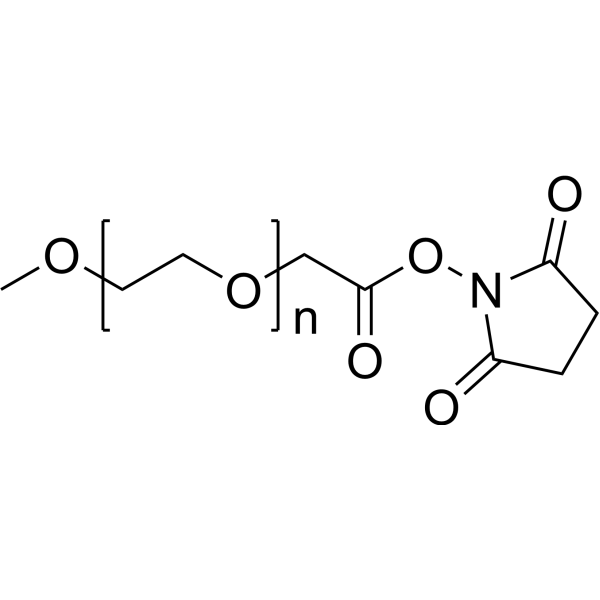
m-PEG5000-NHS ester (mPEG5000-SC; mPEG5000-Succinimidyl ester) is a pegylation reagent that targets the primary amino groups of branched polyethyleneimine on gold nanoparticles. m-PEG1000-NHS ester covalently links its PEG moiety to target amino groups via amine-mediated coupling chemistry. m-PEG1000-NHS ester helps improve the biocompatibility of modified gold nanoparticles used as CT contrast agents and prolongs their blood circulation time.
loading...
    loading...
Cat. No.: HY-151820
CAS No.: 2765066-36-0
Purity:  95.12%
Target:  

ADC Linkers

Research Areas:  

Others

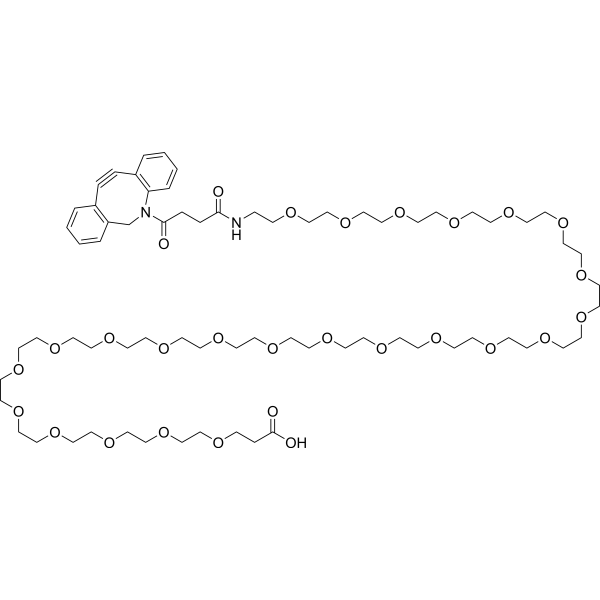
DBCO-PEG24-acid is a click chemistry reagent. DBCO-PEG24-acid is an analog of DBCO-Acid with PEG linker and a DBCO group. The DBCO groups is commonly used for copper-free Click Chemistry reactions due to its strain promoted high energy. The hydrophilic PEG chain allows for increased water solubility. The terminal carboxylic acid can react with primary amine groups in the presence of activators (e.g. EDC, or HATU) to form a stable amide bond. Reagent grade, for research use only .
loading...
    loading...
Cat. No.: HY-160773A
Research Areas:  

Others

DBCO-C3-amide-PEG6-NHS ester is a click chemistry PEG reagent containing an NHS ester that reacts specifically with primary amines, such as side chains of lysine residues or aminosilane-coated surfaces, under neutral or slightly alkaline conditions. , efficient reaction to form covalent bonds. DBCO-C3-amide-PEG6-NHS ester also contains a DBCO group that can undergo strain-promoted alkyne-azide cycloaddition (SPAAC) with molecules containing Azide groups .
loading...
    loading...
Cat. No.: HY-182735
CAS No.: 388101-58-4
BMS-570520 is an orally bioavailable CCR3 antagonist with an IC50 of 1.9 nM against hCCR3 and an IC50 of 1300 nM against hCYP2D6. BMS-570520 inhibits CYP2D6, but shows low activity against off-target G protein-coupled receptors, biogenic amine transporters, and the hERG potassium channel. BMS-570520 regulates chemotaxis, calcium mobilization, and anti-inflammatory pathways. BMS-570520 can be used in research related to asthma, allergic rhinitis, and contact dermatitis .
loading...
    loading...
Cat. No.: HY-30156
CAS No.: 10592-27-5
Synonyms: 7-Azaindoline
Research Areas:  

Others

2,3-Dihydro-7-azaindole (7-Azaindoline) is a cyclic secondary amine substrate with a fused aromatic ring, which serves as a substrate for hydrogenation reactions. 2,3-Dihydro-7-azaindole undergoes amidation with methyl pyrazine-2-carboxylate under the catalysis of lipase from Pseudomonas stutzeri. 2,3-Dihydro-7-azaindole is often used as an intermediate in organic synthesis, for example, in the preparation of indole compounds .
loading...
    loading...
Cat. No.: HY-D0068
CAS No.: 139346-57-9
Synonyms: 7-Diethylaminocoumarin-3-carboxylic acid, SE
Target:  

Fluorescent Dye

Research Areas:  

Others

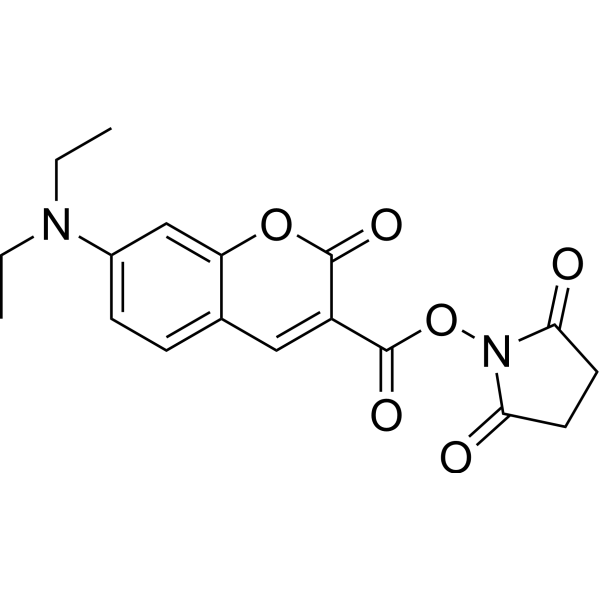
DEAC, SE (7-Diethylaminocoumarin-3-carboxy acid, SE) is an amine-reactive fluorescent succinimidyl ester (NHS ester) dye that is excitable by a 405 nm laser and emits blue fluorescence. DEAC, SE covalently couples with APTES, incorporates into organosilica colloids through co-condensation with TPM or other silane coupling agents, and can also be used for post-synthetic infiltration labeling of porous titanium dioxide protrusions and covalent binding with surface hydroxyl groups. DEAC, SE is used for fluorescent labeling of colloidal particles and confocal microscopy imaging studies .
loading...
    loading...
Cat. No.: HY-D0967
CAS No.: 146368-15-2
Cy5-bifunctional dye is a bifunctional dye used for covalent labeling of primary amines on proteins or oligonucleotides (Ex/Em = 649 nm/670 nm). Cy5-bifunctional dye can label recombinant annexin-V to assess phosphatidylserine exposure on the cell surface via flow cytometry. Cy5-bifunctional dye can label anti-human IgG (H + L) secondary antibodies. Cy5-bifunctional dye is applicable to studies of glanders and melioidosis .
loading...
    loading...
Cat. No.: HY-E72094
Target:  

Cytochrome P450

Research Areas:  

Others

Human CYP1A2, Reductase+b5 refers to a near-physiological recombinant microsomal system co-expressed in insect cells, consisting of human cytochrome P450 1A2, NADPH-P450 oxidoreductase (CPR) and cytochrome b5. Human CYP1A2 is a human cytochrome P450 subtype belonging to the CYP1 family, as well as a major metabolic enzyme. Its expression is centered in the human liver, and it can activate procarcinogens including aromatic heterocyclic amines and polycyclic aromatic hydrocarbons .
loading...
    loading...
Cat. No.: HY-E72110
Target:  

UGT

Research Areas:  

Others

Human UGT1A8 is a UDP-glucuronosyltransferase. Human UGT1A8 catalyzes the transfer of glucuronosyl group from UDPGA to Dihydrotestosterone, forming DHT monoglucuronide. Human UGT1A8 catalyzes the transfer of glucuronosyl group from UDPGA to DHT monoglucuronide, introducing a second glucuronosyl group at the C2 ' position of the latter to form DHT diglucuronide. Human UGT1A8 catalyzes the glucuronidation reactions of coumarins, anthraquinones, flavonoids, phenolic compounds, catechol estrogens, primary amines including 4-Aminobiphenyl, and some opioids .
loading...
    loading...
Cat. No.: HY-W013549R
CAS No.: 551-16-6
Synonyms: 6-APA (Standard)
6-Aminopenicillanic acid (Standard) is the analytical standard of 6-Aminopenicillanic acid. This product is intended for research and analytical applications. 6-Aminopenicillanic acid (6-APA) is a parent amine, an important precursor for the synthesis of β-lactam antibiotics and an antibacterial agent. 6-Aminopenicillanic acid interferes with cell wall synthesis during bacterial division in a manner similar to penicillin. 6-Aminopenicillanic acid has antibacterial activity against Gram-negative bacteria. 6-Aminopenicillanic acid is mainly used in the study of Penicillin-associated immune responses.
loading...
    loading...
Cat. No.: HY-W394551
CAS No.: 1442447-48-4
Research Areas:  

Others

Methyl 3,4-dibromo-2,5-dioxo-2,5-dihydro-1H-pyrrole-1-carboxylate is a small pyrrolidone molecule which features two bromine atoms and a methyl ester. The unsaturated dibromo motif is a covalent ligand for thiol groups, and may be used to label cysteine residues in proteins. The presence of two leaving groups on this molecule allows this linker to bind two thiols at a time. The methyl ester can be saponified to link this molecule to amines to form larger structures.
loading...
    loading...
Cat. No.: HY-W714524A
CAS No.: 40290-44-6
Synonyms: 16:0-18:1 PS (POPS) free acid
Target:  

Liposome

Research Areas:  

Others

2-Oleoyl-1-palmitoyl-sn-glycero-3-phospho-L-serine (16:0-18:1 PS (POPS) free acid) is an anionic phospholipid with oleic acid (18:1) and palmitic acid (16:0) tails containing a carboxylic acid (COOH) and amine (NH2) in their head group. 2-Oleoyl-1-palmitoyl-sn-glycero-3-phospho-L-serine has been used in the preparation of lipid-mixing vesicles, liposomes, and artificial membranes .
loading...
    loading...
Cat. No.: HY-W800718
CAS No.: 2665664-66-2
Research Areas:  

Others

Methyltetrazine-amido-Tri-(acid-PEG1-ethoxymethyl)-methane is a click chemistry PEG reagent which contains three carboxylic acid groups and a methyltetrazine group. This reagent can react with TCO-containing compounds to form a stable covalent bond without the catalysis of Cu or elevated temperatures. The inverse-electron demand Diels-Alder cycloaddition reaction of TCO with tetrazines is the fastest bioorthogonal reaction with exceptional selectivity. The terminal carboxylic acid can react with primary amine groups in the presence of activators (e.g. EDC, or HATU) to form a stable amide bond.
loading...
    loading...
Cat. No.: HY-Y1101B
CAS No.: 7529-22-8
Synonyms: N-Methylmorpholine N-Oxide; MMNO; 4-Methylmorpholine 4-oxide
Research Areas:  

Others

4-Methylmorpholine N-oxide (N-Methylmorpholine N-Oxide; MMNO; 4-Methylmorpholine 4-oxide) is an amine oxide ligand and ozonation reagent. 4-Methylmorpholine N-oxide forms coordination complexes with lanthanum (III) nitrate and yttrium (III) nitrate via its nitroso oxygen atom. The metal-ligand bonds are dominated by electrostatic interactions with a small covalent component. 4-Methylmorpholine N-oxide is applicable in ozonation reactions for the synthesis of methyl 9-oxononanoate .
loading...
    loading...
Cat. No.: HY-KD1108
Deep Red Fluorescent Rapid Labelling Kit (CY5.5) enables red fluorescent labelling of proteins. Maximum excitation/ emission wavelengths: 678/695 nm. Based on NHS ester chemistry, the NHS ester-activated fluorescent dye reacts with primary amines in the antibody/protein to be labelled at pH 7-9, forming stable amide bonds to achieve conjugation. Typically, one IgG molecule can bind 2-8 molecules of CY5.5. The entire procedure can be completed within two hours.
loading...
    loading...
Cat. No.: HY-KD1110
The Near-Infrared Fluorescence Rapid Labelling Kit (CY7.5) enables red fluorescent labelling of proteins. Maximum excitation/ emission wavelengths: 788/814 nm. Based on NHS ester chemistry, the NHS ester-activated fluorescent dye reacts with primary amines in the antibody/protein to be labelled at pH 7-9, forming stable amide bonds to achieve conjugation. Typically, one IgG molecule can bind 2-8 molecules of CY7.5. The entire procedure can be completed within two hours.
loading...
    loading...
Cat. No.: HY-119753
CAS No.: 68284-69-5
Synonyms: SC-31828
Target:  

Others

Research Areas:  

Cardiovascular Disease

Disobutamide (SC-31828) is an orally active, blood-brain barrier permeable cationic amphiphilic ditertiary amine piperidine ring compound with antiarrhythmic properties. Disobutamide induces lysosomal phospholipid accumulation, which triggers extensive cytoplasmic vacuolization and leads to cell death. Disobutamide prolongs multiple electrocardiographic intervals in canine hearts, induces cardiac arrest at high doses, and causes decreased retinal reflectivity. Disobutamide can be used in studies related to arrhythmias, and also serves as a model drug for investigating the storage mechanisms and toxicity thresholds of intracellular amphiphilic compounds .
loading...
    loading...
Cat. No.: HY-145547
CAS No.: 123060-40-2
Synonyms: 14:0 Lyso PE; 1-Myristoyl-2-hydroxy-sn-glycero-3-PE; 1-Tetradecanoyl-sn-glycero-3-phosphoethanolamine
Target:  

Liposome

Research Areas:  

Metabolic Disease

1-Myristoyl-2-hydroxy-sn-glycero-3-phosphoethanolamine (14:0 Lyso PE) is a lysophospholipid with a phosphoethanolamine head and a myristoyl tail. The free amine group can conjugate with NHS active ester or coupled with carboxylic acid in the presence of a coupling agent. It also induces transient increases in intracellular calcium in PC12 cells . Serum levels of 1-Myristoyl-2-hydroxy-sn-glycero-3-phosphoethanolamine are elevated in patients with malignant breast cancer compared to healthy controls .
loading...
    loading...
Cat. No.: HY-151821
CAS No.: 2566404-75-7
Target:  

ADC Linkers

Research Areas:  

Others

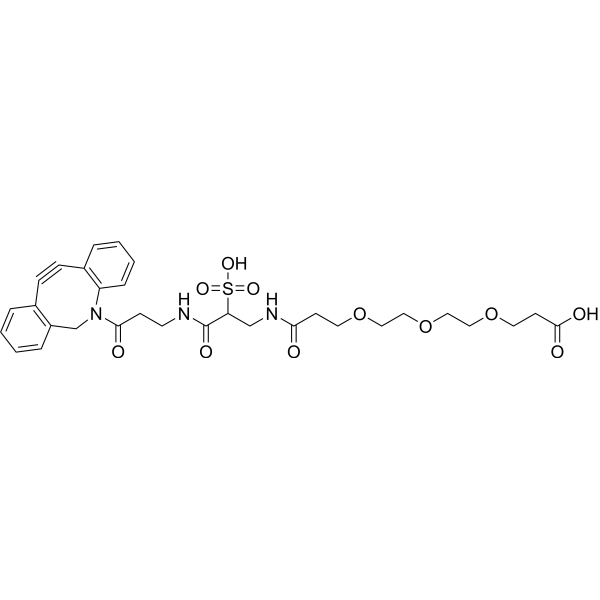
Sulfo DBCO-PEG3-acid is a click chemistry reagent containing an azide group. Sulfo DBCO-PEG3-acid is an analog of DBCO-Acid with PEG linker and a DBCO group. The DBCO groups is commonly used for copper-free Click Chemistry reactions due to its strain promoted high energy. The hydrophilic PEG chain and sulfo group increase water solubility. The terminal carboxylic acid can react with primary amine groups in the presence of activators (e.g. EDC, or HATU) to form a stable amide bond. Reagent grade, for research use only .
loading...
    loading...

