
204 Results for "

CD4 cell.

" in MedChemExpress (MCE) Product Catalog:
Products (204)

204 Results for "CD4 cell." in MCE Product Catalog:

Cat. No.: HY-144002
CAS No.: 216014-46-9
Synonyms: RC-529
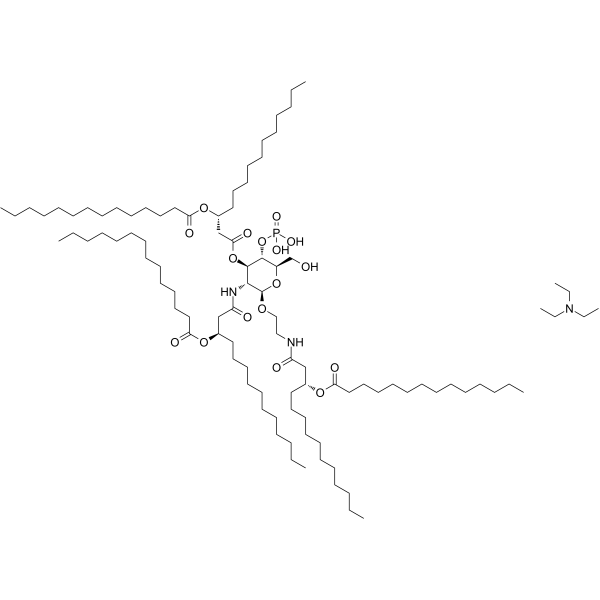
RIBI-529 (RC-529) is a fully synthetic, low-toxicity TLR4 agonist vaccine adjuvant. RIBI-529 upregulates cell surface co-stimulatory molecules, receptors, cytokines and chemokines, and activates the innate immune system. RIBI-529 enhances short-term CD4 + T cell clonal expansion, division, and ex vivo survival under growth factor withdrawal conditions. RIBI-529 enhances humoral and cell-mediated adaptive immune responses, induces non-specific resistance against viral and bacterial pathogens, and skews responses toward a Th1 type, accompanied by Th2 responses .
loading...
    loading...
Cat. No.: HY-182802
CAS No.: 3097756-33-4
Ferroptosis inducer-15 is a ferroptosis inducer. Ferroptosis inducer-15 downregulates GPX4 expression, triggers lipid peroxidation via ROS accumulation, and disrupts mitochondrial membrane potential to drive ferroptosis. Ferroptosis inducer-15 increases splenic CD4 + T cell proportion, promotes CD8 + cytotoxic T cell tumor infiltration, and activates antitumor immune responses. Ferroptosis inducer-15 exerts antiproliferative activity against colorectal cancer cells and inhibits tumor growth in xenograft mice models without significant body weight loss. Ferroptosis inducer-15 can be used for the research of cancer, such as colorectal cancer .
loading...
    loading...
Cat. No.: HY-P990120

Target:  

Inhibitory Antibodies

Research Areas:  

Inflammation/Immunology

Anti-Rat Kappa Immunoglobulin Light Chain Antibody (MAR 18.5) is an anti-rat Kappa Immunoglobulin Light Chain IgG2a monoclonal antibody. Anti-Rat Kappa Immunoglobulin Light Chain Antibody (MAR 18.5) can enhance B cell depletion. Anti-Rat Kappa Immunoglobulin Light Chain Antibody (MAR 18.5) can enhance T cell exhaustion after the injection of CD4 mAb (HY-P990792) and CD8 mAb (HY-P99129). Anti-Rat Kappa Immunoglobulin Light Chain Antibody (MAR 18.5) can be used for research on immunology .
loading...
    loading...
Cat. No.: HY-P992063
Research Areas:  

Inflammation/Immunology

Anti-Mouse CD8α Antibody (YTS 105.18) is a non-depleting rat IgG2a monoclonal antibody that binds to CD8α on mouse CD8 + T cells. When used in combination with a non-depleting anti-CD4 antibody, Anti-Mouse CD8α Antibody (YTS 105.18) does not deplete CD8 + T cells, but instead promotes the induction of peripheral tolerance in this cell subset. Anti-Mouse CD8α Antibody (YTS 105.18) can be used for research on graft rejection. The recommended isotype control is Mouse IgG2a kappa, Isotype Control (HY-P99978) .
loading...
    loading...
Cat. No.: HY-P992434

Research Areas:  

Cancer

OSE-279 is a high-affinity humanized monoclonal bivalent antibody targeting PD-1, the recommended isotype control is HY-P99003. OSE-279 blocks PD-1 ligand binding, inhibits PDL1-induced SHP1 phosphorylation, restores T cell activation, and promotes reactivation of primary T cell effector functions. OSE-279 binds hFcRn receptor, predicts long half-life, induces CD4 and CD8 T cell proliferation, and promotes interleukin 2 and interferon gamma secretion. OSE-279 can be used for the research of advanced malignancies, colon cancer, hepatocarcinoma, mesothelioma .
loading...
    loading...
Cat. No.: HY-D3334
PE-CF594 is a labeled monoclonal antibody conjugate that specifically binds to HLA-DR on the surface of monocytes and B cells, while acting as a signal attenuator. Through steric hindrance and a possible fluorescence resonance energy transfer mechanism, PE-CF594 specifically reduces the fluorescence intensity of PE-CD124 staining, but does not interfere with the staining of other PE-labeled antibodies such as CD40, CD4 or CD14. PE-CF594 can also be used to detect the emission signal of mt-Keima after excitation with a 561-nm laser, thereby effectively evaluating mitophagy activity .
loading...
    loading...
Cat. No.: HY-110382S
Synonyms: c-di-GMP-13C20,15N10 disodium; cyclic diguanylate-13C20,15N10 disodium; 5GP-5GP-13C20,15N10 disodium
13C20, 15N10-Cyclic di-GMP ( 13C20, 15N10-c-di-GMP) is 13C and 15N labeled Cyclic-di-GMP (disodium). Cyclic-di-GMP disodium is a STING agonist and a bacterial second messenger that coordinates different aspects of bacterial growth and behavior, including motility, virulence, biofilm formation, and cell cycle progression. Cyclic-di-GMP disodium has anti-cancer cell proliferation activity and also induces elevated CD4 receptor expression and cell cycle arrest. Cyclic-di-GMP disodium can be used in cancer research .
loading...
    loading...
Cat. No.: HY-N20707
CAS No.: 24312-00-3
Castalagin is an orally active natural product with multiple biological activities including antibacterial activity against bacteria and anti-leishmanial activity against Leishmania aethiopica. Castalagin exhibits inhibitory activity against PARP1 and DNA topoisomerase II, with an IC50 of 0.86 μM for bovine PARP1. Castalagin reduces poly (ADP-ribosyl) ation modification in cells. Castalagin binds to the cell envelope of Ruminococcus bromii, increases the ratio of CD8+/FOXP3+CD4+ T cells in the tumor microenvironment, and acts as a prebiotic to enhance the activity of anti-PD-1 therapy. Castalagin induces morphological changes in Leishmania aethiopica promastigotes and inhibits their proliferation. Castalagin inhibits PBP2a-mediated peptidoglycan layer stabilization, disrupts bacterial peptidoglycan assembly, and inhibits and disintegrates bacterial biofilms. Castalagin can be used in research related to diseases such as cancer, leishmaniasis, and bacterial infections .
loading...
    loading...
Cat. No.: HY-181599
XAN-5 is a mitochondrial DNA G-quadruplex (mtG4) ligand with a Kd of 3.8 μM. XAN-5 selectively binds and stabilizes mtG4 structures, disrupting mitochondrial gene transcription and DNA replication. XAN-5 triggers mitochondrial dysfunction, ROS overproduction, G0 phase arrest and caspase-dependent apoptosis. XAN-5 inhibits autophagy and induces immunogenic cell death. XAN-5 inhibits tumor growth in a mouse liver cancer model while enhancing tumor-infiltrating CD4 + and CD8 + T cells. XAN-5 targets two cancer resistance mechanisms simultaneously. XAN-5 can be used for the research of liver cancer .
loading...
    loading...
Cat. No.: HY-187690
CAS No.: 2170918-46-2
HGR4113 is an orally active anti-inflammatory/antioxidant agent with improved glucose metabolism. HGR4113 inhibits STAT3 phosphorylation, suppresses Th17 differentiation and IL-17 production, reduces oxidative phosphorylation activity, and promotes the differentiation of regulatory T cells among splenic CD4 + T cells. HGR4113 inhibits LPS (HY-D1056)-induced JNK phosphorylation, production of NO, PGE2 and pro-inflammatory cytokines, expression of iNOS and COX-2, as well as nuclear translocation of NF-κB in macrophages, while induces HO-1 expression by activating nuclear translocation of Nrf2. HGR4113 can be used in the research of inflammatory diseases such as type 2 diabetes and Sjögren's syndrome .
loading...
    loading...
Cat. No.: HY-P5917
CAS No.: 1373890-79-9
Synonyms: Vaejovis mexicanus peptide 24
Target:  

Potassium Channel

Research Areas:  

Inflammation/Immunology Cancer

Vm24-toxin (Vaejovis mexicanus peptide 24), a 36-residue peptide, is a potent and selective Kv1.3 blocker with a Kd of ~3 pM in lymphocytes. Vm24-toxin shows >1500-fold affinity for Kv1.3 over other assayed potassium channels. Vm24-toxin folds into a distorted cystine-stabilized α/β motif consisting of a single-turn α-helix and a three-stranded antiparallel β-sheet, stabilized by four disulfide bridges. Vm24-toxin attenuates the CD4 + effector memory T cell response to T cell receptor (TCR) stimulation .
loading...
    loading...
Cat. No.: HY-P5917A
Synonyms: Vaejovis mexicanus peptide 24 TFA
Target:  

Potassium Channel

Research Areas:  

Inflammation/Immunology Cancer

Vm24-toxin (Vaejovis mexicanus peptide 24) TFA, a 36-residue peptide, is a potent and selective Kv1.3 blocker with a Kd of ~3 pM in lymphocytes. Vm24-toxin TFA shows >1500-fold affinity for Kv1.3 over other assayed potassium channels. Vm24-toxin TFA folds into a distorted cystine-stabilized α/β motif consisting of a single-turn α-helix and a three-stranded antiparallel β-sheet, stabilized by four disulfide bridges. Vm24-toxin TFA attenuates the CD4 + effector memory T cell response to T cell receptor (TCR) stimulation .
loading...
    loading...
Cat. No.: HY-P991754
Research Areas:  

Cancer

Anti-Mouse TREM2 Antibody (178) is an antibody targeting mouse TREM2, which blocks the binding of ligands to TREM2 and inhibits TREM2-mediated signaling pathways. Anti-Mouse TREM2 Antibody (178) inhibits the tumor growth of MCA/1956 sarcoma in mice. Anti-Mouse TREM2 Antibody (178) enhances IFNγ production by intratumoral CD8 + T cells and TNFα production by intratumoral CD4 + T cells. Anti-Mouse TREM2 Antibody (178) can be used in the research of sarcoma, colorectal cancer and breast tumors. The recommended isotype control is Rat IgG2a kappa, Isotype Control (HY-P990679) .
loading...
    loading...
Cat. No.: HY-P11490
Target:  

MDM-2/p53

Research Areas:  

Inflammation/Immunology Cancer

DPMI-ω is a dual-specificity d-peptide antagonist of oncogenic proteins MDM2 and MDMX. DPMI-ω, upon fabrication on gold nanoparticles, efficiently traverses tumor cells and kills them by reactivating the p53 signaling pathway. DPMI-ω can disrupte the p53-MDM2/MDMX complex. DPMI-ω can inhibit B16 melanoma growth and induce cells G0/G1 phase arrest. DPMI-ω can augment the efficacy of immunotherapy by expanding CD3 +/CD8 + cytotoxic T cells and suppressing CD4 +/CD25 + regulatory T cells companied with anti-PD1 antibody. DPMI-ω can be used for research of melanoma .
loading...
    loading...
Cat. No.: HY-P992519
Synonyms: ADWA-11

Research Areas:  

Cancer

PF-06940434 (ADWA-11) is a monoclonal antibody targeting integrin αvβ8. PF-06940434 inhibits αvβ8-mediated TGF-β activation. PF-06940434 increases the accumulation of tumor-infiltrating CD8 + T cells and upregulates the expression of granzyme B and TNF-γ. PF-06940434 blocks the inhibitory effect of CD4 +CD25 + T cells on the cytotoxic activity of tumor CD8 + T cells. PF-06940434 enhances the anti-tumor efficacy of combination therapies with other immunomodulators or radiotherapy and induces long-term anti-tumor immunity. PF-06940434 can be used in the research of squamous cell carcinoma, breast cancer, colon cancer, and prostate adenocarcinoma .
loading...
    loading...
Cat. No.: HY-106055
CAS No.: 74817-61-1
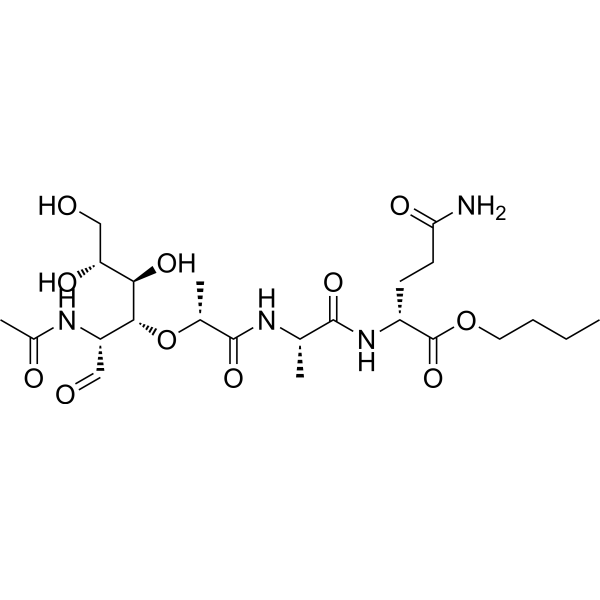
Murabutide is an immunomodulator and also a NOD2 receptor agonist . Murabutide enhances the signal transduction of ATR and NOD2, mediates the activation of the DDR pathway, and thereby repairs radiation-induced DNA double-strand breaks. Murabutide inhibits radiation-induced cell apoptosis and protects cells and mice from radiation-induced toxic damage. Murabutide induces the expression and DNA-binding activity of Oct-1 in macrophages, thereby inhibiting the transcription and replication of HIV-1. Murabutide reduces the expression levels of CD4 and CCR5 on the surface of macrophages, and induces the secretion of β-chemokines, TNF-α and IL-6. Murabutide enhances non-specific viral resistance and targets reticuloendothelial cells. Murabutide can be used in research related to radiation-induced damage and human immunodeficiency virus type 1 infection .
loading...
    loading...
Cat. No.: HY-181663
Target:  

PD-1/PD-L1 JAK

Research Areas:  

Cancer

PJ27 is a dual PD-1/PD-L1/JAK1 inhibitor, with an IC50 of 414 nM against PD-1/PD-L1, an IC50 of 786 nM against JAK1, a Ka of 294 nM for human PD-1/PD-L1, and a Ka of 473 nM for murine PD-1/PD-L1. PJ27 promotes the infiltration of CD3 +CD8 + and CD3 +CD4 + cells into the tumor microenvironment and exerts a significant immune activation effect. PJ27 inhibits tumor growth in a dose-dependent manner in the LLC lung cancer mouse model. PJ27 is applicable to relevant research on lung cancer .
loading...
    loading...
Cat. No.: HY-143712R
CAS No.: 2276-94-0
Allolithocholic acid (Standard) is the analytical standard of Allolithocholic acid (HY-143712). This product is intended for research and analytical applications. Allolithocholic acid is an orally active metabolite of Lithocholic acid (HY-B0172). Allolithocholic acid is a dual GPBAR1 agonist (EC50 = 2.7 μM) and RORγt inverse agonist (IC50 = 3.4 μM). Allolithocholic acid modulates immune and metabolic pathways, regulates immune cell polarization, prevents M1 macrophage and Th17 CD4 cell polarization. Allolithocholic acid improves insulin sensitivity, reduces liver lipid accumulation, reverses liver immunological, inflammatory and metabolic signaling dysregulation, restores bile acid homeostasis, adipose tissue histopathology/function, and intestinal microbiota composition, modulates intestinal immunity. Allolithocholic acid can be used for the researches of cancer, inflammayion, immunology and metabolic disease .
loading...
    loading...
Cat. No.: HY-177277
CAS No.: 1549766-06-4
Target:  

PI3K

Research Areas:  

Inflammation/Immunology

HM5023507 is an orally active and selective PI3Kδ/γ inhibitor with IC50s of 4  and 5  μM for PI3Kδ and PI3Kγ over PI3Kβ and PI3Kα. HM5023507 attenuates the PI3Kδ/γ signaling in human basophils. HM5023507 also attenuates the activation and function of human B and T cells and cytokine and IgG production during cocultures, and Th17 differentiation of CD4 T cells. HM5023507 inhibited semiestablished collagen-induced arthritic inflammation in the rat models. HM5023507 can be used for inflammatory diseases like rheumatoid arthritis research .
loading...
    loading...
Cat. No.: HY-183784
Target:  

P2X Receptor FAK MMP

Research Areas:  

Cancer

P2X7R antagonist-1 is an orally active P2X7 receptor antagonist with an IC50 of 3.57 μM. P2X7R antagonist-1 inhibits the proliferation, invasion and metastasis abilities of cancer cells. P2X7R antagonist-1 downregulates the expression of FAK and MMP-9. P2X7R antagonist-1 suppresses tumor growth and metastasis in a mouse breast cancer model. P2X7R antagonist-1 promotes the activation of CD4 and CD8 T cells. P2X7R antagonist-1 can be used in breast cancer-related research .
loading...
    loading...

