189 Results for "

human fibroblasts

" in MedChemExpress (MCE) Product Catalog:
Products (189)

189 Results for "human fibroblasts" in MCE Product Catalog:

Cat. No.: HY-164482
CAS No.: 2177298-99-4
Target:  

RET

Research Areas:  

Cancer

HG-6-63-01 is a type II RET tyrosine kinase inhibitor (TKI). HG-6-63-01 also inhibits REarranged during Transfection (RET) kinase and signaling in human thyroid cancer cell lines carrying oncogenic RET alleles. HG-6-63-01 impairs phosphorylation and signalling of RET oncogenic mutants. HG-6-63-01 blunts proliferation of RET/C634R and RET/M918T-transformed fibroblasts and of RET mutant thyroid cancer cells, which is promising for research of cancers harboring oncogenic activation of RET .
loading...
    loading...
Cat. No.: HY-181066
Research Areas:  

Infection

ACE2-SP PPI-IN-1 is an inhibitor of the interaction between the SARS-CoV-2 spike protein and ACE2, with an IC50 of 2162.77 nM. ACE2-SP PPI-IN-1 exhibits low cytotoxicity in human fibroblasts. ACE2-SP PPI-IN-1 binds to the interface region between the spike protein RBD and ACE2, reducing the flexibility of the critical receptor-binding loop and maintaining the structural compactness of the spike protein. ACE2-SP PPI-IN-1 can be used for research related to SARS-CoV-2 .
loading...
    loading...
Cat. No.: HY-P992379
Synonyms: BAG3-H2L4

Target:  

Bcl-2 Family

Research Areas:  

Cancer

IB001 is a humanized anti-BAG3 antibody that inhibits BAG3, with a KD value of 14.4 nM for human BAG3. IB001 blocks BAG3-dependent monocyte/macrophage activation, interferes with the interaction between BAG3 and IFITM-2, and disrupts tumor microenvironment signaling pathways. IB001 inhibits tumor growth, reduces α-SMA-positive fibroblasts, and blocks BAG3-dependent IL-6 release. IB001 accumulates in a time-dependent manner in pancreatic ductal adenocarcinoma tumors. IB001 can be used for research related to pancreatic ductal adenocarcinoma .
loading...
    loading...
Cat. No.: HY-W563489
CAS No.: 88431-47-4
Synonyms: POCA
Clomoxir (POCA) is a carnitine palmitoyltransferase I (CPT I) inhibitor with hypoglycemic activity. Clomoxir mediates the inhibition of CPT I via its active form POCA-CoA. Clomoxir inhibits long-chain fatty acid oxidation, ketogenesis, gluconeogenesis, de novo synthesis of cholesterol and fatty acids, and also mildly inhibits acetyl-CoA carboxylase. Clomoxir reduces blood glucose levels in various rodent and porcine models, alters plasma NEFA and cholesterol concentrations, induces hepatic lipid accumulation, peroxisome proliferation and mild myocardial hypertrophy in rats, and stimulates the pentose phosphate pathway in cultured human fibroblasts. Clomoxir can be used in diabetes-related research .
loading...
    loading...
Cat. No.: HY-W654342
Synonyms: NSC 268508-d20; Neuridine-d20
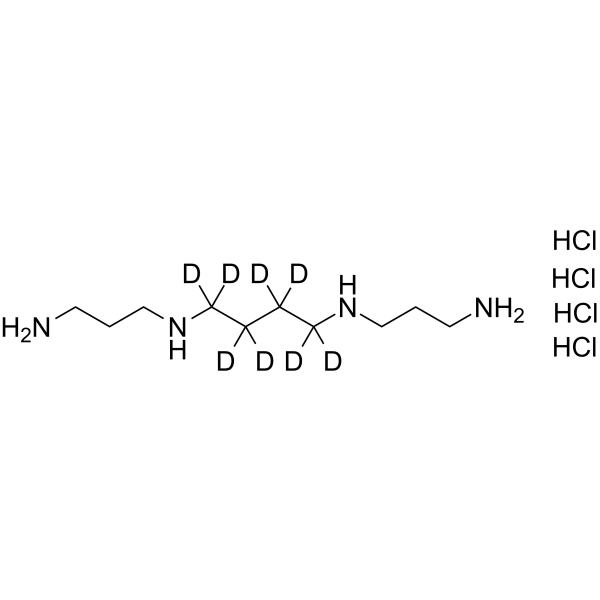
Spermine-d20 (NSC 268508-d20) is deuterium labeled Spermine. Spermine is a natural antioxidant and anti-inflammatory agent. Spermine is known to inhibit some bacterial cultures, especially strains of Staphylococcus aureus. Spermine can reversibly inhibits DNA synthetic response, mixed lymphocyte response and the induction of cytolytic lymphocyte response in primary cultures of murine spleen cells. Spermine is a polyamine nitric oxide donor that can provide nitric oxide to platelets and inhibit platelet activation to a certain extent concentration-dependently. Spermine occurs in mammalian tissues, plants, bacteria, ribosomes and bacteriophage. Spermine tetrahydrochloride inhibits primary human embryo lung fibroblasts in vitro.
loading...
    loading...
Cat. No.: HY-107830
CAS No.: 1448-36-8
Purity:  99.81%
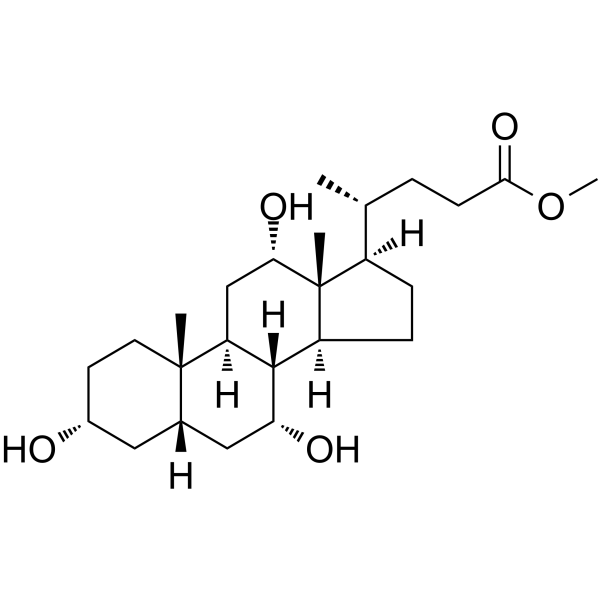
Methyl cholate is a bile acid analog and a specific inhibitor of TcdB toxin from Clostridioides difficile. Methyl cholate exerts a stronger selective inhibitory effect on TcdB than on TcdA. Methyl cholate induces conformational stabilization by binding to a unique site of TcdB, thereby blocking the binding of the toxin to host receptors and its self-processing process. Methyl cholate effectively protects human fibroblasts from TcdB-induced cytopathic effects. Methyl cholate exhibits dose-dependent anti-hepatic fibrosis activity in both cellular and zebrafish models, and significantly reduces the expression levels of α-SMA and COL-I. Methyl cholate is suitable for in-depth research in the fields of Clostridioides difficile infection and hepatic fibrosis .
loading...
    loading...
Cat. No.: HY-147946
CAS No.: 3031349-98-8
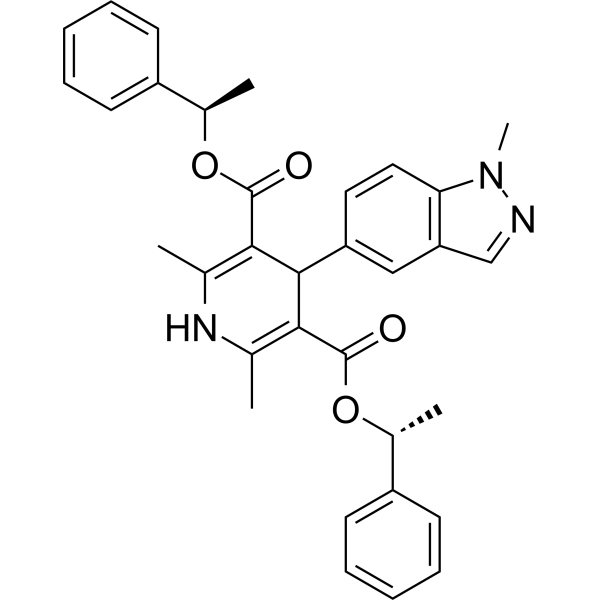
PDE1-IN-4 (compound 2g) is a potent and selective PDE1 (phosphodiesterase-1) inhibitor, with IC50 values of 10, 145, and 354 nM for PDE1C, PDE1A, and PDE1B, respectively. PDE1-IN-4 inhibits myofibroblast differentiation of human lung fibroblasts induced by TGF-β1. PDE1-IN-4 shows anti-fibrosis effects through the regulation of cAMP (3′,5′-cyclic adenosine monophosphate) and cGMP (3′,5′-cyclic guanosine monophosphate). PDE1-IN-4 can be used for idiopathic pulmonary fibrosis (IPF) research .
loading...
    loading...
Cat. No.: HY-156584
CAS No.: 1626364-18-8
Target:  

Endogenous Metabolite

Research Areas:  

Infection

ODE-Bn-PMEG is an antiviral compound with strong inhibitory activity against HPV-11, -16, and -18. ODE-Bn-PMEG effectively reduced transient amplification of viral DNA in transfected cells at concentrations well below its cytotoxic levels. ODE-Bn-PMEG showed increased uptake in human foreskin fibroblasts and was able to be efficiently converted to the active antiviral metabolite PMEG diphosphate in vitro. The P-chiral enantiomer of ODE-Bn-PMEG showed comparable antiviral activity, indicating its potential application against multiple HPV types. ODE-Bn-PMEG is a promising candidate for local inhibition of HPV-16, HPV-18, and other high-risk types .
loading...
    loading...
Cat. No.: HY-181820
Research Areas:  

Infection

Topoisomerase IV-IN-3 is a Staphylococcus aureus Topoisomerase IV inhibitor, DNA gyrase inhibitor and antibacterial agent. Topoisomerase IV-IN-3 has IC50 values of 1.32 μM and 0.48 μM against topoisomerase IV, and 0.88 μM and 0.54 μM against DNA gyrase. Topoisomerase IV-IN-3 inhibits decatenation, ATPase, and supercoiling activities of its target enzymes. Topoisomerase IV-IN-3 exerts antibacterial activity against Gram-positive and Gram-negative bacterial strains. Topoisomerase IV-IN-3 exhibits low cytotoxicity toward human fibroblast cells. Topoisomerase IV-IN-3 can be used for the research of bacterial infections .
loading...
    loading...
Cat. No.: HY-B1777AR
CAS No.: 306-67-2
Spermine (tetrahydrochloride) (Standard) is the analytical standard of Spermine (tetrahydrochloride). This product is intended for research and analytical applications. Spermine tetrahydrochloride is a polyamine nitric oxide donor that can provide nitric oxide to platelets and inhibit platelet activation to a certain extent concentration-dependently. Spermine tetrahydrochloride occurs in mammalian tissues, plants, bacteria, ribosomes and bacteriophage. Spermine tetrahydrochloride inhibits primary human embryo lung fibroblasts in vitro. Spermine is a natural antioxidant and anti-inflammatory agent. Spermine is known to inhibit some bacterial cultures, especially strains of Staphylococcus aureus. Spermine induces neurotoxicity in the striarum dose-dependently. Spermine can reversibly inhibits DNA synthetic response, mixed lymphocyte response and the induction of cytolytic lymphocyte response in primary cultures of murine spleen cells .
loading...
    loading...
Cat. No.: HY-B1777AS
CAS No.: 1173022-85-9
Spermine-d8 (tetrahydrochloride) is the deuterium labeled Spermine tetrahydrochloride. Spermine tetrahydrochloride is a polyamine nitric oxide donor that can provide nitric oxide to platelets and inhibit platelet activation to a certain extent concentration-dependently. Spermine tetrahydrochloride occurs in mammalian tissues, plants, bacteria, ribosomes and bacteriophage. Spermine tetrahydrochloride inhibits primary human embryo lung fibroblasts in vitro. Spermine is a natural antioxidant and anti-inflammatory agent. Spermine is known to inhibit some bacterial cultures, especially strains of Staphylococcus aureus. Spermine induces neurotoxicity in the striarum dose-dependently. Spermine can reversibly inhibits DNA synthetic response, mixed lymphocyte response and the induction of cytolytic lymphocyte response in primary cultures of murine spleen cells .
loading...
    loading...
Cat. No.: HY-W115785
CAS No.: 1332-07-6
Research Areas:  

Metabolic Disease

Zinc borate is a bioactive inorganic substance with properties including osteogenic induction, pro-angiogenesis, antioxidation, antimutagenesis and cytotoxicity. In the field of bone tissue engineering, Zinc borate is often incorporated into chitosan scaffolds. By releasing zinc ions and borate ions, Zinc borate induces the differentiation of human dental pulp stem cells into osteoblasts, upregulates the expression of bone-related genes and promotes calcium deposition. Zinc borate also promotes angiogenesis by upregulating key factors such as vascular endothelial growth factor. Zinc borate exhibits antioxidant capacity to scavenge free radicals, and can specifically reduce mutagenicity under specific conditions. Zinc borate reduces the survival rate of mouse fibroblasts, but it can still be used in studies related to bone tissue engineering .
loading...
    loading...
Cat. No.: HY-107830R
CAS No.: 1448-36-8
Methyl cholate (Standard) is the analytical standard of Methyl cholate. This product is intended for research and analytical applications. Methyl cholate is a bile acid analog and a specific inhibitor of TcdB toxin from Clostridioides difficile. Methyl cholate exerts a stronger selective inhibitory effect on TcdB than on TcdA. Methyl cholate induces conformational stabilization by binding to a unique site of TcdB, thereby blocking the binding of the toxin to host receptors and its self-processing process. Methyl cholate effectively protects human fibroblasts from TcdB-induced cytopathic effects. Methyl cholate exhibits dose-dependent anti-hepatic fibrosis activity in both cellular and zebrafish models, and significantly reduces the expression levels of α-SMA and COL-I. Methyl cholate is suitable for in-depth research in the fields of Clostridioides difficile infection and hepatic fibrosis .
loading...
    loading...
Cat. No.: HY-B1777S
CAS No.: 93827-50-0
Synonyms: NSC 268508-15N2; Neuridine-15N2
Spermine- 15N2 (NSC 268508- 15N2) is the 15N-labeled Spermine (HY-B1777). Spermine is a natural antioxidant and anti-inflammatory agent. Spermine is known to inhibit some bacterial cultures, especially strains of Staphylococcus aureus. Spermine induces neurotoxicity in the striarum dose-dependently. Spermine can reversibly inhibits DNA synthetic response, mixed lymphocyte response and the induction of cytolytic lymphocyte response in primary cultures of murine spleen cells. Spermine tetrahydrochloride is a polyamine nitric oxide donor that can provide nitric oxide to platelets and inhibit platelet activation to a certain extent concentration-dependently. Spermine tetrahydrochloride occurs in mammalian tissues, plants, bacteria, ribosomes and bacteriophage. Spermine tetrahydrochloride inhibits primary human embryo lung fibroblasts in vitro .
loading...
    loading...
Cat. No.: HY-W207699
CAS No.: 27052-20-6
MAO-B-IN-46 (Compound 16) is a selective hMAO-B inhibitor (IC50: 26.8 nM), with weak activity against hMAO-A (IC50: 7.2054 μM). MAO-B-IN-46 (Compound 8) also acts as an α-amylase inhibitor (IC50: 19.46 μM). MAO-B-IN-46 exhibits certain neuroprotective effects and shows no significant toxicity to human gingival fibroblasts and SH-SY5Y cells. Additionally, MAO-B-IN-46 can scavenge DPPH and ABTS free radicals, with IC50 values of 17.86 μM and 17.71 μM, respectively. MAO-B-IN-46 can be used in the research of neurodegenerative diseases such as Parkinson's disease, diabetes, and diseases related to oxidative stress resistance .
loading...
    loading...
Cat. No.: HY-W746556
CAS No.: 52886-39-2
Methyl cholate-d5 is the deuterium labeled Methyl cholate. Methyl cholate is a bile acid analog and a specific inhibitor of TcdB toxin from Clostridioides difficile. Methyl cholate exerts a stronger selective inhibitory effect on TcdB than on TcdA. Methyl cholate induces conformational stabilization by binding to a unique site of TcdB, thereby blocking the binding of the toxin to host receptors and its self-processing process. Methyl cholate effectively protects human fibroblasts from TcdB-induced cytopathic effects. Methyl cholate exhibits dose-dependent anti-hepatic fibrosis activity in both cellular and zebrafish models, and significantly reduces the expression levels of α-SMA and COL-I. Methyl cholate is suitable for in-depth research in the fields of Clostridioides difficile infection and hepatic fibrosis .
loading...
    loading...
Cat. No.: HY-153932
CAS No.: 2550399-06-7
Research Areas:  

Infection Cancer

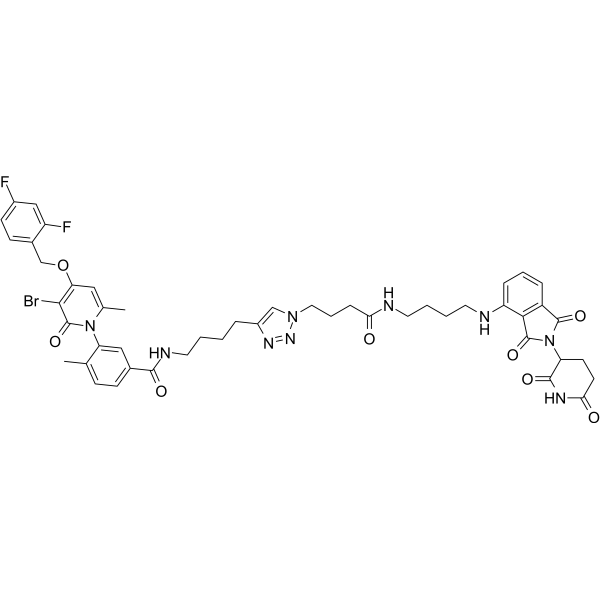
NR-7h is a selective p38α/p38β MAPK PROTAC degrader with multiple activities including anti-leishmanial, anti-malarial, and anti-Mayaro virus properties. NR-7h induces specific degradation of p38α/p38β isoforms and p38-MAPK via the ubiquitin-proteasome system. NR-7h reduces the load of Leishmania donovani, modulates the cytokine profile toward a pro-inflammatory phenotype, and enhances the oxidative burst of macrophages. NR-7h inhibits the growth of Plasmodium falciparum in human red blood cells and merozoite invasion. NR-7h reduces the replication of Mayaro virus and the expression of E1 protein in primary human dermal fibroblasts. NR-7h can be used in studies related to parasitic infections, viral infections, and breast cancer .
loading...
    loading...
Cat. No.: HY-187335
Research Areas:  

Infection

HadAB/InhA=IN-1 is a dual inhibitor of Mycobacterium tuberculosis InhA and HadAB with an InhA IC50 of 0.81 μM. HadAB/InhA=IN-1 inhibits InhA enzymatic activity in the FAS-II pathway of mycolic acid biosynthesis. HadAB/InhA=IN-1 undergoes EthA-mediated activation to covalently bind HadA and inhibit HadAB dehydratase function in the same FAS-II pathway. HadAB/InhA=IN-1 reduces mycolic acid-containing lipid and mycolic acid production, and accumulates standard fatty acids in Mycobacterium tuberculosis. HadAB/InhA=IN-1 exhibits antimycobacterial activity against drug-susceptible, ethA-deficient, and multi-drug-resistant Mycobacterium tuberculosis isolates. HadAB/InhA=IN-1 shows cytotoxic effects against human cancer and immortalized normal lung fibroblast cells. HadAB/InhA=IN-1 can be used for the research of tuberculosis .
loading...
    loading...
Cat. No.: HY-N2038R
CAS No.: 1178-24-1
3,​5,​6,​7,​8,​3',​4'-​Heptemthoxyflavone (Standard) is the analytical standard of 3,​5,​6,​7,​8,​3',​4'-​Heptemthoxyflavone (HY-N2038). This product is intended for research and analytical applications. 3,5,6,7,8,3',4'-Heptemthoxyflavone, a flavonoid from satsuma peel, is an orally available CREB activator with anti-tumor and anti-neuroinflammatory activity. 3,5,6,7,8,3',4'-Heptemthoxyflavone inhibits collagenase activity and increases the content of type I procollagen in human dermal fibroblast neoblast (HDFn) cells. 3,5,6,7,8,3',4'-Heptemthoxyflavone induces brain-derived neurotrophic factor (BDNF) expression through the cAMP/ERK/CREB signaling pathway and reduces phosphodiesterase activity in C6 glioma .
loading...
    loading...
Cat. No.: HY-128795
CAS No.: 2095304-61-1
KH176m is the major active metabolite of KH176 (HY-121577). KH176m is a microsomal prostaglandin E synthase-1 (mPGES-1) inhibitor that can cross the blood-brain barrier, with an IC50 of 0.16 µM against mouse mPGES-1 and 1.51 µM against human mPGES-1. KH176m blocks LPS- or IL-1β-induced PGE2 production, scavenges ROS, inhibits lipid peroxidation, accelerates NADPH consumption, suppresses the growth of prostate cancer spheroids, reduces the CD44 + CD24 − prostate cancer stem cell population, and protects fibroblasts with oxidative phosphorylation defects from redox stress-induced death. KH176m can be used in research related to mitochondrial diseases, inflammatory pain, inflammatory neurological diseases, inflammatory cancers, and prostate cancer .
loading...
    loading...

