182 Results for "

mutated

" in MedChemExpress (MCE) Product Catalog:
Products (182)

182 Results for "mutated" in MCE Product Catalog:

  • Categories Recommended:
    More
Cat. No.: HY-180216
Target:  

Deubiquitinase

Research Areas:  

Cancer

USP1-IN-15 is an orally active and selective USP1 inhibitor with an IC50 of 12.3 nM. USP1-IN-15 has a high specificity for USP1 with negligible inhibition against all off-target DUBs. USP1-IN-15 suppresses colony formation, induces S-phase arrest, and stabilizes ubiquitinated PCNA. USP1-IN-15 also shows synergistic antiproliferative activity. USP1-IN-15 achieves significant tumor growth inhibition in vivo. USP1-IN-15 can be used for BRCA-mutated breast cancer .
loading...
    loading...
Cat. No.: HY-E70289
Synonyms: Bovin B4GALT1 (Y289L)
Target:  

Glycosyltransferase

Research Areas:  

Cancer

Bovin beta-1,4-galactosyltransferase 1 (Y289L) (Bovin B4GALT1 (Y289L)) is a mutated form of bovine-derived galactosyltransferase with a mutation at the Y289L genetic site. Bovin beta-1,4-galactosyltransferase 1 can label O-GlcNAcylated proteins with an N-azidoacetylgalactosamine (GalNAz) group. This labeling method allows for the specific, unbiased, and global labeling of O-GlcNAcylated proteins. After labeling, the appended azide group can react with a wide variety of alkyne-modified chemical probes, facilitating multiple downstream analyses .
loading...
    loading...
Cat. No.: HY-E70723
Target:  

FLT3

Research Areas:  

Cancer

FLT3 (FMS-like tyrosine kinase 3, CD135) is a type 3 receptor tyrosine kinase that plays important roles in cell survival, proliferation, and differentiation during normal hematopoiesis. FLT3 is one of the most frequently mutated genes in acute myeloid leukemia (AML). FLT3 D835Y is the most frequent kinase domain mutation, converting aspartic acid to tyrosine. FLT3 D835Y Recombinant Human Active Protein Kinase is a recombinant FLT3 D835Y protein that can be used to study FLT3 D835Y-related functions .
loading...
    loading...
Cat. No.: HY-161887
CAS No.: 2270875-93-7
Target:  

SWI/SNF Complex

Research Areas:  

Cancer

SMARCA2-IN-8 (Compound 13) is an orally active inhibitor for SWI/SNF chromatin remodeling complexe SMARCA2 (also known as Brahma homologue, BRM) and SMARCA4 (also known as Brahma-related gene 1, BRG1) with IC50 of 5 and 6 nM. SMARCA2-IN-8 inhibits the proliferation of SMARCA2 mutated cancer cell SKMEL5 with AAC50 of 5 nM. SMARCA2-IN-8 downregulates the SMARCA2-dependent KRT80 gene expression with AAC50 of 10 nM. SMARCA2-IN-8 exhibits antitumor efficacy and good pharmacokinetic characteristics in mice .
loading...
    loading...
Cat. No.: HY-184892
CAS No.: 2953305-55-8
Target:  

Ras Raf PERK p38 MAPK Apoptosis

Research Areas:  

Cancer

RMC-8839 is an orally active selective RAS (ON) G13C inhibitor with a Ki value of 28.3 nM. RMC-8839 disrupts the interaction between KRAS G13C and RAF1 (RBD). RMC-8839 inhibits RAS-MAPK pathway signaling by reducing DUSP6 mRNA levels and pERK levels. RMC-8839 induces cytotoxicity, apoptosis (apoptosis) and antiproliferative effects in KRAS G13C-mutated cells. RMC-8839 induces tumor stasis or regression in mice. RMC-8839 can be used in research related to non-small cell lung cancer .
loading...
    loading...
Cat. No.: HY-155736
CAS No.: 3052814-46-4
Purity:  98.54%
Research Areas:  

Cancer

MAPK-IN-2 (compound 3h) is a potent MAPK inhibitor with antineoplastic activity. MAPK-IN-2 inhibits cancer cell proliferation among serval cancer cell lines, and suppresses MAPK pathway with potant efficacy (EGFR WT IC50=281 nM, c-MET IC50=205 nM, B-RAF WT IC50=112 nM, and CDK4/6 IC50=95 and 184 nM, respectively). MAPK-IN-2 even shows a remarkable potency against mutated EGFR and B-RAF (EGFR T790M IC50=69 nM and B-RAF V600E IC50=83 nM) .
loading...
    loading...
Cat. No.: HY-181990
CAS No.: 67629-86-1
IRBM-Z-1 is a non-competitive inhibitor of Zika virus (ZIKV) NS2B-NS3 protease, with an IC50 of 1.8 μM. IRBM-Z-1 also exhibits inhibitory activity against the NS2B-NS3 proteases of T156I-mutated dengue virus 2 (DENV2) and West Nile virus (WNV), with IC50 values of 3.9 μM and 4.7 μM, respectively. IRBM-Z-1 inhibits ZIKV replication, attenuates virus-induced cytopathic effects. IRBM-Z-1 is applicable to research related to ZIKV infection .
loading...
    loading...
Cat. No.: HY-112363
CAS No.: 496864-16-5
Synonyms: RP107
Target:  

CDK GSK-3 ERK JNK CFTR

Research Areas:  

Inflammation/Immunology Cancer

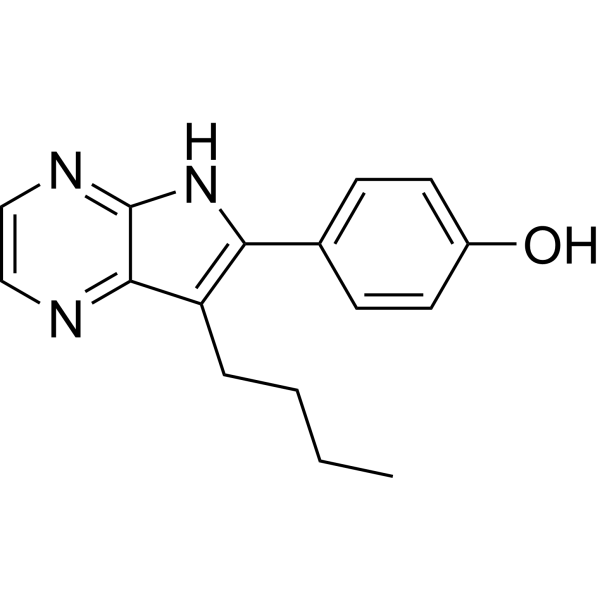
Aloisine A (RP107) is a a potent cyclin-dependent kinase (CDK) inhibitor with IC50s of 0.15 μM, 0.12 μM, 0.4 μM, 0.16 μM for CDK1/cyclin B, CDK2/cyclin A, CDK2/cyclin E, CDK5/p35, respectively. Aloisine A ininhibits GSK-3α (IC50=0.5 μM) and GSK-3β (IC50=1.5 μM). Aloisine A stimulates wild-type CFTR and mutated CFTR, with submicromolar affinity by a cAMP-independent mechanism. Aloisine A has the potential for CFTR-related diseases, including cystic fibrosis research .
loading...
    loading...
Cat. No.: HY-P77676
Purity:  ≥ 95%, as determined by Bis-Tris PAGE.
Synonyms: LRRC32; Transforming Growth Factor Beta Activator LRRC32; Prev. D11S833E; Garpin; Prev. GARP; CPPRDD; Glycoprotein A Repetitions Predominant; Leucine Rich Repeat Containing 32; Leucine-Rich Repeat-Containing Protein 32; TGFB1; Transforming Growth Factor B
Species:  
Human
Source:  
HEK293
loading...
    loading...
Cat. No.: HY-176785S
MCB-294 is a dual-state pan-KRAS inhibitor that selectively inhibits KRAS over NRAS and HRAS. MCB-294 capable of binding both the active (GTP-bound) and inactive (GDP-bound) forms of KRAS with Kds of approximately 1 pM and 10 nM, respectively. MCB-294 broadly impairs the growth of hTERT-HPNE cells expressing G12D, G12C, G12V, G12S, G13D, and wild-type KRAS, with IC50s of approximately 700 nM. MCB-294 induces irreversible apoptosis in KRAS-mutated tumors. MCB-294 effectively suppress KRAS G12C inhibitor-resistant cancer cells and remodel the tumor immune microenvironment. MCB-294 can be used for the study of pancreatic cancer, colorectal cancer and lung cancer .
loading...
    loading...
Cat. No.: HY-D1056C4
Synonyms: LPS, from Salmonella enterica (Serotype abortus equi)
Lipopolysaccharides, from S. enterica (Salmonella enterica) serotype Abortusequi are lipopolysaccharide endotoxins and TLR-4 activators derived from the Abortusequi serotype of S. enterica, classified as a mutated R-type LPS, which can activate pathogen-associated molecular patterns (PAMP) of the immune system and induce cellular secretion of migrasomes. Lipopolysaccharides, from S. enterica serotype abortus equi consist of core oligosaccharide (core oligosaccharide) and lipid A (Lipid A). S. enterica serotype Abortusequi is a major pathogen causing abortion in mares and is also associated with neonatal sepsis, multiple abscesses, orchitis, and polyarthritis in equids. It is primarily grouped based on lipopolysaccharides (O-antigen) and flagellin (H-antigen) .
It is recommended to prepare a solution with concentration ≥2 mg/mL. Vortex thoroughly for more than 10 minutes. Due to the adsorption characteristics of LPS, silanized container or low adsorption centrifuge tubes should be used for aliquoting and storage, and mix thoroughly before use.
loading...
    loading...
Cat. No.: HY-P991641
Synonyms: LY3012218

Target:  

FLT3 p38 MAPK STAT PI3K Akt

Research Areas:  

Cancer

IMC-EB10 (LY3012218) is an anti-FLT3 monoclonal antibody. IMC-EB10 binds to FLT3 with high affinity (Kd = 158 pM) and blocks the binding of FLT3 ligand to FLT3 (IC50 ≈ 10 nM), thereby inhibiting MAPK, STAT5, and PI3K/Akt signaling in leukemia cells. IMC-EB10 can enhance the anti-leukemic effect of Methotrexate (HY-14519) and inhibit leukemias expressing wild-type or ITD-mutated FLT3 receptors. IMC-EB10 prolongs the survival of acute lymphoblastic leukemia (ALL) cells and primary leukemia samples and reduces engraftment in non-obese diabetic/severe combined immunodeficiency patients. IMC-EB10 is indicated for leukemia research .
loading...
    loading...
Cat. No.: HY-P702008
Purity:  ≥ 90%, as determined by reducing SDS-PAGE.
Synonyms: SLC35A1; Solute Carrier Family 35 (UDP-Galactose Transporter), Member 1; Solute Carrier Family 35 Member A1; mutated CMP-Sialic Acid Transporter A1; CMP-Sialic Acid Transporter; CMP-SA-Tr; CMP-Sia-Tr; CST; CMPST; Solute Carrier Family 35 (CMP-Sialic Acid
Species:  
Human
Source:  
Sf9 insect cells
loading...
    loading...
Cat. No.: HY-138794A
CAS No.: 2417089-73-5
Target:  

Deubiquitinase

Research Areas:  

Cancer

(Rac)-XL177A is the racemic isomer of XL177A (HY-138794). XL177A is a covalent USP7 inhibitor that blocks the deubiquitinase activity of USP7. XL177A destabilizes non-canonical PRC1 complexes or KDM6A and reduces chromatin deposition of H2AK119Ub, thereby relieving the repression of neuronal differentiation programs. Meanwhile, XL177A also regulates the ELOF1-UVSSA-USP7-nuclear β-catenin axis, decreasing the transcription levels of related proteins and the accumulation of nuclear β-catenin. XL177A exerts antiviral effects by reducing the expression levels of coronavirus receptors, and exhibits inhibitory activity against APC-mutated colorectal cancer cells, neuroblastoma, and coronaviruses including SARS-CoV-2 variants. XL177A is mainly used in studies related to colorectal cancer, neuroblastoma, and coronavirus infections .
loading...
    loading...
Cat. No.: HY-L031
831 compounds

Immuno-Oncology is a type of immunotherapy that has the specific purpose of treating cancer. It works by stimulating our immune system to fight back. Normally, our immune system is able to destroy cancer cells in our body, however sometimes cancer cells can adapt and mutate, effectively hiding from our immune system. This is when tumors can develop and become a threat to our health. Immuno-oncology involves mobilizing lymphocytes to recognize and eliminate cancer cells using the body’s immune system. There are several immuno-oncology treatments available, including Immune cell therapy (CAR-T), monoclonal antibodies (mABs) and checkpoint inhibitors, cytokines and cancer vaccines.

MCE Small Molecule Immuno-Oncology Compound Library offers 831 bioactive tumor immunology compounds that target some important checkpoints such as PD1/PD-L1, CXCR, Sting, IDO, TLR, etc. This library is a useful tool for Immuno-oncology research.

Cat. No.: HY-174088
CDK4/6/BRD4-IN-2 (Compound PJ2) is a dual inhibitor of CDK4/6 and BRD4 with IC50 values for CDK4, CDK6, BRD4 (BD1), and BRD4 (BD2) of 168.75, 292.45, 23.17, and 3.12 nM respectively. CDK4/6/BRD4-IN-2 has a strong inhibitory effect on non-small cell lung cancer (NSCLC) cell lines. CDK4/6/BRD4-IN-2 induces cell cycle arrest, senescence and apoptosis through ROS-mediated DNA damage. CDK4/6/BRD4-IN-2 can also effectively inhibit the migration and invasion of NCI-H358 cells. CDK4/6-IN-2 can be used for the study of KRAS-mutated NSCLC .
loading...
    loading...
Cat. No.: HY-N0427
CAS No.: 6873-13-8
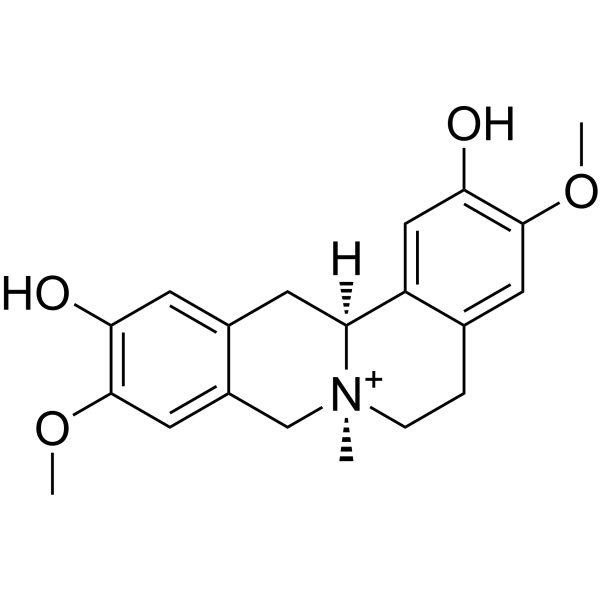
Phellodendrine is an orally active plant alkaloid. Phellodendrine inhibits the proliferation of KRAS-mutated pancreatic cancer cells by suppressing macropinocytosis and glutamine metabolism, inducing ROS accumulation and mitochondrial apoptosis. Phellodendrine promotes autophagy by activating the AMPK/mTOR pathway, alleviating intestinal damage in ulcerative colitis. Phellodendrine can alleviate gouty arthritis by inhibiting the IL-6/STAT3 signaling pathway. Phellodendrine suppresses allergic reactions by altering the conformation of MRGPRB3/MRGPRX2 protein, thereby inhibiting the activation of PKC and subsequent downstream MAPK and NF-κB signaling. Phellodendrine inhibits the AKT/NF-κB pathway and down-regulates the expression of COX-2, thereby protecting zebrafish embryos from oxidative stress. Phellodendrine has an anti-major depressive disorder (MDD) effect by down-regulating CHRM1, HTR1A, and the PI3K/Akt signaling pathway .
loading...
    loading...
Cat. No.: HY-N0735R
CAS No.: 104112-82-5
Phellodendrine chloride (Standard) is the analytical standard of Phellodendrine chloride (HY-N0735). Phellodendrine chloride is an orally active plant alkaloid. Phellodendrine chloride inhibits the proliferation of KRAS-mutated pancreatic cancer cells by suppressing macropinocytosis and glutamine metabolism, inducing ROS accumulation and mitochondrial apoptosis. Phellodendrine chloride promotes autophagy by activating the AMPK/mTOR pathway, alleviating intestinal damage in ulcerative colitis. Phellodendrine chloride can alleviate gouty arthritis by inhibiting the IL-6/STAT3 signaling pathway. Phellodendrine chloride suppresses allergic reactions by altering the conformation of MRGPRB3/MRGPRX2 protein, thereby inhibiting the activation of PKC and subsequent downstream MAPK and NF-κB signaling. Phellodendrine chloride inhibits the AKT/NF-κB pathway and down-regulates the expression of COX-2, thereby protecting zebrafish embryos from oxidative stress. Phellodendrine chloride has an anti-major depressive disorder (MDD) effect by down-regulating CHRM1, HTR1A, and the PI3K/Akt signaling pathway.
loading...
    loading...
Cat. No.: HY-138794G
CAS No.: 2417089-74-6
XL177A GMP is XL177A (HY-138794) produced by using GMP guidelines. GMP small molecules works appropriately as an auxiliary reagent for cell therapy manufacture. XL177A is a covalent USP7 inhibitor that blocks the deubiquitinase activity of USP7. XL177A destabilizes non-canonical PRC1 complexes or KDM6A and reduces chromatin deposition of H2AK119Ub, thereby relieving the repression of neuronal differentiation programs. Meanwhile, XL177A also regulates the ELOF1-UVSSA-USP7-nuclear β-catenin axis, decreasing the transcription levels of related proteins and the accumulation of nuclear β-catenin. XL177A exerts antiviral effects by reducing the expression levels of coronavirus receptors, and exhibits inhibitory activity against APC-mutated colorectal cancer cells, neuroblastoma, and coronaviruses including SARS-CoV-2 variants. XL177A is mainly used in studies related to colorectal cancer, neuroblastoma, and coronavirus infections .
loading...
    loading...
Cat. No.: HY-L077
4,336 compounds

Pancreatic cancer is a devastating disease with a low overall survival rate. Chemotherapy is the most common treatment for patients presenting with advanced pancreatic cancer. More recently, the era of targeted therapies has generated a lot of interest in discovering better approaches for patients with pancreatic cancer. Commonly mutated genes in pancreatic cancer include K-ras (in 74-100% of cases), p16INK4a (up to 98%), p53 (43 to 76%), DPC4 (about 50%), HER-2/neu (in about 65%) and FHIT (found in 70% of cases). Other genes involved are notch1, Akt-2, BRCA2 and COX-2. These proteins are important targets of target therapies for pancreatic cancer.

MCE offers a unique collection of 4,336 compounds with identified and potential anti- pancreatic cancer activity. These compounds target K-Ras, p53, HER2, Notch, AKT, etc. MCE anti-pancreatic cancer compound library is a useful tool for anti-pancreatic cancer drugs screening and other related research.

