175 Results for "

PTP1B

" in MedChemExpress (MCE) Product Catalog:
Products (175)

175 Results for "PTP1B" in MCE Product Catalog:

Cat. No.: HY-N2217R
CAS No.: 20137-37-5
Rotundic acid (Standard) is the analytical standard of Rotundic acid (HY-N2217). This product is intended for research and analytical applications. Rotundic acid is an orally effective triterpenoid with a Kd value of 51.3 µM for PTP1B. Rotundic acid downregulates the AKT/mTOR pro-survival pathway and modulates the MAPK pathway. Rotundic acid induces cell cycle S-phase arrest, DNA damage and apoptosis; it inhibits migration, invasion, angiogenesis and proliferation of cancer cells. Rotundic acid improves leptin sensitivity, regulates gut microbiota and reduces cellular senescence. Rotundic acid can be used in research related to hepatocellular carcinoma, obesity, aging, acute lung injury and type 2 diabetes [1].
loading...
    loading...
Cat. No.: HY-N6651
CAS No.: 22550-15-8
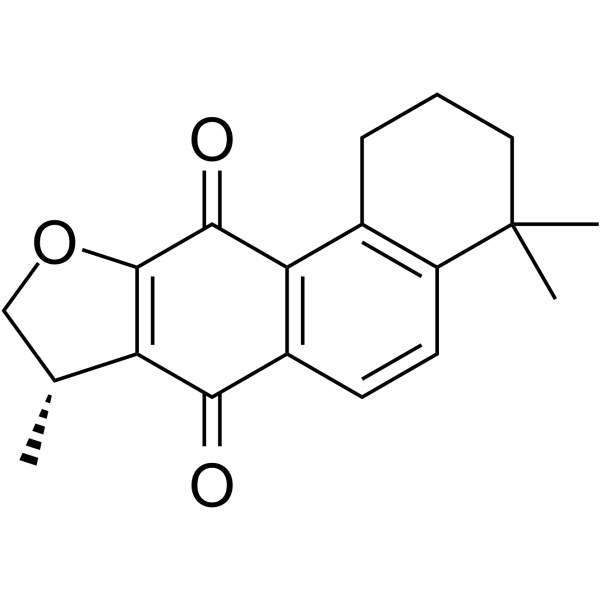
Isocryptotanshinone is a dual STAT3 and PTP1B (IC50 = 56.1 μM) inhibitor. Isocryptotanshinone inhibits STAT3 by binding to the STAT3 SH2 domain to block phosphorylation and nuclear translocation [1][2]. Isocryptotanshinone exerts its anti-proliferative effect via the induction of cell cycle arrest, apoptosis, and pro-death autophagy, through the regulation of STAT3, AKT/mTOR and MAPK signaling pathways. Isocryptotanshinone suppresses the xenograft gastric cancer (GC) tumor growth in BALB/c nude mice. Isocryptotanshinone can be used for cancer research, such as lung cancer, breast cancer and GC [1] .
loading...
    loading...
Cat. No.: HY-N0646R
CAS No.: 29782-68-1
Silydianin (Standard) is the analytical standard of Silydianin (HY-N0646). This product is intended for research and analytical applications. Silydianin is a flavonolignan. Silydianin can be obtained from Silybum marianum. Silydianin inhibits PTP1B with an IC50 of 17.38 μM. Silydianin inhibits both monophenolase and diphenolase of tyrosinase significantly, with IC50s of 2.6 μM and 16.5 μM, respectively. Silydianin induces Apoptosis and reduces cytokines (IL-4 and IL-5). Silymarin has antioxidant, cytoprotective and immunomodulatory effects. Silydianin has antitumor activity against prostate cancer. Silymarin can be used in allergic asthma research [1] .
loading...
    loading...
Cat. No.: HY-109041R
CAS No.: 1008510-37-9
Synonyms: AKB-9778 (Standard)
Razuprotafib (Standard) is the analytical standard of Razuprotafib (HY-109041). This product is intended for research and analytical applications. Razuprotafib (AKB-9778) is a potent and selective inhibitor of the catalytic activity of VE-PTP (vascular endothelial protein tyrosine phosphatase) with an IC50of 17 pM. Razuprotafib promotes TIE2 activation, enhances ANG1-induced TIE2 activation, and stimulates phosphorylation of signaling molecules in the TIE2 pathway, including AKT, eNOS, and ERK. Razuprotafib inhibits the structurally related phosphatase PTP1B with an IC50 of 780 nM. Razuprotafib shows excellent selectivity for VE-PTP versus a variety of phosphatases, with the exception of HPTPη (IC50=36 pM) and HPTPγ (100 pM) [1].
loading...
    loading...
Cat. No.: HY-116474R
CAS No.: 14484-44-7
Viridicatol (Standard) is the analytical standard of Viridicatol (HY-116474). This product is intended for research and analytical applications. Viridicatol is a quinolone alkaloid with anti-inflammatory, antibacterial, antifungal, osteogenic and chondrogenic activities. Viridicatol reduces the phosphorylation levels of ERK, JNK, p38 and STAT6; inhibits MMP-2, MMP-9, NF-κB signaling pathway and PTP1B; downregulates genes related to mast cell activation; and binds to SHN3 to activate the Wnt/SHN3 signaling pathway. Viridicatol inhibits the expression of pro-inflammatory mediators and cytokines, and promotes osteogenic/chondrogenic differentiation. Viridicatol can be used in studies related to fibrosarcoma, allergy, bacterial infection, fungal infection and osteoporosis [1] .
loading...
    loading...
Cat. No.: HY-117085
CAS No.: 522-53-2
Research Areas:  

Cancer

Lobaric acid is a depsipeptide metabolite isolated from Stereocaulon lichen with antioxidant, antiproliferative, antiviral and enzyme inhibitory activities. Lobaric acid scavenges superoxide free radicals (IC50=97.9 μM) and inhibits cancer cell proliferation (EC50 of 15.2-63.9 μg/mL against leukemia, colorectal, gastric, breast, ovarian, prostate, pancreatic and lung cancer cell lines). Lobaric acid inhibits protein tyrosine phosphatase 1B (PTP1B; IC50=0.87 μM for human recombinant enzyme) and 12(S)-HETE produced by 12(S)-lipoxygenase (IC50=28.5 μM). Lobaric acid (250 μM) also reduced pathological changes in tobacco leaves infected with tobacco mosaic virus (TMV).
loading...
    loading...
Cat. No.: HY-174322
Target:  

SHP2 ERK Fluorescent Dye

Research Areas:  

Cancer

SHP2-IN-38 is a novel green-fluorescent SHP2 inhibitor with IC50 values of 2.89 μM (SHP2), 8.73 μM (SHP1), 11.08 μM (PTP1B), 33.07 μM (TCPTP). SHP2-IN-38 blocks the SHP2-mediated ERK signaling pathway and inhibits MV4-11 cells proliferation in vitro with IC50 of 7.90 μM. SHP2-IN-38 has an excitation wavelength of 360 nm, with a maximum emission wavelength of 550 nm in DMSO and 540 nm in DMF. SHP2-IN-38 shows green fluorescence imaging in HeLa cells and zebrafish.
loading...
    loading...
Cat. No.: HY-N4177
CAS No.: 24577-90-0
Synonyms: Rubrofusarin-6-β-gentiobioside
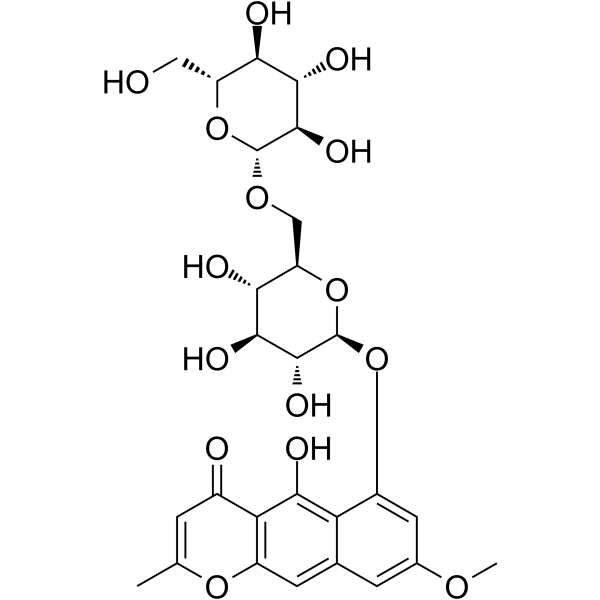
Rubrofusarin gentiobioside (Rrubrofusarin-6-β-gentiobioside) is an orally active weak inhibitor of PTP1B and MAO-A (IC50 >100 μM), and its glycosylation modification results in lower biological activity than its aglycone Rubrofusarin (HY-130307). Rubrofusarin gentiobioside promotes AMPK phosphorylation in an LKB1-independent manner and inhibits the mTOR signaling pathway, thereby downregulating the expressions of PPARγ, C/EBPα, as well as FAS, LPL and aP2. Rubrofusarin gentiobioside inhibits lipid accumulation, reduces body weight and epididymal white adipose tissue volume, improves fatty liver, and shows no cytotoxicity to hepatocytes. Rubrofusarin gentiobioside is widely used in obesity-related studies [1] .
loading...
    loading...
Cat. No.: HY-183801
Target:  

Phosphatase Apoptosis

Research Areas:  

Cancer

Cu2LCl2(H2O) acts as a proteasome inhibitor and protein tyrosine phosphatase inhibitor, with antiproliferative and apoptosis-inducing effects. Cu2LCl2(H2O) exhibits low cytotoxicity against normal cells and remarkable in vivo antitumor efficacy. Cu2LCl2(H2O) inhibits proteasome activity in colon cancer cells, and suppresses PTP1B and TCPTP activities in breast cancer cells. Cu2LCl2(H2O) can be used in the research of colon cancer, breast cancer and liver cancer [1].
loading...
    loading...
Cat. No.: HY-W010667
CAS No.: 2190-25-2
Synonyms: 1,3-Dipalmitoyl-2-oleoylglycerol; ?1,3-Palmitin-2-Olein; TG(16:0/18:1/16:0)
(Z)-2-(Oleoyloxy) propane-1,3-diyl dipalmitate (1,3-Dipalmitoyl-2-oleoylglycerol) is an orally active PTP1B inhibitor with an IC50 of 31.01 μM and a Ki of 16.36 μM. (Z)-2-(Oleoyloxy) propane-1,3-diyl dipalmitate also inhibits α-glucosidase with an IC50 of 163.31 μM. It inhibits phosphorylation of p38 MAPK, activates the PI3K/Akt/CREB pathway, and exhibits antioxidant, anti-apoptosis and anti-inflammatory activities, as well as inhibits peroxynitrite-mediated albumin nitration. (Z)-2-(Oleoyloxy) propane-1,3-diyl dipalmitate can be used in studies related to cerebral ischemia-reperfusion injury and diabetes [1] .
loading...
    loading...
Cat. No.: HY-155847
CAS No.: 3052262-64-0
Purity:  99.80%
Target:  

Phosphatase PD-1/PD-L1

Research Areas:  

Inflammation/Immunology Cancer

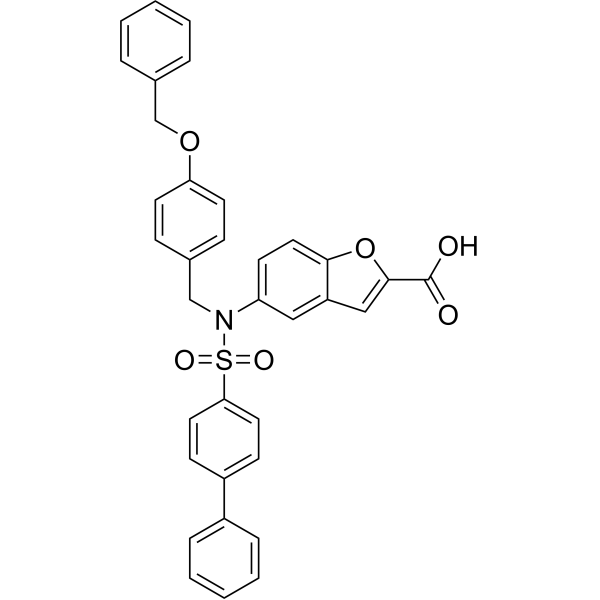
LYP-IN-3 is a selective, orally active and reversible lymphoid-tyrosine phosphatase (LYP) inhibitor (IC50 = 2.55 μM, Ki = 0.93 μM). D34 exhibits high selectivity of PTP1B, PTPN12, PTPN5 and SSH2. LYP-IN-3 regulates the T-cell receptor (TCR) signaling by specifically inhibiting LYP. LYP-IN-3 does not significantly inhibit MC38 cell viability; its anti-tumor effect stems from immune regulation. LYP-IN-3 can significantly upregulate PD-L1 or PD-1 expression in different immune cells. LYP-IN-3 facilitates T-cell infiltration and enhances T-cell functions. LYP-IN-3 synergizes with PD-L1 blockade can significantly improve colorectal tumor regression. LYP-IN-3 can be used for the study of colorectal cancer [1].
loading...
    loading...
Cat. No.: HY-N3266
CAS No.: 99353-00-1
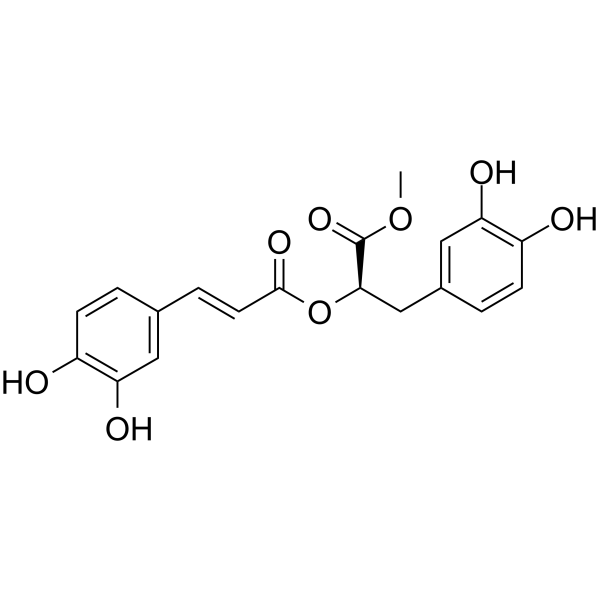
Methyl rosmarinate is an orally active hydroxycinnamic acid. Methyl rosmarinate exhibits an IC50 of 24.70 μM and a Ki of 15.29 μM against PTP1B, an IC50 of 41.46 μg/mL against BChE, a Ki of 0.61 mM against mushroom tyrosinase, and an IC50 of 2.50 μM against SARS-CoV-2 3CLpro. Methyl rosmarinate downregulates the phosphorylation levels of ERK, JNK, p38, Smad2 and Smad3. Methyl rosmarinate activates erythrocyte BPGM and promotes the production of 2,3-BPG. Methyl rosmarinate induces apoptosis of fibroblasts. Methyl rosmarinate prolongs the survival time of hypoxic mice. Methyl rosmarinate improves insulin sensitivity. Methyl rosmarinate binds to SARS-CoV-2 3CLpro and inhibits viral replication. Methyl rosmarinate induces glioblastoma cell death. Methyl rosmarinate activates the TGR5/AMPK axis and reduces the levels of ROS and MDA. Methyl rosmarinate shows inhibitory activity against MMP-1. Methyl rosmarinate can be used in research related to pulmonary fibrosis, hypoxia-induced injury, type 2 diabetes, Alzheimer's disease, hyperpigmentation disorders, COVID-19, glioblastoma and myocardial ischemia-reperfusion injury [1] .
loading...
    loading...
Cat. No.: HY-RS17205
Research Areas:  

Others

Ptpn1 Mouse Pre-designed siRNA Set A contains three designed siRNAs for Ptpn1 gene (Mouse), as well as a negative control, a positive control, and a FAM-labeled negative control.

loading...
    loading...
Cat. No.: HY-RS11415
Research Areas:  

Others

PTPN1 Human Pre-designed siRNA Set A contains three designed siRNAs for PTPN1 gene (Human), as well as a negative control, a positive control, and a FAM-labeled negative control.

loading...
    loading...
Cat. No.: HY-RS23657
Research Areas:  

Others

Ptpn1 Rat Pre-designed siRNA Set A contains three designed siRNAs for Ptpn1 gene (Rat), as well as a negative control, a positive control, and a FAM-labeled negative control.

loading...
    loading...

