1. Search Result
Search Result
Results for "

12-O-tetradecanoylphorbol-13-acetate

" in MedChemExpress (MCE) Product Catalog:

19

阻害剤およびアゴニスト

1

ペプチド

9

天然物

製品番号 製品名 Target 研究分野 構造式
  • HY-P3469A

    GCGR Metabolic Disease
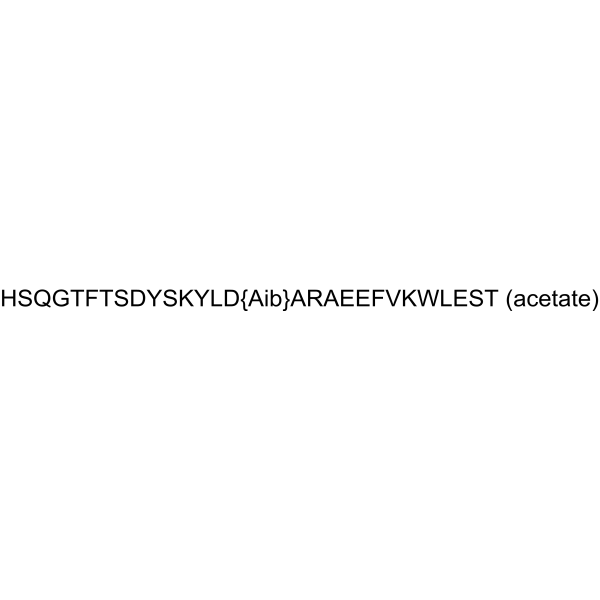
    Dasiglucagon acetate is a human glucagon analog, and can increase plasma glucose. Dasiglucagon can be used in hypoglycemia research .
    Dasiglucagon acetate
  • HY-107260

    Lucidenic acid D2

    NO Synthase COX Infection Inflammation/Immunology Cancer
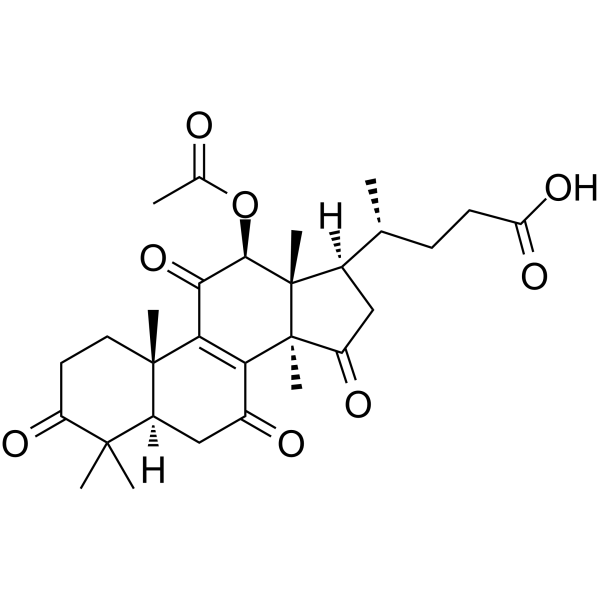
    Lucidenic acid D is a highly oxidized triterpenoid with anti-inflammatory and antiviral activities. Lucidenic acid D attenuates lipopolysaccharide-induced release of proinflammatory cytokines and nitric oxide, reduces the expression of inducible nitric oxide synthase (iNOS) and cyclooxygenase-2 (COX-2), and inhibits skin inflammation. Lucidenic acid D suppresses 12-O-tetradecanoylphorbol-13-acetate (TPA)-induced expression of Epstein-Barr virus (EBV) early antigen and maintains the viability of Raji cells. Lucidenic acid D can be used in studies of cancer chemoprevention .
    Lucidenic acid D
  • HY-B1231

    RP-2831 hydrochloride

    Adrenergic Receptor Cardiovascular Disease Neurological Disease Inflammation/Immunology Cancer
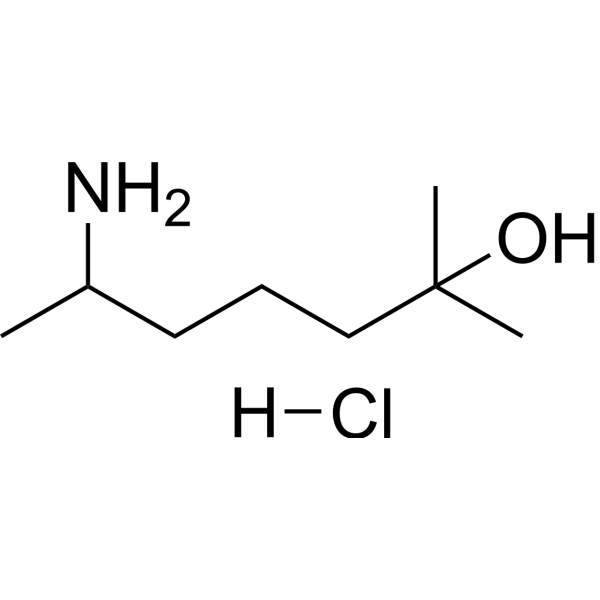
    Heptaminol (RP-2831) hydrochloride is a vasoconstrictor used in the study of hypotension, especially orthostatic hypotension. Heptaminol is also a skin cancer proliferation inhibitor that inhibits immune inflammation induced by the tumor promoting factor 12-O-tetradecanoylphorbol-13-acetate (TPA) in an NO-dependent manner. Heptaminol also acts as a sympathomimetic amine, exerting indirect sympathetic effects. Heptaminol is also an antagonist of catecholamine release and uptake and can increase intracellular free calcium levels .
    Heptaminol hydrochloride
  • HY-100983

    PKC Cancer
    Protein kinase inhibitor H-7 dihydrochloride is a potent PKC (protein kinase C) inhibitor. At 100 μM, Protein kinase inhibitor H-7 dihydrochloride completely inhibits both TPA (skin tumour promoter, 12-O-tetradecanoylphorbol-13-acetate) and phospholipase C-induced ODC (ornithine decarboxylase) .
    Protein kinase inhibitor H-7 dihydrochloride
  • HY-N7691

    Karounidiol dibenzoate

    EBV Infection Cancer
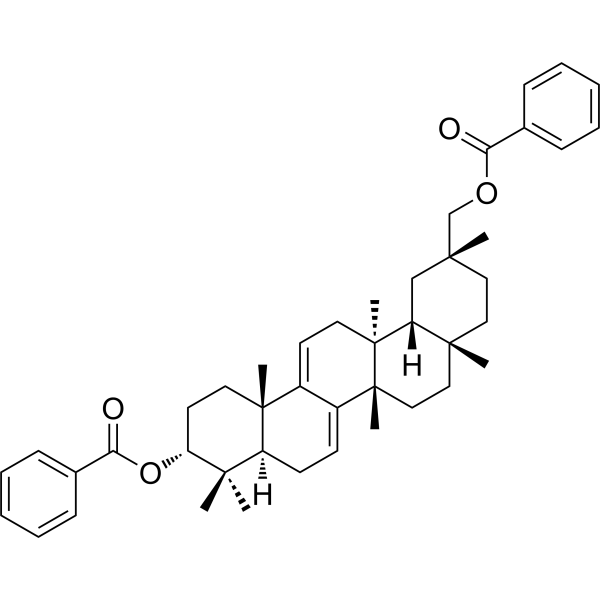
    3,29-O-Dibenzoyloxykarounidiol (Karounidiol dibenzoate) is a triterpene benzoate isolated from the fruit of Momordica grosvenori. 3,29-O-Dibenzoyloxykarounidiol has potent inhibitory effects on Epstein-Barr virus early antigen (EBV-EA) induced by tumor promoter 12-O-tetradecanoylphorbol-13-acetate (TPA) .
    3,29-O-Dibenzoyloxykarounidiol
  • HY-N7041

    EBV HSV Infection
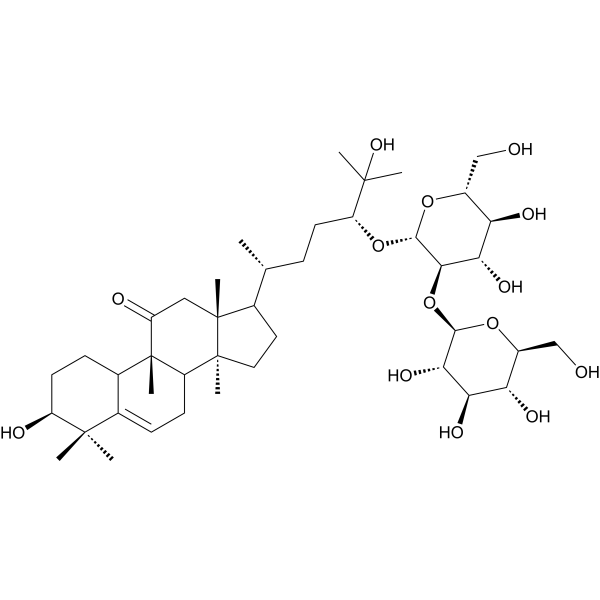
    11-Oxomogroside IIa (11-oxomogroside II A1) is a cucurbitane glycoside extracted from the fruits of Siraitia grosVenorii. 11-Oxomogroside IIa has inhibitory effects against the Epstein-Barr virus early antigen (EBV-EA) activation induced by 12-O-tetradecanoylphorbol-13-acetate (TPA), shows weak inhibitory effects on activation of (+/-)-(E)-methyl-2-[(E)-hydroxyimino]-5-nitro-6-methoxy-3-hexemide (NOR 1), a nitric oxide (NO) donor .
    11-Oxomogroside IIa
  • HY-N4024

    Others Inflammation/Immunology
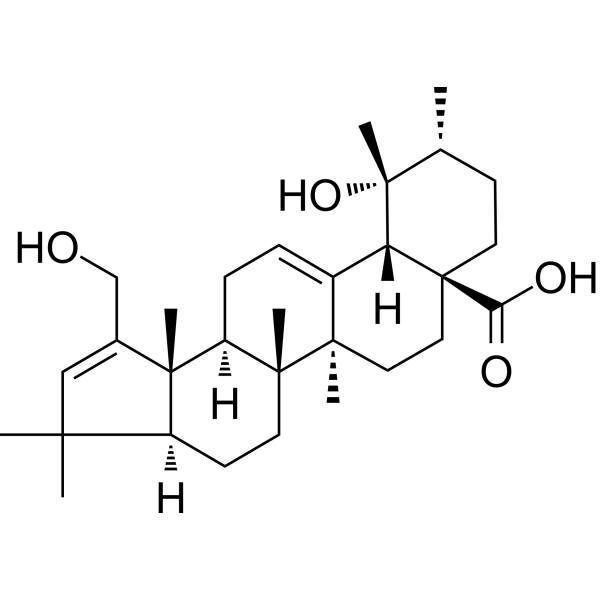
    Hyptadienic acid is a triterpene acid that can be isolated from the leaves of Perilla frutescens. Hyptadienic acid inhibits 12-O-tetradecanoylphorbol-13-acetate (TPA)-induced inflammation in mice with an ID50 value of 0.13 mg/ear. Hyptadienic acid can be used for the research of inflammation .
    Hyptadienic acid
  • HY-N11009

    EBV Infection
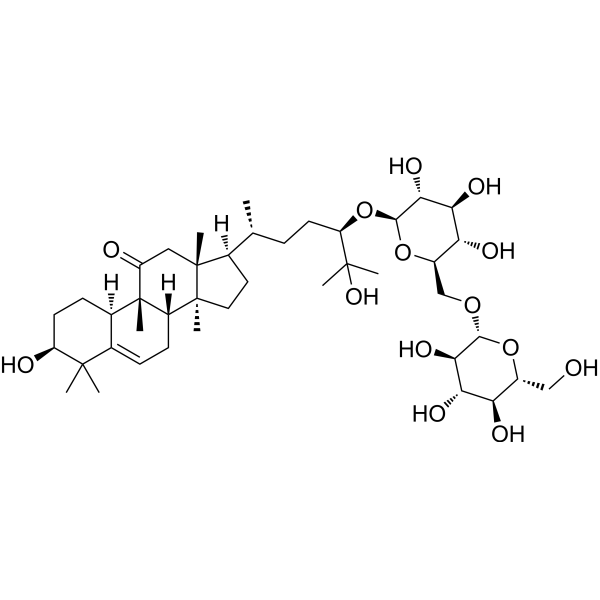
    11-Oxomogroside II A1 (compound 7) is an oxidized cucurbitin. It can be isolated from the ethanol extract of Rohanberry fruit. 11-Oxomogroside II A1 inhibits the activation of Epstein-Barr virus (EBV) early antigen (EBV-EA) induced by 12-O-tetradecanoylphorbol-13-acetate (TPA). 11-Oxomogroside II A1 also weakly inhibits the activation of (±)-(E)-methyl-2-[(E)-hydroxyimino]-5-nitro-6-methoxy-3-hexemide (NOR 1), a nitric oxide (NO) donor .
    11-Oxomogroside II A1
  • HY-114809

    Reactive Oxygen Species (ROS) NADPH Oxidase Inflammation/Immunology Cancer
    AL-1 is a potent O2 - generation inhibitor (IC50 = 7.6 μM) through the inhibition of leukocytic NADPH oxidase. AL-1 inhibits 12-O-Tetradecanoylphorbol-13-acetate (TPA)-induced H2O2 production. AL-1 reduces tumor incidence in ICR mouse skin. AL-1 can be used for research on oxidative stress-related diseases including cancer .
    AL-1
  • HY-108602

    PKC Cancer
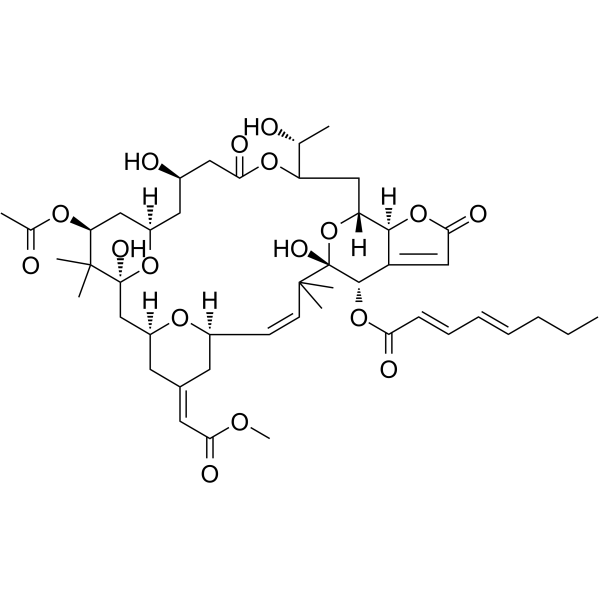
    Bryostatin 3, a macrocyclic lactone, is a protein kinase C activator, with a Ki of 2.75 nM. Bryostatin 3 can block 12-O-tetradecanoylphorbol-13-acetate (TPA) inhibition of cell proliferation, yet did not block TPA-enhanced cell-substratum adhesion .
    Bryostatin 3
  • HY-126198A

    McN-3935 fumarate

    Antibiotic Metabolic Disease
    Linogliride (MCN-3935) fumarate is an antidiabetic agent. Linogliride fumarate (100 μM) does not affect insulin secretion in the absence of glucose, but has a significant insulinotropic effect in the presence of 5.5 mM glucose .
    Linogliride fumarate
  • HY-126198

    McN-3935

    Antibiotic Metabolic Disease
    Linogliride (MCN-3935) is an antidiabetic agent. Linogliride (100 μM) does not affect insulin secretion in the absence of glucose, but has a significant insulinotropic effect in the presence of 5.5 mM glucose .
    Linogliride
  • HY-100983R

    Reference Standards PKC Cancer
    Protein kinase inhibitor H-7 (dihydrochloride) (Standard) is the analytical standard of Protein kinase inhibitor H-7 (dihydrochloride). This product is intended for research and analytical applications. Protein kinase inhibitor H-7 dihydrochloride is a potent PKC (protein kinase C) inhibitor. At 100 μM, Protein kinase inhibitor H-7 dihydrochloride completely inhibits both TPA (skin tumour promoter, 12-O-tetradecanoylphorbol-13-acetate) and phospholipase C-induced ODC (ornithine decarboxylase) .
    Protein kinase inhibitor H-7 dihydrochloride (Standard)
  • HY-B1231R

    RP-2831 hydrochloride (Standard)

    Adrenergic Receptor Reference Standards Cardiovascular Disease Neurological Disease Inflammation/Immunology Cancer
    Heptaminol (hydrochloride) (Standard) is the analytical standard of Heptaminol (hydrochloride). This product is intended for research and analytical applications. Heptaminol (RP-2831) hydrochloride is a vasoconstrictor used in the study of hypotension, especially orthostatic hypotension. Heptaminol is also a skin cancer proliferation inhibitor that inhibits immune inflammation induced by the tumor promoting factor 12-O-tetradecanoylphorbol-13-acetate (TPA) in an NO-dependent manner. Heptaminol also acts as a sympathomimetic amine, exerting indirect sympathetic effects. Heptaminol is also an antagonist of catecholamine release and uptake and can increase intracellular free calcium levels .
    Heptaminol hydrochloride (Standard)
  • HY-N17354

    EBV Infection
    Glycocitrine II is an acridone alkaloid. Glycocitrine II can be isolated from the Rutaceous plants. Glycocitrine II inhibits 12-O-tetradecanoylphorbol-13-acetate (TPA)-induced EBV-EA activation .
    Glycocitrine II
  • HY-183367

    TNF Receptor Interleukin Related Inflammation/Immunology
    Anti-inflammatory agent 115 is a potent anti-inflammatory agent. Anti-inflammatory agent 115 reduces secretion of myeloperoxidase (MPO), TNF-α, IL-1β, and IL-6. Anti-inflammatory agent 115 decreases ear tissue thickness and neutrophil infiltration in 12-O-tetradecanoylphorbol-13-acetate (TPA) (HY-18739)-induced topical edema in mice. Anti-inflammatory agent 115 can be used for the research of inflammatory diseases .
    Anti-inflammatory agent 115
  • HY-N17638

    EBV NO Synthase Infection Cancer
    7-Oxomogroside V is a cucurbitane-type glycoside isolated from the fruits of Siraitia grosvenorii. 7-Oxomogroside V inhibits the activation of Epstein-Barr virus early antigen (EBV-EA) induced by TPA (HY-18739). 7-Oxomogroside V also exerts weak inhibitory effects on the activation of the nitric oxide donor NOR 1. 7-Oxomogroside V is applicable to tumor-related research .
    7-Oxomogroside V
  • HY-N9752

    EBV Infection
    Mogroside II B is a cucurbitane-type glycoside with a sweet taste in water. Mogroside II B inhibits the activation of Epstein Barr virus early antigen (EBV-EA) induced by Phorbol 12-myristate 13-acetate (TPA) (HY-18739). Mogroside II B exerts weak inhibitory effects on the activation of the nitric oxide (NO) donor (NOR1) .
    Mogroside II B
  • HY-N18117A

    NO Synthase EBV Infection Inflammation/Immunology Cancer
    23-Hydroxyohchininolide is a limonoid found in the leaves of Melia azedarach L.. 23-Hydroxyohchininolide inhibits LPS (HY-D1056)-induced NO production and exerts cytotoxic activity against human leukemia and stomach cancer cells. 23-Hydroxyohchininolide inhibits TPA (HY-18739)-induced Epstein-Barr virus early antigen activation. 23-Hydroxyohchininolide can be used for the research of cancer, infection and inflammatory disease .
    23-Hydroxyohchininolide

オンラインお問い合わせ

入力情報は安全に管理されます. 必須入力項目.

タイトル


国或いは地域 *

お名前 *


組纖名 *

デパートメント *


メールアドレス *


製品名 *

製品番号


カスタマ需要量 *

電話番号 *


必ず会社名を記載ください。個人への返信は行いません。

備考

バルクお問い合わせ

Inquiry Information

製品名:
製品番号:
数量:
MCE 日本正規代理店:

