18 Results for "

ATF4 expression

" in MedChemExpress (MCE) Product Catalog:
Products (18)

18 Results for "ATF4 expression" in MCE Product Catalog:

  • Categories Recommended:
    More
1
1 Cited Publications
Cat. No.: HY-112056
CAS No.: 151358-48-4
Pureté:  99.47%
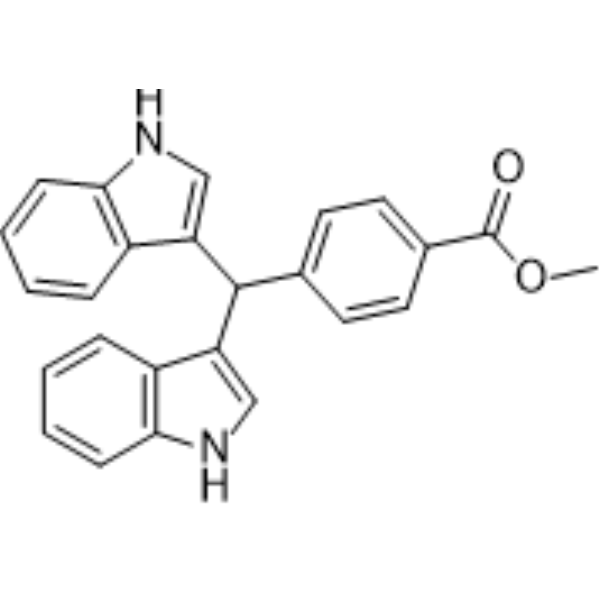
DIM-C-pPhCO2Me is a nuclear receptor 4A1 (NR4A1) antagonist. DIM-C-pPhCO2Me induces Apoptosis. DIM-C-pPhCO2Me decreases PAX3-FOXO1A, N-Myc, Rassf4, MyoD1, Grem1, and DAPK1 proteins. DIM-C-pPhCO2Me decreases expression of TXNDC5 and IDH1, induces markers of ER stress (CHOP, ATF4 and p-PERK). DIM-C-pPhCO2Me inhibits renal cell carcinoma, breast cancer. DIM-C-pPhCO2Me can also be used in rhabdomyosarcoma research .
loading...
    loading...
Cat. No.: HY-158202
CAS No.: 2991057-60-2
Pureté:  99.24%
Domaines de recherche:  

Neurological Disease

ATF4-IN-2 is an ATF4 inhibitor with an IC50 of 47.71 nM. ATF4-IN-2 activates eIF2B, binds to the ISRIB (HY-12495A) binding pocket, restores protein translation, and inhibits ATF4 expression. ATF4-IN-2 inhibits ATF4 protein expression in Thapsigargin (HY-13433)-stimulated cells. ATF4-IN-2 can be used for research on neurodegenerative diseases .
loading...
    loading...
Cat. No.: HY-153339
CAS No.: 891894-69-2
Pureté:  98.85%
Domaines de recherche:  

Cancer

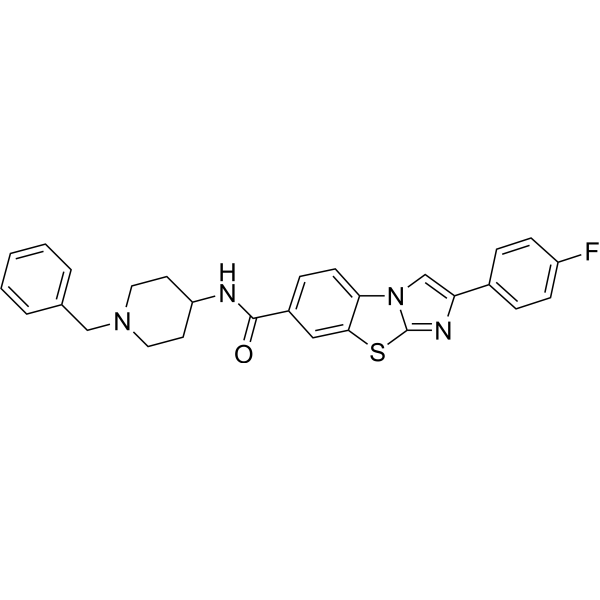
E235 is an expression regulator of activates transcription factor 4 (ATF4). E235 reduces cell viability by activating integrated stress response (ISR) and DNA damage response signals. E235 has anti-proliferative activity and can be used for tumor research .
loading...
    loading...
Cat. No.: HY-W020952
CAS No.: 14024-61-4
Synonyms: Palladium(Ⅱ) 2,4-pentanedionate; Pd(acac)2
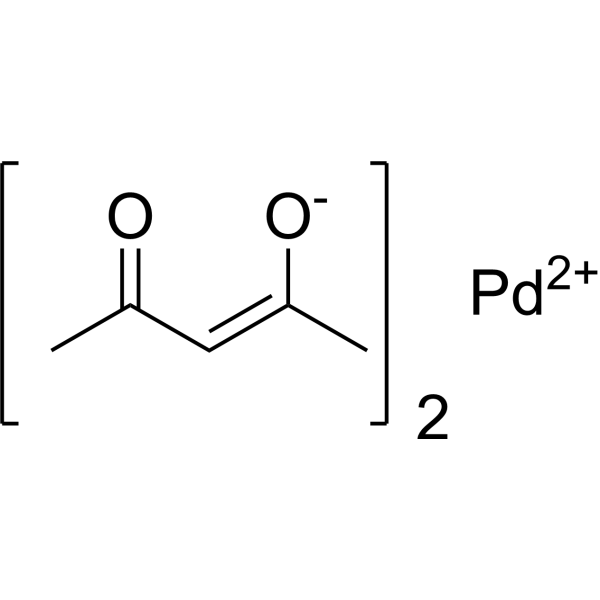
Palladium(II) acetylacetonate is a metal-organic complex. Palladium(II) acetylacetonate upregulates the expression of GRP78, ATF-4, XBP-1, CHOP, and phosphorylated c-Jun. Palladium(II) acetylacetonate induces Apoptosis. Palladium(II) acetylacetonate has anticancer effects against non-small cell lung cancer, gastric cancer, leukemia, and cervical cancer .
loading...
    loading...
Cat. No.: HY-162886
Domaines de recherche:  

Cancer

BSO-07 is a ROS/JNK activator with significant anticancer effects, having an IC50 value of 24.81 μM against human breast cancer (BC) cells. BSO-07 induces apoptosis (Apoptosis) and paraptosis by activating JNK and increasing ROS levels, including enhancing the expression of apoptosis-associated proteins such as PARP, Bax, phosphorylated p53, ATF4, and CHOP, while decreasing the levels of anti-apoptotic proteins like Bcl-2, Bcl-xL, and Survivin. BSO-07 holds promise for research in the field of breast cancer .
loading...
    loading...
Cat. No.: HY-176421
CAS No.: 3070438-85-3
Domaines de recherche:  

Cancer

PROTAC PI3K/110β degrader-1 is a VHL-recruiting PROTAC degrader targeting PI3K/110β, with DC50 values of 0.416 μM (MCF-7) and 19.66 μM (A549), respectively. PROTAC PI3K/110β degrader-1 recruits VHL to induce proteasomal degradation of PI3K/110β. It activates endoplasmic reticulum stress (ERS)-mediated mitochondrial apoptosis via the PERK/ATF4/CHOP unfolded protein response (UPR) pathway, downregulates p-AKT and Bcl-2, upregulates Bax, cleaved-caspase-9 and cleaved-caspase-3, inhibits the expression and activity of P-gp, and exerts synergistic anti-tumor effects with Doxorubicin (Adriamycin, ADM) (HY-15142A) and Cisplatin (DDP) (HY-17394). PROTAC PI3K/110β degrader-1 can be used in research related to multidrug-resistant cancers .
loading...
    loading...
Cat. No.: HY-158195
CAS No.: 1262887-77-3
Pureté:  99.55%
Target:  

Apoptosis

Domaines de recherche:  

Cancer

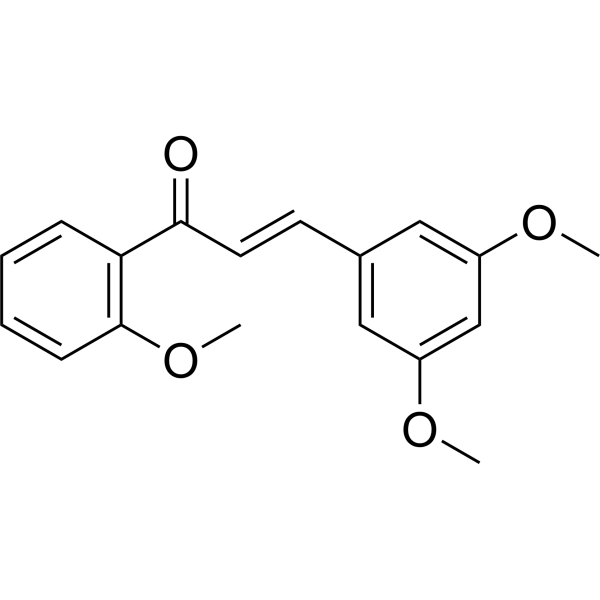
DPP23 exerts antitumor activity through ROS-mediated apoptosis in cancer cells, but does not play a role in healthy cells. DPP23 can up-regulate the expression of ATF4 .
loading...
    loading...
Cat. No.: HY-172784
Target:  

PI3K Akt Apoptosis

Domaines de recherche:  

Cancer

Anticancer agent 273 (Compound 9q) is a potent anticancer agent found in matrine. Anticancer agent 273 inhibits the proliferation of cancer cells (e.g., HeLa cells with an IC50 value of 4.48 μM). Anticancer agent 273 exerts anticancer effects by modulating the expression of PI3K/AKT and activating transcription factor 4 (ATF4), which promotes endoplasmic reticulum stress and induces apoptosis. Anticancer agent 273 is promising for research of cancers, such as cervical cancer .
loading...
    loading...
Cat. No.: HY-170849
Domaines de recherche:  

Cancer

Nur77 modulator 4 (Compound 15h) is a Nur77 inducer with a KD of 0.477 μM. Nur77 modulator 4 significantly induces Nur77 expression and apoptosis, showing excellent growth inhibition in HepG2 and MCF-7 cells, with an IC50 of less than 5 μM. Nur77 modulator 4 activates Nur77-mediated ER stress through the PERK-ATF4 and IRE1 signaling pathways, thereby inducing cell apoptosis. Nur77 modulator 4 can be used in cancer research applications .
loading...
    loading...
Cat. No.: HY-138844
CAS No.: 1184391-57-8
Domaines de recherche:  

Cancer

3-AP-Me is a dimethyl derivative of the nucleotide reductase inhibitor 3-AP (SML0568). 3-AP-Me can activate the endoplasmic reticulum (ER) stress pathway by promoting the phosphorylation of eIF2α and increasing the gene expression of transcription factors ATF4 and ATF6, leading to cell apoptosis. Additionally, 3-AP-Me can activate the stress kinases c-Jun N-terminal kinase (JNK) and p38 mitogen-activated protein kinases. 3-AP-Me also leads to the upregulation of the spliced mRNA variant XBP1, can be used in cancer research .
loading...
    loading...
Cat. No.: HY-158205
CAS No.: 1895934-61-8
Synonyms: 4-Hydroperoxy-2-decenoic acid ethyl ester
Domaines de recherche:  

Inflammation/Immunology Cancer

HPO-DAEE (4-Hydroperoxy-2-decenoic acid ethyl ester) elicits nuclear accumulation of Nrf2 and activated antioxidant response element (ARE). HPO-DAEE induces antioxidant genes upregulation (eg: HO-1) through Nrf2-ARE signaling. HPO-DAEE induces reactive oxygen species generation. HPO-DAEE also inhibits histone deacetylase and upregulate expression of extracellular superoxide dismutase via histone acetylation. HPO-DAEE protects against 6-hydroxydopamine-induced cell death via activation of Nrf2-ARE and eIF2α-ATF4 pathways .
loading...
    loading...
Cat. No.: HY-P5762A
Synonyms: PNX-14 TFA
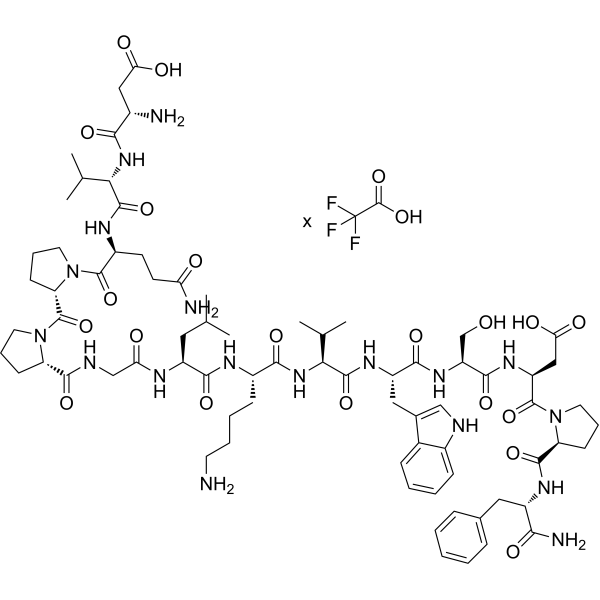
Phoenixin-14 (PNX-14) TFA is an endogenous neuropeptide with multiple biological activities, and serves as the endogenous ligand of GPR173. Phoenixin-14 TFA reduces ROS production by inhibiting the HMGB1/TLR4/MyD88/NF-κB signaling axis, thereby exerting antioxidant and mitochondrial protective effects. Phoenixin-14 TFA inhibits FOXO3 phosphorylation by upregulating SIRT3 expression, suppresses apoptosis, and improves myocardial systolic/diastolic function. Phoenixin-14 TFA resists ferroptosis by activating the ATF4/SLC7A11/GPX4 axis; it activates ERK1/2 phosphorylation via GPR173. Phoenixin-14 TFA can be used in researches on neuroprotection, diabetes, cardiomyopathy, reproductive protection and so on .
loading...
    loading...
Cat. No.: HY-183331
CAS No.: 860445-85-8
Target:  

TGF-β Receptor

Domaines de recherche:  

Infection Inflammation/Immunology

YXX0237 is an orally active anti-hypoxic agent. YXX0237 upregulates mRNA expression of FGF21 and GDF15 via activation of the ISR/ATF4 transcriptional axis. YXX0237 exhibits low cytotoxicity. YXX0237 enhances hypoxic survival in mice. YXX0237 can be used for the research of acute mountain sickness and hypoxia-related diseases .
loading...
    loading...
Cat. No.: HY-183332
Target:  

TGF-β Receptor

Domaines de recherche:  

Inflammation/Immunology

YXX0248 is an orally active anti-hypoxic agent. YXX0248 upregulates mRNA expression of FGF21 and GDF15 via activation of the ISR/ATF4 transcriptional axis. YXX0248 exhibits low cytotoxicity. YXX0248 enhances hypoxic survival in mice. YXX0248 can be used for the research of acute mountain sickness and hypoxia-related diseases .
loading...
    loading...
Cat. No.: HY-181959
CAS No.: 2752441-61-3
Domaines de recherche:  

Cancer

APL-4098 is an orally active, selective, ATP-competitive GCN2 inhibitor with a Ki of 4.39 nM and a Kd of 2.9 nM. APL-4098 reduces the phosphorylation level of eIF2α and the expression level of ATF4. APL-4098 impairs mitochondrial function and exerts cytotoxic effects on primary acute myeloid leukemia cells. APL-4098 is applicable to research related to acute myeloid leukemia .
loading...
    loading...
Cat. No.: HY-180490
Domaines de recherche:  

Cancer

eIF3e-IN-1 (Compound 209) is an elF3e inhibitor with an EC50 of 18.3 μM. eIF3e-IN-1 significantly reduces the accumulation of HIF1α protein induced by hypoxia and inhibits the acute translation hypoxia response. eIF3e-IN-1 significantly inhibits the expression of ATF4 protein. eIF3e-IN-1 can be used in cancer research, such as in breast cancer studies .
loading...
    loading...
Cat. No.: HY-182360
Cytisine-Platinum(IV) Prodrug-1 is a Pt(IV) prodrug incorporating the natural compound Cytisine (HY-N0175) with antiproliferative activity against tumor cells. Cytisine-Platinum(IV) Prodrug-1 promotes calcium transfer across the IP3R1-GRP75-VDAC1 axis to drive mitochondrial calcium overload. Cytisine-Platinum(IV) Prodrug-1 initiates unfolded protein response via PERK, eIF2α, ATF4, and CHOP to modulate Bcl-2 and Bax, triggering apoptosis. Cytisine-Platinum(IV) Prodrug-1 induces mitochondrial dysfunction, ROS production, reduced ATP synthesis, DNA damage, and S-phase cell cycle arrest. Cytisine-Platinum(IV) Prodrug-1 activates the cGAS-STING pathway, reduces PD-L1 expression, drives immunogenic cell death. Cytisine-Platinum(IV) Prodrug-1 exhibits high physiological stability, efficient cellular accumulation, and enhanced platinum-DNA binding, and inhibits tumor growth in mouse models with reduced systemic toxicity. Cytisine-Platinum(IV) Prodrug-1 can be used for the research of lung cancer .
loading...
    loading...
Cat. No.: HY-W097625R
CAS No.: 26964-24-9
6-Methoxyflavone (Standard) is the analytical standard of 6-Methoxyflavone (HY-W097625). This product is intended for research and analytical applications. 6-Methoxyflavone is an orally active methoxyflavone. 6-Methoxyflavone suppresses neuroinflammation in microglia through the inhibition of TLR4/MyD88/p38 MAPK/NF-κB dependent pathways and the activation of HO-1/NQO-1 signaling. 6-Methoxyflavone induces S-phase arrest through the CCNA2/CDK2/p21CIP1 signaling pathway and activates the PERK/EIF2a/ATF4/CHOP pathway in HeLa cells. 6-Methoxyflavone acts as a Flumazenil (HY-B0009)-insensitive positive allosteric modulator at human recombinant α1β2γ2L and α2β2γ2L GABAα receptors. 6-Methoxyflavone inhibits NFAT Translocation into the nucleus and suppresses T cell activation. 6-Methoxyflavone partially restores chronic ethanol-induced behavioral deficits in mice. 6-Methoxyflavone antagonizes chronic constriction injury and diabetes associated neuropathic nociception expression. 6-Methoxyflavone can be used for the study of cancer, inflammation and neurological diseases .
loading...
    loading...
  • 1

