
1. Search Result
Search Result
Pathways Recommended: Immunology/Inflammation
Results for "

Acute and chronic inflammation

" in MedChemExpress (MCE) Product Catalog:

22

Inhibitors & Agonists

2

Peptides

4

Inhibitory Antibodies

4

Natural
Products

2

Isotope-Labeled Compounds

Cat. No. Product Name Target Research Areas Chemical Structure
  • HY-126360

    TNF Receptor Interleukin Related Inflammation/Immunology
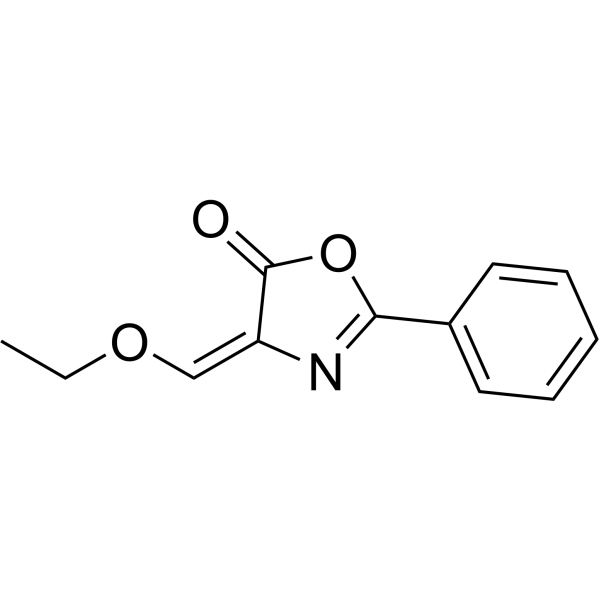
    Oxazolone is a haptenizing agent that induces acute or chronic inflammation of the large intestine and is used to construct models of colitis. Oxazolone can cause Th1/Th2-dependent colitis with weight loss and diarrhea. Oxazolone-induced inflammation can be mitigated by neutralizing anti-IL-4 or anti-TNF-α antibodies or decoy IL-13R2-α-FC proteins .
    Oxazolone
  • HY-P991049

    ATM-001

    TNF Receptor Metabolic Disease Inflammation/Immunology
    Atrosimab is an Fv-Fc1K fusion protein with an EC50 value of 0.37 nM against humans. Atrosimab inhibits TNF-induced TNFR1 activation, release of IL-6 and IL-8, and cell death, and alleviates neuroinflammation. Atrosimab is applicable to research related to inflammatory diseases, neurodegenerative diseases, acute and chronic inflammation, experimental arthritis, non-alcoholic steatohepatitis, and experimental autoimmune encephalomyelitis .
    Atrosimab
  • HY-N1990
    Gypenoside XLIX
    2 Publications Verification

    PPAR Sirtuin Keap1-Nrf2 Toll-like Receptor (TLR) NF-κB Reactive Oxygen Species (ROS) NOD-like Receptor (NLR) Apoptosis Pyroptosis Autophagy Cardiovascular Disease Neurological Disease Metabolic Disease Inflammation/Immunology
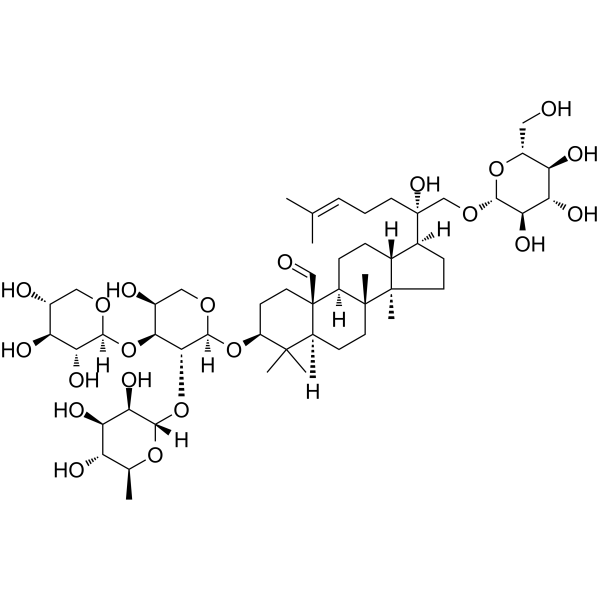
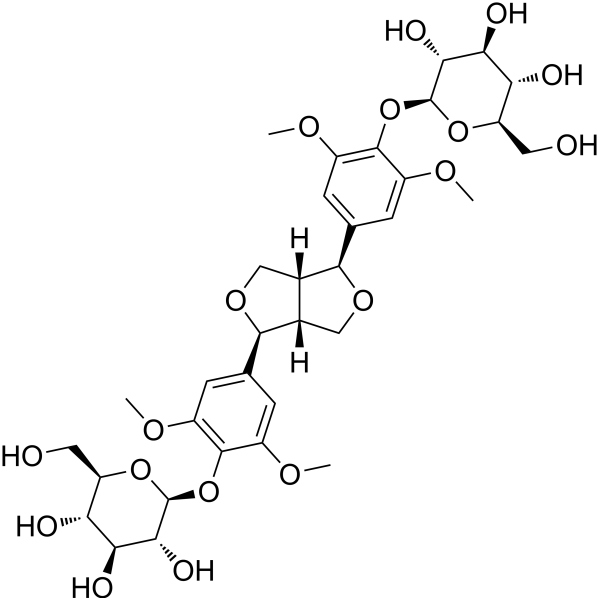
    Gypenoside XLIX is a multifunctional bioactive compound that can be isolated from Gynostemma pentaphyllum, with a Ka value of 1.58 μM for its binding to SIRT1. Gypenoside XLIX acts as a PPAR-α agonist. It inhibits the activation of TLR4-mediated NF-κB signaling pathway by activating the Sirt1/Nrf2 signaling pathway, reduces ROS accumulation, and alleviates hepatic inflammatory injury in mice with sepsis-induced liver disease. Gypenoside XLIX targets SIRT1 to block YAP-NLRP3 activation and improve sepsis-induced cardiomyopathy. Gypenoside XLIX inhibits apoptosis (Apoptosis), pyroptosis (Pyroptosis), autophagy (Autophagy), lipid peroxidation, pro-inflammatory cytokines and anti-inflammatory cytokines. Gypenoside XLIX alleviates sepsis-induced splenic injury by inhibiting inflammation and oxidative stress, and mitigates sepsis-associated encephalopathy by targeting PPAR-α. Gypenoside XLIX prevents acute kidney injury by inhibiting IGFBP7/IGF1R-mediated programmed cell death and inflammation. Gypenoside XLIX inhibits the expression and activity of vascular cell adhesion molecule-1 in cytokine-induced human endothelial cells. Gypenoside XLIX is applicable to research related to acute liver injury, lung injury, cardiomyopathy, acute splenic injury, sepsis-associated encephalopathy, acute kidney injury, atherosclerosis and chronic inflammation .
    Gypenoside XLIX
  • HY-W011641
    (±)-Naringenin
    4 Publications Verification

    Potassium Channel Toll-like Receptor (TLR) NF-κB Apoptosis Caspase Cardiovascular Disease Neurological Disease Inflammation/Immunology Cancer
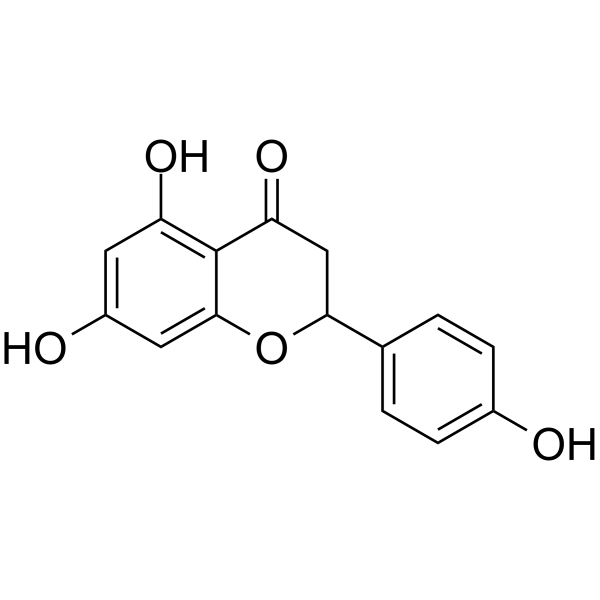
    (±)-Naringenin is an orally available anti-inflammatory agent that can regulate both acute and chronic inflammation responses, while also showing antioxidant, neuroprotective, liver-protective, and anti-cancer effects. (±)-Naringenin promotes vasodilation in endothelial cells by activating BKCa channels in muscle cells. It also exerts protective effects against experimental colitis by inhibiting Toll-like receptor 4/NF-κB signaling, making it useful in studies related to sepsis, fulminant hepatitis, fibrosis, and cancer research .
    (±)-Naringenin
  • HY-N0444

    Reactive Oxygen Species (ROS) NF-κB HBV Apoptosis Bacterial Fungal Parasite Infection Neurological Disease Metabolic Disease Inflammation/Immunology Cancer
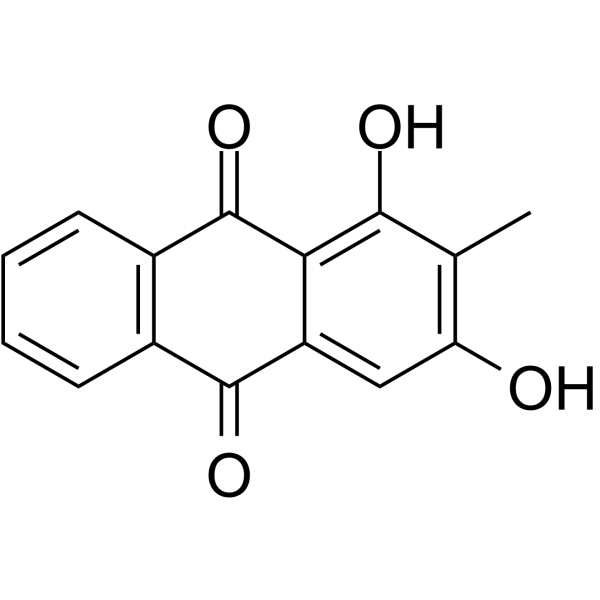
    Rubiadin is an orally active free radical scavenger that inhibits the activation of the NF-κB pathway. Rubiadin inhibits osteoclast formation, bone resorption, lipid peroxidation, HBV DNA replication and cancer cell proliferation; reduces pro-inflammatory cytokine levels; induces cancer cell apoptosis; and possesses antifungal, antimalarial, antibacterial and anticonvulsant activities. Rubiadin can be used in the research of osteoporosis, acute inflammation, chronic inflammation, carbon tetrachloride-induced liver injury, Alzheimer's disease, breast cancer, iron overload disorders, hepatitis B virus infection, colon cancer, liver cancer, T-lymphocytic leukemia, cervical cancer, diabetic nephropathy, epileptic seizures, fungal infections, malaria and bacterial infections .
    Rubiadin
  • HY-P990094

    CSL311

    c-Fms Inflammation/Immunology
    Trabikibart (CSL311) is a specific inhibitor targeting the βc receptor (CSF2RB) that inhibits signal transduction mediated by GM-CSF, IL-5, and IL-3. Trabikibart exhibits significant anti-inflammatory and anti-edema effects, reduces myeloid cell infiltration, and inhibits inflammatory cell survival. Trabikibart also possesses antiviral immune functions, which alleviate pulmonary inflammation, reverse airway dysfunction and fibrosis, and thereby restore impaired pulmonary function. Trabikibart can be used in research on related diseases such as acute respiratory distress syndrome, viral pneumonia, asthma, and chronic rhinosinusitis with nasal polyps .
    Trabikibart
  • HY-17479A
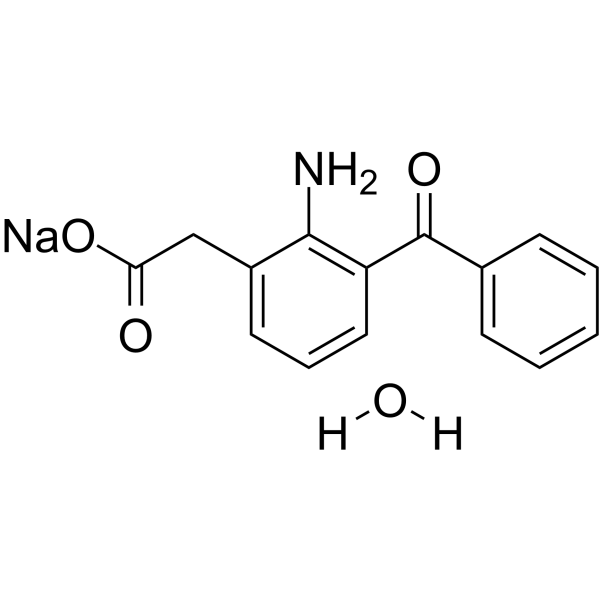
    Amfenac Sodium Hydrate
    1 Publications Verification

    COX Inflammation/Immunology
    Amfenac Sodium Hydrate is a COX-2 inhibitor.
    Amfenac Sodium Hydrate
  • HY-17479BS

    Isotope-Labeled Compounds Others
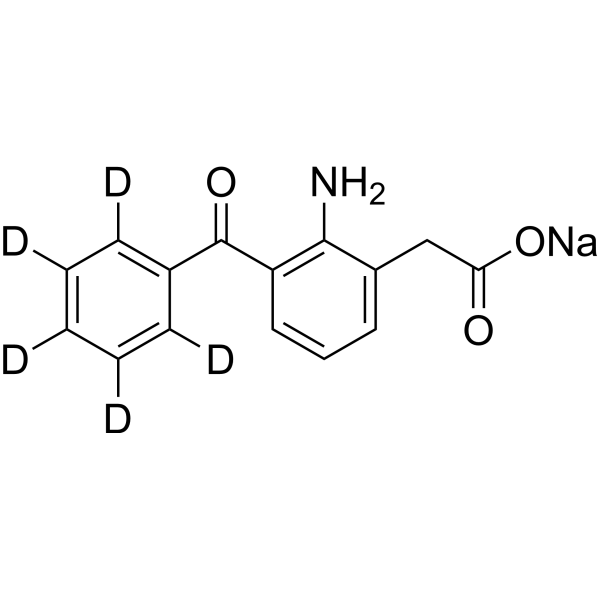
    Amfenac-d5 sodium is deuterated-labeled Amfenac sodium. Amfenac Sodium is an orally active and potent anti-inflammatory compound possessing antipyretic and analgesic properties. Amfenac Sodium can be used for the research of acute and chronic inflammation .
    Amfenac-d5 sodium
  • HY-17479S

    Isotope-Labeled Compounds Others
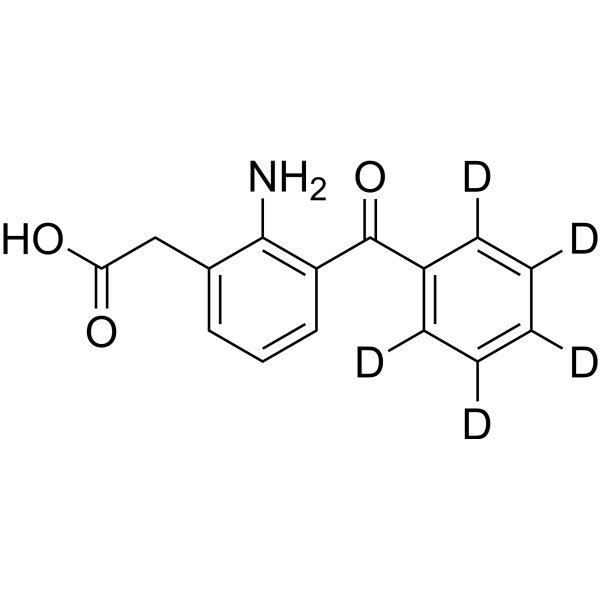
    Amfenac-d5 is the deuterium labeled Amfenac. Amfenac is an orally active and potent anti-inflammatory compound possessing antipyretic and analgesic properties. Amfenac can be used for the research of acute and chronic inflammation .
    Amfenac-d5
  • HY-P11354

    TGF-β Receptor Apoptosis Interleukin Related Integrin Cadherin Inflammation/Immunology
    THR-123 is an orally active ALK3 peptide agonist. THR-123 has a relatively weak binding to ALK2, but does not bind to ALK6. THR-123 suppresses inflammation, apoptosis and the epithelial-to-mesenchymal transition program and reverses established fibrosis in five mouse models of acute and chronic renal injury. THR-123 can be used for the study of kidney fibrosis .
    THR-123
  • HY-P990181

    Glutathione Peroxidase STING Inflammation/Immunology
    Anti-Mouse myeloperoxidase/MPO Antibody (6G4) is an anti-mouse myeloperoxidase/MPO IgG2c monoclonal antibody. Anti-Mouse myeloperoxidase/MPO Antibody (6G4) can activate the cGAS/STING pathway. Anti-Mouse myeloperoxidase/MPO Antibody (6G4) induces acute and chronic kidney injury in mice. Anti-Mouse myeloperoxidase/MPO Antibody (6G4) is often used in the construction of inflammation conditions models such as anti-neutrophil cytoplasmic antibody (ANCA)-associated vasculitides (AAV) .
    Anti-Mouse myeloperoxidase/MPO Antibody (6G4)
  • HY-107355

    Reactive Oxygen Species (ROS) Inflammation/Immunology
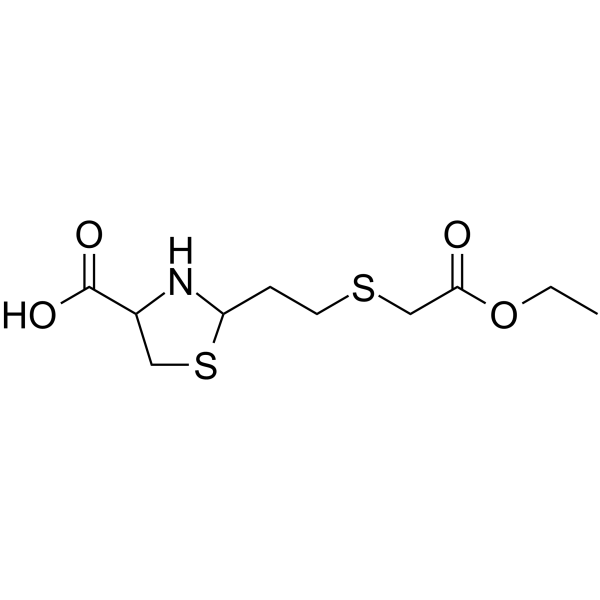
    Letosteine is an orally active, potent and safe expectorant. Letosteine has the effect of scavenging reactive oxygen species (ROS). Letosteine dissolves bronchial mucus and reduces respiratory inflammation symptoms, and restores gas exchanges and natural defense mechanisms in the lung. Letosteine can be used for acute or chronic respiratory diseases (such as bronchopneumopathies) research .
    Letosteine
  • HY-17479

    COX Inflammation/Immunology
    Amfenac (AHR 5850) is an orally active and potent anti-inflammatory compound possessing antipyretic and analgesic properties. Amfenac can be used for the research of acute and chronic inflammation .
    Amfenac
  • HY-17479B

    AHR 5850 sodium

    COX Inflammation/Immunology
    Amfenac sodium (AHR 5850 sodium) is an orally active and potent anti-inflammatory compound possessing antipyretic and analgesic properties. Amfenac sodium can be used for the research of acute and chronic inflammation .
    Amfenac sodium
  • HY-P11354A

    TGF-β Receptor Apoptosis Interleukin Related Integrin Cadherin Inflammation/Immunology
    THR-123 TFA is an orally active ALK3 peptide agonist. THR-123 TFA has a relatively weak binding to ALK2, but does not bind to ALK6. THR-123 TFA suppresses inflammation, Apoptosis and the epithelial-to-mesenchymal transition program and reverses established fibrosis in five mouse models of acute and chronic renal injury. THR-123 TFA can be used for the study of kidney fibrosis .
    THR-123 TFA
  • HY-P991591

    Integrin Inflammation/Immunology
    MOR101 is a humanized monoclonal antibody inhibitor targeting ICAM-1/CD54. MOR101 can be used to study acute and chronic inflammation, such as burns .
    MOR101
  • HY-17479AR

    COX Reference Standards Inflammation/Immunology
    Amfenac (Sodium Hydrate) (Standard) is the analytical standard of Amfenac (Sodium Hydrate). This product is intended for research and analytical applications. Amfenac Sodium Hydrate is a COX-2 inhibitor.
    Amfenac Sodium Hydrate (Standard)
  • HY-131416

    Others Inflammation/Immunology
    DD-3305 is an anti-inflammatory agent with comparable anti-inflammatory activity to the known anti-inflammatory agent indomethacin (HY-14397). In a carrageenin-induced rat inflammation model, DD-3305 was effective in inhibiting chronic and acute inflammation as well as induced allergies. .
    DD-3305
  • HY-125495

    NO Synthase Inflammation/Immunology
    Telmesteine is an amucolitic agent. Telmesteine has anti-protease activity. Telmesteine inhibits LPS-induced NO production in RAW264.7 cells. Telmesteine can be used for research of inflammation, such as acute and chronic bronchitis and obstructive airways disease .
    Telmesteine
  • HY-172135

    p38 MAPK Phosphodiesterase (PDE) Inflammation/Immunology
    PDE4-IN-26 (Compound A5) is an orally active and highly selective PDE4 inhibitor. PDE4-IN-26 has anti-inflammatory activity and can inhibit the phosphorylation of p38 MAPK. In mouse models of acute lung injury and chronic obstructive pulmonary disease, PDE4-IN-26 can improve pulmonary inflammation, injury and fibrosis, promote sputum secretion and relieve cough in mice. PDE4-IN-26 can be used for the research of lung injury-related diseases .
    PDE4-IN-26
  • HY-107355R

    Reactive Oxygen Species (ROS) Reference Standards Inflammation/Immunology
    Letosteine (Standard) is the analytical standard of Letosteine (HY-107355). This product is intended for research and analytical applications. Letosteine is an orally active, potent and safe expectorant. Letosteine has the effect of scavenging reactive oxygen species (ROS). Letosteine dissolves bronchial mucus and reduces respiratory inflammation symptoms, and restores gas exchanges and natural defense mechanisms in the lung. Letosteine can be used for acute or chronic respiratory diseases (such as bronchopneumopathies) research .
    Letosteine (Standard)
  • HY-N18124

    Others Neurological Disease
    1-O-Tigloyl-1-O-debenzoylohchinal is an orally active limonoid-type triterpenoid anti-inflammatory and peripheral analgesic agent isolated from the fruits of Melia toosendan. 1-O-Tigloyl-1-O-debenzoylohchinal significantly inhibits acetic acid (HY-Y0319)-induced increase in vascular permeability, λ-Carrageenan (HY-N9470)-induced paw edema, and acetic acid-induced writhing response in mice. 1-O-Tigloyl-1-O-debenzoylohchinal shows no significant analgesic effect in the hot-plate test, and acts mainly on the peripheral rather than the central nervous system. 1-O-Tigloyl-1-O-debenzoylohchinal can be widely used in the research of acute or chronic inflammation, stomachache and other related diseases .
    1-O-Tigloyl-1-O-debenzoylohchinal

Inquiry Online

Your information is safe with us. * Required Fields.

Salutation


Country or Region *

Applicant Name *


Organization Name *

Department *


Email Address *


Product Name *

Cat. No.


Requested quantity *

Phone Number *


Remarks

Inquiry Online

Inquiry Information

Product Name:
Cat. No.:
Quantity:
MCE Japan Authorized Agent:

