

1. Search Result
Search Result
Results for "

Alzheimer disease (AD)

" in MedChemExpress (MCE) Product Catalog:

327

Inhibitors & Agonists

6

Screening Libraries

4

Fluorescent Dyes

3

Biochemical Assay Reagents

34

Peptides

13

Inhibitory Antibodies

36

Natural
Products

17

Isotope-Labeled Compounds

7

Antibodies

2

Click Chemistry

1

GMP Molecules

Cat. No. Product Name Target Research Areas Chemical Structure
  • HY-50682
    Azeliragon
    Maximum Cited Publications
    15 Publications Verification

    TTP488; PF-04494700

    Amyloid-β Neurological Disease Cancer
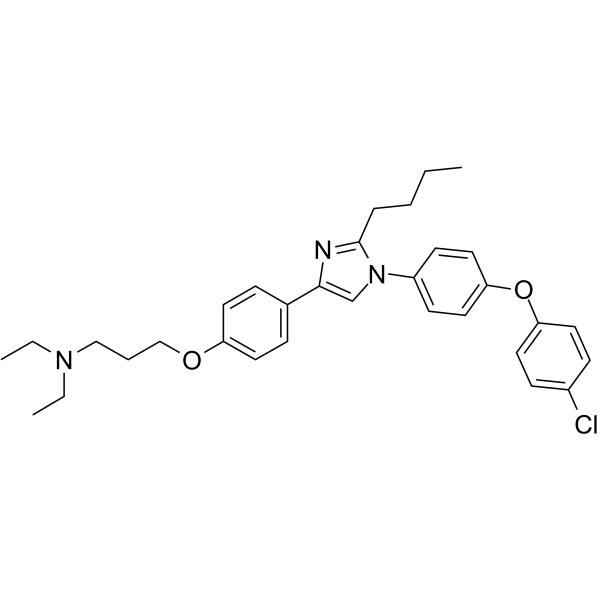
    Azeliragon (TTP488) is an orally bioavailable inhibitor of the receptor for advanced glycation end products (RAGE) in development as a potential treatment to slow disease progression with mild Alzheimer’s disease (AD) . Azeliragon also can cross the blood-brain barrier (BBB) .
    Azeliragon
  • HY-B0591
    Memantine
    5+ Cited Publications

    iGluR Neurological Disease
    Memantine is an orally active, noncompetitive N-methyl-D-aspartate receptor (NMDAR) antagonist. Memantine can be used for the research of moderate-to-severe Alzheimer's disease (AD) .
    Memantine
  • HY-132831
    Selnoflast
    1 Publications Verification

    Somalix; RO-7486967; IZD334

    NOD-like Receptor (NLR) Interleukin Related Neurological Disease Inflammation/Immunology
    Selnoflast (RO7486967), formerly somalix/RG6418/IZD334, is an orally active, potent, selective and reversible small molecule NLRP3 inflammasome inhibitor. Selnoflast is a potent inhibitor of IL-1β release stimulated by NLRP3 activation in human Alzheimer's disease (AD) monocyte-derived macrophages. Selnoflast is promising for research of AD and systemic inflammatory diseases, such as ulcerative colitis and chronic obstructive pulmonary disease .
    Selnoflast
  • HY-P0198
    Neuropeptide Y (human,rat,mouse)
    3 Publications Verification

    Neuropeptide Y (29-64), amide

    Neuropeptide Y Receptor Neurological Disease Endocrinology
    Neuropeptide Y (human,rat,mouse) is involved in Alzheimer's disease (AD) and protects rat cortical neurons against β-Amyloid toxicity.
    Neuropeptide Y (human,rat,mouse)
  • HY-P9967

    BIIB037

    Amyloid-β Neurological Disease
    Aducanumab (BIIB037) is a human monoclonal antibody that selectively targets aggregated amyloid-beta (Aβ). Aducanumab shows blood-brain-barrier penetration, and can be used for Alzheimer's disease (AD) research .
    Aducanumab
  • HY-11013

    ST-101

    Calcium Channel nAChR Neurological Disease Cancer
    ZSET1446 is a novel cognitive enhancer that significantly improves learning deficits in various types of Alzheimer disease (AD) models.
    ZSET1446
  • HY-109055
    Elenbecestat
    1 Publications Verification

    E2609

    Beta-secretase Neurological Disease
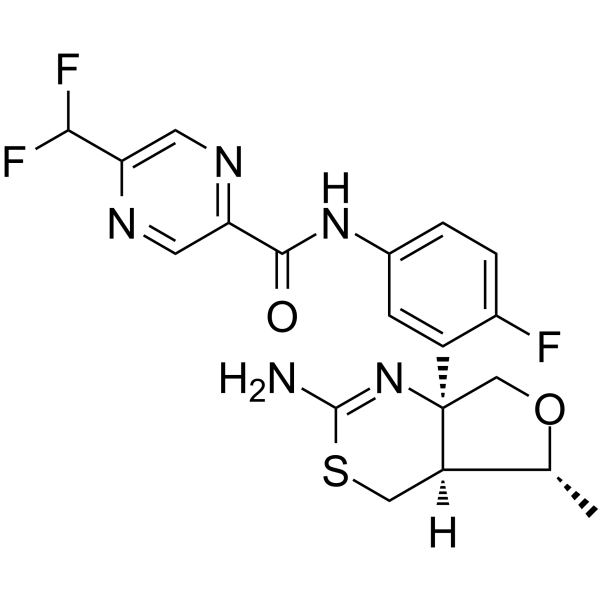
    Elenbecestat (E2609) is a potent, orally bioavailable and BBB-penetrant BACE-1 inhibitor. Elenbecestat has the potential for Alzheimer's disease (AD) research .
    Elenbecestat
  • HY-P1389

    Neuropeptide S Receptor Neurological Disease
    Neuropeptide S human, a neuropeptide, is a potent cognate neuropeptide S receptor (NPSR) agonist. Neuropeptide S human can be used for Alzheimer's disease (AD) research .
    Neuropeptide S (human)
  • HY-111263
    NIAD-4
    1 Publications Verification

    Fluorescent Dye Amyloid-β Others
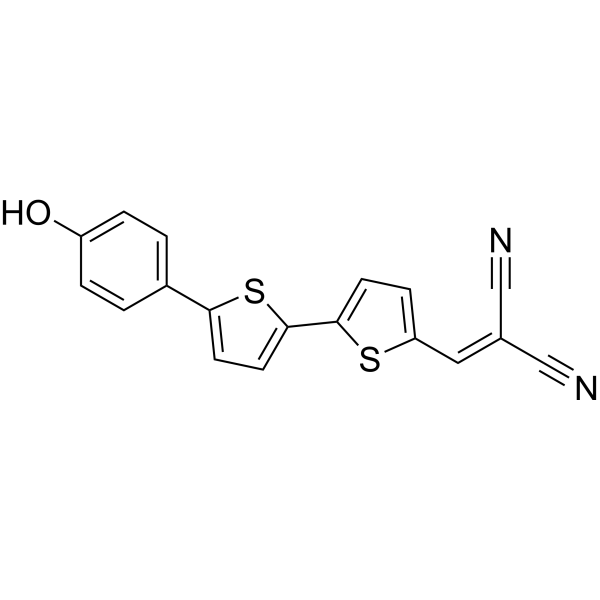
    NIAD-4 is a blood-brain barrier permeable fluorophore for optical imaging of amyloid-β () in the central nervous system (CNS) for Alzheimer’s disease (AD). NIAD-4 binds to the same Aβ site with the binding affinity (Ki) of 10 nM .
    NIAD-4
  • HY-P99185

    AAB-001

    Amyloid-β Neurological Disease
    Bapineuzumab is an anti-β-amyloid protein (APP) monoclonal antibody. Bapineuzumab is a humanized IgG1 that recognizes the N terminus of Aβ cleared plaques from the brains. Bapineuzumab can be used for the research of Alzheimer’s disease (AD) .
    Bapineuzumab
  • HY-P1466

    Amyloid β-Protein (1-16)

    Amyloid-β Neurological Disease
    β-Amyloid (1-16) is a β-Amyloid protein fragment involved in metal binding. Beta-amyloid is a peptide that forms amyloid plaques in the brains of Alzheimer's disease (AD) patients.
    β-Amyloid (1-16)
  • HY-B1804

    Trioctanoin; Glyceryl trioctanoate

    Endogenous Metabolite Neurological Disease Inflammation/Immunology
    Tricaprilin (Trioctanoin) is an orally active and well tolerated ketogenic agent that safely induces ketosis. Tricaprilin restores brain electrical activity and metabolism to help counteract neuroinflammation in migraine. Tricaprilin is promising for research of migraine prevention and Alzheimer’s disease (AD). Tricaprilin is a pure C8 medium chain triglyceride (MCT) .
    Tricaprilin
  • HY-106000

    Histamine Receptor Neurological Disease
    GSK239512 is a potent and brain penetrated H3 receptor antagonist. GSK239512 can be used for the research of mild-to-moderate Alzheimer's disease (AD) .
    GSK239512
  • HY-107481

    NS 105

    mGluR Neurological Disease
    Fasoracetam (NS 105) is the activator of metabotropic glutamate receptor (mGluR). Fasoracetam (NS 105) has the potential for the research of attention-deficit hyperactivity disorder (ADHD) and Alzheimer's disease (AD) .
    Fasoracetam
  • HY-137557

    APN1607; PM-PBB3

    Tau Protein Neurological Disease
    Florzolotau (APN1607) is a positron emission tomography (PET) ligand that can be used for the detection of Alzheimer's disease (AD) and other tau proteinopathies. Its binding sites are located in the β-sheet of paired helical filaments (PHFs) and straight filaments (SFs) of tau protein, as well as in the C-shaped cavity of SFs. In addition, APN-1607 binds to intraneuronal inclusions in Alzheimer's disease (AD), primary age-related tauopathy (PART) and posterior cortical atrophy (PCA). Florzolotau shows promise for PET imaging studies of neurological disorders, particularly tau proteinopathies .
    Florzolotau
  • HY-141660

    Tau Protein Neurological Disease
    BSc3094 is a Tau aggregation inhibitor. BSc3094 can be used for the research of Alzheimer's disease (AD) .
    BSc3094
  • HY-14679

    GSK-3 Neurological Disease
    GSK3β inhibitor II is an inhibitor of GSK3β. GSK3β inhibitor II can be used for research of Alzheimer’s disease (AD) .
    GSK3β inhibitor II
  • HY-P0198A
    Neuropeptide Y (human,rat,mouse) TFA
    3 Publications Verification

    Neuropeptide Y Receptor Neurological Disease Endocrinology
    Neuropeptide Y (human) TFA is involved in Alzheimer's disease (AD) and protects rat cortical neurons against β-Amyloid toxicity.
    Neuropeptide Y (human,rat,mouse) TFA
  • HY-P991373

    Tau Protein Neurological Disease
    APNmAb005 is a human monoclonal antibody (mAb) targeting MAPT/Tau/PHF-tau. APNmAb005 blocks tau seeding in vitro and rescues neuronal loss in rTG4510 mice. APNmAb005 can be used in Alzheimer’s disease (AD) research .
    APNmAb005
  • HY-137472

    GSK-3 Neurological Disease
    SAR502250 is a potent, selective, ATP competitive, orally active and brain-penetrant inhibitor of GSK3, with an IC50 of 12 nM for human GSK-3β. SAR502250 displays antidepressant-like activity. SAR502250 can be used for the research of Alzheimer’s disease (AD) .
    SAR502250
  • HY-13779A

    Monoamine Oxidase Dopamine Transporter Neurological Disease
    J147 is an exceptionally potent, orally active, neuroprotective agent for cognitive enhancement. J147 can pass the blood brain barrier (BBB). J147 can inhibit monoamine oxidase B (MAO B) and the dopamine transporter. J147 plays an impotant role in Alzheimer’s disease (AD) .
    J147
  • HY-159904

    Acyltransferase Neurological Disease Cancer
    ChAT IN-1 is a selective Choline Acetyltransferase (ChAT) inhibitor. It can be used to study mechanisms related to the overexpression of non-neuronal ChAT in cancers (e.g., colorectal and lung cancers) and Alzheimer’s disease (AD) .
    ChAT IN-1
  • HY-162076

    Cathepsin Neurological Disease
    AEP-IN-3 (compound 18) is an orally active, potent and brain penetrant asparagine endopeptidase (AEP) inhibitor, with an IC50 of 7.8 ± 0.9 nM. AEP-IN-3 can be used for Alzheimer’s Disease (AD) research .
    AEP-IN-3
  • HY-P1046

    Amyloid β-Protein (1-15)

    Amyloid-β Neurological Disease
    β-Amyloid (1-15) is a fragment of β-Amyloid peptide. Beta-amyloid is a peptide that forms amyloid plaques in the brains of Alzheimer's disease (AD) patients.
    β-Amyloid (1-15)
  • HY-P10557

    Biochemical Assay Reagents Neurological Disease
    DAG peptide is a cyclic peptide. DAG peptide selectively recognizes a subset of astrocytes that are activated in Alzheimer's disease (AD) starting at an early stage of the disease. DAG peptide can be used as a tool to enhance the delivery of therapeutics and imaging agents to sites of vascular changes and astrogliosis in diseases associated with neuroinflammation .
    DAG peptide
  • HY-P4704A

    α-synuclein Neurological Disease
    α-Synuclein (61-95) (human) TFA is the hydrophobic core region of α-synuclein, and induces neuronal cell death. α-Synuclein (61-95) (human) TFA can be used for research of neurodegenerative diseases, including Alzheimer’s disease (AD) and Parkinson’s disease (PD) .
    α-Synuclein (61-95) (human) TFA
  • HY-P1468

    Amyloid β-Protein (1-28)

    Amyloid-β Neurological Disease
    β-Amyloid (1-28) is a β-Amyloid protein fragment involved in metal binding. Beta-amyloid is a peptide that forms amyloid plaques in the brains of Alzheimer's disease (AD) patients.
    β-Amyloid (1-28)
  • HY-N10488

    Cholinesterase (ChE) Neurological Disease
    BChE-IN-11 (compound 10) is a potent, selective and non-competitive BChE (butyrylcholinesterase) inhibitor, with an IC50 of 2.1 μM. BChE-IN-11 can be used for Alzheimer's disease (AD) research .
    BChE-IN-11
  • HY-178323

    5-HT Receptor Arrestin Neurological Disease
    MW073 is a highly selective and orally active 5-HT2BR antagonist (IC50 =70 nM). MW073 exerts its effects by concentration-dependently inhibiting receptor activity and β-arrestin-1 recruitment. MW073 ameliorates synaptic plasticity and behavioral deficits, including aggression, in Alzheimer’s disease (AD) mouse models. MW073 can be used for Alzheimer’s disease (AD) research [1][2].
    MW073
  • HY-176852

    OGA Neurological Disease
    O-GlcNAcase-IN-3 (Compound I) is an OGA inhibitor. O-GlcNAcase-IN-3 can be used for Alzheimer's Disease (AD) research .
    O-GlcNAcase-IN-3
  • HY-117710B

    Cholinesterase (ChE) Amyloid-β ERK TNF Receptor Interleukin Related Neurological Disease
    AD-35 is an orally active anti-Alzheimer's disease (AD) agent with moderate AChE inhibitory activity and metal ion chelating ability. AD-35 exhibits IC50 values for AChE and BuChE of 793 nM and 31428 nM, respectively. AD-35 can form chelates with Cu²⁺ and Fe³⁺, but its chelating ability for Zn²⁺ is relatively weak. AD-35 can inhibit aggregation and disassemble the formed Aβ aggregates, and inhibit Aβ-induced ERK phosphorylation. AD-35 inhibits neuroinflammation in AD rat models and demonstrates a strong effect in improving cognitive function .
    AD-35
  • HY-N11641

    Cholinesterase (ChE) Neurological Disease
    Methyl ganoderate A acetonide, a lanostane triterpene, is a natural product that could be isolated from the fruiting bodies of Ganoderma lucidum. Methyl ganoderate A acetonide is a potent AChE inhibitor with an IC50 value of 18.35 μM. Methyl ganoderate A acetonide can be used in research of Alzheimer’s disease (AD) .
    Methyl ganoderate A acetonide
  • HY-178454

    Monoamine Oxidase Amyloid-β Mitochondrial Metabolism Apoptosis Reactive Oxygen Species (ROS) COX NF-κB Neurological Disease
    Multitarget AD-IN-3 is a brain-penetrant neuroprotective agent. Multitarget AD-IN-3 can selectively inhibit MAO-B with an IC50 of 4.42 μM and a SI of 18.12. Multitarget AD-IN-3 can eliminate ROS. Multitarget AD-IN-3 Multitarget AD-IN-3 can inhibit 1-42 self-aggregation and can reverse Aβ1-42-induced mitochondrial membrane depolarization and inhibit apoptosis. Multitarget AD-IN-3 can be used for the research of neurological disease, such as Alzheimer’s disease .
    Multitarget AD-IN-3
  • HY-146068

    Cathepsin Neurological Disease
    AEP-IN-1 (Compound 13e) is a CNS agent-like non-covalent inhibitor of asparagine endopeptidase (AEP), with the IC50 of 89 nM. AEP-IN-1 can be used for the research of numerous neurological diseases such as Alzheimer’s disease (AD) .
    AEP-IN-1
  • HY-W841438

    Amyloid-β Tau Protein Neurological Disease
    Lithium orotate is an orally active lithium supplement with reduced binding that can bypass amyloid sequestration in AD mice models. Lithium orotate can prevent Aβ plaque deposition and phospho-tau accumulation and reverse AD pathology, neuroinflammatory changes and memory loss in AD mice models and ageing wild-type mice. Lithium orotate can be used for the research of alcoholism and Alzheimer’s disease .
    Lithium orotate
  • HY-144446

    Cholinesterase (ChE) Neurological Disease
    BuChE-IN-1 (Compound 23) is a potent inhibitor of butyrylcholinesterase (BuChE). Butyrylcholinesterase (BuChE) is recently regarded as a biomarker in progressed Alzheimer’s disease (AD). BuChE-IN-1 shows low cytotoxicity and high blood brain barrier (BBB) permeability. BuChE-IN-1 is a promising BuChE inhibitor for the research of AD .
    BuChE-IN-1
  • HY-178750

    Cholinesterase (ChE) Neurological Disease
    AChE-IN-96 (Compound 8a) is an AChE inhibitor, with an IC50 of 0.697 μM. AChE-IN-96 can be used for the study of neurodegenerative diseases such as Alzheimer's disease (AD) .
    AChE-IN-96
  • HY-P4704

    α-synuclein Neurological Disease
    α-Synuclein (61-95) (human) is the hydrophobic core region of α-synuclein, and induces neuronal cell death. α-Synuclein (61-95) (human) can be used for research of neurodegenerative diseases, including Alzheimer’s disease (AD) and Parkinson’s disease (PD) .
    α-Synuclein (61-95) (human)
  • HY-153189

    Trk Receptor Neurological Disease
    TrkB-IN-1 is a potent and orally active TrkB agonist and has favorable PK properties. TrkB-IN-1 reverses the cognitive defects in an AD mouse model and can be used for alzheimer’s disease research .
    TrkB-IN-1
  • HY-P99527

    ACC-001; PF 05236806

    Amyloid-β Neurological Disease
    Vanutide cridificar (ACC-001) is an aminoterminal Aβ1-7 peptide conjugate. Vanutide cridificar can be used for Alzheimer's disease (AD) research .
    Vanutide cridificar
  • HY-N12581

    Cholinesterase (ChE) Neurological Disease
    Kuwanon U is a potent cholinesterase inhibitor with IC50s of 19.69, 10.11 µM and Kis of 6.48, 9.59 µM for acetylcholinesterase (AChE) and butyrylcholinesterase (BChE), respectively. Kuwanon U has the potential for the research of Alzheimer’s disease (AD) .
    Kuwanon U
  • HY-112636

    Amyloid-β Others
    Astrophloxine is a fluorescent imaging probe capable of targeting antiparallel dimers. Astrophloxine can be used to detect aggregated Aβ in brain tissue and cerebrospinal fluid samples of Alzheimer's disease (AD) mice .
    Astrophloxine
  • HY-178171

    AMPK CDK Neurological Disease
    ARUK2010489 (Compound 23) is a potent, selective and brain-penetrant NUAK1 inhibitor with a pIC50 of 8.7. ARUK2010489 also inhibits CDK2, CDK4 and CDK6 activity, with inhibitory rate of 7%, 39% and 26% at 1 μM. ARUK2010489 can be used for the research of neurological disease, such as Alzheimer’s disease (AD) .
    ARUK2010489
  • HY-173615

    DYRK Neurological Disease Metabolic Disease
    KTD-092 is a hit for DYRK1A inhibition, with an IC50 of 22 nM for human DYRK1A. KTD-092 can be used in the research for Down syndrome (DS), Alzheimer's disease (AD), autism spectrum disorder (ASD), diabetes and other neurodegenerative diseases .
    KTD-092
  • HY-132831B

    Somalix potassium; RO-7486967 potassium; IZD334 potassium

    NOD-like Receptor (NLR) Interleukin Related Neurological Disease Inflammation/Immunology
    Selnoflast potassium (RO7486967 potassium), formerly somalix/RG6418/IZD334, is an orally active, potent, selective and reversible small molecule NLRP3 inflammasome inhibitor. Selnoflast potassium is a potent inhibitor of IL-1β release stimulated by NLRP3 activation in human Alzheimer's disease (AD) monocyte-derived macrophages. Selnoflast potassium is promising for research of AD and systemic inflammatory diseases, such as ulcerative colitis and chronic obstructive pulmonary disease .
    Selnoflast potassium
  • HY-170811

    Cholinesterase (ChE) Neurological Disease
    DCDQ is a potent acetylcholinesterase (AChE) inhibitor. DCDQ shows a strong binding affinity with the 4EY7 protein (binding energy: −8.2 kcal/mol). DCDQ is promising for research of Alzheimer's disease (AD) .
    DCDQ
  • HY-105321A

    PBT 2 hydrochloride

    Bacterial Neurological Disease
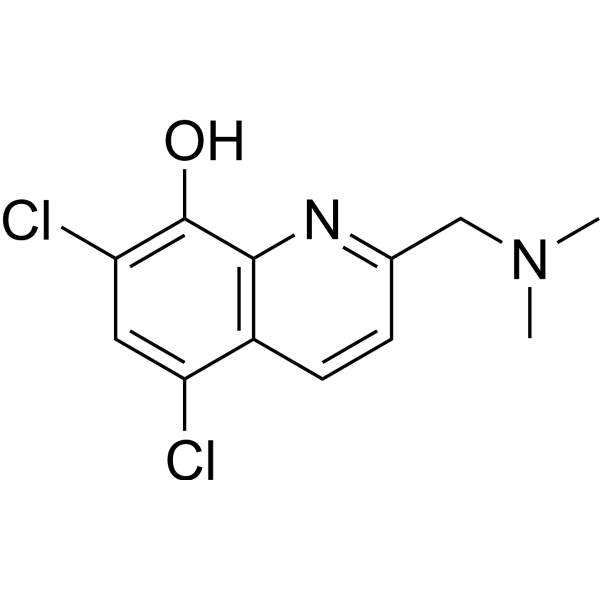
    PBT 1033 hydrochloride is an orally active copper/zinc ionophore. PBT 1033 hydrochloride restores cognition in mouse models of Alzheimer's disease (AD). PB 1033 also has antibacterial activity against Gram-positive bacteria .
    PBT 1033 hydrochloride
  • HY-149087

    Cholinesterase (ChE) NF-κB Interleukin Related TNF Receptor CCR NOD-like Receptor (NLR) JNK NO Synthase Neurological Disease Inflammation/Immunology
    MR2938 is a potent AChE inhibitor, with an IC50 of 5.04 μM. MR2938 also suppresses NO production obviously (IC50 = 3.29 μM). MR2938 suppresses the neuroinflammation through blocking MAPK/JNK and NF-κB signaling pathways. MR2938 can be used for Alzheimer’s disease (AD) research .
    MR2938
  • HY-179337

    Phosphodiesterase (PDE) PKA Neurological Disease
    PDE2-IN-1 is a potent and orally active PDE2 inhibitor with an IC50 of 0.6 μM, demonstrating neuroprotective effects. PDE2-IN-1 modulates the PKA/CREB/BDNF signaling pathway by inhibiting PDE2. PDE2-IN-1 improves memory deficits and cognitive impairment in an okadai acid (OKA)-induced Alzheimer’s disease (AD) mouse model. PDE2-IN-1 can be used for the research of AD .
    PDE2-IN-1
  • HY-P11319

    CCR Neurological Disease
    RAP-103 is an orally active CCR antagonist that provides potent synaptic protection by inhibiting and reversing cytoskeletal changes induced by PrPC/NOX signaling. RAP-103 is potentially useful in Alzheimer's disease (AD) research .
    RAP-103

Inquiry Online

Your information is safe with us. * Required Fields.

Salutation


Country or Region *

Applicant Name *


Organization Name *

Department *


Email Address *


Product Name *

Cat. No.


Requested quantity *

Phone Number *


Remarks

Inquiry Online

Inquiry Information

Product Name:
Cat. No.:
Quantity:
MCE Japan Authorized Agent:

