
16 Results for "

Angiogenin

" in MedChemExpress (MCE) Product Catalog:
Products (16)

16 Results for "Angiogenin" in MCE Product Catalog:

76
76 Publications Verification
Cat. No.: HY-B0470
CAS No.: 1405-10-3
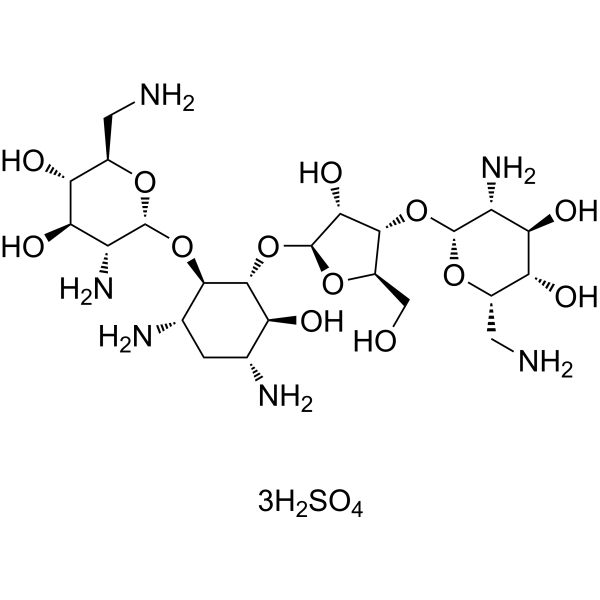
Neomycin sulfate, an aminoglycoside antibiotic, exerts antibacterial activity through irreversible binding of the nuclear 30S ribosomal subunit, thereby blocking bacterial protein synthesis. Neomycin sulfate is a known phospholipase C (PLC) inhibitor. Neomycin sulfate potently inhibits both the nuclear translocation of angiogenin and angiogenin-induced cell proliferation and angiogenesis. Neomycin sulfate inhibits IP3-mediated Ca 2+ release, MgATP-dependent Ca 2+ uptake, and electrical excitation-evoked skeletal muscle Ca 2+ transients. Neomycin sulfate depletes gut microbiota in specific mouse models, causes hearing impairment, and kidney damage with prolonged exposure. Neomycin sulfate can be used for the research of cancer .
loading...
    loading...
5
5 Cited Publications
Cat. No.: HY-P7503
Purity:  ≥ 95%, as determined by reducing SDS-PAGE.
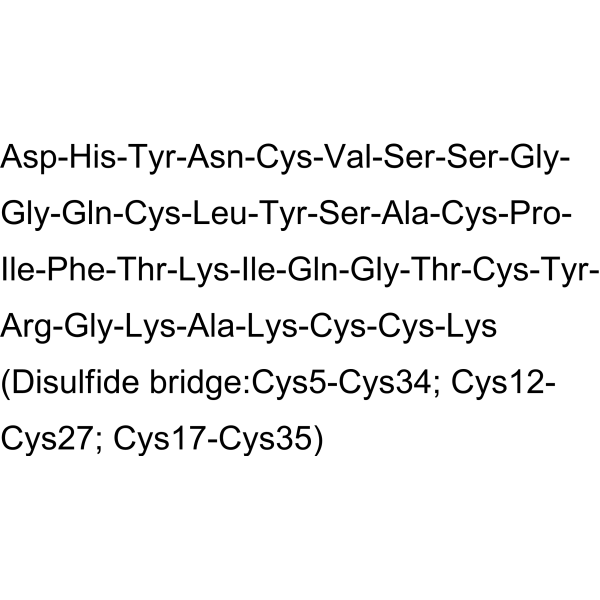
Synonyms: rHuAngiogenin; ANG; RNASE5; Angiogenin
Species:  
Source:  
loading...
    loading...
1
1 Cited Publications
Cat. No.: HY-15943
CAS No.: 91809-67-5
Synonyms: 6-Carboxytetramethylrhodamine
6-TAMRA (6-Carboxytetramethylrhodamine) is a fluorescent dye. 6-TAMRA is often used in combination with 6-FAM (HY-66021) as an acceptor or fluorescence quencher for fluorescence resonance energy transfer (FRET) in biochemical studies such as potassium ion detection and ribonuclease activity assays .
loading...
    loading...
Cat. No.: HY-N7449
CAS No.: 3947-65-7
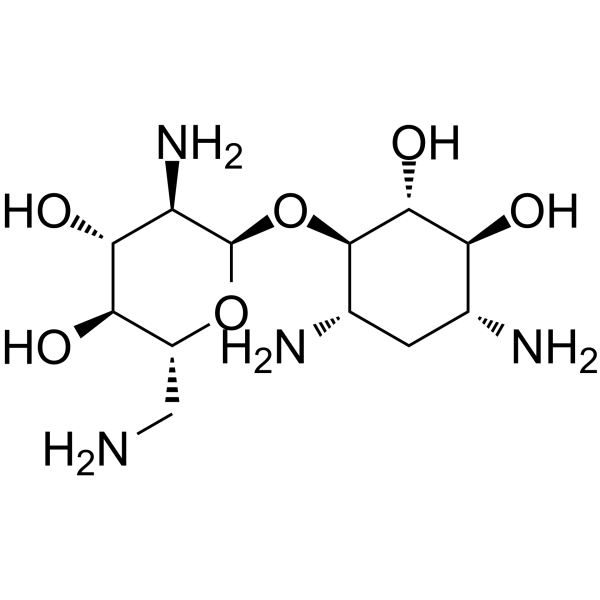
Neamine, a degradation product of Neomycin, is a broad-spectrum aminoglycoside antibiotic. Neamine is an anti-angiogenesis agent targeting angiogenin. Neamine has potent antibacterial, antitumor and neuroprotective activities .
loading...
    loading...
Cat. No.: HY-150520
CAS No.: 1404-04-2
연구분야:  

Infection Cancer

Neomycin, an aminoglycoside antibiotic, exerts antibacterial activity through irreversible binding of the nuclear 30S ribosomal subunit, thereby blocking bacterial protein synthesis. Neomycin is a known phospholipase C (PLC) inhibitor. Neomycin potently inhibits both the nuclear translocation of angiogenin and angiogenin-induced cell proliferation and angiogenesis. Neomycin inhibits IP3-mediated Ca 2+ release, MgATP-dependent Ca 2+ uptake, and electrical excitation-evoked skeletal muscle Ca 2+ transients. Neomycin depletes gut microbiota in specific mouse models, causes hearing impairment, and kidney damage with prolonged exposure. Neomycin can be used for the research of cancer .
loading...
    loading...
Cat. No.: HY-115349
CAS No.: 15446-43-2
Purity:  99.92%
Target:  

Antibiotic Bacterial

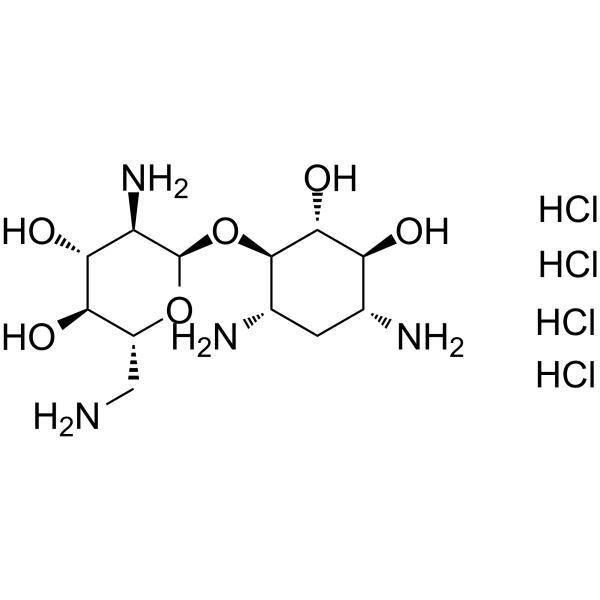
Neamine tetrahydrochloride, a degradation product of Neomycin, is a broad-spectrum aminoglycoside antibiotic. Neamine tetrahydrochloride is an anti-angiogenesis agent targeting angiogenin. Neamine tetrahydrochloride has potent antibacterial, antitumor and neuroprotective activities .
loading...
    loading...
Cat. No.: HY-P1516A
Target:  

Peptides

연구분야:  

Cardiovascular Disease Cancer

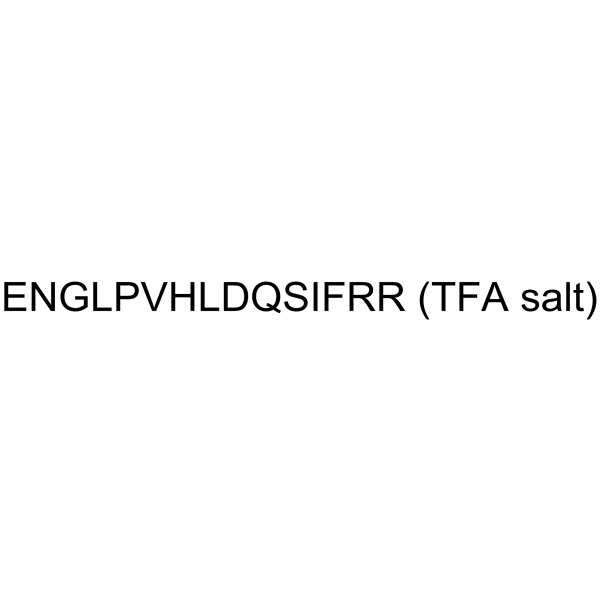
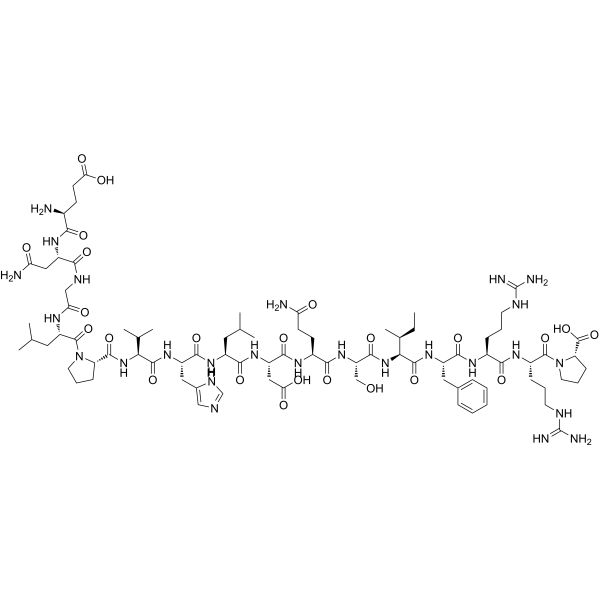
Angiogenin (108-122) TFA is an angiogenin peptide.
loading...
    loading...
Cat. No.: HY-B0470R
CAS No.: 1405-10-3
Neomycin (sulfate) (Standard) is the analytical standard of Neomycin (sulfate). This product is intended for research and analytical applications. Neomycin sulfate, an aminoglycoside antibiotic, exerts antibacterial activity through irreversible binding of the nuclear 30S ribosomal subunit, thereby blocking bacterial protein synthesis. Neomycin sulfate is a known phospholipase C (PLC) inhibitor. Neomycin sulfate potently inhibits both nuclear translocation of angiogenin and angiogenin-induced cell proliferation and angiogenesis .
loading...
    loading...
Cat. No.: HY-W140249
CAS No.: 112173-48-5
Target:  

Peptides

연구분야:  

Cardiovascular Disease

Angiogenin Fragment (108-123) is a C-terminal segment 108-123 of Angiogenin that inhibits the enzymatic and biological activities of Angiogenin .
loading...
    loading...
Cat. No.: HY-P1516
CAS No.: 112173-49-6
Target:  

Angiotensin Receptor

연구분야:  

Cardiovascular Disease Cancer

Angiogenin (108-122) is an angiogenin peptide.
loading...
    loading...
Cat. No.: HY-N7449R
CAS No.: 3947-65-7
Neamine, a degradation product of Neomycin, is a broad-spectrum aminoglycoside antibiotic. Neamine is an anti-angiogenesis agent targeting angiogenin. Neamine has potent antibacterial, antitumor and neuroprotective activities .
loading...
    loading...
Cat. No.: HY-131688R
CAS No.: 19117-92-1
Neomycin (sulfate) (Standard) is the analytical standard of Neomycin (sulfate). This product is intended for research and analytical applications. Neomycin sulfate, an aminoglycoside antibiotic, exerts antibacterial activity through irreversible binding of the nuclear 30S ribosomal subunit, thereby blocking bacterial protein synthesis. Neomycin sulfate is a known phospholipase C (PLC) inhibitor. Neomycin sulfate potently inhibits both nuclear translocation of angiogenin and angiogenin-induced cell proliferation and angiogenesis .
loading...
    loading...
Cat. No.: HY-P700644
Purity:  ≥ 90%, as determined by reducing SDS-PAGE.
Synonyms: rHuAngiogenin; ANG; RNASE5; Angiogenin
Species:  
Source:  
loading...
    loading...
Cat. No.: HY-P71826
Purity:  ≥ 90%, as determined by reducing SDS-PAGE.
Synonyms: Ang4Angiogenin-4; EC 3.1.27.-
Species:  
Source:  
loading...
    loading...
Cat. No.: HY-P811036
Synonyms: RNASE5, ANG, Angiogenin, Ribonuclease 5, RNase 5

Host:  

Rabbit

Application:  

WB, IHC-P, ICC/IF

Reactivity:  

Human, Mouse

loading...
    loading...
Cat. No.: HY-L088
3,577 compounds

Angiogenesis is the physiological process through which new blood vessels are formed from pre-existing vessels. It occurs in various physiological processes e.g. embryonic development, menstrual cycle, exercise and wound healing etc. Angiogenesis is regulated by both endogenous activators and inhibitors. Some key activators of angiogenesis include vascular endothelial growth factor (VEGF), basic fibroblast growth factor (bFGF), angiogenin, TGF-β, etc. whereas angiogenesis inhibitors are angiostatin, endostatin, interferon, platelet factor 4, etc. The loss of balance between these opposing signals leads to life threatening diseases like cancer, cardiovascular and ischemic diseases etc. which are thus controlled by exogenous angiogenesis activators (for cardiovascular/ischemic disorders) and inhibitors (for cancer).

MCE offers a unique collection of 3,577 compounds with validated angiogenesis targets modulating properties. MCE angiogenesis-related compound library is an effective tool for angiogenesis research and discovery of angiogenesis-related drugs.

  • 1

