1. Search Result
Search Result
Results for "

CDK9 Inhibitor

" in MedChemExpress (MCE) Product Catalog:

194

Inhibitors & Agonists

4

Natural
Products

2

Isotope-Labeled Compounds

Targets Recommended:
Cat. No. Product Name Target Research Areas Chemical Structure
  • HY-10492
    Dinaciclib
    Maximum Cited Publications
    54 Publications Verification

    SCH 727965

    CDK Apoptosis Cancer
    Dinaciclib (SCH 727965) is a potent inhibitor of CDK, with IC50s of 1 nM, 1 nM, 3 nM, and 4 nM for CDK2, CDK5, CDK1, and CDK9, respectively .
    Dinaciclib
  • HY-112088
    AZD4573
    10+ Cited Publications

    CDK Cancer
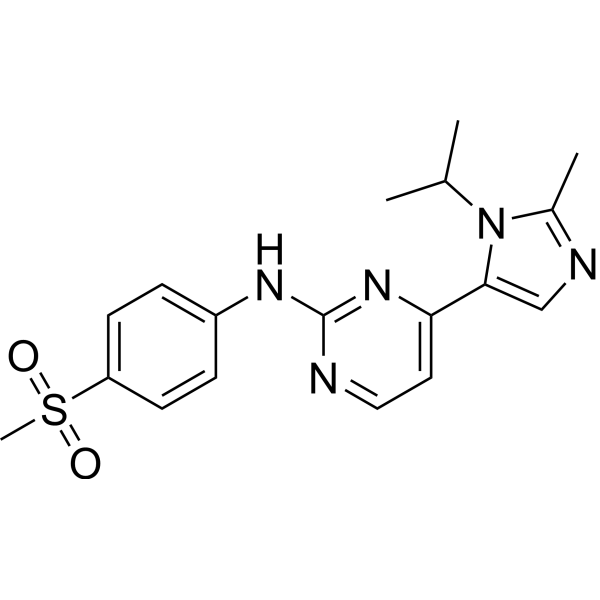
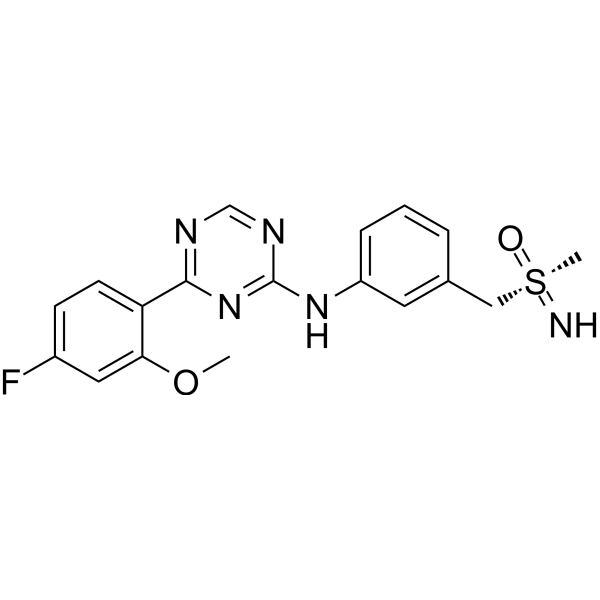
    AZD4573 is a potent and highly selective CDK9 inhibitor (IC50 of <4 nM) that enables transient target engagement for the treatment of hematologic malignancies .
    AZD4573
  • HY-10008
    SNS-032
    10+ Cited Publications

    BMS-387032

    CDK Apoptosis Cancer
    SNS-032 (BMS-387032) is a potent and selective inhibitor of CDK2, CDK7, and CDK9 with IC50s of 38 nM, 62 nM and 4 nM, respectively. SNS-032 has antitumor effect .
    SNS-032
  • HY-101212
    Fadraciclib
    5+ Cited Publications

    CYC065

    CDK Cancer
    Fadraciclib (CYC065) is a second-generation, orally available ATP-competitive inhibitor of CDK2/CDK9 kinases with IC50s of 5 and 26 nM, respectively .
    Fadraciclib
  • HY-103248
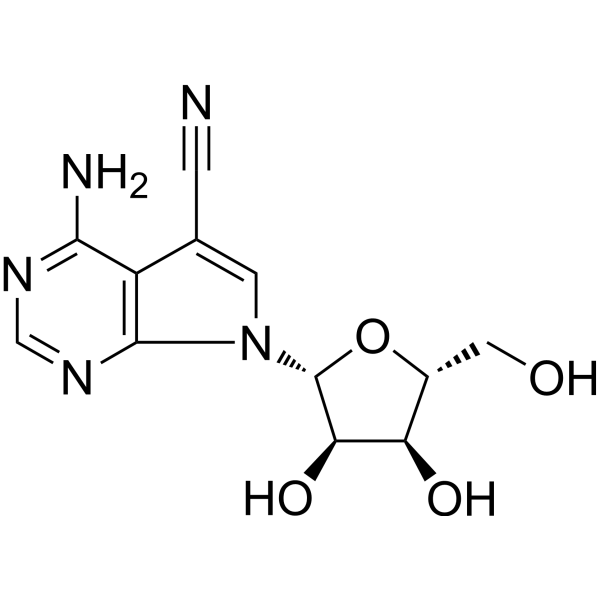
    Toyocamycin
    5+ Cited Publications

    Vengicide

    IRE1 Fungal Antibiotic Apoptosis CDK Infection Cancer
    Toyocamycin (Vengicide) is an adenosine analog produced by Streptomyces diastatochromogenes, acts as an XBP1 inhibitor. Toyocamycin blocks RNA synthesis and ribosome function, and induces apoptosis. Toyocamycin affects IRE1α-XBP1 pathway, and inhibits XBP1 mRNA cleavage with an IC50 value of 80 nM with affecting IRE1α auto-phosphorylation. Toyocamycin specifically inhibits CDK9 with an IC50 value of 79 nM .
    Toyocamycin
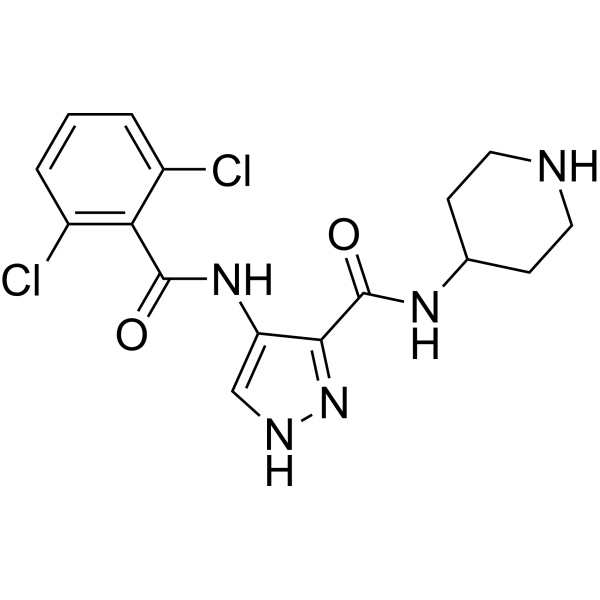
  • HY-13461
    PHA-767491
    4 Publications Verification

    CAY10572

    CDK Cancer
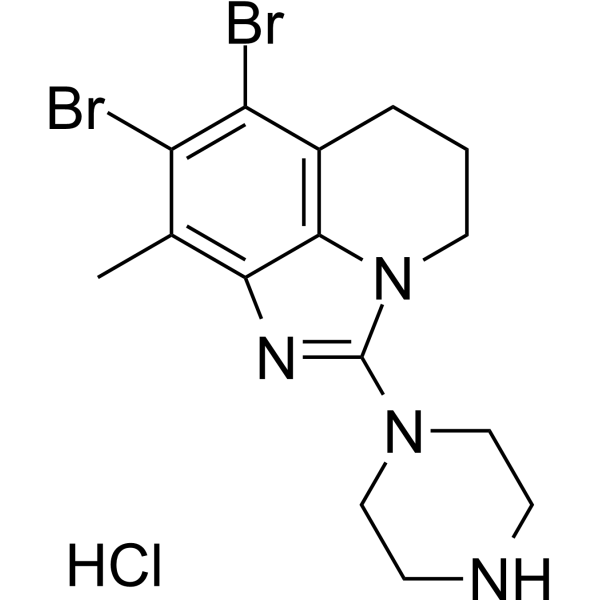
    PHA-767491 is a dual Cdc7/Cdk9 inhibitor, with IC50s of 10 nM and 34 nM, respectively.
    PHA-767491
  • HY-12214A
    NVP-2
    40+ Cited Publications

    CDK Apoptosis Cancer
    NVP-2 is a potent and selective ATP-competitive cyclin dependent kinase 9 (CDK9) probe, inhibits CDK9/CycT activity with an IC50 of 0.514 nM. NVP-2 displays inhibitory effcts on CDK1/CycB, CDK2/CycA and CDK16/CycY kinases with IC50 values of 0.584 μM, 0.706 μM, and 0.605 μM, respectively. NVP-2 induces cell apoptosis.
    NVP-2
  • HY-13914
    Roniciclib
    2 Publications Verification

    BAY 1000394

    CDK Cancer
    Roniciclib is an orally bioavailable pan-cyclin dependent kinase (CDK) inhibitor, with IC50s of 5-25 nM for CDK1, CDK2, CDK3, CDK4, CDK7 and CDK9.
    Roniciclib
  • HY-50940
    AT7519
    10+ Cited Publications

    AT7519M

    CDK Apoptosis Cancer
    AT7519 (AT7519M) as a potent inhibitor of CDKs, with IC50s of 210, 47, 100, 13, 170, and <10 nM for CDK1, CDK2, CDK4 to CDK6, and CDK9, respectively.
    AT7519
  • HY-12445
    Asnuciclib
    2 Publications Verification

    CDKI-73; LS-007

    CDK Apoptosis Inflammation/Immunology Cancer
    Asnuciclib (CDKI-73; LS-007) is an orally active and highly efficacious CDK9 inhibitor, with Ki values of 4 nM, 4 nM and 3 nM for CDK9, CDK1 and CDK2, respectively. Asnuciclib down-regulates the RNAPII phosphorylation. Asnuciclib is also a novel pharmacological inhibitor of Rab11 cargo delivery and innate immune secretion .
    Asnuciclib
  • HY-137478
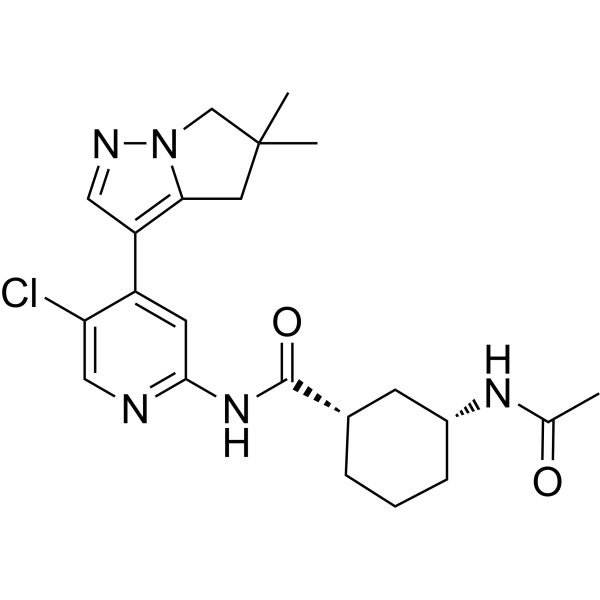
    KB-0742
    3 Publications Verification

    CDK Cancer
    KB-0742 is a potent, selective and orally active CDK9 inhibitor with an IC50 of 6 nM for CDK9/cyclin T1. KB-0742 is selective for CDK9/cyclin T1 with >50-fold selectivity over other CDK kinases. KB-0742 has potent anti-tumor activity .
    KB-0742
  • HY-15878
    LDC000067
    10+ Cited Publications

    LDC067

    CDK Apoptosis Cancer
    LDC000067 is a highly specific CDK9 inhibitor with an IC50 value of 44±10 nM in vitro.
    LDC000067
  • HY-173523

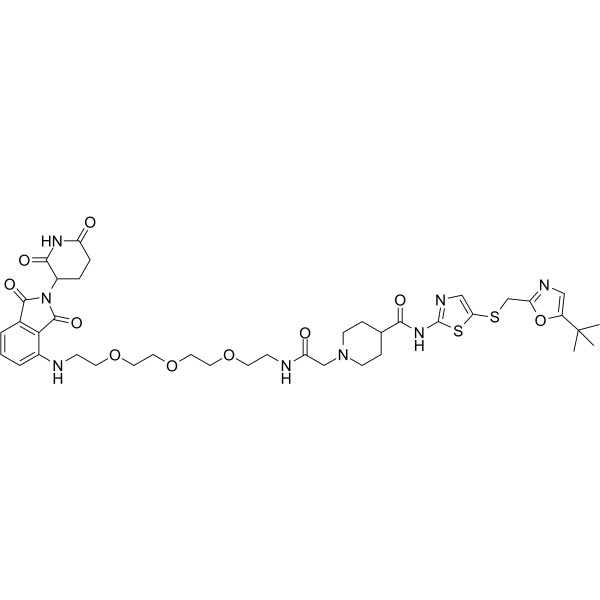
    PROTACs CDK c-Myc Cancer
    KI-CDK9d-32 is a highly selective and potent CDK9 PROTAC degrader (DC50: 0.89 nM). KI-CDK9d-32 promotes the ubiquitination and degradation of CDK9. KI-CDK9d-32 inhibits the MYC pathway and disrupts nucleolar homeostasis. KI-CDK9d-32 exhibits anticancer activity against acute lymphoblastic leukemia and pancreatic cancer. (Pink: CDK9 ligand (HY-153718); Blue: E3 ligase CRBN ligand (HY-163233); Black: Linker (HY-W011657); E3 ligase CRBN ligand-linker conjugate (HY-173525)) .
    KI-CDK9d-32
  • HY-103019A

    (±)-BAY-1251152; (±)-VIP152

    CDK Apoptosis DNA/RNA Synthesis Cancer
    (±)-Enitociclib ((±)-BAY-1251152) is the racemic mixture of Enitociclib (HY-103019E). Enitociclib is a selective CDK9 inhibitor and apoptosis inducer. Enitociclib inhibits CDK9 activity and reduces the phosphorylation of Ser2 in the carboxyl-terminal domain (CTD) of RNA polymerase Pol II, thereby downregulating the transcription of key oncogenes such as MYC and MCL1. Enitociclib has anti-proliferative activity targeting MYC + lymphoma and multiple myeloma (MM) cells, and has synergistic effects with Bortezomib (HY-10227) and Lenalidomide (HY-A0003), and can be used in the research of hematological malignancies .
    (±)-Enitociclib
  • HY-124639

    CDK Cancer
    CDK9 inhibitor HH1 is a potent and selectively CDK9 inhibitor. CDK9 inhibitor HH1 inhibits the transcription of CDK. CDK9 inhibitor HH1 can be used in research of cancer .
    CDK9 inhibitor HH1
  • HY-12871B
    Atuveciclib
    5+ Cited Publications

    BAY-1143572

    CDK Cancer
    Atuveciclib (BAY-1143572) is a potent and highly selective, oral PTEFb/CDK9 inhibitor. Atuveciclib (BAY-1143572) inhibits CDK9/CycT1 with an IC50 of 13 nM .
    Atuveciclib
  • HY-12871
    Atuveciclib Racemate
    1 Publications Verification

    BAY-1143572 Racemate

    CDK Cancer
    Atuveciclib Racemate (BAY-1143572 Racemate) is the racemate mixture of Atuveciclib. Atuveciclib is a potent and highly selective, oral P-TEFb/CDK9 inhibitor which supresses CDK9/CycT1 with an IC50 of 13 nM.
    Atuveciclib Racemate
  • HY-137478A
    KB-0742 dihydrochloride
    3 Publications Verification

    CDK Cancer
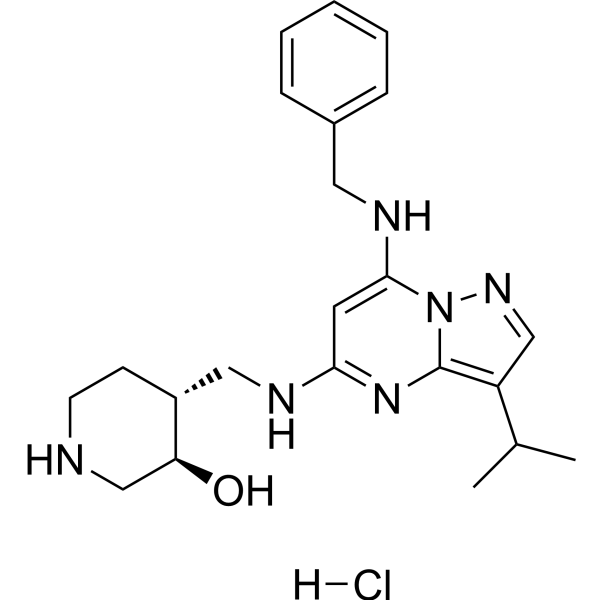
    KB-0742 dihydrochloride is a potent, selective and orally active CDK9 inhibitor with an IC50 of 6 nM for CDK9/cyclin T1. KB-0742 dihydrochloride is selective for CDK9/cyclin T1 with >50-fold selectivity over other CDK kinases. KB-0742 dihydrochloride has potent anti-tumor activity .
    KB-0742 dihydrochloride
  • HY-162919

    CDK Apoptosis c-Myc Cancer
    YK-2168 is a potent and selective CDK9 inhibitor with an IC50 of 5.9 nM. YK-2168 inhibits phosphorylation of the CDK9 substrate pS2-RNA Pol II C-terminal domain. YK-2168 induces apoptosis in tumor cells, suppresses expression of CDK9-regulated genes including MYC and Mcl1, and inhibits tumor growth in CDX mice models. YK-2168 can be used for the research of cancer, such as leukemia .
    YK-2168
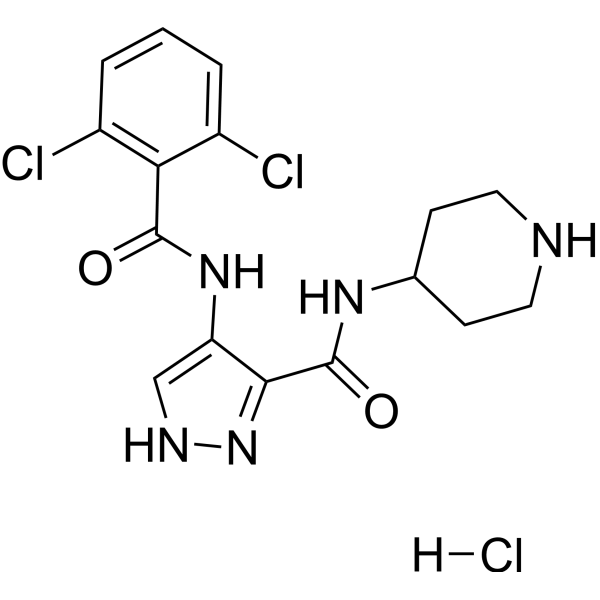
  • HY-13461A
    PHA-767491 hydrochloride
    4 Publications Verification

    CAY-10572 hydrochloride

    CDK Apoptosis Cancer
    PHA-767491 hydrochloride is a dual Cdc7/Cdk9 inhibitor, with IC50s of 10 nM and 34 nM, respectively.
    PHA-767491 hydrochloride
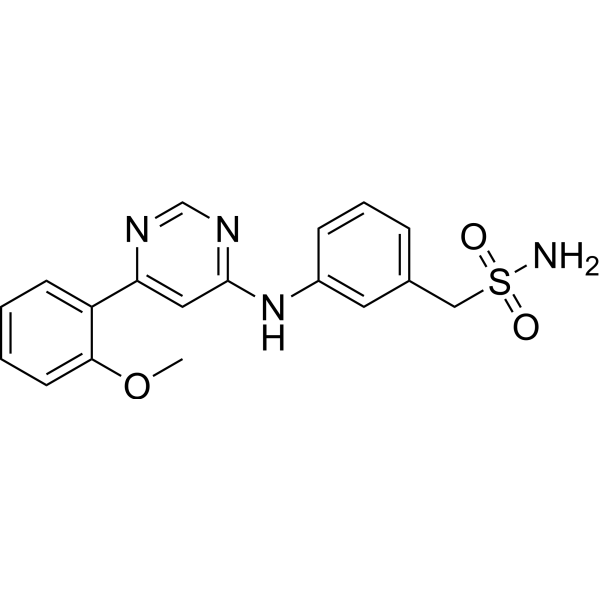
  • HY-X0150
    JSH-150
    1 Publications Verification

    CDK Cancer
    JSH-150 is a highly selective and potent CDK9 inhibitor with an IC50 of 1 nM.
    JSH-150
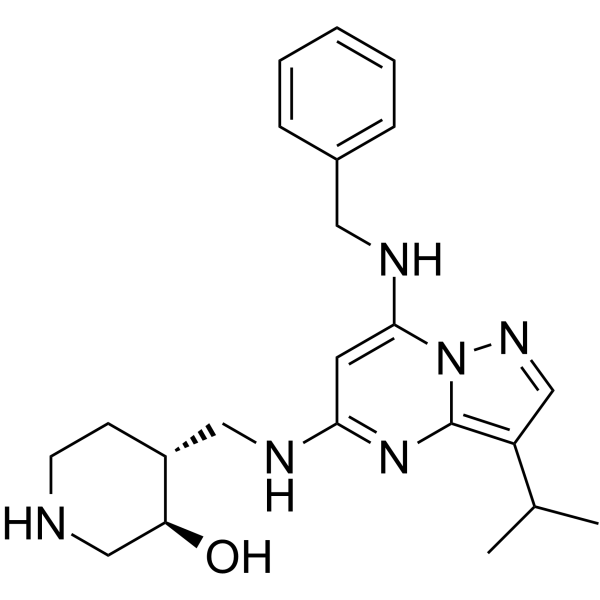
  • HY-119940
    MC180295
    1 Publications Verification

    (rel)-MC180295

    CDK Cancer
    MC180295 ((rel)-MC180295) is a potent and selective CDK9-Cyclin T1 inhibitor, with an IC50 of 5 nM, at least 22-fold more selective for CDK9 over other CDKs. MC180295 also inhibits GSK-3α and GSK-3β. MC180295 ((rel)-MC180295) has potent anti-tumor effect .
    MC180295
  • HY-50943
    AT7519 Hydrochloride
    10+ Cited Publications

    CDK Apoptosis Cancer
    AT7519 Hydrochloride is a potent inhibitor of CDKs, with IC50s of 210, 47, 100, 13, 170, and <10 nM for CDK1, CDK2, CDK4 to CDK6, and CDK9, respectively.
    AT7519 Hydrochloride
  • HY-12293
    LY2857785
    4 Publications Verification

    CDK Apoptosis Cancer
    LY2857785 is a type I reversible and competitive ATP kinase inhibitor against CDK9 (IC50 11 nM) and other transcription kinases CDK8 (IC50 16 nM), and CDK7 (IC50 246 nM).
    LY2857785
  • HY-13231
    CDK9-IN-1
    1 Publications Verification

    CDK HIV Infection
    CDK9-IN-1 is a novel, selective CDK9 inhibitor for the treatment of HIV infection, with an IC50 of 39 nM for CDK9/CycT1, extracted from reference, compound 87.
    CDK9-IN-1
  • HY-100429
    CAN508
    1 Publications Verification

    CDK Cancer
    CAN508 is a potent, ATP-competitive CDK9/cyclin T1 inhibitor with an IC50 of 0.35 μM. CAN508 exhibits a 38-fold selectivity for CDK9/cyclin T over other CDK/cyclin complexes. Antitumor activity .
    CAN508
  • HY-153260

    CDK Cancer
    TP-1287, a prodrug of Alvocidib (HY-10005), is an orally active CDK9 inhibitor .
    TP-1287
  • HY-141687
    NSC 107512
    1 Publications Verification

    CDK Apoptosis Cancer
    NSC 107512 is a potent inhibitor of cyclin-dependent kinase 9 (CDK9). NSC 107512 is a class of sangivamycin-like molecules (SLM). NSC 107512 inhibits growth and induces apoptosis of multiple myeloma tumors .
    NSC 107512
  • HY-103019B
    (-)-Enitociclib
    2 Publications Verification

    (R)-Enitociclib; (-)-BAY-1251152; (-)-VIP152

    Drug Isomer CDK Apoptosis DNA/RNA Synthesis Cancer
    (-)-Enitociclib ((R)-Enitociclib) is an enantiomer of Enitociclib (HY-103019E) with an optical rotation of (-). Enitociclib is a selective CDK9 inhibitor and apoptosis inducer. Enitociclib inhibits CDK9 activity and reduces the phosphorylation of Ser2 in the carboxyl-terminal domain (CTD) of RNA polymerase Pol II, thereby downregulating the transcription of key oncogenes such as MYC and MCL1. Enitociclib has anti-proliferative activity targeting MYC + lymphoma and multiple myeloma (MM) cells, and has synergistic effects with Bortezomib (HY-10227) and Lenalidomide (HY-A0003), and can be used in the research of hematological malignancies .
    (-)-Enitociclib
  • HY-139980

    CDK Cancer
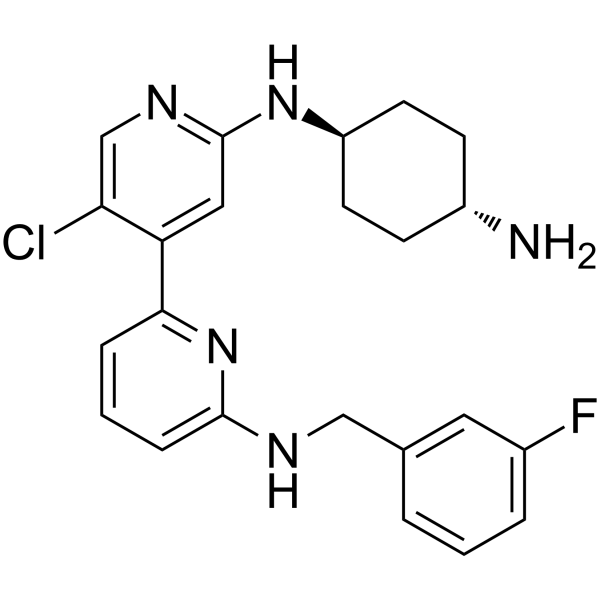
    CDK9-IN-13 (compound 38) is potent and selective CDK9 inhibitor, with an IC50 of <3 nM. CDK9-IN-13 exhibits short half-lives in rodents .
    CDK9-IN-13
  • HY-102039

    CDK Cancer
    CDK9-IN-8 is a highly effective and selective CDK9 inhibitor with an IC50 of 12 nM.
    CDK9-IN-8
  • HY-16462
    CDK9-IN-2
    5+ Cited Publications

    CDK Cancer
    CDK9-IN-2 is a special cyclin-dependent kinase 9 (CDK9) inhibitor, extracted from patent WO/2012131594A1, compound CDKI(8), has an IC50 of 5 nM and 7 nM in H929 multiple myeloma(MM) cell line (72 hours) and A2058 skin cell line (72 hours), respectively.
    CDK9-IN-2
  • HY-50940A
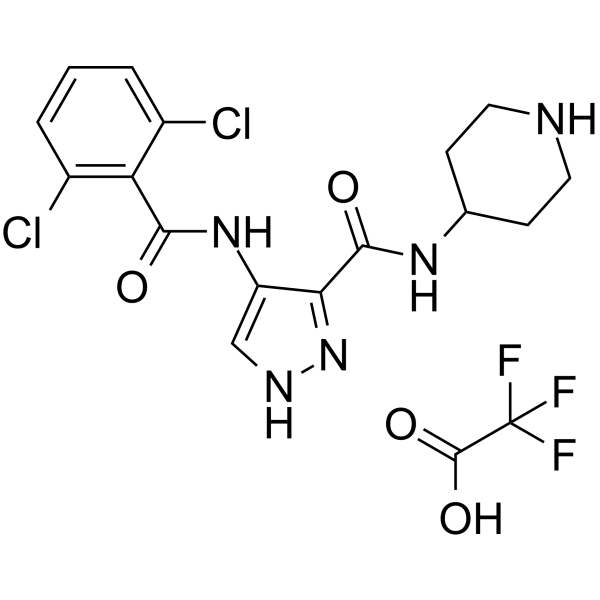
    AT7519 TFA
    10+ Cited Publications

    AT7519M TFA

    CDK Cancer
    AT7519 (AT7519M) TFA as a potent inhibitor of CDKs, with IC50s of 210, 47, 100, 13, 170, and <10 nM for CDK1, CDK2, CDK4 to CDK6, and CDK9, respectively.
    AT7519 TFA
  • HY-156084

    CDK PROTACs Apoptosis c-Myc Cancer
    LL-K9-3 is a potent small-molecule degrader of CDK9-cyclin T1. LL-K9-3 has anti-proliferative and pro-apoptotic activities and suppresses downstream signaling of CDK9 and AR. Moreover, LL-K9-3 inhibits AR and Myc-driven oncogenic transcriptional programs .
    LL-K9-3
  • HY-12871C

    BAY-1143572 S-Enantiomer; (+)-Atuveciclib; (+)-BAY-1143572

    CDK Cancer
    Atuveciclib S-Enantiomer (BAY-1143572 S-Enantiomer) is a potent and selective CDK9 inhibitor, which inhibits CDK9/CycT1 with an IC50 of 16 nM.
    Atuveciclib S-Enantiomer
  • HY-176165

    CDK Histone Methyltransferase Cancer
    CDK9/EZH2-IN-1 (Compound D16) is a CDK9/EZH2 dual-target inhibitor (IC50: 83.9/108.6 nM). CDK9/EZH2-IN-1 induces apoptosis and DNA double-strand breaks (DSBs). CDK9/EZH2-IN-1 inhibits the proliferation activity of MKN45, MDA-MB-453 and SW620 cancer cells (IC50 values are 136.3, 171.3 and 315.7 nM, respectively) .
    CDK9/EZH2-IN-1
  • HY-126251

    CDK Apoptosis Cancer
    CDK9-IN-7 (compound 21e) is a selective, highly potent, and orally active CDK9/cyclin T inhibitor (IC50=11 nM), which exhibits more potent over other CDKs (CDK4/cyclinD=148 nM; CDK6/cyclinD=145 nM). CDK9-IN-7 shows antitumor activity without obvious toxicity. CDK9-IN-7 induces NSCLC cell apoptosis, arrests the cell cycle in the G2 phase, and suppresses the stemness properties of NSCLC .
    CDK9-IN-7
  • HY-100950

    GSK-3 CDK Inflammation/Immunology Cancer
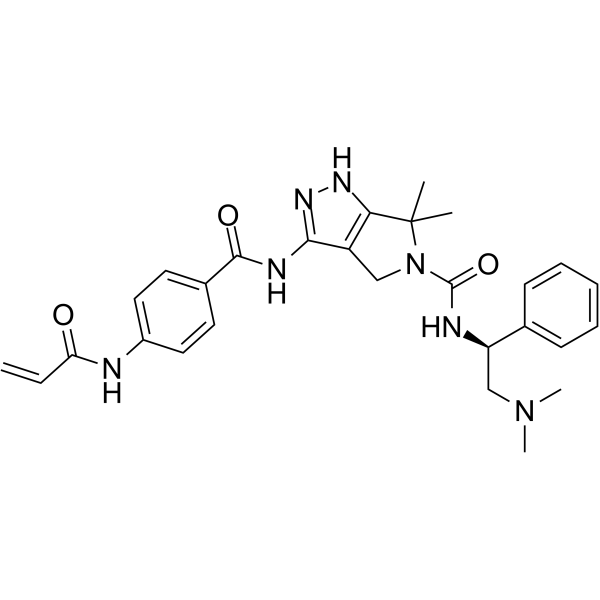
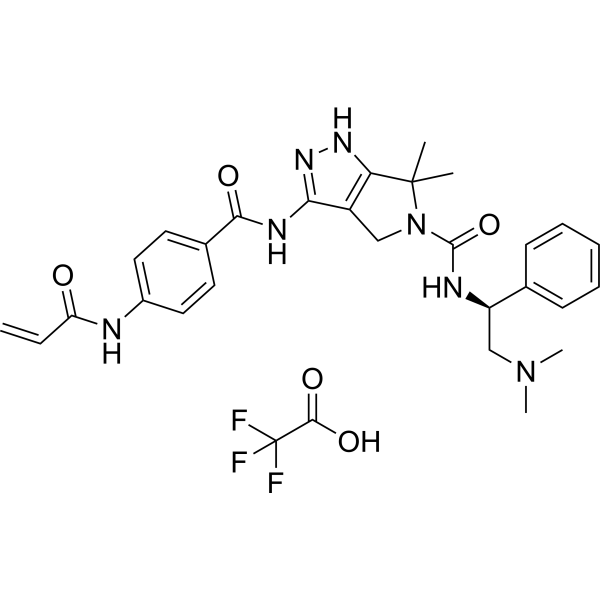
    ABC1183 is an orally active selective dual GSK3 and CDK9 inhibitor. ABC1183 inhibits GSK3β, GSK3α and CDK9/cyclin T1 with the IC50 values of 657 nM, 327 nM and 321 nM, respectively. ABC1183 has anti-inflammatory and anti-tumor activities .
    ABC1183
  • HY-151984

    CDK Cancer
    CDK9-IN-22 is a potent CDK9 inhibitor with IC50s of 10.4, 876.2 nM for CDK9, CDK, respectively. CDK9-IN-22 induces apoptosis and cell cycle arrests at G2/M phase. CDK9-IN-22 decreases the expression of p-RNAPII (S2) and CDK9 protein. CDK9-IN-22 shows antiproliferative and aiti-tumor activity .
    CDK9-IN-22
  • HY-179023

    CDK Apoptosis Reactive Oxygen Species (ROS) Caspase Bcl-2 Family c-Myc IAP Cancer
    CDK9-IN-45 (Compound B11) is a highly selective CDK9 inhibitor with IC50 values for CDK9 and CDK1 of 7.13 and 489.5 nM respectively. CDK9-IN-45 exhibits a potent inhibitory effect on colorectal cancer cells. CDK9-IN-45 induces cell apoptosis and leads to significant accumulation of ROS. CDK9-IN-45 activates Caspase-3, downregulates Mcl-1, XIAP, and c-Myc. CDK9-IN-45 can be used for research on colorectal cancer .
    CDK9-IN-45
  • HY-170978

    PROTACs CDK Cancer
    PROTAC CDK9 degrader-11 (Compound C3) is an orally active PROTAC degrader for CDK9 with DC50 of 1.09 nM. PROTAC CDK9 degrader-11 exhibits cytotoxicity in multi small cell lung cancer cell with IC50 of nanomolar levels. PROTAC CDK9 degrader-11 arrests cell cycle at G0/G1 phase, inhibits the cell invasion in DMS114 and DMS53 cell. PROTAC CDK9 degrader-11 exhibits antitumor efficacy in NCI-H446 xenograft mouse models .(Pink: ligand for target protein CDK9 ligand 3 (HY-170979); Black: linker; Blue: ligand for E3 ligase Cereblon E3 ligase Ligand 56 (HY-W247437))
    PROTAC CDK9 degrader-11
  • HY-111356

    CDK Cancer
    IIIM-290 is a potent and oral CDK inhibitor with IC50s of 90 and 94 nM for CDK2/A and CDK9/T1.
    IIIM-290
  • HY-156795

    CDK Cancer
    PROTAC CDK9/CycT1 Degrader-2 is a inhibitor of CDK9, with the IC50 of 45 nM .
    PROTAC CDK9/CycT1 Degrader-2
  • HY-130001

    CDK Cancer
    CDK9-IN-9 (example 2) is a potent and selective CDK9 inhibitor with an IC50 of 1.8 nM. CDK9-IN-9 inhibits CDK2 with an IC50 of 155 nM. CDK9-IN-9 has anti-cancer activity .
    CDK9-IN-9
  • HY-176736

    CDK Apoptosis Cancer
    CDK9-IN-40 is a potent and orally active CDK9 inhibitor with an IC50 of 5.5 nM. CDK9-IN-40 shows high selectivity for CDK9 versus CDK1, CDK2, CDK4, and CDK6, respectively. CDK9-IN-40 can arrest cell cycle, induce cell apoptosis and inhibit tumor growth. CDK9-IN-40 exhibits strong anti-cancer activity .
    CDK9-IN-40
  • HY-147026

    CDK Cancer
    CDK9-IN-15 (compound 50) is a potent CDK9 inhibitor .
    CDK9-IN-15
  • HY-157980

    CDK Cancer
    CDK9-IN-32 (compound 006-3) is a CDK9 inhibitor .
    CDK9-IN-32
  • HY-178499

    CDK c-Myc Bcl-2 Family Neurological Disease Cancer
    CDK9-IN-44 (Compound 7) is a selective CDK9 inhibitor (IC50=7.6 μM). CDK9-IN-44 inhibits CDK9/cyclin T1 kinase activity, blocking transcriptional elongation, reducing the expression of pro-cancer proteins (such as MCL1, c-MYC), and inducing tumor cell apoptosis. CDK9-IN-44 is promising for research of glioblastoma (GBM) and central nervous system (CNS) disorders .
    CDK9-IN-44
  • HY-156296

    CDK Apoptosis Cancer
    CDK9-Cyclin T1 PPI-IN-1 (Compound B19) is a selective CDK9-Cyclin T1 protein-protein interaction (PPI) inhibitor. CDK9-Cyclin T1 PPI-IN-1 inhibits cell proliferation in TNBC MDA-MB-231 cells (IC50: 0.044 μM), and induces apoptosis. CDK9-Cyclin T1 PPI-IN-1 inhibits CDK9 transcription activity, reduces the phosphorylation of RNA Pol II CTD ser2. CDK9-Cyclin T1 PPI-IN-1 inhibits tumor growth in a TNBC 4T1 mouse model .
    CDK9-Cyclin T1 PPI-IN-1
  • HY-176484

    CDK Apoptosis Cancer
    CDK9-IN-39 (1-7a-B1) is an orally active cyclin-dependent kinase 9 (CDK9) inhibitor with an IC50 of 6.51 nM. CDK9-IN-39 induces cell apoptosis by inhibiting the phosphorylation of RNA polymerase II at Ser2 and can be used for study of colorectal cancer .
    CDK9-IN-39

Inquiry Online

Your information is safe with us. * Required Fields.

Salutation


Country or Region *

Applicant Name *


Organization Name *

Department *


Email Address *


Product Name *

Cat. No.


Requested quantity *

Phone Number *


Remarks

Inquiry Online

Inquiry Information

Product Name:
Cat. No.:
Quantity:
MCE Japan Authorized Agent:

