


1. Search Result
Search Result
Results for "

Diabetes,Experimental autoimmune encephalomyelitis

" in MedChemExpress (MCE) Product Catalog:

754

Inhibitors & Agonists

10

Screening Libraries

9

Biochemical Assay Reagents

87

Peptides

98

Inhibitory Antibodies

27

Natural
Products

1

Recombinant Proteins

22

Isotope-Labeled Compounds

5

Click Chemistry

15

Oligonucleotides

Cat. No. 상품명 Target 연구분야 Chemical Structure
  • HY-153808
    Complete Freund's adjuvant (CFA)
    Maximum Cited Publications
    15 Publications Verification

    Toll-like Receptor (TLR) Inflammation/Immunology
    Complete Freund's adjuvant (CFA) is an immunoadjuvant emulsified with antigen by its discoverer Jules T. Freund to enhance an animal's immune response to an antigen. Complete Freund's adjuvant (CFA) is also an inducer of the Th1 immune response and a ligand of TLRs. Complete Freund's adjuvant (CFA) contains heat-killed inactive tuberculosis bacilli and consists of a paraffin oil-in-water emulsion. Complete Freund's adjuvant (CFA) stimulates a strong and durable immune response and can be used to induce persistent inflammatory pain models in mice, experimental autoimmune myocarditis (EAM) models, and more. Incomplete Freund's adjuvant (IFA) (HY-153808A) is another type of Freund's Adjuvant that stimulates a weaker immune response .
    Complete Freund's adjuvant (CFA)
  • HY-A0124A
    Sapropterin dihydrochloride
    2 Publications Verification

    (6R)-BH4 dihydrochloride; (6R)-Tetrahydro-L-biopterin dihydrochloride

    Endogenous Metabolite Infection Metabolic Disease Inflammation/Immunology
    Sapropterin ((6R)-BH4; (6R)-Tetrahydro-L-biopterin) dihydrochloride is an orally active phenylalanine hydroxylase (PAH) cofactor, which is effective in reducing blood phenylalanine concentrations. Sapropterin dihydrochloride can be used in study of phenylketonuria (PKU) phenylketonuria. Sapropterin dihydrochloride can aggravate experimental autoimmune encephalomyelitis (EAE) .
    Sapropterin dihydrochloride
  • HY-P3719
    MOG(35-55) amide, mouse, rat
    1 Publications Verification

    CCR Inflammation/Immunology
    MOG (35-55) amide, mouse, rat the terminal amidation form of the 35-55 fragment of the myelin oligodendrocyte glycoprotein (MOG) immunogenic peptide (MOG (35-55) (HY-P1240)). MOG(35-55) amide, mouse, rat can be used for experimental autoimmune encephalomyelitis (EAE) modeling .
    MOG(35-55) amide, mouse, rat
  • HY-B1462
    Chlorzoxazone
    3 Publications Verification

    Cytochrome P450 Potassium Channel FOXO Amyloid-β Neurological Disease Inflammation/Immunology
    Chlorzoxazone is a SK-type potassium channel activator. Chlorzoxazone modulates FOXO3 phosphorylation and . Chlorzoxazone enhances immunosuppression, attenuates vasoconstriction, attenuates cognitive deficits, and improves experimental autoimmune encephalomyelitis .
    Chlorzoxazone
  • HY-N2279
    Kurarinone
    5 Publications Verification

    Eukaryotic Initiation Factor (eIF) Inflammation/Immunology Cancer
    Kurarinone is an orally active flavonoid isolated from matrine that inhibits the pathogenesis of experimental autoimmune encephalomyelitis by inhibiting cell differentiation of Th1 and Th17. Kurarinone has antitumor and anti-inflammatory activity .
    Kurarinone
  • HY-168625

    Molecular Glues Inflammation/Immunology
    VAV1 degrader-3 (Example 185) is an orally active VAV1 molecular glue degrader (DC50: 7 nM). VAV1 degrader-3 reduces immune cell activation, immune cell proliferation and the production of various cytokines. VAV1 degrader-3 can be used for research of inflammatory or autoimmune disorder. VAV1 degrader-3 inhibits disease progression in experimntal autoimmune encephalomyelitis (EAE) mouse model, Collagen-induced arthritis (CIA) mouse model, etc. .
    VAV1 degrader-3
  • HY-101254
    Luzindole
    15+ Cited Publications

    N-0774

    Melatonin Receptor Neurological Disease
    Luzindole (N-0774) is a selective melatonin receptor antagonist. Luzindole preferentially targets MT2 (Mel1b) over MT1 (Mel1a) with Ki values of 10.2 and 158 nM for human MT2 and MT1, respectively. Luzindole suppresses experimental autoimmune encephalomyelitis (EAE), and exerts antidepressant-like activity .
    Luzindole
  • HY-B0157
    Ketotifen
    3 Publications Verification

    HC 20-511

    Endogenous Metabolite Histamine Receptor SARS-CoV Influenza Virus Infection Inflammation/Immunology Endocrinology Cancer
    Ketotifen (HC 20-511) is an orally active second-generation noncompetitive histamine 1 (H1) receptor blocker and mast cell stabilizer. Ketotifen can block 6-phosphogluconate dehydrogenase (PGD) in vitro. Ketotifen also has antiviral activity against SARS-CoV-2 and Influenza virus. Ketotifen can be used to the research of autoimmune encephalomyelitis (EAE) and asthma attack prevention .
    Ketotifen
  • HY-17606

    ACT-334441

    LPL Receptor Inflammation/Immunology
    Cenerimod (ACT-334441) is a potent, selective and orally active S1P1 receptor modulator, with an EC50 of 1 nM. Cenerimod shows more than 36 fold selctivity for hS1P1 over hS1P2, hS1P3, hS1P4, and hS1P5 receptor subtypes (EC50s=>10000, 228, 2134, and 36 nM, respectively). Cenerimod can attenuate murine experimental autoimmune encephalomyelitis (EAE) and murine sclerodermatous .
    Cenerimod
  • HY-B0157A
    Ketotifen fumarate
    3 Publications Verification

    HC 20511 fumarate

    Histamine Receptor Endogenous Metabolite SARS-CoV Influenza Virus Inflammation/Immunology Endocrinology Cancer
    Ketotifen (HC 20-511) fumarate is an orally active second-generation noncompetitive histamine 1 (H1) receptor blocker and mast cell stabilizer. Ketotifen fumarate can block 6-phosphogluconate dehydrogenase (PGD) in vitro. Ketotifen fumarate also has antiviral activity against SARS-CoV-2 and Influenza virus. Ketotifen fumarate can be used to the research of autoimmune encephalomyelitis (EAE) and asthma attack prevention .
    Ketotifen fumarate
  • HY-Y0344J
    Sodium chloride, for molecular biology
    3 Publications Verification

    Halite, for molecular biology

    Biochemical Assay Reagents Na+/K+ ATPase Interleukin Related Inflammation/Immunology Cancer
    Sodium chloride is an orally active salt. Sodium chloride induces the expression of ATP1A1. Sodium chloride induces the pro-inflammatory cytokines IL-2, TNFα, IL-9 and several chemokines. Sodium chloride enhances the anti-tumor activities of Digoxin (HY-B1049) against small cell lung cancer. Sodium chloride drives autoimmune disease by the induction of pathogenic Th17 cells .
    Sodium chloride, for molecular biology
  • HY-P10936A

    Aquaporin Neurological Disease Inflammation/Immunology
    AQP4 (201-220) TFA is an encephalitogenic epitope of AQP-4. AQP4 (201-220) TFA can induce experimental autoimmune encephalomyelitis (EAE) (characterized by midline lesions in the brain, retinal pathology, and lesions at the grey matter/white matter border zone in the spinal cord). AQP-4 is a target antigen in neuromyelitis optica .
    AQP4 (201-220) TFA
  • HY-N8441

    17β-Neriifolin

    Atg8/LC3 Na+/K+ ATPase Apoptosis Beclin1 Cardiovascular Disease Inflammation/Immunology Cancer
    Neriifolin, a CNS-penetrating cardiac glycoside, is an inhibitor of the Na +, K +-ATPase. Neriifolin can target beclin 1, inhibits the formation of LC3-associated phagosomes and ameliorates experimental autoimmune encephalomyelitis (EAE) development. Neriifolin induces cell cycle arrest and apoptosis in human hepatocellular carcinoma HepG2 cells [2.
    Neriifolin
  • HY-P990155

    Transmembrane Glycoprotein Others
    Anti-Mouse TIGIT Antibody (1G9) is a mouse-derived agonistic TIGIT IgG1 κ type antibody. Anti-Mouse TIGIT Antibody (1G9) blocks CD155 binding to TIGIT. Anti-Mouse TIGIT Antibody (1G9) shows potent anti-infection and anti-immune effects in septic and experimental autoimmune encephalomyelitis .
    Anti-Mouse TIGIT Antibody (1G9)
  • HY-109520
    Glatiramer acetate
    2 Publications Verification

    MHC Inflammation/Immunology Cancer
    Glatiramer acetate, a synthetic analogue of myelin basic protein and an immunomodulating agent, inhibits Experimental autoimmune encephalomyelitis (EAE), and can be used for the research of multiple sclerosis. Glatiramer acetate exhibits strong and promiscuous binding to MHC molecules and consequent competition with various myelin antigens for their presentation to T cells. A further aspect of its action is potent induction of specific suppressor cells of the T helper 2 (Th2) type that migrate to the brain and lead to in situ bystander suppression .
    Glatiramer acetate
  • HY-P1587

    MHC Inflammation/Immunology
    IRBP (1-20), human contains a major epitope for the H-2 b haplotype. IRBP (1-20), human induces experimental autoimmune uveoretinitis (EAU) in H-2 b mice .
    IRBP (1-20), human
  • HY-18166

    LPL Receptor Inflammation/Immunology
    NIBR-0213 is a potent, orally active and selective S1P1 antagonist with efficacy in experimental autoimmune encephalomyelitis. NIBR-0213 displays potent and comparable potency on human and rat S1P1 (IC50 of 2.0 nM and 2.3 nM, respectively) in GTPγ 35S assays .
    NIBR0213
  • HY-108039

    HE 3286; NE-3107

    NF-κB Neurological Disease Metabolic Disease Inflammation/Immunology
    Bezisterim (HE 3286; NE-3107) is a synthetic derivative of a natural anti-inflammatory steroid, β-AET. Bezisterim is an orally active partial NF-κB inhibitor. HE3286 reduces proinflammatory signals, including IL-6 and matrix metallopeptidase 3. Bezisterim freely penetrates the blood brain barrier in mice. Bezisterim can be used for the research of the ulcerative colitis, arthritis, experimental autoimmune encephalomyelitis . Bezisterim is a click chemistry reagent, it contains an Alkyne group and can undergo copper-catalyzed azide-alkyne cycloaddition (CuAAc) with molecules containing Azide groups.
    Bezisterim
  • HY-148103

    REV-ERB Inflammation/Immunology
    SR12418 is a REV-ERB-specific synthetic ligand with IC50s of 68 nM and 119 nM for REV-ERBα and REV-ERBβ, respectively. SR12418 can be used in experimental autoimmune encephalomyelitis (EAE) and colitis research .
    SR12418
  • HY-117213

    S1P1-IN-Ex26

    LPL Receptor Neurological Disease Metabolic Disease Inflammation/Immunology
    Ex26 (S1P1-IN-Ex26) is a potent and selective sphingosine 1-phosphate receptor 1 (S1P1) antagonist (IC50=0.93 nM). Ex26 shows >3,000-fold selectivity for S1P1 over other Sphingosine 1-phosphate receptors. Ex26 can be used in experimental autoimmune encephalomyelitis reseach .
    Ex26
  • HY-126328

    PKC Interleukin Related Inflammation/Immunology
    PKC-theta inhibitor 1 is an orally active and selective ATP-competitive inhibitor of Protein Kinase Cθ (PKCθ), with a Ki value of 6 nM. PKC-theta inhibitor 1 inhibits T-cell-mediated inflammatory responses by suppressing the release of proinflammatory cytokines (IL-2 IC50 = 0.21 μM in anti-CD3/CD28-stimulated PBMCs; IL-17 IC50 = 1 μM in CD3/CD28-stimulated Th17 cells) PKC-theta inhibitor 1 significantly reduces symptoms in mice with ongoing experimental autoimmune encephalomyelitis (EAE). PKC-theta inhibitor 1 can be used for the study of T-cell-mediated inflammatory diseases such as multiple sclerosis .
    PKC-theta inhibitor 1
  • HY-W010144

    COX Lipoxygenase Cardiovascular Disease Inflammation/Immunology
    Phenidone, an orally active dual inhibitor of cyclooxygenase (COX) and lipoxygenase (LOX), ameliorates rat paralysis in experimental autoimmune encephalomyelitis. Phenidone is a potent hypotensive agent in the spontaneously hypertensive rat . Phenidone is used as a photographic developer .
    Phenidone
  • HY-176566

    STING Inflammation/Immunology
    H-151 Alkyne (Compound H-151-AL) is a selective STING (Stimulator of interferon genes) inhibitor. H-151 Alkyne is promising for research of autoimmune diseases such as systemic lupus erythematosus, scleroderma, and autoinflammatory diseases .
    H-151 Alkyne
  • HY-103333

    N-Vanillylarachidonamide

    TRP Channel Cannabinoid Receptor CD74 Akt Orexin Receptor (OX Receptor) Neurological Disease Inflammation/Immunology
    Arvanil (N-Vanillylarachidonamide) is a mixed agonist of CB1 and TRPV1 receptors. Arvanil downregulates CD25, HLA-DR, CD134/OX40, blocks G1/S phase transition, and induces phosphorylation of Akt. Arvanil does not induce apoptosis in cells. Arvanil inhibits lymphocyte activation and ameliorates autoimmune encephalomyelitis. Arvanil can be used in research related to Huntington's disease, vomiting, and multiple sclerosis .
    Arvanil
  • HY-153245

    Btk Inflammation/Immunology Cancer
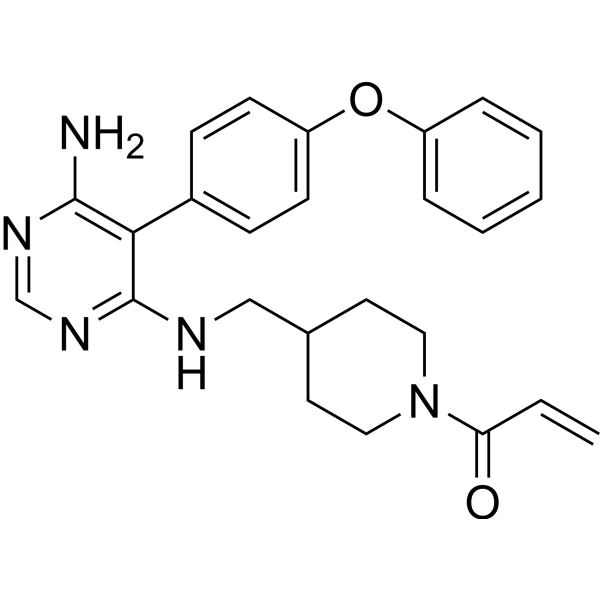
    JNJ-64264681 is a potent, orally active, selective and irreversible covalent BTK inhibitor. JNJ-64264681 exhibits good pharmacokinetic characteristics and can be used for cancer and autoimmune diseases research .
    JNJ-64264681
  • HY-139203

    Interleukin Related Inflammation/Immunology Cancer
    IL-17 modulator 3 is an IL-17 modulator (US20200247785A1). IL-17 modulator 3 can be used for the research of inflammation, cancer and autoimmune diseases .
    IL-17 modulator 3
  • HY-P10936

    Aquaporin Neurological Disease Inflammation/Immunology
    AQP4 (201-220) is an encephalitogenic epitope of AQP-4. AQP4 (201-220) can induce experimental autoimmune encephalomyelitis (EAE) (characterized by midline lesions in the brain, retinal pathology, and lesions at the grey matter/white matter border zone in the spinal cord). AQP-4 is a target antigen in neuromyelitis optica .
    AQP4 (201-220)
  • HY-158417

    LPL Receptor Inflammation/Immunology
    KSI-6666 is an orally active, competitive antagonist for sphingosine 1-phosphate receptor 1 (S1PR1), with an IC50 of 6.4 nM. KSI-6666 exhibits anti-inflammatory efficacy in autoimmune encephalomyelitis model and T cell transfer colitis model .
    KSI-6666
  • HY-A0124

    (6R)-BH4; (6R)-Tetrahydro-L-biopterin

    Endogenous Metabolite Infection Metabolic Disease Inflammation/Immunology
    Sapropterin ((6R)-BH4; (6R)-Tetrahydro-L-biopterin) is an orally active phenylalanine hydroxylase (PAH) cofactor, which is effective in reducing blood phenylalanine concentrations. Sapropterin can be used in study of phenylketonuria (PKU) phenylketonuria. Sapropterin can aggravate experimental autoimmune encephalomyelitis (EAE) .
    Sapropterin
  • HY-B1084

    Drug Intermediate Others
    Cinoctramide is an intermediate of pharmaceutical synthesis. Cinoctramide can be used for the research of autoimmune diseases .
    Cinoctramide
  • HY-119245

    BMS-986166

    LPL Receptor Inflammation/Immunology
    Udifitimod (BMS-986166) is a potent, selective and orally active S1P1R modulator. Udifitimod has the potential for the research of autoimmune diseases .
    Udifitimod
  • HY-46225

    Drug Intermediate Inflammation/Immunology
    DEX-maleimide is a coupling agent that can be used to synthesize conjugates containing single-domain antibodies (VHH) conjugated with antigens and anti-inflammatory agents. DEX-maleimide can be used for research on autoimmune diseases .
    DEX-maleimide
  • HY-157807

    Nuclear Hormone Receptor 4A/NR4A Inflammation/Immunology Cancer
    Prostaglandin E2-biotin is a prostaglandin analog. Prostaglandin E2-biotin can be used for research of Nurr1-related disease, such as cancer and autoimmune disease .
    Prostaglandin E2-biotin
  • HY-154956

    PIKfyve Inflammation/Immunology Cancer
    PIKfyve-IN-2 is a potent PIKfyve kinase inhibitor and can be used for cancers, autoimmune disorders research .
    PIKfyve-IN-2
  • HY-142042

    MEK TGF-beta/Smad Neurological Disease Inflammation/Immunology Cancer
    3-Hydroxy-4-carboxyalkylamidino-5-arylamino-isothiazoles is an inhibitor for bone morphogenetic protein 2 (BMP2) with an IC50 of 2.2 μM. 3-Hydroxy-4-carboxyalkylamidino-5-arylamino-isothiazoles is inhibitor for mitogen-activated protein kinase 1 (MEK1). 3-Hydroxy-4-carboxyalkylamidino-5-arylamino-isothiazoles exhibits anti-inflammatory and neuroprotective activity in EAE mouse model .
    3-Hydroxy-4-carboxyalkylamidino-5-arylamino-isothiazoles
  • HY-111021
    ASP-4058
    1 Publications Verification

    LPL Receptor Inflammation/Immunology
    ASP-4058 is a next-generation, selective and oral bioactive agonist for Sphingosine 1-Phosphate receptors 1 and 5 (S1P1 and S1P5), ameliorates rodent experimental autoimmune encephalomyelitis with a favorable safety profile .
    ASP-4058
  • HY-115566

    LPL Receptor Smo Inflammation/Immunology
    S1PL-IN-31 (compound ) is an oral active sphingosine-1-phosphate (S1P) lyase inhibitor with the IC50 of 210 nM. S1PL-IN-31 is Smoothened receptor antagonist with the IC50 of 440 nM. S1PL-IN-31 can be used for study of experimental autoimmune encephalomyelitis .
    S1PL-IN-1
  • HY-P990808

    Interleukin Related Infection Metabolic Disease Inflammation/Immunology Cancer
    Anti-Mouse CD122/IL-2Rβ Antibody (TM-Beta 1) is a rat-derived IgG2b κ type antibody inhibito, targeting to mouse CD122/IL-2Rβ. Anti-Mouse CD122/IL-2Rβ Antibody (TM-Beta 1) can block IL-2 and IL-15. Anti-Mouse CD122/IL-2Rβ Antibody (TM-Beta 1) can deplete natural killer (NK) cells and NKT cells. Anti-Mouse CD122/IL-2Rβ Antibody (TM-Beta 1) can be used for the researches of cancer, infection, inflammation, immunology and metabolic disease, such as melanoma, experimental autoimmune encephalomyelitis (EAE) and diabetes .
    Anti-Mouse CD122/IL-2Rβ Antibody (TM-Beta 1)
  • HY-N11451

    LNFP-III

    Arginase Aldehyde Dehydrogenase (ALDH) Indoleamine 2,3-Dioxygenase (IDO) Inflammation/Immunology
    Lacto-N-fucopentaose III (LNFP-III) is an immune modulator. Lacto-N-fucopentaose III reduces the severity of experimental autoimmune encephalomyelitis (EAE) and CNS inflammation .
    Lacto-N-fucopentaose III
  • HY-N11286

    TG-DHA; Meganol D

    Others Neurological Disease Metabolic Disease Inflammation/Immunology
    Tridocosahexaenoylglycerol (TG-DHA) is an orally active dietary supplement that improves autoimmune encephalomyelitis in mice. Tridocosahexaenoylglycerol shows beneficial effects on neurodegenerative diseases and also improves macular function in diabetic retinopathy. Tridocosahexaenoylglycerol can be used for research on neurological diseases, inflammatory immune diseases, and metabolic diseases .
    Tridocosahexaenoylglycerol
  • HY-170409

    Trk Receptor Apoptosis Neurological Disease Inflammation/Immunology
    BNN27 is the agonist for TrkA receptor and p75NTR receptor, that exhibits neurotrophic and anti-apoptotic effects. BNN27 increases the levels of glutamate, GABA, and glutamine in the rat hippocampus and prefrontal cortex, improves glutamate turnover. BNN27 exhibits neuroprotective efficacy in mouse amyotrophic lateral sclerosis (ALS) model, exhibits anti-inflammatory efficacy in experimental autoimmune encephalomyelitis (EAE) model, exhibits retinal protective efficacy in rat diabete models. BNN27 is blood-brain barrier penetrable .
    BNN27
  • HY-P1409A
    ADWX 1 TFA
    1 Publications Verification

    Potassium Channel Inflammation/Immunology
    ADWX 1 TFA is a new peptide inhibitor that is potent and selective for Kv1.3 with an IC50 value of 1.89 pM. ADWX 1 inhibits Kv1.3 channel activity specifically to inhibit both the initial calcium signaling and NF-κB activation. ADWX 1 TFA ameliorates the disease in rats of experimental autoimmune encephalomyelitis (EAE) models. ADWX 1 TFA can be used to study T cell-mediated autoimmune diseases .
    ADWX 1 TFA
  • HY-134919

    Cyclic GMP-AMP Synthase Inflammation/Immunology
    CU-76 is an inhibitor for human cyclic GMP-AMP synthase (hcGAS) with an IC50 of 0.24 μM. CU-76 selectively inhibits the DNA pathway in human cells, and can be used in autoimmune research .
    CU-76
  • HY-151805

    MALT1 Inflammation/Immunology
    RGT-068A is a MALT1 inhibitor with oral bioavailability. RGT-068A inhibits MALT1 activity. RGT-068A can be used for the research of autoimmune diseases .
    RGT-068A
  • HY-P5966

    MOG (40-54)

    MHC Inflammation/Immunology
    Myelin Oligodendrocyte Glycoprotein (40-54), Rat, Mouse (MOG (40-54)) is a CD8-related self-antigenic epitope of the myelin oligodendrocyte glycoprotein (MOG) protein and is presented in association with H-2Db .
    Myelin Oligodendrocyte Glycoprotein (40-54), Rat, Mouse
  • HY-P991682

    TNF Receptor Inflammation/Immunology
    Emzotamig is a monoclonal antibody inhibitor targeting tumor necrosis factor (TNF). Emzotamig is promising for research of autoimmune diseases associated with TNF overexpression, such as rheumatoid arthritis and ankylosing spondylitis .
    Emzotamig
  • HY-P991658

    ARGX-109; GB224; RYI-008

    Interleukin Related Inflammation/Immunology
    Gerilimzumab (GB224) is a humanized monoclonal antibody inhibitor targeting interleukin-6 (IL-6). Gerilimzumab is promising for research of autoimmune diseases such as rheumatoid arthritis .
    Gerilimzumab
  • HY-158374

    IRAK Inflammation/Immunology
    BIO-8169 is a selective inhibitor for interleukin receptor-associated kinase 4 (IRAK 4), with an IC50 of 0.23 nM. BIO-8169 exhibits good pharmacokinetic character, reduces the production of pro-inflammatory cytokines, and attenuates the autoimmune encephalomyelitis in EAE mice model. BIO-8169 exhibits good blood brain penetrant with a rat Kpu,u of 0.7 .
    BIO-8169
  • HY-P11553

    CCR Inflammation/Immunology
    ECL1i is an allosteric, selective CCR2 inhibitor. ECL1i specifically inhibits CCL2-/CCR2-mediated chemotaxis. ECL1i interferes with CCR2-positive cell recruitment and attenuates disease progression in experimental autoimmune encephalomyelitis .
    ECL1i
  • HY-P3248

    Myelin basic protein (85-99) antagonist

    Biochemical Assay Reagents Inflammation/Immunology
    J5 peptide is an MBP inhibitor that competitively inhibits the binding of MBP85-99 to HLA-DR2. J5 peptide alleviates PLP139-151/MBP85-99-induced experimental autoimmune encephalomyelitis (EAE) in mice. J5 peptide can be used in research on inflammatory and immune diseases .
    J5 peptide

온라인 문의

Your information is safe with us. * Required Fields.

호칭


Country or Region *

고객명 *


회사명 *

Department *


메일주소 *


상품명 *

Cat. No.


Requested quantity *

전화번호 *


비고

온라인 문의

Inquiry Information

상품명:
Cat. No.:
수량:
MCE Japan Authorized Agent:

