From 11:00 pm to 12:00 pm EST ( 8:00 pm to 9:00 pm PST ) on January 6th, the website will be under maintenance. We are sorry for the inconvenience. Please arrange your schedule properly.
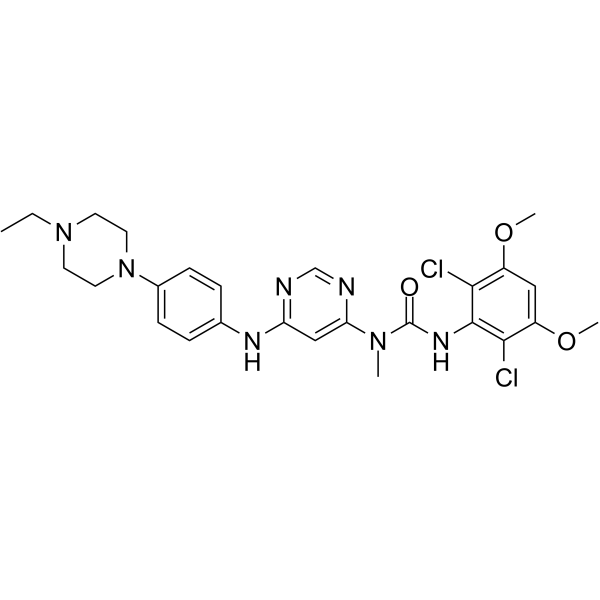
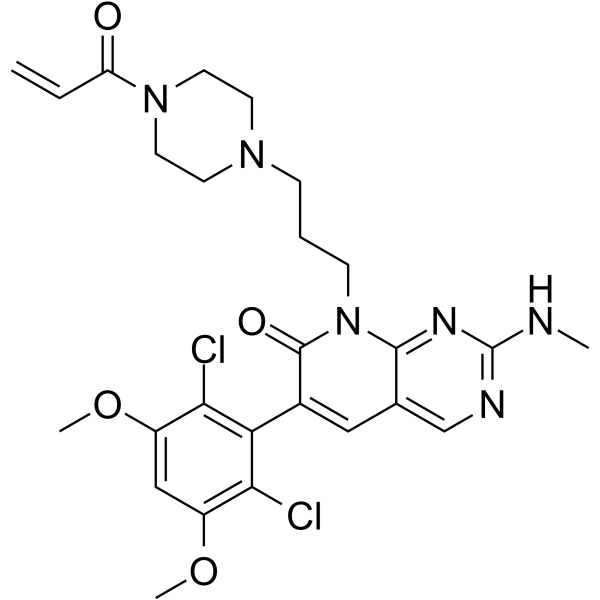
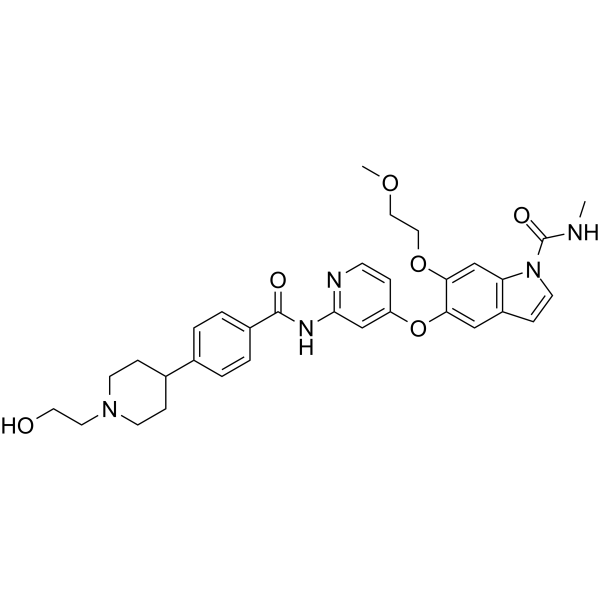
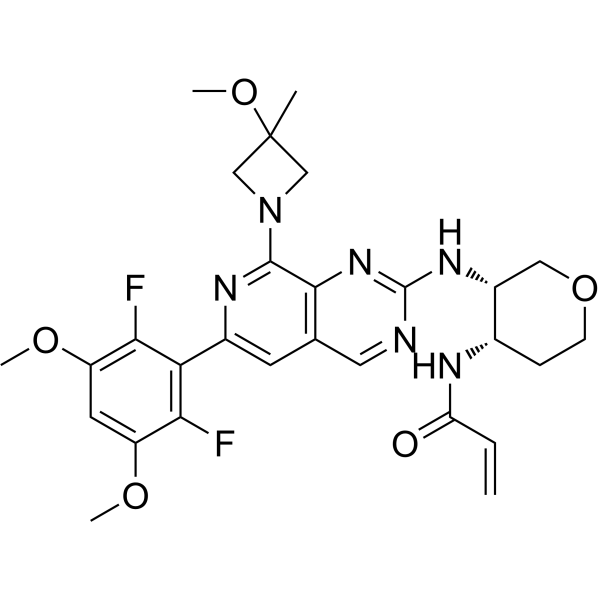
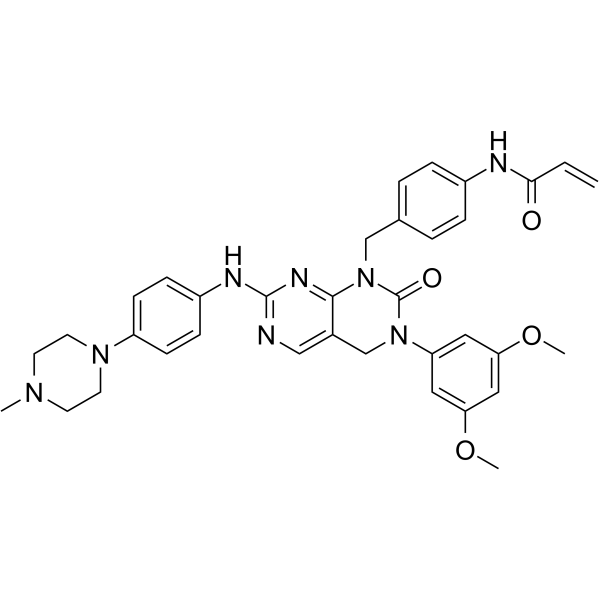
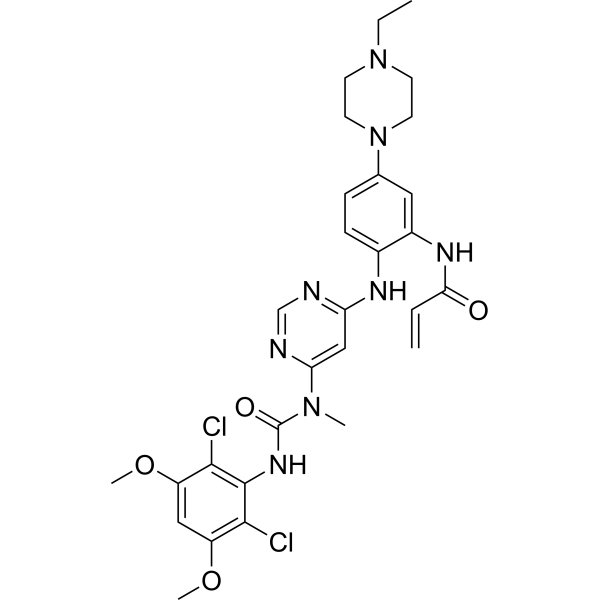
Infigratinib (BGJ-398; NVP-BGJ398) is a potent inhibitor of the FGFR family with IC50s of 0.9 nM, 1.4 nM, 1 nM, and 60 nM for FGFR1, FGFR2, FGFR3, and FGFR4, respectively.
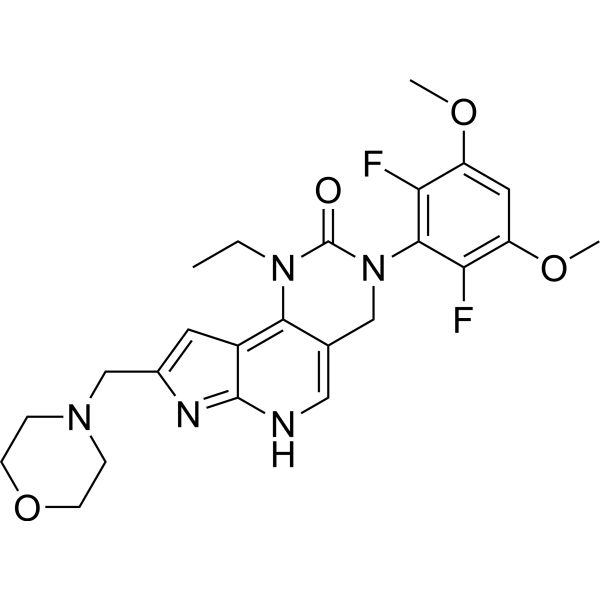
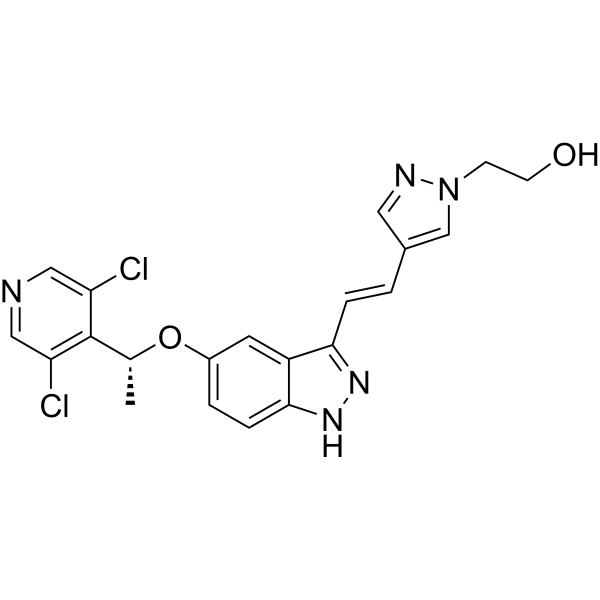
Pemigatinib (INCB054828) is an orally active, selective FGFR inhibitor with IC50s of 0.4 nM, 0.5 nM, 1.2 nM, 30 nM for FGFR1, FGFR2, FGFR3, FGFR4, respectively. Pemigatinib has the potential for cholangiocarcinoma .
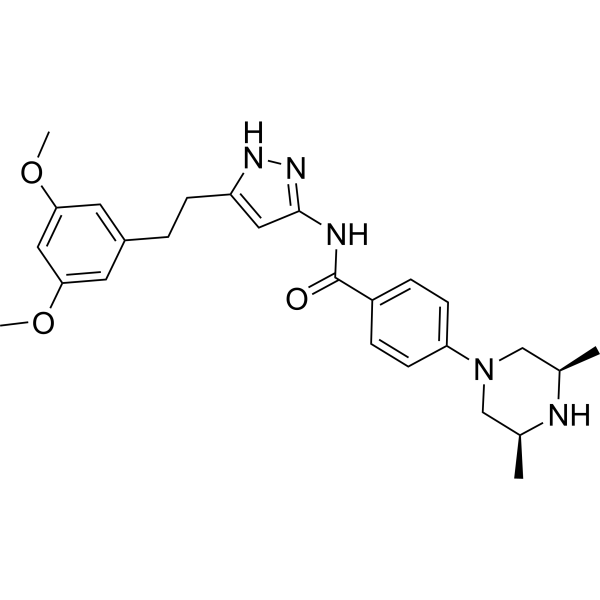
Fexagratinib (AZD4547; ADSK091) is a potent inhibitor of the FGFR family with IC50s of 0.2 nM, 2.5 nM, 1.8 nM, and 165 nM for FGFR1, FGFR2, FGFR3, and FGFR4, respectively.
Fisogatinib (BLU-554) is a potent, highly selective and orally active fibroblast growth factor receptor 4(FGFR4) inhibitor with an IC50 of 5 nM. Fisogatinib has significant anti-tumor activity in models of hepatocellular carcinoma (HCC) that are dependent on FGFR4 signalling .
BLU9931 is a potent, highly selective, and irreversible fibroblast growth factor receptor 4(FGFR4) inhibitor with an IC50 of 3 nM and a Kd of 6 nM. BLU9931 has significant antitumor activity .
E7090 is an orally available, potent, and selective FGFR inhibitor with IC50s of 0.71 nM, 0.50 nM, 1.2 nM, and 120 nM for FGFR1/FGFR2/FGFR3/FGFR4, respectively .
Irpagratinib (ABSK011) is an orally active FGFR4 inhibitor (IC50<10 nM). Irpagratinib inhibits FGFR4 autophosphorylation and blocks signaling from FGFR4 to downstream pathway activation. Irpagratinib has shown high exposure in PK studies in mice, rats, and dogs, and also demonstrated antitumor activity in a subcutaneous xenograft tumor model .
Zoligratinib (Debio 1347) is an orally available and selective FGFR inhibitor with IC50s of 9.3, 7.6, and 22 nM for FGFR1, FGFR2, FGFR3, and FGFR4, respectively.
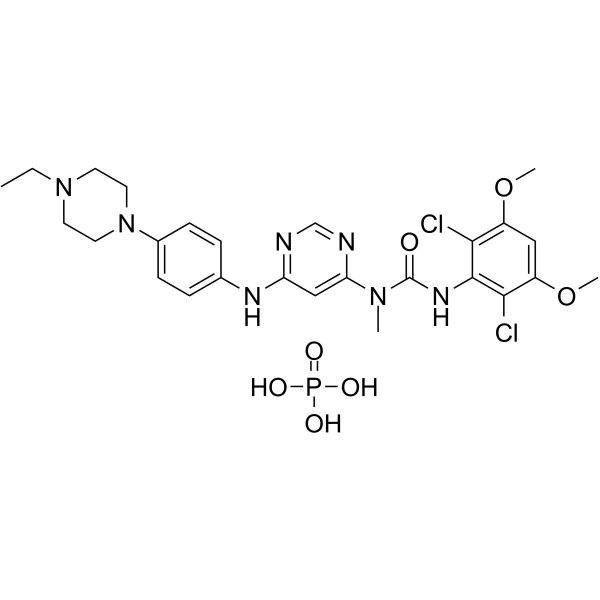
Infigratinib phosphate (BGJ-398 phosphate; NVP-BGJ398 phosphate) is a potent inhibitor of the FGFR family with IC50 of 0.9 nM, 1.4 nM, 1 nM, and 60 nM for FGFR1, FGFR2, FGFR3, and FGFR4, respectively.
PRN1371 is a highly selective and potent FGFR1-4 and CSF1R inhibitor with IC50s of 0.6, 1.3, 4.1, 19.3 and 8.1 nM for FGFR1, FGFR2, FGFR3, FGFR4 and CSF1R, respectively .
H3B-6527 is an orally active, highly selective and covalent FGFR4 inhibitor with an IC50 of <1.2 nM. H3B-6527 has at least 250-fold selectivity over FGFR1-3 with IC50s of 320 nM, 1290 nM and 1060 nM respectively. H3B-6527 has potent anti-cancer activity .
U3-1784 is a humanized antibody expressed in CHO that targets FGFR4/CD334. U3-1784 is equipped with a huIgG1 heavy chain and a huλ light chain, with a predicted molecular weight (MW) of 150 kDa. The isotype control for U3-1784 can be referenced as Human IgG1 kappa, Isotype Control (HY-P99001).
FIIN-1 is a potent, irreversible, selective FGFR inhibitor. FIIN-1 binds to FGFR1/2/3/4 and Flt1/4 with Kds of 2.8/6.9/5.4/120 nM and 32/120 nM respectively. The biochemical IC50s of FIIN-1 are 9.2, 6.2, 11.9, and 189 nM against FGFR1/2/3/4, respectively .
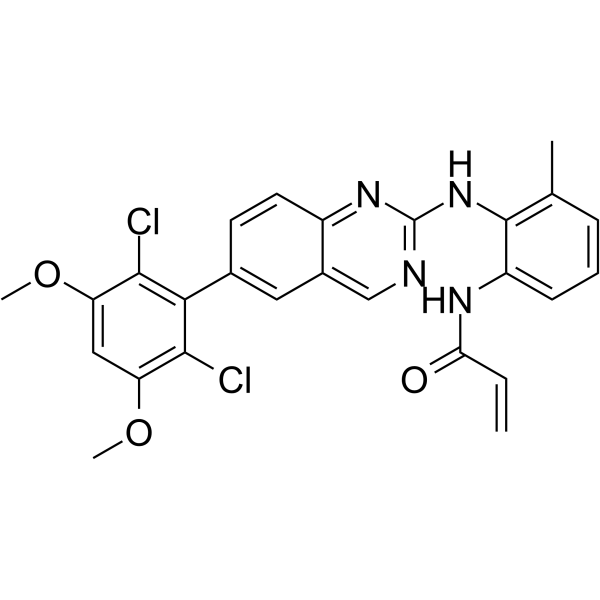
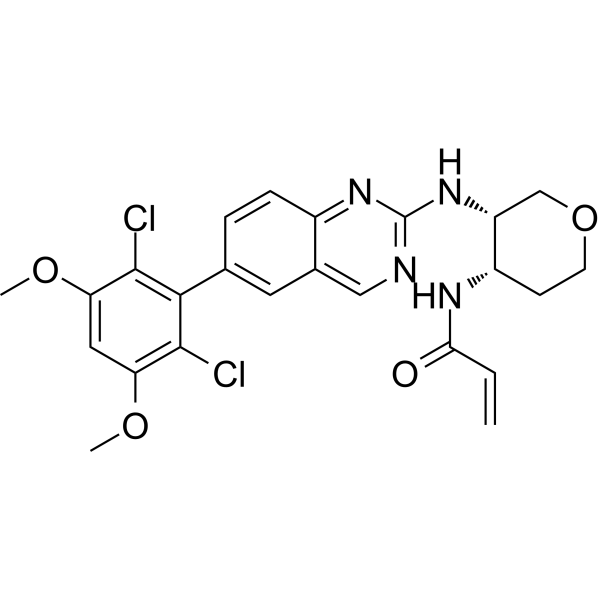
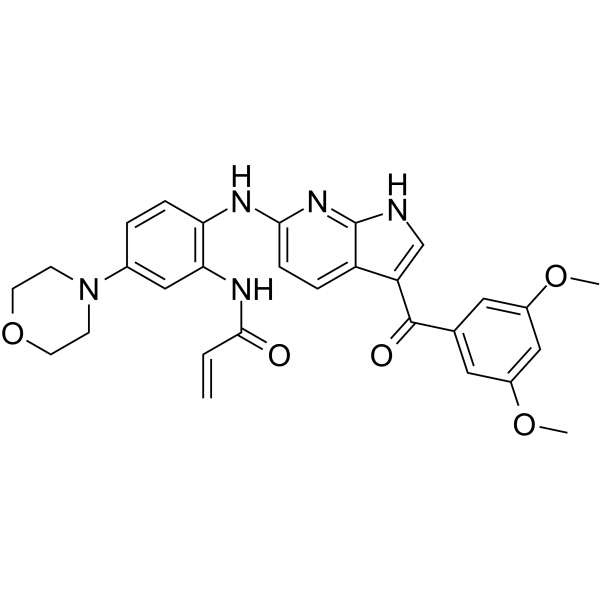
FGFR4-IN-11 (Compound 30) is a potent, selective, covalent FGFR4 inhibitor with an IC50 of 2.1 nM. FGFR4-IN-11 significantly inhibits the FGF19/FGFR4 signaling pathway and shows antitumor activity .
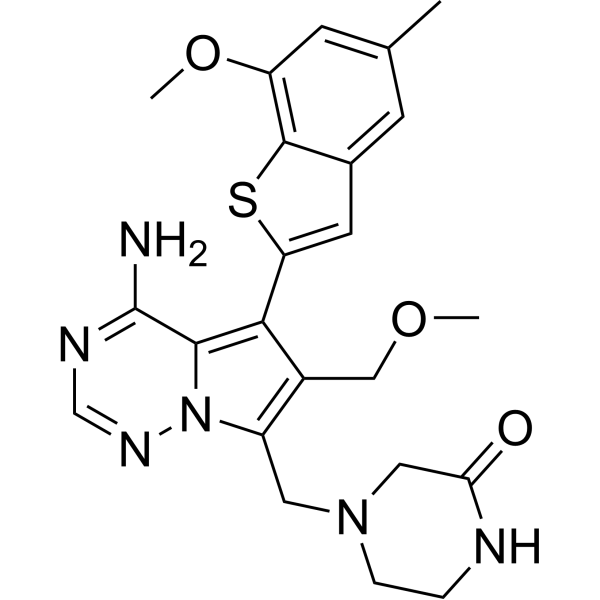
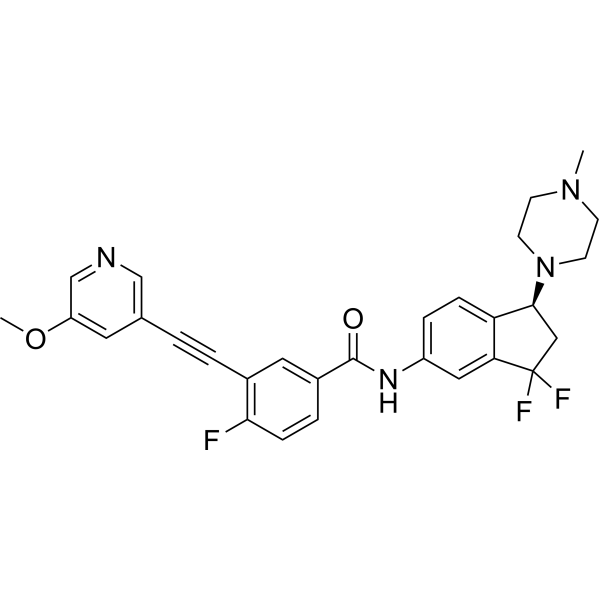
FGFR4-IN-17 (Compound (S)-23) is a piperazinyl diflurindan derivative containing pyridinyl. FGFR4-IN-17 is a FGFR inhibitor with IC50 values of 24.2, 16.1, 78.0, and 68.0 nM for FGFR1, FGFR2, FGFR3, and FGFR4, respectively. FGFR4-IN-17 has antitumor activity .
Fgfr4 Mouse Pre-designed siRNA Set A contains three designed siRNAs for Fgfr4 gene (Mouse), as well as a negative control, a positive control, and a FAM-labeled negative control.
Human FGFR4 mRNA encodes the human fibroblast growth factor receptor 4 (FGFR4) protein, a tyrosine kinase and cell surface receptor for fibroblast growth factors. FGFR4 is involved in the regulation of several pathways, including cell proliferation, cell differentiation, cell migration, lipid metabolism, bile acid biosynthesis, vitamin D metabolism, glucose uptake, and phosphate homeostasis.
FGFR4 is a transcriptional target of the PAX3-FOXO1 fusion gene. FGFR4 expression is significantly higher in rhabdomyosarcoma. FGFR4 V550E is a mutant of FGFR3 that may be present in rhabdomyosarcoma. FGFR4 V550E Recombinant Human Active Protein Kinase is a recombinant FGFR4 V550E protein that can be used to study FGFR4 V550EK-related functions .
Fgfr4 Rat Pre-designed siRNA Set A contains three designed siRNAs for Fgfr4 gene (Rat), as well as a negative control, a positive control, and a FAM-labeled negative control.
FGFR4 Human Pre-designed siRNA Set A contains three designed siRNAs for FGFR4 gene (Human), as well as a negative control, a positive control, and a FAM-labeled negative control.
FGFR4 is a transcriptional target of the PAX3-FOXO1 fusion gene. FGFR4 expression is significantly higher in rhabdomyosarcoma. FGFR3 K650E is a mutant of FGFR3 that may be present in rhabdomyosarcoma. FGFR4 N535K Recombinant Human Active Protein Kinase is a recombinant FGFR4 N535K protein that can be used to study FGFR4 N535K-related functions .
FGFR2/3-IN-1 is a potent and selective FGFR2 and FGFR3 (FGFR) inhibitor with IC50s of 1 nM and 0.5 nM, respectively. FGFR2/3-IN-1 displays >40-fold selectivity over FGFR1/FGFR4 and other kinome. FGFR2/3-IN-1 also inhibits FGFR3 V555L and V555M mutants with IC50s of 2.7 nM and 6.1 nM, respectively .
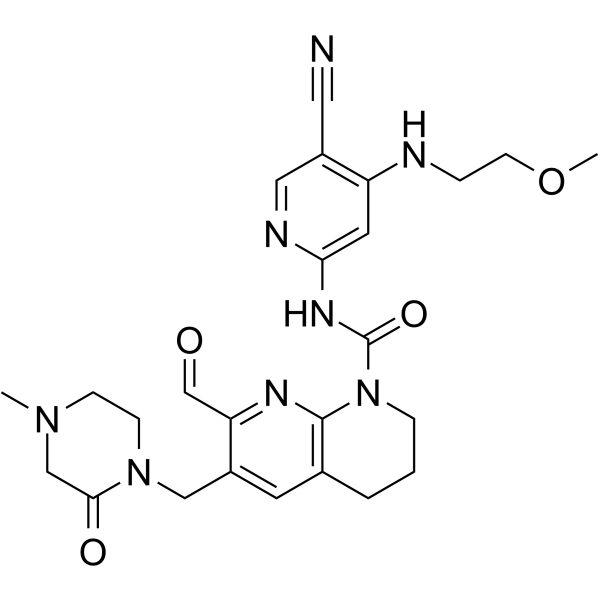
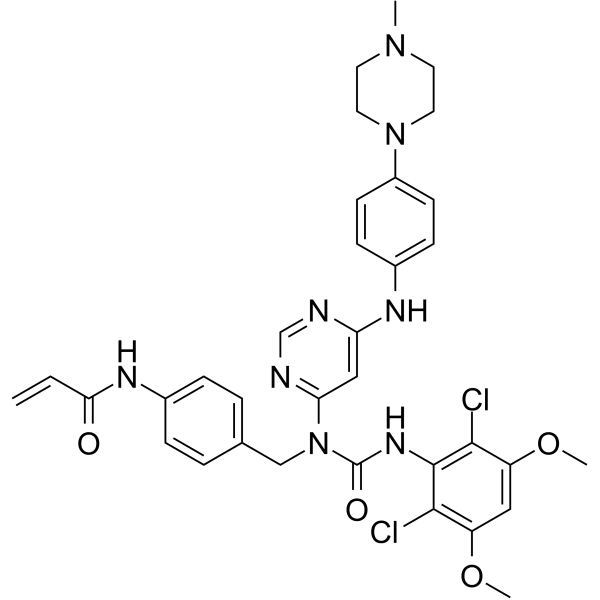
FGFR4-IN-23 (compound 48c) is a FGFR4 inhibitor with an IC50 value of 2.9 nM against FGFR4WT kinase. FGFR4-IN-23 inhibits the phosphorylation of FGFR4, AKT and MAPK .
FGFR4-IN-12 (Compound A34) is a potent inhibitor of FGFR4. FGFR4-IN-12 exhibits improved FGFR4 inhibitory capability and selectivity and excellent anti-proliferative activities against FGFR4-dependent HCC cell lines. FGFR4-IN-12 has the potential for the research of cancer diseases . FGFR4-IN-12 is a click chemistry reagent, it contains an Alkyne group and can undergo copper-catalyzed azide-alkyne cycloaddition (CuAAc) with molecules containing Azide groups.
FGFR4-IN-10 (compound 5a) is a potent and selective FGFR4 inhibitor with an IC50 value of 70.7 nM. FGFR4-IN-10 shows no inhibition against other FGFR family members, i.e. FGFR1, FGFR2 and FGFR3 .
FGFR4-IN-20 (comp 11) is an orally active and selective FGFR4 inhibitor with IC50s of 19 and 36 nM against Huh7 cells and FGFR4 enzyme. FGFR4-IN-20 can be used for hepatocellular carcinoma research .
FGFR4-IN-7 (Compound C3) is a covalent reversible FGFR4 inhibitor with an IC50 value of 0.42 μM. FGFR4-IN-7 induces apoptosis via the FGFR4 signaling pathway blockage. FGFR4-IN-7 can be used for the research of hepatocellular carcinoma (HCC) .
FGFR4-IN-19 (compound 8B) is a potent covalent fibroblast growth factor receptor 4(FGFR4) inhibitor (IC50=1.2 nM). FGFR4-IN-19 achieves high efficiency and isotype selectivity by covalently targeting a rare cysteine (C552) in the FGFR4 kinase domain. FGFR4-IN-19 can be used for hepatocellular carcinoma (HCC) research .
FGFR4-IN-8 (Compound 7v) is an ATP-competitive, highly selective covalent inhibitor of wild-type and gatekeeper mutant FGFR4. FGFR4-IN-8 exhibits excellent potency against FGFR4, FGFR4V550L, FGFR4V550M and FGFR4C552S with IC50s of 0.5, 0.25, 1.6, 931 nM, respectively. FGFR4-IN-8 exhibits potent antiproliferative activity against Hep3B hepatocellular carcinoma cells with the IC50 value of 29 nM. FGFR4-IN-8 demonstrates modest in vivo antitumor efficacy in nude mice bearing the Huh-7 xenograft model .
FGFR4-IN-6 (Compound 9ka) is a covalently reversible FGFR4 inhibitor with an IC50 value of 5.4 nM. FGFR4-IN-6 also exhibits good oral pharmacokinetic properties. FGFR4-IN-6 induces significant tumor regressions in a xenograft mouse model of Hep3B2.1-7 HCC cell line without an obvious sign of toxicity . FGFR4-IN-6 is a click chemistry reagent, it contains an Alkyne group and can undergo copper-catalyzed azide-alkyne cycloaddition (CuAAc) with molecules containing Azide groups.
FIIN-4 is a first-in-class, orally active and covalent FGFR inhibitor with IC50s of 2.6 nM, 2.6 nM, 5.6 nM, 9.2 nM for FGFR1, FGFR2, FGFR3, and FGFR4, respectively. FIIN-4 can inhibit metastatic tumor growth.
IONIS-FGFR4Rx (ISIS 463588) is an antisense inhibitor of fibroblast growth factor receptor 4(FGFR4), which is promising for research of renal diseases .
IONIS-FGFR4Rx (ISIS 463588) sodium is an antisense inhibitor of fibroblast growth factor receptor 4(FGFR4), which is promising for research of renal diseases .
FGFR4-IN-22 (compound 10f) is a potent inhibitor of FGFR4, with the IC50 of 5.4 nM. FGFR4-IN-22 serve as a potential lead compound targeting FGFR4 for anti-HCC agent
development .
FGFR2 is a receptor tyrosine kinase that is involved in many human cancers such as intrahepatic cholangiocarcinomas and hepatocellular carcinomas. FGFR2 N549K is a mutant of FGFR3. FGFR2 N549K Recombinant Human Active Protein Kinase is a recombinant FGFR4 N535K protein that can be used to study FGFR4 N535K-related functions .
FGFR4-IN-9 (Compound 6O) is a selective FGFR4 inhibitor with an IC50 of 75.3 nM. FGFR4-IN-9 effectively inhibits both the growth and angiogenesis of HCC .
FGFR4-IN-5 is a potent and selective covalent FGFR4 inhibitor with an IC50 of 6.5 nM. FGFR4-IN-5 exhibits strong anti-tumor activity in vivo and can be used for hepatocellular carcinoma research .
FGFR4-IN-14 (Compound 27i) is a FGFR4 inhibitor (IC50: 2.4 nM. FGFR4-IN-14 inhibits the proliferation of V550L and N535K mutant strains, with IC50s of 21 nM, 2.5 nM, 171 nM against huh7, BaF3/ETV6-FGFR4-V550L and BaF3/ETV6-FGFR4-N535K cells respectively. FGFR4-IN-14 has potent antitumor efficacy in the Huh7 xenograft model. FGFR4-IN-14 can be used for research of hepatocellular carcinoma (HCC) .
Infigratinib-d3 is a deuterated analog of infigratinib. Infigratinib is an effective inhibitor of the FGFR family, with IC50 values of 0.9 nM, 1.4 nM, 1 nM, and 60 nM for FGFR1, FGFR2, FGFR3, and FGFR4, respectively .
Fexagratinib (Standard) is the analytical standard of Fexagratinib. This product is intended for research and analytical applications. Fexagratinib (AZD4547; ADSK091) is a potent inhibitor of the FGFR family with IC50s of 0.2 nM, 2.5 nM, 1.8 nM, and 165 nM for FGFR1, FGFR2, FGFR3, and FGFR4, respectively.
FGFR-IN-22 (Compound 23) is a FGFR inhibitor with IC50s of 0.631, 1.26, 0.851 and 1 nM for FGFR1, FGFR2, FGFR3 and FGFR4, respectively. FGFR-IN-22 effectively inhibits cell proliferation that depends on the FGFR1 and FGFR3 signaling pathway. FGFR-IN-22 can be used for cancers such as chronic lymphocytic leukemia (CLL) research .
FGFR-IN-13 (compound III-30) is an irreversible covalent fibroblast growth factor receptor (FGFR) inhibitor. FGFR-IN-13 regulates endogenous FGFR1(IC50=0.20±0.02 nM) and FGFR4(IC50=0.40±0.03 nM) mediated signaling pathways by inhibiting the expression of key proteins. FGFR-IN-13 inhibits total-PARP and Bcl-2 protein expressions, and promote Cleaved-PARP and Bax protein expressions in a dose-dependent manner. FGFR-IN-13 has significant antitumor activity and oral activity .
CXF-009 is a selective and covalent FGFR4 inhibitor, with the IC50 of 48 nM. CXF-009 targeting Cys477 and Cys552 of FGFR4, and can be used for the study of hepatocellular carcinoma .
FGFR-IN-21 (Compound FP1) is a selective covalent FGFR4 inhibitor with an IC50 value of 70 nM. FGFR-IN-21 is promising for research of FGFR signaling pathways in cancers .
HDAC-IN-50 is a potent and orally active FGFR and HDAC dual inhibitor with IC50 values of 0.18, 1.2, 0.46, 1.4, 1.3, 1.6, 2.6, 13 nM for FGFR1, FGFR2, FGFR3, FGFR4, HDAC1, HDAC2, HDAC6, HDAC8, respectively. HDAC-IN-50 induces Apoptosis and cell cycle arrest at G0/G1 phase. HDAC-IN-50 decreases the expression of pFGFR1, pERK, pSTAT3. HDAC-IN-50 shows anti-tumor activity .
BW710 is an orally active fibroblast growth factor receptor 2 (FGFR2) inhibitor. BW710 inhibits the proliferation of BaF3-FGFR2 cells with an IC50 of 2.8 nM. BW710 abolishes FGFR2 enzymatic activity and is selective against other 75 tyrosine kinases including FGFR1, FGFR3, and FGFR4 at 1 μM. BW710 suppresses the FGFR2 signaling and selectively inhibits FGFR2-driven cancer cell proliferation. BW710 displays reasonable
pharmacokinetic properties with an oral bioavailability of 29 % in mice .
FGFR-IN-23 (Compound 9p) is a covalent pan FGFR inhibitor with IC50s of 14, 4.2, 5 and 220 nM for FGFR1, FGFR2, FGFR3 and FGFR4, respectively. FGFR-IN-23 also has potent inhibitory activity against gatekeeper mutants, such as FGFR1 V561M and FGFR3 V555M. FGFR-IN-23 suppresses the activation of FGFR-mediated signaling and induces apoptosis. FGFR-IN-23 shows significant antitumor efficacy in RT112 xenograft mouse models. FGFR-IN-23 can be used for cancers and its drug resistance research .
FGFR-IN-9 (Compound 19) is a potent, reversible and orally active FGFR inhibitor with an IC50 of 17.1, 29.6, 30.7, 46.7 and 64.3 nM against FGFR4WT, FGFR3, FGFR4V550L, FGFR2 and FGFR1, respectively .
FGFR-IN-18 (Compound KF7) is a lysine-targeting FGFR covalent inhibitor, with IC50s of: 1.1 nM for FGFR2, 1.3 nM for FGFR1, 31.5 nM for FGFR4. FGFR-IN-18 also has affinity for FGFR3 (inhibition rate of 52% at 10 nM). FGFR-IN-18 covalently modifies Lys485 (an reactive site of FGFRs) .
FGFR2 is a receptor tyrosine kinase that is involved in many human cancers such as intrahepatic cholangiocarcinomas and hepatocellular carcinomas. FGFR2 N549H is a mutant of FGFR3. FGFR2 N549H Recombinant Human Active Protein Kinase is a recombinant FGFR4 N535H protein that can be used to study FGFR4 N535H-related functions .
FGFR4-IN-24 is a selective irreversible covalent FGFR4 inhibitor (IC50 = 1.2 nM). FGFR4-IN-24 shows much weaker activity against the other three FGFR family kinases (FGFR1-3). FGFR4-IN-24 inhibits the FGF19/FGFR4 signaling pathway, effectively suppressing the proliferation of the HuH-7 HCC cell line (GI50 = 17 nM). FGFR4-IN-24 exhibits significant antitumor activity in a HuH-7 mouse xenograft model. FGFR4-IN-24 can be used for the research of hepatocellular carcinoma .
FGFR-IN-2 (compound 1) is a potent FGFR inhibitor with IC50s of 7.3 nM, 4.3 nM, 7.6 nM, 11 nM for FGFR1, FGFR2, FGFR3 and FGFR4, respectively. FGFR-IN-2 has the potential for cancer research .
Infigratinib phosphate (Standard) is the analytical standard of Infigratinib phosphate. This product is intended for research and analytical applications. Infigratinib phosphate (BGJ-398 phosphate; NVP-BGJ398 phosphate) is a potent inhibitor of the FGFR family with IC50 of 0.9 nM, 1.4 nM, 1 nM, and 60 nM for FGFR1, FGFR2, FGFR3, and FGFR4, respectively.
Infigratinib (Standard) is the analytical standard of Infigratinib. This product is intended for research and analytical applications. Infigratinib (BGJ-398; NVP-BGJ398) is a potent inhibitor of the FGFR family with IC50s of 0.9 nM, 1.4 nM, 1 nM, and 60 nM for FGFR1, FGFR2, FGFR3, and FGFR4, respectively.
Pemigatinib (Standard) is the analytical standard of Pemigatinib. This product is intended for research and analytical applications. Pemigatinib (INCB054828) is an orally active, selective FGFR inhibitor with IC50s of 0.4 nM, 0.5 nM, 1.2 nM, 30 nM for FGFR1, FGFR2, FGFR3, FGFR4, respectively. Pemigatinib has the potential for cholangiocarcinoma .
Pemigatinib-d6 (INCB054828-d6) is deuterium labeled Pemigatinib. Pemigatinib (INCB054828) is an orally active, selective FGFR inhibitor with IC50s of 0.4 nM, 0.5 nM, 1.2 nM, 30 nM for FGFR1, FGFR2, FGFR3, FGFR4, respectively. Pemigatinib has the potential for cholangiocarcinoma .
FGFR-IN-11 (compound I-5) is an orally active and covalent FGFR inhibitor with IC50 values of 9.9 nM (FGFR1), 3.1 nM (FGFR2), 16 nM (FGFR3), and 1.8 nM (FGFR4), respectively. FGFR-IN-11 inhibits multiple cancer cell proliferation with nanomolar activity. FGFR-IN-11 inhibits tumor growth significantly in xenograft mice models .
FGFR-IN-8 (Compound 17a) is a highly potent and orally active panFGFR inhibitor against wild-type and mutant FGFRs. FGFR-IN-8 shows inhibition with IC50 values of <0.5, 189.1, <0.5, 22.6, <0.5 and 7.30 nM against FGFR1, V564F-FGFR2, N549H-FGFR2, V555M-FGFR3, FGFR3 and FGFR4, respectively. GFR-IN-8 induces cancer cell apoptosis and shows anticancer activities .
Len-604 is a FGFR inhibitor with IC50 values of 9.71 nM, 9.93 nM, 29.80 nM and 14.48 nM against FGFR4, FGFR1, FGFR2 and FGFR3, respectively. Len-604 reduces the phosphorylation levels of FGFR4 and ERK, and induces DNA damage and apoptosis in cancer cells. Len-604 is applicable to research related to liver cancer .
Fisogatinib (Standard) is the analytical standard of Fisogatinib (HY-100492). This product is intended for research and analytical applications. Fisogatinib (BLU-554) is a potent, highly selective and orally active fibroblast growth factor receptor 4 (FGFR4) inhibitor with an IC50 of 5 nM. Fisogatinib has significant anti-tumor activity in models of hepatocellular carcinoma (HCC) that are dependent on FGFR4 signalling .
FGFR-IN-27 is an orally active, broad-spectrum FGFR inhibitor, with an IC50 of 0.24 nM against human FGFR1, 0.71 nM against FGFR2, 0.87 nM against FGFR3, and 6.50 nM against FGFR4. FGFR-IN-27 inhibits cancer cell proliferation and blocks tumor growth. FGFR-IN-27 reduces the phosphorylation levels of AKT and ERK, induces apoptosis and ferroptosis, increases ROS levels, and decreases GSH levels. FGFR-IN-27 can be used in the research of hepatocellular carcinoma .
FGFR-IN-16 (compound 7N) is a potent inhibitor of FGFR1, FGFR2, and FGFR4, with the IC50s of 8 nM, 4 nM and 3.8 nM, respectively. FGFR-IN-16 plays an important role in cancer research 1].
Roblitinib (Standard) is the analytical standard of Roblitinib (HY-101568). This product is intended for research and analytical applications. Roblitinib (FGF-401) is an orally active and highly selective FGFR4 inhibitor with an IC50 of 1.9 nM . Roblitinib has antitumor activity .
E7090 (Standard) is the analytical standard of E7090 (HY-101466). This product is intended for research and analytical applications. E7090 is an orally available, potent, and selective FGFR inhibitor with IC50s of 0.71 nM, 0.50 nM, 1.2 nM, and 120 nM for FGFR1/FGFR2/FGFR3/FGFR4, respectively .
PRN1371 (Standard) is the analytical standard of PRN1371 (HY-101768). This product is intended for research and analytical applications. PRN1371 is a highly selective and potent FGFR1-4 and CSF1R inhibitor with IC50s of 0.6, 1.3, 4.1, 19.3 and 8.1 nM for FGFR1, FGFR2, FGFR3, FGFR4 and CSF1R, respectively .
H3B-6527 (Standard) is the analytical standard of H3B-6527 (HY-100491). This product is intended for research and analytical applications. H3B-6527 is an orally active, highly selective and covalent FGFR4 inhibitor with an IC50 of <1.2 nM. H3B-6527 has at least 250-fold selectivity over FGFR1-3 with IC50s of 320 nM, 1290 nM and 1060 nM respectively. H3B-6527 has potent anti-cancer activity .
FGFR-IN-26 is an orally active FGFR inhibitor. FGFR-IN-26 inhibits FGFR2 wild-type and clinically relevant resistance mutations. FGFR-IN-26 inhibits tumor growth in FGFR2-amplified xenograft mouse models. FGFR-IN-26 can be used for the research of cancer, suah as gastric carcinoma .
FGFR3-IN-12 is a selective fibroblast growth factor receptor 3 (FGFR3) inhibitor with an IC50 of 6.8 nM. FGFR3-IN-12 shows an IC50 of 19.2 nM against FGFR3V555M and an IC50 of 16.9 nM against TNK1 (Thirty-eight Negative Kinase 1). FGFR3-IN-12 inhibits cancer cells proliferation and induces caspase-mediated apoptosis. FGFR3-IN-12 exhibits antitumor activity in bladder cancer xenografts mice models. FGFR3-IN-12 can be used for the research of cancer, such as bladder cancer .
U3-1784 is a humanized antibody expressed in CHO that targets FGFR4/CD334. U3-1784 is equipped with a huIgG1 heavy chain and a huλ light chain, with a predicted molecular weight (MW) of 150 kDa. The isotype control for U3-1784 can be referenced as Human IgG1 kappa, Isotype Control (HY-P99001).
The FGFR-4 protein is a tyrosine protein kinase and cell surface receptor for fibroblast growth factor that regulates diverse cellular processes such as proliferation, differentiation, migration, lipid metabolism, and bile acid biosynthesis. Notably, it contributes to the downregulation of the bile acid synthase CYP7A1 in response to FGF19. FGFR-4 Protein, Human (HEK293, His-Avi) is the recombinant human-derived FGFR-4 protein, expressed by HEK293 , with C-Avi, C-His labeled tag.
The FGFR-4 protein is a tyrosine protein kinase and cell surface receptor for fibroblast growth factor that regulates diverse cellular processes such as proliferation, differentiation, migration, lipid metabolism, and bile acid biosynthesis. Notably, it contributes to the downregulation of the bile acid synthase CYP7A1 in response to FGF19. FGFR-4 Protein, Human (Biotinylated, HEK293, His-Avi) is the recombinant human-derived FGFR-4 protein, expressed by HEK293 , with C-His, C-Avi labeled tag.
The FGFR-4 protein is a tyrosine-protein kinase receptor for fibroblast growth factor that regulates cellular processes, lipid metabolism, bile acid biosynthesis, and more.Its effects include downregulation of CYP7A1 in response to FGF19.FGFR-4 Protein, Rat (HEK293, hFc) is the recombinant rat-derived FGFR-4 protein, expressed by HEK293 , with C-hFc labeled tag.
The FGFR-4 protein is a tyrosine-protein kinase receptor for fibroblast growth factor that regulates cellular processes, lipid metabolism, bile acid biosynthesis, and more.Its effects include downregulation of CYP7A1 in response to FGF19.FGFR-4 Protein, Rat (HEK293, His) is the recombinant rat-derived FGFR-4 protein, expressed by HEK293 , with C-His labeled tag.
The FGFR-4 protein is a tyrosine protein kinase and cell surface receptor for fibroblast growth factor that regulates diverse cellular processes such as proliferation, differentiation, migration, lipid metabolism, and bile acid biosynthesis. Notably, it contributes to the downregulation of the bile acid synthase CYP7A1 in response to FGF19. FGFR-4 Protein, Human (HEK293, His) is the recombinant human-derived FGFR-4 protein, expressed by HEK293 , with C-His labeled tag.
FGFR-4 protein is a tyrosine protein kinase that serves as a cell surface receptor for fibroblast growth factor and controls proliferation, differentiation, migration, lipid metabolism, bile acid biosynthesis, glucose uptake, vitamin D metabolism, and phosphate and other cellular processes homeostasis. It significantly downregulates CYP7A1 in response to FGF19. FGFR-4 Protein, Mouse (HEK293, His) is the recombinant mouse-derived FGFR-4 protein, expressed by HEK293 , with C-His labeled tag.
The leptin R/LEPR protein is a receptor protein that binds to the hormone leptin. It plays a vital role in regulating energy balance and body weight. FGFR-4 Protein, Human (HEK293, Fc) is the recombinant human-derived FGFR-4 protein, expressed by HEK293 , with C-hFc labeled tag.
The FGFR-4 protein is a tyrosine-protein kinase receptor for fibroblast growth factor that regulates cellular processes, lipid metabolism, bile acid biosynthesis, and more.Its effects include downregulation of CYP7A1 in response to FGF19.FGFR-4 Protein, Rat (HEK293, Fc, Solution) is the recombinant rat-derived FGFR-4 protein, expressed by HEK293 , with C-hFc labeled tag.
The FGFR-4 protein is a cell surface receptor for tyrosine kinase and fibroblast growth factor. FGFR4, a receptor for FGF-1 and FGF-3 highly expressed in cancer cells, promotes tumor progression in colon cancer by activating Mek/Erk and MMP-7. FGFR-4 Protein, Rhesus Macaque (HEK293, His) is the recombinant Rhesus Macaque-derived FGFR-4 protein, expressed by HEK293 , with C-His labeled tag.
The FGFR-4 protein is a cell surface receptor for tyrosine kinase and fibroblast growth factor. FGFR4, a receptor for FGF-1 and FGF-3 highly expressed in cancer cells, promotes tumor progression in colon cancer by activating Mek/Erk and MMP-7. FGFR-4 Protein, Rhesus Macaque (HEK293, Fc) is the recombinant Rhesus Macaque-derived FGFR-4 protein, expressed by HEK293 , with C-mFc labeled tag.
The FGFR-4 protein is a tyrosine protein kinase and cell surface receptor for fibroblast growth factor that regulates diverse cellular processes such as proliferation, differentiation, migration, lipid metabolism, and bile acid biosynthesis. Notably, it contributes to the downregulation of the bile acid synthase CYP7A1 in response to FGF19. FGFR-4 Protein, Human (Biotinylated, HEK293, His) is the recombinant human-derived FGFR-4 protein, expressed by HEK293 , with C-His labeled tag.
FGFR-4 protein is a tyrosine protein kinase that serves as a cell surface receptor for fibroblast growth factor and controls proliferation, differentiation, migration, lipid metabolism, bile acid biosynthesis, glucose uptake, vitamin D metabolism, and phosphate and other cellular processes homeostasis. It significantly downregulates CYP7A1 in response to FGF19. FGFR-4 Protein, Mouse (HEK293, His-Fc) is the recombinant mouse-derived FGFR-4 protein, expressed by HEK293 , with C-hFc, C-His labeled tag.
The FGFR-4 protein is a tyrosine protein kinase and cell surface receptor for fibroblast growth factor that regulates diverse cellular processes such as proliferation, differentiation, migration, lipid metabolism, and bile acid biosynthesis. Notably, it contributes to the downregulation of the bile acid synthase CYP7A1 in response to FGF19. FGFR-4 Protein, Human (Biotinylated, sf9, Avi) is the recombinant human-derived FGFR-4, expressed by Sf9 insect cells, with Avi labeled tag. The total length of FGFR-4 Protein, Human (Biotinylated, sf9, Avi) is 343 a.a..
FGFR2/3-IN-1 is a potent and selective FGFR2 and FGFR3 (FGFR) inhibitor with IC50s of 1 nM and 0.5 nM, respectively. FGFR2/3-IN-1 displays >40-fold selectivity over FGFR1/FGFR4 and other kinome. FGFR2/3-IN-1 also inhibits FGFR3 V555L and V555M mutants with IC50s of 2.7 nM and 6.1 nM, respectively .
Infigratinib-d3 is a deuterated analog of infigratinib. Infigratinib is an effective inhibitor of the FGFR family, with IC50 values of 0.9 nM, 1.4 nM, 1 nM, and 60 nM for FGFR1, FGFR2, FGFR3, and FGFR4, respectively .
Pemigatinib-d6 (INCB054828-d6) is deuterium labeled Pemigatinib. Pemigatinib (INCB054828) is an orally active, selective FGFR inhibitor with IC50s of 0.4 nM, 0.5 nM, 1.2 nM, 30 nM for FGFR1, FGFR2, FGFR3, FGFR4, respectively. Pemigatinib has the potential for cholangiocarcinoma .
Fgfr4 Mouse Pre-designed siRNA Set A contains three designed siRNAs for Fgfr4 gene (Mouse), as well as a negative control, a positive control, and a FAM-labeled negative control.
Human FGFR4 mRNA encodes the human fibroblast growth factor receptor 4 (FGFR4) protein, a tyrosine kinase and cell surface receptor for fibroblast growth factors. FGFR4 is involved in the regulation of several pathways, including cell proliferation, cell differentiation, cell migration, lipid metabolism, bile acid biosynthesis, vitamin D metabolism, glucose uptake, and phosphate homeostasis.
Fgfr4 Rat Pre-designed siRNA Set A contains three designed siRNAs for Fgfr4 gene (Rat), as well as a negative control, a positive control, and a FAM-labeled negative control.
FGFR4 Human Pre-designed siRNA Set A contains three designed siRNAs for FGFR4 gene (Human), as well as a negative control, a positive control, and a FAM-labeled negative control.
IONIS-FGFR4Rx (ISIS 463588) is an antisense inhibitor of fibroblast growth factor receptor 4(FGFR4), which is promising for research of renal diseases .
IONIS-FGFR4Rx (ISIS 463588) sodium is an antisense inhibitor of fibroblast growth factor receptor 4(FGFR4), which is promising for research of renal diseases .
Western blot analysis of extracts from THP-1(lane 2(20μg), Jurkat (lane 3(20μg) and NIH3T3(lane 4(20μg) using FOXO1A (HY-P80132) Rabbit mAb. Proteins were transferred
to a PVDF membrane and blocked with 5% non-fat milk in TBST for 2 hour at room temperature. The primary antibody (1/1000) and Loading control antibody (Beta Actin, HY-P80438, 1/10000) was
used in 5% non-fat milk in TBST at 4°C overnight. Goat Anti-Mouse/Rabbit IgG-HRP Secondary Antibody (1/10000) was used for 1 hour at room temperature.
Western blot analysis of extracts from THP-1(lane 2(20μg), Jurkat (lane 3(20μg) and NIH3T3(lane 4(20μg) using FOXO1A (HY-P80132) Rabbit mAb. Proteins were transferred
to a PVDF membrane and blocked with 5% non-fat milk in TBST for 2 hour at room temperature. The primary antibody (1/1000) and Loading control antibody (Beta Actin, HY-P80438, 1/10000) was
used in 5% non-fat milk in TBST at 4°C overnight. Goat Anti-Mouse/Rabbit IgG-HRP Secondary Antibody (1/10000) was used for 1 hour at room temperature.
Western blot analysis of extracts from THP-1(lane 2(20μg), Jurkat (lane 3(20μg) and NIH3T3(lane 4(20μg) using FOXO1A (HY-P80132) Rabbit mAb. Proteins were transferred
to a PVDF membrane and blocked with 5% non-fat milk in TBST for 2 hour at room temperature. The primary antibody (1/1000) and Loading control antibody (Beta Actin, HY-P80438, 1/10000) was
used in 5% non-fat milk in TBST at 4°C overnight. Goat Anti-Mouse/Rabbit IgG-HRP Secondary Antibody (1/10000) was used for 1 hour at room temperature.
Western blot analysis of extracts from THP-1(lane 2(20μg), Jurkat (lane 3(20μg) and NIH3T3(lane 4(20μg) using FOXO1A (HY-P80132) Rabbit mAb. Proteins were transferred
to a PVDF membrane and blocked with 5% non-fat milk in TBST for 2 hour at room temperature. The primary antibody (1/1000) and Loading control antibody (Beta Actin, HY-P80438, 1/10000) was
MedchemExpress Validation 03
Western blot analysis of extracts from THP-1(lane 2(20μg), Jurkat (lane 3(20μg) and NIH3T3(lane 4(20μg) using FOXO1A (HY-P80132) Rabbit mAb. Proteins were transferred
MedchemExpress Validation 04
Western blot analysis of extracts from THP-1(lane 2(20μg), Jurkat (lane 3(20μg) and NIH3T3(lane 4(20μg) using FOXO1A (HY-P80132) Rabbit mAb. Proteins were transferred
to a PVDF membrane and blocked with 5% non-fat milk in TBST for 2 hour at room temperature. The primary antibody (1/1000) and Loading control antibody (Beta Actin, HY-P80438, 1/10000) was
used in 5% non-fat milk in TBST at 4°C overnight. Goat Anti-Mouse/Rabbit IgG-HRP Secondary Antibody (1/10000) was used for 1 hour at room temperature.
MedchemExpress Validation
Western blot analysis of extracts from THP-1(lane 2(20μg), Jurkat (lane 3(20μg) and NIH3T3(lane 4(20μg) using FOXO1A (HY-P80132) Rabbit mAb. Proteins were transferred
to a PVDF membrane and blocked with 5% non-fat milk in TBST for 2 hour at room temperature. The primary antibody (1/1000) and Loading control antibody (Beta Actin, HY-P80438, 1/10000) was
used in 5% non-fat milk in TBST at 4°C overnight. Goat Anti-Mouse/Rabbit IgG-HRP Secondary Antibody (1/10000) was used for 1 hour at room temperature.
Western blot analysis of extracts from THP-1(lane 2(20μg), Jurkat (lane 3(20μg) and NIH3T3(lane 4(20μg) using FOXO1A (HY-P80132) Rabbit mAb. Proteins were transferred
to a PVDF membrane and blocked with 5% non-fat milk in TBST for 2 hour at room temperature. The primary antibody (1/1000) and Loading control antibody (Beta Actin, HY-P80438, 1/10000) was
used in 5% non-fat milk in TBST at 4°C overnight. Goat Anti-Mouse/Rabbit IgG-HRP Secondary Antibody (1/10000) was used for 1 hour at room temperature.
MedchemExpress Validation
Western blot analysis of extracts from THP-1(lane 2(20μg), Jurkat (lane 3(20μg) and NIH3T3(lane 4(20μg) using FOXO1A (HY-P80132) Rabbit mAb. Proteins were transferred
to a PVDF membrane and blocked with 5% non-fat milk in TBST for 2 hour at room temperature. The primary antibody (1/1000) and Loading control antibody (Beta Actin, HY-P80438, 1/10000) was
used in 5% non-fat milk in TBST at 4°C overnight. Goat Anti-Mouse/Rabbit IgG-HRP Secondary Antibody (1/10000) was used for 1 hour at room temperature.
MedchemExpress Validation
Western blot analysis of extracts from THP-1(lane 2(20μg), Jurkat (lane 3(20μg) and NIH3T3(lane 4(20μg) using FOXO1A (HY-P80132) Rabbit mAb. Proteins were transferred
to a PVDF membrane and blocked with 5% non-fat milk in TBST for 2 hour at room temperature. The primary antibody (1/1000) and Loading control antibody (Beta Actin, HY-P80438, 1/10000) was
used in 5% non-fat milk in TBST at 4°C overnight. Goat Anti-Mouse/Rabbit IgG-HRP Secondary Antibody (1/10000) was used for 1 hour at room temperature.
MedchemExpress Validation
Western blot analysis of extracts from THP-1(lane 2(20μg), Jurkat (lane 3(20μg) and NIH3T3(lane 4(20μg) using FOXO1A (HY-P80132) Rabbit mAb. Proteins were transferred
to a PVDF membrane and blocked with 5% non-fat milk in TBST for 2 hour at room temperature. The primary antibody (1/1000) and Loading control antibody (Beta Actin, HY-P80438, 1/10000) was
used in 5% non-fat milk in TBST at 4°C overnight. Goat Anti-Mouse/Rabbit IgG-HRP Secondary Antibody (1/10000) was used for 1 hour at room temperature.
MedchemExpress Validation
Western blot analysis of extracts from THP-1(lane 2(20μg), Jurkat (lane 3(20μg) and NIH3T3(lane 4(20μg) using FOXO1A (HY-P80132) Rabbit mAb. Proteins were transferred
to a PVDF membrane and blocked with 5% non-fat milk in TBST for 2 hour at room temperature. The primary antibody (1/1000) and Loading control antibody (Beta Actin, HY-P80438, 1/10000) was
used in 5% non-fat milk in TBST at 4°C overnight. Goat Anti-Mouse/Rabbit IgG-HRP Secondary Antibody (1/10000) was used for 1 hour at room temperature.
MedchemExpress Validation
Western blot analysis of extracts from THP-1(lane 2(20μg), Jurkat (lane 3(20μg) and NIH3T3(lane 4(20μg) using FOXO1A (HY-P80132) Rabbit mAb. Proteins were transferred
to a PVDF membrane and blocked with 5% non-fat milk in TBST for 2 hour at room temperature. The primary antibody (1/1000) and Loading control antibody (Beta Actin, HY-P80438, 1/10000) was
used in 5% non-fat milk in TBST at 4°C overnight. Goat Anti-Mouse/Rabbit IgG-HRP Secondary Antibody (1/10000) was used for 1 hour at room temperature.
MedchemExpress Validation
Western blot analysis of extracts from THP-1(lane 2(20μg), Jurkat (lane 3(20μg) and NIH3T3(lane 4(20μg) using FOXO1A (HY-P80132) Rabbit mAb. Proteins were transferred
to a PVDF membrane and blocked with 5% non-fat milk in TBST for 2 hour at room temperature. The primary antibody (1/1000) and Loading control antibody (Beta Actin, HY-P80438, 1/10000) was
used in 5% non-fat milk in TBST at 4°C overnight. Goat Anti-Mouse/Rabbit IgG-HRP Secondary Antibody (1/10000) was used for 1 hour at room temperature.
MedChemExpress values your privacy and your trust is important to us. We use cookies to enhance your website experience. Some cookies are necessary to run the website.
Privacy and Cookie Policy

