1. Search Result
Search Result
Results for "

GluN1

" in MedChemExpress (MCE) Product Catalog:

34

Inhibitors & Agonists

2

Peptides

1

Inhibitory Antibodies

3

Oligonucleotides

Targets Recommended:
Cat. No. Product Name Target Research Areas Chemical Structure
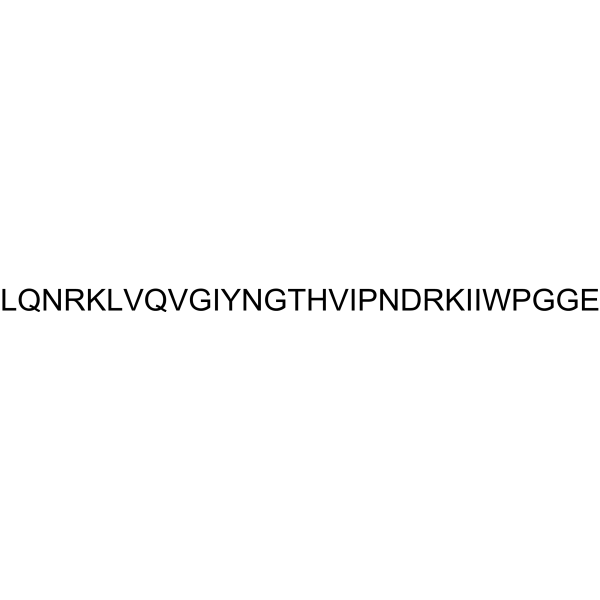
  • HY-P5912

    iGluR Calcium Channel Neurological Disease
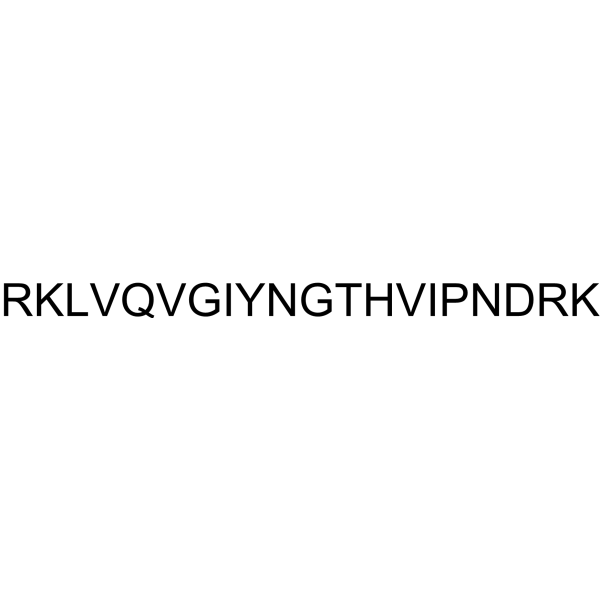
    GluN1 (356-385) is a polypeptide targeting NMDAR GluN1. GluN1 (356-385) induces the production of autoantibodies, which reduce the density of cell surface NMDAR clusters, impair long-term potentiation, and decrease NMDAR-mediated Ca 2+ influx. As an immunogen, GluN1 (356-385) induces symptoms similar to anti-NMDAR encephalitis, including memory loss, in mice. GluN1 (356-385) can be used to establish a mouse model that mimics the pathogenesis of anti-NMDAR encephalitis. GluN1 (356-385) is applicable to research related to anti-NMDAR encephalitis [1].
    GluN1(356-385)
  • HY-13457
    TCN 201
    1 Publications Verification

    iGluR Neurological Disease
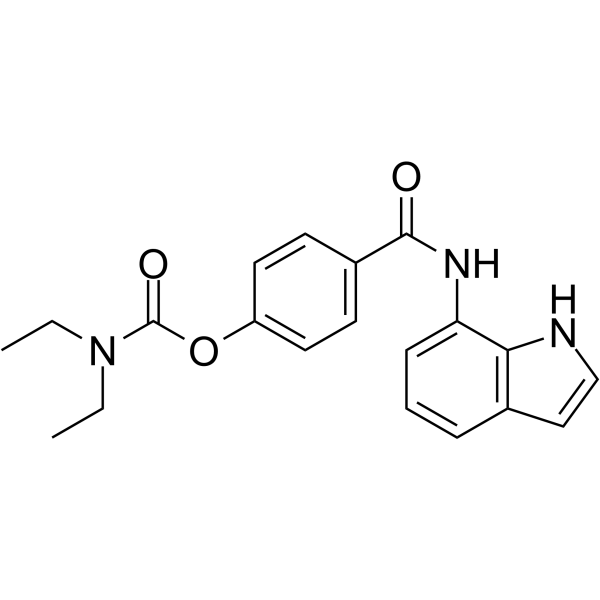
    TCN 201 is a potent, selective and non-competitive antagonist of GluN1/GluN2A NMDA receptor, with a pIC50 of 6.8. TCN 201 is selective for GluN1/GluN2A NMDA receptor over GluN1/GluN2B NMDA receptor (pIC50<4.3) [1] .
    TCN 201
  • HY-107701

    iGluR Neurological Disease
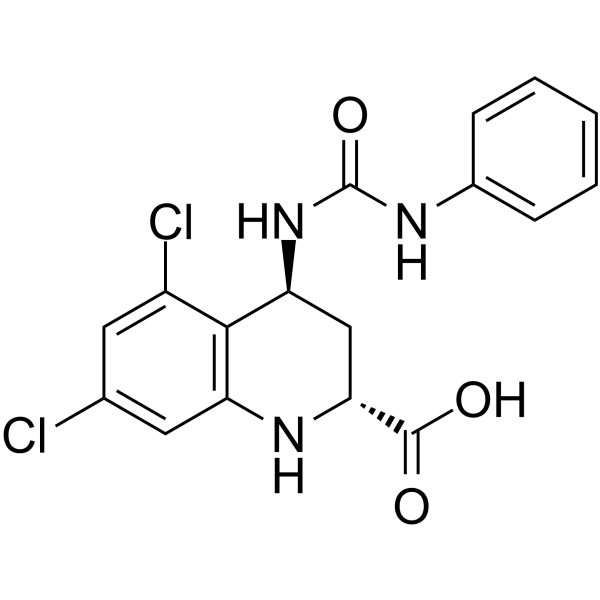
    CGP 78608 hydrochloride is a highly potent and selective antagonist at the glycine-binding site of the NMDA receptor, with an IC50 of 6 nM. CGP 78608 hydrochloride acts as a potentiator of GluN1/GluN3A-mediated glycine currents, with an estimated EC50 in the low nM range (26.3 nM). Anticonvulsant activity [1] .
    CGP 78608 hydrochloride
  • HY-172997

    iGluR Neurological Disease
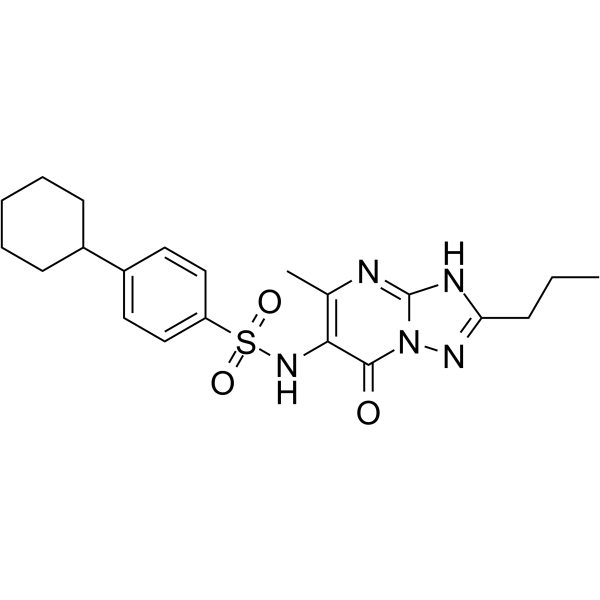
    GluN1/3A-IN-1 (Compound GM-10) is a GluN1/GluN3A NMDA receptor inhibitor. GluN1/3A-IN-1 exhibits potent inhibitory activity against GluN1/GluN3A (IC50: 0.98 µM). GluN1/3A-IN-1 exerts its inhibitory effect by targeting the pre-M1 region and forming hydrogen bond interactions with key residues. GluN1/3A-IN-1 can be used to study GluN1/GluN3A-related neurological diseases [1].
    GluN1/3A-IN-1
  • HY-124569

    iGluR Neurological Disease
    NAB-14 is a potent, selective, orally active and non-competitive GluN2C/2D antagonists with an IC50 of 580 nM for GluN1/GluN2D. NAB-14 shows >800-fold selective for recombinant GluN2C and GluN2D over GluN2A and GluN2B. NAB-14 can cross the blood-brain-barrier [1].
    NAB-14
  • HY-101178

    iGluR Neurological Disease
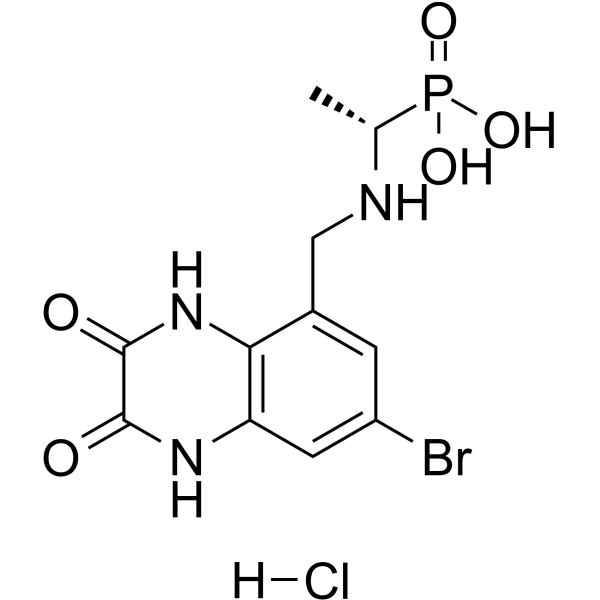
    L-689560 is a potent N-methyl-D-aspartate (NMDA) receptor antagonist at the GluN1 glycine binding site. L-689560 is widely used as a radiolabeled ligand in binding studies and used for study the roles of NMDA receptors in normal neurological processes as well as in diseases [1] .
    L-689560
  • HY-P5911

    iGluR Inflammation/Immunology
    GluN1 (359-378) is an anti-N-methyl-D-aspartate receptor (NMDAR) peptide. GluN1 (359-378) can cross the blood-brain barrier. GluN1 (359-378) can be used to study anti-NMDAR encephalitis therapy targeting the immune system [1].
    GluN1(359-378)
  • HY-15703
    QNZ46
    1 Publications Verification

    iGluR Neurological Disease
    QNZ46 is a highly selective noncompetitive NMDA receptor antagonist targeting GluN2C/D (IC50=3.9 μM), GluN1/GluN2C (IC50=7.1 μM), and GluN1/GluN2D (IC50=182 μM) subunits. QNZ46 inhibits glutamate-mediated calcium influx, thereby blocking excitotoxicity. QNZ46 is membrane permeable and can cross the blood-brain barrier, where it inhibits myelin damage and axonal degeneration [1] .
    QNZ46
  • HY-175442

    iGluR Neurological Disease
    GluN1/3A-IN-2 (Compound DD-1) is a selective GluN1/GluN3A NMDA receptor inhibitor with an IC50 of 1.26  μM for GluN1/GluN3A NMDA receptor. GluN1/3A-IN-2 can be used for neurological and psychiatric disorders research [1].
    GluN1/3A-IN-2
  • HY-178121

    iGluR Neurological Disease Inflammation/Immunology
    JNJ-78911118 is a potent, brain-penetrant, selective GluN2A antagonist (IC50 = 44 nM). JNJ-78911118 shows >200-fold selectivity against GluN1/2B, 2C and 2D receptors. JNJ-78911118 functions as a negative allosteric modulator (NAM) by insurmountably suppressing glutamate efficacy and reducing glycine potency at GluN1/2A receptors. JNJ-78911118 produces profound pharmacodynamic effects in vivo. JNJ-78911118 can be used for depression research [1].
    JNJ-78911118
  • HY-129527

    iGluR Neurological Disease
    GNE-9278 is a highly selective positive allosteric modulator of NMDAR that acts at the GluN1 transmembrane domain (TMD). GNE-9278 acts on activated NMDARs to increase peak current and agonist affinity [1].
    GNE-9278
  • HY-P991611

    iGluR Inflammation/Immunology
    ART5803 is a humanized IgG1 monoclonal antibody inhibitor targeting NMDAR. ART5803 binds to the N-terminal domain (NTD) of the NMDAR GluN1 subunit (GluN1-NTD) with a high affinity. ART5803 blocks NMDAR internalization induced by pathogenic autoantibodies and restores cell-surface NMDAR expression and functions. ART5803 reverses behavioral abnormalities and NMDAR expression in marmoset disease models. ABT-147 can be used to study anti-NMDAR encephalitis [1].
    ART5803
  • HY-112095

    ENS-101 free base

    iGluR Neurological Disease
    EVT-101 free base is a GluN2B antagonist. EVT-101 free base binds at the same GluN1/GluN2B dimer interface as Ifenprodil (HY-12882). EVT-101 free base inhibits calcium influx in chicken-derived cells, with an EC50 of 22 nM. EVT-101 can be used in the research of brain disorders [1] .
    EVT-101 free base
  • HY-W115558

    Serine Racemase (SR) Neurological Disease
    L-Serine-O-sulfate potassium is a serine racemase (Srr) inhibitor. L-Serine-O-sulfate potassium attenuates the chronic constriction injury (CCI)-induced increases in NO levels, nNOS phosphorylation at Ser847, PKC-dependent GluN1 phosphorylation at Ser896, and the development of mechanical allodynia in mice. L-Serine-O-sulfate potassium can be used for the research of peripheral neuropathy [1].
    L-Serine-O-sulfate potassium
  • HY-117734

    iGluR Neurological Disease
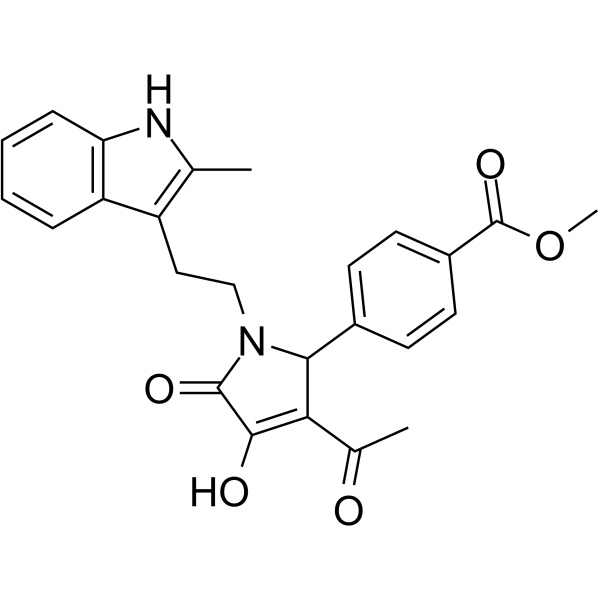
    PYD-106 is a stereoselective pyrrolidinone (PYD) positive allosteric modulator for GluN2C-containing NMDA receptors. PYD-106 increases opening frequency and open time of single channel currents activated by maximally effective concentrations of agonist but only has modest effects on glutamate and glycine EC50. PYD-106 selectively enhances the responses of diheteromeric GluN1/GluN2C receptors but not triheteromeric GluN1/GluN2A/GluN2C receptors [1].
    PYD-106
  • HY-179108

    iGluR Neurological Disease
    NMDAR modulator 1 (Compound 12) is a positive, allosteric GluN1/GluN2B receptor modulator. NMDAR modulator 1 enhances NMDAR current. NMDAR modulator 1 can be used in the research of psychiatric disorders [1].
    NMDAR modulator 1
  • HY-129517

    iGluR Neurological Disease
    UBP714 exhibts agonistic activity for recombinant GluN1/GluN2 receptor by binding to the positive allosteric site (PAM) of NMDARs. UBP714 enhances NMDAR-mediated field excitatory postsynaptic potentials (f-EPSPs) in Xenopus oocytes [1].
    UBP714
  • HY-107712

    iGluR Neurological Disease
    TCN 213 is a selective, surmountable, glycine-dependentlly GluN1/GluN2A NMDAR antagonist with IC50s of 0.55, 3.5, 40 μM in the presence of 75, 750, 7500 nM glycine, respectively. TCN 213 can be used to monitor, pharmacologically, the switch in NMDAR expression in developing cortical neurones [1] .
    TCN 213
  • HY-169951

    iGluR Neurological Disease
    Lu AF90103 (Compound 42e) is a methyl ester prodrug of compound 42d capable of penetrating the blood-brain barrier. Compound 42d acts as a partial agonist of the GluN1/GluN2B complex, exhibiting 24% efficacy, and has an EC50 value of 78 nM. Lu AF90103 plays an important role in neuropsychiatric diseases research [1].
    Lu AF90103
  • HY-120523

    iGluR Neurological Disease
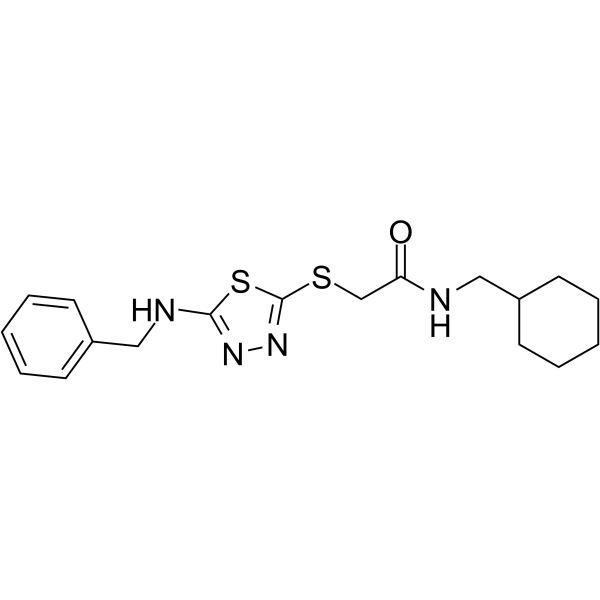
    UBP646 is a potent GluN1/GluN2D receptors potentiator, and also potentiates the other three subtypes, GluN1/GluN2A, GluN1/GluN2B, and GluN1/GluN2C receptors [1].
    UBP646
  • HY-100839

    D,L-(tetrazol-5-yl)glycine; LY 285265

    iGluR Neurological Disease
    (RS)-(Tetrazol-5-yl)glycine (D,L-(tetrazol-5-yl)glycine) is a highly potent and selective N-methyl-D-aspartate (NMDA) receptor agonist [1]. (RS)-(Tetrazol-5-yl)glycine has EC50s of 99 nM, 1.7 μM for GluN1/GluN2D and GluN1/GluN2A, respectively . (RS)-(Tetrazol-5-yl)glycine induces seizure responses and Fos in mice .
    (RS)-(Tetrazol-5-yl)glycine
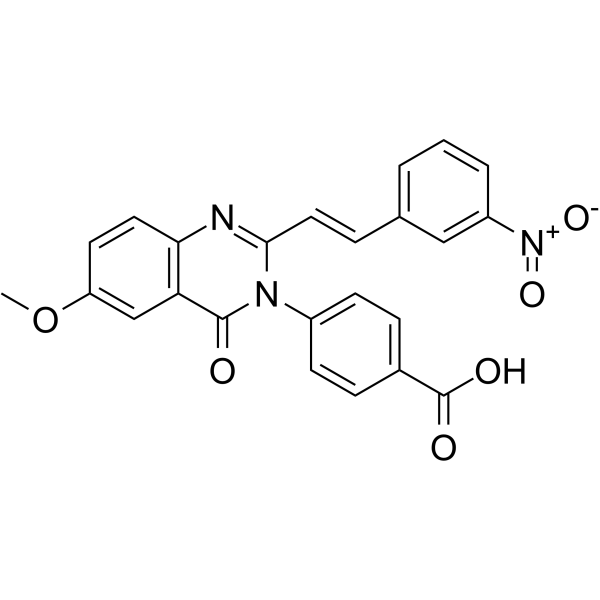
  • HY-172213

    iGluR Neurological Disease
    (3S,6R)-NML is a NMDA receptor antagonist, with pIC50s of 4.8 (GluN1-GluN2A), 4.6 (GluN1-GluN2B), 5.0 (GluN1-GluN2C), 5.0 (GluN1-GluN2D) respectively. (3S,6R)-NML can be used for depression research [1].
    (3S,6R)-NML
  • HY-107701A

    iGluR Neurological Disease
    CGP 78608 is a highly potent and selective antagonist at the glycine-binding site of the NMDA receptor, with an IC50 of 6 nM. CGP 78608 acts as a potentiator of GluN1/GluN3A-mediated glycine currents, with an estimated EC50 in the low nM range (26.3 nM). CGP 78608 has anticonvulsant activities [1] .
    CGP-78608
  • HY-148611

    iGluR Neurological Disease
    NSC339614 potassium is a selective GluN1/GluN2C and GluN1/GluN2D receptor enhancer with the activity of enhancing neuronal responses to specific NMDA receptors. NSC339614 potassium can selectively enhance the signaling of GluN1/GluN2C and GluN1/GluN2D receptors without affecting other NMDA receptors. The mechanism of action of NSC339614 potassium does not compete with agonists of L-glutamate or glycine, nor does it depend on membrane potential. The activity of NSC339614 potassium depends on the specific structure of the agonist ligand binding domain, showing its potential as a novel pharmacological agent for studying the function of NMDA receptor subtypes and providing new lead compounds for a variety of neurological diseases [1].
    NSC339614 potassium
  • HY-169950

    iGluR Neurological Disease
    NMDA agonist 1 (compound 42d) is a potent NMDA agonist with a Ki value of 96 nM. NMDA agonist 1 acts as a partial agonist of the GluN1/GluN2B complex with an EC50 value of 78 nM [1].
    NMDA agonist 1
  • HY-172121

    iGluR Neurological Disease
    NMDA agonist 2 (compound 8d) is a potent agonist of NMDA receptor, with the EC50 of 0.034 μM for GluN1/2C. NMDA agonist 2 plays an important role in neurological and psychiatric disorders [1].
    NMDA agonist 2
  • HY-172884

    Cholinesterase (ChE) iGluR Neurological Disease
    MDAR IN-1 (Compound 5m) is a brain-penetrant inhibitor of acetylcholinesterase (AChE) and antagonist of the GluN1/GluN2B subtype of NMDAR receptor. MDAR IN-1 effectively inhibits AChE activity, enhances cholinergic neurotransmission, and blocks NMDAR, reducing excitatory neurotoxicity. MDAR IN-1 is promising for research of Alzheimer's disease [1].
    MDAR-IN-1
  • HY-170898

    iGluR Neurological Disease
    Antidepressant agent 8 (Compound 1f) is a selective antagonist for the NMDA receptor GluN1/2A with an IC50 of 2.94 μmol/L. Antidepressant agent 8 exhibits antidepressant-like effects in Hydrocortisone (HY-N0583)-induced zebrafish depression model. Antidepressant agent 8 can cross blood-brain barrier [1].
    Antidepressant agent 8
  • HY-155735

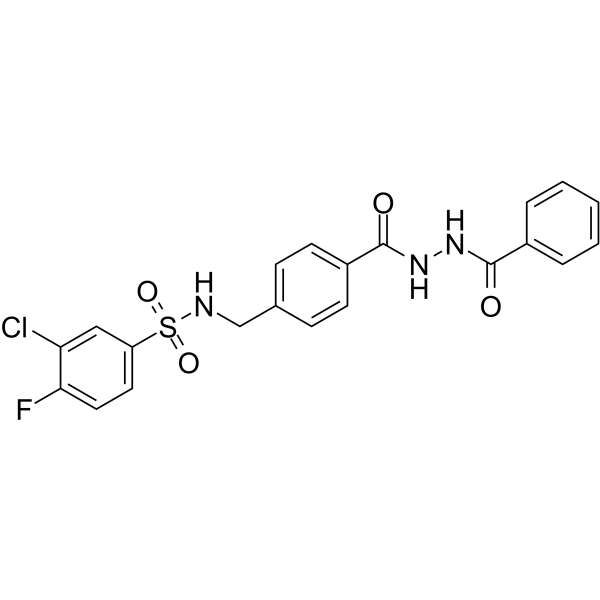
    iGluR Cholinesterase (ChE) Amyloid-β Neurological Disease
    AChE/Aβ-IN-2 (compound 33) is a potent and orally active inhibitor of acetylcholinesterase (AChE) with IC50 of 135 nM, as well as an antagonist of NMDA receptor (GluN1-1b/GluN2B subunit combination) with IC50 of 5.054 μM. AChE/Aβ-IN-2 also inhibits Aβ aggregation and shows good blood-brain barrier permeability. AChE/Aβ-IN-2 improves cognitive and spatial memory impairment in rats model [1].
    AChE/Aβ-IN-2
  • HY-155733

    iGluR Cholinesterase (ChE) Amyloid-β Neurological Disease
    AChE/Aβ-IN-1 (compound 32) is a potent and orally active inhibitor of acetylcholinesterase (AChE) with an IC50 of 86 nM, as well as an antagonist of NMDA receptor (GluN1-1b/GluN2B subunit combination) with IC50 of 3.876 μM. AChE/Aβ-IN-1 also inhibits Aβ aggregation and shows good blood-brain barrier permeability and neuroprotection. AChE/Aβ-IN-1 improves cognitive and spatial memory impairment in rats model [1].
    AChE/Aβ-IN-1
  • HY-179573

    iGluR Neurological Disease
    UCM-A86 is a selective positive allosteric modulator of GluN1/GluN3 NMDA receptors with EC50 values of 21 µM and 19 µM at GluN1/GluN3A and GluN1/GluN3B receptors, respectively. UCM-A86 selectively potentiates responses from GluN1/GluN3A/B over GluN1/GluN2A-D receptors. UCM-A86 can be used in the research of central nervous system diseases [1].
    UCM-A86
  • HY-RS20948

    Small Interfering RNA (siRNA) Others

    Grin1 Mouse Pre-designed siRNA Set A contains three designed siRNAs for Grin1 gene (Mouse), as well as a negative control, a positive control, and a FAM-labeled negative control.

    Grin1 Mouse Pre-designed siRNA Set A
    Grin1 Mouse Pre-designed siRNA Set A
  • HY-RS05803

    Small Interfering RNA (siRNA) Others

    GRIN1 Human Pre-designed siRNA Set A contains three designed siRNAs for GRIN1 gene (Human), as well as a negative control, a positive control, and a FAM-labeled negative control.

    GRIN1 Human Pre-designed siRNA Set A
    GRIN1 Human Pre-designed siRNA Set A
  • HY-RS27465

    Small Interfering RNA (siRNA) Others
    Grin1 Rat Pre-designed siRNA Set A contains three designed siRNAs for Grin1 gene (Rat), as well as a negative control, a positive control, and a FAM-labeled negative control.
    Grin1 Rat Pre-designed siRNA Set A
    Grin1 Rat Pre-designed siRNA Set A

Inquiry Online

Your information is safe with us. * Required Fields.

Salutation


Country or Region *

Applicant Name *


Organization Name *

Department *


Email Address *


Product Name *

Cat. No.


Requested quantity *

Phone Number *


Remarks

Inquiry Online

Inquiry Information

Product Name:
Cat. No.:
Quantity:
MCE Japan Authorized Agent:

