12 Results for "

H4IIE hepatoma cells

" in MedChemExpress (MCE) Product Catalog:
Products (12)

12 Results for "H4IIE hepatoma cells" in MCE Product Catalog:

Cat. No.: HY-113422
CAS No.: 68-42-8
Tetrahydrocorticosterone is a glucocorticoid. One of its active forms, 5α-Tetrahydrocorticosterone (HY-113364), exerts its effects by binding to the GC receptor and inhibiting inflammatory processes. Tetrahydrocorticosterone is naturally synthesized by the adrenal glands and plays a key role in regulating the metabolism of carbohydrates, proteins and fats .
loading...
    loading...
Cat. No.: HY-N0930B
CAS No.: 2368870-39-5
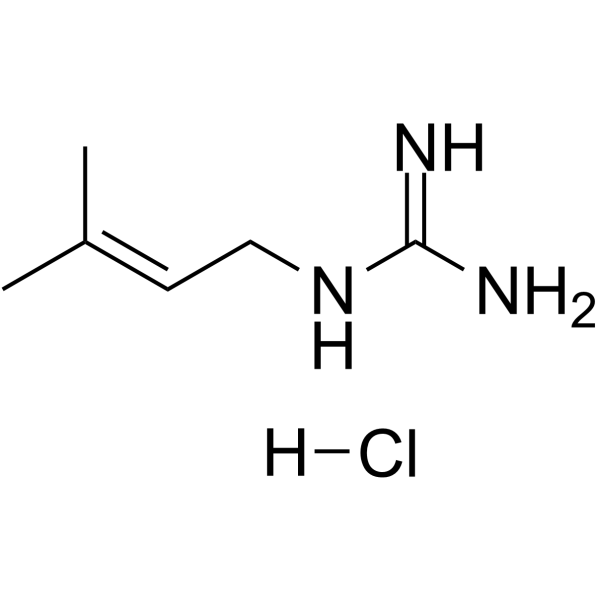
Galegine hydrochloride, a guanidine derivative, contributes to weight loss in mice. Guanidine hydrochloride is the compound derived from G. officinalis, which gave rise to the biguanides, metformin and phenformin. Galegine hydrochloride activates AMPK in 3T3-L1 adipocytes and L6 myotubes, as well as in the H4IIE rat hepatoma and HEK293 human kidney cell lines. Galegine hydrochloride has antibacterial activity, with minimum inhibitory concentration of 4 mg/L against Staphylococcus aureus strains .
loading...
    loading...
Cat. No.: HY-136717
CAS No.: 883973-99-7
Purity:  99.10%
Target:  

FBPase

Research Areas:  

Metabolic Disease

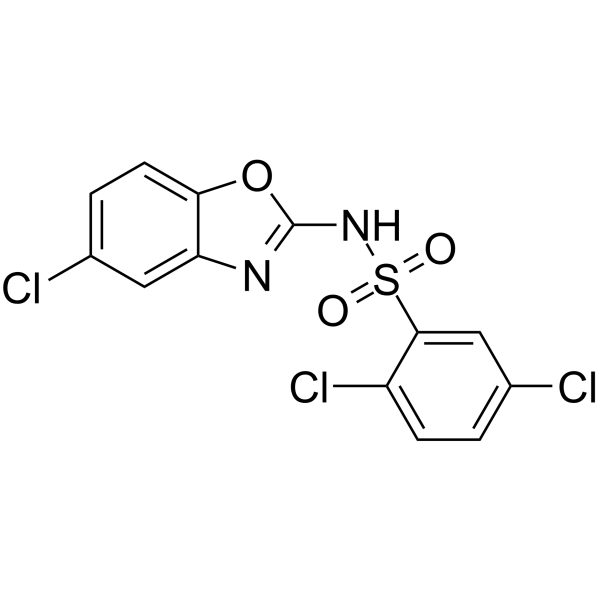
FBPase-1 inhibitor-1 (Compound 1) is an allosteric FBPase-1 inhibitor with an IC50 of 3.3 μM or 3.9 μM. FBPase-1 inhibitor-1 blocks gluconeogenesis by inhibiting FBPase-1. FBPase-1 inhibitor-1 can be used for the research of type 2 diabetes (t2dm) .
loading...
    loading...
Cat. No.: HY-N0930A
CAS No.: 14279-86-8
Target:  

AMPK Bacterial

Research Areas:  

Infection Metabolic Disease

Galegine hemisulfate, a guanidine derivative, contributes to weight loss in mice. Galegine hemisulfate activates AMPK in 3T3-L1 adipocytes and L6 myotubes, as well as in the H4IIE rat hepatoma and HEK293 human kidney cell lines. Galegine hemisulfate has antibacterial activity, with minimum inhibitory concentration of 4 mg/L against Staphylococcus aureus strains .
loading...
    loading...
Cat. No.: HY-N10612
CAS No.: 26577-85-5
Petasin is an orally active, potent inhibitor of mitochondrial electron transport chain complex I (ETCC1) with an IC50 of 3.55 μM. Petasin functionally activates AMPK by inhibiting mitochondrial respiration and increasing the intracellular AMP/ATP ratio. Petasin inhibits leukotriene production and eosinophil effector responses, as well as tumor cell proliferation, migration, invasion, and in vivo tumor growth and metastasis. Petasin is also a natural sesquiterpene ester that can be found in plants of the Petasites genus, such as Petasites japonicus and Petasites hybridus. Petasin can be used in studies related to cancer metabolism, glucose and lipid metabolism, and inflammation .
loading...
    loading...
Cat. No.: HY-113422S
CAS No.: 2483831-29-2
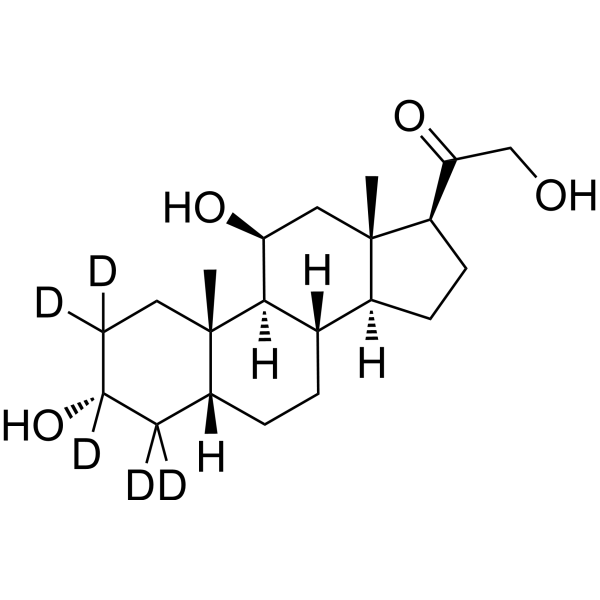
Tetrahydrocorticosterone-d5 is the d5-labeled Tetrahydrocorticosterone (HY-113422). Tetrahydrocorticosterone is a glucocorticoid. One of its active forms, 5α-Tetrahydrocorticosterone (HY-113364), exerts its effects by binding to the GC receptor and inhibiting inflammatory processes. Tetrahydrocorticosterone is naturally synthesized by the adrenal glands and plays a key role in regulating the metabolism of carbohydrates, proteins and fats .
loading...
    loading...
Cat. No.: HY-W762018
CAS No.: 60851-34-5
Synonyms: 2,3,4,6,7,8-HxCDF
Target:  

Cytochrome P450

Research Areas:  

Infection Cancer

2,3,4,6,7,8-Hexachlorodibenzofuran (2,3,4,6,7,8-HxCDF) is a dioxin-like polychlorinated dibenzofuran (PCDF). 2,3,4,6,7,8-Hexachlorodibenzofuran induces expression of the genes encoding aryl hydrocarbon hydroxylase (AHH) and ethoxyresorufin-O-deethylase (EROD) in H-4-II-E rat hepatoma cells (EC50s = 0.687 and 0.575 nM, respectively) .
loading...
    loading...
Cat. No.: HY-N17637
CAS No.: 511-81-9
Machaeric acid is a triterpenoid and triterpene sapogenin, which serves as the aglycone of Senegaloside A; it can be isolated from the seeds of Caragana microphylla Lam. and Acacia senegal(Mimosaceae). Machaeric acid exhibits remarkable biosafety, and even at concentrations as high as 200 μM, it does not induce cytotoxicity or reduce the viability of H4IIE rat hepatoma cells .
loading...
    loading...
Cat. No.: HY-W762015
CAS No.: 57117-44-9
Synonyms: 1,2,3,6,7,8-HxCDF
Target:  

Cytochrome P450

Research Areas:  

Cancer

1,2,3,6,7,8-Hexachlorodibenzofuran (1,2,3,6,7,8-HxCDF) is a dioxin-like polychlorinated dibenzofuran (PCDF). 1,2,3,6,7,8-Hexachlorodibenzofuran induces expression of the genes encoding aryl hydrocarbon hydroxylase (AHH) and ethoxyresorufin-O-deethylase (EROD) in H-4-II-E rat hepatoma cells (EC50s = 1.47 and 1.24 nM, respectively). 1,2,3,6,7,8-Hexachlorodibenzofuran reduces weight, induces thymic atrophy, and induces the expression of genes encoding the cytochrome P450 (CYP) isoform CYP1A1 and 4-chlorobiphenyl hydroxylase in rats (EC50s = 3.2, 0.9, 0.35, and 0.21 µmol/kg, respectively) .
loading...
    loading...
Cat. No.: HY-113422S1
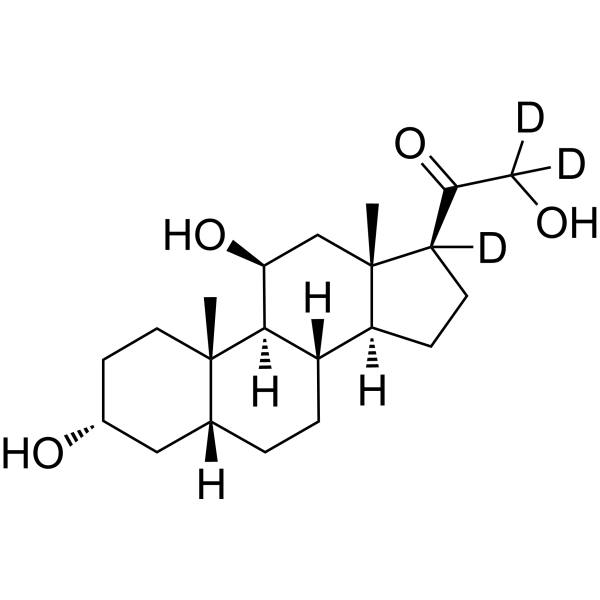
Tetrahydrocorticosterone-d3 is the d3-labeled Tetrahydrocorticosterone (HY-113422). Tetrahydrocorticosterone is a glucocorticoid. One of its active forms, 5α-Tetrahydrocorticosterone (HY-113364), exerts its effects by binding to the GC receptor and inhibiting inflammatory processes. Tetrahydrocorticosterone is naturally synthesized by the adrenal glands and plays a key role in regulating the metabolism of carbohydrates, proteins and fats .
loading...
    loading...
Cat. No.: HY-113422S2
Tetrahydrocorticosterone-d3-1 is the d3-1-labeled Tetrahydrocorticosterone (HY-113422). Tetrahydrocorticosterone is a glucocorticoid. One of its active forms, 5α-Tetrahydrocorticosterone (HY-113364), exerts its effects by binding to the GC receptor and inhibiting inflammatory processes. Tetrahydrocorticosterone is naturally synthesized by the adrenal glands and plays a key role in regulating the metabolism of carbohydrates, proteins and fats .
loading...
    loading...
Cat. No.: HY-P11881
IUB288 is a stable and long-acting glucagon-modified peptide, as well as a highly selective Glucagon Receptor agonist. IUB288 stimulates the production of cAMP, increases the expression levels of FGF21 in plasma and liver, regulates bile acid metabolism, and inhibits the expression of hepatic HMGCR. IUB288 improves hypercholesterolemia, enhances insulin sensitivity, increases core body temperature, boosts energy expenditure, suppresses food intake, and can also induce hyperglycemia and glucose intolerance. IUB288 is applicable to the research of diet-induced obesity, type 2 diabetes, and obesity-related glucose intolerance .
loading...
    loading...
  • 1

