






1. Search Result
Search Result
Results for "

HBsAg

" in MedChemExpress (MCE) Product Catalog:

60

Inhibitors & Agonists

5

Peptides

6

Inhibitory Antibodies

17

Natural
Products

2

Recombinant Proteins

2

Antibodies

1

Oligonucleotides

Cat. No. Product Name Target Research Areas Chemical Structure
  • HY-117650A
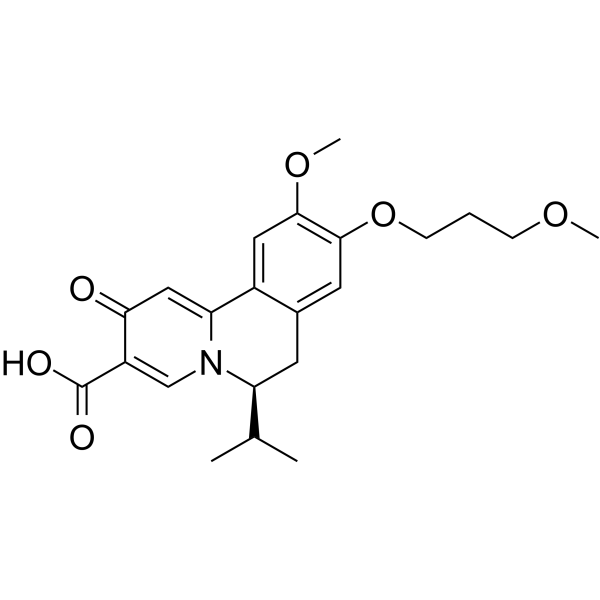
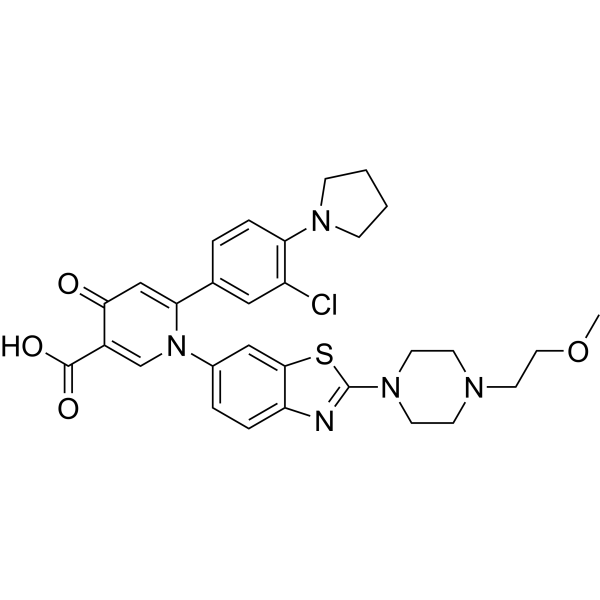
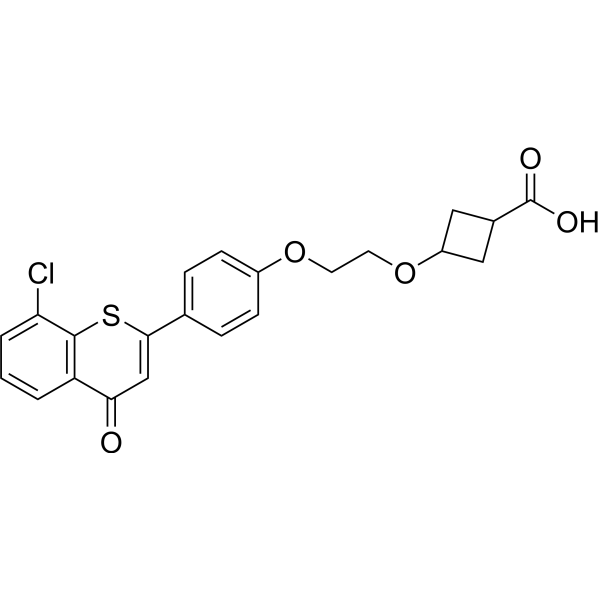
    RG7834
    Maximum Cited Publications
    9 Publications Verification

    RO 7020322; (S)-RO0321

    HBV Infection
    RG7834 (RO 7020322) is a highly selective and orally bioavailable HBV inhibitor, potently inhibits HBV antigens (both HBsAg and HBeAg) and HBV DNA, with IC50s of 2.8, 2.6, and 3.2 nM, respectively, in dHepaRG Cells .
    RG7834
  • HY-109197
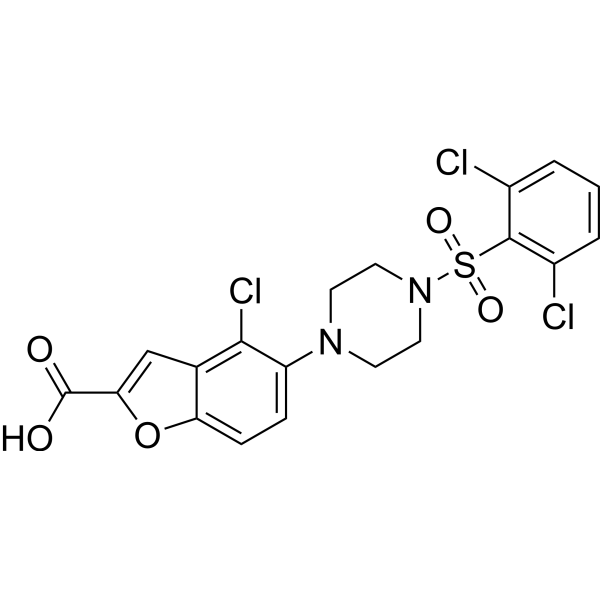
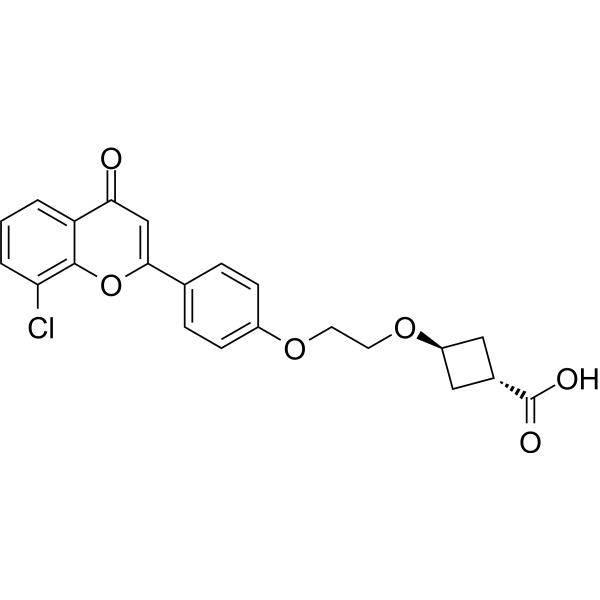
    Vonafexor
    2 Publications Verification

    EYP001

    FXR HBV Infection
    Vonafexor (EYP001) is an orally active, non-steroidal and selective FXR agonist. Vonafexor shows significant HBsAg reduction when combined with Peg-IFNα. Vonafexor can be used for anti-HBV research .
    Vonafexor
  • HY-N0699
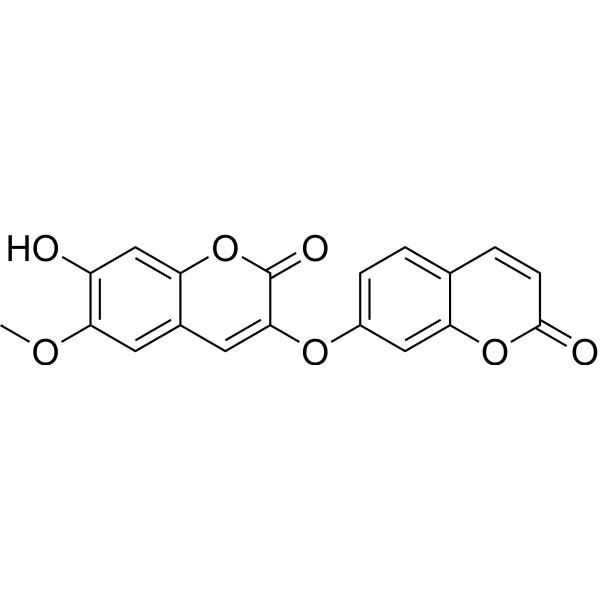
    Daphnoretin
    3 Publications Verification

    Dephnoretin; Thymelol

    PKC Influenza Virus NOD-like Receptor (NLR) Apoptosis HBV JNK PI3K Akt CDK Caspase Bcl-2 Family Infection Inflammation/Immunology Cancer
    Daphnoretin (Dephnoretin; Thymelol) is a protein kinase C (PKC) activator that inhibits the expression of hepatitis B virus (HBV) surface antigen (HBsAg) and exhibits antiviral activity. Daphnoretin exerts its antitumor effects by inhibiting the activation of the PI3K/AKT signaling pathway and triggers the mitochondrial apoptosis pathway. Daphnoretin alleviates chondrocyte apoptosis and inflammatory responses by inhibiting endoplasmic reticulum stress and activation of the NLRP3 inflammasome. Daphnoretin regulates the differentiation and maturation of dendritic cells, inhibits their immunostimulatory function by downregulating the phosphorylation level of JNK, and thus exerts a protective effect in skin graft rejection .
    Daphnoretin
  • HY-P990015

    VIR-3434

    HBV Infection
    Tobevibart (VIR-3434) is a human IgG1 lambda monoclonal antibody against hepatitis B virus (HBV) surface antigen (HBsAg). Tobevibart shows potent neutralization against HBsAg from all HBV genotypes in vitro and inhibits viral entry of HBV and hepatitis delta virus (HDV). Recommend Isotype Controls: Human IgG1 lambda2, Isotype Control (HY-P990096) .
    Tobevibart
  • HY-177022

    HBV Infection
    ALG-001075, a capsid assembly modulator (CAM), is an orally active HBV inhibitor. ALG-001075 effectively blocks not only HBV DNA production but also extracellular HBsAg/HBeAg and intracellular HBV RNA in primary human hepatocytes. ALG-001075 shows pronounced reductions of circulating HBV DNA in the AAV-HBV mouse model. ALG-001075 can be used for the study of Chronic hepatitis B (CHB) .
    ALG-001075
  • HY-148348

    HBV Infection
    AB-836 is an orally active HBV capsid inhibitor. AB-836 inhibits viral replication by interacting with HBV core protein. AB-836 can be used in research related to chronic hepatitis B .
    AB-836
  • HY-157993

    HBV Infection
    SAG-524 is a potent oral small molecule HBV viral replication inhibitor. SAG-524 decreased HBV-DNA and HbsAg levels in supernatant of HepG2.2.15 cells, IC50 0.92 and 1.4 nM, respectively .
    SAG-524
  • HY-148560A

    HBV DNA/RNA Synthesis Infection
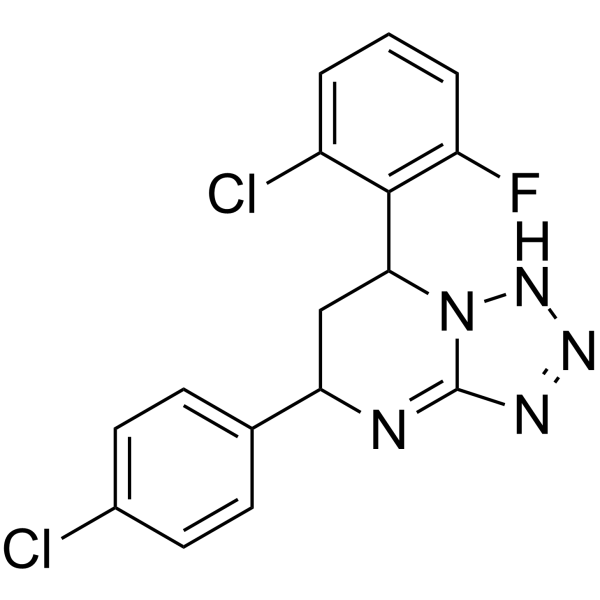
    trans-ccc_R08 (Compound 1-B) is a cccDNA inhibitor with anti-HBV activity, with an IC50 of 0.14 μM for HBeAg and an IC50 of 0.08 μM for HBsAg in in vitro assays. trans-ccc_R08 inhibits covalently closed circular DNA (cccDNA). trans-ccc_R08 is applicable to research related to hepatitis B virus infection .
    trans-ccc_R08
  • HY-P99693

    GC1102

    HBV Infection
    Lenvervimab (GC1102) is a IgG1-type recombinant human hepatitis B Immunoglobulin. Lenvervimab can be used for research of hepatitis B virus infection .
    Lenvervimab
  • HY-147266

    VIR-2218 sodium

    Small Interfering RNA (siRNA) HBV Infection
    Elebsiran (VIR-2218) sodium is a siRNA that targets and degrades hepatitis B virus (HBV) and hepatitis D virus (HDV) RNA transcripts. Elebsiran sodium leads to a significant decrease in HBV surface antigen (HBsAg) and a reduction in viral load. Elebsiran sodium binds to the sialic acid-depleted glycoprotein receptor (ASGPR) on the surface of liver cells through the GalNAc ligand, achieving liver-targeted delivery and demonstrating improved liver safety. Elebsiran sodium can be used for the study of chronic HBV/HDV infections .
    Elebsiran sodium
  • HY-133721

    HBV Infection Inflammation/Immunology
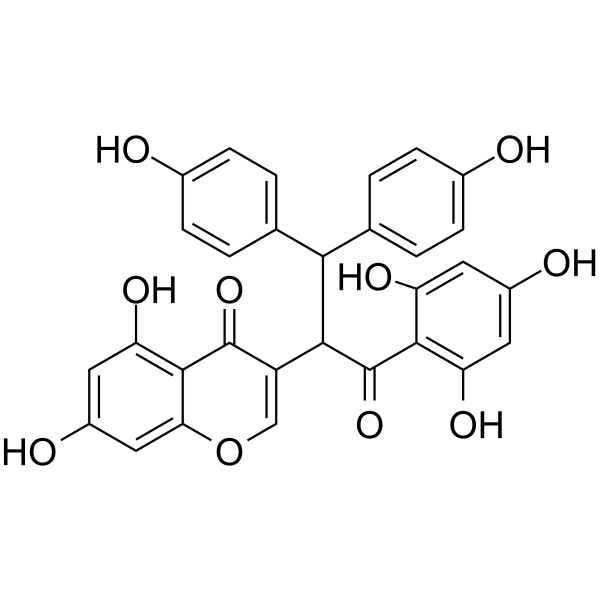
    Chamaechromone is a biflavonoid ingredient isolated from the roots of Stellera chamaejasme L. (Thymelaeaceae). Chamaechromone possesses anti-hepatitis B virus (HBV) effects against the surface antigen of HBV (HBsAg) secretion and has insecticidal activities .
    Chamaechromone
  • HY-P991674

    BJT-778

    HBV Infection Inflammation/Immunology
    Brelovitug (BJT-778) is a humanized IgG1 neutralizing monoclonal antibody targeting hepatitis B surface antigen (HBsAg). Brelovitug binds with high affinity to HBsAg purified from HBV serotypes ad and ay, with Kd values of 0.22 nM and 0.39 nM, respectively. Brelovitug binds with high affinity to HBsAg of HBV genotypes A, B, C and D, with IC50 values of 0.07, 0.02, 0.02 and 0.07 nM, respectively. Brelovitug can be used in research related to chronic hepatitis B and chronic hepatitis D .
    Brelovitug
  • HY-P99703

    17.1.41

    HBV Infection
    Libivirumab (17.1.41) is a human anti-HBV monoclonal antibody. Libivirumab shows neutralization activity with IC50s of 35, 130 ng/mL for HBsAg, HBeAg, respectively .
    Libivirumab
  • HY-N4168

    HBV Infection Cancer
    3-O-Caffeoylquinic acid methyl ester is a monocaffeoylquinic acid derivative and phenolic acid component, which can be found in the whole plant of Pyrrosia calvata (Backer) Ching and the flower buds of Lonicera japonica Thunb .
    3-O-Caffeoylquinic acid methyl ester
  • HY-P99541

    anti-hepatitis B; OST 577; SDZ-OST 577

    HBV Infection
    Tuvirumab (OST 577; SDZ-OST 577) is a human IgG1 subclass monoclonal antibody directed against HBV surface antigen (HBsAg). Tuvirumab binds specifically and with high affinity (K=3.6 nM) to HBsAg. Tuvirumab has the potential for chronic hepatitis B research .
    Tuvirumab
  • HY-123336

    HBV Infection
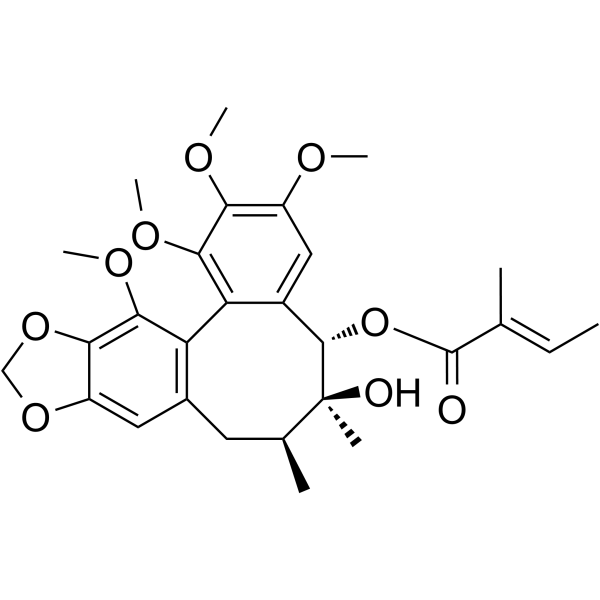
    Schisantherin C exhibits anti-HBV activity with potency against HBsAg and HBeAg secretion by 59.7% and 34.7% at 50μg/mL .
    Schisantherin C
  • HY-147266A

    VIR-2218

    HBV Small Interfering RNA (siRNA) Infection
    Elebsiran (VIR-2218) is a siRNA that targets and degrades hepatitis B virus (HBV) and hepatitis D virus (HDV) RNA transcripts. Elebsiran leads to a significant decrease in HBV surface antigen (HBsAg) and a reduction in viral load. Elebsiran binds to the sialic acid-depleted glycoprotein receptor (ASGPR) on the surface of liver cells through the GalNAc ligand, achieving liver-targeted delivery and demonstrating improved liver safety. Elebsiran can be used for the study of chronic HBV/HDV infections .
    Elebsiran
  • HY-148783

    HBV Infection
    HBV-IN-32 is a potent cccDNA (covalently closed circular DNA) inhibitor. HBV-IN-32 shows anti-HBV activity with an IC50 value of 0.14 µM for HBsAg. HBV-IN-32 inhibits cell growth .
    HBV-IN-32
  • HY-P99608

    HBV Infection
    Exbivirumab is a monoclonal antibody directed against highly conserved HBsAg epitopes. Exbivirumab enhances the antiviral activity of hepatitis B immunoglobulin (HBIG). Exbivirumab combined with Libivirumab (HY-P99703) decreases circulating HBsAg and hepatitis B virus (HBV) DNA levels in a chronically infected chimpanzee. Exbivirumab can be used for HBV re-infection in liver transplant .
    Exbivirumab
  • HY-N8107
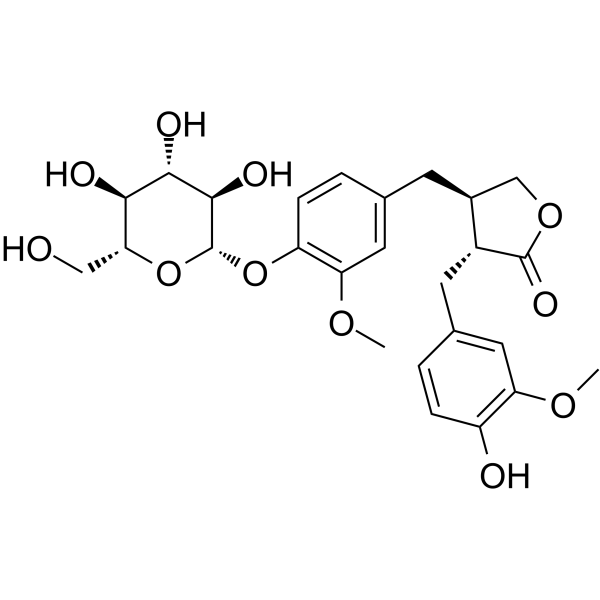
    Matairesinol monoglucoside
    2 Publications Verification

    STING IFNAR HBV Infection
    Matairesinol monoglucoside is a STING activator. Matairesinol monoglucoside modulates the STING-TBK1-IRF3 signaling axis, promotes STING transcriptional expression, increases TBK1 and IRF3 phosphorylation. Matairesinol monoglucoside induces IFN-α and IFN-β production, reduces HBV DNA, HBsAg, and HBeAg expression. Matairesinol monoglucoside can be used for the research of hepatitis b virus (hbv) infection .
    Matairesinol monoglucoside
  • HY-126970

    HBV Infection
    HBF-0259 is a potent and selective inhibitor of hepatitis B virus (HBV) surface antigen (HBsAg) secretion, with an EC50 of 1.5 μM in HepG2.2.15 cells. HBF-0259 has no effect on HBV DNA synthesis .
    HBF-0259
  • HY-155547

    HBV Infection
    HBV-IN-34 (compound 17i) is a potent HBsAg production inhibitor. HBV-IN-34 exhibits excellent in vitro anti-HBV potency, with an EC50 of 0.018 μM and 0.044 μM for HBV DNA and HBsAg, respectively .
    HBV-IN-34
  • HY-P2783

    HBV Infection
    Destruxin B2 (compound 5) is a natural depsipeptide that can be inhibits hepatitis B surface antigen (HBsAg) secretion in Hep3B cells with an IC50 1.30 μM .
    Destruxin B2
  • HY-N3093

    (+)-Periglaucine B

    HBV Infection
    Periglaucine B ((+)-Periglaucine B) is an alkaloid and an HBsAg inhibitor. Periglaucine B can be isolated from Pericampylus glaucus. Periglaucine B inhibits the secretion of hepatitis B virus (HBV) surface antigen (HBsAg) in Hep G2.2.15 cells with an IC50 of 0.47 mM .
    Periglaucine B
  • HY-145055

    HBV Infection
    HBV-IN-11 is a potent HBsAg secretion inhibitor with an EC50 of 0.46 µM (From patent WO2018085619A1, example 28) .
    HBV-IN-11
  • HY-P4043

    HBV Infection Inflammation/Immunology
    Hepatitis b virus pre-s region (120-145) is a preS2 peptide that inhibits the binding of single-chain Fv fragment (scFv) or IgG to r-HBsAg .
    Hepatitis b virus pre-s region (120-145)
  • HY-145060

    HBV Infection
    HBV-IN-12 is a potent hepatitis B surface antigen (HBsAg) inhibitor. From patent WO2021204252A1, compound 1_B .
    HBV-IN-13
  • HY-P4045

    HBV Infection
    HBV Seq2 aa:208-216, a HBsAg derived CD8 epitope peptide, is studied as part of Large envelope protein from Hepatitis B virus .
    HBV Seq2 aa:208-216
  • HY-148782

    HBV Infection
    HBV-IN-31 is a potent cccDNA (covalently closed circular DNA) inhibitor. HBV-IN-31 shows anti-HBV activity with an IC50 value of 0.13 µM for HBsAg. HBV-IN-31 inhibits cell growth .
    HBV-IN-31
  • HY-145053

    HBV Infection
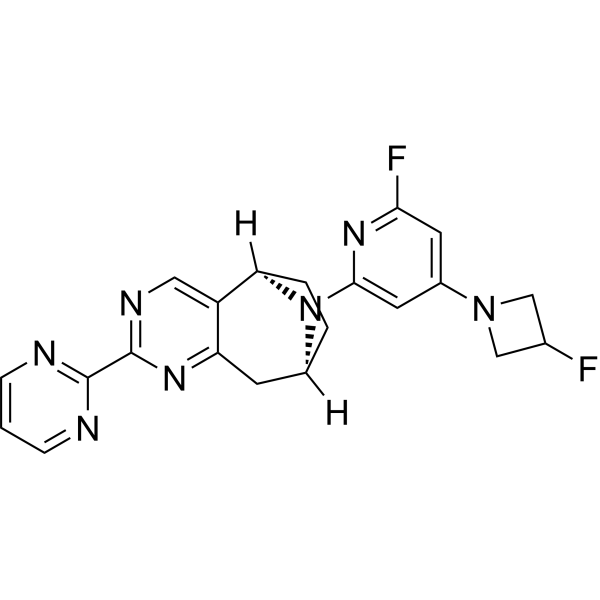
    HBV-IN-10 is an enantiomer of compound 6 (WO2021204258A1). Compound 6 is a hepatitis B surface antigen (HBsAg) inhibitor (0.001 μM< EC50 ≤0.05 μM). From patent WO2021204258A1, compound 6 .
    HBV-IN-10
  • HY-N3094

    HBV HIV Infection
    Periglaucine A, a hasubanane-type alkaloid, can be isolated from Pericampylus glaucus. Periglaucine A can inhibits HBV surface antigen (HBsAg) secretion in Hep G2.2.15 cells. Periglaucine A also shows anti-HIV-1 activity in C8166 cells (EC50: 204 μM) .
    Periglaucine A
  • HY-173278

    HBV Potassium Channel Infection
    AIC263282 is a potent Hepatitis B Virus (HBV) capsid assembly modulator with an EC50 of 3.8 nM. AIC263282 shows an IC50 of 61 nM for hERG. AIC263282 exhibits activity against viral replication and hepatitis B surface antigen (HBsAG) on primary human hepatocytes .
    AIC263282
  • HY-N2882

    HBV Infection
    Apigenin-4'-α-L-rhamnoside is a potent inhibitor of HBV. Apigenin-4'-α-L-rhamnoside inhibits the secretory level of HBV surface antigen (HBsAg) in HepG2.2.15 cells .
    Apigenin-4'-α-L-rhamnoside
  • HY-145053A

    HBV Infection
    (5S,8R)-HBV-IN-10 is an enantiomer of compound 6 (WO2021204258A1). Compound 6 is a hepatitis B surface antigen (HBsAg) inhibitor (0.001 μM< EC50 ≤0.05 μM). From patent WO2021204258A1, compound 6 .
    (5S,8R)-HBV-IN-10
  • HY-145059

    HBV Infection
    HBV-IN-12 is a potent hepatitis B surface antigen (HBsAg) inhibitor (0.001 μM< EC50 ≤0.05 μM). HBV-IN-12 shows anti-HBV DNA activity (0.001 μM<EC50 ≤0.02 μM). From patent WO2021204252A1, compound 15 .
    HBV-IN-12
  • HY-147863

    HBV Infection Neurological Disease
    HBV-IN-24 (compound (2ʹS, 6S)-1a) is a potent HBV inhibitor. HBV-IN-24 exhibits potent inhibition activity against HBV DNA, HBsAg, and HBeAg, with EC50 values of 0.6, 0.6, and 4.6 nM, respectively. HBV-IN-24 shows excellent antiviral activity, could have improved neurotoxicity .
    HBV-IN-24
  • HY-134635R

    Bacterial Fungal HIV Infection Neurological Disease Cancer
    Dehydrozingerone (Standard) is the analytical standard of Dehydrozingerone. This product is intended for research and analytical applications. Dehydrozingerone (Compound 10), a structural half analogue of Curcumin (HY-N0005), is a phenolic compound with antibacterial, anticancer, antioxidant, anti-Alzheimer’s and antifungal activity, which is isolated from ginger (Zingiber officinale) rhizomes. Dehydrozingerone shows moderate inhibitory activities on the secretion of HBsAg in HepG 2 cells with an IC50 value of 0.50 mM .
    Dehydrozingerone (Standard)
  • HY-162579

    Toll-like Receptor (TLR) Inflammation/Immunology
    TLR7 agonist 22 (Compound 11a) emerges as a selective TLR7 agonist with an IC50 value of 25.86 μM. TLR7 agonist 22 inhibits the cellular HBsAg secretion and effectively activates TLR7, thereby inducing the secretion of TLR7-regulated cytokines IL-12, TNF-αand IFN-αin human PBMC cells. TLR7 agonist 22 is a promising for research in the field of developing novel immunomodulatory anti-HBV agents .
    TLR7 agonist 22
  • HY-159987

    HBV Infection
    AB-161 is an orally active HBV RNA destabilizer and a PAPD5/7 inhibitor, with its primary action focused in the liver. AB-161 treats Hepatitis B Virus (HBV) infection by lowering the levels of Hepatitis B surface antigen (HBsAg), with an EC50 value of 2.2 nM for HBsAg. AB-161 can be used in the field of HBV infection research .
    AB-161
  • HY-P4044

    HBV Infection
    HBV Seq2 aa:28-39 is a HBsAg peptide, which binds to major histocompatibility complex (MHC) class I molecules .
    HBV Seq2 aa:28-39
  • HY-171181

    HBV Infection
    ZINC20451377 is a small molecule targeting hepatitis B (HBV) surface antigen (HBsAg) and can effectively inhibit wild-type hepatitis B and tenofovir (HY-13910)-resistant hepatitis B .
    ZINC20451377
  • HY-161327

    HBV Infection
    HBV-IN-44 (Compound (S)-2a) is a HBV inhibitor with a IC50 value of 23 nM for HbsAg. HBV-IN-44 is less toxic to the neurite growth of HT22 cells and DRG neurons in vitro .
    HBV-IN-44
  • HY-N15419

    HBV Infection
    Acutumidine (compound 4) is an alkaloid with anti-HBV activity that can be isolated from Hypserpa nitida Miers. Acutumidine inhibits the production of HBsAg in Hep G2.2.15 cells stably transfected with HBV genome with an IC50 value of 2.023 mM .
    Acutumidine
  • HY-W754691

    HBV Infection
    Glaziovine is an antiviral agent found in Hypserpa nitida. Glaziovine exhibits significant inhibitory activity against HBV, capable of suppressing hepatitis B virus surface antigen (HBsAg) secretion in Hep G2.2.15 cells transfected with HBV, with an IC50 of 8 nM .
    Glaziovine
  • HY-148201

    HBV Infection
    Oleana-2,12-dien-28-oic acid is an HBV-DNA inhibitor, HBsAg and HBeAg inhibitor. Oleana-2,12-dien-28-oic acid can be used in hepatitis B virus infection disease research .
    Oleana-2,12-dien-28-oic acid
  • HY-145052

    HBV Infection
    HBV-IN-9 is a potent HBsAg (HBV Surface antigen) inhibitor (IC50=10 nM) and HBV DNA production inhibitor (IC50=0.15 nM in HepG2.2.15 cells) . From patent WO2018001952A1, example 20.
    HBV-IN-9
  • HY-170605

    HBV Infection
    BA-AZT1 is the inhibitor for HBV polymerase and sodium taurocholate cotransporting polypeptide (NTCP). BA-AZT1 inhibits the secretion of viral capsid protein HBsAg and HBeAg with IC50 of 0.65 µM and 13.42 µM, inhibits the HBV DNA replication with an IC50 of 0.70 µM .
    BA-AZT1
  • HY-145713

    HBV-IN-19

    HBV Infection
    GS-8873 is an orally active inhibitor for the production of hepatitis B virus (HBV) surface antigen (HBsAg) with an EC50 of 4 nM. GS-8873 exhibits good pharmacokinetic characters in rats and metabolic stability in human hepatocytes. GS-8873 causes neurofunctional deficits in rats and cynomolgus monkeys .
    GS-8873
  • HY-107315

    HBV Apoptosis Infection Cancer
    Alisol F 24-acetate is a triterpene compound that can be isolated from the rhizomes of Alisma orientalis. Alisol F 24-acetate inhibits the secretion of HBV surface antigen HBsAg and HBeAg with IC50 values of 7.7 µM and 5.1 µM. Alisol F 24-acetate has proapoptotic activity and can be used for cancer research .
    Alisol F 24-acetate
  • HY-N11792

    HBV Others
    Pedunculosumoside F is a homoflavonoid glucoside. Pedunculosumoside F can be isolated from Ophioglossum pedunculosum. Pedunculosumoside F has cytotoxicity against HepG2 22.15 cells with CC50 value of 56.7 μM without anti-HBV activity. While its analogs block HBsAg secretion in HBV-infected HepG2 2.2.15 cells .
    Pedunculosumoside F

Inquiry Online

Your information is safe with us. * Required Fields.

Salutation


Country or Region *

Applicant Name *


Organization Name *

Department *


Email Address *


Product Name *

Cat. No.


Requested quantity *

Phone Number *


Remarks

Inquiry Online

Inquiry Information

Product Name:
Cat. No.:
Quantity:
MCE Japan Authorized Agent:

