15 Results for "

Intracellular trafficking

" in MedChemExpress (MCE) Product Catalog:
Products (15)

15 Results for "Intracellular trafficking" in MCE Product Catalog:

1
1 Cited Publications
Cat. No.: HY-136151
CAS No.: 1347749-97-6
Purity:  99.75%
Research Areas:  

Others

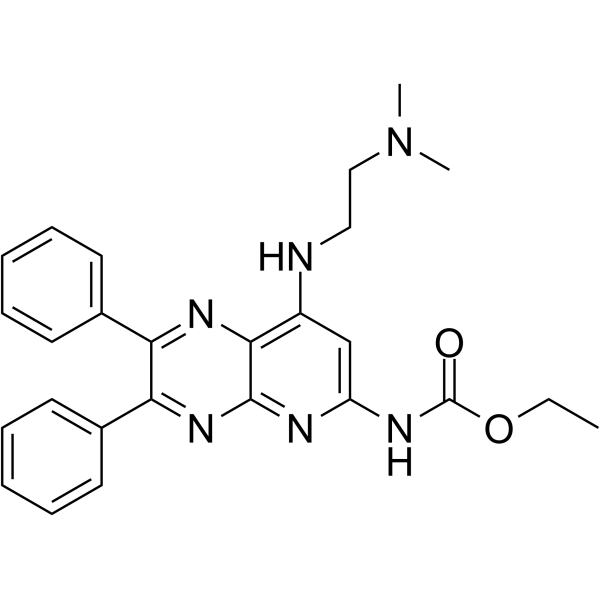
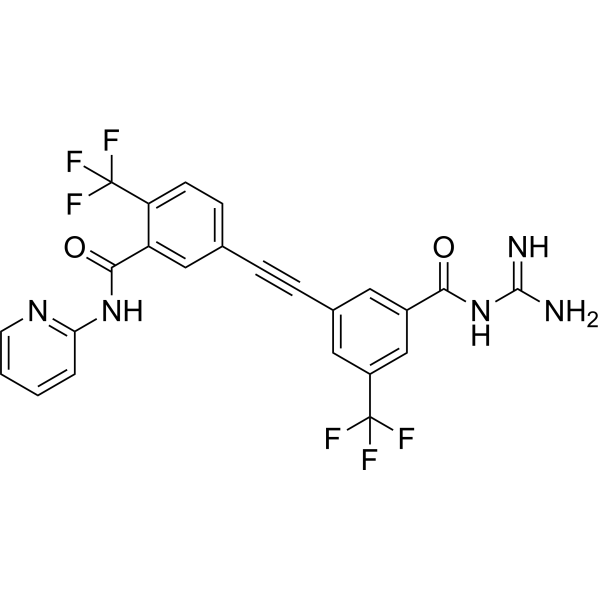
UNC10217938A is a 3-deazapteridine analog with strong oligonucleotide enhancing effects. UNC10217938A enhances oligonucleotides effects by modulating their intracellular trafficking and release from endosomes. UNC10217938A also enhances the effects of antisense and siRNA oligonucleotides .
loading...
    loading...
1
1 Cited Publications
Cat. No.: HY-139407
CAS No.: 1246303-05-8
Synonyms: 3-Dodecanoyl-NBD-cholesterol
Target:  

Fluorescent Dye

Research Areas:  

Others

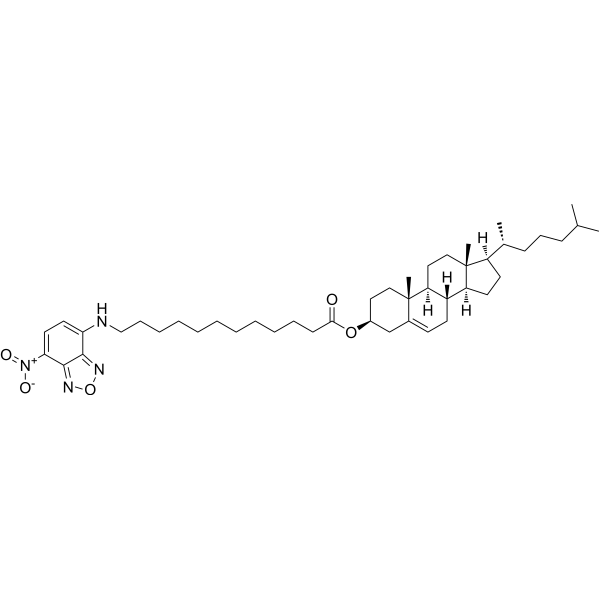
3-C12-NBD-cholesterol is a fluorescent cholesterol analog that can be used for measuring membrane and intracellular trafficking dynamics .
loading...
    loading...
Cat. No.: HY-147087
CAS No.: 1318793-78-0
Purity:  ≥98.0%
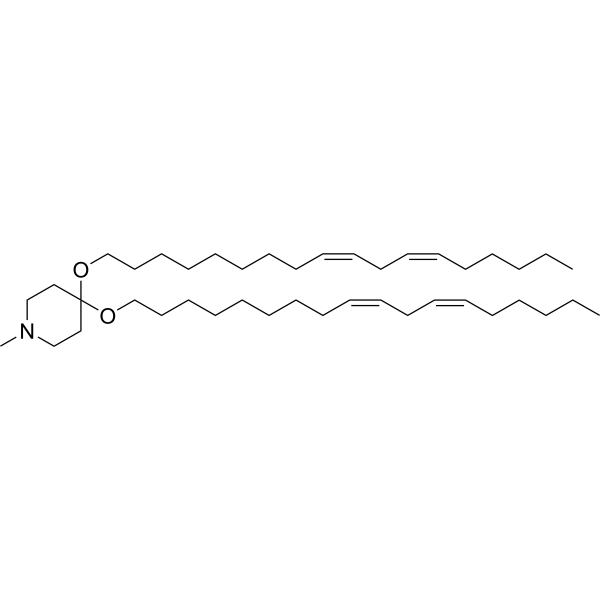
YSK 05 is a pH-sensitive cationic lipid. YSK 05 improves the intracellular trafficking of non-viral vectors. YSK 05-MEND shows significantly good gene silencing activity and hemolytic activity. YSK 05 overcomes the suppression of endosomal escape by PEGylation. YSK 05 effectively enhances siRNA delivery both in vitro and in vivo .
loading...
    loading...
Cat. No.: HY-148978
CAS No.: 321883-23-2
Purity:  99.62%
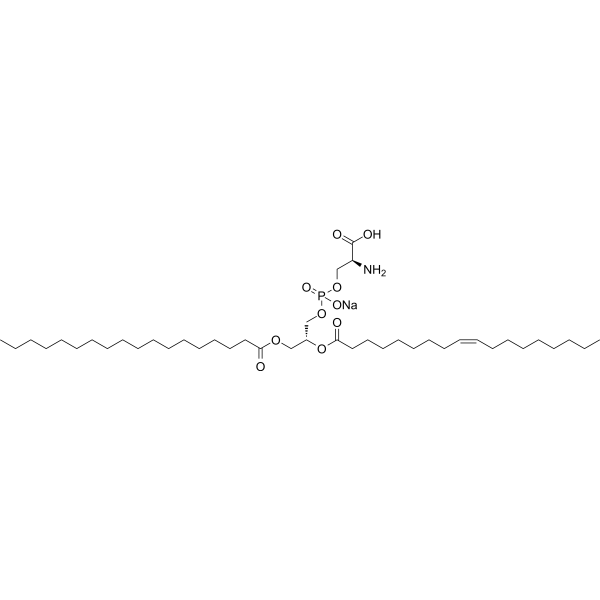
18:0,18:1 PS sodium is the dominant phosphatidylserine subtype in cells, exosomes and HIV particles. It is abundant in the brain and is essential for maintaining membrane structure, lipid raft organization and intracellular trafficking. 18:0,18:1 PS sodium mediates interleaflet membrane coupling through cholesterol-dependent interactions with very long-chain sphingolipids, and can induce the clustering of glycosylphosphatidylinositol-anchored proteins. In addition, clusters formed by the binding of 18:0,18:1 PS sodium to cholesterol not only facilitate the proper distribution of cholesterol in lipid bilayers, but also effectively protect cholesterol from oxidative damage .
loading...
    loading...
Cat. No.: HY-131682
CAS No.: 201731-19-3
Purity:  ≥99.0%
Synonyms: 3-Hexanoyl-NBD-cholesterol
Target:  

Fluorescent Dye

Research Areas:  

Others

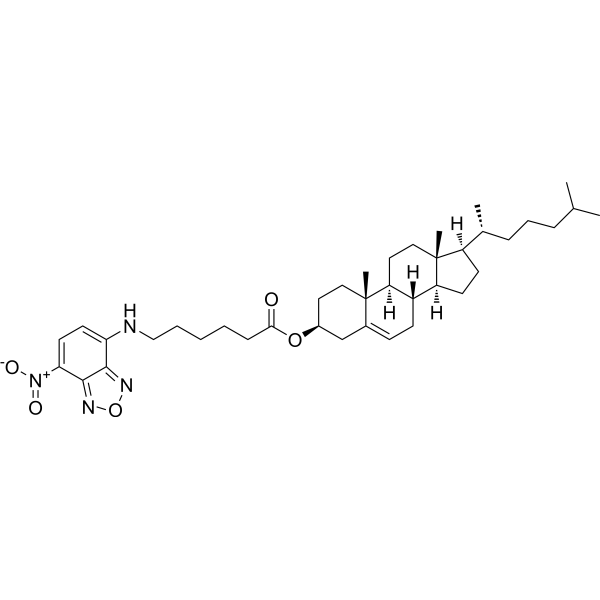
3-C6-NBD-cholesterol is a fluorescent analog of Chol that can be used to measure the kinetics of membrane and intracellular trafficking .
loading...
    loading...
Cat. No.: HY-148978A
CAS No.: 124262-93-7
Research Areas:  

Metabolic Disease

18:0,18:1 PS is the dominant phosphatidylserine subtype in cells, exosomes and HIV particles. It is abundant in the brain and is essential for maintaining membrane structure, lipid raft organization and intracellular trafficking. 18:0,18:1 PS mediates interleaflet membrane coupling through cholesterol-dependent interactions with very long-chain sphingolipids, and can induce the clustering of glycosylphosphatidylinositol-anchored proteins. In addition, clusters formed by the binding of 18:0,18:1 PS to cholesterol not only facilitate the proper distribution of cholesterol in lipid bilayers, but also effectively protect cholesterol from oxidative damage .
loading...
    loading...
Cat. No.: HY-148178
CAS No.: 2260904-47-8
Purity:  99.50%
Target:  

Parasite

Research Areas:  

Infection

MMV688533 is an antimalarial agent. MMV688533 interferes with intracellular trafficking, lipid utilization, and endocytosis pathways in Plasmodium falciparum. MMV688533 rapidly kills asexual blood-stage Plasmodium falciparum and Plasmodium vivax parasites in vitro and reduces parasitemia in a Plasmodium falciparum NSG mouse model. MMV688533 can be used for the research of malaria .
loading...
    loading...
Cat. No.: HY-131482
CAS No.: 299216-98-1
Target:  

Liposome

Research Areas:  

Others

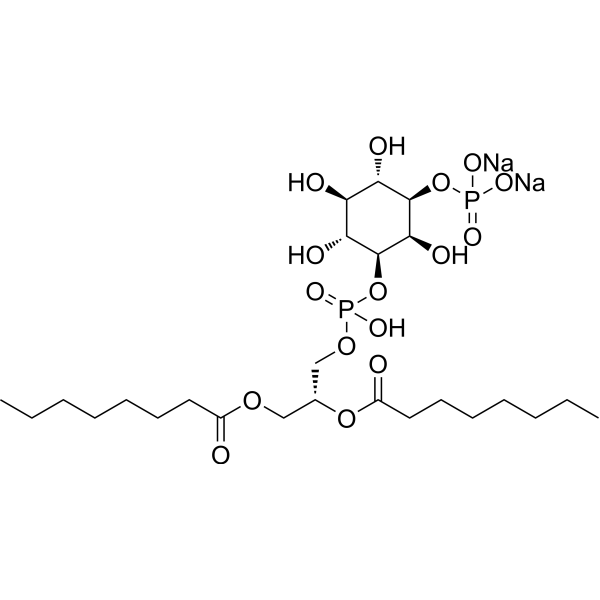
PtdIns-(3)-P1(1,2-dioctanoyl) sodium (compound 1b) is a glycogen phosphate that plays a key role in eukaryotic membrane trafficking and agonist-activated intracellular signaling .
loading...
    loading...
Cat. No.: HY-148978R
CAS No.: 321883-23-2
Resorantel (Standard) is the analytical standard of Resorantel. This product is intended for research and analytical applications. 18:0,18:1 PS sodium is the dominant phosphatidylserine subtype in cells, exosomes and HIV particles. It is abundant in the brain and is essential for maintaining membrane structure, lipid raft organization and intracellular trafficking. 18:0,18:1 PS sodium mediates interleaflet membrane coupling through cholesterol-dependent interactions with very long-chain sphingolipids, and can induce the clustering of glycosylphosphatidylinositol-anchored proteins. In addition, clusters formed by the binding of 18:0,18:1 PS sodium to cholesterol not only facilitate the proper distribution of cholesterol in lipid bilayers, but also effectively protect cholesterol from oxidative damage .
loading...
    loading...
Cat. No.: HY-157699
CAS No.: 1246303-10-5
1,2-Dioleoyl-sn-glycero-3-phospho-(1'-myo-inositol-5'-phosphate) ammonium is a membrane-bound signaling molecule with intracellular activity in regulating membrane trafficking and signal transduction. 1,2-Dioleoyl-sn-glycero-3-phospho-(1'-myo-inositol-5'-phosphate) ammonium can be used in the preparation of liposomes to enhance the efficiency of compound delivery. 1,2-Dioleoyl-sn-glycero-3-phospho-(1'-myo-inositol-5'-phosphate) ammonium can also act as a coordinator of the actin cytoskeleton and participate in the regulation of cell morphology and motility.
loading...
    loading...
Cat. No.: HY-D3198
CAS No.: 2351937-34-1
NIR-fluorescent ceramide is a neutral near-infrared (NIF) fluorescent probe (λem=650 nm) based on the C-bridged nitrobenzoxadiazole SCOTfluor core, which enables visualization of lipid metabolic processes such as sphingolipid trafficking. The emission signal of NIR-fluorescent ceramide increases significantly in liposomal environments. NIR-fluorescent ceramide acts as an intracellular trafficking tracer, localizing to regions surrounding the endoplasmic reticulum and Golgi apparatus within a short period, and then translocating to recycling lysosomes over a longer period, thus enabling real-time visualization of sphingolipid trafficking and biological lipid functions in living cells. NIR-fluorescent ceramide also generates metabolic uptake profiles and provides multiple metabolic readouts in human cancer cell lines .
loading...
    loading...
Cat. No.: HY-182721
CAS No.: 2380013-55-6
Target:  

PI4K Hedgehog

Research Areas:  

Cancer

Pipinib is an ATP-competitive and selective phosphatidylinositol 4-kinase IIIb (PI4KB) inhibitor with an IC50 of 2.2 μM. Pipinib reduces intracellular PI4P levels. Pipinib inhibits GLI-mediated transcription, the expression of Hedgehog target genes, and blocks the trafficking of Smoothened to cilia. Pipinib can be used in the research of basal cell carcinoma and medulloblastoma .
loading...
    loading...
Cat. No.: HY-D3347
CAS No.: 1123684-41-2
DUPA-FITC is a fluorescent reagent targeting PSMA, which specifically binds to prostate cancer cells expressing PSMA without non-specific binding to normal blood cells. DUPA-FITC can label PSMA-expressing prostate cancer cells in whole blood, followed by internalization and trafficking to acidic intracellular endosomes, during which the fluorescence is quenched. When combined with flow cytometry and density gradient centrifugation enrichment, DUPA-FITC enables quantitative analysis of circulating tumor cells in peripheral blood samples from prostate cancer patients .
loading...
    loading...
Cat. No.: HY-182464
CAS No.: 893603-33-3
Target:  

Potassium Channel

Research Areas:  

Infection Others

DABMA is a TMEM175 channel activator with a human EC50 of 17.9 μM. DABMA directly increases TMEM175 channel current via interaction with intracellular, transmembrane, or endosomal lumen-associated domains, and does not alter TMEM175 mRNA or protein levels. DABMA delays endolysosomal substrate degradation, modulates endolysosomal trafficking, increases acidic organelle accumulation, induces cholesterol accumulation and altered late endosome morphology. DABMA can be used for the research of coronavirus disease, Clostridium difficile infection, Pseudomonas aeruginosa infection, rabies, and influenza virus infection .
loading...
    loading...
Cat. No.: HY-179558
Target:  

PD-1/PD-L1

Research Areas:  

Cancer

MS1-96 is an orally active PD-L1 (programmed death-ligand 1) degrader. MS1-96 effectively reduced PD-L1 protein levels across multiple colorectal cancer (CRC) cell lines. MS1-96 directly binds to PD-L1 (KD = 2.58 μM) and enhances the interaction between HIP1R and PD-L1, thereby altering the intracellular trafficking of PD-L1 within clathrin-coated vesicles. MS1-96 induces abnormal N-glycosylation of PD-L1, destabilizing the protein and hastening its lysosome-mediated degradation. MS1-96 can be used for the study of colorectal cancer .
loading...
    loading...
  • 1

