25 Results for "

METTL14

" in MedChemExpress (MCE) Product Catalog:
Products (25)

25 Results for "METTL14" in MCE Product Catalog:

20
20 Publications Verification
Cat. No.: HY-19528
CAS No.: 979-92-0
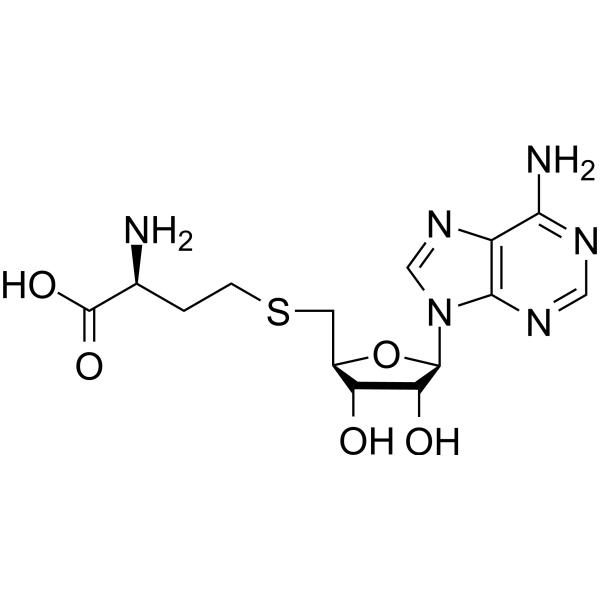
Synonyms: SAH (S-Adenosylhomocysteine)
SAH (S-Adenosylhomocysteine) is an amino acid derivative and a modulartor in several metabolic pathways. It is an intermediate in the synthesis of cysteine and adenosine . SAH is an inhibitor for METTL3-METTL14 heterodimer complex (METTL3-14) with an IC50 of 0.9 µM .
loading...
    loading...
3
3 Cited Publications
Cat. No.: HY-W037893
CAS No.: 122323-88-0
Synonyms: Methyl piperazine-2-carboxylate dihydrochloride; METTL3 activator-1
Target:  

METTL3 HIV

Research Areas:  

Infection Neurological Disease

CHMA1004 (Methyl piperazine-2-carboxylate; METTL3 activator-1) dihydrochloride is a METTL3/METTL14/WTAP methyltransferase complex activator. CHMA1004 dihydrochloride exhibits neuroprotective and anxiolytic potential by enhancing m 6A methylation modification of RNA. CHMA1004 dihydrochloride promotes HIV replication in an infection context. CHMA1004 dihydrochloride can be used in studies related to anxiety disorders and HIV-1 infection .
loading...
    loading...
2
2 Cited Publications
Cat. No.: HY-160415
CAS No.: 3066823-45-5
Target:  

PROTACs METTL3 Apoptosis

Research Areas:  

Cancer

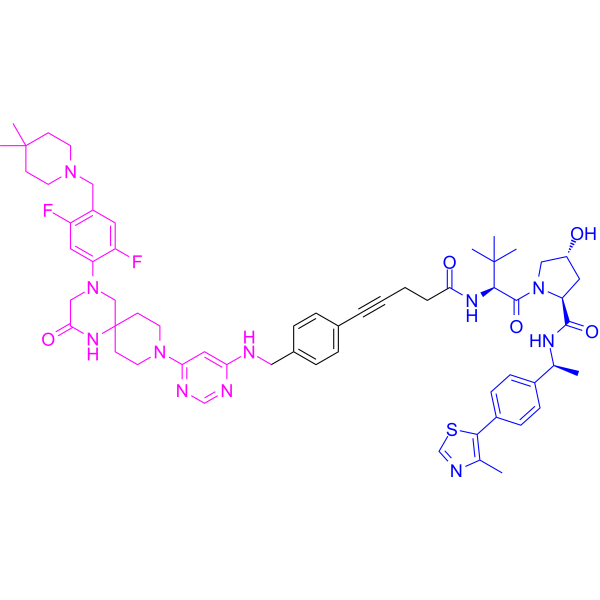
WD6305 is a potent and selective METTL3-METTL14 PROTAC degrader. WD6305 has DC50 values of 140 nM and 194 nM for METTL3 and METTL14, respectively. WD6305 inhibits m 6A modification and proliferation of AML cells, and induces apoptosis.
loading...
    loading...
2
2 Cited Publications
Cat. No.: HY-N0353
CAS No.: 13657-68-6
Synonyms: (+)-Curdione
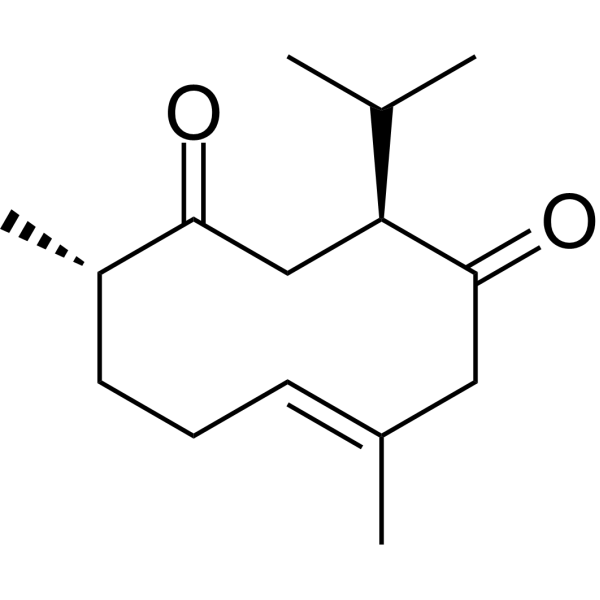
Curdione ((+)-Curdione) is an orally active sesquiterpenoid. Curdione inhibits platelet aggregation. Curdione induces ferroptosis in colorectal cancer via m6A methylation mediated by METTL14 and YTHDF2. Curdione inhibits ferroptosis in Isoproterenol (HY-B0468)-induced myocardial infarction by regulating the Keap1/Trx1/GPX4 signaling pathway, suppressing oxidative stress (ROS) and apoptosis. Curdione ameliorates Doxorubicin (HY-15142)-induced cardiotoxicity by inhibiting oxidative stress (ROS) and activating the Nrf2/HO-1 pathway. Curdione ameliorates sepsis-induced lung injury by inhibiting platelet-mediated neutrophil extracellular trap formation. Curdione ameliorates Bleomycin (HY-17565A)-induced pulmonary fibrosis by inhibiting TGF-β-induced fibroblast-to-myofibroblast differentiation. Curdione exhibits neuroprotective effects against focal cerebral ischemia-reperfusion injury in rats. Curdione exerts antiproliferative effects against human uterine leiomyosarcoma by targeting IDO1. Curdione protects vascular endothelial cells and atherosclerosis by regulating DNMT1-mediated ERBB4 promoter methylation. Curdione inhibits inducible prostaglandin E2 production (IC50 = 1.1 μM) and cyclooxygenase 2 expression .
loading...
    loading...
2
2 Cited Publications
Cat. No.: HY-160415A
Target:  

PROTACs METTL3 Apoptosis

Research Areas:  

Cancer

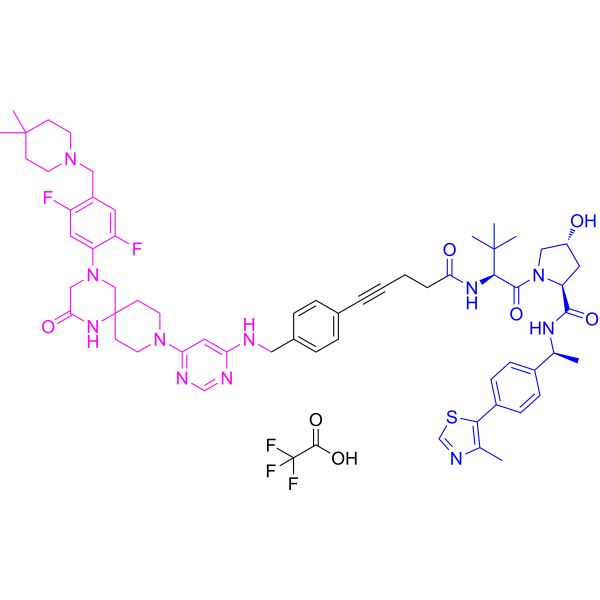
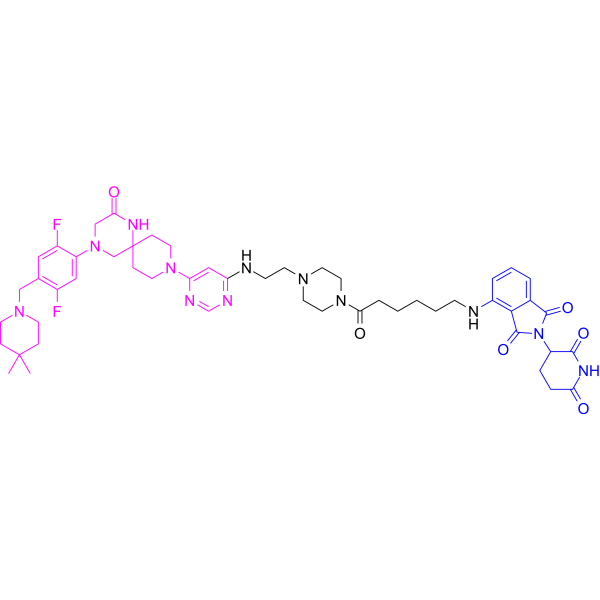
WD6305 TFA is a potent and selective METTL3-METTL14 PROTAC degrader. WD6305 TFA has DC50 values of 140 nM and 194 nM for METTL3 and METTL14, respectively. WD6305 TFA inhibits m 6A modification and proliferation of AML cells, and induces apoptosis. WD6305 TFA has antitumor activity .(Pink: UZH2 (HY-115717); Black: Linker; Blue: VHL ligand (HY-150803))
loading...
    loading...
2
2 Cited Publications
Cat. No.: HY-153625
CAS No.: 2762286-04-2
Purity:  99.92%
Target:  

METTL3

Research Areas:  

Cancer

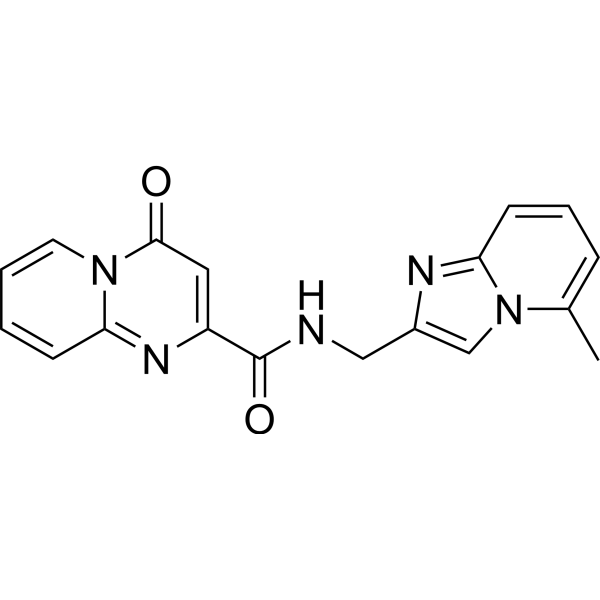
STM2120 is a METTL3-METTL14 inhibitor with an IC50 of 64.5 μM .
loading...
    loading...
2
2 Cited Publications
Cat. No.: HY-N0086R
CAS No.: 1867-73-8
Synonyms: 6-Methyladenosine (Standard); N-Methyladenosine (Standard)
N6-Methyladenosine (Standard) is the analytical standard of N6-Methyladenosine. This product is intended for research and analytical applications. N6-Methyladenosine is the most prevalent internal (non-cap) modification present in the messenger RNA (mRNA) of all higher eukaryotes. N6-Methyladenosine can modifies viral RNAs and has antiviral activities. In Vitro: N6-methyladenosine (m6A) is selectively recognized by the human YTH domain family 2 (YTHDF2) protein to regulate mRNA degradation. N6-methyladenosine (m6A), a prevalent internal modification in the messenger RNA of all eukaryotes, is post-transcriptionally installed by m6A methyltransferase (e.g., MT-A70) within the consensus sequence of G(m6A)C (70%) or A(m6A)C (30%). N6-methyladenosine (m6A)-containing RNAs are greatly enriched in the YTHDF-bound portion and diminished in the flow-through portion . N6-methyladenosine (m6A), the most abundant internal RNA modification, functions in diverse biological processes, including regulation of embryonic stem cell self-renewal and differentiation. N6-methyladenosine (m6A) is a large protein complex, consisting in part of methyltransferase-like 3 (METTL3) and methyltransferase-like 14 (METTL14) catalytic subunits .
loading...
    loading...
1
1 Cited Publications
Cat. No.: HY-P10387
Research Areas:  

Cancer

RSM3 is a METTL3-METTL14 complex inhibitor with a Kd of 3.10 μM for the METTL3-METTL14 complex. RSM3 reduces the m 6A modification level of SLC31A1 and the global RNA methylation level. RSM3 upregulates programmed cell death-related genes, enhances cell apoptosis, inhibits pro-cancer signals and suppresses tumor growth. RSM3 is applicable to the research of preeclampsia and cancer .
loading...
    loading...
1
1 Cited Publications
Cat. No.: HY-P10387A
Target:  

METTL3 Apoptosis

Research Areas:  

Cancer

RSM3 TFA is a METTL3-METTL14 complex inhibitor with a Kd of 3.10 μM for the METTL3-METTL14 complex. RSM3 TFA reduces the m 6A modification level of SLC31A1 and the global RNA methylation level. RSM3 TFA upregulates programmed cell death-related genes, enhances cell apoptosis, inhibits pro-cancer signals and suppresses tumor growth. RSM3 TFA is applicable to the research of preeclampsia and cancer .
loading...
    loading...
Cat. No.: HY-19528S
Synonyms: SAH (S-Adenosylhomocysteine)-d4
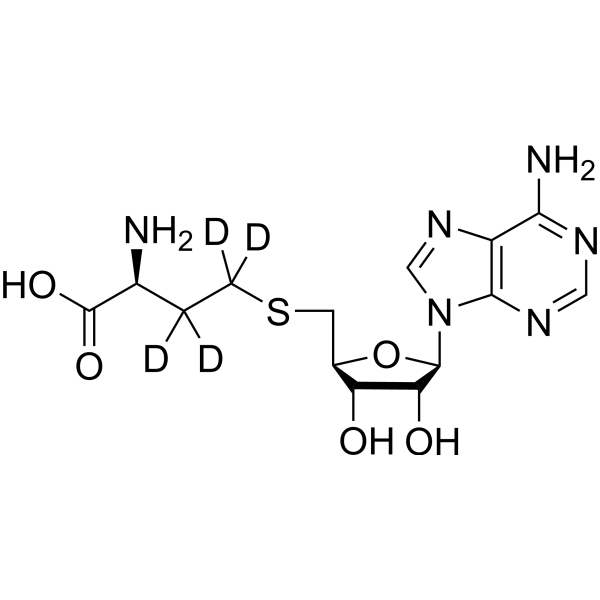
SAH-d4 is the deuterium labeled SAH. SAH (S-Adenosylhomocysteine) is an amino acid derivative and a modulartor in several metabolic pathways. It is an intermediate in the synthesis of cysteine and adenosine . SAH is an inhibitor for METTL3-METTL14 heterodimer complex (METTL3-14) with an IC50 of 0.9 μM .
loading...
    loading...
Cat. No.: HY-RS08355
Research Areas:  

Others

METTL14 Human Pre-designed siRNA Set A contains three designed siRNAs for METTL14 gene (Human), as well as a negative control, a positive control, and a FAM-labeled negative control.

loading...
    loading...
Cat. No.: HY-RS16861
Research Areas:  

Others

Mettl14 Mouse Pre-designed siRNA Set A contains three designed siRNAs for Mettl14 gene (Mouse), as well as a negative control, a positive control, and a FAM-labeled negative control.

loading...
    loading...
Cat. No.: HY-19528R
CAS No.: 979-92-0
Synonyms: SAH (S-Adenosylhomocysteine) (Standard)
SAH (Standard) is the analytical standard of SAH. This product is intended for research and analytical applications. SAH (S-Adenosylhomocysteine) is an amino acid derivative and a modulartor in several metabolic pathways. It is an intermediate in the synthesis of cysteine and adenosine . SAH is an inhibitor for METTL3-METTL14 heterodimer complex (METTL3-14) with an IC50 of 0.9 μM .
loading...
    loading...
Cat. No.: HY-RS23302
Research Areas:  

Others

Mettl14 Rat Pre-designed siRNA Set A contains three designed siRNAs for Mettl14 gene (Rat), as well as a negative control, a positive control, and a FAM-labeled negative control.

loading...
    loading...
Cat. No.: HY-162282
CAS No.: 3039554-79-2
Target:  

PROTACs METTL3

Research Areas:  

Cancer

PROTAC METTL3-14 degrader 1 is a METTL3-METTL14 heterodimer complex PROTAC degrader. PROTAC METTL3-14 degrader 1 binds to the E3 ubiquitin ligase CRBN, forms a ternary complex with METTL3-METTL14, and promotes the ubiquitination and degradation of METTL3. PROTAC METTL3-14 degrader 1 is applicable to the research of acute myeloid leukemia and prostate cancer .
loading...
    loading...
Cat. No.: HY-151924
CAS No.: 35940-03-5
Target:  

Enterovirus

Research Areas:  

Infection

Antiviral agent 23 (compound 11b) is an antiviral agent to enterovirus 71 (EV71) with an EC50 value of 94 nM. Antiviral agent 23 effectively suppresses the activity of METTL3/METTL14. Antiviral agent 23 can be used for the research of infection .
loading...
    loading...
Cat. No.: HY-162930
Target:  

PROTACs METTL3

Research Areas:  

Cancer

PROTAC METTL3 degrader 1 is a VHL-based PROTAC METTL3 degrader (DC50: 220 nM in MOLM-13 cells). PROTAC METTL3 degrader 1 inhibits METTL3/14 complex with an IC50 value of 341 nM. PROTAC METTL3 degrader 1 can be used for the research of acute myeloid leukemia and gastric cancer .
loading...
    loading...
Cat. No.: HY-151926
CAS No.: 23661-03-2
Purity:  99.63%
Target:  

Enterovirus

Research Areas:  

Infection

Antiviral agent 24 is a potent antiviral agent with EC50 values of 0.101, 19.9, 91.2 µM for EV71, CVA21, EV68, respectively. Antiviral agent 24 inhibits METTL3/METTL14 activity in a dose-dependent manner .
loading...
    loading...
Cat. No.: HY-19528S2
CAS No.: 2687960-02-5
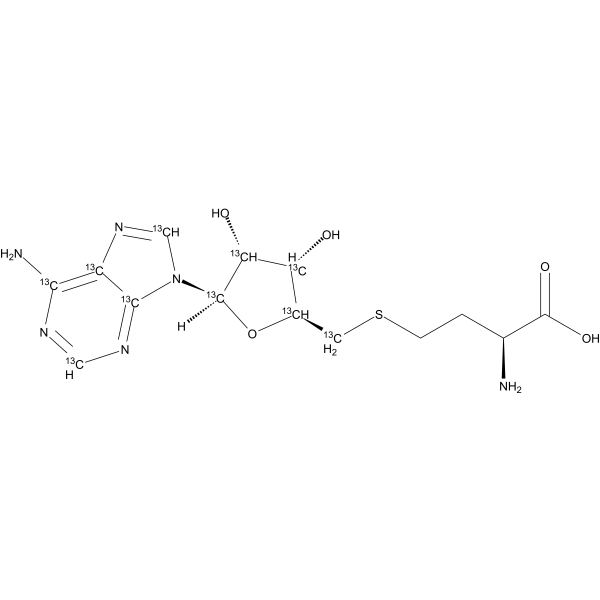
SAH- 13C10 is the 13C labeled SAH . SAH (S-Adenosylhomocysteine) is an amino acid derivative and a modulartor in several metabolic pathways. It is an intermediate in the synthesis of cysteine and adenosine . SAH is an inhibitor for METTL3-METTL14 heterodimer complex (METTL3-14) with an IC50 of 0.9 μM .
loading...
    loading...
Cat. No.: HY-W125425
CAS No.: 2758-98-7
Synonyms: Methyl piperazine-2-carboxylate; METTL3 activator-1 free base
Target:  

METTL3 HIV

Research Areas:  

Infection Neurological Disease

CHMA1004 (Methyl piperazine-2-carboxylate; METTL3 activator-1 free base) is a METTL3/METTL14/WTAP methyltransferase complex activator . CHMA1004 exhibits neuroprotective and anxiolytic potential by enhancing m 6A methylation modification of RNA. CHMA1004 promotes HIV replication in an infection context. CHMA1004 can be used in studies related to anxiety disorders and HIV-1 infection .
loading...
    loading...

