






1. Search Result
Search Result
Results for "

MHC class II

" in MedChemExpress (MCE) Product Catalog:

38

Inhibitors & Agonists

20

Peptides

11

Inhibitory Antibodies

3

Natural
Products

1

Recombinant Proteins

1

Isotope-Labeled Compounds

7

Antibodies

Cat. No. Product Name Target Research Areas Chemical Structure
  • HY-B1618
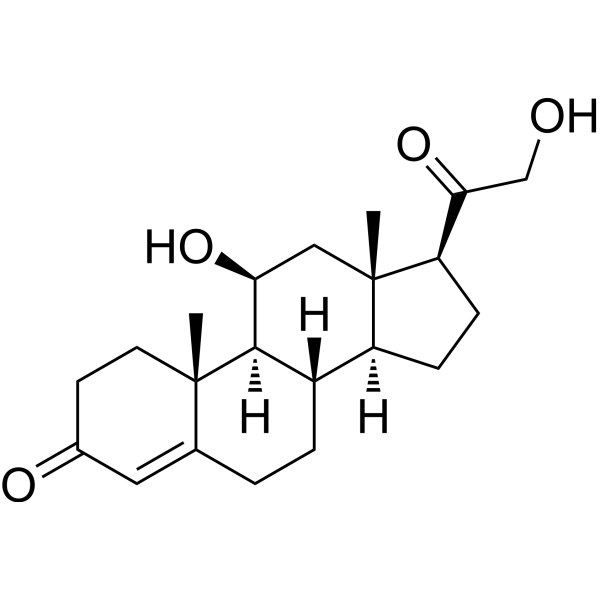
    Corticosterone
    60+ Cited Publications

    17-Deoxycortisol; 11β,21-Dihydroxyprogesterone; Kendall's compound B

    Glucocorticoid Receptor Endogenous Metabolite iGluR Neurological Disease Inflammation/Immunology Endocrinology
    Corticosterone (17-Deoxycortisol) is an orally active and adrenal cortex-produced glucocorticoid, which plays an important role in regulating neuronal functions of the limbic system (including hippocampus, prefrontal cortex, and amygdala). Corticosterone increases the Rab-mediated AMPAR membrane traffic via SGK-induced phosphorylation of GDI. Corticosterone also interferes with the maturation of dendritic cells and shows a good immunosuppressive effect .
    Corticosterone
  • HY-N7819
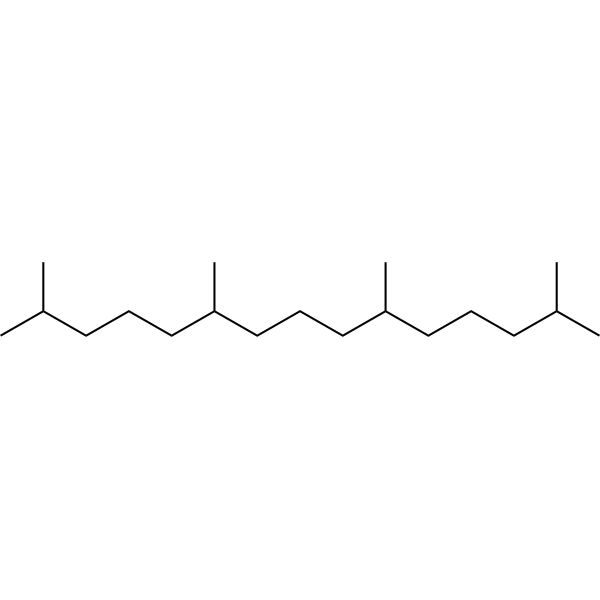
    Pristane
    1 Publications Verification

    Norphytane

    Others Inflammation/Immunology
    Pristane (Norphytane) is a naturally occurring hydrocarbon oil found in small quantities in many plants, in various marine organisms, and as the most active component of mineral oil . Pristane is a non-antigenic adjuvant, and induces MHC class II-restricted, arthritogenic T cells in the rat .
    Pristane
  • HY-P1924

    Lipocalin Family Interleukin Related Inflammation/Immunology
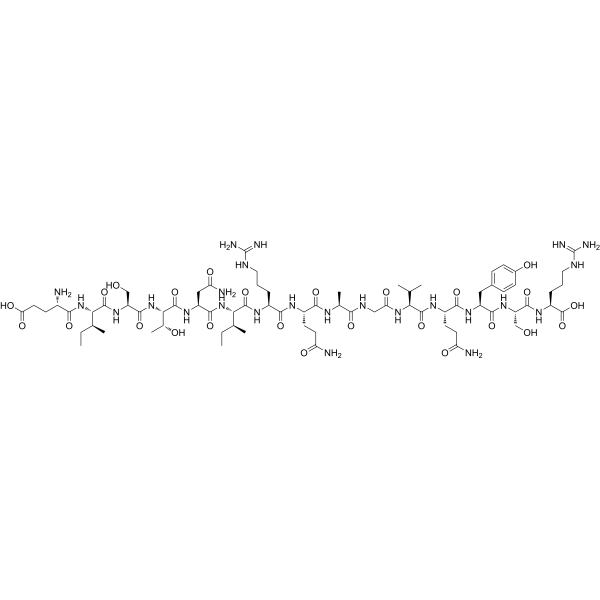
    IRBP (651-670) human, mouse is an epitope and uveitis inducer naturally processed from the conserved region of native IRBP. IRBP (651-670) human, mouse increases the levels of proinflammatory cytokines in ocular tissues (IL-1β, IL-6, TNFα, IL-17A and IL-17F). IRBP (651-670) human, mouse is a IRBP fragment conserved among human, mouse and bovine species. IRBP (651-670) human, mouse induces experimental autoimmune uveitis. IRBP (651-670) human, mouse is applicable to research related to experimental autoimmune uveitis .
    IRBP(651-670) human, mouse
  • HY-P1745

    Insulin B chain (9-23)

    MHC Insulin Receptor IFNAR Inflammation/Immunology
    InsB (9-23) (Insulin B chain (9-23)) is an HLA-DQ8-restricted insulin B-chain peptide composed of amino acid residues 9-23. InsB (9-23) serves as a major MHC II class-restricted antigen. InsB (9-23) supports the recognition and activation of T cells, stimulates the secretion of IFN-γ and cytokines, and induces cross-reactive immune responses. InsB (9-23)-specific CD4 T cells can initiate diabetes . InsB (9-23) can be used in research related to type 1 diabetes and autoimmune diabetes .
    InsB (9-23)
  • HY-P99613

    MK-4280; Mavezelimab

    LAG-3 Cancer
    Favezelimab (MK-4280) is a humanized monoclonal antibody targeting LAG-3. Favezelimab blocks the interaction between LAG-3 and its ligand, MHC class II molecules. Favezelimab is applicable to research on relapsed/refractory classical Hodgkin lymphoma, relapsed/refractory diffuse large B-cell lymphoma, and relapsed/refractory indolent B-cell lymphoma . For the isotype control of Favezelimab, refer to Human IgG4 (S228P) kappa, Isotype Control (HY-P99003).
    Favezelimab
  • HY-P11303

    CD74 MHC Neurological Disease Cancer
    PADRE peptide is a pan-HLA-DR binding epitope and immunostimulant. PADRE peptide binds to the peptide-binding groove of MHC class II molecules for presentation to CD4 + T cells, thereby effectively stimulating specific immune responses. PADRE peptide not only enhances anti-tumor immune responses, inhibits tumor growth and prolongs survival; it also significantly increases the frequency of E7-specific CD8 + T cells and improves therapeutic efficacy against TC-1 tumors when used in combination with E7 peptide-based vaccines and poly (I:C). The intensity of the immune response induced by PADRE peptide is lower than that of the Ii-PADRE DNA vaccine, and it fails to enhance the immune effect of CRT-E7 DNA. PADRE peptide is widely applicable to research on related tumors such as melanoma, glioblastoma and cervical cancer .
    PADRE peptide
  • HY-P990187

    MHC Influenza Virus Infection Inflammation/Immunology
    Anti-Mouse MHC Class II (I-A/I-E) Antibody (M5/114) is a rat-derived IgG2b type antibody inhibitor, targeting to mouse MHC Class II. Anti-Mouse MHC Class II (I-A/I-E) Antibody (M5/114) reacts with mouse MHC Class II haplotypes I-Ab, I-Ad, I-Aq, I-Ed, and I-Ek. Anti-Mouse MHC Class II (I-A/I-E) Antibody (M5/114) does not react with I-Af, I-Ak, or I-As haplotypes. Anti-Mouse MHC Class II (I-A/I-E) Antibody (M5/114) blocks MHC Class II and inhibit T cell generation. Anti-Mouse MHC Class II (I-A/I-E) Antibody (M5/114) can be used for the researches of infection and immunology, such as influenza A virus (IAV) infection .
    Anti-Mouse MHC Class II (I-A/I-E) Antibody (M5/114)
  • HY-165613

    Dipalmitoyl-S-glyceryl-cysteine; S-[2,3-Bis(palmitoyloxy)propyl]cysteine

    Toll-like Receptor (TLR) Influenza Virus NF-κB Infection Inflammation/Immunology
    Pam2Cys (Dipalmitoyl-S-glyceryl-cysteine; S-[2,3-Bis(palmitoyloxy)propyl]cysteine) is a TLR2 agonist and immunostimulant. Pam2Cys binds to TLR2 to activate dendritic cells and trigger the TLR2-dependent NF-κB signaling pathway. Pam2Cys also induces dendritic cell maturation by upregulating the expression of cell surface MHC II molecules. Pam2Cys activates innate immune signaling pathways, drives pro-inflammatory and antimicrobial responses, enhances the expression of macrophage activation markers, increases phagocytic activity, induces the release of IL-12 and pro-inflammatory cytokines, and polarizes macrophages into a pro-inflammatory, antimicrobial phenotype without interfering with IL-10-induced macrophage polarization. Pam2Cys also serves as the lipid moiety in synthetic lipopeptide vaccines and possesses self-adjuvant properties. Pam2Cys enhances the immunogenicity of conjugated peptide segments and induces cellular and humoral immune responses. However, it does not activate CD4 T cells in mouse splenocyte cultures when used alone. Pam2Cys activates pulmonary TLR2 signaling pathways, triggers innate immune responses, recruits neutrophils and macrophages, induces the secretion of various cytokines, alleviates symptoms and damages associated with influenza A virus infection in mice without impairing adaptive immunity. Pam2Cys can be used in studies related to tuberculosis and influenza A virus infection .
    Pam2Cys
  • HY-P990188

    MHC Inflammation/Immunology
    Anti-Mouse MHC class II (I-A) Antibody (Y-3P) is a mouse-derived IgG2a κ type antibody inhibitor, targeting to mouse MHC class II. Anti-Mouse MHC class II (I-A) Antibody (Y-3P) reacts with mouse MHC Class II haplotypes I-Ab, I-Af, I-Ap, I-Aq, I-Ar, I-As, I-Au, I-Av, and weakly with I-Ak. Anti-Mouse MHC class II (I-A) Antibody (Y-3P) blocks MHC class II and inhibits expansion of regulate T cells. Anti-Mouse MHC class II (I-A) Antibody (Y-3P) can be used for the immunology research .
    Anti-Mouse MHC class II (I-A) Antibody (Y-3P)
  • HY-P990189

    MHC Apoptosis Reactive Oxygen Species (ROS) Infection Cancer
    Anti-Monkey/Human MHC class II (HLA-DR) Antibody (L243) is a mouse-derived IgG2a κ type antibody inhibitor, targeting to monkey/human MHC class II. Anti-Monkey/Human MHC class II (HLA-DR) Antibody (L243) can inhibits tumor cells proliferation and induce apoptosis. Anti-Monkey/Human MHC class II (HLA-DR) Antibody (L243) increases cellular reactive oxygen species (ROS) and loss of mitochondrial membrane potential in human endothelial cells. Anti-Monkey/Human MHC class II (HLA-DR) Antibody (L243) can be used for the researches of cancer and infection, such as lymphoma .
    Anti-Monkey/Human MHC class II (HLA-DR) Antibody (L243)
  • HY-P2459

    MHC Neurological Disease
    MOG (35-55), human is a component of CNS myelin. MOG (35-55), human is different from mMOG (35-55) by a proline for serine substitution at position 42. MOG (35-55), human is also immunogenic via bind to H-2b class II MHC and recognized by T cells, but not encephalitogenic, and is only partially cross-reactive with mMOG35–55. MOG (35-55), human induces minimal clinical signs of EAE relative to the rodent peptide .
    MOG (35-55), human
  • HY-P1826

    CD74 Inflammation/Immunology Cancer
    CLIP (86-100) is amino acids 86 to 100 fragment of class II-associated invariant chain peptide (CLIP). CLIP is a small self-peptide and cleavage product of the invariant chain that resides in the HLA-II antigen binding groove and is believed to play a critical role in the assembly and transport of MHC class II alphabetaIi complexes through its interaction with the class II peptide-binding site .
    CLIP (86-100)
  • HY-157269

    Hapten Inflammation/Immunology
    J10-1 is a hapten small molecule. J10-1 accelerates peptide exchange in MHC class II molecules in an HLA-DM-independent manner, and its effect is not affected by the polymorphism of the P1 pocket of MHC class II molecules. J10-1 enhances the processes of peptide dissociation, peptide binding and peptide association of MHC class II molecules on the surface of B cells. J10-1 can be used for research on immunoregulation .
    J10-1
  • HY-P5453

    CD3 Others
    CFP10 (71–85) is a biological active peptide. (CFP1071–85, that elicited IFN-γ production and CTL activity by both CD4+ and CD8+ T cells from persons expressing multiple MHC class II and class I molecules)
    CFP10 (71–85)
  • HY-P990185

    MHC Inflammation/Immunology Cancer
    Anti-Mouse/Rat MHC Class II (I-Ek/RT1-D) Antibody (14-4-4S) is a mouse-derived IgG2a κ type antibody inhibitor, targeting to mouse/rat MHC Class II. Anti-Mouse/Rat MHC Class II (I-Ek/RT1-D) Antibody (14-4-4S) reacts with mouse MHC Class II alloantigen I-Ek and the rat MHC class II alloantigen RT1D. Anti-Mouse/Rat MHC Class II (I-Ek/RT1-D) Antibody (14-4-4S) blocks antigen presentation. Anti-Mouse/Rat MHC Class II (I-Ek/RT1-D) Antibody (14-4-4S) can be used for the research of immunology and cancer .
    Anti-Mouse/Rat MHC Class II (I-Ek/RT1-D) Antibody (14-4-4S)
  • HY-P2525

    MHC Inflammation/Immunology
    GAD65 (206-220) is glutamic acid decarboxylase (GAD) 65-derived peptide, corresponding to residues 180-188. GAD65 is presented to T cells in association with I-Ag7 MHC class II molecules and a major pancreatic antigens targeted by self-reactive T cells in type I diabetes mellitus .
    GAD65 (206-220)
  • HY-P1924A

    Lipocalin Family Interleukin Related Inflammation/Immunology
    IRBP (651-670) human, mouse TFA is an epitope and uveitis inducer naturally processed from the conserved region of native IRBP. IRBP (651-670) human, mouse TFA increases the levels of proinflammatory cytokines in ocular tissues (IL-1β, IL-6, TNFα, IL-17A and IL-17F). IRBP (651-670) human, mouse TFA is a IRBP fragment conserved among human, mouse and bovine species. IRBP (651-670) human, mouse TFA induces experimental autoimmune uveitis. IRBP (651-670) human, mouse TFA is applicable to research related to experimental autoimmune uveitis .
    IRBP(651-670) human, mouse TFA
  • HY-P4155

    Biochemical Assay Reagents Inflammation/Immunology
    SSA antigenic peptide is an antigenic peptide of Sjögren's syndrome-related antigen A (SSA). SSA antigenic peptide can be used for the research of systemic lupus erythematosus .
    SSA antigenic peptide
  • HY-P991750

    MHC Inflammation/Immunology
    Anti-pan MHC Class II (HLA II) Antibody (IVA12) recognizes human HLA-II (HLA-DR, HLA-DP, and HLA-DQ). Anti-pan MHC Class II (HLA II) Antibody (IVA12) blocks MHC-II in vitro. Recommend Isotype Controls: Mouse IgG1 kappa, Isotype Control (HY-P99977) .
    Anti-pan MHC Class II (HLA II) Antibody (IVA12)
  • HY-P990184

    MHC Others
    Anti-Mouse MHC Class II (βchain) Antibody (KL277) is a hamster/mouse-derived IgG type antibody inhibitor, targeting to mouse MHC Class II. Anti-Mouse MHC Class II (βchain) Antibody (KL277) reacts with mouse MHC Class II haplotypes I-Ab, I-Ad, I-Ap, I-Aq, I-Abu, and I-Abw. Anti-Mouse MHC Class II (βchain) Antibody (KL277) does not react with I-Aa, I-Ak, I-Af, I-Aj, I-As, or I-Atl haplotypes. Anti-Mouse MHC Class II (βchain) Antibody (KL277) can be used for western blot experiments .
    Anti-Mouse MHC Class II (βchain) Antibody (KL277)
  • HY-N7819S

    Isotope-Labeled Compounds Inflammation/Immunology
    Pristane-d40 is the deuterium labeled Pristane . Pristane (Norphytane) is a naturally occurring hydrocarbon oil found in small quantities in many plants, in various marine organisms, and as the most active component of mineral oil . Pristane is a non-antigenic adjuvant, and induces MHC class II-restricted, arthritogenic T cells in the rat .
    Pristane-d40
  • HY-P990186

    MHC Others
    Anti-Mouse MHC Class II (I-Ak, I-Ar, I-Af, I-As,I-Ag7) Antibody (10-3.6.2) is a mouse-derived IgG2c κ type antibody inhibitor, targeting to mouse MHC Class II. Anti-Mouse MHC Class II (I-Ak, I-Ar, I-Af, I-As,I-Ag7) Antibody (10-3.6.2) reacts with mouse MHC Class II haplotypes I-Ak, I-Ar, I-Af, I-As, and I-Ag7. Anti-Mouse MHC Class II (I-Ak, I-Ar, I-Af, I-As,I-Ag7) Antibody (10-3.6.2) does not react with I-Ab, I-Ad, I-Ap, or I-Aq haplotypes. Anti-Mouse MHC Class II (I-Ak, I-Ar, I-Af, I-As,I-Ag7) Antibody (10-3.6.2) blocks MHC Class II and inhibits antigen proliferation responses. Anti-Mouse MHC Class II (I-Ak, I-Ar, I-Af, I-As,I-Ag7) Antibody (10-3.6.2) can be used for the research of immunology .
    Anti-Mouse MHC Class II (I-Ak, I-Ar, I-Af, I-As,I-Ag7) Antibody (10-3.6.2)
  • HY-123876

    PIKfyve Interleukin Related MHC Inflammation/Immunology
    AS2677131 is a potent and orally active PIKfyve inhibitor. AS2677131 inhibits f IL-12p40, IL-6 and IL-1β through a PIKfyve-c-Rel pathway. AS2677131 selectively inhibits DNA-binding activity of c-Rel to IL-12p40 and IL-1β promoter. AS2677131 inhibits MHC class II expression on B cells. AS2677131 can be used for the researches of inflammation and immunology, such as arthritis .
    AS2677131
  • HY-157171

    MHC Inflammation/Immunology
    Ac-YR-NH2 is a small molecule modulator of MHC class II antigen presentation. Ac-YR-NH2 can influence peptide binding by MHC II to influence immune response .
    Ac-YR-NH2
  • HY-N7819R

    Norphytane (Standard)

    Reference Standards Others Inflammation/Immunology
    Pristane (Norphytane) is a naturally occurring hydrocarbon oil found in small quantities in many plants, in various marine organisms, and as the most active component of mineral oil . Pristane is a non-antigenic adjuvant, and induces MHC class II-restricted, arthritogenic T cells in the rat .
    Pristane (Standard)
  • HY-P5502

    Influenza Virus Others
    Influenza NP (311-325) is a biologically active peptide derived from the influenza virus nucleoprotein (NP). The NP protein is an MHC class II restricted epitope that elicits host immune responses during viral infection. Influenza NP (311-325) elicits the most potent interferon gamma (IFN-γ) production without stimulating CD8 T cells in mice.
    Influenza NP (311-325)
  • HY-P11090

    MHC Inflammation/Immunology
    TpD is a chimeric T-helper epitope. TpD has a special site that cathepsin can cut. Immunization with TpD produces a strong antibody response. TpD promotes long-term CD4 immune responses in animals and humans. TpD binds well to many human MHC class II types, mainly HLA-DRB1. It also binds some other HLA alleles like DRB3, DRB4, DRB5, DP, and DQ. TpD can be used to improve the immune response of peptide vaccines .
    TpD
  • HY-P10246

    MHC Inflammation/Immunology
    Hemoglobin 64-76 is a T cell inducing determinant, that binds to two different MHC class II molecules in distinct registers and lengths .
    Hemoglobin (64-76)
  • HY-P3639

    TNF Receptor Others
    SYLQDSVPDSFQD, anchor-modified for high-affinity binding to DR4, is a DR4-restricted MHC class II peptide Tyrosinase .
    SYLQDSVPDSFQD
  • HY-105488

    TNF Receptor MHC Inflammation/Immunology
    MDL 201112 is a carbocyclic nucleoside. MDL 201112 can decrease TNF-α production and inhibit MHC class II Ia+ antigen expression. MDL 201112 can be used for the research of inflammation and immunology .
    MDL 201112
  • HY-120794

    TNF Receptor Inflammation/Immunology
    SC 67655 is a potent and stable pentapeptide MHC class II haplotype DR4 (DR4 Dw4 or DRB 1"0401) ligand with an IC50 of 50 nM. SC 67655 can be used for the study of autoimmune diseases .
    SC-67655
  • HY-W179151

    Dopamine Receptor Inflammation/Immunology
    N-Octanoyl dopamine is superior to dopamine in protecting graft contractile function when administered to the heart transplant recipients from brain-dead donors. N-Octanoyl dopamine inhibits cytokine production in activated T-cells and diminishes MHC-class-II expression as well as adhesion molecules in IFNγ-stimulated endothelial cells .
    N-Octanoyl dopamine
  • HY-168384

    STING TNF Receptor Interleukin Related CD28 Inflammation/Immunology
    M04 is an agonist of STING. It induces the expression of the IFN reporter gene in HEK293T cells expressing wild-type human STING, but does not induce this expression in HEK293T cells expressing the R71H-G230A-R293Q (HAQ) STING variant or in mouse RAW 264.7 cells, indicating that its activity is dependent on allelic and species variations. M04 induces the production of TNF-α, IL-10, IL-1β, and IL-12p70 in human peripheral blood mononuclear cells (PBMCs). At a concentration of 50 µM, M04 stimulates dendritic cells isolated from PBMCs to express the MHC class II cell surface receptor HLA-DR and co-stimulatory molecules CD40, CD80, and CD86, and also enhances their ability to activate T cells in an ex vivo assay. M04 can be used in research on inflammatory immune diseases .
    M04
  • HY-W387035

    MHC Metabolic Disease Inflammation/Immunology
    D-α-Methyl DOPA is an inhibitor of the binding of DQ8 peptide to MHC class II molecules. D-α-Methyl DOPA occupies a pocket along the DQ8 peptide binding groove. D-α-Methyl DOPA inhibits the binding of a DQ8 peptide to an MHC class II molecule for presentation to CD4 + T cells, thereby slowing the development or progression of type 1 diabete or celiac disease .
    D-α-Methyl DOPA
  • HY-P992461

    LAG-3 Cancer
    SHR-1802 is a humanized anti-LAG-3 monoclonal antibody.SHR-1802 specifically binds to LAG-3 and inhibits its binding to major histocompatibility complex class II (MHC-II), fibrinogen-like protein 1 (FGL1), galectin-3, and liver sinusoidal endothelial cell lectin.SHR-1802 can be used for the research of advanced solid tumors .
    SHR-1802
  • HY-171239

    Toll-like Receptor (TLR) NF-κB MHC Others
    Ste2Cys is a diacylglycerol cysteine-type immunologic adjuvant lipid molecule. Ste2Cys can bind to TLR2 and activate NF-κB signaling pathway. Ste2Cy can upregulate the expression of MHC II class molecules on the surface of mouse bone marrow-derived D1 dendritic cells. Ste2Cys can be used for research of the development of immunologic vaccines .
    Ste2Cys
  • HY-P991837

    CD74 Inflammation/Immunology
    Anti-HLA-DP Antibody (B7/21) reacts with the class II major histocompatibility complex (MHC) antigen. Anti-HLA-DP Antibody (B7/21) recognizes a monomorphic determinant present on cells expressing DP1, DP2, DP3, DP4 and DP5. Recommend Isotype Controls: Mouse IgG3 kappa, Isotype Control (HY-P99985) .
    Anti-HLA-DP Antibody (B7/21)
  • HY-P992254

    LAG-3 Cancer
    Anti-LAG-3 Antibody (BAP050) is an anti-LAG3 antibody with Kd values of 9.0 nM (Equilibrium) and 0.80 nM (Kinetic) against hLAG3. Anti-LAG-3 Antibody (BAP050) binds to an epitope outside the 30-amino-acid residue loop in the first immunoglobulin-like domain (D1) of hLAG3. Anti-LAG-3 Antibody (BAP050) is applicable for cancer-related research. The isotype control is Mouse IgG1 kappa, Isotype Control (HY-P99977) .
    Anti-LAG-3 Antibody (BAP050)

Inquiry Online

Your information is safe with us. * Required Fields.

Salutation


Country or Region *

Applicant Name *


Organization Name *

Department *


Email Address *


Product Name *

Cat. No.


Requested quantity *

Phone Number *


Remarks

Inquiry Online

Inquiry Information

Product Name:
Cat. No.:
Quantity:
MCE Japan Authorized Agent:

