







Search Result
Results for "
MHC-II
" in MedChemExpress (MCE) Product Catalog:
1
Isotope-Labeled Compounds
| Cat. No. |
Product Name |
Target |
Research Areas |
Chemical Structure |
-
- HY-P99156
-
|
BMS-986016
|
LAG-3
|
Cancer
|
|
Relatlimab (BMS-986016) is a human monoclonal antibody anti-LAG-3 antibody generated by immunization of transgenic mice bearing human immunoglobulin miniloci with recombinant LAG-3 protein. Relatlimab blocks LAG-3/MHC II interaction with an IC50 value of 0.67 nM and LAG-3/FGL1 interaction with an IC50 value of 0.019 nM. Relatlimab can be used in research of cancer .
|
-
-
- HY-P1745
-
|
Insulin B chain (9-23)
|
MHC
Insulin Receptor
IFNAR
|
Inflammation/Immunology
|
|
InsB (9-23) (Insulin B chain (9-23)) is an HLA-DQ8-restricted insulin B-chain peptide composed of amino acid residues 9-23. InsB (9-23) serves as a major MHC II class-restricted antigen. InsB (9-23) supports the recognition and activation of T cells, stimulates the secretion of IFN-γ and cytokines, and induces cross-reactive immune responses. InsB (9-23)-specific CD4 T cells can initiate diabetes . InsB (9-23) can be used in research related to type 1 diabetes and autoimmune diabetes .
|
-
-
- HY-165613
-
|
Dipalmitoyl-S-glyceryl-cysteine; S-[2,3-Bis(palmitoyloxy)propyl]cysteine
|
Toll-like Receptor (TLR)
Influenza Virus
NF-κB
|
Infection
Inflammation/Immunology
|
|
Pam2Cys (Dipalmitoyl-S-glyceryl-cysteine; S-[2,3-Bis(palmitoyloxy)propyl]cysteine) is a TLR2 agonist and immunostimulant. Pam2Cys binds to TLR2 to activate dendritic cells and trigger the TLR2-dependent NF-κB signaling pathway. Pam2Cys also induces dendritic cell maturation by upregulating the expression of cell surface MHC II molecules. Pam2Cys activates innate immune signaling pathways, drives pro-inflammatory and antimicrobial responses, enhances the expression of macrophage activation markers, increases phagocytic activity, induces the release of IL-12 and pro-inflammatory cytokines, and polarizes macrophages into a pro-inflammatory, antimicrobial phenotype without interfering with IL-10-induced macrophage polarization. Pam2Cys also serves as the lipid moiety in synthetic lipopeptide vaccines and possesses self-adjuvant properties. Pam2Cys enhances the immunogenicity of conjugated peptide segments and induces cellular and humoral immune responses. However, it does not activate CD4 T cells in mouse splenocyte cultures when used alone. Pam2Cys activates pulmonary TLR2 signaling pathways, triggers innate immune responses, recruits neutrophils and macrophages, induces the secretion of various cytokines, alleviates symptoms and damages associated with influenza A virus infection in mice without impairing adaptive immunity. Pam2Cys can be used in studies related to tuberculosis and influenza A virus infection .
|
-
-
- HY-P99573
-
|
MGD-013
|
LAG-3
|
Inflammation/Immunology
Cancer
|
|
Tebotelimab (MGD-013) is a humanized IgG4κ bispecific PD-1/LAG-3 dual-affinity re-targeting (DART) antibody. Tebotelimab binds cell-surface expressed PD-1 and LAG-3 with EC50s of 1.65 nM and 0.41 nM in NS0 cells, respectively. Tebotelimab blocks PD-1/PD-L1, PD-1/PD-L2 and LAG-3/HLA (MHC-II) interactions and PD-1 signaling. Tebotelimab restores exhausted T-cell responses and and enhances antitumour immunity .
|
-
-
- HY-P99922
-
|
|
LAG-3
|
Cancer
|
|
Encelimab is an anti-LAG3 antibody. Encelimab blocks the interaction between LAG-3 and MHC II, and enhances T-cell activation. Encelimab alone or in combination with an anti-PD-1 antibody reduces tumor size in a lymphoma mice model (A20 cell xenograft) .
|
-
-
- HY-P99141
-
|
|
LAG-3
|
Inflammation/Immunology
Cancer
|
|
Anti-Mouse LAG-3 Antibody (C9B7W) is an anti-mouse LAG-3 IgG1 monoclonal antibody. Anti-Mouse LAG-3 Antibody (C9B7W) can enhance CD4 + T cell function and exert anti-tumor effects without blocking the interaction between LAG-3 and MHCII. Anti-Mouse LAG-3 Antibody (C9B7W) can be used for research on cancer such as head and neck squamous cell carcinoma (HNSCC) .
|
-
-
- HY-P990839
-
|
|
IFNAR
|
Inflammation/Immunology
|
|
Anti-IFNγ Antibody (B133.5) is a kind of mouse IgG1 chimeric antibody inhibitor, targeting to human IFNγ. Anti-IFNγ Antibody (B133.5) can neutralize human IFNγ (interferon gamma). Anti-IFNγ Antibody (B133.5) can be used for the research of immunology .
|
-
-
- HY-112026
-
-
-
- HY-P99027
-
|
LAG525; IMP701; Hu5A8
|
LAG-3
|
Cancer
|
|
Ieramilimab (LAG525; IMP701) is a humanized IgG4 monoclonal antibody that binds to LAG-3, resulting in inhibition of LAG-3 interaction with MHC-II molecules. Ieramilimab restores T-cell and NK-cell-mediated antileukemic immunity by reducing exhaustion and augmenting cytokine output and cytotoxicity. Ieramilimab increases the infiltration of cytotoxic T lymphocytes and reduces baseline densities of regulatory T cells (Tregs) and ADAM10-expressing tumor cells. Ieramilimab can be used for the study of various malignancies including melanoma, RCC, and advanced solid tumors .
|
-
-
- HY-P5898
-
|
Z-Val-Val-Nle-CHN2
|
Cathepsin
MHC
|
Inflammation/Immunology
|
|
Z-Val-Val-Nle-diazomethylketone is a cathepsin S (CATS) inhibitor. Z-Val-Val-Nle-diazomethylketone significantly inhibits the IFNg-induced upregulation of the MHCII molecules HLA-DR and Ii-p33/35 with an increase of Ii-p10 protein level. Z-Val-Val-Nle-diazomethylketone can be used for dermatological diseases like psoriasis, atopic dermatitis and actinic keratosis research .
|
-
-
- HY-W016773
-
|
|
MHC
Transmembrane Glycoprotein
|
Metabolic Disease
Inflammation/Immunology
|
|
1,10-Decanediol is a diol compound that can react with α-ketoglutarate (aKG) to generate polymeric microparticles (termed paKG MPs) for the sustained release of aKG, thereby promoting immunosuppressive regulation. Additionally, paKG MPs can bind to dendritic cells (DCs), reducing their glycolysis and mitochondrial respiration in vitro. These metabolic changes lead to the modulation of MHC-II and CD86 expression in DCs and alter the frequency of regulatory T cells (Tregs) as well as T-helper type 1/2/17 cells in vitro. 1,10-Decanediol can be used in research within the field of immunometabolism. can be used as a surfactant/stabilizer in the synthesis of nanomaterials .
|
-
-
- HY-P99736
-
|
BI-754111
|
LAG-3
|
Cancer
|
|
Miptenalimab (BI-754111) is an anti-human LAG-3 antibody (KD: 88.6 nM for h LAG-3). Miptenalimab blocks the interaction of LAG-3 with its ligand MHC-II .
|
-
-
- HY-171883
-
|
|
Cannabinoid Receptor
CETP
MHC
|
Metabolic Disease
Inflammation/Immunology
Cancer
|
|
BI-5756 is a CETP inhibitor and cannabinoid receptor 1 (CB1) agonist. BI-5756 can significantly increase HDL-C levels and reduce LDL-C levels. BI-5756 can also enhance the function of regulatory T cells while maintaining T cell-mediated anti-tumor activity. BI-5756 can directly inhibit the growth of tumor cells and upregulate the expression of MHC I, MHC II, and CD80 on tumor cells. BI-5756 has a protective effect in graft-versus-host disease models. BI-5756 can be used in research on tumors, graft-versus-host disease, and metabolic diseases .
|
-
-
- HY-P991750
-
|
|
MHC
|
Inflammation/Immunology
|
|
Anti-pan MHC Class II (HLA II) Antibody (IVA12) recognizes human HLA-II (HLA-DR, HLA-DP, and HLA-DQ). Anti-pan MHC Class II (HLA II) Antibody (IVA12) blocks MHC-II in vitro. Recommend Isotype Controls: Mouse IgG1 kappa, Isotype Control (HY-P99977) .
|
-
-
- HY-P10835
-
|
|
LAG-3
|
Cancer
|
|
LAG-3 cyclic peptide inhibitor C25 is a LAG-3 inhibitor. LAG-3 cyclic peptide inhibitor C25 has a high affinity with human LAG-3 protein with a Kd value of 0.66 μM. LAG-3 cyclic peptide inhibitor C25 can block the interaction of LAG-3 with HLA-DR (MHC-II) and activate CD8 + T cells. LAG-3 cyclic peptide inhibitor C25 can be used in the study of cancer .
|
-
-
- HY-176814
-
|
|
LAG-3
|
Cancer
|
|
LAG-3-IN-1 (Compound 11) is a LAG-3 inhibitor with a KD of 0.41 μM. LAG-3-IN-1 disrupts the LAG-3/MHCII interaction, enhances IFN-γ secretion and promotes tumor cell killing in cocultures of PBMCs and cancer cells. LAG-3-IN-1 can be used for cancers like ovarian cancer, colon adenocarcinoma and melanoma research .
|
-
-
- HY-W016773S
-
|
|
Isotope-Labeled Compounds
|
Others
|
|
1,10-Decanediol-d20 is the deuterium labeled 1,10-Decanediol . 1,10-Decanediol is a diol compound that can react with α-ketoglutarate (aKG) to generate polymeric microparticles (termed paKG MPs) for the sustained release of aKG, thereby promoting immunosuppressive regulation. Additionally, paKG MPs can bind to dendritic cells (DCs), reducing their glycolysis and mitochondrial respiration in vitro. These metabolic changes lead to the modulation of MHC-II and CD86 expression in DCs and alter the frequency of regulatory T cells (Tregs) as well as T-helper type 1/2/17 cells in vitro. 1,10-Decanediol can be used in research within the field of immunometabolism. can be used as a surfactant/stabilizer in the synthesis of nanomaterials .
|
-
-
- HY-157280
-
|
|
MHC
|
Inflammation/Immunology
|
|
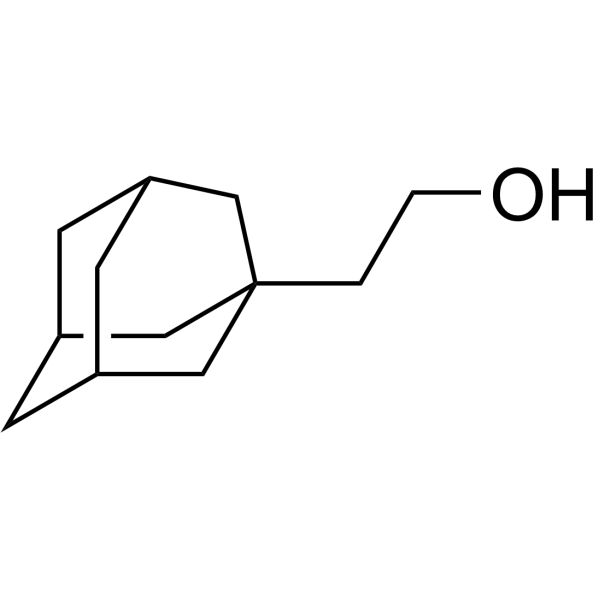
AdCaPy is an MHC II antigen loading catalyst that accelerates the loading of peptide antigens by MHC II. AdCaPy is a useful molecular tool for enhancing immune responses .
|
-
-
- HY-157277
-
|
|
Hapten
|
Cancer
|
|
AdBeSA is a hapten. AdBeSA can influence peptide binding by MHC II .
|
-
-
- HY-164308
-
|
|
LAG-3
|
Inflammation/Immunology
|
|
SA-15-P inhibits LAG-3/MHCII and LAG-3/FGL1 interactions with IC50 values of 4.21 and 6.52 μM respectively. LAG-3/MHCII interaction is a target for immunotherapies .
|
-
-
- HY-157171
-
|
|
MHC
|
Inflammation/Immunology
|
|
Ac-YR-NH2 is a small molecule modulator of MHC class II antigen presentation. Ac-YR-NH2 can influence peptide binding by MHC II to influence immune response .
|
-
-
- HY-P10382
-
|
|
MHC
|
Inflammation/Immunology
|
|
M133 peptide is a coronavirus-specific CD4 T cell epitope. M133 peptide is immunodominant in mice infected with the neurotropic coronavirus (the JHM strain of mouse hepatitis virus). M133 peptide forms a complex with MHC II molecules, which is recognized by specific TCRs, thereby activating CD4 T cells .
|
-
-
- HY-157992
-
-
-
- HY-181685
-
|
|
LAG-3
TNF Receptor
|
Cancer
|
|
LAGi-DEL is a LAG-3 inhibitor, with Kd values of 97.33 nM and 271 nM in surface plasmon resonance (SPR) assay and microscale thermophoresis (MST) assay, respectively. LAGi-DEL blocks the LAG-3/MHC-II interaction, with an EC50 of 138 nM. LAGi-DEL restores T cell activation, enhances IFN-γ secretion and promotes immune-mediated cytotoxicity. LAGi-DEL can be used in the research of acute myeloid leukemia, lung cancer and melanoma .
|
-
-
- HY-P992461
-
|
|
LAG-3
|
Cancer
|
|
SHR-1802 is a humanized anti-LAG-3 monoclonal antibody.SHR-1802 specifically binds to LAG-3 and inhibits its binding to major histocompatibility complex class II (MHC-II), fibrinogen-like protein 1 (FGL1), galectin-3, and liver sinusoidal endothelial cell lectin.SHR-1802 can be used for the research of advanced solid tumors .
|
-
-
- HY-P992352
-
|
|
|
|
|
ES005 is an anti-tumor compound and LAG3 inhibitor. ES005 blocks the interactions of LAG3 with MHC-II, LSECtin and FGL1, thereby effectively reversing the LAG3-mediated inhibition of T cell activation and NFAT reporter gene expression. ES005 exhibits significant tumor growth inhibitory effects in syngeneic mouse breast tumor models using humanized LAG3 knock-in mice. ES005 can be used for breast tumor-related research .
|
-
-
- HY-171239
-
|
|
Toll-like Receptor (TLR)
NF-κB
MHC
|
Others
|
|
Ste2Cys is a diacylglycerol cysteine-type immunologic adjuvant lipid molecule. Ste2Cys can bind to TLR2 and activate NF-κB signaling pathway. Ste2Cy can upregulate the expression of MHC II class molecules on the surface of mouse bone marrow-derived D1 dendritic cells. Ste2Cys can be used for research of the development of immunologic vaccines .
|
-
-
- HY-180900
-
|
|
LAG-3
|
Inflammation/Immunology
|
|
Z3071585108 is a small molecule binder of the LAG-3 D1 domain with Kd values measured for the MST-TRIC channel and spectral shift detection of 59.2 and 56.1 μM respectively. Z3071585108 partially inhibits the binding of LAG-3 to MHCII, with an EC₅₀ of 42.9 μM. Z3071585108 can be used for the study of small molecule immunotherapies targeting LAG-3 .
|
-
-
- HY-W761985
-
|
|
Insecticide
|
Inflammation/Immunology
|
|
Furathiocarb is a carbamate pro-insecticide and a contact allergen. Furathiocarb is commonly used in studies related to contact allergy. Furathiocarb induces significant proliferation of MHC II-positive B cells in auricular lymph node cells and induces the production of Th1 cytokines (such as IL-2, TNF-γ and IFN-γ). However, Furathiocarb does not induce respiratory allergy in mice. After absorption through the abdominal skin of isolated rats, Furathiocarb is completely metabolized into carbofuran, and its permeation amount increases with time and dosage. The skin permeation rates of both emulsifiable concentrate (EC) and wettable powder (WP) formulations of Furathiocarb are higher than that of Furathiocarb itself, with no significant difference between the two formulations .
|
-
-
- HY-P992408
-
|
|
TNF Receptor
NF-κB
MHC
IFNAR
|
Cancer
|
|
MEDI-5083 is an Fc fusion protein that targets CD40 and is a CD40 agonist. MEDI-5083 stimulates CD40 signaling via NF-κB activation. MEDI-5083 upregulates MHCII, CD80, and CD86 expression, induces pro-inflammatory cytokine secretion, and enhances IFN-γ secretion by memory CD8+ T cells. MEDI-5083 can be used for the research of melanoma, colon carcinoma, and advanced solid tumors[1][2].
|
-
| Cat. No. |
Product Name |
Target |
Research Area |
-
- HY-P1745
-
|
Insulin B chain (9-23)
|
MHC
Insulin Receptor
IFNAR
|
Inflammation/Immunology
|
|
InsB (9-23) (Insulin B chain (9-23)) is an HLA-DQ8-restricted insulin B-chain peptide composed of amino acid residues 9-23. InsB (9-23) serves as a major MHC II class-restricted antigen. InsB (9-23) supports the recognition and activation of T cells, stimulates the secretion of IFN-γ and cytokines, and induces cross-reactive immune responses. InsB (9-23)-specific CD4 T cells can initiate diabetes . InsB (9-23) can be used in research related to type 1 diabetes and autoimmune diabetes .
|
-
- HY-P5412
-
|
Listeriolysin O 190 peptide
|
Peptides
|
Others
|
|
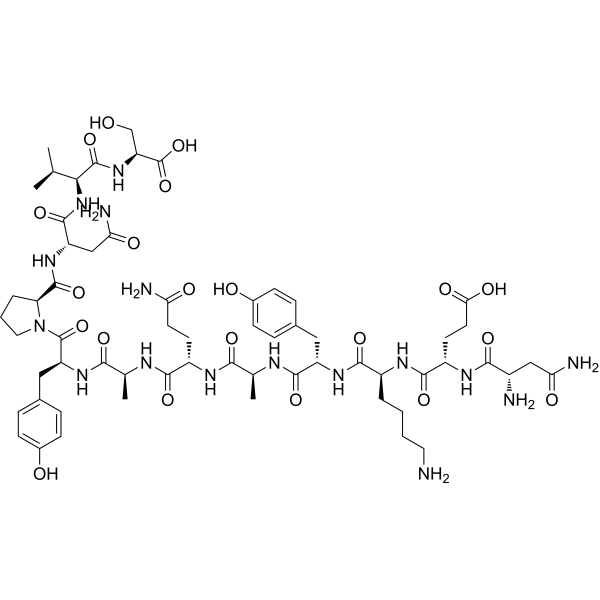
LLO (190-201) (Listeriolysin O 190 peptide) is a biological active peptide. (This peptide is a major histocompatibility complex class II (MHC-II)-restricted peptide, LLO190 (NEKYAQAYPNVS), from the listeriolysin O protein of Listeria monocytogenes, which generates an LLO190-specific Th response. This peptide subsequently challenge recombinant L. monocytogenes expressing the MHC-I-restricted epitope of ovalbumin (Ova257, SIINFEKL).)
|
-
- HY-P10441A
-
|
|
Peptides
|
Inflammation/Immunology
|
|
S-palm P0(180–199) (TFA) is a peptide that enhances MHC II-restricted responses. S-palm P0(180–199) (TFA) can be used to establish models of chronic inflammatory demyelinating polyneuropathy (CIDP) and chronic experimental autoimmune neuritis (c-EAN). S-palm P0(180–199) (TFA) is used for studying autoimmune-mediated neuroinflammatory diseases .
|
-
- HY-P5898
-
|
Z-Val-Val-Nle-CHN2
|
Cathepsin
MHC
|
Inflammation/Immunology
|
|
Z-Val-Val-Nle-diazomethylketone is a cathepsin S (CATS) inhibitor. Z-Val-Val-Nle-diazomethylketone significantly inhibits the IFNg-induced upregulation of the MHCII molecules HLA-DR and Ii-p33/35 with an increase of Ii-p10 protein level. Z-Val-Val-Nle-diazomethylketone can be used for dermatological diseases like psoriasis, atopic dermatitis and actinic keratosis research .
|
-
- HY-P10835
-
|
|
LAG-3
|
Cancer
|
|
LAG-3 cyclic peptide inhibitor C25 is a LAG-3 inhibitor. LAG-3 cyclic peptide inhibitor C25 has a high affinity with human LAG-3 protein with a Kd value of 0.66 μM. LAG-3 cyclic peptide inhibitor C25 can block the interaction of LAG-3 with HLA-DR (MHC-II) and activate CD8 + T cells. LAG-3 cyclic peptide inhibitor C25 can be used in the study of cancer .
|
-
- HY-P10382
-
|
|
MHC
|
Inflammation/Immunology
|
|
M133 peptide is a coronavirus-specific CD4 T cell epitope. M133 peptide is immunodominant in mice infected with the neurotropic coronavirus (the JHM strain of mouse hepatitis virus). M133 peptide forms a complex with MHC II molecules, which is recognized by specific TCRs, thereby activating CD4 T cells .
|
| Cat. No. |
Product Name |
Target |
Research Area |
Image |
-
- HY-P99156
-
|
BMS-986016
|
LAG-3
|
Cancer
|
|
Relatlimab (BMS-986016) is a human monoclonal antibody anti-LAG-3 antibody generated by immunization of transgenic mice bearing human immunoglobulin miniloci with recombinant LAG-3 protein. Relatlimab blocks LAG-3/MHC II interaction with an IC50 value of 0.67 nM and LAG-3/FGL1 interaction with an IC50 value of 0.019 nM. Relatlimab can be used in research of cancer .
|
-
(5)
-
- HY-P99573
-
|
MGD-013
|
LAG-3
|
Inflammation/Immunology
Cancer
|
|
Tebotelimab (MGD-013) is a humanized IgG4κ bispecific PD-1/LAG-3 dual-affinity re-targeting (DART) antibody. Tebotelimab binds cell-surface expressed PD-1 and LAG-3 with EC50s of 1.65 nM and 0.41 nM in NS0 cells, respectively. Tebotelimab blocks PD-1/PD-L1, PD-1/PD-L2 and LAG-3/HLA (MHC-II) interactions and PD-1 signaling. Tebotelimab restores exhausted T-cell responses and and enhances antitumour immunity .
|
-
(5)
-
- HY-P99922
-
|
|
LAG-3
|
Cancer
|
|
Encelimab is an anti-LAG3 antibody. Encelimab blocks the interaction between LAG-3 and MHC II, and enhances T-cell activation. Encelimab alone or in combination with an anti-PD-1 antibody reduces tumor size in a lymphoma mice model (A20 cell xenograft) .
|
-
(5)
-
- HY-P99141
-
|
|
LAG-3
|
Inflammation/Immunology
Cancer
|
|
Anti-Mouse LAG-3 Antibody (C9B7W) is an anti-mouse LAG-3 IgG1 monoclonal antibody. Anti-Mouse LAG-3 Antibody (C9B7W) can enhance CD4 + T cell function and exert anti-tumor effects without blocking the interaction between LAG-3 and MHCII. Anti-Mouse LAG-3 Antibody (C9B7W) can be used for research on cancer such as head and neck squamous cell carcinoma (HNSCC) .
|
-
(5)
-
- HY-P990839
-
|
|
IFNAR
|
Inflammation/Immunology
|
|
Anti-IFNγ Antibody (B133.5) is a kind of mouse IgG1 chimeric antibody inhibitor, targeting to human IFNγ. Anti-IFNγ Antibody (B133.5) can neutralize human IFNγ (interferon gamma). Anti-IFNγ Antibody (B133.5) can be used for the research of immunology .
|
-
(5)
-
- HY-P99027
-
|
LAG525; IMP701; Hu5A8
|
LAG-3
|
Cancer
|
|
Ieramilimab (LAG525; IMP701) is a humanized IgG4 monoclonal antibody that binds to LAG-3, resulting in inhibition of LAG-3 interaction with MHC-II molecules. Ieramilimab restores T-cell and NK-cell-mediated antileukemic immunity by reducing exhaustion and augmenting cytokine output and cytotoxicity. Ieramilimab increases the infiltration of cytotoxic T lymphocytes and reduces baseline densities of regulatory T cells (Tregs) and ADAM10-expressing tumor cells. Ieramilimab can be used for the study of various malignancies including melanoma, RCC, and advanced solid tumors .
|
-
(5)
-
- HY-P99736
-
|
BI-754111
|
LAG-3
|
Cancer
|
|
Miptenalimab (BI-754111) is an anti-human LAG-3 antibody (KD: 88.6 nM for h LAG-3). Miptenalimab blocks the interaction of LAG-3 with its ligand MHC-II .
|
-
(5)
-
- HY-P991750
-
|
|
MHC
|
Inflammation/Immunology
|
|
Anti-pan MHC Class II (HLA II) Antibody (IVA12) recognizes human HLA-II (HLA-DR, HLA-DP, and HLA-DQ). Anti-pan MHC Class II (HLA II) Antibody (IVA12) blocks MHC-II in vitro. Recommend Isotype Controls: Mouse IgG1 kappa, Isotype Control (HY-P99977) .
|
-
(5)
-
- HY-P992461
-
|
|
LAG-3
|
Cancer
|
|
SHR-1802 is a humanized anti-LAG-3 monoclonal antibody.SHR-1802 specifically binds to LAG-3 and inhibits its binding to major histocompatibility complex class II (MHC-II), fibrinogen-like protein 1 (FGL1), galectin-3, and liver sinusoidal endothelial cell lectin.SHR-1802 can be used for the research of advanced solid tumors .
|
-
(5)
-
- HY-P992352
-
|
|
|
|
|
ES005 is an anti-tumor compound and LAG3 inhibitor. ES005 blocks the interactions of LAG3 with MHC-II, LSECtin and FGL1, thereby effectively reversing the LAG3-mediated inhibition of T cell activation and NFAT reporter gene expression. ES005 exhibits significant tumor growth inhibitory effects in syngeneic mouse breast tumor models using humanized LAG3 knock-in mice. ES005 can be used for breast tumor-related research .
|
-
(5)
-
- HY-P992408
-
|
|
TNF Receptor
NF-κB
MHC
IFNAR
|
Cancer
|
|
MEDI-5083 is an Fc fusion protein that targets CD40 and is a CD40 agonist. MEDI-5083 stimulates CD40 signaling via NF-κB activation. MEDI-5083 upregulates MHCII, CD80, and CD86 expression, induces pro-inflammatory cytokine secretion, and enhances IFN-γ secretion by memory CD8+ T cells. MEDI-5083 can be used for the research of melanoma, colon carcinoma, and advanced solid tumors[1][2].
|
-
(5)
| Cat. No. |
Product Name |
Chemical Structure |
-
- HY-W016773S
-
|
|
|
1,10-Decanediol-d20 is the deuterium labeled 1,10-Decanediol . 1,10-Decanediol is a diol compound that can react with α-ketoglutarate (aKG) to generate polymeric microparticles (termed paKG MPs) for the sustained release of aKG, thereby promoting immunosuppressive regulation. Additionally, paKG MPs can bind to dendritic cells (DCs), reducing their glycolysis and mitochondrial respiration in vitro. These metabolic changes lead to the modulation of MHC-II and CD86 expression in DCs and alter the frequency of regulatory T cells (Tregs) as well as T-helper type 1/2/17 cells in vitro. 1,10-Decanediol can be used in research within the field of immunometabolism. can be used as a surfactant/stabilizer in the synthesis of nanomaterials .
|
-
| Cat. No. |
Compare |
Product Name |
Application |
Reactivity |
Image |
Compare Products
|
| Products |
|
| Cat. No. |
|
| Host |
|
| Reactivity |
|
| Application |
|
Dilution Ratio |
|
| Molecular Weight |
|
| Conjugation |
|
| Clonality |
|
| Immunogen |
|
| Appearance |
|
| Isotype |
|
| Gene ID |
|
| SwissProt ID |
|
| Purity |
|
| Formulation |
|
| Free Sample |
Yes
No
|
| Size |
* This product has been "discontinued".
Optimized version of product available:
|
Your information is safe with us. * Required Fields.
Inquiry Information
- Product Name:
- Cat. No.:
- Quantity:
- MCE Japan Authorized Agent:

