1. Search Result
Search Result
Results for "

MRI

" in MedChemExpress (MCE) Product Catalog:

35

Inhibitors & Agonists

2

Fluorescent Dye

6

Biochemical Assay Reagents

2

Natural
Products

2

Antibodies

4

Oligonucleotides

Cat. No. Product Name Target Research Areas Chemical Structure
  • HY-W019894
    Manganese chloride
    1 Publications Verification

    Manganese dichloride

    Biochemical Assay Reagents Apoptosis mTOR Cardiovascular Disease Neurological Disease
    Manganese chloride is an orally active MRI liver contrast agent. Manganese chloride induces Apoptosis and activates the mTOR signaling pathway. Manganese chloride induces cognitive impairment, promotes hematopoietic recovery, and reduces radiation-induced bone marrow and brain damage. It can be used for the study of renal impairment .
    Manganese chloride
  • HY-W034551

    Radionuclide-Drug Conjugates (RDCs) Others Cancer
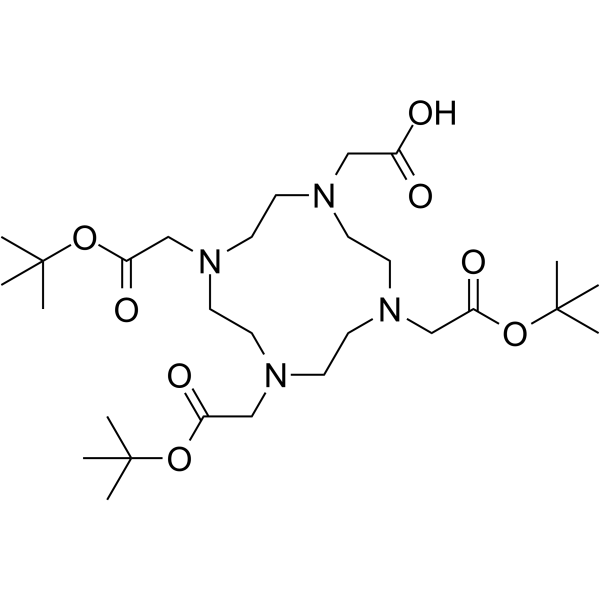
    DOTA-tri(t-butyl ester) belongs to the DOTA class of chelating agents. DOTA-tri(t-butyl ester) is a key raw material for synthesizing nanospherical magnetic resonance imaging (MRI) contrast agents, which are used in MR angiography and tumor angiogenesis imaging .
    DOTA-tri(t-butyl ester)
  • HY-112624L

    Dextran 10; Dextran D10; Dextran T10(MW 8000-12000)

    Biochemical Assay Reagents Cancer
    Dextran T10 (MW 10,000) (Dextran 10) is a dehydrated glucose polymer with an average molecular weight of 10,000. Dextran T10 (MW 10,000) is composed of repeated glucose units, and it has abundant hydroxyl (-OH) groups, which can be used as a natural "magnetic marker" for chemical exchange saturation transfer (CEST) MRI imaging .
    Dextran T10 (MW 10,000)
  • HY-153800
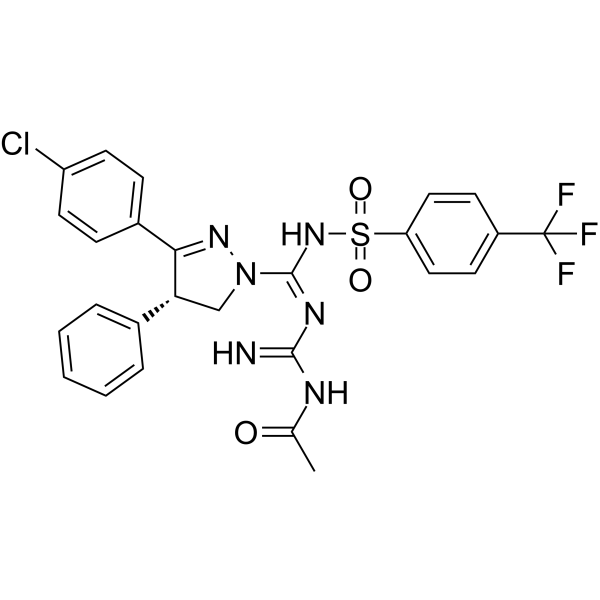
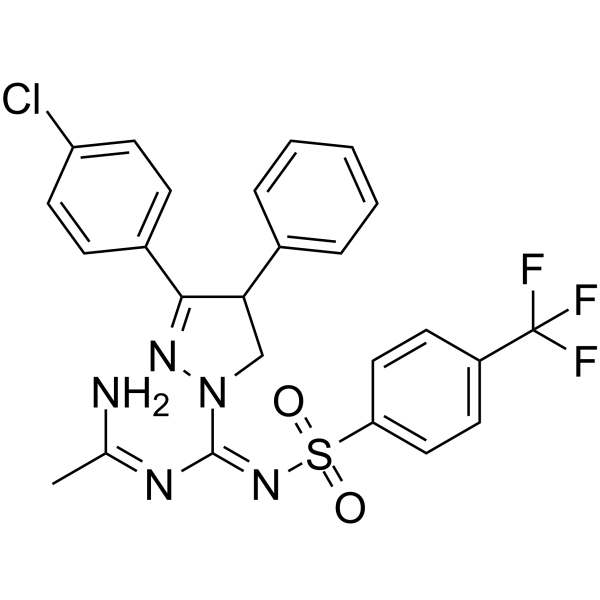
    Monlunabant
    1 Publications Verification

    (S)-MRI-1891; INV-202

    Cannabinoid Receptor Arrestin Metabolic Disease
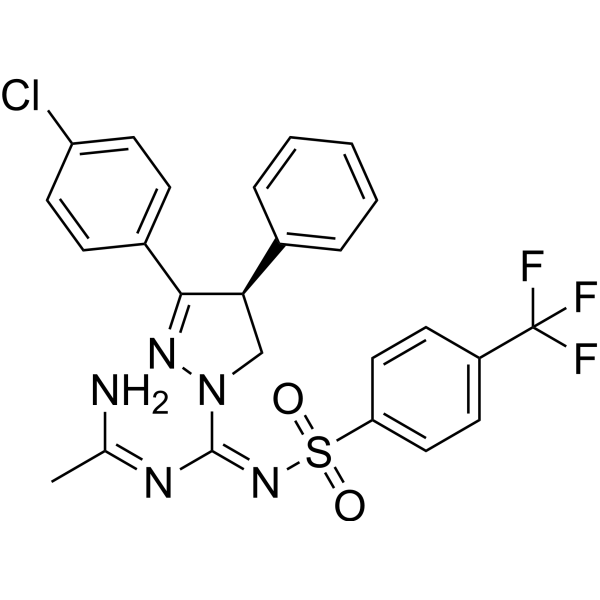
    Monlunabant ((S)-MRI-1891) is an orally active antagonist for cannabinoid receptor 1 (CB1), binds to hCB1 and hCB2 with Ki of 0.3 nM and 613 nM .
    Monlunabant
  • HY-159181

    Biochemical Assay Reagents Others
    p-NCS-Bz-DOTA-GA is a bifunctional chelator. p-NCS-Bz-DOTA-GA can be used as a versatile linker in targeted molecular imaging for both PET/SPECT and MRI applications .
    p-NCS-Bz-DOTA-GA
  • HY-W176557

    Aquaporin Neurological Disease
    TGN-073 is a aquaporin 4 (AQP4) modulator, as well as an orally available, blood-brain barrier-permeable agent. TGN-073 increases the uptake and distribution of brain MRI tracers in the brain parenchyma and reduces the levels of insoluble amyloid-β 40 and β 42. TGN-073 can be used in research related to Alzheimer's disease, dementia, traumatic brain injury and pain .
    TGN-073
  • HY-W007656

    Biochemical Assay Reagents Others
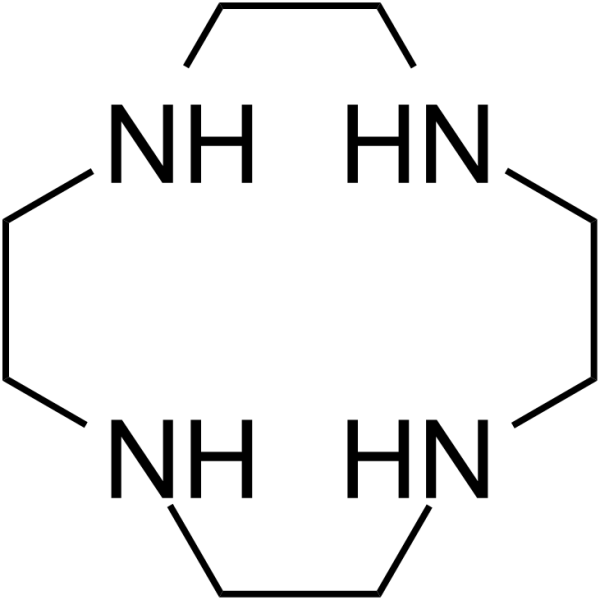
    Cyclen is a macrocyclic tetraamine chelating agent. Cyclen is the aza analogue of crown ether, used as a precursor for MRI contrast agents, and is an intermediate for the preparation of effective macrocyclic chelates. Cyclen is employed as a structural regulator through interfacial polymerization of polyethleneimine (PEI) and trimesoyl chloride (TMC) to develop polyamide NF membrane with efficient Li +/Mg 2+ separation performance. Cyclen has specific cavity structure and exhibits selective coordination properties for Li + ions [1][2].
    Cyclen
  • HY-W011696

    cis-1-Amino-9-octadecene, 80-90%

    Environmental Pollutants Biochemical Assay Reagents Cancer
    Oleylamine, 80-90% (cis-1-Amino-9-octadecene, 80-90%) is a multifunctional reagent used for metal ion coordination and nanoparticle surface modification, and acts as a solvent, surfactant and reducing agent in the synthesis of metal oxide nanoparticles. Oleylamine, 80-90% regulates nanoparticle morphology, magnetization intensity and water proton relaxation rate via thiol-ene "click" reaction, and enhances the colloidal stability of nanoparticles in organic reagents. Oleylamine, 80-90% is mainly used in research and applications in fields such as nanomaterial synthesis, biomedical imaging (MRI contrast agents, fluorescent probes), cancer cell targeting and drug delivery .
    Oleylamine, 80-90%
  • HY-D1449
    IR-1061
    1 Publications Verification

    Fluorescent Dye Others
    IR-1061 is a near infrared fluorescent organic dye for in vivo bimodal imaging .
    IR-1061
  • HY-106594A

    Iron(III) ferrocyanide; Milori blue

    Environmental Pollutants Bacterial Infection Cancer
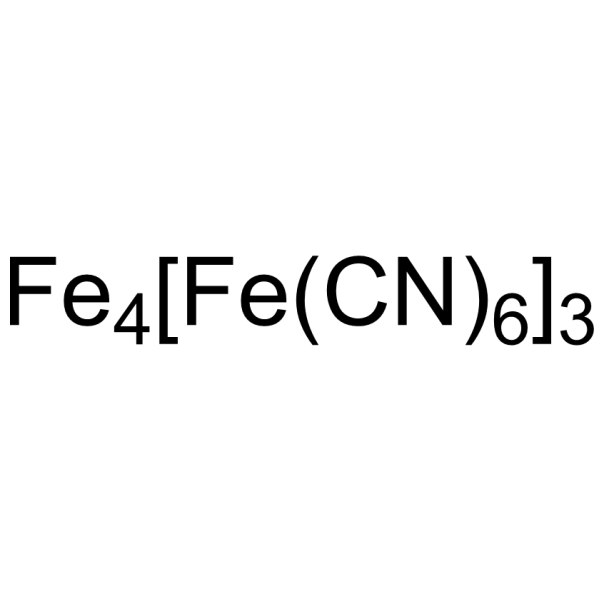
    Prussian blue soluble is a good adsorbent to be used as antidotes for poisoning with cesium or thallium ions. Prussian blue soluble has anticancerous and antibacterial properties. Prussian blue soluble can be used as a contrast agent in photoacoustic and magnetic resonance imaging (MRI) .
    Prussian blue insoluble
  • HY-108894

    Ferroptosis Reactive Oxygen Species (ROS) Cardiovascular Disease Inflammation/Immunology Cancer
    Ferumoxytol is an FDA-approved ultrasmall superparamagnetic iron oxide preparation and iron replacement agent that exerts selective activity against leukemia cells with low ferroportin expression. Ferumoxytol increases intracellular iron levels, induces reactive oxygen species (ROS) production via the Fenton reaction, and triggers oxidative stress and cell death. Ferumoxytol reduces disease burden in mouse models and patient-derived leukemia models. As an MRI contrast agent, Ferumoxytol enables imaging of vascular lesions, tumors and lymph nodes. Ferumoxytol can be used in research related to acute myeloid leukemia and blast-phase chronic myeloid leukemia .
    Ferumoxytol
  • HY-115853

    Biochemical Assay Reagents Others
    Pyclen forms kinetically and thermodynamically stable nine-coordinate Ln (III) complexes, as well as Mn (II)-based MRI contrast agents. Pyclen-Based Mn(II) Complexes can be used for liver-specific MRI .
    Pyclen
  • HY-129242

    4-Oxo-Tempo

    SOD Others
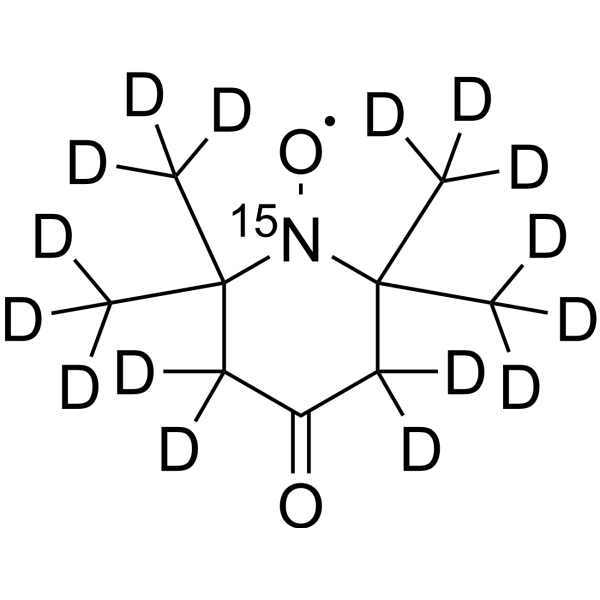
    Tempone (4-Oxo-Tempo) is a stable water-soluble nitro radical. Tempone is widely used as a contrast agent for metabolic activity and hypoxic sensitivity in electron spin resonance spectroscopy, magnetic resonance imaging and dynamic nuclear polarization. Tempone reduces superoxide radicals by mimicking the activity of superoxide dismutase (SOD), thereby reducing the formation of hydroxyl radicals and peroxynitrites. Tempone can be used in the study of ischemia-reperfusion injury and acute renal failure .
    Tempone
  • HY-141411A

    (S)-MRI-1867

    Cannabinoid Receptor NO Synthase Metabolic Disease
    Zevaquenabant ((S)-MRI-1867) is a peripherally restricted, orally bioavailable dual cannabinoid CB1 receptor and inducible NOS antagonist. Zevaquenabant ameliorates obesity-induced chronic kidney disease (CKD) .
    Zevaquenabant
  • HY-106594B

    Pigment blue 27

    Bacterial Infection Cancer
    Prussian blue soluble is a good adsorbent to be used as antidotes for poisoning with cesium or thallium ions. Prussian blue soluble has anticancerous and antibacterial properties. Prussian blue soluble can be used as a contrast agent in photoacoustic and magnetic resonance imaging (MRI) .
    Prussian blue soluble
  • HY-W854721

    Manganese(III) Protoporphyrin IX Chloride

    Heme Oxygenase (HO) Metabolic Disease
    Mn(III) protoporphyrin IX chloride is a metalloporphyrin. It induces mRNA expression of the genes encoding δ-aminolevulinate synthase and heme oxygenase (HO), enzymes that catalyze the rate-limiting steps of heme biosynthesis and degradation, respectively, in chick embryo liver cells when used at a concentration of 10 μM. Mn(III) protoporphyrin IX chloride-containing nanobialys have been used in magnetic resonance imaging (MRI) of fibrin clots in vitro. It has also been used in the synthesis of Mn(III) protoporphyrin IX-6(7)-glycyl-glycyl-L-histidine methyl ester (MnGGH), a metalloporphyrin conjugate with microperoxidase activity.
    Mn(III) Protoporphyrin IX chloride
  • HY-157335

    Biochemical Assay Reagents Others
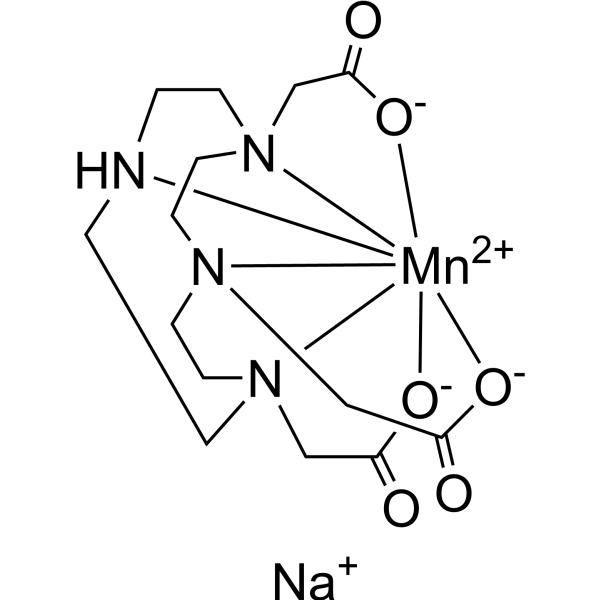
    Mn(II)-DO3A sodium is a Mn(II) complex and a potential alternative to Gd-based MRI contrast agents .
    Mn(II)-DO3A sodium
  • HY-W130177

    Biochemical Assay Reagents Cancer
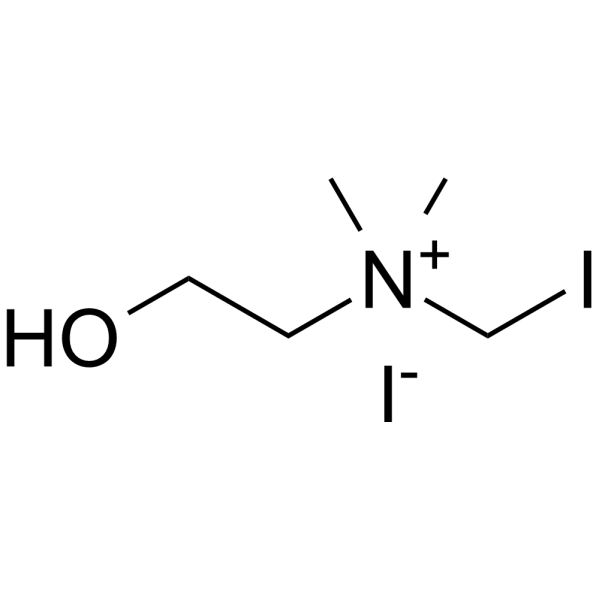
    Iodocholine iodide is a non-toxic, metabolizable "green" catalyst that can catalyze the free radical polymerization of functional polymers. Iodocholine iodide is also the non-radioactive iodide of Carbon-11 choline. C-11 Choline can be used in PET imaging and non-informative bone scintigraphy, CT or MRI to monitor various types of cancer .
    Iodocholine iodide
  • HY-141411

    (Rac)-MRI-1867

    Cannabinoid Receptor NO Synthase Others
    (Rac)-Zevaquenabant ((Rac)-MRI-1867, compound 6b) is a cannabinoid receptor type 1 (CB1R)/iNOS antagonist, with a Ki of 5.7 nM for CB1R. (Rac)-Zevaquenabant is potential for the research of liver fibrosis .
    (Rac)-Zevaquenabant
  • HY-180450

    Biochemical Assay Reagents Cancer
    Gadoxetate disodium is a liver-specific magnetic resonance imaging (MRI) contrast agent, can be used for detecting and identifying liver tumors .
    Caloxetate trisodium
  • HY-141411B

    (R)-MRI-1867

    Drug Isomer Cannabinoid Receptor NO Synthase Others
    (R)-Zevaquenabant ((R)-MRI-1867) is the enantiomer of Zevaquenabant (HY-141411A). Zevaquenabant ((S)-MRI-1867) is a peripherally restricted, orally bioavailable dual cannabinoid CB1 receptor and inducible NOS antagonist. Zevaquenabant ameliorates obesity-induced chronic kidney disease (CKD) .
    (R)-Zevaquenabant
  • HY-RS08653

    Small Interfering RNA (siRNA) Others

    MRI1 Human Pre-designed siRNA Set A contains three designed siRNAs for MRI1 gene (Human), as well as a negative control, a positive control, and a FAM-labeled negative control.

    MRI1 Human Pre-designed siRNA Set A
    MRI1 Human Pre-designed siRNA Set A
  • HY-153800A

    (R)-MRI-1891; (R)-INV-202

    Cannabinoid Receptor Metabolic Disease
    (R)-Monlunabant ((R)-MRI-1891) is a CB1 receptor mediators for research of obesity and metabolic disease
    (R)-Monlunabant
  • HY-173383

    1,2-dioleoyl-sn-glycero-3-phosphoethanolamine-N- tetraazacyclododecane-N-tetraacetic acid, sodium salt

    Biochemical Assay Reagents Inflammation/Immunology Cancer
    DOPE-DOTA sodium is a chelated lipid that serves as a key contrast agent in magnetic resonance imaging (MRI). DOPE-DOTA sodium can be used for cancer, blood-brain barrier disruption, abnormalities such as aneurysms or plaque buildup, inflammation in arthritis, and liver function and lesions study
    DOPE-DOTA sodium
  • HY-RS28987

    Small Interfering RNA (siRNA) Others
    Cyren Rat Pre-designed siRNA Set A contains three designed siRNAs for Cyren gene (Rat), as well as a negative control, a positive control, and a FAM-labeled negative control.
    Cyren Rat Pre-designed siRNA Set A
    Cyren Rat Pre-designed siRNA Set A
  • HY-RS22464

    Small Interfering RNA (siRNA) Others

    Cyren Mouse Pre-designed siRNA Set A contains three designed siRNAs for Cyren gene (Mouse), as well as a negative control, a positive control, and a FAM-labeled negative control.

    Cyren Mouse Pre-designed siRNA Set A
    Cyren Mouse Pre-designed siRNA Set A
  • HY-115853A

    Biochemical Assay Reagents Others
    Pyclen dihydrochloride forms kinetically and thermodynamically stable nine-coordinate Ln (III) complexes, as well as Mn (II)-based MRI contrast agents. Pyclen-Based Mn(II) Complexes can be used for liver-specific MRI .
    Pyclen dihydrochloride
  • HY-RS03490

    Small Interfering RNA (siRNA) Others

    CYREN Human Pre-designed siRNA Set A contains three designed siRNAs for CYREN gene (Human), as well as a negative control, a positive control, and a FAM-labeled negative control.

    CYREN Human Pre-designed siRNA Set A
    CYREN Human Pre-designed siRNA Set A
  • HY-101262

    Endothelin Receptor Neurological Disease
    SB234551 is a selective endothelin ETA receptor antagonist. SB234551 can be used in the study of stroke model .
    SB234551
  • HY-173384

    1,2-distearoyl-sn-glycero-3-phosphoethanolamine-N- tetraazacyclododecane-N-tetraacetic acid, sodium salt

    Biochemical Assay Reagents Neurological Disease Inflammation/Immunology Cancer
    DSPE-DOTA sodium (1,2-distearoyl-sn-glycero-3-phosphoethanolamine-N- tetraazacyclododecane-N-tetraacetic acid, sodium salt) is a chelating lipid used as a key contrast agent in magnetic resonance imaging (MRI). DSPE-DOTA sodium can be used for imaging detection of tumors, neurological and inflammatory diseases .
    DSPE-DOTA sodium
  • HY-164981

    Drug Intermediate Cancer
    p-SCN-Bn-DOTA(tBu)4 is the derivative of DOTA (HY-W053583). p-SCN-Bn-DOTA(tBu)4 is the component of the Gd(III)-DOTA-IAC, which is a targeted magnetic resonance imaging (MRI) contrast agent for αvβ3 integrin receptor .
    p-SCN-Bn-DOTA(tBu)4
  • HY-115853B

    Biochemical Assay Reagents Others
    Pyclen sulfate forms kinetically and thermodynamically stable nine-coordinate Ln (III) complexes, as well as Mn (II)-based MRI contrast agents. Pyclen-Based Mn(II) Complexes can be used for liver-specific MRI .
    Pyclen sulfate
  • HY-106594AR

    Iron(III) ferrocyanide (Standard); Milori blue (Standard)

    Reference Standards Bacterial Infection Cancer
    Prussian blue insoluble (Standard) is the analytical standard of Prussian blue insoluble (HY-106594A). This product is intended for research and analytical applications. Prussian blue soluble is a good adsorbent to be used as antidotes for poisoning with cesium or thallium ions. Prussian blue soluble has anticancerous and antibacterial properties. Prussian blue soluble can be used as a contrast agent in photoacoustic and magnetic resonance imaging (MRI) .
    Prussian blue insoluble (Standard)
  • HY-106594BR

    Pigment blue 27 (Standard)

    Reference Standards Bacterial Infection Cancer
    Prussian blue soluble (Standard) is the analytical standard of Prussian blue soluble (HY-106594B). This product is intended for research and analytical applications. Prussian blue soluble is a good adsorbent to be used as antidotes for poisoning with cesium or thallium ions. Prussian blue soluble has anticancerous and antibacterial properties. Prussian blue soluble can be used as a contrast agent in photoacoustic and magnetic resonance imaging (MRI) .
    Prussian blue soluble (Standard)
  • HY-W007656R

    Reference Standards Others
    Cyclen (Standard) is the analytical standard substance of Cyclen. This product is used for research and analytical applications. Cyclen is a macrocyclic tetrathiolate chelating agent. Cyclen is a nitrogen-containing analogue of crown ethers and can be used as a precursor for MRI contrast agents, as well as an intermediate for preparing highly efficient macrocyclic chelates. As a structural regulator, Cyclen can be prepared into polyamide nanofiltration membranes with efficient Li +/Mg 2+ separation performance through the interfacial polymerization of polyethyleneimine (PEI) and meta-benzotriazole chloride (TMC). Cyclen has a unique cavity structure and exhibits selective coordination properties for Li + ions .
    Cyclen (Standard)

Inquiry Online

Your information is safe with us. * Required Fields.

Salutation


Country or Region *

Applicant Name *


Organization Name *

Department *


Email Address *


Product Name *

Cat. No.


Requested quantity *

Phone Number *


Remarks

Inquiry Online

Inquiry Information

Product Name:
Cat. No.:
Quantity:
MCE Japan Authorized Agent:

