1. Search Result
Search Result
Results for "

PET Probe

" in MedChemExpress (MCE) Product Catalog:

37

Inhibitors & Agonists

5

Fluorescent Dye

8

Peptides

Cat. No. Product Name Target Research Areas Chemical Structure
  • HY-128890
    DOTA-​NHS-ester
    1 Publications Verification

    ADC Linker Cancer
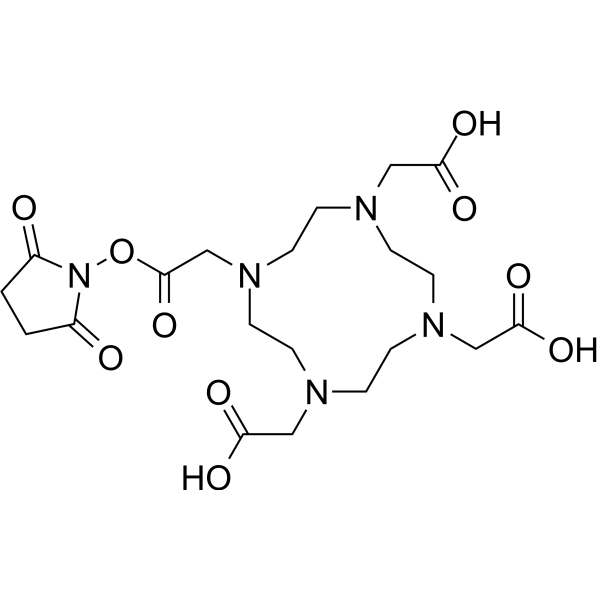
    DOTA-NHS-ester is a linker for affibody molecules and is applied in small animals PET, SPECT, and CT. DOTA-NHS-ester can be used to label radiotherapeutic agents or imaging probes for the detection of tumors .
    DOTA-​NHS-ester
  • HY-134418

    Radionuclide-Drug Conjugates (RDCs) Cardiovascular Disease Cancer
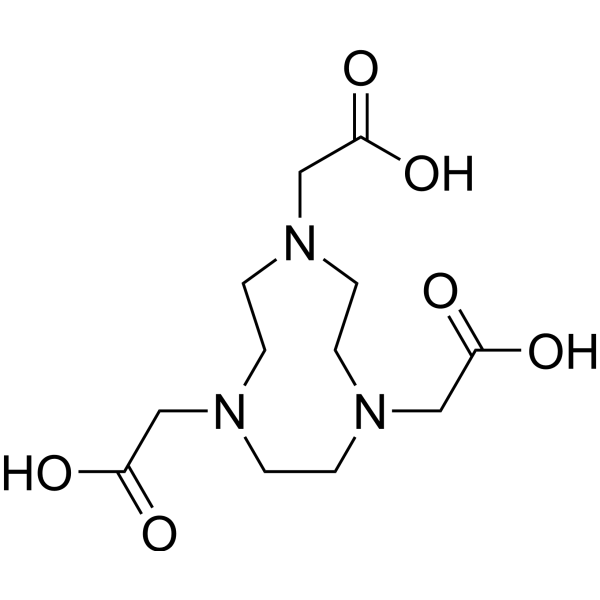
    NOTA is a bifunctional chelate which acts as the framework to construct PET imaging tools. NOTA also can be used for probe design and signal amplification via the multivalent effect. NOTA can be used in multiple myeloma, breast cancer, lymphoma and myocardial infarction research .
    NOTA
  • HY-160116

    Radionuclide-Drug Conjugates (RDCs) Fluorescent Dye α-synuclein Neurological Disease
    α-Synuclein aggregate binder 1 (Compound C05-05) is a specific binder for α-synuclein aggregates and can inhibit α-synuclein aggregation. α-Synuclein aggregate binder 1 can be used as a fluorescent probe (excitation wavelength 900 nm, detection wavelength 500-550 nm) for optical imaging, and can also inhibit α-synuclein fibril formation by blocking the aggregation process. α-Synuclein aggregate binder 1 can be used for positron emission tomography (PET) imaging after being labeled with 18F. α-Synuclein aggregate binder 1 can be used for visual diagnosis of brain lesions and mechanism research of neurodegenerative diseases such as Parkinson's disease and Lewy body dementia .
    α-Synuclein aggregate binder 1
  • HY-20167A

    Neurokinin Receptor Cancer
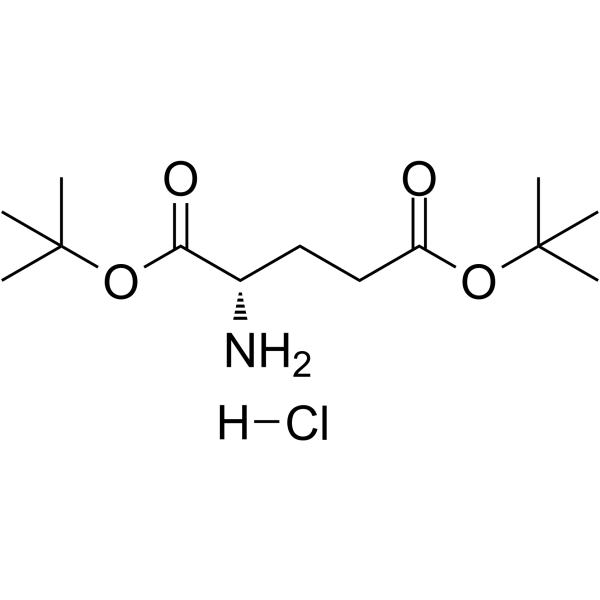
    H-Glu(OtBu)-OtBu hydrochloride is a key intermediate that can be used to synthesize prostate-specific membrane antigen (PSMA) targeting probes. H-Glu(OtBu)-OtBu hydrochloride can reduce nonspecific background binding through negatively charged linkers, improve tumor/background contrast, and can be used in prostate cancer PET/SPECT imaging studies .
    H-Glu(OtBu)-OtBu hydrochloride
  • HY-117468
    Lissamine rhodamine B
    Maximum Cited Publications
    6 Publications Verification

    Fluorescent Dye Others
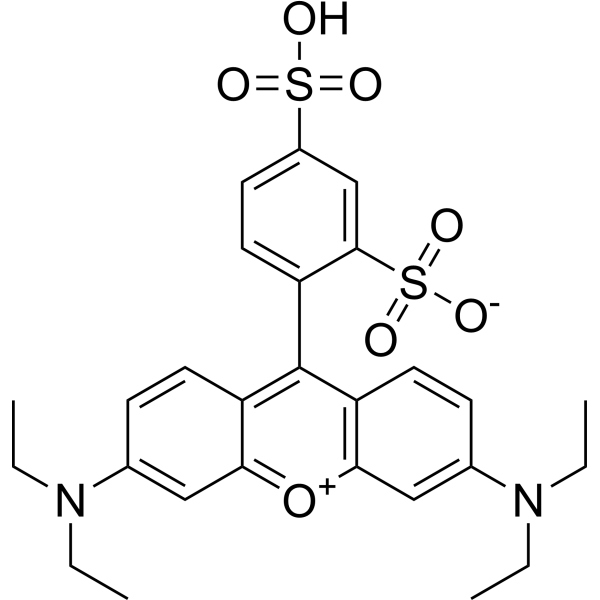
    Lissamine rhodamine B is a red-fluorescent dye, it is a derivative of rhodamine. Lissamine rhodamine B can be used as a fluorescent probe to develop competitive aptamer fluorescence anisotropy/polarization (FA/FP) assays .
    Lissamine rhodamine B
  • HY-135714

    EKZ-001

    HDAC Microtubule/Tubulin Neurological Disease Cancer
    Bavarostat (EKZ-001) is a blood-brain barrier-permeable, potent HDAC6 inhibitor and PET radiotracer, with an IC50 as low as 17 nM against human HDAC6. Bavarostat can be labeled with 18F and used as a probe to map HDAC6 distribution and measure target occupancy in the brains of non-human primates. Bavarostat also selectively modulates tubulin acetylation, but not histone acetylation. Bavarostat is applicable for research on Alzheimer's disease, other neurodegenerative disorders, and cancers .
    Bavarostat
  • HY-105252A

    Amyloid-β Neurological Disease
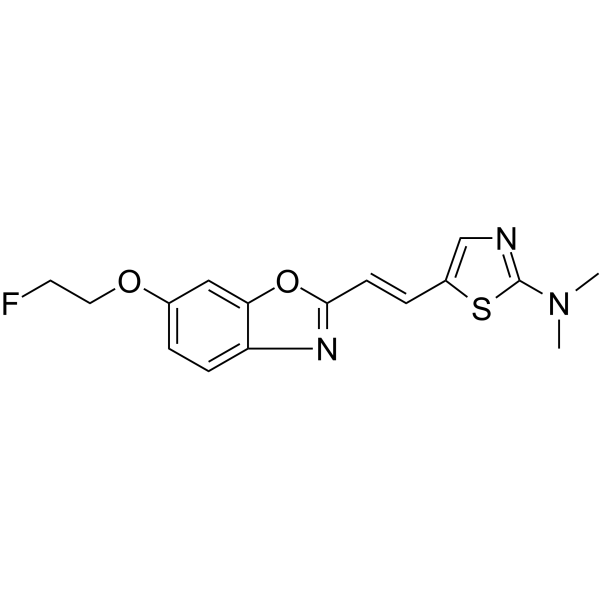
    BF 227 is a candidate for an amyloid imaging probe for PET, with a Ki of 4.3 nM for Aβ1-42 fibrils.
    BF 227
  • HY-D1590

    Fluorescent Dye Others
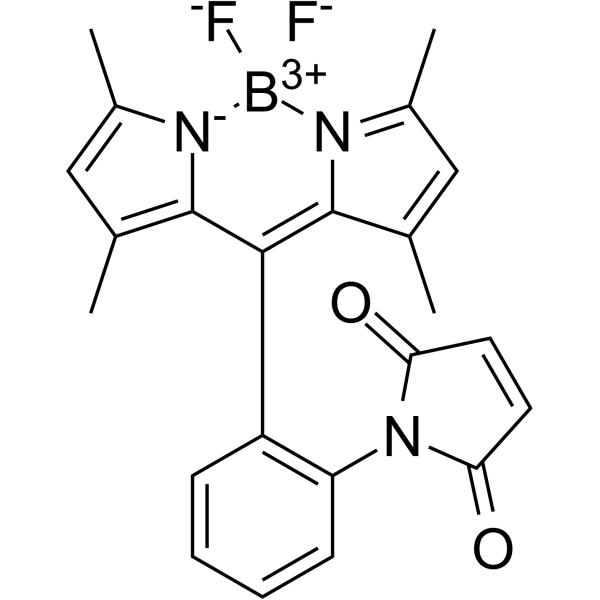
    ODIPY Green 8-P2M is a novel thiol-reactive fluorescence probe based on the BODIPY fluorophore, the fluorescence is strongly quenched by d-PeT and then can be restored after reaction with thiol, resulting in an extremely high signal-to-noise ratio. ODIPY Green 8-P2M can be useful for detecting extremely low concentrations of protein in the gel after SDS-PAGE .
    BODIPY Green 8-P2M
  • HY-160250

    Fluorescent Dye UGT Metabolic Disease
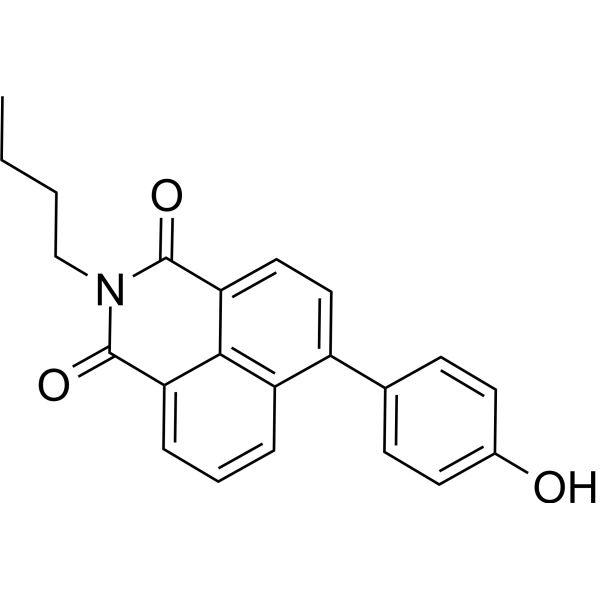
    UGT1A1-IN-1 is a UGT1A1 inhibitor and fluorescent probe (Ex=370 nm, Em=520 nm), with an IC50 of 1.33 μM and a Ki of 5.02 μM. UGT1A1-IN-1 is selectively glucuronidated by UGT1A1 at the bilirubin homologous binding site, and its PET effect is blocked along with this reaction, triggering fluorescence changes. UGT1A1-IN-1 can serve as a substitute for bilirubin to detect UGT1A1 activity and perform high-throughput screening of UGT1A1 modulators .
    UGT1A1-IN-1
  • HY-163574
    TDP-43 ligand-1
    1 Publications Verification

    hnRNP Neurological Disease
    TDP-43 ligand-1 is a specific ligand for TDP43, and its Ki value for binding to TDP-43 protein aggregates is 78 nM. TDP-43 ligand-1 can be used in the research of PET imaging probes for TDP-43 proteinopathies.
    TDP-43 ligand-1
  • HY-128890B
    DOTA-​NHS-ester TFA
    1 Publications Verification

    ADC Linker Biochemical Assay Reagents Cancer
    DOTA-​NHS-ester (TFA) is used as a linker for affibody molecules, and it can be employed in small animal positron emission tomography (PET), single photon emission computed tomography (SPECT), and CT scanning. DOTA-​NHS-ester can be used to label radiotracers or imaging probes for tumor detection .
    DOTA-​NHS-ester TFA
  • HY-134418R

    Radionuclide-Drug Conjugates (RDCs) Reference Standards Cardiovascular Disease Cancer
    NOTA (Standard) is the analytical standard of NOTA. This product is intended for research and analytical applications. NOTA is a bifunctional chelate which acts as the framework to construct PET imaging tools. NOTA also can be used for probe design and signal amplification via the multivalent effect. NOTA can be used in multiple myeloma, breast cancer, lymphoma and myocardial infarction research .
    NOTA (Standard)
  • HY-102089

    Dopamine Receptor Neurological Disease
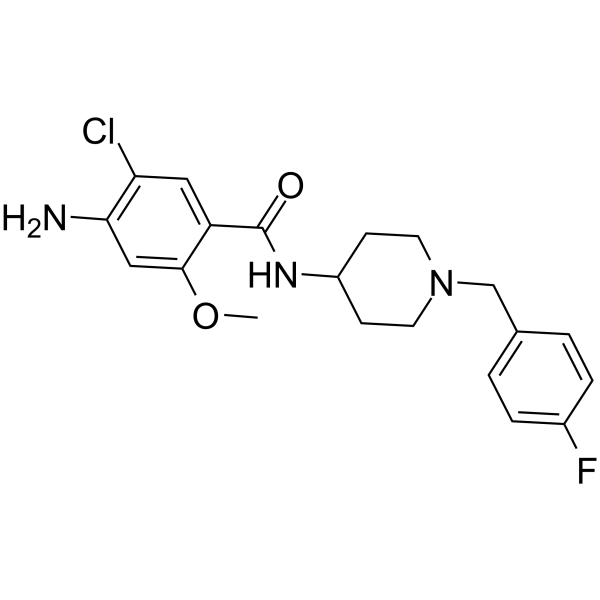
    Fluoroclebopride binds reversibly to dopamine receptors. 18F labeled fluoroclebopride has been used as a probe for studying D2/D3 receptor availability via PET in various monkey models .
    Fluoroclebopride
  • HY-101182

    Microtubule/Tubulin Neurological Disease
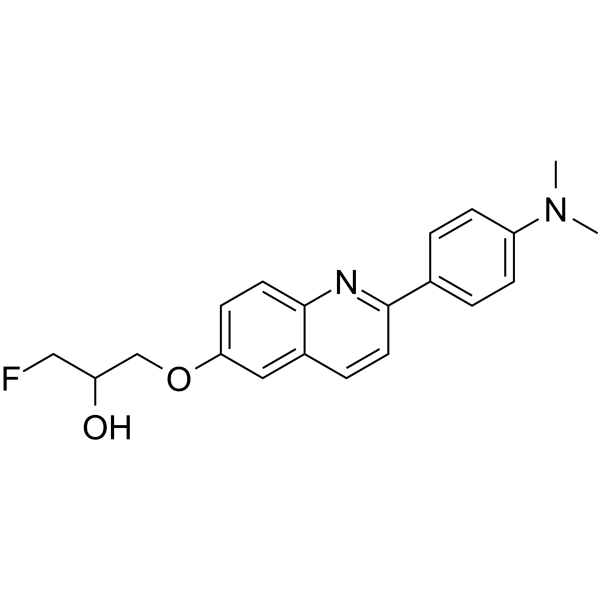
    THK-5117, an arylquinoline derivative, displays high binding affinity to tau fibrils with a Ki of 10.5 nM. THK-5117 has high binding affinity to tau protein aggregates and tau-rich Alzheimer disease (AD)  brain homogenates. 18F-THK-5117 has the potential to act as a tau imaging PET probe .
    THK-5117
  • HY-P11253

    VISTA Inflammation/Immunology
    DOTA-Bn-CA-170 is a molecular probe targeting the VISTA protein, with a Kd value of 0.124 nM. DOTA-Bn-CA-170 is formed by covalently linking the p-SCN-Bn-DOTA ligand with CA-170 (HY-101093). DOTA-Bn-CA-170 labeled with [ 68Ga]Ga successfully achieves specific and high-contrast PET imaging of VISTA expression in various tumor-bearing mouse models. DOTA-Bn-CA-170 can be used for the study of VISTA-targeted immunotherapy .
    DOTA-Bn-CA-170
  • HY-176834

    GLUT Cancer
    3-Deoxy-3-fluoro-D-fructose (Compound 12) is a derivative of 2,5-Anhydro-D-mannitol. 3-Deoxy-3-fluoro-D-fructose is a selective probe of Hexose transporter 5 (GLUT5). 3-Deoxy-3-fluoro-D-fructose inhibits the transport of D-fructose labeled with 14C by GLUT5 with IC50s of 1.16 and 2.37 µM in EMT-6 and MCF-7 cells. 3-Deoxy-3-fluoro-D-fructose can be used for positron emission tomography (PET) imaging of cancers .
    3-Deoxy-3-fluoro-D-fructose
  • HY-136404

    Fluorescent Dye Cancer
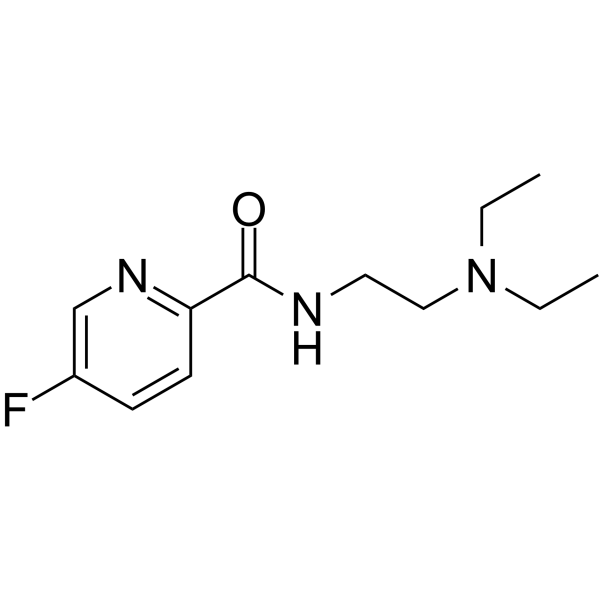
    Melanin probe-1 is an 18F-picolinamides based PET probe. Melanin probe-1 can be used for PET imaging of malignant melanoma. Melanin probe-1 exhibits high tumor targeting efficiency, excellent tumor imaging contrasts, desirable biodistribution patterns, and good in vivo stability .
    Melanin probe-1
  • HY-D2334

    Radionuclide-Drug Conjugates (RDCs) HSP Cancer
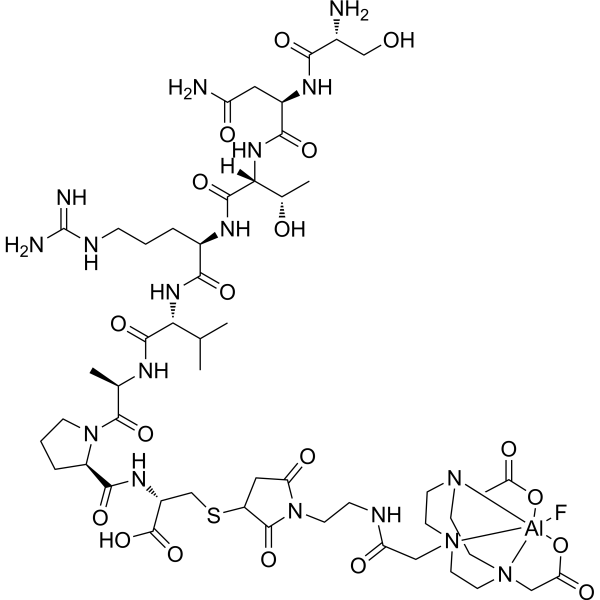
    AlF-NOTA-c-d-VAP is a peptide positron emission tomography (PET) probe that used for targeted tumor imaging of GRP78. AlF-NOTA-c-d-VAP demonstrates high stability in vitro and in vivo .
    AlF-NOTA-c-d-VAP
  • HY-101181

    Microtubule/Tubulin Neurological Disease
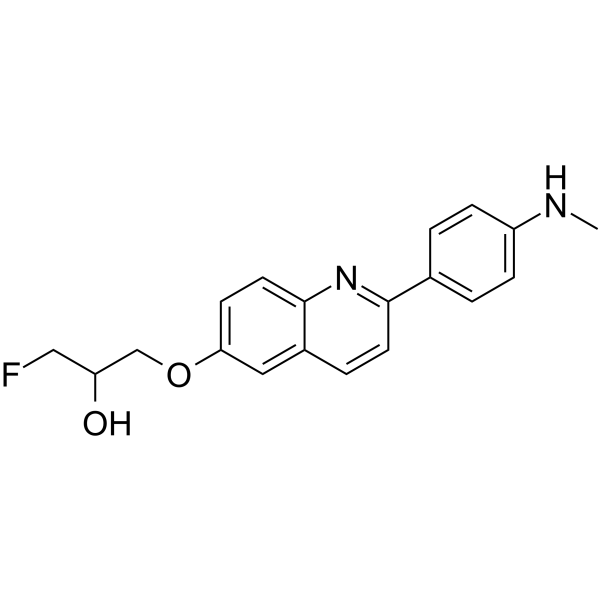
    THK-5105, an arylquinoline derivative, displays high binding affinity to tau fibrils. THK-5105 has high binding affinity to tau protein aggregates and tau-rich Alzheimer disease (AD)  brain homogenates. 18F-THK-5105 has the potential to act as a tau imaging PET probe .
    THK-5105
  • HY-136405

    Fluorescent Dye Others
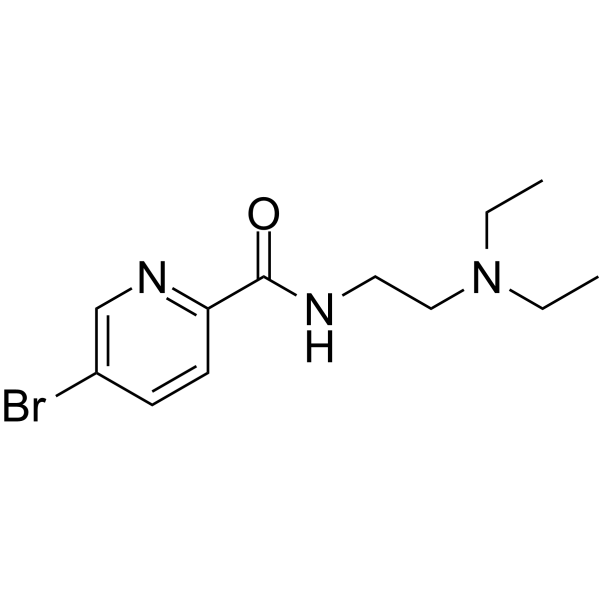
    Melanin probe-2 (compound 5) is a non-radioactive bromopicolinamide precursor. Melanin probe-2 can be used for 18F-Labeled Picolinamide PET probe synthesis (HY-136404) .
    Melanin probe-2
  • HY-112830

    Amyloid-β Neurological Disease
    BF-168, a candidate probe for PET, is found to specifically recognize both neuritic and diffuse plaques, with a Ki of 6.4 nM for Aβ1-42.
    BF-168
  • HY-D2310

    CXCR Inflammation/Immunology
    CXCR2 Probe 1 (Compound [18F]16b) is a selective ligand for CXCR2 and is a radiotracer for PET imaging of neutrophils in inflammatory diseases .
    CXCR2 Probe 1
  • HY-W724743

    Biochemical Assay Reagents Cardiovascular Disease
    Losartan azide is a click chemistry reagent containing an azide group and is a synthetic intermediate for the preparation of angiotensin AT1R-targeted renal PET imaging probe [18 F]fluoropyridine-losartan .
    Losartan azide
  • HY-157556

    GHSR Others
    BPP-2 is a GHSR ligand with an F element. Using 18F isotope labeling BPP-2, a PET probe targeting GHSR can be obtained. The binding affinity Ki of 18F-BPP-2 for GHSR is 274 nM .
    BPP-2
  • HY-162928

    RIP kinase Neurological Disease
    RIPK1-IN-26 (Compound 8a) is a potent receptor-interacting serine/threonine-protein kinase 1 (RIPK1) inhibitor with cell anti-necroptosis potency. RIPK1-IN-26 demonstrats good metabolic stability and good binding specificity in mice. RIPK1-IN-26 is promising for research of PET imaging probe development and neurodegenerative disorders .
    RIPK1-IN-26
  • HY-P10744

    Radionuclide-Drug Conjugates (RDCs) PSMA Cancer
    BQ7859 is a probe targeting PSMA that contains a NOTA chelator and demonstrates excellent imaging performance. BQ7859 can be labeled with various radionuclides, such as 68Ga, 18F, 55Co, and 111In. In a mouse prostate cancer xenograft model, BQ7859 (labeled with 111In) efficiently accumulates in tumor regions in a PSMA-dependent manner and provides high-contrast tumor imaging. BQ7859 shows potential for research in prostate cancer imaging, particularly in positron emission tomography (PET) and single-photon emission computed tomography (SPECT) . BQ7859 can be used for the synthesis/research of Radionuclide-Drug Conjugates (RDCs).
    BQ7859
  • HY-P11708

    Integrin Cancer
    Relitegatide is a cyclic peptide with selectivity for the αvβ6 integrin. Relitegatide can be used for the synthesis of Relitegatide brexetan (HY-P11276) .
    Relitegatide
  • HY-105252AR

    Reference Standards Amyloid-β Neurological Disease
    BF 227 (Standard) is the analytical standard of BF 227 (HY-105252A). This product is intended for research and analytical applications. BF 227 is a candidate for an amyloid imaging probe for PET, with a Ki of 4.3 nM for Aβ1-42 fibrils.
    BF 227 (Standard)
  • HY-P11785

    Claudin Cancer
    Cpe30 MT2 is a short peptide that binds tightly junction protein Claudin‑4 (CLDN4) with high affinity, with a Kd value of 1.97 nM. Cpe30 MT2 can be used for the synthesis of PET molecular imaging probes targeting pancreatic cancer .
    Cpe30 MT2
  • HY-185550

    Drug Intermediate Neurological Disease
    ACI-19626 precursor (Compound 20) is the precursor of the TDP-43 protein probe ACI-19626 (HY-163575). ACI-19626 is a TDP-43 aggregation inhibitor that can be used in imaging diagnostics such as positron emission tomography (PET) to detect and distinguish related neurodegenerative diseases .
    ACI-19626 precursor
  • HY-P11613

    EGFR Cancer
    DOTA-WC8 is a HER2-targeting peptide probe with a KD of 61.20 nM. 68Ga-labeled DOTA-WC8 serves as a PET imaging agent for the specific identification of HER2-positive breast cancer. DOTA-WC8 is applicable to breast cancer-related research .
    DOTA-WC8
  • HY-D3174

    Fluorescent Dye Metabolic Disease Inflammation/Immunology
    PiF is a fluorescent probe with high specificity for pancreatic β-cells (Ex/Em = 535 nm/565 nm), and its fluorescence signal increases significantly with elevated insulin concentrations in in vitro experiments. PiF enables visualization of rat and human islets transplanted via the portal vein in mouse livers with low liver background signals. The fluorine atom of PiF can be replaced by radioactive 18F to prepare a PET tracer. PiF can be used for research on type 1 diabetes .
    PiF
  • HY-P11618

    Glycoprotein VI Cancer
    10P3Me is a Glypican-3 (GPC3)-targeting probe with a Ka of 93.8 nM for the human target. 10P3Me exhibits high binding affinity to GPC3, targets GPC3-positive cells, and serves as an agent for PET imaging. 10P3Me selectively accumulates in GPC3-positive tumor tissues, including subcutaneous xenograft models and orthotopic HepG2-LUC liver cancer models, to achieve precise localization of lesions .
    10P3Me
  • HY-178271

    Drug Intermediate Cancer
    P-SCN-Bn-NOTA is a metal chelator and molecular imaging probe precursor that allows radiolabeling with Ga-68. P-SCN-Bn-NOTA can be conjugated to CD70-specific molecules B3, B6, ABDB3 and ABDB6 to form NOTA-labeled derivatives. P-SCN-Bn-NOTA is applicable for preclinical PET/CT imaging of CD70-expressing tumors in NCG mouse PDX models. P-SCN-Bn-NOTA can be used in studies related to CD70-positive tumors .
    P-SCN-Bn-NOTA
  • HY-D3188

    Fluorescent Dye Cancer
    gGlu-2OMe SiR600 is a γ-glutamyl transpeptidase (GGT) responsive fluorescent probe. gGlu-2OMe SiR600 can be converted into a highly fluorescent molecule via reaction with GGT, and its initial fluorescence is quenched through a photoinduced electron transfer (PeT) mechanism. gGlu-2OMe SiR600 exhibits fluorescence activation in malignant breast cancer and benign breast fibroadenoma tissues, enabling lesion visualization. gGlu-2OMe SiR600 can be used for research related to breast cancer and fibroadenoma .
    gGlu-2OMe SiR600
  • HY-P11486

    Radionuclide-Drug Conjugates (RDCs) G-quadruplex DNA/RNA Synthesis Mitochondrial Metabolism Cancer
    NOTA-RHAU18 is a conjugate of the chelator NOTA and the peptide RHAU18. NOTA-RHAU18 can be used to synthesize the radiolabeled peptide probe [ 18F]AlF-NOTA-RHAU18. [ 18F]AlF-NOTA-RHAU18 targets mitochondrial DNA G4. [ 18F]AlF-NOTA-RHAU18 can be used to visualize and detect solid tumors in homozygous mice. [ 18F]AlF-NOTA-RHAU18 can also be used in PET imaging studies .
    NOTA-RHAU18
  • HY-D3189

    Fluorescent Dye PSMA Cancer
    5GluAF-2MeTG is an activatable fluorescent probe targeting the glutamate carboxypeptidase (CP) activity of PSMA (Ex/Em=490/500-600 nm). After being hydrolyzed by PSMA, 5GluAF-2MeTG releases a cell membrane-permeable fluorescent product, and achieves fluorescence activation by disrupting donor-excited photoinduced electron transfer (d-PeT). 5GluAF-2MeTG enables fluorescence imaging of live PSMA-expressing prostate cancer cells in vitro and visualizes the carboxypeptidase activity of PSMA. 5GluAF-2MeTG can be used to detect prostate cancer regions in preclinical excised tissue specimens .
    5GluAF-2MeTG

Inquiry Online

Your information is safe with us. * Required Fields.

Salutation


Country or Region *

Applicant Name *


Organization Name *

Department *


Email Address *


Product Name *

Cat. No.


Requested quantity *

Phone Number *


Remarks

Inquiry Online

Inquiry Information

Product Name:
Cat. No.:
Quantity:
MCE Japan Authorized Agent:

