22 Results for "

PUMA

" in MedChemExpress (MCE) Product Catalog:
Products (22)

22 Results for "PUMA" in MCE Product Catalog:

69
69 Publications Verification
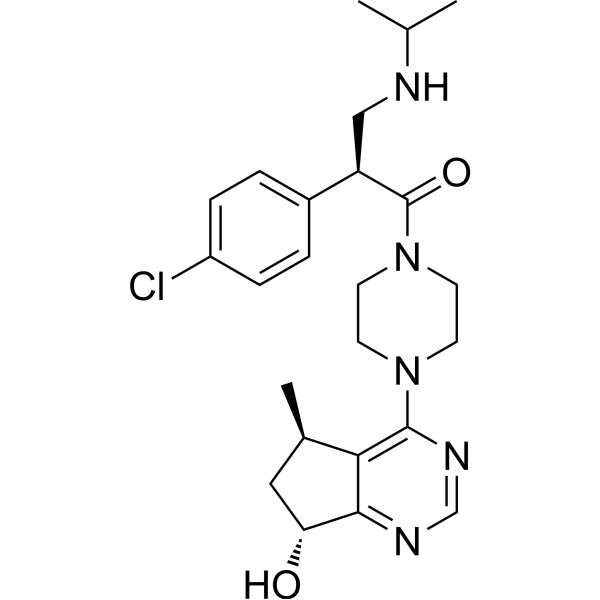
Cat. No.: HY-15186
CAS No.: 1001264-89-6
Purity:  99.79%
Synonyms: GDC-0068; RG7440
Target:  

Organoid Akt Apoptosis

Research Areas:  

Cancer

Ipatasertib (GDC-0068) is an orally active, highly selective and ATP-competitive pan-Akt inhibitor with IC50 values of 5, 18, 8 nM for Akt1/2/3, respectively. Ipatasertib synchronously activates FoxO3a and NF-κB through inhibition of Akt leading to p53-independent activation of PUMA. Ipatasertib also induces apoptosis in cancer cells and inhibits tumor growth in xenograft mouse models .
loading...
    loading...
1
1 Cited Publications
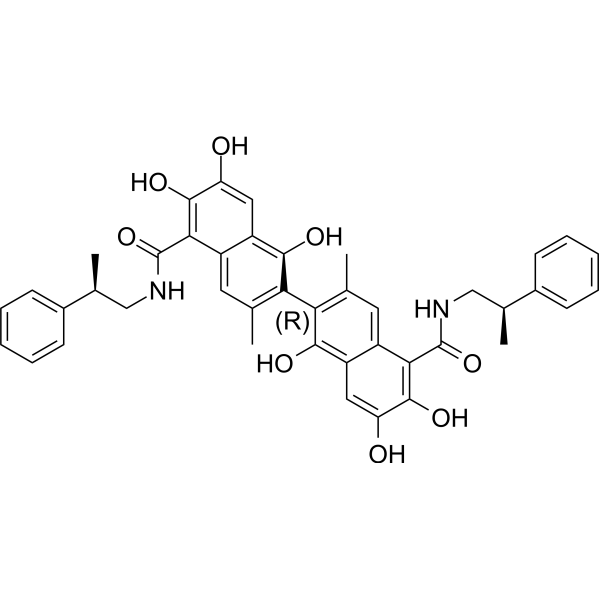
Cat. No.: HY-15191
CAS No.: 1228108-65-3
Purity:  99.04%
Synonyms: BI-97C1
Target:  

Bcl-2 Family

Research Areas:  

Cancer

Sabutoclax is a potent and effective Bcl-2 Family (Bcl-2, Bcl-XL, Mcl-1, Bfl-1) inhibitor with IC50s of 0.32 μM, 0.31 μM, 0.20 μM, and 0.62 μM, respectively. Sabutoclax increases Bax, Bim, PUMA and survivin expression .
loading...
    loading...
1
1 Cited Publications
Cat. No.: HY-W614507
CAS No.: 19132-12-8
Research Areas:  

Metabolic Disease Cancer

Dihydronicotinamide riboside is a potent NAD + concentration enhancer. Dihydronicotinamide riboside modulates targets BAX, PUMA, NQO2, and IκB kinase. Dihydronicotinamide riboside mediates apoptosis, induces pro-oxidant activity, mitochondrial dysfunction, metabolic dysregulation, redox modulation, and pro-inflammatory M1 phenotype induction. Dihydronicotinamide riboside increases intracellular and mitochondrial NAD + levels, maintains cell survival against NAD +-depleting genotoxins. Dihydronicotinamide riboside can be used for the research of hepatocellular carcinoma .
loading...
    loading...
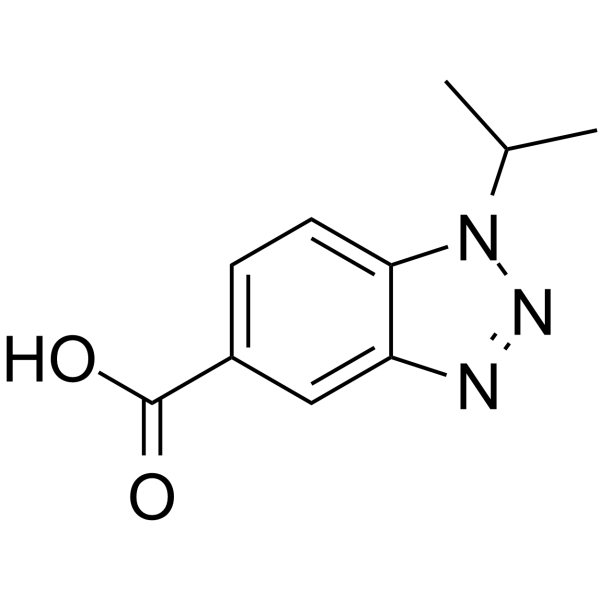
Cat. No.: HY-107580
CAS No.: 306935-41-1
Purity:  99.91%
GPR109 receptor agonist-1 is a highly selective agonist of the human orphan G protein-coupled receptor GPR109b, and does not activate the mouse homologous receptor PUMA-G. GPR109 receptor agonist-1 functionally modulates the human GPR109b receptor via the cAMP signaling pathway, with an EC50 of 400 nM. GPR109 receptor agonist-1 inhibits isoproterenol (HY-B0468)-stimulated lipolysis in human subcutaneous adipocytes, with efficacy comparable to that of Niacin (HY-B0143), and does not act on β-adrenergic receptors. GPR109 receptor agonist-1 can be used in studies related to dyslipidemia and atherosclerosis .
loading...
    loading...
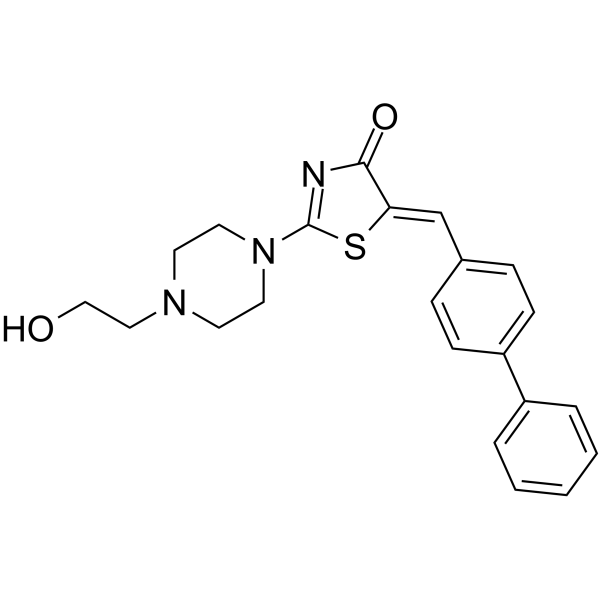
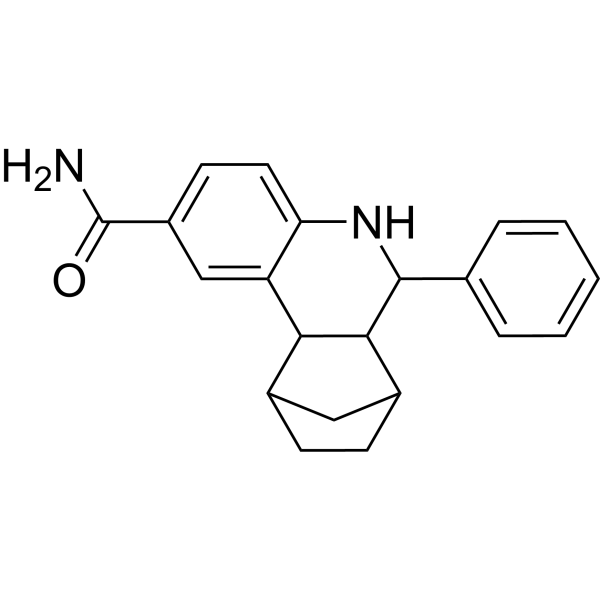
Cat. No.: HY-122627
CAS No.: 678158-55-9
Purity:  99.14%
Target:  

Bcl-2 Family Apoptosis

Research Areas:  

Cancer

CLZ-8 (Compound 8) is an orally active Mcl-1-PUMA interface inhibitor, with a Ki of 0.3 μM. CLZ-8 exhibits dual activity on reduce PUMA-dependent apoptosis while deactivating Mcl-1-mediated anti-apoptosis in cancer cells .
loading...
    loading...
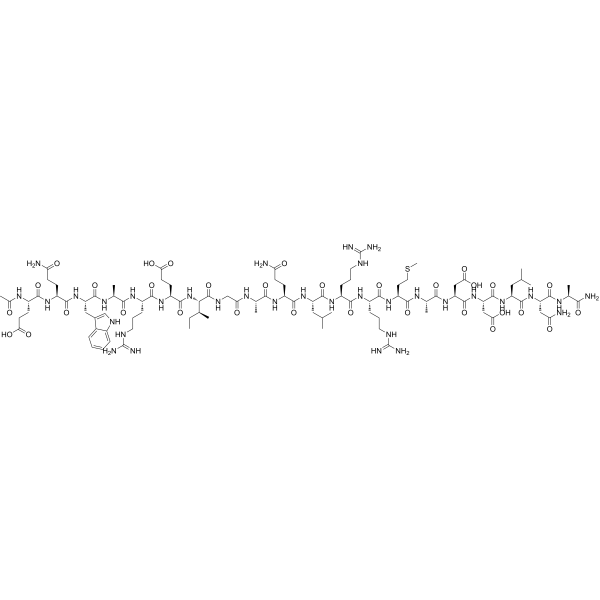
Cat. No.: HY-P1562
Target:  

Bcl-2 Family

Research Areas:  

Cancer

PUMA BH3 is a p53 upregulated modulator of apoptosis (PUMA) BH3 domain peptide, acts as a direct activator of Bak, with a Kd of 26 nM.
loading...
    loading...
Cat. No.: HY-148408
CAS No.: 1005095-06-6
Purity:  99.94%
Target:  

Sirtuin

Research Areas:  

Cancer

SIRT2-IN-11 (AEM1) is a selective SIRT2 inhibitor with an IC50 value of 18.5 μM. SIRT2-IN-11 p53-dependently induces apoptosis, activates expression of CDKN1A, PUMA and NOXA, and increases acetylation of p53. SIRT2-IN-11 can be used for the research of p53-related cancers .
loading...
    loading...
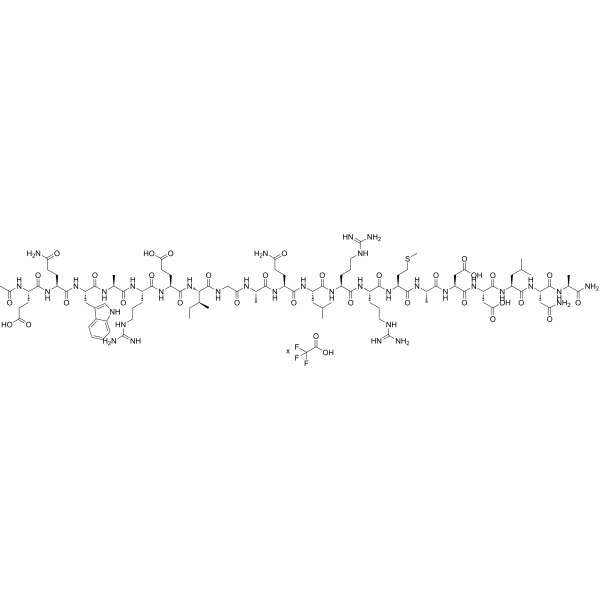
Cat. No.: HY-P1562A
Target:  

Bcl-2 Family

Research Areas:  

Cancer

PUMA BH3 TFA is a p53 upregulated modulator of apoptosis (PUMA) BH3 domain peptide, acts as a direct activator of Bak, with a Kd of 26 nM .
loading...
    loading...
Cat. No.: HY-RS01381
Research Areas:  

Others

BBC3 Human Pre-designed siRNA Set A contains three designed siRNAs for BBC3 gene (Human), as well as a negative control, a positive control, and a FAM-labeled negative control.

loading...
    loading...
Cat. No.: HY-P11705
Research Areas:  

Cancer

PUMA2A is a PUMA BH3-only peptide. PUMA2A can be used as a negative control in Cytochrome C release assays and BH3 profiling. PUMA2A can be used in the research of chronic myeloid leukemia .
loading...
    loading...
Cat. No.: HY-15186C
CAS No.: 1491138-24-9
Synonyms: GDC-0068 tosylate; RG7440 tosylate
Target:  

Organoid Akt Apoptosis

Research Areas:  

Cancer

Ipatasertib (GDC-0068) tosylate is an orally active, highly selective and ATP-competitive pan-Akt inhibitor with IC50 values of 5, 18, 8 nM for Akt1/2/3, respectively. Ipatasertib tosylate synchronously activates FoxO3a and NF-κB through inhibition of Akt leading to p53-independent activation of PUMA. Ipatasertib tosylate also induces apoptosis in cancer cells and inhibits tumor growth in xenograft mouse models .
loading...
    loading...
Cat. No.: HY-P86329
Synonyms: BBC3; PUMA; Bcl-2-binding component 3; JFY-1; p53 up-regulated modulator of apoptosis

Host:  

Rabbit

Application:  

WB, IHC-P, ICC/IF, IP, ELISA

Reactivity:  

Human, Mouse, Rat

loading...
    loading...
Cat. No.: HY-P80289
Synonyms: PUMA, BBC3, JFY-1, p53 up-regulated modulator of apoptosis

Host:  

Rabbit

Application:  

WB, ICC/IF, IHC-P, FC

Reactivity:  

Human, Mouse

loading...
    loading...
Cat. No.: HY-167182
CAS No.: 470695-03-5
PUMAi is a PUMA inhibitor that disrupts the interaction between PUMA and BCL-xL. PUMAi inhibits apoptosis, caspase-3 activation, WNT/NOTCH pathway activation, and DNA damage. PUMAi protects intestinal tissues in mice, promotes the growth of colonoids, and reduces chemotherapy-induced weight loss, gastrointestinal damage, and lethality. PUMAi alleviates acetaminophen-induced liver injury and cytoplasmic translocation of HMGB1 in mice. PUMAi can be used in studies related to gastrointestinal injury, intestinal injury, and liver injury .
loading...
    loading...
Cat. No.: HY-119408
CAS No.: 2230058-99-6
Target:  

MDM-2/p53 Bcl-2 Family

Research Areas:  

Cancer

MB725 is an ethylamide analogue of MB710 (HY-120373). MB725 increases mRNA levels of a range of p53 target genes, notably PUMA, p21, MDM2, NOXA and BAX. MB725 shows selective anticancer activity against p53-Y220C cancer .
loading...
    loading...
Cat. No.: HY-119709
CAS No.: 1353384-61-8
Target:  

MDM-2/p53 Apoptosis

Research Areas:  

Cancer

AQ-101 is a MDM2 degrader. Upon binding to MDM2, it blocks the MDM2-MDM4 interaction, inducing autoubiquitination and proteasome-mediated degradation of MDM2. AQ-101 activates p53, upregulates downstream targets including p21 and PUMA, and induces apoptosis and cell cycle arrest in tumor cells. AQ-101 inhibits the progression of acute lymphoblastic leukemia in xenograft animal models. AQ-101 can be used for research related to acute lymphoblastic leukemia .
loading...
    loading...
Cat. No.: HY-15186R
CAS No.: 1001264-89-6
Synonyms: GDC-0068 (Standard); RG7440 (Standard)
Ipatasertib (Standard) is the analytical standard of Ipatasertib (HY-15186). This product is intended for research and analytical applications. Ipatasertib (GDC-0068) is an orally active, highly selective and ATP-competitive pan-Akt inhibitor with IC50 values of 5, 18, 8 nM for Akt1/2/3, respectively. Ipatasertib synchronously activates FoxO3a and NF-κB through inhibition of Akt leading to p53-independent activation of PUMA. Ipatasertib also induces apoptosis in cancer cells and inhibits tumor growth in xenograft mouse models .
loading...
    loading...
Cat. No.: HY-179507
Target:  

MDM-2/p53 Apoptosis

Research Areas:  

Cancer

p53 Activator 17 is a p53-Y220C activator. p53 Activator 17 exhibits selective cytotoxicity and pro-apoptotic activity in p53-Y220C mutant cancer cell lines, with minimal effects in wild-type or p53-null cells. p53 Activator 17 induces a mutant-to-wild-type conformational shift in cellular p53-Y220C, accompanied by transcriptional activation of canonical p53 target genes, including BBC3 (PUMA) and MDM2. p53 Activator 17 can be used for the study of hepatocellular carcinoma and breast cancer .
loading...
    loading...
Cat. No.: HY-189142
Research Areas:  

Cancer

EGFR-IN-217 is an ATP-competitive EGFR kinase inhibitor, with an IC50 of 60.7 nM against EGFR. EGFR-IN-217 exhibits kinase inhibitory activity against PI3K-α and mTOR. EGFR-IN-217 upregulates pro-apoptotic factors including P53, Bax, PUMA, and caspase-7, -8 and -9, and downregulates the anti-apoptotic protein BCL-2, thereby inducing cell apoptosis and cycle arrest. EGFR-IN-217 shows tumor growth inhibitory effects in the solid Ehrlich ascites carcinoma xenograft mouse model. EGFR-IN-217 can be applied in the research of solid Ehrlich ascites carcinoma, hepatocellular carcinoma, and breast cancer .
loading...
    loading...
Cat. No.: HY-183629
ZNF281-IN-1 is a ZNF281 inhibitor. ZNF281-IN-1 disrupts the binding of transcriptionally active DNA-bound ZNF281 to the promoters of target genes including TRIM35 and ZEB1. ZNF281-IN-1 inhibits tumor cell proliferation, stabilizes P53 and upregulates PUMA to induce apoptosis, while triggering cellular senescence. ZNF281-IN-1 completely prevents Doxorubicin (HY-15142A)-induced cardiotoxicity (AIC), and enhances rather than impairs the antitumor efficacy of Doxorubicin. ZNF281-IN-1 completely blocks the distant metastasis of melanoma to the lungs. ZNF281-IN-1 can be used in the research of cardiotoxicity, lung cancer and metastatic melanoma .
loading...
    loading...

