1. Search Result
Search Result
Pathways Recommended: Membrane Transporter/Ion Channel
Results for "

Prostate-specific membrane antigen

" in MedChemExpress (MCE) Product Catalog:

45

Inhibitors & Agonists

1

Fluorescent Dye

11

Peptides

2

Inhibitory Antibodies

1

Click Chemistry

1

Oligonucleotides

Cat. No. Product Name Target Research Areas Chemical Structure
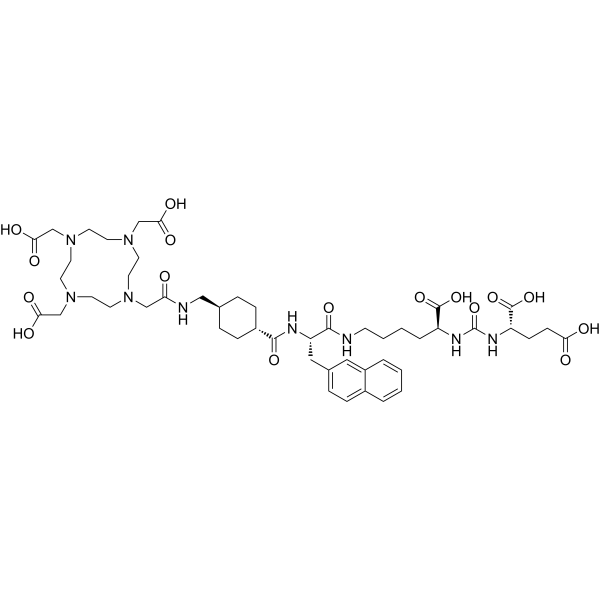
  • HY-117410
    Vipivotide tetraxetan
    Maximum Cited Publications
    17 Publications Verification

    PSMA-617

    Drug-Linker Conjugates for ADC Cancer
    Vipivotide tetraxetan (PSMA-617) is a high potent prostate-specific membrane antigen (PSMA) inhibitor, with a Ki of 0.37 nM. Vipivotide tetraxetan (PSMA-617) is designed consisting of three components: the pharmacophore Glutamate-urea-Lysine, the chelator DOTA able to complex both 68Ga or 177Lu, and a linker connecting these two entities. Glutamate-urea-Lysine is the selective pharmacophore to bind to prostate specific membrane antigen.
    Vipivotide tetraxetan
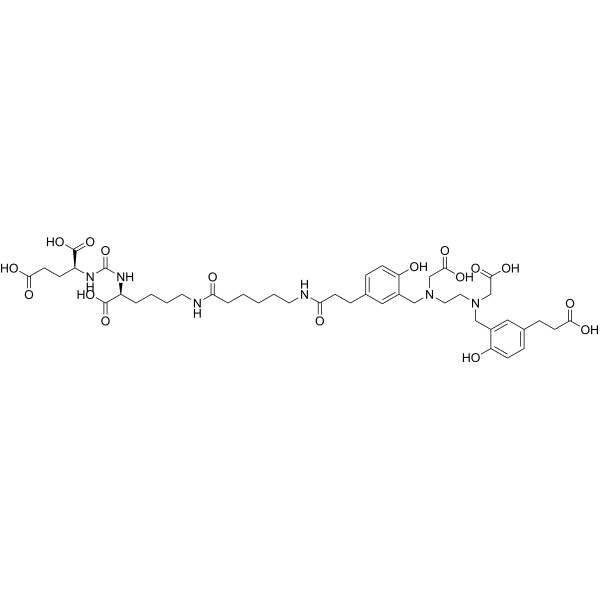
  • HY-125399
    PSMA-11
    1 Publications Verification

    HBED-CC-PSMA

    PSMA Radionuclide-Drug Conjugates (RDCs) Cancer
    PSMA-11 is a small molecule ligand that targets prostate-specific membrane antigen (PSMA) and has the ability to inhibit PSMA activity. PSMA-11 can be used to synthesize 68Ga-PSMA-11, a positron emission tomography (PET) tracer that can be used to image advanced prostate cancer .
    PSMA-11
  • HY-43869

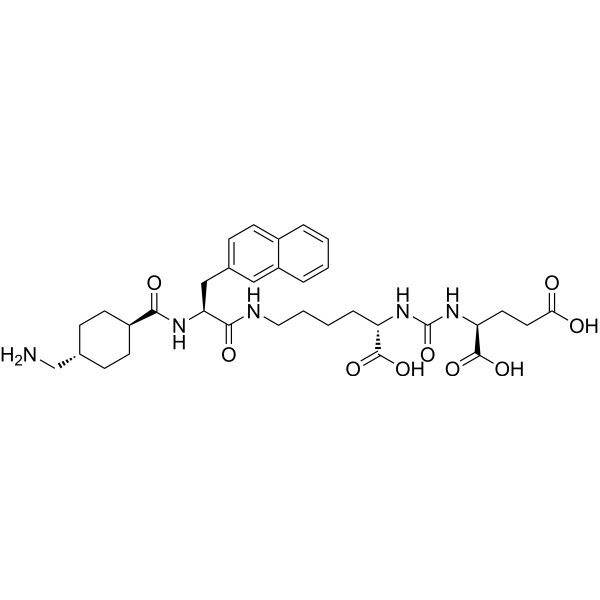
    PSMA-617 Ligand-Linker Conjugate

    ADC Linker Cancer
    Vipivotide tetraxetan Ligand-Linker Conjugate (PSMA-617 Ligand-Linker Conjugate) is a complex composed of pharmacophore group Glutamate-urea-Lysine peptide coupling linker, which can be used to synthesize Vipivotide tetraxetan (PSMA-617). Glutamate-urea-Lysine selectively binds to prostate-specific membrane antigen (PSMA) .
    Vipivotide tetraxetan Ligand-Linker Conjugate
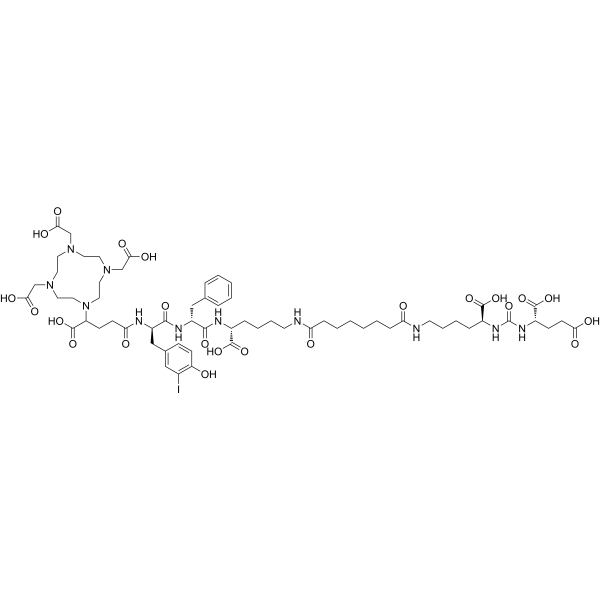
  • HY-148761
    Zadavotide guraxetan
    2 Publications Verification

    PSMA I&T; PNT-2002

    PSMA Cancer
    PSMA I&T is an effective inhibitor of prostate-specific membrane antigen (PSMA). PSMA I&T can be used for SPECT/CT imaging and radionuclide studies in triple-negative breast cancer and prostate cancer (PCa) .
    Zadavotide guraxetan
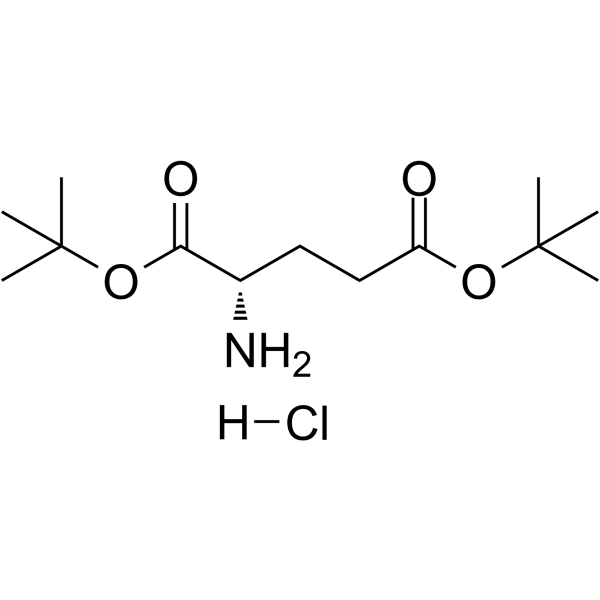
  • HY-20167A

    Neurokinin Receptor Cancer
    H-Glu(OtBu)-OtBu hydrochloride is a key intermediate that can be used to synthesize prostate-specific membrane antigen (PSMA) targeting probes. H-Glu(OtBu)-OtBu hydrochloride can reduce nonspecific background binding through negatively charged linkers, improve tumor/background contrast, and can be used in prostate cancer PET/SPECT imaging studies .
    H-Glu(OtBu)-OtBu hydrochloride
  • HY-117756

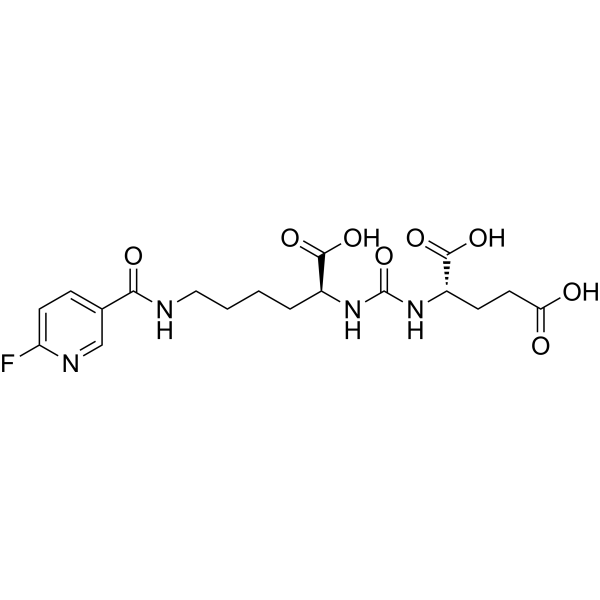
    DCFPYL

    PSMA Cancer
    Piflufolastat (DCFPYL) can be used for the preparation of piflufolastat F 18 (DCFPyL F-18). Piflufolastat F-18 (DCFPyL F-18) is an 18F-labeled imaging agent. Piflufolastat F-18 can be used for positron emission tomography (PET) targeting prostate-specific membrane antigen (PSMA). Piflufolastat can be used for imaging of prostate cancer .
    Piflufolastat
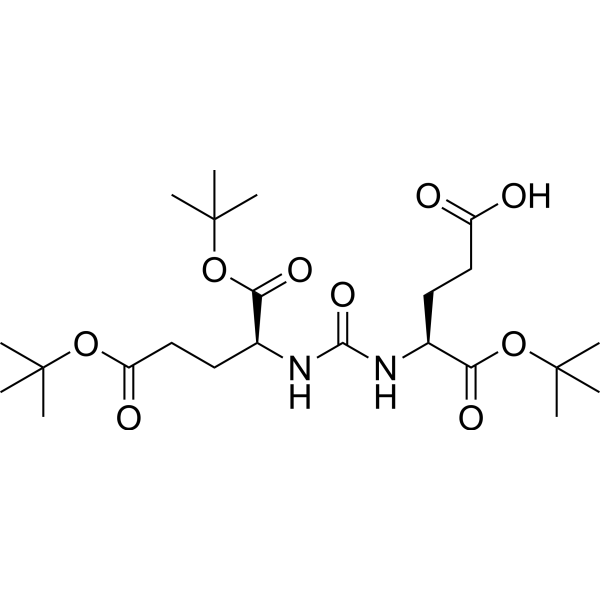
  • HY-103591
    DUPA(OtBu)-OH
    1 Publications Verification

    PSMA Cancer
    DUPA(OtBu)-OH is a DUPA precursor. DUPA is used as the targeting moiety to actively deliver Docetaxel (DTX) for treatment of Prostate-Specific Membrane Antigen (PSMA) expressing prostate cancer.
    DUPA(OtBu)-OH
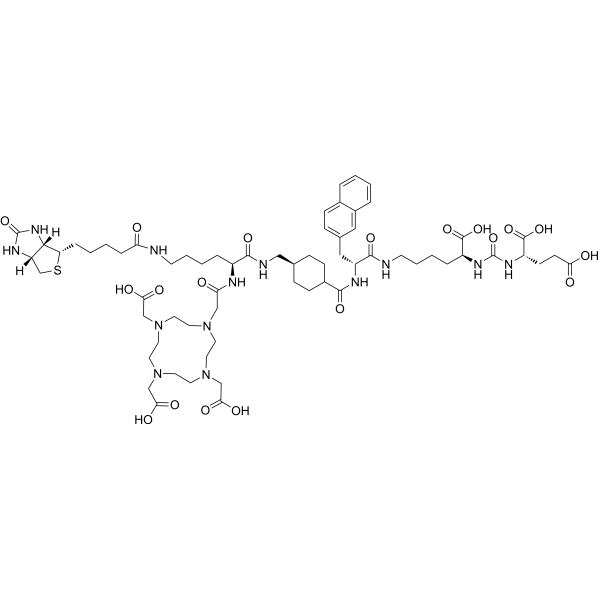
  • HY-141729

    Fluorescent Dye Cancer
    Biotin-NH-PSMA-617 is a biotin-tagged PSMA-617. PSMA-617 is a small molecule targeting the prostate-specific membrane antigen (PSMA), which is directly expressed by the tumor cells .
    Biotin-NH-PSMA-617
  • HY-147287

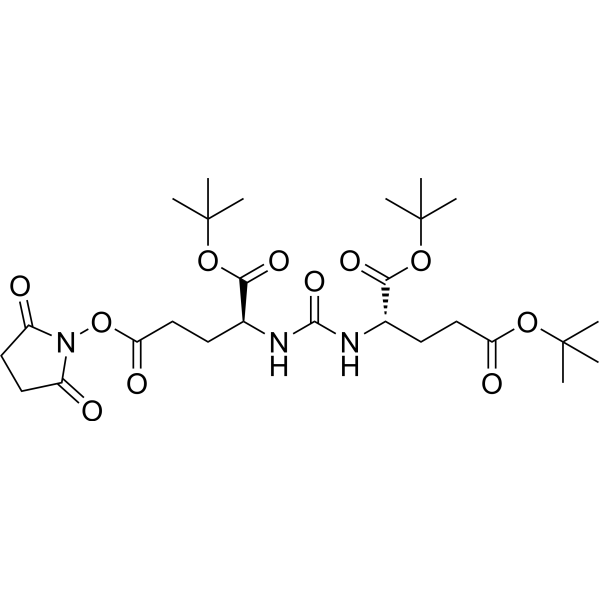
    PSMA Drug Intermediate Cancer
    Glu-urea-Glu-NHS ester is an activated N-hydroxysuccinamide (NHS) ester of Glu-urea-Glu. Glu-urea-Glu-NHS ester can be used for synthesis of small-molecule prostate-specific membrane antigen (PSMA) inhibitors, imaging agents (such as PSMAi-PEG conjugates), and targeted drug delivery vehicles .
    Glu-urea-Glu-NHS ester
  • HY-160893

    PSMA Cancer
    PSMA-azide is a prostate-specific membrane antigen (PSMA) ligand. PSMA-azide inhibits PSMA-dependent NAAG (N-acetylaspartylglutamic acid) hydrolysis, with an IC50 of 9 nM and a Ki of 1 nM. PSMA-azide contains an Azide group and can undergo copper-catalyzed azide-alkyne cycloaddition reaction (CuAAc) with molecules containing Alkyne groups .
    PSMA-azide
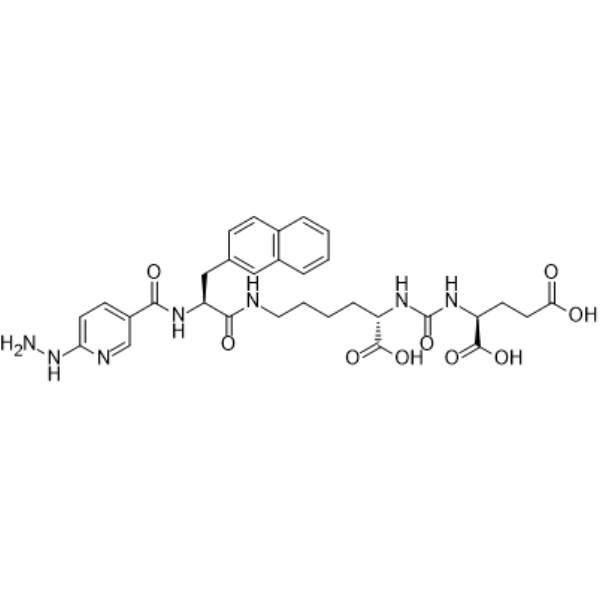
  • HY-P5290

    Radionuclide-Drug Conjugates (RDCs) PSMA Cancer
    HYNIC-PSMA is a ligand for molecular imaging of tumors. Hynic-psma consists of two components: HYNIC (6-hydrazinonicotinamide) and PSMA (Prostate-Specific Membrane Antigen). HYNIC is a compound used to attach radioactive isotopes to targeted molecules, such as 188Re-HYNIC-PSMA. PSMA is a membrane antigen that is specifically expressed on the surface of prostate cancer cells. HYNIC-PSMA can be used in prostate cancer research . HYNIC-PSMA can be used for the synthesis/research of Radionuclide-Drug Conjugates (RDCs).
    HYNIC-PSMA
  • HY-P10740

    Peptide-Drug Conjugates (PDCs) PSMA Folate Receptor (FR) Cancer
    CBP-1018 is a PDC (peptide-drug conjugate) formed by conjugating Monomethyl auristatin E (HY-15162) to a dual-targeting ligand of FLOR1/PSMA (prostate-specific membrane antigen) via a linker (HY-78738). CBP-1018 binds to FLOR1 and prostate-specific membrane antigen (PSMA). CBP-1018 is applicable to the research of solid tumors and metastatic castration-resistant prostate cancer .
    CBP-1018
  • HY-114256

    PSMA Cancer
    EC1169 is a cytotoxic maytansinoid conjugate that specifically binds to prostate-specific membrane antigen (PSMA). EC1169 precisely delivers the maytansinoid B hydrazide payload to PSMA-positive cells to exert antitumor activity. EC1169 only inhibits the growth of PSMA-positive cells but has no effect on PSMA-negative cells, and enables complete recovery in mice bearing PSMA-positive tumors. EC1169 exhibits safety with no body weight loss or major organ damage induced. EC1169 is used in studies of prostate cancer and other PSMA-expressing malignancies .
    EC1169
  • HY-P6825

    LY4181530; PSMA-62

    PSMA Cancer
    PNT2001 (LY4181530) is a potent prostate specific membrane antigen (PSMA) ligand with an IC50 of 3.1 nM. PNT2001 can improve cellular internalization. 177Lu- and 225Ac-labeled PNT2001 can be used in prostate cancer research .
    PNT2001
  • HY-177808

    A9g aptamer sodium

    PSMA Cancer
    A9g sodium is an RNA aptamer that inhibits the enzymatic activity of prostate-specific membrane antigen (PSMA).
    A9g sodium
  • HY-P5292A

    Radionuclide-Drug Conjugates (RDCs) PSMA Cancer
    HYNIC-iPSMA TFA is a ligand for molecular imaging of tumors. Hynic-ipsma consists of two components: HYNIC (6-hydrazinonicotinamide) and iPSMA (Inhibitor of Prostate-Specific Membrane Antigen). HYNIC is a compound used to attach radioactive isotopes to targeted molecules. iPSMA is a specific inhibitor used to inhibit prostate-specific membrane antigen (PSMA). 68GA-labeled iPSMA has been used to detect prostate cancer by PET imaging. The further 99mTc-EDDA/HYNIC-iPSMA TFA has excellent specificity and sensitivity . HYNIC-iPSMA TFA can be used for the synthesis/research of Radionuclide-Drug Conjugates (RDCs).
    HYNIC-iPSMA TFA
  • HY-129615

    PSMA Cancer
    MIP-1072 is a small molecule specific prostate-specific membrane antigen (PSMA) inhibitor. MIP-1072 inhibits the glutamate carboxypeptidase activity of PSMA with an Ki value of 4.6 nM. MIP-1072 is promising for research of prostate cancer .
    MIP-1072
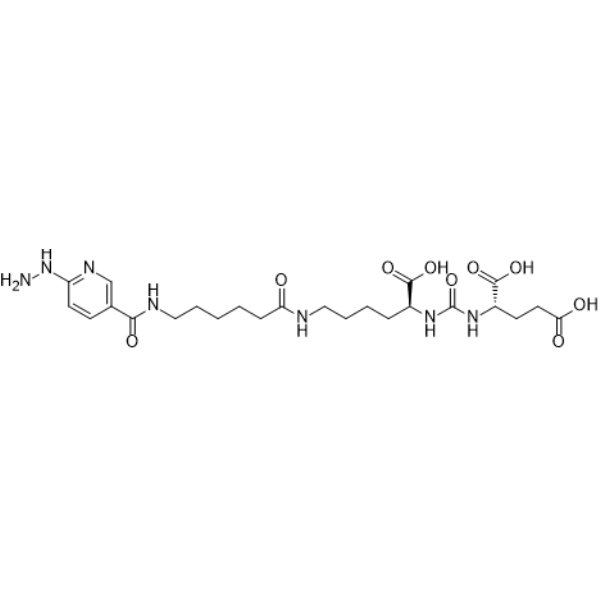
  • HY-P5292

    Radionuclide-Drug Conjugates (RDCs) PSMA Cancer
    HYNIC-iPSMA is a ligand for molecular imaging of tumors. Hynic-ipsma consists of two components: HYNIC (6-hydrazinonicotinamide) and iPSMA (Inhibitor of Prostate-Specific Membrane Antigen). HYNIC is a compound used to attach radioactive isotopes to targeted molecules. iPSMA is a specific inhibitor used to inhibit prostate-specific membrane antigen (PSMA). 68GA-labeled iPSMA has been used to detect prostate cancer by PET imaging. The further 99mTc-EDDA/HYNIC-iPSMA has excellent specificity and sensitivity . HYNIC-iPSMA can be used for the synthesis/research of Radionuclide-Drug Conjugates (RDCs).
    HYNIC-iPSMA
  • HY-164575

    Radionuclide-Drug Conjugates (RDCs) PSMA Cancer
    NH2-NODAGA is a NODAGA-type metal chelator that can bind to radionuclides to prepare radionuclide conjugates (RDCs). NH2-NODAGA can react with diethyl squarate in 0.5M phosphate buffer to obtain NODAGA.SA. NODAGA.SA can target L-lysine urea-L-glutamate (KuE), which is a key structure of prostate-specific membrane antigen (PSMA). NODAGA.SA.KuE can bind [68]Ga and can be used for PET examination of NMRInu/nu nude mice bearing LNCaP tumors.
    NH2-NODAGA
  • HY-168757

    PSMA Cancer
    PSMA precursor-1 is a precursor in the synthesis of prostate-specific membrane antigen (PSMA) ligands and fluorescent probes that have been used in the detection of PSMA in LNCaP and PC3 cells .
    PSMA  precursor-1
  • HY-P11310

    PSMA Cancer
    PSMA-1-SMCC is a selective binding agent targeting Prostate-Specific Membrane Antigen (PSMA). PSMA-1-SMCC is promising for research of targeted imaging for prostate cancer .
    PSMA-1-SMCC
  • HY-P10951

    (R)-PSMA I&T; (R)-PNT-2002

    PSMA Cancer
    Zadavotide guraxetan (PSMA I&T; PNT-2002) is a prostate-specific membrane antigen (PSMA) inhibitor. Zadavotide guraxetan has antitumor activity and can be used in prostate cancer-targeted research .
    (R)-Zadavotide guraxetan
  • HY-173476

    TcO-5

    PSMA Cancer
    TcO-ABX474 (TcO-5) is a potent prostate-specific membrane antigen (PSMA) inhibitor with a Kd value of 6.1 nM. TcO-ABX474 inhibits prostate cancer cell growth and metastasis. TcO-ABX474 is promising for research of prostate cancer .
    TcO-ABX474
  • HY-168913

    PSMA Cancer
    CTT2274 is a prodrug of MMAE (HY-15162). CTT2274 is composed of a prostate-specific membrane antigen (PSMA)-binding scaffold, a biphenyl motif, a pH-sensitive phosphoramidate linker, and MMAE payload. CTT2274 shows selective binding to PSMA and delivers MMAE. CTT2274 inhibits prostate cancer .
    CTT2274
  • HY-P10743

    Radionuclide-Drug Conjugates (RDCs) PSMA Cancer
    BQ7876 is a probe targeting prostate-specific membrane antigen (PSMA) that contains a DOTA chelator. BQ7876, after being radiolabeled with radionuclide (177Lu), functions in both radionuclide imaging and tumor cell destruction by specifically binding to PSMA. BQ7876 shows potential for research in the field of metastatic castration-resistant prostate cancer (mCRPC) . BQ7876 can be used for the synthesis/research of Radionuclide-Drug Conjugates (RDCs).
    BQ7876
  • HY-169336

    PARP PSMA Cancer
    CQ-16 is an orally active small molecule drug conjugate (SMDC) targeting prostate-specific membrane antigen (PSMA). CQ-16 exhibits highly selective antiproliferative activity between PSMA-positive and PSMA-negative prostate cells. In addition, CQ-16 also has PARP inhibitory activity (IC50=1 nM). (Pink: PSMA Ligand (HY-139840); Black: Linker (HY-W037980); Blue: PARP Inhibitor (HY-10162))
    CQ-16
  • HY-P11261

    PSMA Cancer
    AAZTA-NI-PSMA-093 is a bispecific agent targeting prostate-specific membrane antigen (PSMA) with an IC50 value for PSMA of 87.48 nM. AAZTA-NI-PSMA-093 has a PSMA targeting module and an oxygen-sensitivity module (hypoxia-sensitive NI-moiety). AAZTA-NI-PSMA-093 can utilize the PSMA targeting property as a "navigation system" to efficiently concentrate the entire molecule within prostate cancer cells, and once the cells are in an oxygen-deficient state, the molecule will irreversibly capture and remain in the oxygen-deficient cells, achieving "secondary enrichment". AAZTA-NI-PSMA-093 can be labeled with ⁶⁸Ga and ¹⁷⁷Lu, and has high accumulation and rapid clearance characteristics in mouse models. AAZTA-NI-PSMA-093 can be used for the study of prostate cancer .
    AAZTA-NI-PSMA-093
  • HY-168133

    Sirtuin Cancer
    SIRT2-IN-16 (compund 17) is a prostate-specific membrane antigen (PSMA)-targeted SIRT2 inhibitor .
    SIRT2-IN-16
  • HY-128938A

    ADC Linker Cancer
    EC1167 hydrochloride is the linker for EC1169. EC1169 is prostate-specific membrane antigen targeting-tubulysin conjugate. EC1169 hydrochloride has the potential to treat recurrent metastatic, castration-resistant prostate cancer (MCRPC) .
    EC1167 hydrochloride
  • HY-128938

    ADC Linker Cancer
    EC1167 is the linker for EC1169. EC1169 is prostate-specific membrane antigen targeting-tubulysin conjugate. EC1169 has the potential to treat recurrent metastatic, castration-resistant prostate cancer (MCRPC) .
    EC1167
  • HY-172367

    Fluorescent Dye Cancer
    Tc-BQ0413 exhibits binds specifically to prostate-specific membrane antigen (PSMA) with good affinity. Tc-BQ0413 can be used as a single-photon emission computed tomography (SPECT) imaging agent, when labeled with technetium-99m .
    Tc-BQ0413
  • HY-121659

    PSMA Cancer
    DCFBC is a prostate-specific membrane antigen (PSMA) inhibitor that can be used for small animal positron emission tomography (PET) imaging. DCFBC labeled with F 18 ([18F]DCFBC) can images in severe combined immunodeficient mice. [18F]DCFBC uptake is higher in PIP tumors, but almost absent in FLU tumors. [18F]DCFBC uptake is also high in the kidney and bladder, but the radioactivity washout time is shorter than that in PIP tumors. Indicating that [18F]DCFBC can specifically localize to PSMA+ expressing tumors and is applicable to the study of prostate cancer .
    DCFBC
  • HY-185167

    Cancer
    PSMA-1-DOTA is a prostate-specific membrane antigen (PSMA) binder with high affinity, enables targeted radionuclide delivery for imaging and therapy. PSMA-1-DOTA acts as a tumor growth inhibitor that reduces growth of PSMA-expressing prostate cancer tumors .
    PSMA-1-DOTA
  • HY-181829

    EGFR PSMA LYTACs Cancer
    Ctx-L3 is a selective EGFR PTAC (PSMA-targeted chimera) degrader (DC50: 4.3 pM in LNCaP cells) and LYTAC. Ctx-L3 recruits prostate-specific membrane antigen (PSMA) and mediates lysosomal degradation of EGFR in PSMA-positive prostate cancer cells. Ctx-L3 exhibits degrading activity against EGFR in prostate cancer cells. Ctx-L3 is applicable to related research on prostate cancer .
    Ctx-L3
  • HY-179330

    Fluorescent Dye Cancer
    PSMA-1092 is a fluorescence probe targeting prostate-specific membrane antigen (PSMA) with a Ki of 80 pM. PSMA-1092 can be used for tumor localization and imaging, such as prostate cancer .
    PSMA-1092
  • HY-180308

    PSMA Cancer
    Flotufolastat is a prostate-specific membrane antigen (PSMA) modulator. Flotufolastat is also a radiodiagnostic agent used in prostate cancer imaging. Flotufolastat can be used in research on prostate cancer and other cancers .
    Flotufolastat
  • HY-P11591

    PSMA-DOTA-PEI2

    Radionuclide-Drug Conjugates (RDCs) PSMA Cancer
    PDI2 (PSMA-DOTA-PEI2) is a prostate-specific membrane antigen (PSMA) ligand that acts as a tumor retention agent, renal uptake reducer, imaging agent and antitumor agent, applicable in SPECT diagnostic imaging and radiotheranostics. PDI2 specifically binds to PSMA on prostate cancer cells, enters cells via clathrin-dependent endocytosis, and exhibits higher tumor retention rate and lower renal uptake level. PDI2 is applicable in research related to prostate cancer and castration-resistant metastatic prostate cancer .
    PDI2
  • HY-P991757

    PSMA Cancer
    Anti-Human/Mouse/Rat/Canine/Swine PSMA Antibody (3F11) reacts with prostate-specific membrane antigen (PSMA) from human, mouse, rat, canine and swine species. Recommend Isotype Controls: Mouse IgG1 kappa, Isotype Control (HY-P99977) .
    Anti-Human/Mouse/Rat/Canine/Swine PSMA Antibody (3F11)
  • HY-103591R

    PSMA Reference Standards Cancer
    DUPA(OtBu)-OH (Standard) is the analytical standard of DUPA(OtBu)-OH (HY-103591). This product is intended for research and analytical applications. DUPA(OtBu)-OH is a DUPA precursor. DUPA is used as the targeting moiety to actively deliver Docetaxel (DTX) for treatment of Prostate-Specific Membrane Antigen (PSMA) expressing prostate cancer.
    DUPA(OtBu)-OH (Standard)
  • HY-181853

    Radionuclide-Drug Conjugates (RDCs) PSMA Cancer
    NOTA-SP₂A-PSMAL is a ligand targeting prostate-specific membrane antigen (PSMA), which competitively binds to PSMA with high binding affinity and an IC50 value of 0.26 nM. 18F-labeled NOTA-SP2A-PSMAL can be used as a PET tracer for positron emission tomography imaging of prostate cancer. NOTA-SP2A-PSMAL can be used for the synthesis and research of radionuclide conjugates (RDCs) .
    NOTA-SP2A-PSMAL
  • HY-164575B

    Radionuclide-Drug Conjugates (RDCs) PSMA Cancer
    NH2-NODAGA hydrochloride is a NODAGA-type metal chelator that can bind to radionuclides to prepare radionuclide conjugates (RDCs). NH2-NODAGA hydrochloride can react with diethyl squarate in 0.5M phosphate buffer to obtain NODAGA.SA. NODAGA.SA can target L-lysine urea-L-glutamate (KuE), which is a key structure of prostate-specific membrane antigen (PSMA). NODAGA.SA.KuE can bind [68]Ga and can be used for PET examination of NMRInu/nu nude mice bearing LNCaP tumors.
    NH2-NODAGA hydrochloride
  • HY-164575A

    Radionuclide-Drug Conjugates (RDCs) PSMA Cancer
    NH2-NODAGA TFA is a NODAGA-type metal chelator that can bind to radionuclides to prepare radionuclide conjugates (RDCs). NH2-NODAGA TFA can react with diethyl squarate in 0.5M phosphate buffer to obtain NODAGA.SA. NODAGA.SA can target L-lysine urea-L-glutamate (KuE), which is a key structure of prostate-specific membrane antigen (PSMA). NODAGA.SA.KuE can bind [68]Ga and can be used for PET examination of NMRInu/nu nude mice bearing LNCaP tumors.
    NH2-NODAGA TFA
  • HY-164575C

    Drug Isomer Cancer
    (S)-NH2-NODAGA hydrochloride is the S isomer of NH2-NODAGA hydrochloride (HY-164575B). NH2-NODAGA hydrochloride is a NODAGA-type metal chelator that can bind to radioactive nuclides to prepare nuclide conjugates (RDC). NH2-NODAGA hydrochloride can react with diethyl fumarate in 0.5M phosphoric acid buffer to obtain NODAGA.SA. NODAGA.SA can target L-lysine urea-L-glutamic acid (KuE), and KuE is a key structure of prostate-specific membrane antigen (PSMA). NODAGA.SA.KuE can bind [68]Ga and can be used for PET examination in NMRInu/nu nude mice carrying LNCaP tumors.
    (S)-NH2-NODAGA hydrochloride
  • HY-178248

    PSMA Cancer
    PSMA ligand 2 is a prostate specific membrane antigen (PSMA) ligand with a glutamate-urea-lysine (GUL) moiety. PSMA ligand 2 can be efficiently labeled with radioactive nuclides such as 68Ga and 177Lu and specifically binds to PSMA-positive tumor cells. PSMA ligand 2 can be used for imaging of PSMA-expressing tumors or cells via PET or SPECT imaging. PSMA ligand 2 can be used for the research of prostate cancer .
    PSMA-R2
  • HY-D3347

    Fluorescent Dye Cancer
    DUPA-FITC is a fluorescent reagent targeting PSMA, which specifically binds to prostate cancer cells expressing PSMA without non-specific binding to normal blood cells. DUPA-FITC can label PSMA-expressing prostate cancer cells in whole blood, followed by internalization and trafficking to acidic intracellular endosomes, during which the fluorescence is quenched. When combined with flow cytometry and density gradient centrifugation enrichment, DUPA-FITC enables quantitative analysis of circulating tumor cells in peripheral blood samples from prostate cancer patients .
    DUPA-FITC

Inquiry Online

Your information is safe with us. * Required Fields.

Salutation


Country or Region *

Applicant Name *


Organization Name *

Department *


Email Address *


Product Name *

Cat. No.


Requested quantity *

Phone Number *


Remarks

Inquiry Online

Inquiry Information

Product Name:
Cat. No.:
Quantity:
MCE Japan Authorized Agent:

