19 Results for "

RNA staining

" in MedChemExpress (MCE) Product Catalog:
Products (19)

19 Results for "RNA staining" in MCE Product Catalog:

188
188 Publications Verification
Cat. No.: HY-D0079
CAS No.: 104821-25-2
Synonyms: Hydroethidine; PD-MY 003
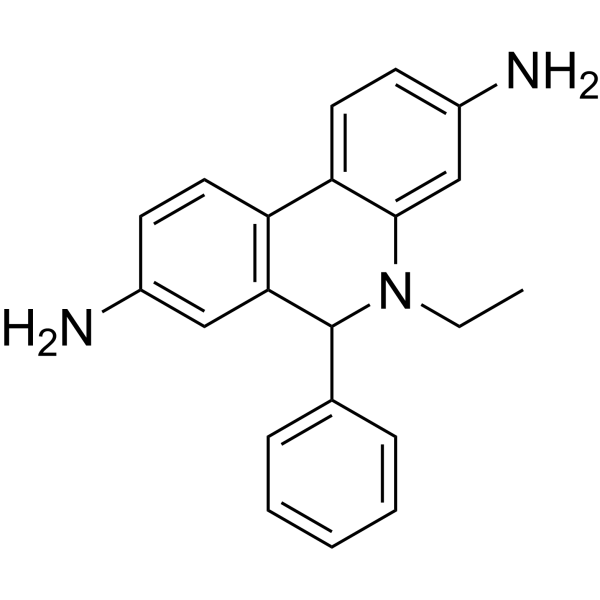
Dihydroethidium, also known as DHE, is a peroxide indicator. Dihydroethidium penetrates cell membranes to form a fluorescent protein complex with blue fluoresces. After entering the cells, Dihydroethidium is mainly localized in the cell membrane, cytoplasm and nucleus, and the staining effect is the strongest in the nucleus. Dihydroethidium produces inherent blue fluorescence with a maximum excitation wavelength of 370 nm and a maximum emission wavelength of 420 nm; after dehydrogenation, Dihydroethidium combines with RNA or DNA to produce red fluorescence with a maximum excitation wavelength of 300 nm and a maximum emission wavelength of 610 nm. 535 nm can also be used as the excitation wavelength for actual observation .
loading...
    loading...
43
43 Cited Publications
Cat. No.: HY-D0952
CAS No.: 494-38-2
Acridine Orange base is a cell-permeable fluorescent dye that stains organisms (bacteria, parasites, viruses, etc.) bright orange and, when used under appropriate conditions (pH=3.5, Ex=460 nm), distinguishes human cells in green for detection by fluorescence microscopy. Acridine Orange base fluoresces green when bound to dsDNA (Ex=488, Em=520-524) and red when bound to ssDNA (Ex=457, Em=630-644) or ssRNA (Ex=457, Em=630-644), also can be used in cell cycle assays .
loading...
    loading...
9
9 Cited Publications
Cat. No.: HY-13735
CAS No.: 83-89-6
Purity:  98.20%
Synonyms: Acriquine
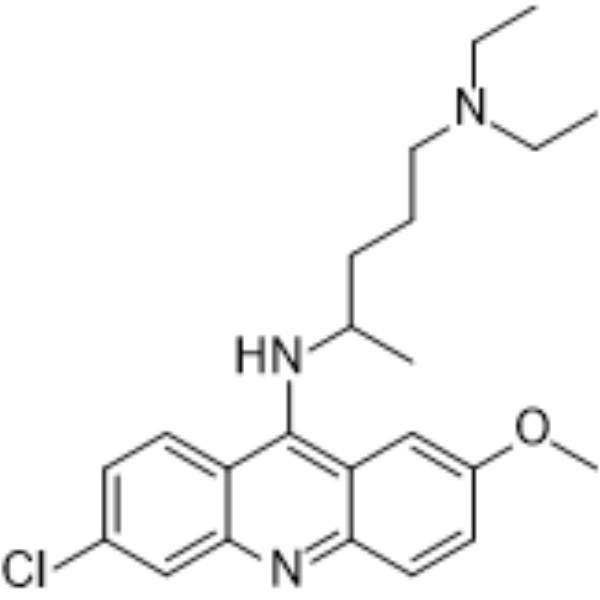
Quinacrine (Acriquine) is an antimalarial and anti-cancer agent. Quinacrine also inhibits human aldehyde oxidase (IC50: 3.3 μM). Quinacrine has affinity for nucleic acids, and stains DNA and RNA in fixed cells (Ex/Em: 436/525 nm) .
loading...
    loading...
8
8 Cited Publications
Cat. No.: HY-D1020
CAS No.: 7240-37-1
Synonyms: 7-AAD
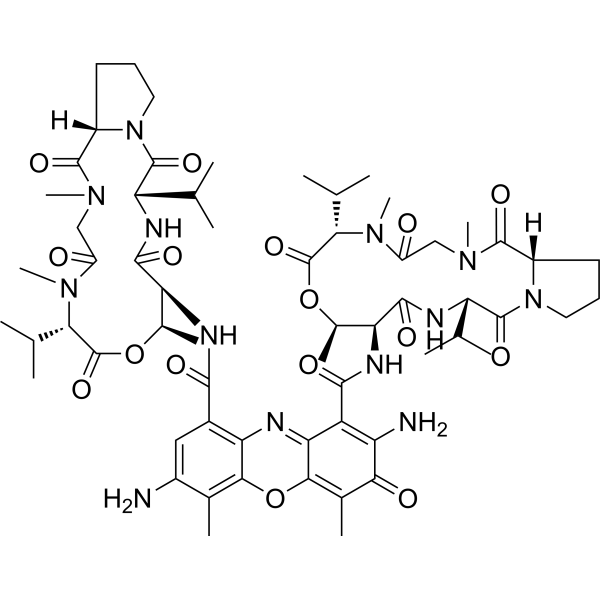
7-Aminoactinomycin D (7-AAD) a cell-impermeant fluorescent DNA stain, is a potent RNA polymerase inhibitor. 7-Aminoactinomycin D selectively binds to GC regions of the DNA. 7-Aminoactinomycin D also has antibacterial effects .
loading...
    loading...
5
5 Cited Publications
Cat. No.: HY-D0093
CAS No.: 61926-22-5
Synonyms: EthD-1
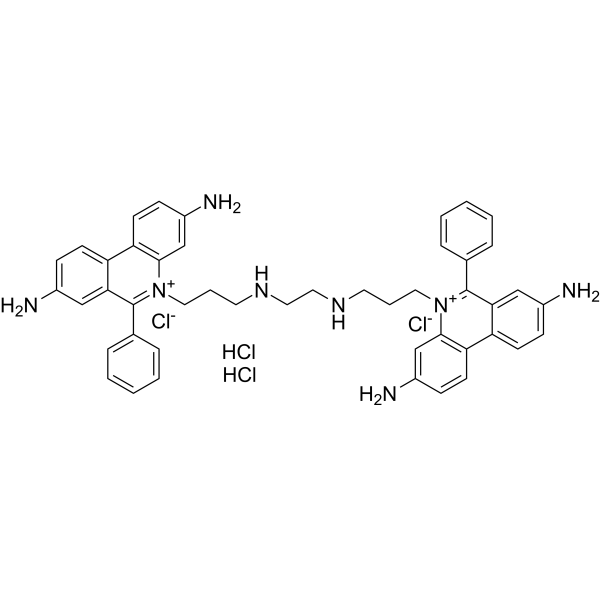
Ethidium homodimer (EthD-1) is a high-affinity fluorescent nucleic acid dye commonly used to stain mammals, bacteria, yeast, and fungi. Ethidium homodimer binds to DNA or RNA, enhancing fluorescence more than 30 times. The Ethidium homodimer has a strong positive charge, so it cannot cross cell membranes and stain living cells; But the Ethidium homodimer can cross the disordered region of the dead cell membrane to reach the nucleus and embed the DNA double strand to produce red fluorescence. Therefore, Ethidium homodimer is a relatively sensitive nucleic acid stain that can accurately detect nucleic acids in solution or in decomposing cells. Ethidium homodimer binds DNA, Ex/Em=528/617 nm .
loading...
    loading...
4
4 Cited Publications
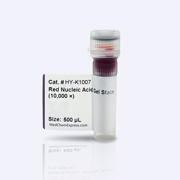
Cat. No.: HY-K1007

MCE Red Nucleic Acid Gel Stain (10,000×) is a nucleic acid stain that can be used as a safer alternative to the traditional ethidium bromide (EB) stain for detecting nucleic acids in agarose gels or polyacrylamide gels.

loading...
    loading...
1
1 Cited Publications
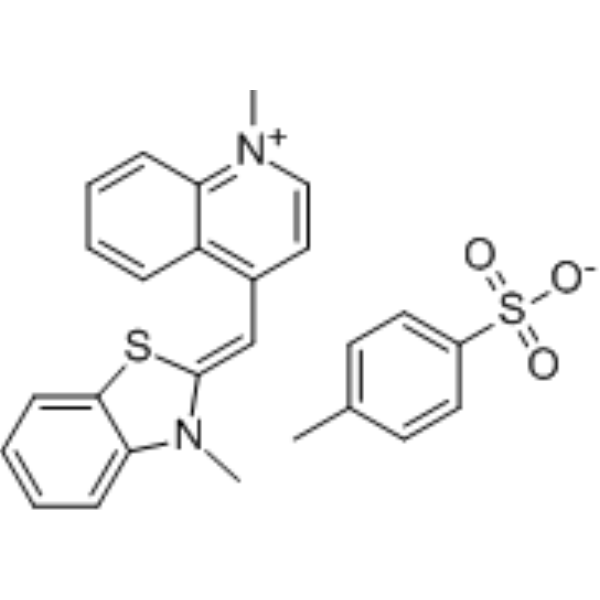
Cat. No.: HY-D0150
CAS No.: 107091-89-4
Thiazole Orange is an asymmetric anthocyanin dye that can be coupled with oligonucleotides (ONs) to prepare fluorescent hybridization probes. Thiazole Orange has been widely used in biomolecular detection and staining of DNA/ RNA in gels and can be used for reticulocyte analysis. Thiazole orange generates a significant fluorescence enhancement and high quantum yield when it binds with nucleic acids, especially RNA. Thiazole orange can permeate living cell membranes. Thiazole orange can use UV light for detection, but can also be detected with blue light. The excitation and emission of Thiazole orange are λex = 510 nm (488 nm and 470 nm also show strong excitation) and λem = 527 nm, respectively .
loading...
    loading...
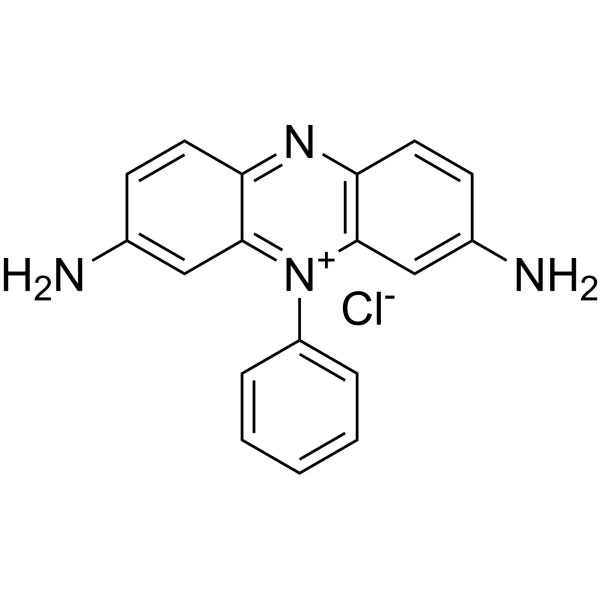
Cat. No.: HY-W040198
CAS No.: 81-93-6
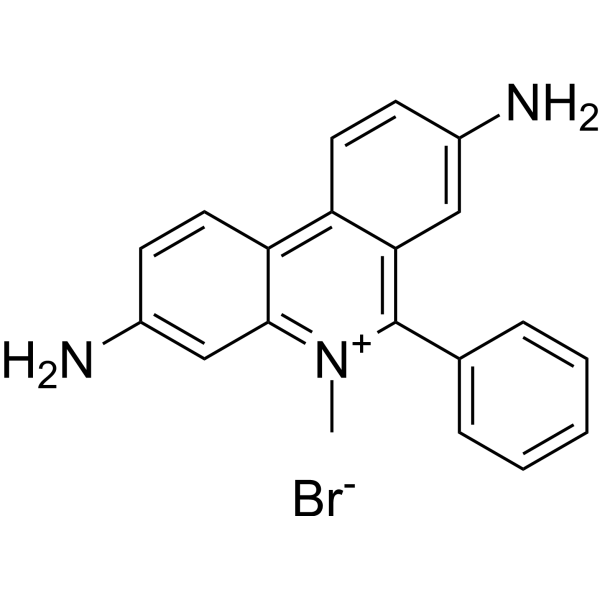
Phenosafranine is a phenazine dye. Phenosafranine exhibits higher binding affinity for triple-stranded RNA than for double-stranded RNA, and binds to both types of RNA via intercalation. Phenosafranine interacts with hemoglobin. Phenosafranine can be used for plant cell staining, as well as the detection of hemoglobin, dopamine, serotonin, etc.
loading...
    loading...
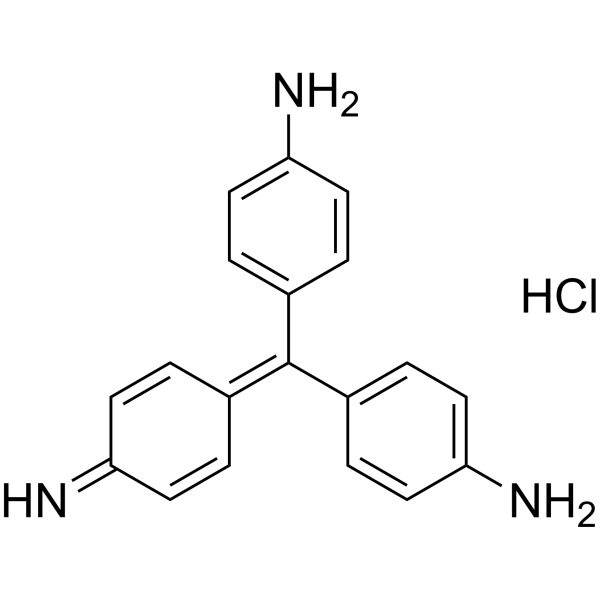
Cat. No.: HY-W127770
CAS No.: 569-61-9
Synonyms: Basic red 9
Target:  

Fluorescent Dye

Research Areas:  

Infection

Pararosaniline hydrochloride (Basic red 9) is a pH-responsive basic dye, as a biological stain to track certain proteins. The pH of the acidified Pararosaniline hydrochloride reagent has a significant effect on the color and the maximum absorption wavelength (λmax) of the reaction system, with its optimum pH 0.48 and a λmax at 549 nm. Pararosaniline hydrochloride is also a strong modifier of RNA splicing. Pararosaniline hydrochloride has been used in the analysis of SO2 and formaldehyde and staining of bacteria or other organisms. Pararosaniline hydrochloride is extensively used in industries like textile, printing, paper, cosmetic, and leather .
loading...
    loading...
Cat. No.: HY-D0920
CAS No.: 166196-17-4
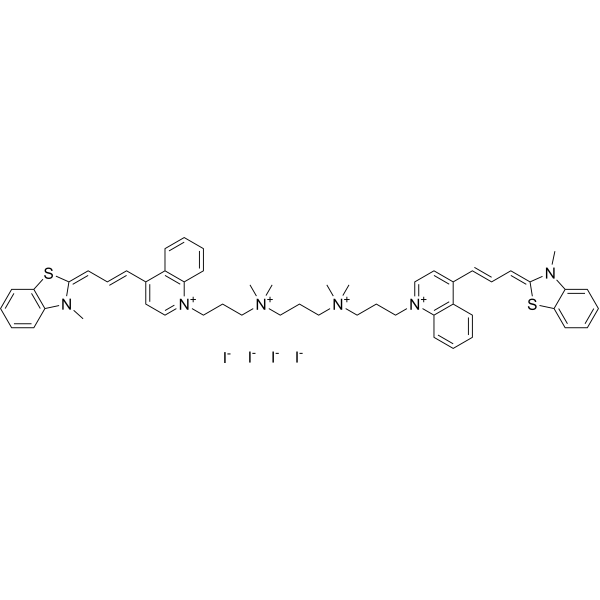
TOTO-3 is a cyanine nucleic acid intercalating fluorescent probe that binds to both RNA and DNA (Ex=642 nm, Em=660 nm). TOTO-3 cannot enter intact cells, but can penetrate cells with permeabilized plasma membranes, staining cytoplasmic RNA and nucleoli to distinguish intact cells from damaged ones. TOTO-3 is taken up by macrophages in an ultrasound-independent manner. TOTO-3 accumulates in tumor cells via ultrasound-mediated enhancement of plasma membrane permeability. TOTO-3 supports optical imaging for real-time assessment of plasma membrane integrity, nucleic acid detection, and monitoring of ultrasound-mediated intracellular delivery processes. TOTO-3 is applicable to studies related to rectal cancer .
loading...
    loading...
Cat. No.: HY-DY1015
CAS No.: 104821-25-2
Dihydroethidium (solution) , also known as DHE, is a peroxide indicator. Dihydroethidium penetrates cell membranes to form a fluorescent protein complex with blue fluoresces. After entering the cells, Dihydroethidium is mainly localized in the cell membrane, cytoplasm and nucleus, and the staining effect is the strongest in the nucleus. Dihydroethidium produces inherent blue fluorescence with a maximum excitation wavelength of 370 nm and a maximum emission wavelength of 420 nm; after dehydrogenation, Dihydroethidium combines with RNA or DNA to produce red fluorescence with a maximum excitation wavelength of 300 nm and a maximum emission wavelength of 610 nm. 535 nm can also be used as the excitation wavelength for actual observation .
Solvent and concentration: DMSO: 5 mM
loading...
    loading...
Cat. No.: HY-W250143
CAS No.: 6586-04-5
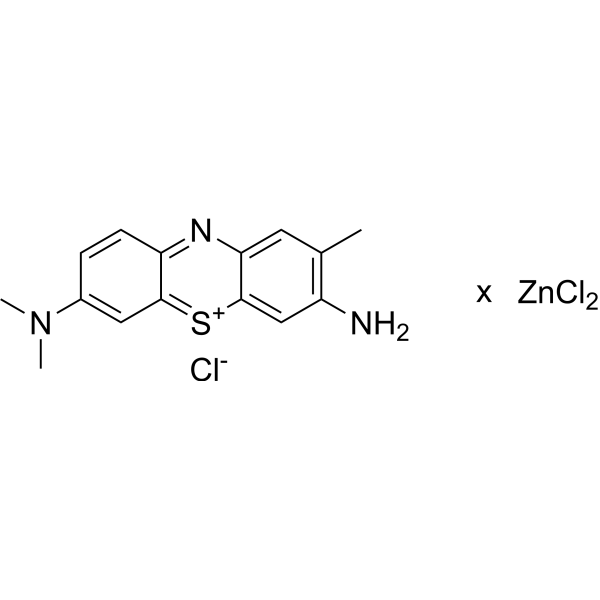
Toluidine blue (ZnCl2) is a basic thiazine dye commonly used as a biological stain for microscopy. It has a deep bluish-purple color and is commonly used to stain nucleic acids such as DNA and RNA, as well as to stain mast cells, cartilage, and other connective tissues. Toluidine blue (ZnCl2) stains the acidic components of these tissues, such as sulfated or carboxylated mucopolysaccharides. It is frequently used in histology, cytology, and pathology applications to aid in the diagnosis of various diseases and conditions. The dye is usually applied to tissue sections prior to microscopic examination and can be differentiated using an acidic alcohol solution. Toluidine blue (ZnCl2) is a relatively simple and inexpensive stain with good reproducibility, making it a popular choice for many laboratories.
loading...
    loading...
Cat. No.: HY-13735R
CAS No.: 83-89-6
Synonyms: Acriquine (Standard)
Quinacrine (Standard) is the analytical standard of Quinacrine. This product is intended for research and analytical applications. Quinacrine (Acriquine) is an antimalarial and anti-cancer agent. Quinacrine also inhibits human aldehyde oxidase (IC50: 3.3 μM). Quinacrine has affinity for nucleic acids, and stains DNA and RNA in fixed cells (Ex/Em: 436/525 nm) .
loading...
    loading...
Cat. No.: HY-108166
CAS No.: 495-99-8
Target:  

Fluorescent Dye

Research Areas:  

Inflammation/Immunology

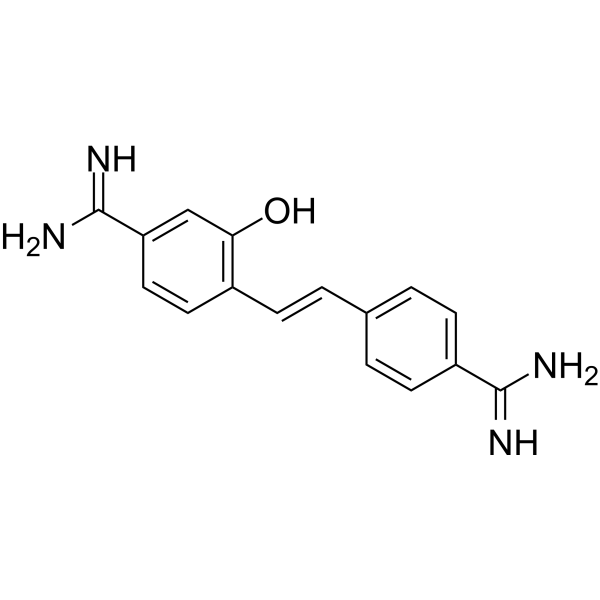
Hydroxystilbamidine, a dye capable of binding to both DNA and RNA, is a powerful inhibitor of cellular ribonucleases. Hydroxystilbamidine is a retrograde fluorescent tracer and a histochemical stain [1]
loading...
    loading...
Cat. No.: HY-DY1099
CAS No.: 7240-37-1
Synonyms: 7-AAD (solution)
7-Aminoactinomycin D (solution) (7-AAD (solution)) a cell-impermeant fluorescent DNA stain, is a potent RNA polymerase inhibitor. 7-Aminoactinomycin D selectively binds to GC regions of the DNA. 7-Aminoactinomycin D also has antibacterial effects .
Solvent and concentration: DMSO: 1 mg/mL
loading...
    loading...
Cat. No.: HY-D3459
SYTO-9 is a cell-permeable fluorescent dye that can be used for nucleic acid staining. The fluorescence intensity of SYTO-9 increases significantly upon binding to RNA and DNA . SYTO-9 can stain RNA and DNA in live and dead eukaryotic cells, as well as in Gram-positive and Gram-negative bacteria. SYTO-9 is applicable for fluorescence microscopy, flow cytometry, fluorophotometry, and bacterial counting in aquatic systems (RNA: Ex/Em = 486/501 nm; DNA: Ex/Em = 485/498 nm) .
loading...
    loading...
Cat. No.: HY-A0216
CAS No.: 533-22-2
Research Areas:  

Others

Hydroxystilbamidine diisethionate, a dye capable of binding to both DNA and RNA, is a powerful inhibitor of cellular ribonucleases. Hydroxystilbamidine diisethionate is a retrograde fluorescent tracer and histochemical stain .
loading...
    loading...
Cat. No.: HY-W761989
CAS No.: 16071-86-6
Target:  

Fluorescent Dye

Research Areas:  

Others

Direct Brown 95, a synthetic dye, finds extensive application in the textile industry for imparting color to fabrics. It serves as a stain in histology and cytology, aiding in the differentiation of diverse cell types. Additionally, it serves as a marker in molecular biology, facilitating the detection of DNA and RNA.
loading...
    loading...
Cat. No.: HY-DY1097
CAS No.: 107091-89-4
Thiazole Orange (solution) is an asymmetric anthocyanin dye that can be coupled with oligonucleotides (ONs) to prepare fluorescent hybridization probes. Thiazole Orange has been widely used in biomolecular detection and staining of DNA/ RNA in gels and can be used for reticulocyte analysis. Thiazole orange generates a significant fluorescence enhancement and high quantum yield when it binds with nucleic acids, especially RNA. Thiazole orange can permeate living cell membranes. Thiazole orange can use UV light for detection, but can also be detected with blue light. The excitation and emission of Thiazole orange are λex = 510 nm (488 nm and 470 nm also show strong excitation) and λem = 527 nm, respectively .
Solvent and concentration: DMSO: 10 mM
The 1 mL volume is defined as the base specification. All larger sizes correspond to incremental volumes of this base.
loading...
    loading...
  • 1

