1. Search Result
Search Result
Results for "

SIRS

" in MedChemExpress (MCE) Product Catalog:

31

Inhibitors & Agonists

9

Fluorescent Dye

4

Natural
Products

1

Isotope-Labeled Compounds

3

Click Chemistry

Cat. No. Product Name Target Research Areas Chemical Structure
  • HY-15452
    Selisistat
    290+ Cited Publications

    EX-527

    Sirtuin Inflammation/Immunology Cancer
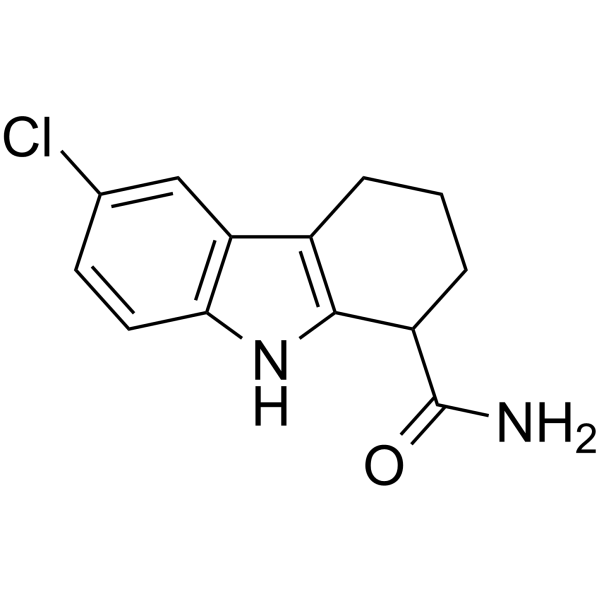
    Selisistat (EX-527) is a potent and selective SirT1 (Sir2 in Drosophila melanogaster) inhibitor with an IC50 of 123 nM for SirT1. Selisistat alleviates pathology in multiple animal and cell models of Huntington's disease .
    Selisistat
  • HY-N2031
    Parishin
    4 Publications Verification

    Others Neurological Disease
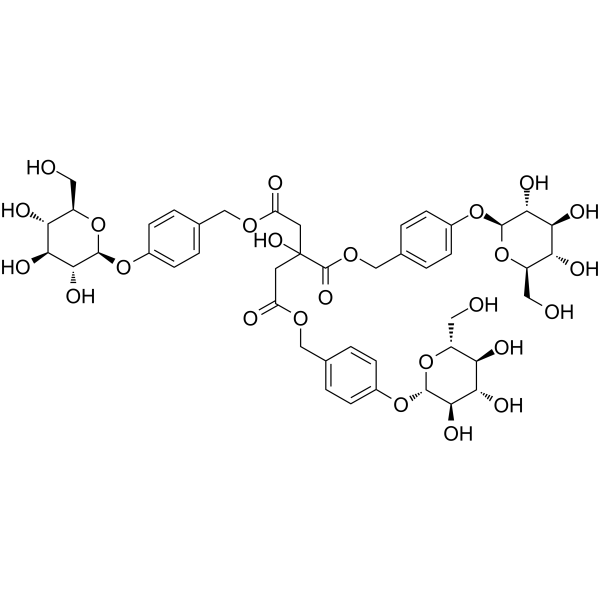
    Parishin is a phenolic glucoside isolated from Gastrodia elata. Parishin exhibits antiaging effects and extends the lifespan of yeast via regulation of Sir2/Uth1/TOR signaling pathway .
    Parishin
  • HY-100585

    Splitomycin

    HDAC Cancer
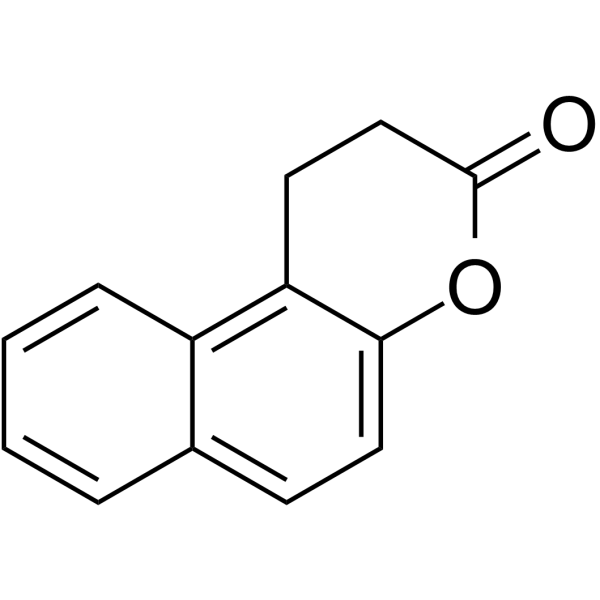
    Splitomicin (Splitomycin) is a selective Sir2p inhibitor. Splitomicin inhibits NAD +-dependent HDAC activity of Sir2 protein. Splitomicin induces dose-dependent inhibition of HDAC in the yeast extract with an IC50 of 60 μM .
    Splitomicin
  • HY-N1926

    Hydrocoumarin; Chroman-2-one

    Sirtuin Cancer
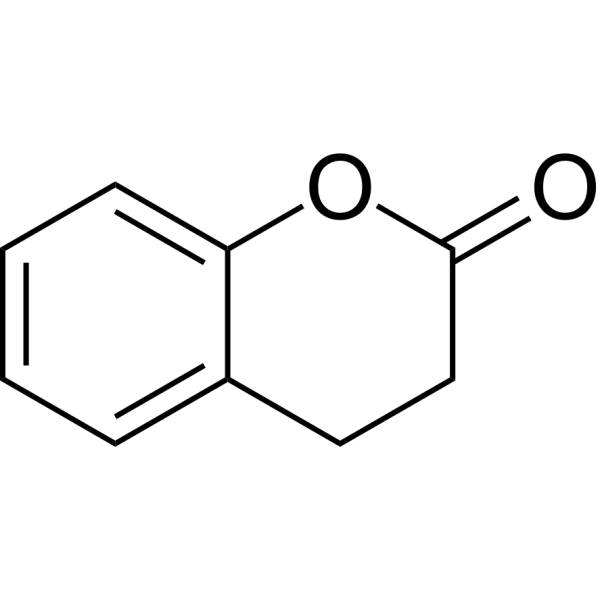
    Dihydrocoumarin is a compound found in Melilotus officinalis. Dihydrocoumarin is a yeast Sir2p inhibitor. Dihydrocoumarin also inhibits human SIRT1 and SIRT2 with IC50s of 208 μM and 295 μM, respectively .
    Dihydrocoumarin
  • HY-W784030

    Amino Acid Derivatives Biochemical Assay Reagents Fluorescent Dye Others
    N-TCO-L-lysine is a non-canonical amino acid. N-TCO-L-lysine contains a trans-cyclooctene (TCO) bioorthogonal reactive linker. N-TCO-L-lysine undergoes a bioorthogonal click reaction with SiR-Tz to enable fluorescent labeling of endogenously expressed proteins with site-specific incorporation. When used in combination with SiR-Tz, N-TCO-L-lysine allows super-resolution and live-cell imaging of endogenous proteins .
    N-TCO-L-lysine
  • HY-157456

    RIP kinase Inflammation/Immunology
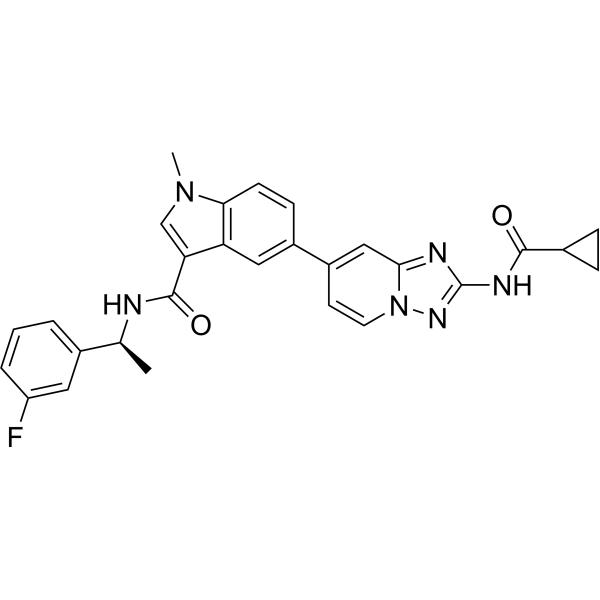
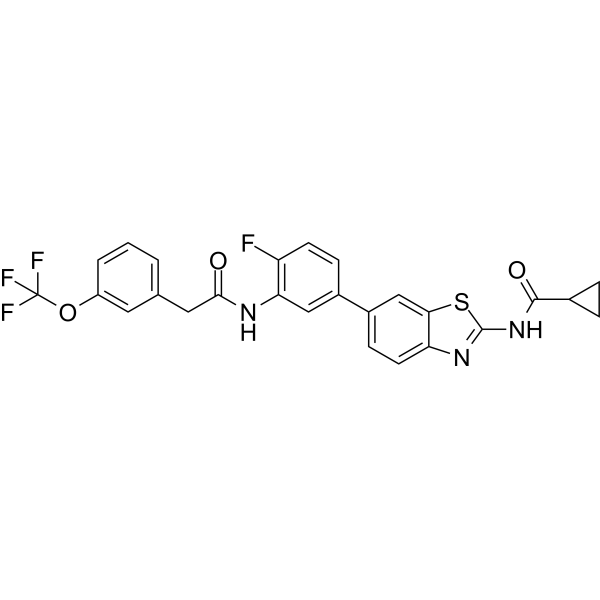
    RIPK1-IN-19 is a selective RIPK1 inhibitor (IC50=15 nM). RIPK1-IN-19 does not show obvious activity against RIPK2, RIPK3, and RIPK4. RIPK1-IN-19 displays potent protective activity in TNFα-induced systemic inflammatory response syndrome (SIRS) model and Imiquimod (IMQ)-induced psoriasis model. RIPK1-IN-19 can be used in research on inflammation and immune system diseases .
    RIPK1-IN-19
  • HY-15452R

    EX-527 (Standard)

    Sirtuin Reference Standards Inflammation/Immunology Cancer
    Selisistat (Standard) is the analytical standard of Selisistat. This product is intended for research and analytical applications. Selisistat (EX-527) is a potent and selective SirT1 (Sir2 in Drosophila melanogaster) inhibitor with an IC50 of 123 nM for SirT1. Selisistat alleviates pathology in multiple animal and cell models of Huntington's disease .
    Selisistat (Standard)
  • HY-173185

    RIP kinase Necroptosis Inflammation/Immunology
    RIP1-IN-1 is an orally active RIP1 inhibitor with strong RIP1 binding affinity (Kd: 110 nM). RIP1-IN-1 exhibits strong anti-necroptosis activity. RIP1-IN-1 effectively inhibits the formation of necrosomes by blocking the phosphorylation of RIP1, RIP3 and MLKL signaling pathways. RIP1-IN-1 inhibits necroptosis and can be used in the study of acute liver injury .
    RIP1-IN-1
  • HY-D2940

    SiR650-BG

    Fluorescent Dye Others
    SiR-SNAP (SiR650-BG) is a SiR-labeled SNAP tag near-infrared fluorescent probe (Ex/Em: 645 nm/661 nm). SiR-SNAP combines excellent optical properties, good cell membrane permeability, and environmentally sensitive fluorescence characteristics, providing a powerful tool for the dynamic study of proteins in living cells .
    SiR-SNAP
  • HY-157039

    RIP kinase Necroptosis Mixed Lineage Kinase Inflammation/Immunology
    RIPK1-IN-17 is an orally active, selective RIPK1 inhibitor (Kd = 17 nM) and shows no significant inhibition to RIPK3. RIPK1-IN-17 specifically inhibits necroptosis rather than apoptosis by inhibiting RIPK1, RIPK3, and MLKL phosphorylation. RIPK1-IN-17 protects mice from hypothermia and death. RIPK1-IN-17 can be used for the study of necroptosis-related diseases such as inflammatory response syndrome (SIRS) .
    RIPK1-IN-17
  • HY-133859

    Mitochondrial Metabolism Metabolic Disease
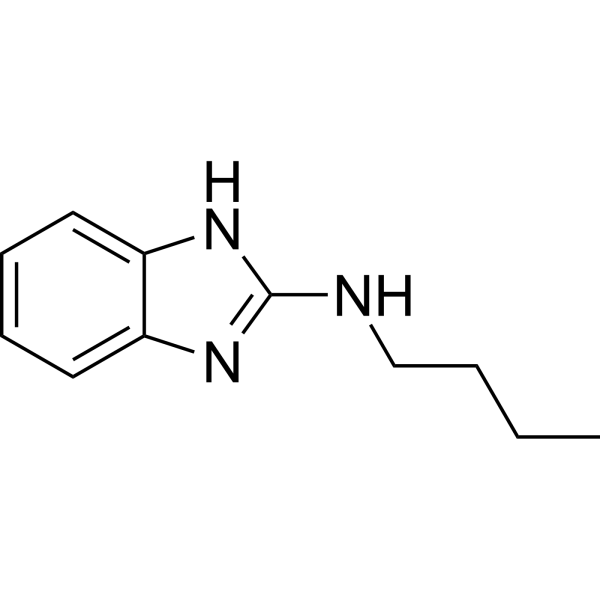
    M084 is a benzimidazole derivative. M084 inhibits the mitochondrial respiration, activate mitochondrial unfolded protein response and AMPK, recruites SIR-2.1 and SKN-1, and finally through the transcription factor DAF-16, delays the aging process of C. elegans .
    M084
  • HY-153435

    RIP kinase Necroptosis Cancer
    RIP1 kinase inhibitor 5 (example 1) is a potent inhibitor of RIP1, which is used as a checkpoint kinase to control tumor immunity . RIP1 kinase inhibitor 5 is similar with SIR1-365 (compound 13), which inhibits necrosis and iron death activity .
    RIP1 kinase inhibitor 5
  • HY-D2243

    Fluorescent Dye Others
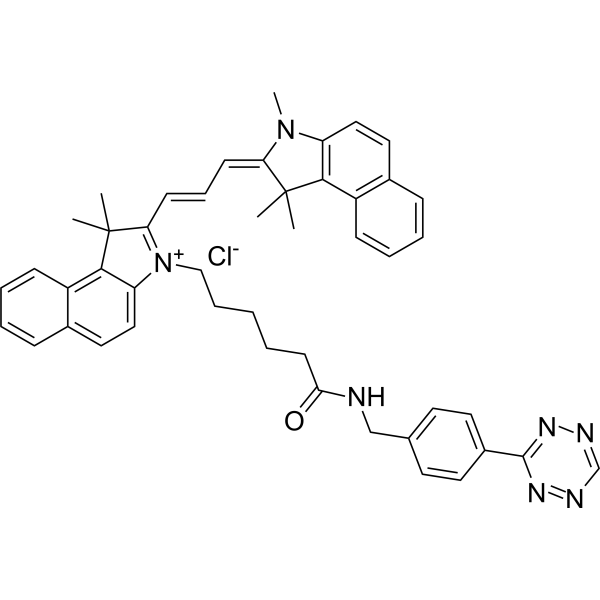
    Cy3.5 tetrazineis a Tetrazine modified Cy3.5 fluorescent dye. SiR-tetrazine is a click chemistry reagent, it contains a Tetrazine group that can undergo an inverse electron demand Diels-Alder reaction (iEDDA) with molecules containing TCO groups .
    Cy3.5 tetrazine
  • HY-174820

    Necroptosis RIP kinase Inflammation/Immunology Cancer
    AZ'320 is an ATP-competitive necroptosis (EC50 of 4.9 μM) inhibitor and a RIPK1 (pKD of 5.45) inhibitor. AZ'320 inhibits necroptosis by inhibiting RIPK1 phosphorylation. AZ’320 prevents mortality of the mice and rescues temperature and body weight in SIRS mice models. AZ'320 can be used for researches of cancer and inflammation .
    AZ'320
  • HY-D1679

    Fluorescent Dye Others
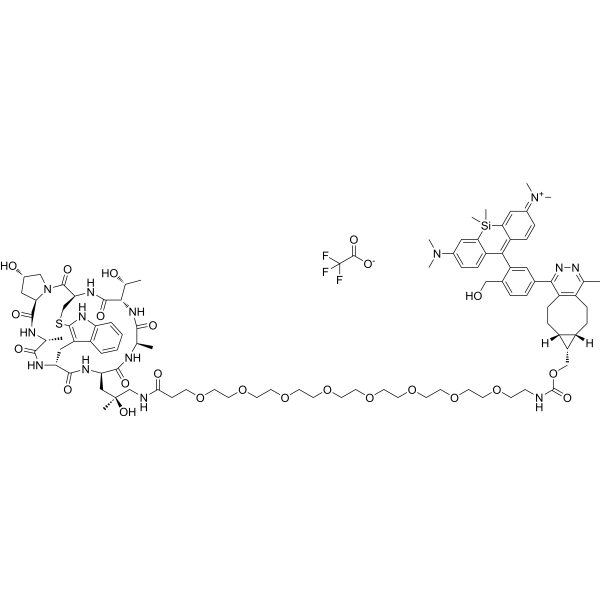
    Phalloidin-f-HM-SiR is a multifunctional dye. Dyes are important tools in biological experiments. They can help researchers observe and analyze cell structures, track biomolecules, evaluate cell functions, distinguish cell types, detect biomolecules, study tissue pathology and monitor microorganisms. Their applications range from basic scientific research to clinical A wide range of diagnostics. Dyes are also widely used in traditional fields such as textile dyeing, as well as in emerging fields such as functional textile processing, food pigments and dye-sensitized solar cells.
    Phalloidin-f-HM-SiR
  • HY-178762S

    RIP kinase Necroptosis Inflammation/Immunology
    RIPK1-IN-35 is a selective and orally active RIPK1 inhibitor with an IC50 of 5.33 nM. RIPK1-IN-35 has a potent protective effect against necroptosis in both human and murine cells. RIPK1-IN-35 shows good therapeutic effects in both TNF-α-induced systemic inflammatory response syndrome and DSS (HY-116282C)-induced inflammatory bowel disease models. RIPK1-IN-35 can be used to the study of inflammatory diseases related to necroptosis .
    RIPK1-IN-35
  • HY-14909R

    CDDO (Standard); RTA 401 (Standard)

    Keap1-Nrf2 Necroptosis SARS-CoV Virus Protease Reference Standards Infection Cardiovascular Disease Inflammation/Immunology
    Bardoxolone (Standard) is the analytical standard of Bardoxolone (HY-14909). This product is intended for research and analytical applications. Bardoxolone is an orally active activator of nuclear regulatory factor (NRf-2) and an inhibitor of SARS-CoV-2 3CL protease. Bardoxolone inhibits SARS-CoV-2 3CL protease with an EC50 value of 0.43 μM in vero cells. Bardoxolone also inhibits necroptosis in HT-29 cells with an EC50 value of 1.30 μM by blocking necrosome formation through inhibiting phosphorylation of RIPK1 and RIPK3. Bardoxolone can be used in research on COVID-19, TNF-induced systemic inflammatory response syndrome (SIRS), and cerebral ischemia-reperfusion injury .
    Bardoxolone (Standard)
  • HY-D2961

    Fluorescent Dye Others
    SiR-CLIP is a SiR-carboxyl derivative used for covalent fluorescent labeling of CLIP tags .
    SiR-CLIP
  • HY-149052

    RIP kinase Mixed Lineage Kinase Necroptosis Inflammation/Immunology
    SZM-1209 is an orally active, potent and specific RIPK1 inhibitor, with a Kd of 85 nM. SZM-1209 exhibits high anti-necroptotic activity (EC50=22.4 ± 8.1 nM). SZM-1209 shows anti-SIRS (systemic inflammatory response syndrome), and anti-ALI (acute lung injury) effects .
    SZM-1209
  • HY-100585R

    Splitomycin (Standard)

    Reference Standards HDAC Cancer
    Splitomicin (Standard) is the analytical standard of Splitomicin. This product is intended for research and analytical applications. Splitomicin (Splitomycin) is a selective Sir2p inhibitor. Splitomicin inhibits NAD+-dependent HDAC activity of Sir2 protein. Splitomicin induces dose-dependent inhibition of HDAC in the yeast extract with an IC50 of 60 μM .
    Splitomicin (Standard)
  • HY-N2031R

    Reference Standards Others Neurological Disease
    Parishin (Standard) is the analytical standard of Parishin. This product is intended for research and analytical applications. Parishin is a phenolic glucoside isolated from Gastrodia elata. Parishin exhibits antiaging effects and extends the lifespan of yeast via regulation of Sir2/Uth1/TOR signaling pathway .
    Parishin (Standard)
  • HY-W142410

    Fungal Others
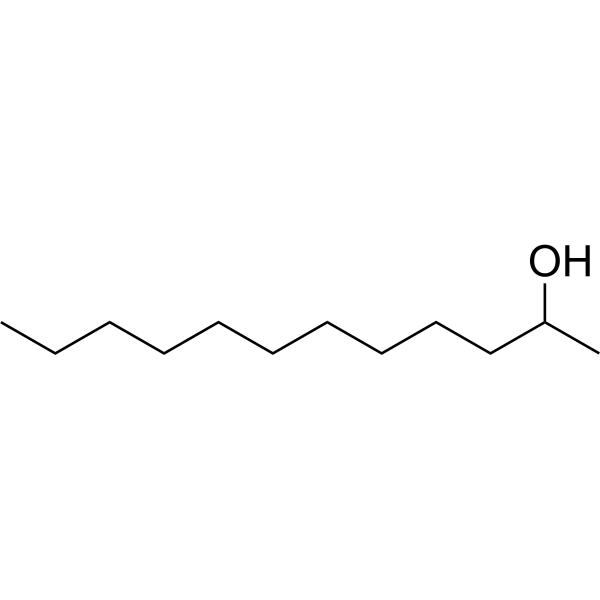
    2-Dodecanol inhibits hyphal formation and SIR2 expression in C. albicans .
    2-Dodecanol
  • HY-131041

    Calcium Channel Cardiovascular Disease
    Ned-K is a nicotinic acid adenine dinucleotide phosphate (NAADP) antagonist. Ned-K is effective at dampening simulated ischaemia and reperfusion (sIR)-induced Ca 2+ oscillations in cardiomyocytes .
    Ned-K
  • HY-N1926R

    Hydrocoumarin (Standard); Chroman-2-one (Standard)

    Reference Standards Sirtuin Cancer
    Dihydrocoumarin (Standard) is the analytical standard of Dihydrocoumarin. This product is intended for research and analytical applications. Dihydrocoumarin is a compound found in Melilotus officinalis. Dihydrocoumarin is a yeast Sir2p inhibitor. Dihydrocoumarin also inhibits human SIRT1 and SIRT2 with IC50s of 208 μM and 295 μM, respectively .
    Dihydrocoumarin (Standard)
  • HY-163390

    RIP kinase Necroptosis Inflammation/Immunology Cancer
    RIP1 kinase inhibitor 9 (compound SY-1) is a selective RIP kinase inhibitor. RIP1 kinase inhibitor 9 effectively suppresses the central inflammatory response induced by epilepsy. RIP1 kinase inhibitor 9 inhibits Z-VAD-FMK (HY-16658B)-induced necroptosis in HT-29 cells with an EC50 of 7.04 nM .
    RIP1 kinase inhibitor 9
  • HY-179680

    RIP kinase Necroptosis Mixed Lineage Kinase Lactate Dehydrogenase Interleukin Related Inflammation/Immunology
    RIPK1-IN-38 is an orally active RIPK1 inhibitor with an IC50 value of 27 nM. RIPK1-IN-38 can inhibit the phosphorylation of RIPK1 and its downstream signaling molecules RIPK3 and MLKL. RIPK1-IN-38 exhibits anti-necroptotic activity. RIPK1-IN-38 has excellent anti-inflammatory efficacy in both the SIRS model and GVHD model. RIPK1-IN-38 can be used for the research of inflammatory and immune-related diseases .
    RIPK1-IN-38
  • HY-D3229

    Fluorescent Dye Others
    SiR-BCN is a Fluorophore-labeled bicyclononyne. SiR-BCN can be used for protein modification and labeling studies .
    SiR-BCN
  • HY-D3188

    Fluorescent Dye Cancer
    gGlu-2OMe SiR600 is a γ-glutamyl transpeptidase (GGT) responsive fluorescent probe. gGlu-2OMe SiR600 can be converted into a highly fluorescent molecule via reaction with GGT, and its initial fluorescence is quenched through a photoinduced electron transfer (PeT) mechanism. gGlu-2OMe SiR600 exhibits fluorescence activation in malignant breast cancer and benign breast fibroadenoma tissues, enabling lesion visualization. gGlu-2OMe SiR600 can be used for research related to breast cancer and fibroadenoma .
    gGlu-2OMe SiR600
  • HY-D3264

    Fluorescent Dye Others
    SiR-PEG4-DBCO is a novel fluorescent labeling molecule that combines the superior fluorescent properties of silicon-rhodamine dyes with the functionalities of polyethylene glycol (PEG) and Click Chemistry. SiR dyes exhibit excellent photostability under identical excitation conditions, making them suitable for long-term cellular imaging (Ex = 640 nm, Em = 670–680 nm).
    SiR-PEG4-DBCO
  • HY-D3446

    Fluorescent Dye Others
    PA-SiR-Halo is a photoactivatable fluorophore targeting HaloTag. When bound to HaloTag, PA-SiR-Halo stabilizes its fluorescent form under physiological pH. After conjugation and photoactivation, it exhibits enhanced resistance to nucleophiles, and enables live-cell confocal imaging, fixed-cell single-molecule localization microscopy imaging, live-cell single-particle tracking, as well as live-cell single-molecule localization microscopy imaging of dynamic mitochondrial structures without the need for washing .
    PA-SiR-Halo
  • HY-D3187

    Fluorescent Dye Glycosidase Infection Cancer
    HMRef-αMan is a substrate-based green fluorescent probe (Ex/Em=465 nm/515 nm) targeting MAN2C1 (α-mannosidase). HMRef-αMan can be specifically cleaved by MAN2C1 to generate a highly fluorescent product, which thus gets activated to produce green fluorescence in malignant breast tissues, benign lesions and living cancer cells. The signal intensity of HMRef-αMan is directly correlated with MAN2C1 activity, and it can effectively detect tiny breast cancer lesions with a diameter of less than 1 mm. When used in combination with the red-emitting γ-glutamyl transpeptidase (GGT) probe gGlu-2OMe SiR600 (HY-D3188), HMRef-αMan enables precise optical differentiation of breast tissue types via a dual-color imaging strategy. HMRef-αMan has been widely used in the research of breast diseases such as breast cancer, fibroadenoma, phyllodes tumor and various types of papilloma .
    HMRef-αMan

Inquiry Online

Your information is safe with us. * Required Fields.

Salutation


Country or Region *

Applicant Name *


Organization Name *

Department *


Email Address *


Product Name *

Cat. No.


Requested quantity *

Phone Number *


Remarks

Inquiry Online

Inquiry Information

Product Name:
Cat. No.:
Quantity:
MCE Japan Authorized Agent:

