

26 Results for "

Salinity

" in MedChemExpress (MCE) Product Catalog:
Products (26)

26 Results for "Salinity" in MCE Product Catalog:

24
24 Cited Publications
Cat. No.: HY-K3005

Phosphate-Buffered Saline (PBS) is a balanced salt solution used for a variety of cell culture applications, such as washing cells, diluting cells and preparing reagents. The 500 mL is defined as the base specification. All larger sizes correspond to incremental volumes of this base.

loading...
    loading...
2
2 Cited Publications
Cat. No.: HY-K3006

Phosphate-Buffered Saline (PBS) is a balanced salt solution used for a variety of cell culture applications, such as washing cells, diluting cells and preparing reagents. The 500 mL is defined as the base specification. All larger sizes correspond to incremental volumes of this base.

loading...
    loading...
Cat. No.: HY-N9497
CAS No.: 3687-64-7
Category:  

Natural Products

Target:  

Galectin Fungal

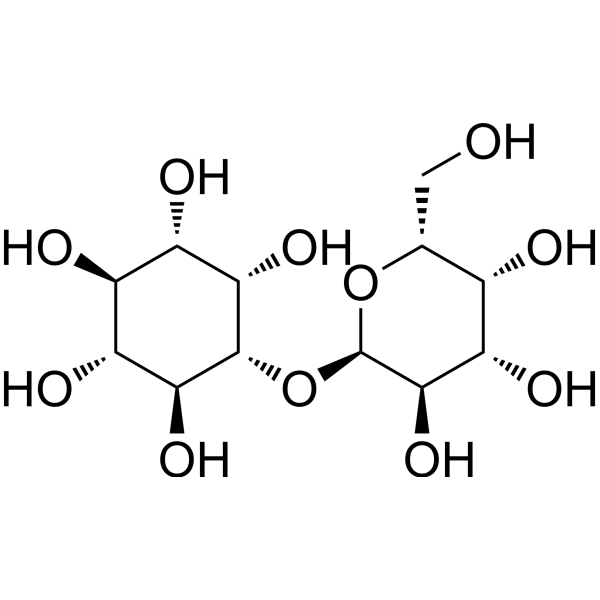
Galactinol is a disaccharide carbohydrate serving as a galactosyl donor, which belongs to the raffinose family oligosaccharide pathway and acts as an important osmoprotectant. Galactinol not only induces disease resistance in plants against fungal and bacterial pathogens, but also significantly enhances plant tolerance to abiotic stresses such as drought, high salinity, low temperature and oxidative damage. In addition, Galactinol has the ability to scavenge hydroxyl radicals, can act as a signaling component for root colonization-induced systemic resistance, and is positively correlated with seed longevity in various crops, making it a potential biomarker for evaluating seed vigor. Therefore, Galactinol can be used in the research of various plant diseases including fungal leaf spot, bacterial angular leaf spot, gray mold and soft rot .
loading...
    loading...
Cat. No.: HY-W460471
Tris Buffered Saline is a common buffer reagent in molecular biology, consisting of Tris and NaCl. Tris Buffered Saline can adjust pH and ionic strength and is widely used in DNA/RNA extraction, PCR and protein electrophoresis. Tris Buffered Saline can purify and protect nucleic acid materials and improve reaction efficiency and concentration. In protein electrophoresis, Tris Buffered Saline stabilizes gels and maintains pH. Overall, Tris Buffered Saline offers versatility, good solubility, and low toxicity in molecular biology applications.
loading...
    loading...
Cat. No.: HY-145539
CAS No.: 145849-32-7
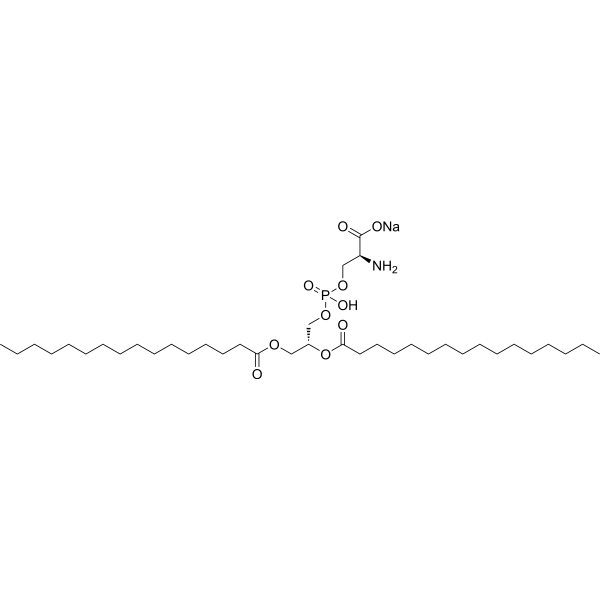
1,2-Dipalmitoyl-sn-glycero-3-PS sodium is a phosphatidylserine phospholipid. 1,2-Dipalmitoyl-sn-glycero-3-PS sodium is used for the preparation of phospholipid bilayers .
loading...
    loading...
Cat. No.: HY-P1278
CAS No.: 137593-52-3
Target:  

Neurokinin Receptor

Research Areas:  

Neurological Disease Endocrinology

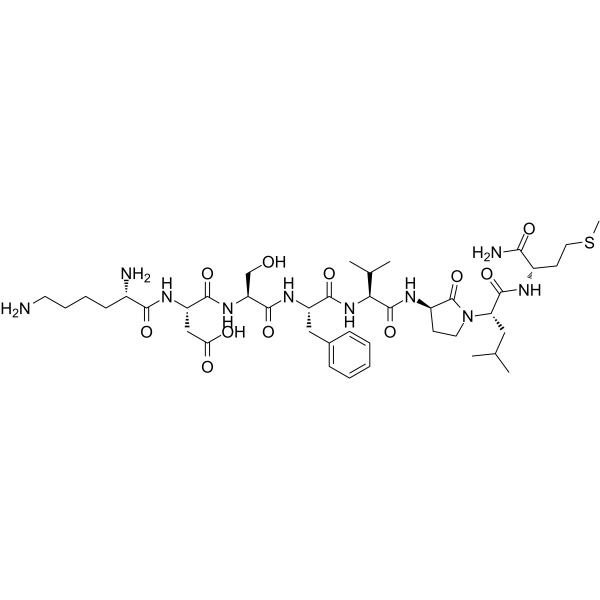
GR 64349 is a selective neurokinin 2 (NK2) receptor agonist. GR 64349 selectively activates the NK-2 receptor subtype. GR 64349 activates tonic and rhythmic bladder contractions of the micturition reflex. GR 64349 acetate does not inhibit rhythmic bladder contraction activation induced by normal saline. GR 64349 induces inward currents .
loading...
    loading...
Cat. No.: HY-135258
CAS No.: 1217474-91-3
Purity:  ≥98.0%
Target:  

Galectin Fungal

Research Areas:  

Others

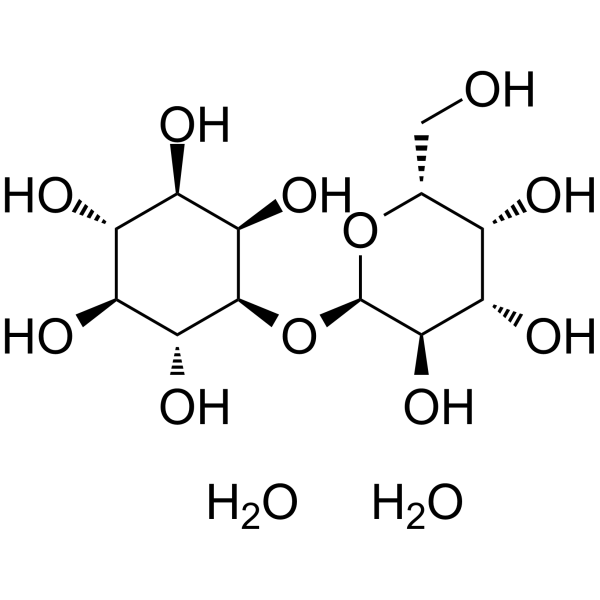
Galactinol dihydrate is a disaccharide carbohydrate serving as a galactosyl donor, which belongs to the raffinose family oligosaccharide pathway and acts as an important osmoprotectant. Galactinol dihydrate not only induces disease resistance in plants against fungal and bacterial pathogens, but also significantly enhances plant tolerance to abiotic stresses such as drought, high salinity, low temperature and oxidative damage. In addition, Galactinol dihydrate has the ability to scavenge hydroxyl radicals, can act as a signaling component for root colonization-induced systemic resistance, and is positively correlated with seed longevity in various crops, making it a potential biomarker for evaluating seed vigor. Therefore, Galactinol dihydrate can be used in the research of various plant diseases including fungal leaf spot, bacterial angular leaf spot, gray mold and soft rot .
loading...
    loading...
Cat. No.: HY-D0015
CAS No.: 1733-12-6
Cresol red, 97% is an acidic phenolsulfonphthalein triphenylmethane dye. Cresol red, 97% generates reactive oxygen species and singlet oxygen under ultrasonic irradiation, interacts with bovine serum albumin, alters the structure of bovine serum albumin, and oxidizes the fluorescent amino acid residues of bovine serum albumin. Cresol red, 97% can be decolorized and biodegraded by *Absidia spinosa* M15, producing phenylacetic acid and benzoic acid metabolites. Cresol red, 97% serves as a pH indicator (orange at pH 1.8-yellow at pH 2.0, yellow at pH 7.0-purple at pH 8.8). Cresol red, 97% can be used to indicate pH, temperature and salinity .
loading...
    loading...
Cat. No.: HY-D0015A
CAS No.: 62625-29-0
Cresol Red sodium is a triarylmethane dye. Cresol Red sodium can be used for indicating pH, temperatures and salinities .
loading...
    loading...
Cat. No.: HY-138660
CAS No.: 2376841-30-2
Synonyms: HM-JF526 NHS
Target:  

Fluorescent Dye

Research Areas:  

Others

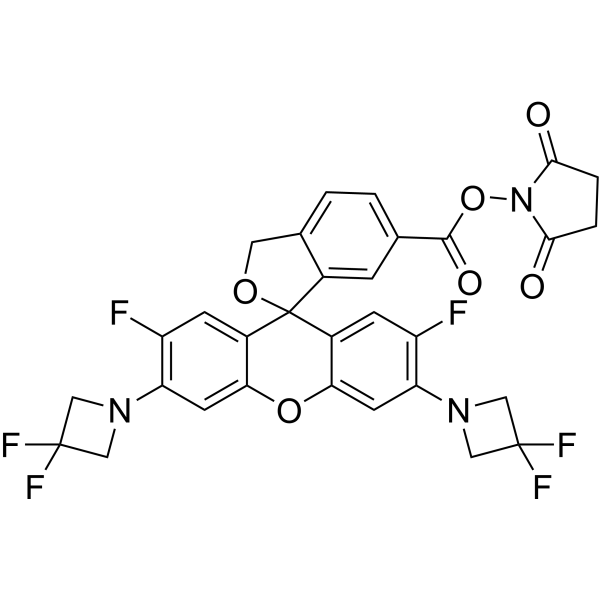
HM Janelia Fluor® 526, SE (HM-JF526 NHS) is a derivative of hydroxymethyl JF526 (HM-JF526). SMLM (single-molecule localization microscopy) imaging in standard phosphate-buffered saline (pH 7.4) revealed that the HM-JF526 label showed spontaneous blinking behavior throughout the imaging session and did not require short-wavelength activation light . Janelia Fluor® products are licensed under U.S. Pat. Nos. 9,933,417, 10,018,624 and 10,161,932 and other patents from Howard Hughes Medical Institute.
loading...
    loading...
Cat. No.: HY-P2194
CAS No.: 902781-14-0
Target:  

Peptides

Research Areas:  

Inflammation/Immunology

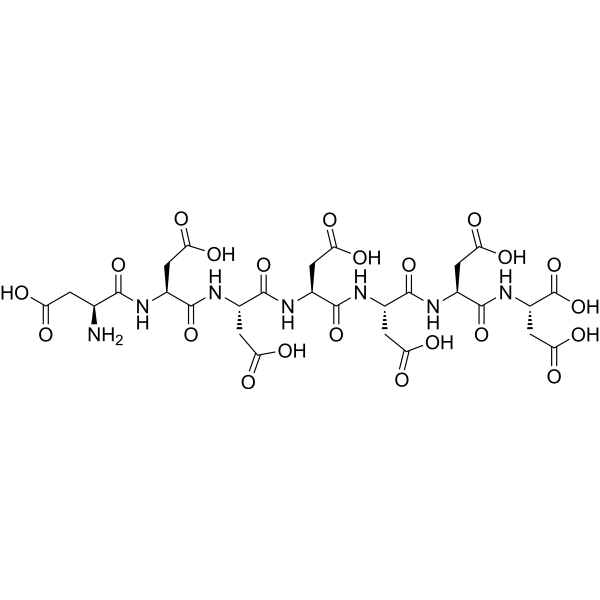
AtPep3 is a hormone-like peptide. AtPep3 can enhance salinity tolerance of plants and inhibits the salt-induced bleaching of chlorophyll in seedlings .
loading...
    loading...
Cat. No.: HY-P5700
CAS No.: 172617-19-5
Target:  

Bacterial

SAAP Fraction 3 is an antimicrobial peptide. SAAP Fraction 3 is active against P. haemolytica in Zn-saline buffer .
loading...
    loading...
Cat. No.: HY-W616313
CAS No.: 221667-31-8
Target:  

Herbicide

Research Areas:  

Others

Cyprosulfamide serves as a herbicide that safeguards plants against salinity stress while promoting vigorous growth, including the development of new tillers and early flowering.
loading...
    loading...
Cat. No.: HY-W616313S
Cyprosulfamide-d4 is deuterium labeled Cyprosulfamide. Cyprosulfamide serves as a herbicide that safeguards plants against salinity stress while promoting vigorous growth, including the development of new tillers and early flowering .
loading...
    loading...
Cat. No.: HY-105825
CAS No.: 57645-05-3
Synonyms: SH-G 318AB
Target:  

Endogenous Metabolite

Research Areas:  

Inflammation/Immunology

Sermetacin (SH-G 318AB) is an anti-inflammatory agent with biocompatibility and anti-inflammatory activity. Sermetacin is stable in saline and suitable for compound delivery. Sermetacin exhibits good biocompatibility in the RAW 264.7 mouse macrophage cell line. The anti-inflammatory response of sermetacin is comparable to that of its parent compound, indomethacin. Sermetacin may show potential in future applications of self-delivery of compound delivery .
loading...
    loading...
Cat. No.: HY-W653739
CAS No.: 41944-86-9
Synonyms: Abscisic aldehyde
Target:  

Drug Intermediate

Research Areas:  

Others

(+)-Abscisic Aldehyde (ABAld) is an intermediate in the biosynthesis of the plant hormone abscisic acid (ABA). (+)-Abscisic Aldehyde is produced by the dehydrogenation of xanthoxin by xanthoxin dehydrogenases, followed by selective oxidation by abscisic aldehyde oxygenase. (+)-Abscisic Aldehyde has an oxidizing PsAOγ activity and it correlates with ABA accumulation in the old leaves of pea plants with long exposure of salinity, ammonium or nitrogen deficiency. (+)-Abscisic Aldehyde can be used for plant growth and development research .
loading...
    loading...
Cat. No.: HY-P1278A
Target:  

Neurokinin Receptor

Research Areas:  

Neurological Disease Endocrinology

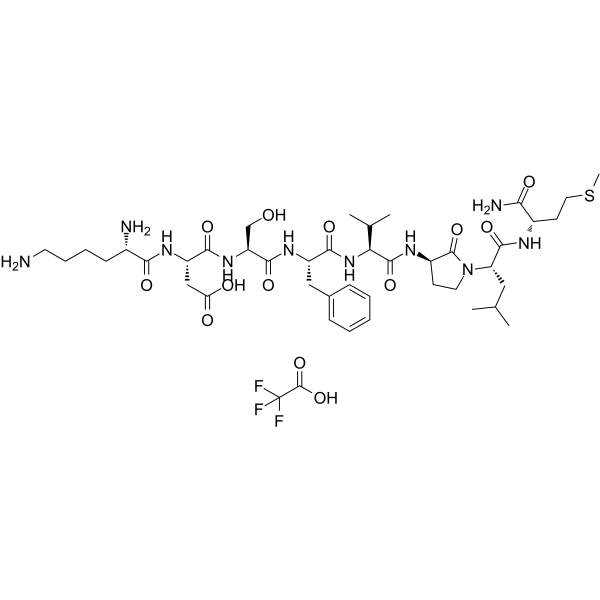
GR 64349 TFA is a selective neurokinin 2 (NK2) receptor agonist. GR 64349 TFA selectively activates the NK-2 receptor subtype. GR 64349 TFA activates tonic and rhythmic bladder contractions of the micturition reflex. GR 64349 TFA does not inhibit rhythmic bladder contraction activation induced by normal saline. GR 64349 TFA induces inward currents .
loading...
    loading...
Cat. No.: HY-120045A
CAS No.: 115904-74-0
Target:  

Opioid Receptor

Research Areas:  

Neurological Disease

DuP 747 hydrochloride is an analgesic with selective kappa-opioid receptor agonist activity. DuP 747 showed less spiradoline-appropriate selection when administered SC, but showed a partial generalized response to spiradoline when administered IP or PO. The 5-hydroxy-desmethoxy metabolite of DuP 747 induced selection of the saline-appropriate lever only. The effects of DuP 747 suggest that its metabolites may play a major role in the similar responses to spiradoline after IP and PO administration .
loading...
    loading...
Cat. No.: HY-P2194A
Target:  

Peptides

Research Areas:  

Inflammation/Immunology

AtPep3 TFA is a hormone-like peptide. AtPep3 TFA can enhance salinity tolerance of plants and inhibits the salt-induced bleaching of chlorophyll in seedlings .
loading...
    loading...
Cat. No.: HY-K3008

Dulbecco's phosphate-buffered saline (DPBS) is a balanced salt solution used for a variety of cell culture applications, such as washing cells, diluting cells and preparing reagents. The 500 mL is defined as the base specification. All larger sizes correspond to incremental volumes of this base.

loading...
    loading...

