21 Results for "

Septicemia

" in MedChemExpress (MCE) Product Catalog:
Products (21)

21 Results for "Septicemia" in MCE Product Catalog:

12
12 Publications Verification
Cat. No.: HY-16911
CAS No.: 620175-39-5
Synonyms: API-1252; Debio 1452
Target:  

Bacterial Antibiotic

Research Areas:  

Infection

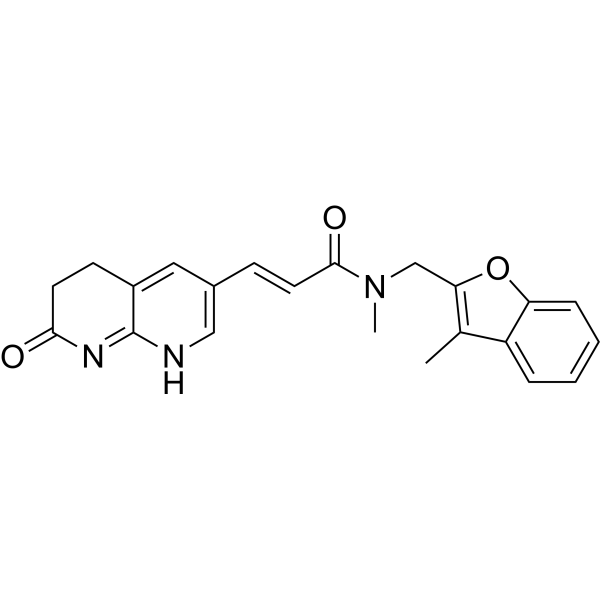
AFN-1252 is an orally active and selective inhibitor of FabI, an essential enzyme in fatty acid biosynthesis in Staphylococcus spp. AFN-1252 exhibits exquisite and highly selective activity against Staphylococcus spp. AFN-1252 exhibits typical MIC90 values of ⩽0.015 μg/ml against diverse clinical isolates of S. aureus. AFN-1252 is efficacious in a mouse model of septicemia providing 100% protection from an otherwise lethal peritoneal infection of S. aureus Smith .
loading...
    loading...
2
2 Cited Publications
Cat. No.: HY-N1181
CAS No.: 603-61-2
Synonyms: 4'-O-Methyl Quercetin
Tamarixetin (4'-O-Methyl Quercetin) is an orally active natural flavonoid derivative of quercetin and caseinolytic protease p (ClpP) inhibitor with anti-inflammatory, antioxidant and antitumor effects. Tamarixetin inhibits the hydrolytic activity of ClpP to the fluorescent substrate Suc-LY-AMC with an IC50 of 49.73 μM, which can be used for the study of Staphylococcus aureus infection. Tamarixetin inhibits tumor cell growth, induces apoptosis, and cell cycle arrest. Tamarixetin prevents cardiac hypertrophy by inhibiting the NFAT and AKT pathways .
loading...
    loading...
Cat. No.: HY-103251
CAS No.: 1312473-63-4
Purity:  99.42%
Synonyms: LpxC-4
Target:  

Antibiotic Bacterial

Research Areas:  

Infection

PF-5081090 (LpxC-4) is a potent LpxC inhibitor, is a rapidly bactericidal with broad-spectrum activity. PF-5081090 serves as a regulator of lipid A biosynthesis in Gram-negative pathogens .
loading...
    loading...
Cat. No.: HY-B2091
CAS No.: 17243-38-8
Target:  

Antibiotic Bacterial

Research Areas:  

Infection

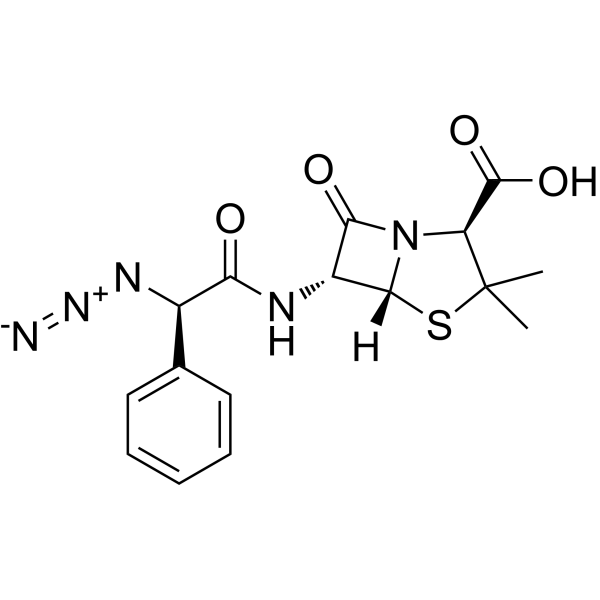
Azidocillin, a semi-synthetic Penicillin, is an orally active β-lactam antibiotic. Azidocillin bears an azide functionality and retains on-target activity within bacteria. Azidocillin can be used to research osteitis caused by dental surgery, otitis media, enterococcal septicemia and other bacterial infectious diseases . Azidocillin is a click chemistry reagent, it contains an Azide group and can undergo copper-catalyzed azide-alkyne cycloaddition reaction (CuAAc) with molecules containing Alkyne groups. It can also undergo strain-promoted alkyne-azide cycloaddition (SPAAC) reactions with molecules containing DBCO or BCN groups.
loading...
    loading...
Cat. No.: HY-115620
CAS No.: 849669-54-1
Purity:  98.00%
Research Areas:  

Inflammation/Immunology

AQX-016A is an orally active and potent SHIP1 agonist. AQX-016A can activate recombinant SHIP1 enzyme in vitro and stimulate SHIP1 activity. AQX-016A also can inhibit the PI3K pathway and TNFa production, can be useful for various inflammatory diseases research .
loading...
    loading...
Cat. No.: HY-P2936A
CAS No.: 9031-54-3
Sphingomyelin phosphodiesterase, Bacillus cereus is a sphingomyelin hydrolase and Insecticide. Sphingomyelin phosphodiesterase, Bacillus cereus catalyzes the decomposition of sphingomyelin into ceramide and phosphorylcholine. Sphingomyelin phosphodiesterase, Bacillus cereus causes rapid paralysis and death in injected insects, including German cockroaches and black cutworms. Sphingomyelin phosphodiesterase, Bacillus cereus reduces H2O2 production. Sphingomyelin phosphodiesterase, Bacillus cereus can be used in studies related to sepsis and endophthalmitis .
loading...
    loading...
Cat. No.: HY-B1374S1
CAS No.: 2213400-85-0
Synonyms: (-)-Florfenicol-d3; SCH-25298-d3
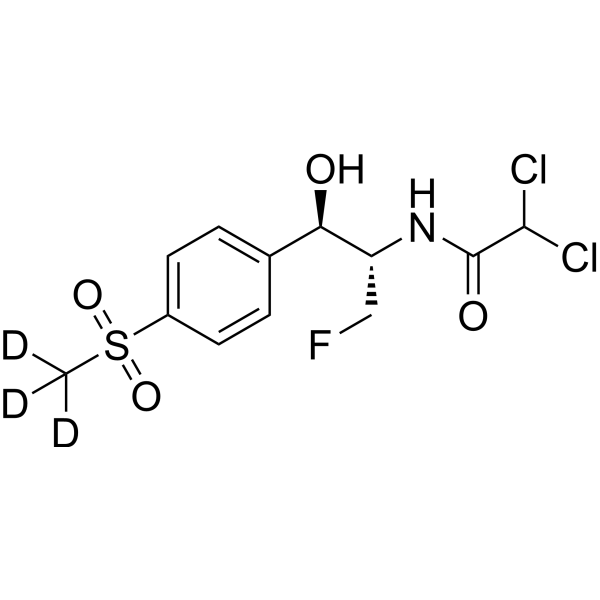
Florfenicol-d3 ((-)-Florfenicol-d3)?is the deuterium labeled Florfenicol. Florfenicol, a commonly used veterinary antibiotic, is currently indicated for bovine respiratory disease, and also used in aquaculture for the control of enteric septicemia in catfish. Florfenicol can induce early embryonic death in eggs, with an LC50 of 1.07 μg/g.
loading...
    loading...
Cat. No.: HY-B1374S
CAS No.: 1217619-10-7
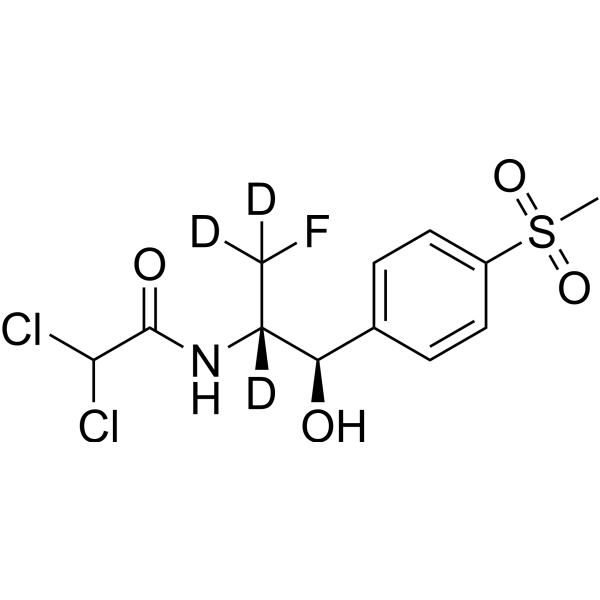
ent-Florfenicol-d3 is the deuterium labeled Florfenicol. Florfenicol, a commonly used veterinary antibiotic, is currently indicated for the treatment of bovine respiratory disease, and also used in aquaculture for the control of enteric septicemia in catfish. Florfenicol can induce early embryonic death in eggs, with an LC50 of 1.07 μg/g.
loading...
    loading...
Cat. No.: HY-103251R
CAS No.: 1312473-63-4
Synonyms: LpxC-4 (Standard)
Research Areas:  

Infection

Cefalonium (dihydrate) (Standard) is the analytical standard of Cefalonium (dihydrate). This product is intended for research and analytical applications. Cefalonium dihydrate is a cephalosporin antibiotic. Cefalonium (dihydrate) is effective against Staphylococcus aureus. Cefalonium (dihydrate) has anti-inflammatory and antibacterial activities .
loading...
    loading...
Cat. No.: HY-W182770
CAS No.: 489403-70-5
Target:  

GPR84

Research Areas:  

Inflammation/Immunology

GPR84 agonist-1 (Compound LY214-5) is a GPR84 agonist, with an EC50 of 2.479 μM. GPR84 agonist-1 can be used for the research of septicemia .
loading...
    loading...
Cat. No.: HY-114622
CAS No.: 1047981-31-6
Synonyms: API-1252 tosylate; Debio 1452 tosylate
Target:  

Bacterial Antibiotic

Research Areas:  

Infection

AFN-1252 (API-1252) tosylate is an orally active and selective inhibitor of FabI, an essential enzyme in fatty acid biosynthesis in Staphylococcus spp. AFN-1252 tosylate exhibits exquisite and highly selective activity against Staphylococcus spp. AFN-1252 tosylate exhibits typical MIC90 values of 0.015 μg/ml against diverse clinical isolates of S. aureus. AFN-1252 tosylate is efficacious in a mouse model of septicemia providing 100% protection from an otherwise lethal peritoneal infection of S. aureus Smith .
loading...
    loading...
Cat. No.: HY-117736
CAS No.: 134452-47-4
Ro 09-1428 is a broad-spectrum parenteral cephalosporin. Ro 09-1428 has potent antibacterial activities against Pseudomonas aeruginosa and Acinetobacter caloaceticus, with MIC90s of 0.39 and 6.25 μg/mL, respectively, better than Ceftazidime (HY-B0593). Additionally, Ro 09-1428 shows high activity against Escherichia coli, Kkbsielia pneumoniae, Proteus mirabilis, P. aeruginosa, staphylococci, and more. Ro 09-1428 preferentially attacks PBP 3 for target in E. coli and P. aeruginosa, which is promising for research of septicemias and serious P. aeruginosa infections .
loading...
    loading...
Cat. No.: HY-P5626
Target:  

Bacterial

Research Areas:  

Infection

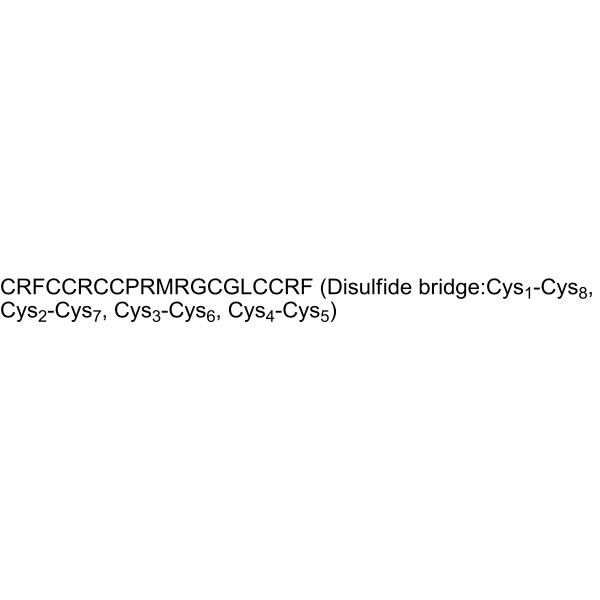
Seabream hepcidin is an antimicrobial peptide with anti-bacterial (V.anguillarum), fungal (S.cerevisiae) and viral hemorrhagic septicemia virus activity .
loading...
    loading...
Cat. No.: HY-162839
CAS No.: 3018085-89-4
Target:  

Bacterial

Research Areas:  

Infection

Cerastecin D (compound 1) is an antibacterial agent. Cerastecin D shows inhibition on Acinetobacter baumannii ATCC19606 with MITC95 values of 165 nM .
loading...
    loading...
Cat. No.: HY-16911R
CAS No.: 620175-39-5
Synonyms: API-1252 (Standard); Debio 1452 (Standard)
Research Areas:  

Infection

Apramycin (Standard) is the analytical standard of Apramycin. This product is intended for research and analytical applications. 0
loading...
    loading...
Cat. No.: HY-B2091A
CAS No.: 35334-12-4
Target:  

Bacterial Antibiotic

Research Areas:  

Infection

Azidocillin sodium, a semi-synthetic Penicillin, is an orally active β-lactam antibiotic. Azidocillin sodium bears an azide functionality and retains on-target activity within bacteria. Azidocillin sodium can be used to research osteitis caused by dental surgery, otitis media, enterococcal septicemia and other bacterial infectious diseases . Azidocillin sodium is a click chemistry reagent, it contains an Azide group and can undergo copper-catalyzed azide-alkyne cycloaddition reaction (CuAAc) with molecules containing Alkyne groups. It can also undergo strain-promoted alkyne-azide cycloaddition (SPAAC) reactions with molecules containing DBCO or BCN groups.
loading...
    loading...
Cat. No.: HY-105828A
CAS No.: 18179-65-2
Synonyms: Sulfapyrazole sodium; Vesulong sodium
Target:  

Bacterial

Research Areas:  

Inflammation/Immunology

Sulfamethylphenazole (Sulfapyrazole; Vesulong) sodium is a long-acting sulfonamide antibacterial agent. Sulfamethylphenazole sodium maintains effective blood concentrations for chemotherapy via slow release of free sulfonamides from protein-binding reservoirs. Sulfamethylphenazole sodium can be used in combination with antibiotics such as terramycin for the treatment of hemorrhagic septicemia in cattle. Sulfamethylphenazole sodium is applicable to research related to hemorrhagic septicemia .
loading...
    loading...
Cat. No.: HY-105828B
CAS No.: 18179-68-5
Synonyms: Sulfapyrazole potassium; Vesulong potassium
Target:  

Bacterial

Research Areas:  

Inflammation/Immunology

Sulfamethylphenazole (Sulfapyrazole; Vesulong) potassium is a long-acting sulfonamide antibacterial agent. Sulfamethylphenazole potassium maintains effective blood concentrations for chemotherapy via slow release of free sulfonamides from protein-binding reservoirs. Sulfamethylphenazole potassium can be used in combination with antibiotics such as terramycin for the treatment of hemorrhagic septicemia in cattle. Sulfamethylphenazole potassium is applicable to research related to hemorrhagic septicemia .
loading...
    loading...
Cat. No.: HY-106911
CAS No.: 141646-08-4
Synonyms: GV 118819X
Target:  

Antibiotic Bacterial

Research Areas:  

Infection

Sanfetrinem cilexetil (GV 118819X), a prodrug of Sanfetrinem (HY-106922), is an orally active antibiotic. Sanfetrinem cilexetil shows potent efficacy against experimental murine septicemia caused by Staphylococcus aureus, Streptococcus pyogenes, and Escherichia coli and against murine respiratory infections caused by Streptococcus pneumoniae .
loading...
    loading...
Cat. No.: HY-107044
CAS No.: 364069-14-7
Target:  

Bacterial Topoisomerase

Research Areas:  

Infection

DK 507k is an orally active 8-methoxyquinolone Antibacterial agent. DK 507k targets DNA gyrase subunit A (GyrA) and modulates the function of GyrA. DK 507k inhibits the growth of various Gram-positive and Gram-negative bacteria, including Pseudomonas aeruginosa and Methicillin (HY-121544)-resistant Staphylococcus aureus. DK 507k eliminates Penicillin-tolerant Streptococcus pneumoniae from the lungs of mice. DK 507k can be used in research related to sepsis and *Streptococcus pneumoniae* pneumonia .
loading...
    loading...

