

1. Search Result
Search Result
Results for "

T-4

" in MedChemExpress (MCE) Product Catalog:

78

Inhibitors & Agonists

2

Fluorescent Dye

8

Biochemical Assay Reagents

2

Peptides

2

MCE Kits

7

Inhibitory Antibodies

16

Natural
Products

27

Recombinant Proteins

9

Isotope-Labeled Compounds

10

Antibodies

1

Click Chemistry

3

Oligonucleotides

Cat. No. Product Name Target Research Areas Chemical Structure
  • HY-18341
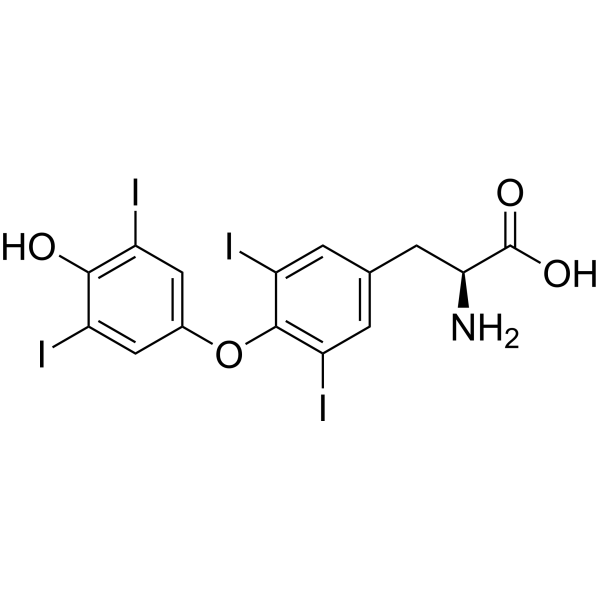
    L-Thyroxine
    Maximum Cited Publications
    13 Publications Verification

    Levothyroxine; T4

    Thyroid Hormone Receptor Endogenous Metabolite Endocrinology Cancer
    L-Thyroxine (Levothyroxine; T4) is a synthetic hormone for the research of hypothyroidism. DIO enzymes convert biologically active thyroid hormone (Triiodothyronine,T3) from L-Thyroxine (T4) .
    L-Thyroxine
  • HY-18341B
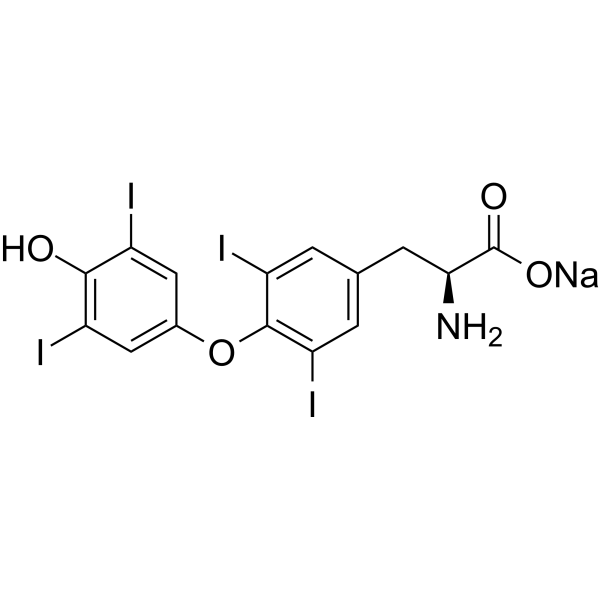
    L-Thyroxine sodium
    10+ Cited Publications

    Levothyroxine sodium; T4 sodium

    Thyroid Hormone Receptor Endogenous Metabolite Endocrinology Cancer
    L-Thyroxine sodium (Levothyroxine sodium) is a synthetic hormone for the research of hypothyroidism. DIO enzymes convert biologically active thyroid hormone (Triiodothyronine,T3) from L-Thyroxine (T4) .
    L-Thyroxine sodium
  • HY-107903

    Thyroglobulin from bovine

    Biochemical Assay Reagents Cancer
    Thyroglobulin is a 660 kDa, dimeric glycoprotein produced by the follicular cells of the thyroid and used entirely within the thyroid gland. Thyroglobulin acts as a substrate for the synthesis of the thyroid hormones thyroxine (T4) and triiodothyronine (T3), as well as the storage of the inactive forms of thyroid hormone and iodine within the follicular lumen of a thyroid follicle. Thyroglobulin activates Akt kinase activity in FRTL-5 thyroid cell .
    Thyroglobulin
  • HY-N1957
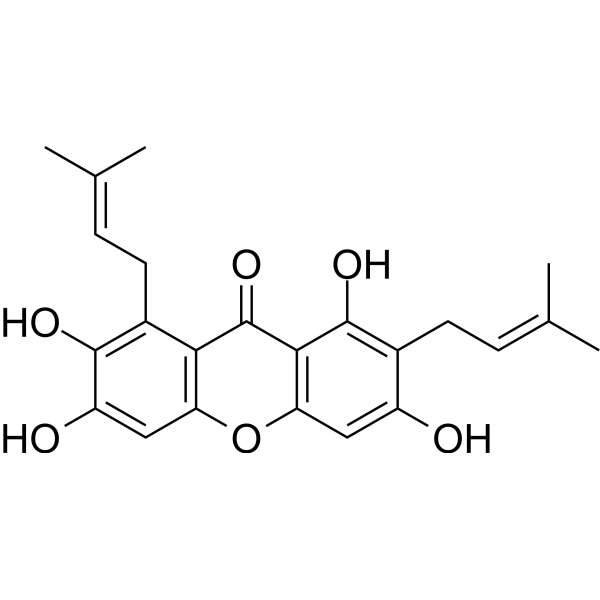
    Gamma-Mangostin
    2 Publications Verification

    γ-Mangostin

    5-HT Receptor COX Transthyretin (TTR) Metabolic Disease Inflammation/Immunology Cancer
    Gamma-Mangostin is a novel competitive 5-hydroxytryptamine 2A (5-HT2A) receptor antagonist and potent epoxidase 2 (COX-2) inhibitor, as well as a transthyroxin protein (TTR) profibrosis inhibitor. Gamma-Mangostin binds to the thyroxine (T4)-binding sites and stabilized the TTR tetramer . Gamma-Mangostin inhibits [3 H] spiperone binding to cultured rat aortic myocytes (IC50=3.5 nM) and reduces The perfusion pressure response of rat coronary artery to 5-HT2A (IC50=0.32 μM). Gamma-Mangostin has anti-inflammatory, antibacterial, antioxidant and anticancer activities, and can be used in the study of metabolic disorders such as diabetes [4] .
    Gamma-Mangostin
  • HY-79256
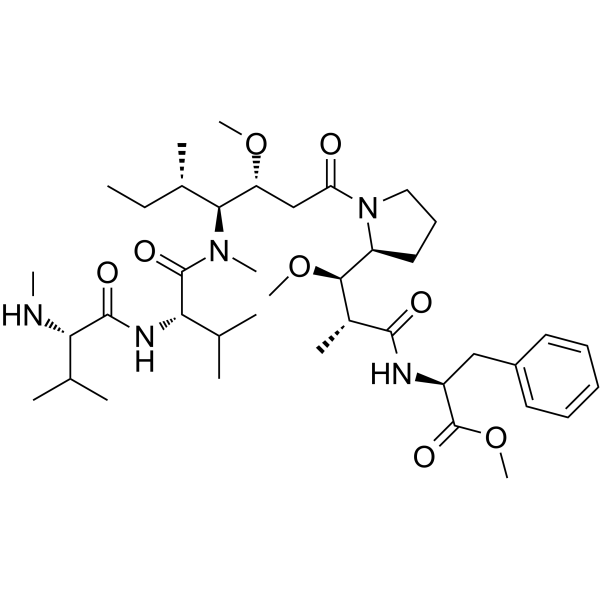
    MMAF-OMe
    1 Publications Verification

    Monomethyl auristatin F methyl ester

    ADC Payload Cancer
    MMAF-Ome, an antitubulin agent, is also an ADC cytotoxin. MMAF-Ome inhibits several tumor cell lines with IC50s of 0.056 nM, 0.166 nM, 0.183 nM, and 0.449 nM for MDAMB435/5T4, MDAMB361DYT2, MDAMB468, and Raji (5T4 -) cell lines, respectively.
    MMAF-OMe
  • HY-150233

    Microtubule/Tubulin Cancer
    Cys-McMMAF is the released payload of AlMcMMAF, an anti-5T4 humanized A1 antibody conjugated to the microtubule disrupting MMAF (HY-15579) via a maleimidocaproyl linker. Cys-McMMAF has antitumor efficacy in two tumor mouse models (H1975 and MDA-MB-361-DYT2 models) .
    Cys-McMMAF
  • HY-W008859
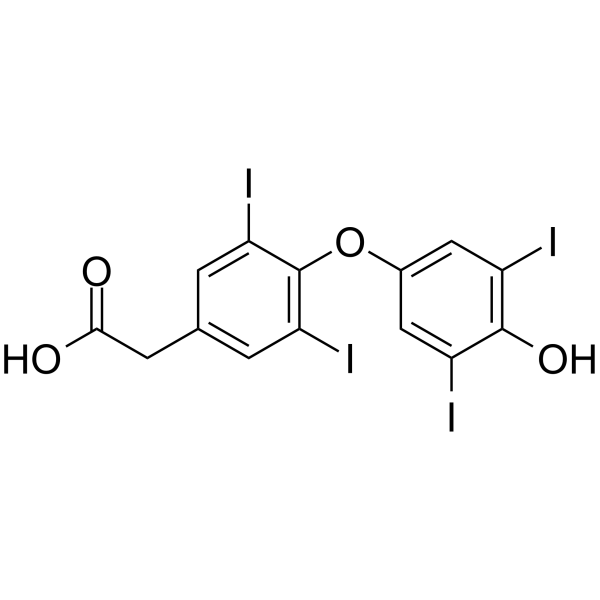
    Tetrac
    1 Publications Verification

    Tetraiodothyroacetic acid; 3,3',5,5'-Tetraiodothyroacetic acid

    Integrin Endogenous Metabolite Cancer
    Tetrac (Tetraiodothyroacetic acid), a derivative of L-thyroxine (T4), is a thyrointegrin receptor antagonist. Tetrac blocks the actions of T4 and 3,5,3'-triiodo-L-thyronine (T3) at the cell surface receptor for thyroid hormone on integrin αvβ3. Tetra has anti-angiogenic and anti-tumor activities .
    Tetrac
  • HY-B1234

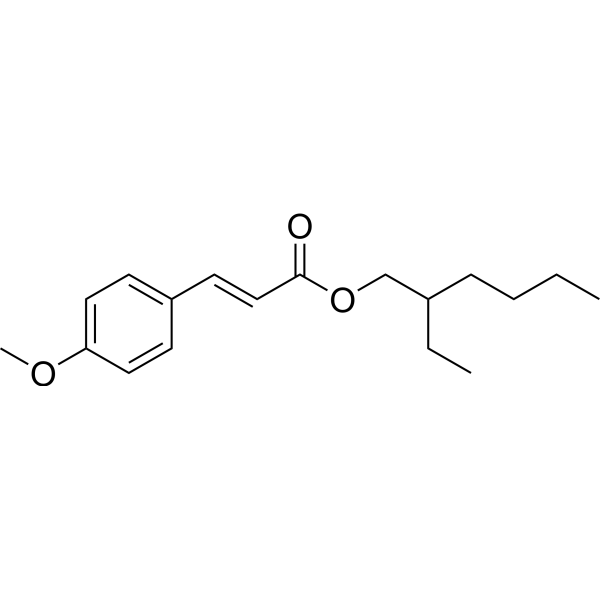
    Octyl methoxycinnamate

    Environmental Pollutants Estrogen Receptor/ERR Androgen Receptor Cytochrome P450 Thyroid Hormone Receptor Metabolic Disease Endocrinology
    Octinoxate (Octyl methoxycinnamate) is a thyroid hormone receptor agonist, reducing the levels of triiodothyronine (T3) and thyroxine (T4) and transcription levels of genes related to type II deiodinase (deio2) in Japanese Medaka. Octinoxate is commonly used as a safe ultraviolet (UV) filter used in the aquatic environment. Octinoxate inhibits CYP1A1 and CYP1B1 to regulate hyaluronan (HA) (HY-B0633A) metabolism in a PI3K pathway-dependent manner in human keratinocytes. Octinoxate also exhibits an anti-estrogenic and anti-androgenic effect in vitro and in vivo [4] .
    Octinoxate
  • HY-112624J

    Dextran 4; Dextran D4; Dextran T4(MW 3200-4800)

    Bacterial Others
    Dextran 4,000 is a mucus rheology modifier. The dextran molecules in Dextran 4,000 can reduce the cross-link density of mucus through osmotic effects and hydrogen bond substitution, and reduce viscoelasticity and improve the mucociliary/cough clearance index by destroying the DNA-mucin network structure in mucus. Dextran 4,000 has the ability to improve the rheological properties and clearance ability of cystic fibrosis (CF) sputum, and can be used in the study of inhalation therapy or aerosol delivery of mucostatic respiratory diseases. The Dextran series of compounds are also natural polysaccharide drug carriers that can be connected to drugs through covalent bonding methods such as ester bonds, amide bonds or click chemistry, or self-assembled to form carriers such as nanoparticles and hydrogels. Dextran is biodegradable and biocompatible, and can achieve targeted delivery and controlled release of drugs. Dextran derivatives can prolong the half-life of drugs, increase local concentrations, and reduce the activity of immune clearance .
    Dextran T4 (MW 4,000)
  • HY-P3005

    DNA/RNA Synthesis Others
    T4 DNA ligase is the product of gene 30 of phage T4. T4 DNA ligase catalyzes the repair of single-stranded nicks in duplex DNA and joins duplex DNA restriction fragments having either blunt or cohesive ends. T4 DNA ligase catalyze the sealing of adjacent 5′-phosphate and 3′-­hydroxyl termini at single-stranded breaks in double-stranded DNA.T4 DNA ligase is an ATP-dependent ligase enzyme. T4 DNA ligase can be used in various biotechnological applications. T4 DNA ligase can join the ends of single-stranded DNA in the absence of any duplex DNA structure at the ligation site .
    T4 DNA ligase
  • HY-E70094

    DNA/RNA Synthesis Others
    T4 UvsX Recombinase helps initiate DNA replication on a double-stranded DNA template by catalyzing synapsis between the template and a homologous DNA single strand that serves as primer. T4 UvsX Recombinase greatly amplifies the snap-back (hairpin-primed) DNA synthesis that is catalyzed by the T4 DNA polymerase holoenzyme on linear, single-stranded DNA templates .
    T4 UvsX Recombinase
  • HY-18341A

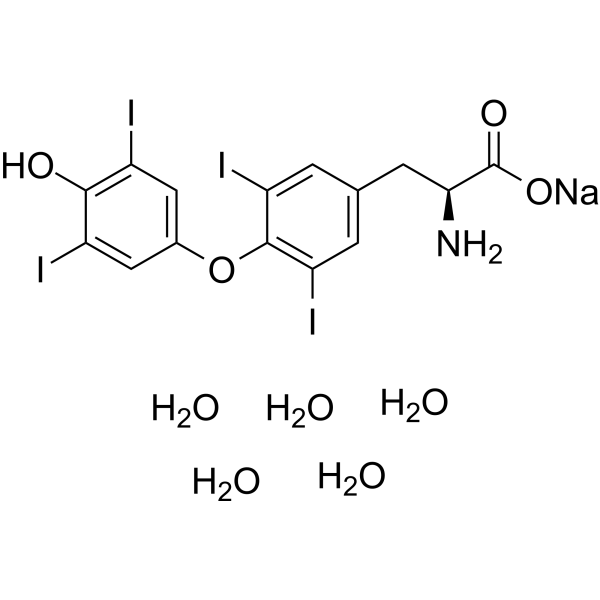
    Sodium levothyroxine pentahydrate

    Thyroid Hormone Receptor Endogenous Metabolite Endocrinology Cancer
    L-Thyroxine sodium salt pentahydrate (Levothyroxine; T4) is a synthetic hormone for the research of hypothyroidism. DIO enzymes convert biologically active thyroid hormone (Triiodothyronine,T3) from L-Thyroxine (T4) .
    L-Thyroxine sodium salt pentahydrate
  • HY-18341R

    Levothyroxine (Standard); T4 (Standard)

    Reference Standards Thyroid Hormone Receptor Endogenous Metabolite Endocrinology Cancer
    L-Thyroxine (Standard) is the analytical standard of L-Thyroxine. This product is intended for research and analytical applications. L-Thyroxine (Levothyroxine; T4) is a synthetic hormone for the research of hypothyroidism. DIO enzymes convert biologically active thyroid hormone (Triiodothyronine,T3) from L-Thyroxine (T4) .
    L-Thyroxine (Standard)
  • HY-A0069

    Histamine Receptor Cytochrome P450 Neurological Disease Metabolic Disease
    Doxylamine succinate is a first-generation antihistamine and acts as a histamine H1 receptor antagonist. Doxylamine succinate is orally active, possessing analgesic and hypnotic activities. Doxylamine succinate enhances the activities of CYP2B, CYP2A, CYP3A and thyroxine-glucuronosyltransferase via promoting substrate hydroxylation and thyroxine metabolic pathways. Doxylamine succinate decreases serum thyroxine (T4) level and elevates serum thyroid-stimulating hormone (TSH) level. Doxylamine succinate induces liver enlargement and increases the activities of hepatic microsomal cytochrome P450, cytochrome b5 and NADPH-cytochrome c reductase. Doxylamine succinate can be used for the research of nausea, allergy, insomnia .
    Doxylamine succinate
  • HY-101406
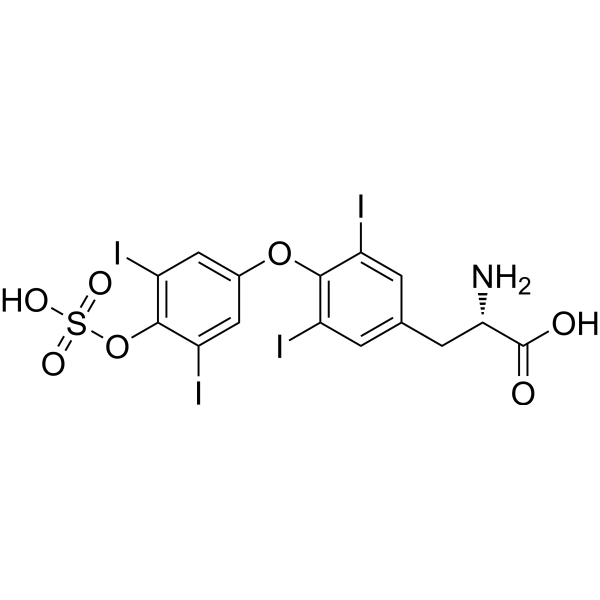
    Thyroxine sulfate
    4 Publications Verification

    T4 Sulfate

    Thyroid Hormone Receptor Drug Metabolite Endogenous Metabolite Metabolic Disease Endocrinology
    Thyroxine sulfate is a thyroid hormone metabolite.
    Thyroxine sulfate
  • HY-P5411

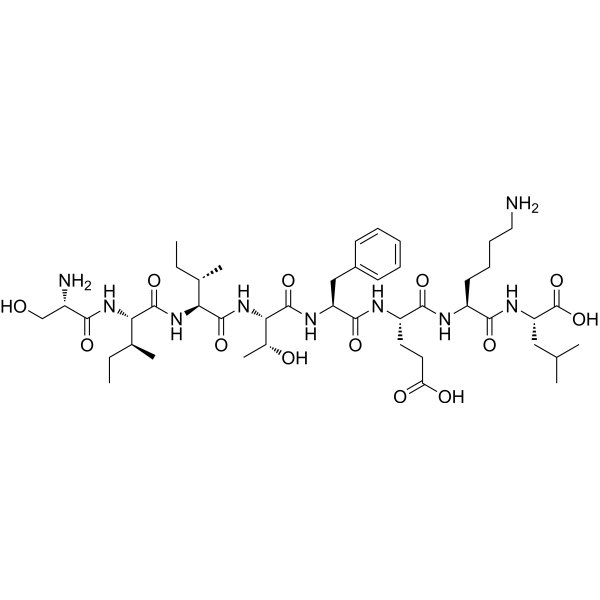
    SIITFEKL, OVA (257-264) Variant

    MHC Others
    OVA-T4 Peptide (SIITFEKL, OVA (257-264) Variant) is a low-affinity variant of OVA (257-264) (SIINFEKL). OVA-T4 Peptide has similar binding to H-2Kb MHC class I molecules as OVA (257-264), but has a much lower affinity for the OT-I TCR25 .
    OVA-T4 Peptide
  • HY-A0152

    D-T4

    Endogenous Metabolite Metabolic Disease
    D-Thyroxine (D-T4) is an orally active thyroid hormone that inhibits the secretion of TSH. D-Thyroxine can inhibit goiter, promote metamorphosis of tadpoles and influence cholesterol metabolism. D-Thyroxine can be used for the study of hypercholesterolemia .
    D-Thyroxine
  • HY-E70095

    Others Others
    T4 UvsY Protein is an accessory protein for in vitro catalysis of strand exchange. T4 UvsY Protein enhances strand exchange by UvsX protein by interacting specifically with UvsX protein. UvsY protein enhances the rate of single-stranded-DNA-dependent ATP hydrolysis by UvsX protein .
    T4 UvsY Protein
  • HY-145149

    ADC Payload Cancer
    Duostatin 5 is a ADC Cytotoxin designed based on MMAF (HY-15579) and can be used to synthesize ADCs. The preparation of Duostatin 5 has the advantages of fewer synthetic steps, simple operation, less difficulty in quality control, and more stable chemical synthesis process. Duostatin 5 can be linked to the antibody targeting 5T4 (ZV05) by cross-linking with interchain cysteines through a disubstituted C-Lock linker. Duostatin 5 is a click chemistry reagent. It contains an azide group and can undergo copper-catalyzed azide-alkyne cycloaddition (CuAAc) with molecules containing alkyne groups. It can also undergo ring strain-driven alkyne-azide cycloaddition (SPAAC) with molecules containing DBCO or BCN groups[1][2].
    Duostatin 5
  • HY-18341S2

    Thyroid Hormone Receptor Endogenous Metabolite Endocrinology
    L-Thyroxine- 13C6 is the 13C labeled L-Thyroxine . L-Thyroxine (Levothyroxine;T4) is a synthetic hormone for the research of hypothyroidism. DIO enzymes convert biologically active thyroid hormone (Triiodothyronine,T3) from L-Thyroxine (T4) .
    L-Thyroxine-13C6
  • HY-W010669
    L-Thyroxine sodium xhydrate
    10+ Cited Publications

    Sodium levothyroxine

    Thyroid Hormone Receptor Endocrinology
    L-Thyroxine sodium xhydrate (Levothyroxine; T4) is a synthetic hormone in the treatment of hypothyroidism. DIO enzymes convert biologically active hormone (Triiodothyronine,T3) from L-Thyroxine (T4).
    L-Thyroxine sodium xhydrate
  • HY-P9998

    UB421

    HIV Cancer
    Semzuvolimab is a human IgG1κ antibody, targeting to p55, T cell surface antigen T4/Leu-3 (CD4). Human CD4 antibodies can neutralize HIV infection and have the potential to inhibit HAART stable HIV infection .
    Semzuvolimab
  • HY-112514
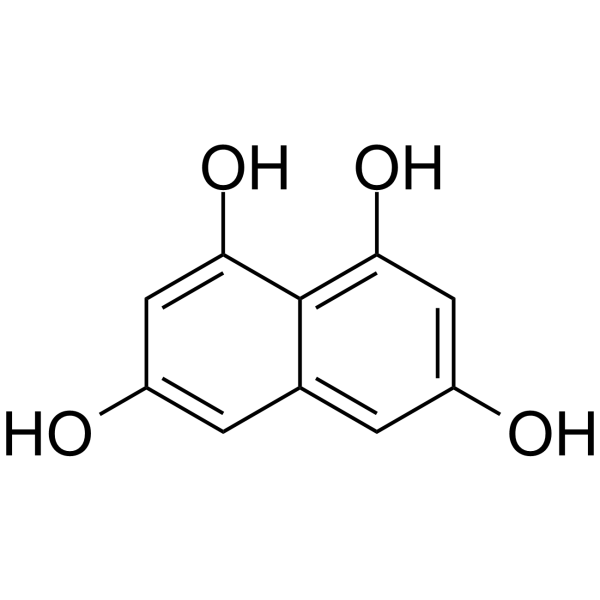
    1,3,6,8-Tetrahydroxynaphthalene
    1 Publications Verification

    1,3,6,8-THN; T4HN

    Drug Intermediate Others
    1,3,6,8-Tetrahydroxynaphthalene (T4HN) is an indispensable precursor to DHN (1,8-Dihydroxynaphthalene) melanin and is an unique symmetrical compound of polyketide origin .
    1,3,6,8-Tetrahydroxynaphthalene
  • HY-158269

    Thyroid Hormone Receptor Endogenous Metabolite Inflammation/Immunology
    T4-BSA is a biochemical reagent that can be used as a biological material or organic compound for life science related research .
    T4-BSA
  • HY-144088
    ZYF0033
    2 Publications Verification

    HPK1-IN-22

    MAP4K Inflammation/Immunology Cancer
    ZYF0033 is an orally active inhibitor of the hematopoietic progenitor cell kinase HPK1 with an IC50 of less than 10 nM based on the phosphorylation inhibition of MBP protein. ZYF0033 promotes anti-cancer immune responses and reduces phosphorylation of SLP76 (serine 376). ZYF0033 inhibits tumor growth in the 4T-1 syngeneic mouse model and leads to increased intratumoral infiltration of DCs, NK cells, and CD107a +CD8 + T cells, but not T cells, PD-1 +CD8 + T cells, TIM-3 +CD8 + Infiltration of T cells and LAG3 +CD8 + T cells was reduced .
    ZYF0033
  • HY-18341F1

    Thyroid Hormone Receptor Others
    Biotin-hexanamide-(L-Thyroxine) is biotinylated L-Thyroxine (HY-18341). L-Thyroxine (Levothyroxine; T4) is a synthetic hormone for the research of hypothyroidism .
    Biotin-hexanamide-(L-Thyroxine)
  • HY-114918

    TSH Receptor Endocrinology
    MS438 is a potent thyrotropin receptor (TSHR) agonist with an EC50 of 53 nM. MS438 binds to the serpentine portion of the TSHR. MS438 induces T4 secretion in mice .
    MS438
  • HY-18341F

    Thyroid Hormone Receptor Endogenous Metabolite Endocrinology
    Biotin-(L-Thyroxine) is the biotinylated L-Thyroxine (HY-18341). L-Thyroxine is a synthetic hormone for the research of hypothyroidism. DIO enzymes convert biologically active thyroid hormone (Triiodothyronine,T3) from Biotin-(L-Thyroxine) (T4) .
    Biotin-(L-Thyroxine)
  • HY-160053

    PDGFR Cancer
    Gint4.T aptamer sodium is a nuclease-resistant RNA aptamer-based antagonist targeting platelet-derived growth factor receptor beta (PDGFRβ) (Kd: 9.6 nM). Gint4.T aptamer sodium inhibits PDGFRβ heterodimerization and EGFR transactivation. It can significantly inhibit cell migration and proliferation, induce differentiation and prevent tumor growth in vivo. Gint4.T aptamer sodium specifically inhibits PDGFRβ-mediated tropism of mesenchymal stem cells (MSCs) toward the tumor microenvironment .
    Gint4.T aptamer sodium
  • HY-P991089

    CD3 Cancer
    GEN-1044 is a bispecific CD3 and oncofetal antigen 5T4 antibody. GEN-1044 shows immunomodulating and antineoplastic activities .
    GEN-1044
  • HY-E70578

    DNA Glycosylase Others
    T4 Endonuclease V is a dual-activity DNA glycosylase that combines the activities of DNA N-glycosylase and AP lyase. T4 Endonuclease V can repair ultraviolet (UV)-induced cyclobutane pyrimidine dimers in DNA .
    T4 Endonuclease V
  • HY-W181026

    Fluorescent Dye Inflammation/Immunology
    KLF10-IN-1 (#48-15) is a KLF10 inhibitor with an IC50 value of 40 μM for KLF10 reporter gene. KLF10-IN-1 can inhibit KLF10-DNA binding and transcriptional activity, block the conversion of CD4+CD25 T cells to CD4+CD25+T regulatory cells, and inhibit the expression of KLF10 target genes. KLF10-IN-1 can be used as a useful mechanistic probe to study KLF10-mediated effects and T regulatory cell biology .
    KLF10-IN-1
  • HY-161564

    Biochemical Assay Reagents Inflammation/Immunology
    T4/OVA is a conjugate of T4 peptide (thyroxine T4) and ovalbumin. T4/OVA is a altered peptide, which can be used to stimulate OT-I CD8+ T cells .
    T4/OVA
  • HY-P99436

    ABR-214936

    Transmembrane Glycoprotein Cardiovascular Disease Inflammation/Immunology Cancer
    Anatumomab mafenatox (ABR-214936) is a 73 KDa recombinant protein to recognize the tumor-associated antigen 5T4, which is widely expressing in malignancy. Anatumomab mafenatox is between a modified form of SEA and a murine Fab. The main side effects of Anatumomab mafenatox are reported to include fever, low blood pressure, pain, nausea and drowsiness .
    Anatumomab mafenatox
  • HY-E70602

    Bacterial Others
    T4 lysozyme is derived from a recombinant E.coli strain and can lyse bacterial cell walls. T4 lysozyme acts on the peptidoglycan of bacterial cell walls and hydrolyzes the β-1,4 bond between N-acetylmuramic acid and N-acetylglucosamine .
    T4 lysozyme
  • HY-E70091

    DNA/RNA Synthesis Others
    T4 RNA ligase is an ATP-dependent RNA ligase that can catalyze the formation of phosphodiester bonds between the 5'-P end and the 3'-OH end of single-stranded RNA, single-stranded DNA or single nucleotides between molecules or within molecules. T4 RNA ligase is used for enzymatic low ribonucleotide synthesis and 3′ end labeling of RNA. It is mainly used for RNA and RNA, but can also be used for RNA and single nucleotides .
    T4 RNA ligase
  • HY-W008859R

    Tetraiodothyroacetic acid (Standard); 3,3',5,5'-Tetraiodothyroacetic acid (Standard)

    Reference Standards Integrin Endogenous Metabolite Cancer
    Tetrac (Tetraiodothyroacetic acid), a derivative of L-thyroxine (T4), is a thyrointegrin receptor antagonist. Tetrac blocks the actions of T4 and 3,5,3'-triiodo-L-thyronine (T3) at the cell surface receptor for thyroid hormone on integrin αvβ3. Tetra has anti-angiogenic and anti-tumor activities .
    Tetrac (Standard)
  • HY-115451

    DNA/RNA Synthesis Others
    Photoregulin 3 (compound T4) can promote distal-to-proximal alternative polyadenylation (APA) activity in multiple transcripts .
    Photoregulin 3
  • HY-P4015

    HIV Neurological Disease Metabolic Disease
    VIP (1-12), human, porcine, rat, ovine is a vasoactive intestinal peptide (VIP) fragment. VIP (1-12), human, porcine, rat, ovine is a ligand for the CD4 (T4)/human immunodeficiency virus receptor .
    VIP (1-12), human, porcine, rat, ovine
  • HY-18341BR

    Levothyroxine sodium (Standard); T4 sodium (Standard)

    Reference Standards Thyroid Hormone Receptor Endogenous Metabolite Endocrinology Cancer
    L-Thyroxine (sodium) (Standard) is the analytical standard of L-Thyroxine (sodium). This product is intended for research and analytical applications. L-Thyroxine sodium (Levothyroxine sodium) is a synthetic hormone for the research of hypothyroidism. DIO enzymes convert biologically active thyroid hormone (Triiodothyronine,T3) from L-Thyroxine (T4) .
    L-Thyroxine sodium (Standard)
  • HY-18341S4

    Levothyroxine-13C6-1; T4-13C6-1

    Isotope-Labeled Compounds Endogenous Metabolite Thyroid Hormone Receptor Endocrinology
    L-Thyroxine- 13C6-1 (Levothyroxine- 13C6-1; T4- 13C6-1) is a 13C labeled L-Thyroxine (HY-18341). L-Thyroxine (Levothyroxine; T4) is a synthetic hormone for the research of hypothyroidism. DIO enzymes convert biologically active thyroid hormone (Triiodothyronine,T3) from L-Thyroxine (T4) .
    L-Thyroxine-13C6-1
  • HY-18341S1

    Levothyroxine-13C6; T4-13C6

    Isotope-Labeled Compounds Thyroid Hormone Receptor Endogenous Metabolite Endocrinology
    Thyroxine hydrochloride- 13C6 is the 13C-labeled L-Thyroxine. L-Thyroxine (Levothyroxine; T4) is a synthetic hormone for the research of hypothyroidism. DIO enzymes convert biologically active thyroid hormone (Triiodothyronine,T3) from L-Thyroxine (T4) .
    Thyroxine hydrochloride-13C6
  • HY-E70585

    DNA/RNA Synthesis Others
    T4 Phage β-glucosyltransferase is a DNA-modifying enzyme encoded by bacteriophage T4. T4 Phage β-glucosyltransferase transfers glucose from uridine diphosphoglucose to 5-hydroxymethyl cytosine bases of phage T4 DNA .
    T4 Phage β-glucosyltransferase
  • HY-E70603

    Endonuclease Others
    T4 endonuclease VII displays broad substrate specificity and can bind and cleave single-base mismatches in a DNA duplex as well as three-way and four-way branched DNA structures .
    T4 endonuclease VII
  • HY-W010669R

    Sodium levothyroxine (Standard)

    Reference Standards Thyroid Hormone Receptor Endocrinology
    L-Thyroxine sodium xhydrate (Standard) is the analytical standard of L-Thyroxine sodium xhydrate. This product is intended for research and analytical applications. L-Thyroxine sodium xhydrate (Levothyroxine; T4) is a synthetic hormone in the treatment of hypothyroidism. DIO enzymes convert biologically active hormone (Triiodothyronine,T3) from L-Thyroxine (T4).
    L-Thyroxine sodium xhydrate (Standard)
  • HY-131601A

    3'-FdTTP tetrasodium

    DNA/RNA Synthesis Drug Derivative Others
    3'-Fluorothymidine-5'-triphosphate tetrasodium (3'-FdTTP tetrasodium) is a dTTP (HY-138615) analog. 3'-Fluorothymidine-5'-triphosphate tetrasodium inhibits the T4 DNA polymerases competitively with dTTP. 3'-Fluorothymidine-5'-triphosphate tetrasodium inhibits DNA synthesis by T4 wild-type, L98 and CB121 DNA polymerase .
    3'-Fluorothymidine-5'-triphosphate tetrasodium
  • HY-A0069A

    Histamine Receptor Cytochrome P450 Neurological Disease Metabolic Disease
    Doxylamine is a first-generation antihistamine and acts as a histamine H1 receptor antagonist. Doxylamine is orally active, possessing analgesic and hypnotic activities. Doxylamine enhances the activities of CYP2B, CYP2A, CYP3A and thyroxine-glucuronosyltransferase via promoting substrate hydroxylation and thyroxine metabolic pathways. Doxylamine decreases serum thyroxine (T4) level and elevates serum thyroid-stimulating hormone (TSH) level. Doxylamine induces liver enlargement and increases the activities of hepatic microsomal cytochrome P450, cytochrome b5 and NADPH-cytochrome c reductase. Doxylamine can be used for the research of nausea, allergy, insomnia .
    Doxylamine
  • HY-114272A

    Thyroid Hormone Receptor Endocrinology
    T4-ATA S-isomer is the S-isomer of T4-ATA, which is the active form of the thyroid hormone.
    T4-ATA (S-isomer)
  • HY-N1957R

    γ-Mangostin (Standard)

    Reference Standards 5-HT Receptor COX Transthyretin (TTR) Metabolic Disease Inflammation/Immunology Cancer
    Gamma-Mangostin (Standard) is the analytical standard of Gamma-Mangostin. This product is intended for research and analytical applications. Gamma-Mangostin is a novel competitive 5-hydroxytryptamine 2A (5-HT2A) receptor antagonist and potent epoxidase 2 (COX-2) inhibitor, as well as a transthyroxin protein (TTR) profibrosis inhibitor. Gamma-Mangostin binds to the thyroxine (T4)-binding sites and stabilized the TTR tetramer . Gamma-Mangostin inhibits [3H] spiperone binding to cultured rat aortic myocytes (IC50=3.5 nM) and reduces The perfusion pressure response of rat coronary artery to 5-HT2A (IC50=0.32 μM). Gamma-Mangostin has anti-inflammatory, antibacterial, antioxidant and anticancer activities, and can be used in the study of metabolic disorders such as diabetes [4] .
    Gamma-Mangostin (Standard)
  • HY-A0069R

    Reference Standards Histamine Receptor Cytochrome P450 Neurological Disease Metabolic Disease
    Doxylamine succinate (Standard) is the analytical standard of Doxylamine succinate (HY-A0069). This product is intended for research and analytical applications. Doxylamine succinate is a first-generation antihistamine and acts as a histamine H1 receptor antagonist. Doxylamine succinate is orally active, possessing analgesic and hypnotic activities. Doxylamine succinate enhances the activities of CYP2B, CYP2A, CYP3A and thyroxine-glucuronosyltransferase via promoting substrate hydroxylation and thyroxine metabolic pathways. Doxylamine succinate decreases serum thyroxine (T4) level and elevates serum thyroid-stimulating hormone (TSH) level. Doxylamine succinate induces liver enlargement and increases the activities of hepatic microsomal cytochrome P450, cytochrome b5 and NADPH-cytochrome c reductase. Doxylamine succinate can be used for the research of nausea, allergy, insomnia .
    Doxylamine succinate (Standard)

Inquiry Online

Your information is safe with us. * Required Fields.

Salutation


Country or Region *

Applicant Name *


Organization Name *

Department *


Email Address *


Product Name *

Cat. No.


Requested quantity *

Phone Number *


Remarks

Inquiry Online

Inquiry Information

Product Name:
Cat. No.:
Quantity:
MCE Japan Authorized Agent:

