18 Results for "

THP-1 human acute leukemia cells

" in MedChemExpress (MCE) Product Catalog:
Products (18)

18 Results for "THP-1 human acute leukemia cells" in MCE Product Catalog:

8
8 Publications Verification
Cat. No.: HY-115364
CAS No.: 14255-87-9
Purity:  99.87%
Synonyms: SKF 29044
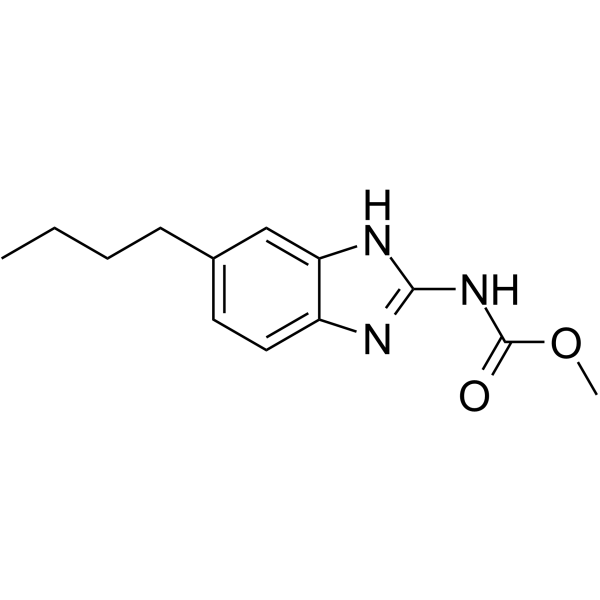
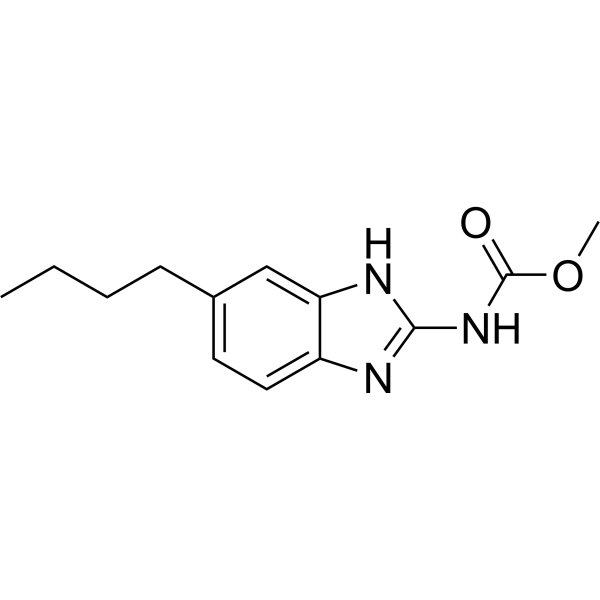
Parbendazole (SKF‑29044) is an orally active benzimidazole carbamate compound with multiple biological activities. Parbendazole binds to free tubulin and inhibits microtubule polymerization; it also activates the JNK/c‑Jun signaling axis and upregulates the expression of the downstream axonal repulsion factor Sema3A. Parbendazole upregulates KAL-1 mRNA expression, reduces nerve growth factor levels, and promotes the terminal differentiation of normal human epidermal keratinocytes. Parbendazole induces apoptosis in differentiated acute myeloid leukemia monocytes and exerts antileukemic activity in a mouse xenograft model of acute myeloid leukemia. Parbendazole exhibits broad-spectrum anthelmintic activity against various animal nematodes. Parbendazole is used in research related to acute myeloid leukemia and parasitic infections .
loading...
    loading...
6
6 Cited Publications
Cat. No.: HY-141539
CAS No.: 2755823-12-0
Purity:  99.93%
Research Areas:  

Cancer

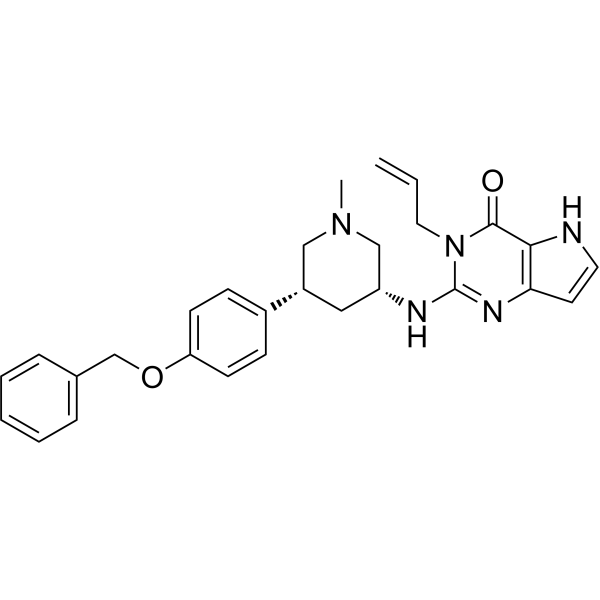
SETDB1-TTD-IN-1 is a SETDB1 methyltransferase activator and SETDB1-TTD competitive inhibitor (Kd of 88 nM), and selectivity for SETDB1-TTD over other tudor and bromodomain proteins. SETDB1-TTD-IN-1 stimulates methyltransferase activity via increased catalytic activity, promotes Akt1 Lys64 methylation, Akt1 Thr308 phosphorylation and activation. SETDB1-TTD-IN-1 prevents SETDB1-TTD-histone H3 peptide association, induces global gene expression changes, exhibits cellular target engagement, and acts as a tool compound for SETDB1-TTD function exploration. SETDB1-TTD-IN-1 can be used for the research of breast cancer .
loading...
    loading...
1
1 Cited Publications
Cat. No.: HY-76293
CAS No.: 331963-29-2
Target:  

Bacterial

Research Areas:  

Infection

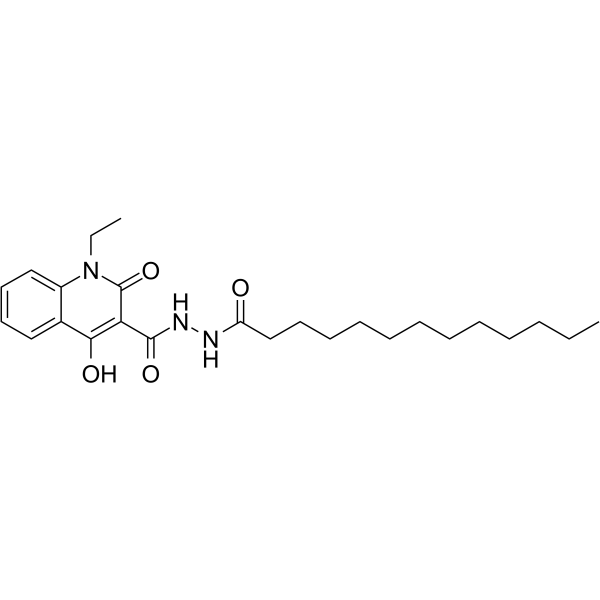
I2906 is an orally active isocitrate lyase (ICL) inhibitor with a Mycobacterium tuberculosis IC50 of 134.3 μg/mL. I2906 inhibits the growth of Mycobacterium tuberculosis. I2906 can be used for the research of tuberculosis .
loading...
    loading...
Cat. No.: HY-155175
CAS No.: 1113126-49-0
Purity:  98.93%
Target:  

Tim3 IFNAR

Research Areas:  

Cancer

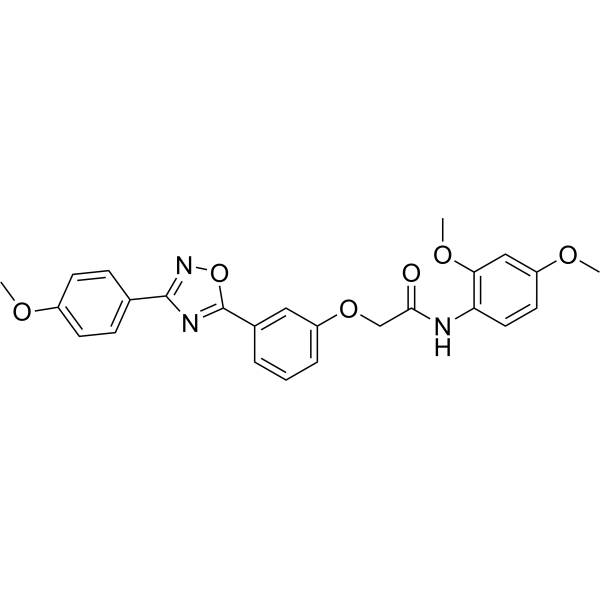
TIM-3-IN-2 is a TIM-3 inhibitor. TIM-3-IN-2 blocks the interactions of TIM-3 with PtdSer, CEACAM1 and Gal-9, and inhibits the immunosuppressive function of TIM-3. TIM-3-IN-2 restores IFNγ release from peripheral blood mononuclear cells. TIM-3-IN-2 inhibits the proliferation of acute myeloid leukemia cells. TIM-3-IN-2 can be used for the research of acute myeloid leukemia .
loading...
    loading...
Cat. No.: HY-162608
CAS No.: 3052553-20-2
Target:  

PROTACs JAK STAT

Research Areas:  

Cancer

PROTAC JAK1 degrader 1 is a JAK1 PROTAC degrader with a DC50 of 214 nM and an IC50 of 5.2 nM. PROTAC JAK1 degrader 1 inhibits the downstream JAK-STAT signaling pathway by degrading JAK1. PROTAC JAK1 degrader 1 exhibits antiproliferative activity in cells. PROTAC JAK1 degrader 1 can be used for research on leukemia .
loading...
    loading...
Cat. No.: HY-N8390
CAS No.: 168293-15-0
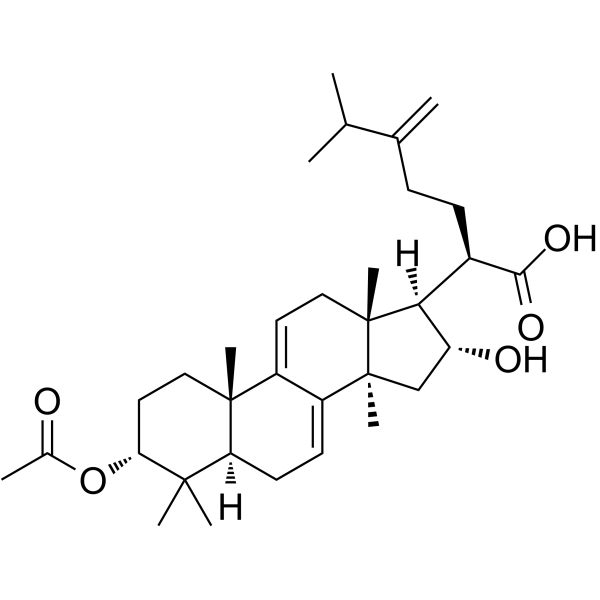
3-Epidehydropachymic acid, a lanostane triterpenoid, shows totoxicity effect against human acute monocytic leukemia cell line THP-1 (IC50=52.51 μM) .
loading...
    loading...
Cat. No.: HY-147609
CAS No.: 2765301-60-6
Target:  

c-Fms

Research Areas:  

Cancer

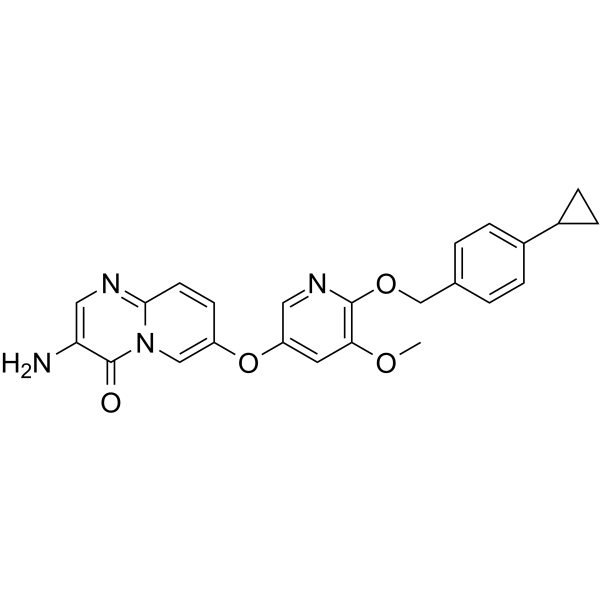
CSF1R-IN-8 (Compound 22) is a CSF-1R inhibitor with an IC50 of 0.012 μM .
loading...
    loading...
Cat. No.: HY-147611
CAS No.: 2765301-88-8
Target:  

c-Fms

Research Areas:  

Cancer

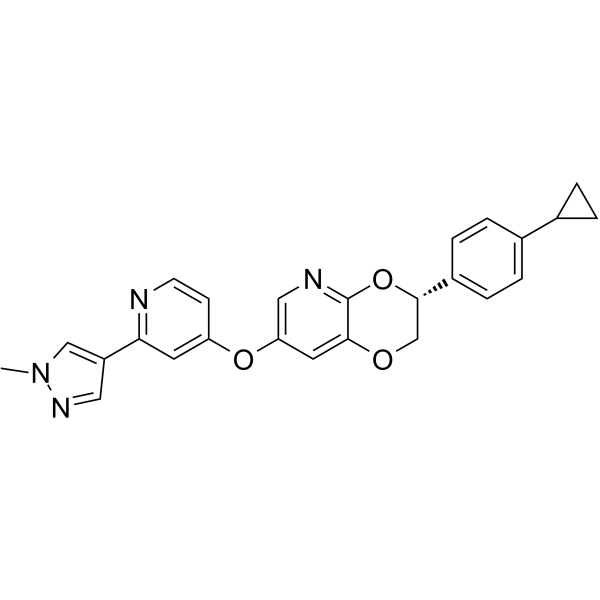
CSF1R-IN-10 (Compound 48) is a CSF-1R inhibitor with an IC50 of 0.005 μM .
loading...
    loading...
Cat. No.: HY-124693
CAS No.: 869767-86-2
Target:  

Apoptosis

Research Areas:  

Cancer

DB1055 is a HOXA9 inhibitor that competes with HOXA9 binding to DNA (blocking its DNA interaction activity). DB1055 induces in vitro cell growth reduction, cell apoptosis, and differentiation in human acute myeloid leukemia (AML) cells. DB1055 leads to monocyte-to-macrophage differentiation and exhibits antileukemic activities in a human THP-1 AML in vivo model. DB1055 does not impact human CD34+ bone marrow cells. DB1055 can be used for the research of acute myeloid leukemia[1].
loading...
    loading...
Cat. No.: HY-147610
CAS No.: 2765301-84-4
Target:  

c-Fms

Research Areas:  

Cancer

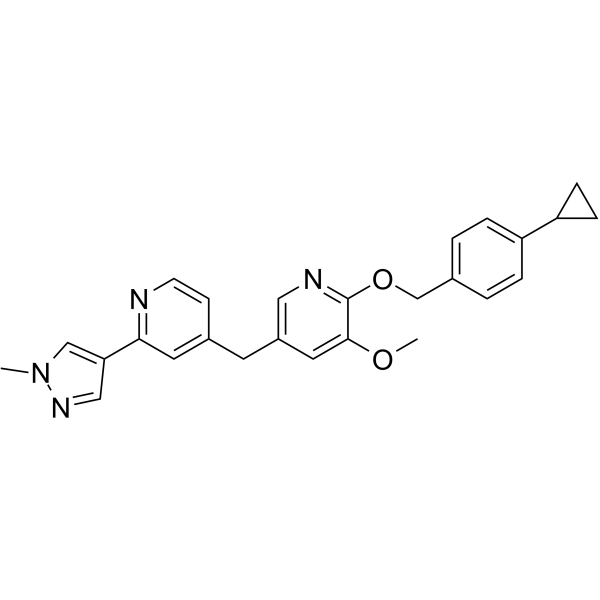
CSF1R-IN-9 (Compound 46) is a CSF-1R inhibitor with an IC50 of 0.028 μM .
loading...
    loading...
Cat. No.: HY-115364R
CAS No.: 14255-87-9
Synonyms: SKF 29044 (Standard)
Parbendazole (Standard) (SKF 29044 (Standard)) is the analytical standard of Parbendazole (HY-115364). This product is intended for research and analytical applications. Parbendazole (SKF‑29044) is an orally active benzimidazole carbamate compound with multiple biological activities. Parbendazole binds to free tubulin and inhibits microtubule polymerization; it also activates the JNK/c‑Jun signaling axis and upregulates the expression of the downstream axonal repulsion factor Sema3A. Parbendazole upregulates KAL-1 mRNA expression, reduces nerve growth factor levels, and promotes the terminal differentiation of normal human epidermal keratinocytes. Parbendazole induces apoptosis in differentiated acute myeloid leukemia monocytes and exerts antileukemic activity in a mouse xenograft model of acute myeloid leukemia. Parbendazole exhibits broad-spectrum anthelmintic activity against various animal nematodes. Parbendazole is used in research related to acute myeloid leukemia and parasitic infections .
loading...
    loading...
Cat. No.: HY-115364S
CAS No.: 1613439-58-9
Synonyms: SKF 2904-d3
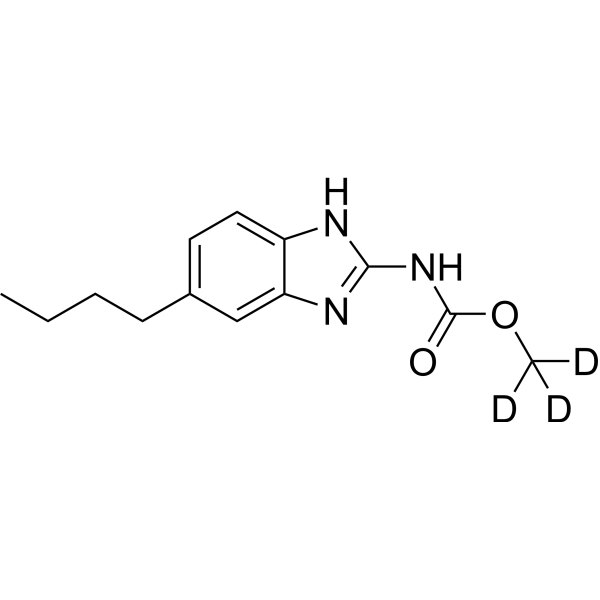
Parbendazole-d3 (SKF 2904-d3) is the deuterated-labeled Parbendazole (HY-115364). Parbendazole (SKF‑29044) is an orally active benzimidazole carbamate compound with multiple biological activities. Parbendazole binds to free tubulin and inhibits microtubule polymerization; it also activates the JNK/c‑Jun signaling axis and upregulates the expression of the downstream axonal repulsion factor Sema3A. Parbendazole upregulates KAL-1 mRNA expression, reduces nerve growth factor levels, and promotes the terminal differentiation of normal human epidermal keratinocytes. Parbendazole induces apoptosis in differentiated acute myeloid leukemia monocytes and exerts antileukemic activity in a mouse xenograft model of acute myeloid leukemia. Parbendazole exhibits broad-spectrum anthelmintic activity against various animal nematodes. Parbendazole is used in research related to acute myeloid leukemia and parasitic infections .
loading...
    loading...
Cat. No.: HY-208740
CAS No.: 2488951-93-3
Target:  

PKC

Research Areas:  

Inflammation/Immunology

PKCζ-IN-2 is an orally active, selective PKCζ inhibitor with an IC50 of 0.1 nM. As an anti-inflammatory agent, PKCζ-IN-2 reduces joint swelling and ameliorates disease progression in a mouse collagen-induced arthritis model. PKCζ-IN-2 can be used for the research of rheumatoid arthritis .
loading...
    loading...
Cat. No.: HY-115364A
CAS No.: 83601-81-4
Synonyms: SKF 29044 hydrochloride
Research Areas:  

Infection Cancer

Parbendazole hydrochloride (SKF‑29044 hydrochloride) is an orally active benzimidazole carbamate compound with multiple biological activities. Parbendazole hydrochloride binds to free tubulin and inhibits microtubule polymerization; it also activates the JNK/c‑Jun signaling axis and upregulates the expression of the downstream axonal repulsion factor Sema3A. Parbendazole hydrochloride upregulates KAL-1 mRNA expression, reduces nerve growth factor levels, and promotes the terminal differentiation of normal human epidermal keratinocytes. Parbendazole hydrochloride induces apoptosis in differentiated acute myeloid leukemia monocytes and exerts antileukemic activity in a mouse xenograft model of acute myeloid leukemia. Parbendazole hydrochloride exhibits broad-spectrum anthelmintic activity against various animal nematodes. Parbendazole hydrochloride is used in research related to acute myeloid leukemia and parasitic infections .
loading...
    loading...
Cat. No.: HY-183265
GO847 is an orally active casein kinase 2 (CK2) inhibitor with an IC50 of 40.2 nM. GO847 increases intracellular ATP levels, impairs Mitochondrial metabolic flexibility, and promotes excessive mitochondrial ROS production. GO847 alters the period length of cellular circadian rhythms. GO847 inhibits the growth of acute myeloid leukemia cells. GO847 can be used for the research of acute myeloid leukemia .
loading...
    loading...
Cat. No.: HY-182349
CAS No.: 3034297-25-8
Research Areas:  

Cancer

Bax activator-2 is a pro-apoptotic agent targeting BAX, with an IC50 of 0.30 μM against human BAX. Bax activator-2 binds to the trigger site of BAX and induces its conformational change. Bax activator-2 induces mitochondrial depolarization, cytochrome c release, cleavage of caspase-3/9 and PARP, thereby initiating apoptosis. Bax activator-2 exhibits cytotoxicity against a variety of cancer cell lines. Bax activator-2 can be used in research related to acute myeloid leukemia and solid tumors .
loading...
    loading...
Cat. No.: HY-N20701
CAS No.: 60449-48-1
Eucomic acid is a derivative of Malic acid (HY-Y1311). Eucomic acid also acts as an anti-plasmodial inhibitor, pigment inducer and antioxidant. Eucomic acid inhibits the growth of Plasmodium falciparum. Eucomic acid promotes the production of black pigments in mature soybean pods and seed coats through oxidation or polymerization, while exerting antioxidant effects. Eucomic acid can be isolated from the roots of Eriosema montanum and the bulbs of Eucomis punctata. Eucomic acid can be used in research on malaria, antioxidation, etc .
loading...
    loading...
Cat. No.: HY-185207
CAS No.: 3034207-17-2
Target:  

Pyroptosis

Research Areas:  

Infection Cancer

CQ80 is a PEPD/XPNPEP1 inhibitor and selective CARD8 inflammasome activator. CQ80 has IC50 values of 0.91 μM for PEPD, 43 μM for XPNPEP1. CQ80 promotes the accumulation of Xaa-Pro peptides by inhibiting PEPD and XPNPEP1, releases the fragment of CARD8 for inflammasome formation, and induces pyroptosis via GSDMD cleavage. CQ80 can be used for research on inflammasome, CARD8-expressing cancer cells, HIV-1-infected cell clearance, acute myeloid leukemia (AML) .
loading...
    loading...
  • 1

