
1. Search Result
Search Result
Results for "

UCP1

" in MedChemExpress (MCE) Product Catalog:

28

Inhibitors & Agonists

1

Peptides

7

Natural
Products

1

Antibodies

3

Oligonucleotides

Cat. No. Product Name Target Research Areas Chemical Structure
  • HY-N0704
    Agrimol B
    1 Publications Verification

    Sirtuin PPAR Fatty Acid Synthase (FASN) c-Myc Bacterial Infection Metabolic Disease Cancer
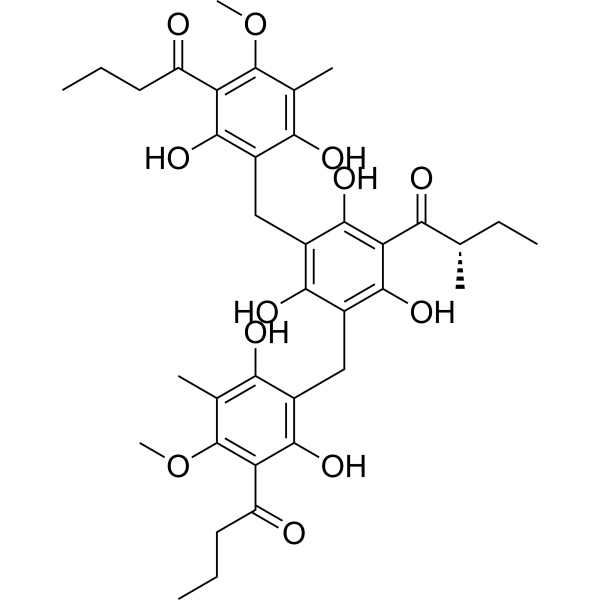
    Agrimol B, a polyphenol, is an orally active and potent SIRT1 activator. Agrimol B shows anti-adipogenic and anticancer activity. Agrimol B shows antibacterial activity against plant pathogens. Agrimol B dramatically inhibits 3T3-L1 adipocyte differentiation by reducing PPARγ, C/EBPα, FAS, UCP-1, and apoE expression. The action of Agrimol B on the cancer cells is likely derived from its effect on c-MYC, SKP2 and p27 [1] .
    Agrimol B
  • HY-107574
    TC-E 5003
    3 Publications Verification

    Histone Methyltransferase AP-1 NF-κB PKA Metabolic Disease Inflammation/Immunology Cancer
    TC-E 5003 is a selective protein arginine methyltransferase 1 (PRMT1) inhibitor with an IC50 of 1.5 µM against hPRMT1. TC-E 5003 modulates the lipopolysaccharide (LPS) (HY-D1056)-induced AP-1 and NF-κB signaling pathways with anti-inflammatory properties. TC-E 5003 also upregulates the expression of Ucp1 and Fgf21, activates protein kinase A signaling and lipolysis in primary subcutaneous adipocytes from both mouse and humans. TC-E 5003 is promising for research of obesity and associated metabolic disorders, oxidative stress, inflammation and cancers [1] .
    TC-E 5003
  • HY-P2917

    GyK

    Nuclear Hormone Receptor 4A/NR4A Metabolic Disease Inflammation/Immunology
    Glycerol kinase, microorganism (GyK) acts as a NR4A1 inhibitor with enzymatic activity. It directly binds to and inhibits the transcription factor NR4A1, thereby negatively regulating hepatic gluconeogenesis and reducing blood glucose levels. Glycerol kinase, microorganism positively regulates UCP1 expression via partial dependence on the β-adrenergic receptor-cAMP-CREB pathway, promotes browning of white adipose tissue and thermogenesis, and further modulates intracellular fatty acid composition and energy metabolism. In diabetic mouse models, overexpression of Glycerol kinase effectively antagonizes NR4A1-induced hyperglycemia, demonstrating potential for improving glucose homeostasis. Glycerol kinase, microorganism can be used for studies on diabetes and obesity [1] .
    Glycerol kinase, microorganism
  • HY-N0260
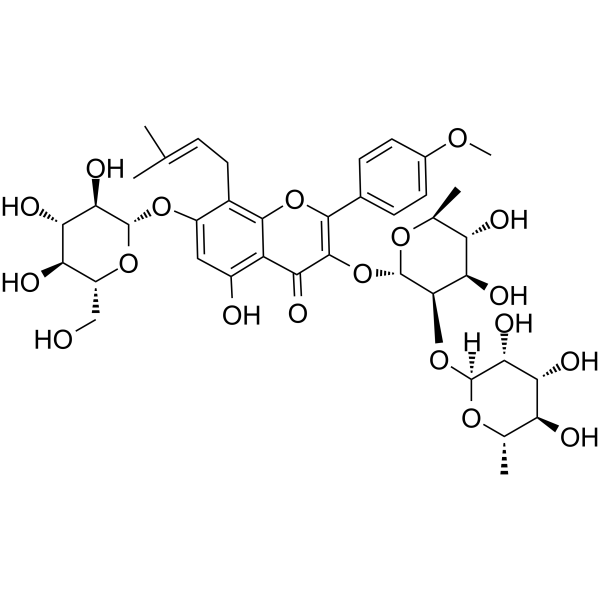
    Epmedin C
    Maximum Cited Publications
    6 Publications Verification

    Epimedin-C; Baohuoside-VI

    Keap1-Nrf2 CDK Caspase Infection Metabolic Disease Inflammation/Immunology Cancer
    Epmedin C (Epimedin-C; Baohuoside-VI) is an orally active anti-inflammatory agent and immunomodulator that binds to multiple key proteins including UCP1, Caspase-1, CDK2 and Keap1. Epmedin C inhibits epithelial cell proliferation by disrupting the complex function of CDK2/Cyclin E. Epmedin C also upregulates Nrf2 expression, reduces ROS levels and inhibits pro-inflammatory cytokine secretion, thereby effectively restoring antibody production and alleviating tissue damage. Epmedin C has good safety with no hepatotoxicity or skin sensitization, and it has been used in studies on diseases such as obesity, Deoxynivalenol (HY-N6684)-induced immunotoxicity and mammary hyperplasia [1] .
    Epmedin C
  • HY-138207

    Mitochondrial Metabolism Drug Metabolite Inflammation/Immunology
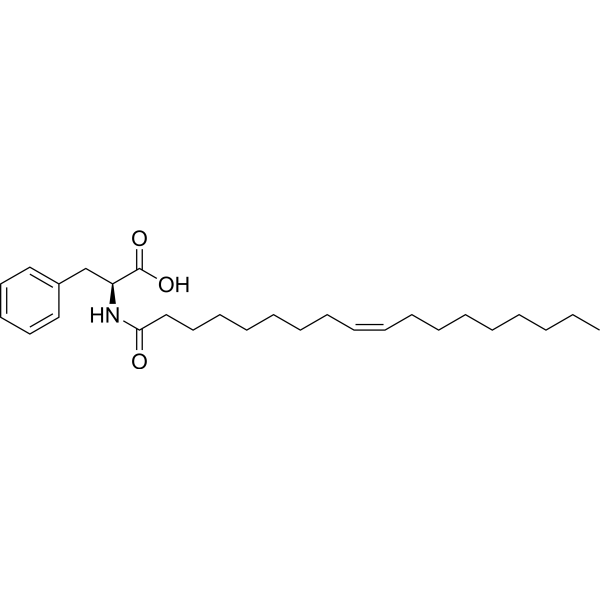
    N-Oleoyl-L-phenylalanine is a long-chain N-acyl-L-phenylalanine and also a mitochondrial uncoupler. N-Oleoyl-L-phenylalanine uncouples UCP1-independent respiration in mitochondria, thereby helping to regulate glucose homeostasis. As an endogenous metabolite, the level of N-Oleoyl-L-phenylalanine increases in patients with ulcerative colitis after a high-fat diet. N-Oleoyl-L-phenylalanine can be used in studies related to ulcerative colitis [1] .
    N-Oleoyl-L-phenylalanine
  • HY-129692
    Withanone
    1 Publications Verification

    iGluR Neurological Disease Cancer
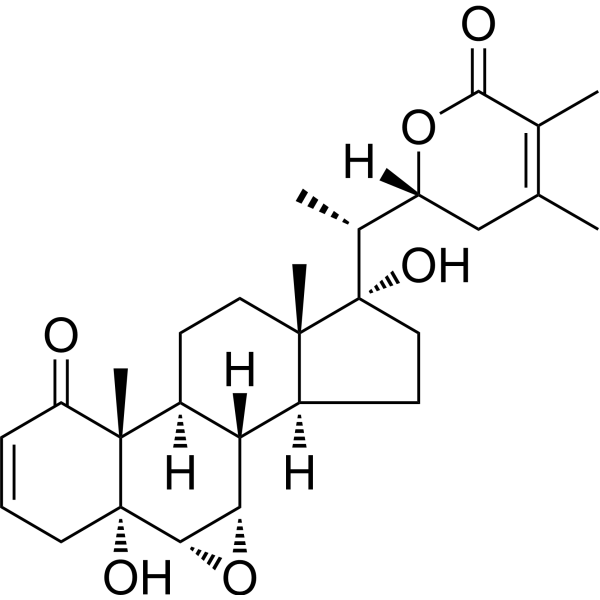
    Withanone is an active ingredient from the roots of Withania somnifera and a GRP75 inhibitor. Withanone has multifunctional neuroprotective effects in alleviating cognitive dysfunction. In neuron-like cells, Withanone can inhibit NMDA-induced excitotoxicity. Withanone can inhibit white adipose tissue browning by blocking the formation of the GRP75-ANT2-UCP1 complex, thereby alleviating cancer-related cachexia. Withanone can be used in the research of tumors and nervous system diseases [1] .
    Withanone
  • HY-114557

    3,5-Diiodo-L-thyronine

    JNK NF-κB Sirtuin PGC-1α COX TGF-β Receptor Collagen Metabolic Disease Inflammation/Immunology Endocrinology
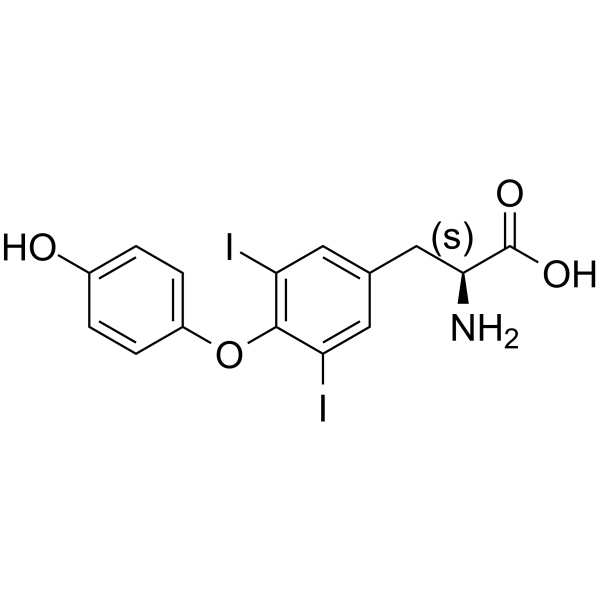
    NSC 90469 (3,5-Diiodo-L-thyronine) is an orally active thyroid hormone derivative. NSC 90469 inhibits JNK phosphorylation and NF-κB acetylation, blocks SIRT1 protein expression, induces elevated PGC-1α levels, and stimulates COX activity. NSC 90469 enhances UCP1-mediated thermogenesis, increases hepatic Dio1 activity, inhibits TSH levels and hypothalamic-pituitary-thyroid axis function, enhances lipid metabolism, and regulates energy metabolism via the mitochondrial pathway. NSC 90469 prevents blood glucose reduction, reduces urinary albumin excretion, inhibits renal matrix expansion, decreases TGF-β1 expression, and reduces renal fibronectin and type Ⅳ collagen deposition. NSC 90469 also increases energy expenditure and prevents diet-induced overweight. NSC 90469 can be used in studies related to diabetic nephropathy, hypothyroidism, non-alcoholic fatty liver disease, and diet-induced obesity [1] .
    NSC 90469
  • HY-135115

    3,4-DHPEA-EA

    α-synuclein HDAC Adrenergic Receptor Inflammation/Immunology
    Oleuropein Aglycone (3,4-DHPEA-EA) is a polyphenol and the aglycone form of oleuropein (HY-N0292), formed by enzymatic, acidic or acetylated hydrolysis of oleuropein. Dietary intake of oleuropein Aglycone (50 mg/kg diet) increases the number of neuronal autophagic vesicles, reverses cognitive deficits in the TgCRND8 transgenic mouse model of Alzheimer's disease, and reduces the levels of histone deacetylase 2 (HDAC2) in the cortex and hippocampus. Oleuropein Aglycone increases urinary norepinephrine, interscapular brown adipose tissue epinephrine, and UCP1 protein levels, and reduced plasma leptin levels and total abdominal adipose tissue weight in a rat model of high-fat diet-induced obesity. Oleuropein Aglycone also reduced lung neutrophil infiltration, lipid peroxidation, and IL-1β levels in a mouse model of carrageenan-induced pleurisy.
    Oleuropein Aglycone
  • HY-110148

    Carboxylesterase (CES) Metabolic Disease
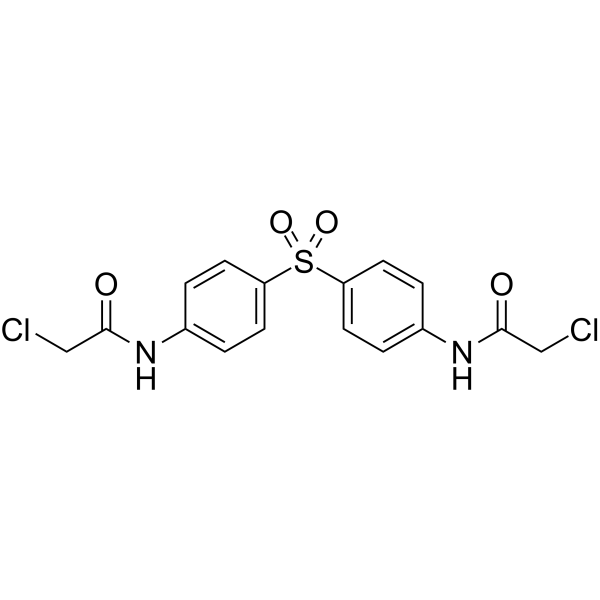
    WWL113 is a selective and orally active Ces3 and Ces1f inhibitor, with IC50 values of 120 nM and 100 nM for Ces3 and Ces1f, respectively. WWL113 appears to show excellent selectivity for the 60-kDa serine hydrolase (or hydrolases) [1].
    WWL113
  • HY-RS16955

    Small Interfering RNA (siRNA) Metabolic Disease

    Ucp1 Mouse Pre-designed siRNA Set A contains three designed siRNAs for Ucp1 gene (Mouse), as well as a negative control, a positive control, and a FAM-labeled negative control.

    Ucp1 Mouse Pre-designed siRNA Set A
    Ucp1 Mouse Pre-designed siRNA Set A
  • HY-153813

    p38 MAPK Mitochondrial Metabolism Others
    Z16078526 induces endogenous Ucp1 expression, promotes p38 MAPK phosphorylation and lipolysis in primary mouse brown adipocytes. Z16078526 activates thermogenic gene expression and mitochondrial activity (uncoupled respiration) in mouse brown adipocytes. Z16078526 also stimulates thermogenesis in the mouse [1].
    Z16078526
  • HY-133095

    STAT PPAR Inflammation/Immunology
    BML-260 is a potent inhibitor of dual-specific phosphatases JSP-1 and DUSP22. BML-260 can activate UCP1 and thermogenesis in adipocytes in a JSP-1-independent manner. The effect of BML-260 on adipocytes is partially achieved through the activation of CREB, STAT3, and PPAR signaling pathways. BML-260 can be used in the research of inflammatory and proliferative disorders associated with JNK signaling dysfunction as well as obesity [1] .
    BML-260
  • HY-RS15410

    Small Interfering RNA (siRNA) Others

    UCP1 Human Pre-designed siRNA Set A contains three designed siRNAs for UCP1 gene (Human), as well as a negative control, a positive control, and a FAM-labeled negative control.

    UCP1 Human Pre-designed siRNA Set A
    UCP1 Human Pre-designed siRNA Set A
  • HY-RS23398

    Small Interfering RNA (siRNA) Others

    Ucp1 Rat Pre-designed siRNA Set A contains three designed siRNAs for Ucp1 gene (Rat), as well as a negative control, a positive control, and a FAM-labeled negative control.

    Ucp1 Rat Pre-designed siRNA Set A
    Ucp1 Rat Pre-designed siRNA Set A
  • HY-148973

    ATP Synthase Metabolic Disease
    ZW290 is a compound to activate brown adipose tissue (BAT) thermogenic function. ZW290 increases the expression of uncoupling Protein 1 (UCP1) protein and inhibits ATP synthesis in BAT [1].
    ZW290
  • HY-153812

    AST070

    Anion Exchangers Metabolic Disease
    AST 7062601 (AST070) is a Ucp1 inducer that strongly induces endogenous Ucp1 expression in primary mouse brown adipocytes. Ucp1 refers to uncoupling protein, found in brown and beige fat cells. In mammals, UCP1 oxidizes fatty acids and uncouples ATP production in mitochondria to promote energy dissipation as heat. AST 7062601 can be used to study thermogenic, uncoupled respiration [1].
    AST 7062601
  • HY-176148

    Mitochondrial Metabolism Metabolic Disease
    ZGL-18 is an uncoupling protein 1 (UCP1)-inspired mitochondrial uncoupler. ZGL-18 activates brown adipocytes and reduces mitochondrial membrane potential [1].
    ZGL-18
  • HY-101824

    PPAR Metabolic Disease
    NC-2100 is a PPAR activator. NC-2100 can effectively reduce the plasma glucose and triglyceride levels of obese KKAy mice. NC-2100 can induce UCP1 and UCP2 expression in mesenteric and subcutaneous WAT of mice. NC-2100 can be used in research related to type 2 diabetes [1].
    NC-2100
  • HY-129692R

    Reference Standards iGluR Neurological Disease Cancer
    Withanone (Standard) is the analytical standard of Withanone (HY-129692). This product is intended for research and analytical applications. Withanone is an active ingredient from the roots of Withania somnifera and a GRP75 inhibitor. Withanone has multifunctional neuroprotective effects in alleviating cognitive dysfunction. In neuron-like cells, Withanone can inhibit NMDA-induced excitotoxicity. Withanone can inhibit white adipose tissue browning by blocking the formation of the GRP75-ANT2-UCP1 complex, thereby alleviating cancer-related cachexia. Withanone can be used in the research of tumors and nervous system diseases [1] .
    Withanone (Standard)
  • HY-11032

    Others Metabolic Disease
    SM-350300 is a glucoprotein. SM-350300 stimulates lipolysis in white adipocytes by activating the cyclic AMP (cAMP) pathway, and upregulates the expression of lipolytic enzymes and uncoupling proteins (UCP1, UCP3) in brown adipose tissue (BAT) and white adipose tissue (WAT). SM-350300 reduces body weight by decreasing carcass fat while increasing lean muscle mass in metabolic disorder models. SM-350300 can be used for the study of metabolic disorders including obesity, type 2 diabetes, and cachexia [1].
    SM-350300
  • HY-N0260R

    Epimedin-C (Standard); Baohuoside-VI (Standard)

    Reference Standards Keap1-Nrf2 CDK Caspase Inflammation/Immunology
    Epmedin C (Standard) is the analytical standard of Epmedin C. This product is intended for research and analytical applications. Epmedin C (Epimedin-C; Baohuoside-VI) is an orally active anti-inflammatory agent and immunomodulator that binds to multiple key proteins including UCP1, Caspase-1, CDK2 and Keap1. Epmedin C inhibits epithelial cell proliferation by disrupting the complex function of CDK2/Cyclin E. Epmedin C also upregulates Nrf2 expression, reduces ROS levels and inhibits pro-inflammatory cytokine secretion, thereby effectively restoring antibody production and alleviating tissue damage. Epmedin C has good safety with no hepatotoxicity or skin sensitization, and it has been used in studies on diseases such as obesity, Deoxynivalenol (HY-N6684)-induced immunotoxicity and mammary hyperplasia [1] .
    Epmedin C (Standard)
  • HY-114557R

    3,5-Diiodo-L-thyronine (Standard)

    Reference Standards Endogenous Metabolite Metabolic Disease
    NSC 90469 (Standard) is the analytical standard of NSC 90469. This product is intended for research and analytical applications. NSC 90469 (3,5-Diiodo-L-thyronine) is an orally active thyroid hormone derivative. NSC 90469 inhibits JNK phosphorylation and NF-κB acetylation, blocks SIRT1 protein expression, induces elevated PGC-1α levels, and stimulates COX activity. NSC 90469 enhances UCP1-mediated thermogenesis, increases hepatic Dio1 activity, inhibits TSH levels and hypothalamic-pituitary-thyroid axis function, enhances lipid metabolism, and regulates energy metabolism via the mitochondrial pathway. NSC 90469 prevents blood glucose reduction, reduces urinary albumin excretion, inhibits renal matrix expansion, decreases TGF-β1 expression, and reduces renal fibronectin and type Ⅳ collagen deposition. NSC 90469 also increases energy expenditure and prevents diet-induced overweight. NSC 90469 can be used in studies related to diabetic nephropathy, hypothyroidism, non-alcoholic fatty liver disease, and diet-induced obesity [1] .
    NSC 90469 (Standard)
  • HY-183097

    PGC-1α Metabolic Disease
    AM89 is a PGC-1α1 stabilizer. AM89 activates the expression of PGC-1α1 target genes and induces the upregulation of Ucp1 gene expression. AM89 is applicable for the research of obesity and related metabolic disorders [1].
    AM89
  • HY-183095

    Metabolic Disease
    AM79 is a PGC-1α1 stabilizer. AM79 promotes the accumulation of endogenous PGC-1α1 protein, thereby activating its target genes. AM79 increases uncoupled mitochondrial respiration in brown adipocytes. AM79 induces the expression of Ucp1 and Cidea in brown adipocytes. AM79 can be used for the research of obesity and related metabolic disorders [1].
    AM79
  • HY-183096

    PGC-1α Metabolic Disease
    AM31 is a PGC-1α1 stabilizer. AM31 enhances the protein stability of PGC-1α1, promotes protein accumulation and target gene activation. AM31 induces the expression of Ucp1 and Cidea in brown adipocytes. AM31 increases the levels of basal mitochondrial respiration and uncoupled respiration in brown adipocytes. AM31 can be used for the research of obesity and related metabolic disorders [1].
    AM31
  • HY-183094

    PGC-1α Metabolic Disease
    AM73 is a PGC-1α1 stabilizer. AM73 increases the expression levels of Ucp1 and Cidea in brown adipocytes, and enhances basal mitochondrial respiration and uncoupled respiration. AM73 regulates hypoxia, brown adipocyte differentiation, carbohydrate metabolism and insulin signaling pathways in brown adipocytes. AM73 alters the thermogenic process of white adipocytes. AM73 is applicable to the research of obesity and related metabolic disorders [1].
    AM73
  • HY-107574R

    Reference Standards Histone Methyltransferase AP-1 NF-κB PKA Metabolic Disease Inflammation/Immunology Cancer
    TC-E 5003 (Standard) is the analytical standard of TC-E 5003 (HY-107574). This product is intended for research and analytical applications. TC-E 5003 is a selective protein arginine methyltransferase 1 (PRMT1) inhibitor with an IC50 of 1.5 µM against hPRMT1. TC-E 5003 modulates the lipopolysaccharide (LPS) (HY-D1056)-induced AP-1 and NF-κB signaling pathways with anti-inflammatory properties. TC-E 5003 also upregulates the expression of Ucp1 and Fgf21, activates protein Kinase A signaling and lipolysis in primary subcutaneous adipocytes from both mouse and humans. TC-E 5003 is promising for research of obesity and associated metabolic disorders, oxidative stress, inflammation and cancers [1] .
    TC-E 5003 (Standard)
  • HY-186011

    Progesterone Receptor Metabolic Disease
    CPAG-1 is a small-molecule activator of progesterone receptor membrane component 2 (PGRMC2). CPAG-1 can enhance mitochondrial heme delivery to the nucleus mediated by PGRMC2 and activate genes related to heat production in brown adipose tissue (BAT), such as Ucp1 and Pgc-1α, and reduce lipid accumulation in BAT. CPAG-1 reduce fasting blood sugar and insulin levels, and improve glucose tolerance and insulin sensitivity. CPAG-1 can be used for research of type 2 diabetes [1].
    CPAG-1

Inquiry Online

Your information is safe with us. * Required Fields.

Salutation


Country or Region *

Applicant Name *


Organization Name *

Department *


Email Address *


Product Name *

Cat. No.


Requested quantity *

Phone Number *


Remarks

Inquiry Online

Inquiry Information

Product Name:
Cat. No.:
Quantity:
MCE Japan Authorized Agent:

