1. Search Result
Search Result
Results for "

Virus replication

" in MedChemExpress (MCE) Product Catalog:

399

Inhibitors & Agonists

2

Screening Libraries

4

Fluorescent Dye

2

Biochemical Assay Reagents

15

Peptides

1

Inhibitory Antibodies

51

Natural
Products

18

Isotope-Labeled Compounds

7

Click Chemistry

20

Oligonucleotides

Cat. No. Product Name Target Research Areas Chemical Structure
  • HY-107433
    U18666A
    20+ Cited Publications

    Flavivirus Dengue Virus HCV Infection Neurological Disease
    U18666A, an intra-cellular cholesterol transport inhibitor, inhibits replication of Ebola virus, dengue virus, and human hepatitis C virus .
    U18666A
  • HY-10241
    Simeprevir
    40+ Cited Publications

    TMC435; TMC435350

    HCV HCV Protease SARS-CoV DNA/RNA Synthesis Infection
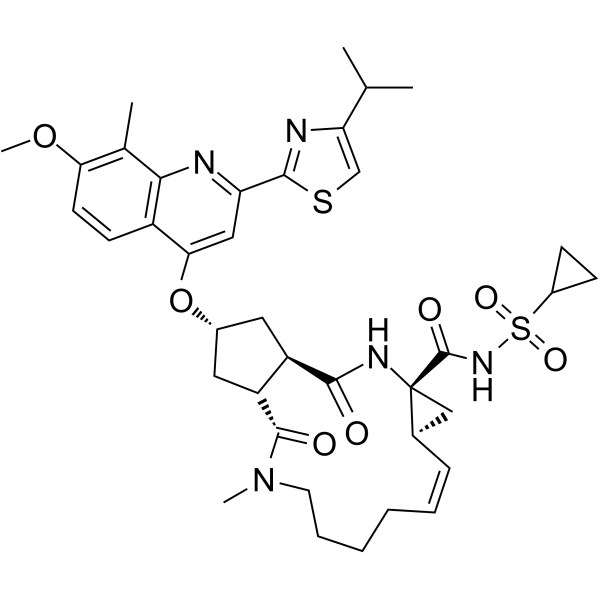
    Simeprevir (TMC435; TMC435350) is an oral, potent and highly specific hepatitis C virus (HCV) NS3/4A protease inhibitor with a Ki of 0.36 nM. Simeprevir inhibits HCV replication with an EC50 of 7.8 nM. Simeprevir also potently suppresses SARS-CoV-2 replication and synergizes with Remdesivir. Simeprevir inhibits the main protease (M pro) and the RNA-dependent RNA polymerase (RdRp) of SARS-CoV-2, and also modulates host immune responses .
    Simeprevir
  • HY-B1367
    Carbenoxolone disodium
    5+ Cited Publications

    Gap Junction Protein Orthopoxvirus 11β-HSD Infection Inflammation/Immunology
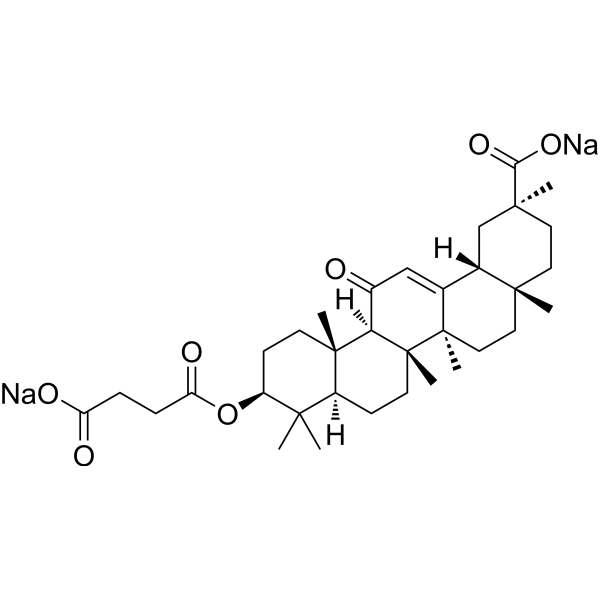
    Carbenoxolone disodium is the active metabolite of Glycyrrhizic acid (HY-N0184) and the inhibitor of human 11β-HSD and bacterial 3α, 20β-HSD . Carbenoxolone disodium is an uncoupling agent for gap junctions and a potent inhibitor of Vaccinia virus replication . Carbenoxolone disodium is used for the study of peptic, esophageal and oral ulceration and inflammation. Carbenoxolone disodium inhibits Vaccinia virus replication.
    Carbenoxolone disodium
  • HY-125033
    EIDD-1931
    35+ Cited Publications

    β-D-N4-hydroxycytidine; NHC

    CHIKV SARS-CoV Enterovirus HCV Topoisomerase Infection
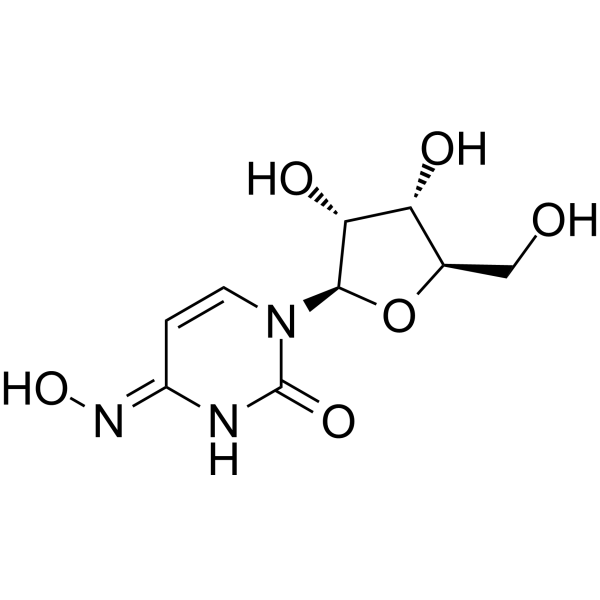
    EIDD-1931 (Beta-d-N4-hydroxycytidine; NHC) is a novel nucleoside analog and behaves as a potent anti-virus agent. EIDD-1931 effectively inhibits the replication activity of venezuelan equine encephalitis virus (VEEV), Chikungunya virus (CHIKV) and hepatitis C virus (HCV) .
    EIDD-1931
  • HY-B0017
    Telbivudine
    1 Publications Verification

    Epavudine; L-Thymidine; NV 02B

    HBV Infection
    Telbivudine (Epavudine), an orally active thymidine nucleoside analog, is a potent antiviral inhibitor of hepatitis B virus (HBV) replication .
    Telbivudine
  • HY-100721
    GC376 sodium
    5+ Cited Publications

    Virus Protease Infection
    GC376 sodium is a 3CLpro inhibitor; inhibits the replication of viruses TGEV, FIPV and PTV with IC50 values of 0.15, 0.2 and 0.15 μM, respectively.
    GC376 sodium
  • HY-N7922
    Urolithin M5
    1 Publications Verification

    Decarboxyellagic acid

    Influenza Virus p38 MAPK EGFR Akt Reactive Oxygen Species (ROS) Apoptosis Infection Neurological Disease
    Urolithin M5 (Decarboxyellagic acid) is an orally active influenza virus neuraminidase inhibitor and neuroprotective agent, with IC50 values of 174.8 μM (HK68), 191.5 μM (pdm09), 243.2 μM (WSN) and 257.1 μM (PR8) against four influenza virus neuraminidases, respectively. Urolithin M5 inhibits viral neuraminidase activity, thereby blocking influenza virus replication (including oseltamivir (HY-13317)-resistant strains), protecting infected mammals from death and improving pulmonary edema. Urolithin M5 forms a hydrogen-bond stabilized complex with IGF1R, and binds to MAPK14, AKT1, NFKB1 and EGFR. Urolithin M5 reduces reactive oxygen species production, inhibits neuronal apoptosis, restores mitochondrial transmembrane potential, and promotes neurite outgrowth of damaged neuronal cells. Urolithin M5 can be used in research related to influenza virus infection and Alzheimer's disease .
    Urolithin M5
  • HY-B1422
    9-Aminoacridine
    4 Publications Verification

    Aminacrine

    Bacterial HIV Infection
    9-Aminoacridine, a fluorescent probe, acts as an indicator of pH for quantitative determination of transmembrane pH gradients (inside acidic). 9-Aminoacridine is an antimicrobial. 9-Aminoacridine exerts its antimicrobial activity by interacting with specific bacterial DNA and disrupting the proton motive force in K. pneumoniae. 9-Aminoacridine is a HIV-1 inhibitor and inhibits HIV LTR transcription highly dependent on the presence and location of the amino moiety. 9-Aminoacridine inhibits virus replication in HIV-1 infected cell lines. 9-Aminoacridine is used as a Rifampin (RIF; HY-B0272) adjuvant for the multidrug-resistant K. pneumoniae infections .
    9-Aminoacridine
  • HY-B0338

    1-Rimantadine

    Influenza Virus Autophagy Infection
    Rimantadine (1-Rimantadine) is an orally active inhibitor for M2 protein, which blocks the hydrogen ion channel activity, prevents the entry and replication of the virus, and exhibits board-spectrum antiviral activity. Rimantadine significantly inhibits hepatitis A virus (HAV) replication at the post-entry stage in Huh7 cells. Rimantadine enhances autophagy. Rimantadine has a significant protective effect against H3N2 virus in mouse model .
    Rimantadine
  • HY-145586

    ZSP1273

    Influenza Virus DNA/RNA Synthesis Infection
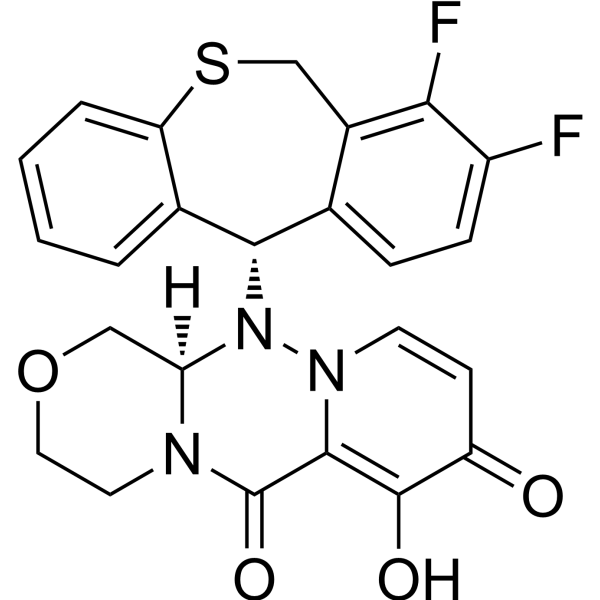
    Onradivir (ZSP1273) is an orally active antiviral agent targeting influenza A virus RNA polymerase PB2 subunit with an IC50 of 0.562 nM. Onradivir inhibits cap binding to influenza A virus RNA polymerase PB2 subunit, suppresses viral replication, reduces viral titres and RNA loads, and inhibits influenza A virus infection. Onradivir maintains high survival rates in influenza A virus-infected mice, and reduces influenza A virus titers in a murine model. Onradivir can be used for the research of influenza A virus infection .
    Onradivir
  • HY-125371
    2'-C-Methyladenosine
    2 Publications Verification

    HCV Infection Inflammation/Immunology
    2'-C-Methyladenosine is an inhibitor of hepatitis C virus (HCV) replication. 2'-C-Methyladenosine inhibits HCV replicon and NS5B-catalyzed RNA synthesis with IC50 values of 0.3μM and 1.9 μM, respectively. 2'-C-Methyladenosine also potently inhibits LRV1 in Leishmania guyanensis (Lgy) and Leishmania braziliensis .
    2'-C-Methyladenosine
  • HY-W011100

    Dengue Virus Estrogen Receptor/ERR Flavivirus Infection Endocrinology
    Cyclofenil is a selective estrogen receptor modulator and an ovulation-inducing agent. Cyclofenil shows an inhibitory effect on dengue virus replication in Vero cells with an EC50 of 1.62 μM. Cyclofenil has anti-dengue-virus activity .
    Cyclofenil
  • HY-50001
    Nucleozin
    5+ Cited Publications

    Influenza Virus Infection
    Nucleozin, a potent inhibitor of influenza A virus infection, induces the formation of nucleoprotein (NP) aggregates and antagonizes its nuclear accumulation, leading to cessation of viral replication. Nucleozin impedes influenza A virus replication in vitro with a nanomolar EC50 .
    Nucleozin
  • HY-12828
    KH-CB19
    1 Publications Verification

    CDK Infection Neurological Disease
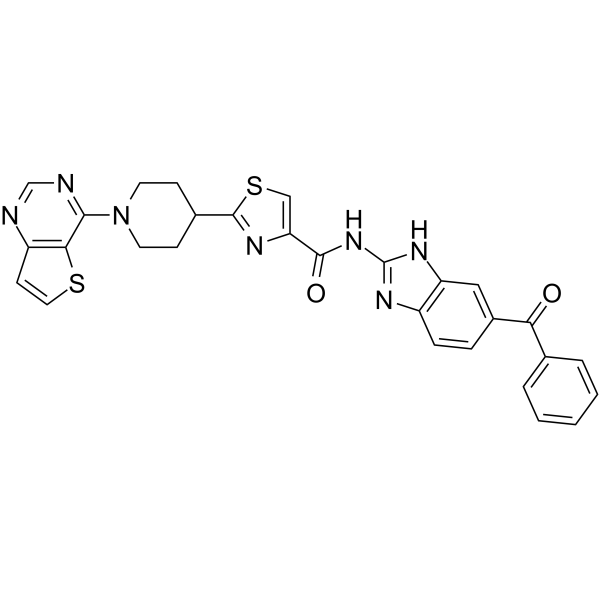
    KH-CB19 is a potent CLK (cdc2-like kinase) inhibitor (CLK1 IC50=19.7 nM; CLK3 IC50=530 nM). KH-CB19 shows antiviral activity and inhibits influenza virus replication (IC50=13.6?μM) .
    KH-CB19
  • HY-B1537

    2',3',5'-Tri-O-acetyl-6-azauridine

    Virus Protease Influenza Virus Infection Inflammation/Immunology
    Azaribine (2',3',5'-Tri-O-acetyl-6-azauridine) is a potent orotidine monophosphate decarboxylase (OMPD) inhibitor. Azaribine is an antiviral inhibitor of several RNA viruses and inhibits viral genome replication and gene transcription. Azaribine shows broad-spectrum antiviral activity (EC50=3.80 nM-1.73 μM against influenza A and B viruses; EC50=1.62 μM against ZIKV Paraiba). Azaribine, a triacetate salt of Azauridine, has the potential for psoriasis research .
    Azaribine
  • HY-N0093
    Ancitabine hydrochloride
    1 Publications Verification

    Cyclocytidine hydrochloride; Cyclo-CMP hydrochloride; Cyclo-C

    Autophagy CMV DNA/RNA Synthesis Infection Cancer
    Ancitabine hydrochloride is a cytarabine derivative that inhibits viral replication. Ancitabine hydrochloride blocks vaccinia virus DNA replication, the progression of viral protein synthesis from early to late stages, and one-step growth of vaccinia virus. Ancitabine hydrochloride is applicable to research related to vaccinia virus infection, leukemia, human cytomegalovirus infection and colorectal cancer .
    Ancitabine hydrochloride
  • HY-W011518
    2′-Deoxy-2′-fluoroguanosine
    1 Publications Verification

    Nucleoside Antimetabolite/Analog Influenza Virus Infection
    2′-Deoxy-2′-fluoroguanosine is a nucleoside analog and potent influenza virus inhibitor with an EC90 value of <0.35 μM against influenza A and B viruses. 2′-Deoxy-2′-fluoroguanosine inhibits influenza virus replication in the upper respiratory tract, thereby ameliorating fever and nasal inflammation .
    2′-Deoxy-2′-fluoroguanosine
  • HY-13337

    INX-08189

    HCV Infection
    BMS-986094 (INX-08189) is a potent inhibitor of hepatitis C virus (HCV) replication, with an EC50 of 35 nM at 24 h in Huh-7 cells. BMS-986094 is a phosphoramidate proagent of 6-O-methyl-2’-C-methyl guanosine. BMS-986094 can be used for the research of chronic HCV infection .
    BMS-986094
  • HY-100943
    Cinanserin hydrochloride
    1 Publications Verification

    SQ 10643

    5-HT Receptor Influenza Virus Infection Inflammation/Immunology
    Cinanserin hydrochloride (SQ 10643) is a potent, selective and highly affinity 5-HT2 receptor antagonist with a Ki of 41 nM. Cinanserin hydrochloride has a much higher binding affinity for the 5-HT2 than for the 5-HT1 receptor (Ki of 3500 nM). Cinanserin is also an inhibitor of 3C-like proteinase of severe acute respiratory syndrome coronavirus and strongly reduces virus replication in vitro .
    Cinanserin hydrochloride
  • HY-121527

    Enterovirus Influenza Virus Bacterial Infection Neurological Disease
    Amylmetacresol is a phenolic compound with topical antibacterial and antiviral activity. Amylmetacresol works by destroying the protein structure of the virus surface or interfering with the function of the virus lipid membrane. Amylmetacresol inhibits the attachment and replication of respiratory viruses such as human Rhinovirus 1a and influenza virus A, without significant effect on viruses such as HRV8. Amylmetacresol is mainly applied topically to the throat to relieve viral sore throats. Amylmetacresol is more active against enveloped viruses than non-enveloped viruses .
    Amylmetacresol
  • HY-10242

    BILN 2061; BILN 2061ZW

    HCV HCV Protease DNA/RNA Synthesis Infection
    Ciluprevir (BILN 2061; BILN 2061ZW) is an orally active macrocyclic peptide inhibitor of hepatitis C virus (HCV)NS3 protease, with an IC50 of 3 nM. Ciluprevir has Kᵢ values of 0.66 nM and 0.30 nM against genotypes 1b and 1a, respectively. Ciluprevir inhibits HCV RNA replication with an EC50 of 1.2 nM, and its EC50 values against genotypes 1b and 1a are 3 nM and 4 nM, respectively. Ciluprevir shows no significant inhibition against human leukocyte elastase and hepatic cathepsin B. Ciluprevir can be used for genotype 1 HCV infection .
    Ciluprevir
  • HY-U00124B
    Tromantadine hydrochloride
    1 Publications Verification

    HSV Infection
    Tromantadine hydrochloride, an Amantadine derivative with antiherpetic activity, inhibits herpes simplex virus type 1 (HSV-1) and HSV-2 replication .
    Tromantadine hydrochloride
  • HY-15591A
    TMC647055 Choline salt
    2 Publications Verification

    HCV Infection
    TMC647055 (Choline salt) is a potent nonnucleoside NS5B polymerase inhibitor of HCV replication. TMC647055 Choline salt has potent HCV combine activity with an IC50 value of 82 nM. TMC647055 Choline salt can be used for the research of Hepatitis C virus (HCV) .
    TMC647055 Choline salt
  • HY-P991059

    Influenza Virus Infection
    VIS-410 is an antibody inhibitor targeting the stem region of hemagglutinin (HA). VIS-410 inhibits influenza virus replication by blocking HA-mediated membrane fusion. VIS-410 exhibits broad-spectrum neutralization against influenza A viruses with group 1 and group 2 hemagglutinins, including subtypes such as H1N1, H3N2, H5N1, and H7N9 (H5N1 IC50 = 1.5 μg/mL). VIS-410 is applicable to research related to influenza A virus infection .
    VIS-410
  • HY-I0736

    MOFs Drug Metabolite Drug Intermediate Infection
    Isonicotinic acid is an Isoniazid (HY-B0329) metabolite. The Isonicotinic acid derivative Enisamium inhibits the replication of multiple subtypes of influenza A virus .
    Isonicotinic acid
  • HY-W352344

    HBV Infection
    2'-Deoxy-L-adenosine is an orally active synthon for modified oligodeoxyribonucleotides. 2'-Deoxy-L-adenosine is a potent, specific and selective inhibitor of the replication of hepatitis B virus (HBV) as well as the closely related duck and woodchuck hepatitis viruses (WHV) .
    2'-Deoxy-L-adenosine
  • HY-156048
    Trifluoromethyl-tubercidin
    2 Publications Verification

    TFMT

    Influenza Virus Infection
    Trifluoromethyl-tubercidin (TFMT) is an inhibitor of 2'-O-ribose methyltransferase 1 (MTr1). Trifluoromethyl-tubercidin can inhibit the replication of influenza A and B viruses by interfering with the cap-snatching process of the influenza virus. Trifluoromethyl-tubercidin has antiviral activity and low toxicity .
    Trifluoromethyl-tubercidin
  • HY-135570

    Influenza Virus Dihydroorotate Dehydrogenase DNA/RNA Synthesis Infection
    hDHODH-IN-3 (compound 21d) is a human dihydroorotate dehydrogenase (HsDHODH) inhibitor, inhibits measles virus replication with a pMIC50 value of 8.6 .
    hDHODH-IN-3
  • HY-128787

    Dihydroorotate Dehydrogenase DNA/RNA Synthesis Influenza Virus Infection
    hDHODH-IN-4 is a potent human dihydroorotate dehydrogenase (DHODH) inhibitor, with a pIC50 of 7.8 for human recombinant DHODH. hDHODH-IN-4 inhibits measles virus replication, with a pMIC50 of 8.8 .
    hDHODH-IN-4
  • HY-116999

    HBV Infection
    IR415 is a potent anti-HBV agent and inhibits HBV replication by blocking the HBx activity. IR415 selectively interacts with HBx (Kd=2 nM) and blocks HBV-mediated RNAi suppression, reverses the inhibitory effect of HBx protein on the activity of the dicer endoribonuclease . HBx: hepatitis B virus X protein.
    IR415
  • HY-158824A

    ALN-RSV01 sodium

    Small Interfering RNA (siRNA) RSV Infection
    Asvasiran sodium is a siRNA that targets the respiratory syncytial virus (RSV) N gene and inhibits viral replication.
    Asvasiran sodium
  • HY-106382

    HIV CMV Infection Cancer
    PMEDAP is a potent inhibitor of human immunodeficiency virus (HIV) replication. PMEDAP has anti-murine cytomegalovirus (MCMV) activity. PMEDAP is a very potent inhibitor of Moloney murine sarcoma virus (MSV)-induced tumor formation and associated mortality .
    PMEDAP
  • HY-124662

    Flavivirus Dengue Virus Glycosidase Infection
    IHVR-19029 is a potent endoplasmic reticulum (ER) α-glucosidases I and II inhibitor, with an IC50 of 0.48 μM for ER a-glucosidase I. IHVR-19029 efficiently blocks the replication of several hemorrhagic fever viruses, such as Dengue virus (DENV), Ebola virus (EBOV) and Rift Valley fever virus. The combination of IHVR-19029 with Favipiravir (HY-14768) improves the antiviral efficacy .
    IHVR-19029
  • HY-134922

    Influenza Virus Infection
    NS1-IN-1 (compound 3) is a potent NS1 inhibitor. NS1 is a major influenza A virus virulence factor that inhibits host gene expression. NS1-IN-1 decreases viral protein levels, contributing to the reduction of virus replication. NS1-IN-1 shows antiviral activity by repressing the activity of mTORC1 in a TSC1-TSC2-dependent manner .
    NS1-IN-1
  • HY-143494

    RSV Influenza Virus Infection
    RSV/IAV-IN-3 (compound 14'i) is a dual inhibitor of respiratory syncytial virus (RSV) and influenza A virus (IAV) with EC50 values of 2.92 µM and 1.90 µM,respectively. RSV/IAV-IN-3 has antiviral effect against H1N1 and H3N2 with EC50 values of 3.25 µM and 1.50 µM in MDCK cells, respectively. RSV/IAV-IN-3 significantly inhibits the activity of luciferase in a dose-dependent manner, with an EC50 of 3.89 µM. RSV/IAV-IN-3 inhibits IAV infectivity and RdRp activity. RSV/IAV-IN-3 inhibits IAV and RSV replication at the post-entry stage .
    RSV/IAV-IN-3
  • HY-148170

    EBV DNA/RNA Synthesis Nucleoside Antimetabolite/Analog Infection
    L-I-OddU, a L-5'-halo- dioxolane nucleoside analogue, is a potent and selective anti-Epstein-Barr virus (EBV) agent with an EC50 value of 0.03μM. L-I-OddU has low cytotoxicity with a CC50 value of 1000 nM. L-I-OddU has antiviral activity by suppressing replicative EBV DNA and viral protein synthesis .
    L-I-OddU
  • HY-P4030

    HIV Protease Infection
    Herpes virus inhibitor 2 is a herpes virus inhibitor and disrupts herpes virus ribonucleotide reductase quaternary structure. Herpes virus inhibitor 2 inhibits viral replication .
    Herpes virus inhibitor 2
  • HY-148167

    DNA/RNA Synthesis Virus Protease Infection
    2'-Deoxy-2'-fluoro-l-uridine is an L-nucleoside compound. 2'-Deoxy-2'-fluoro-l-uridine is a potent, selective viral RNA polymerase inhibitor, thereby inhibiting RNA virus replication .
    2'-Deoxy-2'-fluoro-l-uridine
  • HY-111003

    NZ-4

    HBV Infection
    Isothiafludine is an orally active non-nucleosidic anti-HBV compound. Isothiafludine inhibits hepatitis B virus replication by blocking pregenomic RNA encapsidation .
    Isothiafludine
  • HY-12993B

    A-60444 (R enantiomer)

    RSV Infection
    RSV604 R enantiomer is the R-enantiomer of RSV604. RSV604 is an inhibitor of respiratory syncytial virus (RSV) replication. R-enantiomer is less active against RSV.
    RSV604 (R enantiomer)
  • HY-14844

    MIV-210

    HBV Infection
    Lagociclovir (FLG) is a nucleoside analogue that inhibits wild-type hepatitis B virus (HBV) replication in a human hepatoma cell line permanently expressing HBV .
    Lagociclovir
  • HY-114437

    Z-D-Phe-Phe-Gly-OH; FIP; Virus replication Inhibitory Peptide

    Influenza Virus Infection
    Fusion Inhibitory Peptide (Z-D-Phe-Phe-Gly-OH, FIP, Virus Replication Inhibitory Peptide) is a potent inhibitor of the virus replication, by inhibiting the membrane fusing activity of a viral glycoprotein .
    Fusion Inhibitory Peptide
  • HY-U00124

    HSV Infection
    Tromantadine hydrochloride, an Amantadine derivative with antiherpetic activity, inhibits herpes simplex virus type 1 (HSV-1) and HSV-2 replication .
    Tromantadine
  • HY-143769

    Cap-dependent endonuclease-IN-15

    Influenza Virus Infection
    Sebaloxavir marboxil (Cap-dependent endonuclease-IN-15) (Compound c-1) is a potent inhibitor of cap-dependent endonuclease (CEN). Sebaloxavir marboxil inhibits the replication of influenza virus. Sebaloxavir marboxil has the potential for the research of viral infections caused by influenza viruses .
    Sebaloxavir marboxil
  • HY-109072

    DNA/RNA Synthesis SARS-CoV Infection
    Riamilovir is an antiviral drug whose activity is primarily directed against RNA viruses. Riamilovir acts directly on the virus's RNA-dependent RNA polymerase, thereby preventing the virus from replicating. This mechanism allows Riamilovir to effectively reduce the amount of virus, accelerate the relief of symptoms, and help reduce the severity of the disease. Riamilovir can be used in the study of acute respiratory viral infections caused by new variants of SARS-CoV-2 .
    Riamilovir
  • HY-147314

    HIV Src Infection
    HIV-IN-6 is a HIV-Ⅰ viral replication inhibitor by targeting Src family kinases (SFK) that interact with Nef protein of the virus, such as Hck .
    HIV-IN-6
  • HY-131179

    Influenza Virus Infection
    Influenza A virus-IN-1 is a dihydropyrrolidones derivative and is a potent inhibitor against wide subtypes of influenza A virus (IAV) with IC50 values from 3.11 μM to 7.13 μM. Influenza A virus-IN-1 efficiently inhibits replication of IAV, up-regulates the expression of key antiviral cytokines IFN-β and antiviral protein MxA .
    Influenza A virus-IN-1
  • HY-15591

    HCV Infection
    TMC647055 is a potent nonnucleoside NS5B polymerase inhibitor of HCV replication. TMC647055 has potent HCV combine activity with an IC50 value of 82 nM. TMC647055 can be used for the research of Hepatitis C virus (HCV) .
    TMC647055
  • HY-144062

    SARS-CoV Infection
    INSCoV-614(1B) is a potent inhibitor of M pro (3CL pro). Proteases (PL pro and 3CL pro) are involved with transcription and replication of the virus. INSCoV-614(1B) has the potential for the research of SARS-CoV-2 infection (extracted from patent WO2021219089A1) .
    INSCoV-614(1B)
  • HY-10241A

    TMC435 sodium; TMC435350 sodium

    HCV HCV Protease SARS-CoV DNA/RNA Synthesis Infection
    Simeprevir (TMC435; TMC435350) sodium is an oral, potent and highly specific hepatitis C virus (HCV) NS3/4A protease inhibitor with a Ki of 0.36 nM. Simeprevir sodium inhibits HCV replication with an EC50 of 7.8 nM. Simeprevir sodium also potently suppresses SARS-CoV-2 replication and synergizes with Remdesivir. Simeprevir sodium inhibits the main protease (M pro) and the RNA-dependent RNA polymerase (RdRp) of SARS-CoV-2, and also modulates host immune responses .
    Simeprevir sodium

Inquiry Online

Your information is safe with us. * Required Fields.

Salutation


Country or Region *

Applicant Name *


Organization Name *

Department *


Email Address *


Product Name *

Cat. No.


Requested quantity *

Phone Number *


Remarks

Inquiry Online

Inquiry Information

Product Name:
Cat. No.:
Quantity:
MCE Japan Authorized Agent:

