

1. Search Result
Search Result
Results for "

acetone

" in MedChemExpress (MCE) Product Catalog:

37

Inhibitors & Agonists

7

Biochemical Assay Reagents

2

Peptides

17

Natural
Products

4

Isotope-Labeled Compounds

3

Oligonucleotides

Cat. No. Product Name Target Research Areas Chemical Structure
  • HY-W440823A

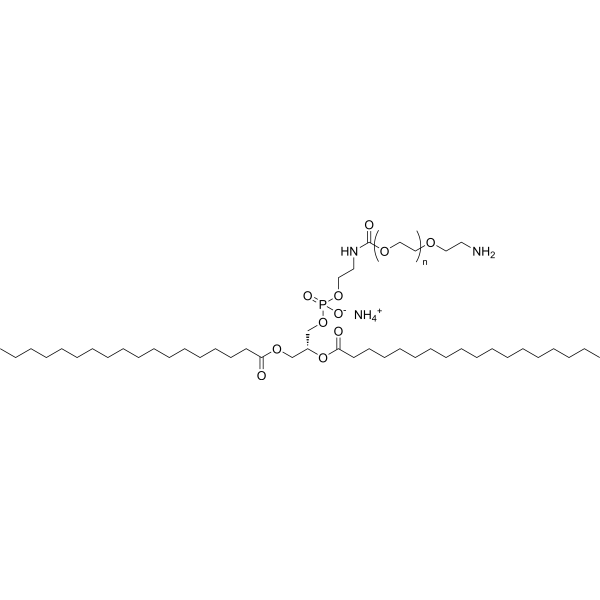
    DSPE-PEG1000-NH2 ammonium

    Liposome Cancer
    DSPE-PEG1000-Amine (DSPE-PEG1000-NH2) ammonium is a 1,2-distearoyl-sn-glycero-3-phosphoethanolamine-polyethylene glycol conjugate with a terminal amino group. DSPE-PEG1000-Amine ammonium can functionalize the surface of PLGA-lecithin-PEG core-shell nanoparticles to introduce positive surface charges. The amino group of DSPE-PEG1000-Amine ammonium can be converted into an aromatic aldehyde to react with the acetone-protected aromatic hydrazide on the surface of bovine carbonic anhydrase (BCA) molecules .
    DSPE-PEG1000-Amine ammonium
  • HY-N3074

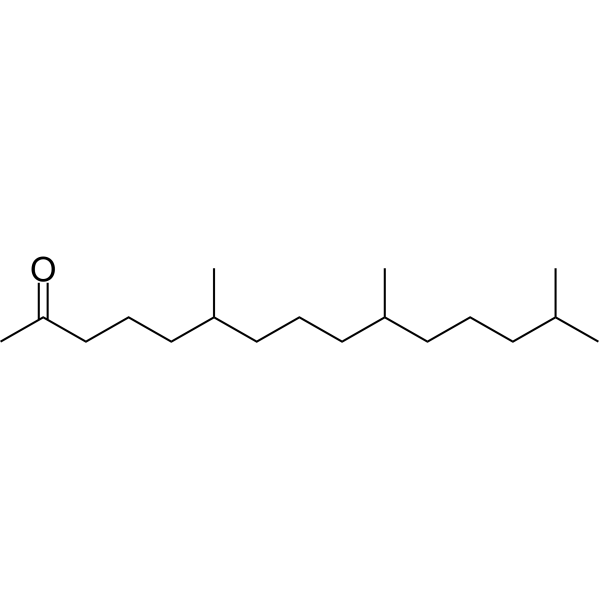
    6,10,14-Trimethyl-2-pentadecanone

    Bacterial Antibiotic Infection Inflammation/Immunology Cancer
    Hexahydrofarnesyl acetone (6,10,14-Trimethyl-2-pentadecanone) is a oral active sesquiterpene with oral activity, exhibiting antibacterial, anti-inflammatory, and anticancer properties, and is used in pain relief research .
    Hexahydrofarnesyl acetone
  • HY-15602A
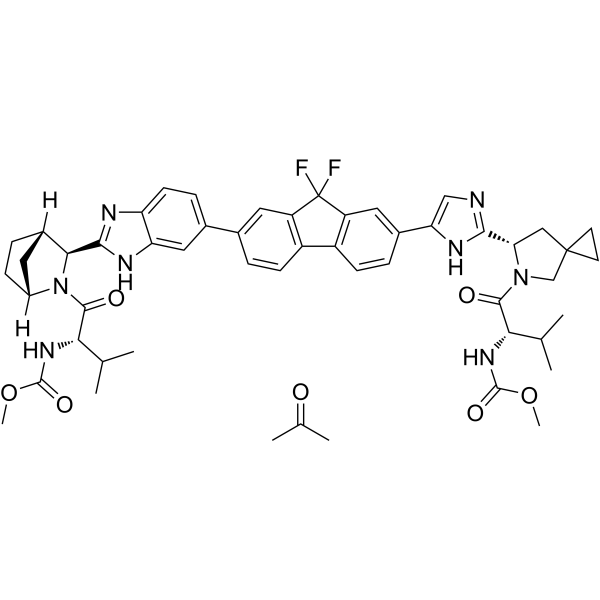
    Ledipasvir (acetone)
    30+ Cited Publications

    GS-5885 (acetone)

    HCV Infection
    Ledipasvir acetone (GS-5885 acetone) is the active ingredient of Ledipasvir. Ledipasvir is an inhibitor of the hepatitis C virus NS5A, with EC50 values of 34 pM against GT1a and 4 pM against GT1b replicon.
    Ledipasvir (acetone)
  • HY-W087995

    Mono-acetone glucose; 1,2-O-Isopropylidene-α-D-glucofuranose

    Biochemical Assay Reagents Others
    1,2-O-Isopropylidene-alpha-d-glucofuranose (Mono-acetone glucose) is a biochemical reagent that can be used as a biological material or organic compound for life science related research.
    1,2-O-Isopropylidene-alpha-d-glucofuranose
  • HY-P4566

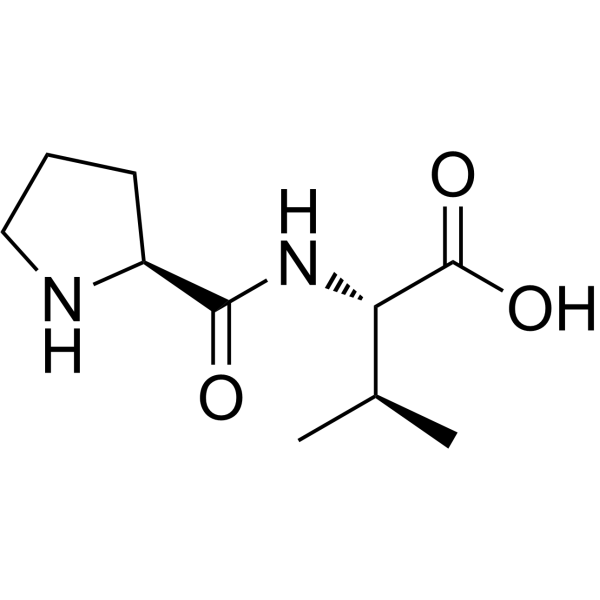
    Pro-Val

    Dipeptidyl Peptidase Others
    H-Pro-Val-OH is a deprotonation dipeptide containing proline, which can catalyze the Michael addition reaction of acetone to trans-β-nitrostyrene. H-Pro Val OH can also serve as a substrate for fibroblast enzymes and prolinase, and has potential applications in biochemical analysis .
    H-Pro-Val-OH
  • HY-N7510

    12-Methoxycarnosic acid

    5 alpha Reductase Infection Cancer
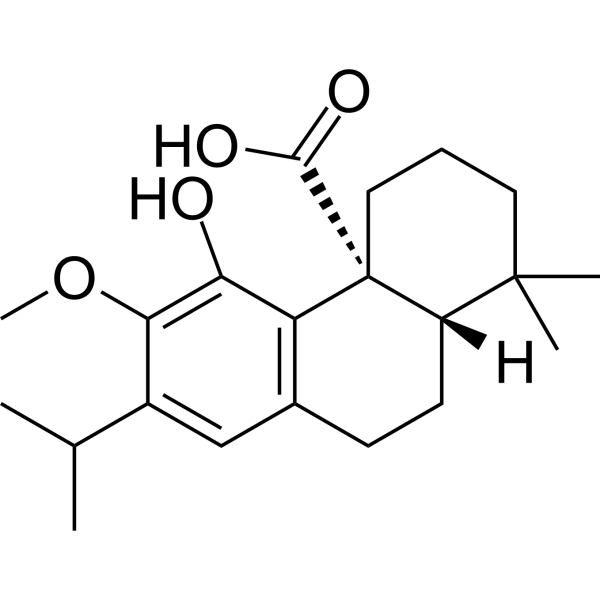
    12-O-Methylcarnosic acid (12-Methoxycarnosic acid), a diterpene carnosic acid isolated from the acetone extract of Salvia microphylla, is an active constituent of 5α-reductase inhibition with an IC50 value of 61.7 μM. 12-O-Methylcarnosic acid inhibits proliferation in LNCaP cells. 12-O-Methylcarnosic acid has antioxidant, anti-cancer and antimicrobial activity .
    12-O-Methylcarnosic acid
  • HY-W016801

    Dimethyl-3-oxoglutarate

    Biochemical Assay Reagents Others
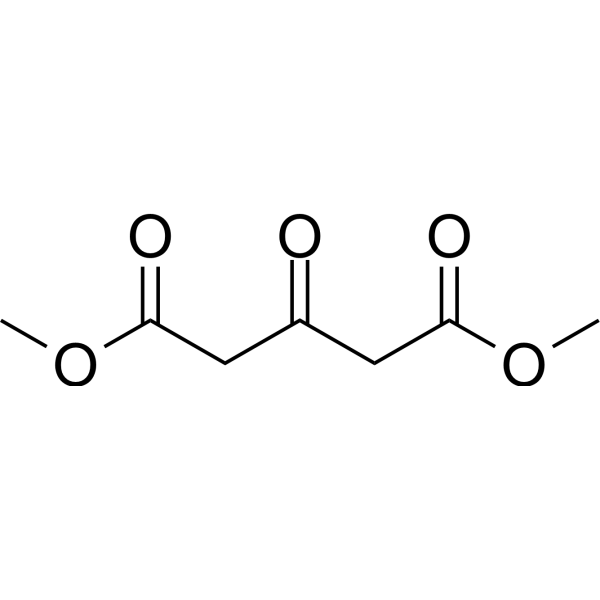
    Dimethyl acetone-1,3-dicarboxylate is a biochemical reagent that can be used as a biological material or organic compound for life science related research.
    Dimethyl acetone-1,3-dicarboxylate
  • HY-76693

    Nucleoside Antimetabolite/Analog Drug Intermediate Others
    2,3-O-Isopropylidene-D-ribonolactone is an acetonide derivative of d-ribonolactone and an intermediate in organic synthesis.2,3-O-Isopropylidene-D-ribonolactone forms via acid-catalyzed acetalization of d-ribonolactone with acetone.2,3-O-Isopropylidene-D-ribonolactone facilitates production of 1,5-dideoxy-1,5-imino-d-ribitol and 1,5-dideoxy-1,5-imino-l-arabinitol .
    2,3-O-Isopropylidene-D-ribonolactone
  • HY-N7494

    Environmental Pollutants Cancer
    Pentacosane is one of the major components in the acetone extract from Curcuma raktakanda and is also in the essential oil from the leaves of Malus domestica. Pentacosane exhibit anti-cancer activities .
    Pentacosane
  • HY-W027872

    Environmental Pollutants Biochemical Assay Reagents Others
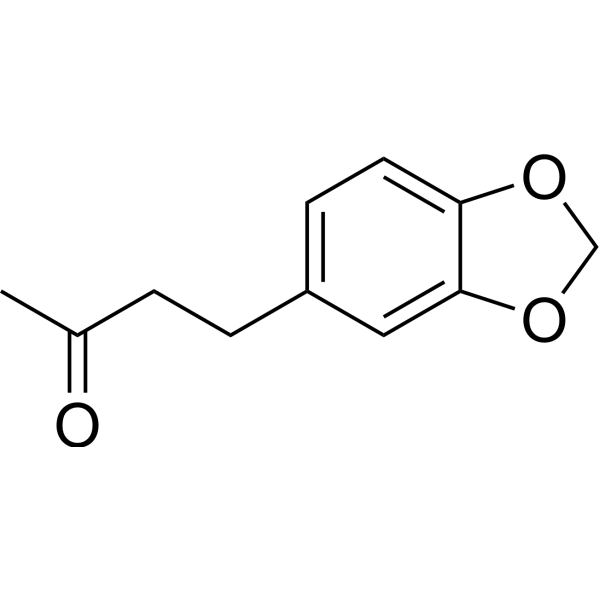
    Piperonyl acetone is a food additives .
    Piperonyl acetone
  • HY-34409

    3-Methylbut-2-en-1-al

    Drug Intermediate Others
    3-Methyl-2-butenal (3-Methylbut-2-en-1-al) is an enone aldehyde that occurs in hops (Humulus lupulus L.) .
    3-Methyl-2-butenal
  • HY-N3956

    Others Others
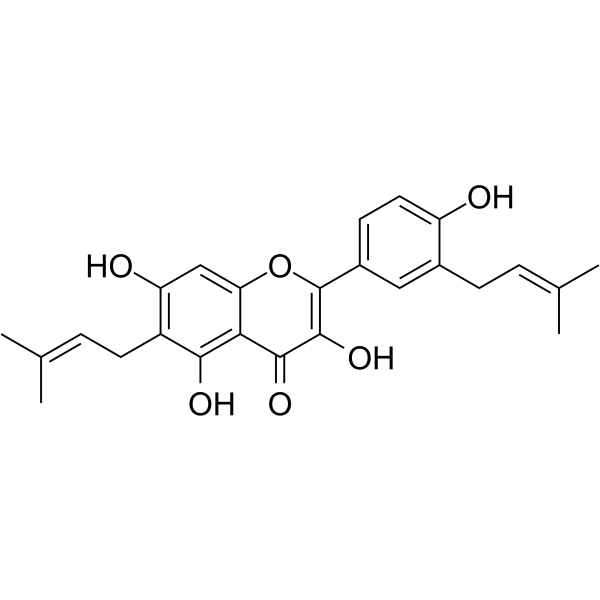
    Glyasperin A is a flavonoid compound isolated from the acetone extract of the leaves of Macaranga gigantea .
    Glyasperin A
  • HY-41840

    Drug Intermediate Others
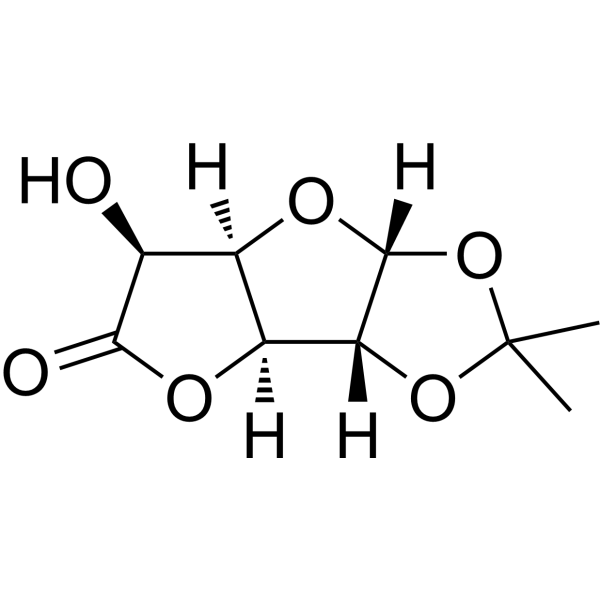
    D-Glucurono-6,3-lactone acetonide is a acetone-protected derivative of D-Glucurono-6,3-lactone (HY-41982) that can be used as a synthetic intermediate.
    D-Glucurono-6,3-lactone acetonide
  • HY-W873634

    TRAP-Pr

    Radionuclide-Drug Conjugates (RDCs) Cancer
    TRAP-Pr is a radionuclide conjugate (RDC) that can bind to the radionuclide [68]Ga. RDCs have the ability to specifically target biomolecules and can be used in medical imaging or therapy. TRAP-Pr can be further functionalized with acetone and used in click chemistry CuAAC reactions to conjugate other labeled molecules.
    TRAP
  • HY-155908

    DSPE-PEG10000-NH2 ammonium

    Liposome Others
    DSPE-PEG10000-Amine ammonium is a phosphoethanolamine involved in the synthesis of liposomes for delivery systems. The amino group of DSPE-PEG10000-Amine ammonium can be converted into aromatic aldehydes by reacting with acetone-protected aromatic hydrazines on the surface of bovine carbonic anhydrase (BCA) molecules. Liposomes form a liposome-BAH-BCA conjugate by forming a bisarylhydrazone (BAH) with the target enzyme molecule. The conjugate catalyzes the hydration of carbon dioxide to bicarbonate.
    DSPE-PEG10000-Amine ammonium
  • HY-155907

    DSPE-PEG5000-NH2 ammonium

    Liposome Others
    DSPE-PEG5000-Amine ammonium is a phosphoethanolamine involved in the synthesis of liposomes for delivery systems. DSPE-PEG5000-Amine ammonium amino group can be converted to aromatic aldehydes that react with acetone-protected aromatic hydrazides on the surface of the bovine carbonic anhydrase (BCA) molecule. Liposomes produce liposome-Bah-BCA conjugates by forming diaryl hydrazone (BAH) with target enzyme molecules. The conjugate catalyzes the hydration of carbon dioxide to bicarbonate.
    DSPE-PEG5000-Amine ammonium
  • HY-W110166

    Biochemical Assay Reagents Others
    Hexyl acrylate is a photoinitiator. Hexyl acrylate undergoes self-polymerization via piCVD under 254 nm UV radiation. Hexyl acrylate can be polymerized by atom transfer radical polymerization technology .
    Hexyl acrylate
  • HY-15602AS

    GS-5885-d6 hydrochloride

    HCV Isotope-Labeled Compounds Infection
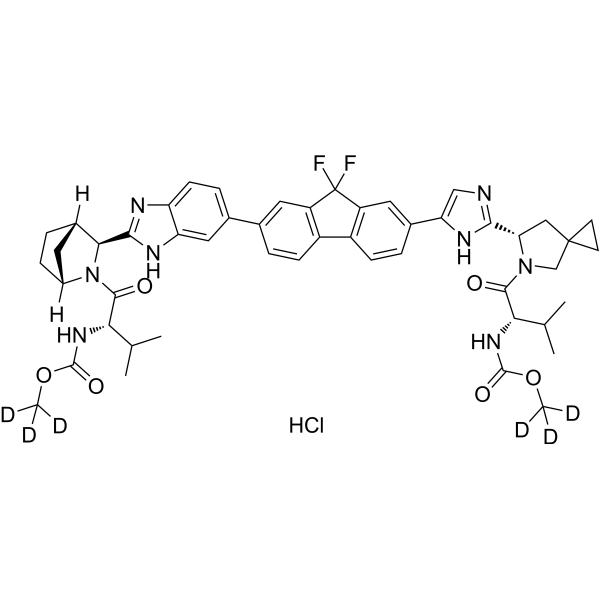
    Ledipasvir-d6 hydrochloride is deuterated labeled Ledipasvir acetone (HY-15602A). Ledipasvir acetone (GS-5885 acetone) is the active ingredient of Ledipasvir. Ledipasvir is an inhibitor of the hepatitis C virus NS5A, with EC50 values of 34 pM against GT1a and 4 pM against GT1b replicon.
    Ledipasvir-d6 hydrochloride
  • HY-N11543

    Others Others
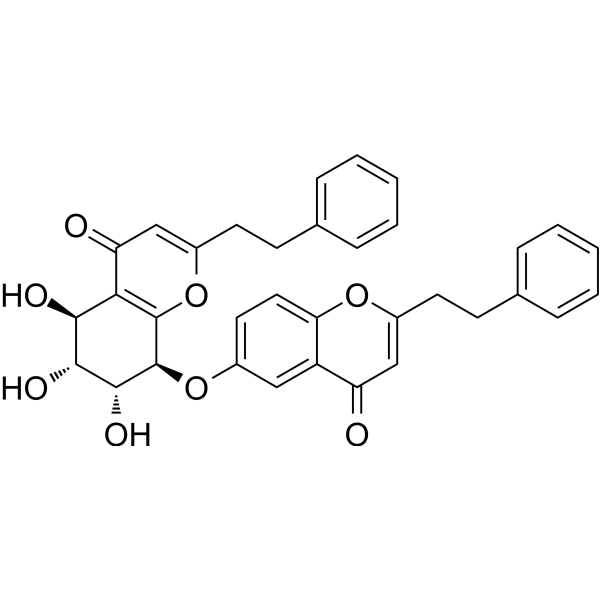
    AH13, a bi-phenylethychromone, can be isolated from acetone extract of agalwood from Kalimantan .
    AH13
  • HY-N7494S

    Isotope-Labeled Compounds Cancer
    Pentacosane-d52 is the deuterium labeled Pentacosane . Pentacosane is one of the major components in the acetone extract from Curcuma raktakanda and is also in the essential oil from the leaves of Malus domestica. Pentacosane exhibit anti-cancer activities .
    Pentacosane-d52
  • HY-W111881

    Biochemical Assay Reagents Others
    Furfurylideneacetone is a furfural-acetone compound and can be used as active diluent for epoxy resins fabrication .
    Furfurylideneacetone
  • HY-142074

    (+)-Inophyllum B

    Reverse Transcriptase HIV Infection
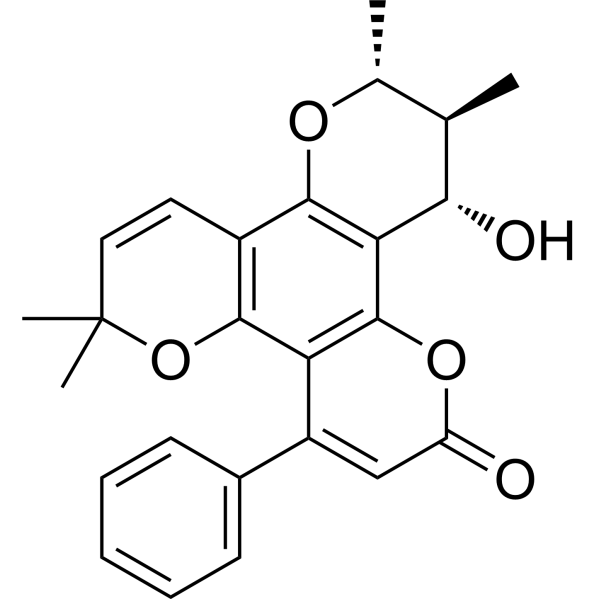
    Inophyllum B ((+)-Inophyllum B) is a potent HIV Reverse Transcriptase inhibitor with an IC50 value of 38 nM. Inophyllum B inhibits HIV-1 (IC50=1.4 μM) in vitro cell culture. Inophyllum B can be isolated from the acetone extract of the giant African snail, Achatina fulica .
    Inophyllum B
  • HY-132950S

    Isotope-Labeled Compounds Others
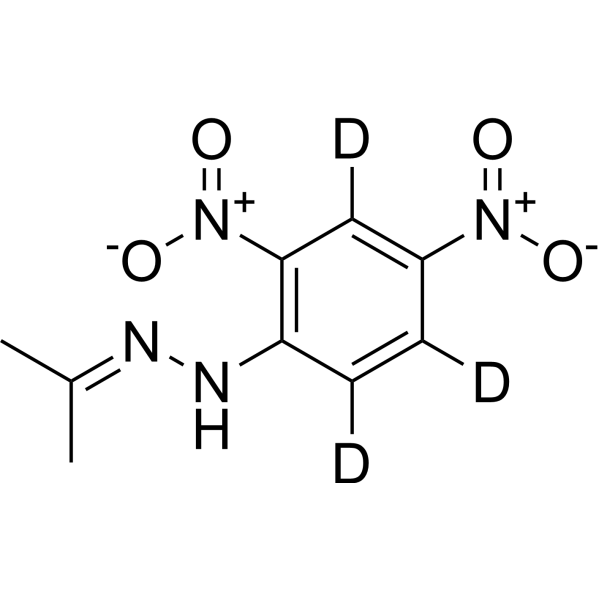
    Acetone 2,4-dinitrophenylhydrazone-d3 is the deuterium labeled Acetone 2,4-dinitrophenylhydrazone .
    Acetone 2,4-dinitrophenylhydrazone-d3
  • HY-W017785

    Diisopropylidene acetone

    Glutathione S-transferase Metabolic Disease Cancer
    Phorone (Diisopropylidene acetone) is a glutathione (GSH) depletor. Phorone specifically and reversibly depletes free GSH through enzymatic binding (Glutathione S-transferase) (Km = 0.9 mM). Phorone reversibly reduces the binding and nuclear uptake of glucocorticoid receptors in rat liver, and this effect is related to the temporal changes in GSH levels. Phorone can be used for studying liver toxicity.
    Phorone
  • HY-P4487

    Biochemical Assay Reagents Others
    H-Pro-Pro-Asp-NH2 is a potent and selective catalyst for asymmetric aldol reactions. H-Pro-Pro-Asp-NH2 catalyzes aldol reactions between acetone and several aldehydes .
    H-Pro-Pro-Asp-NH2
  • HY-W754348

    1-(2,6-Dimethylphenoxy)acetone-d5

    Isotope-Labeled Compounds Others
    1-(2,6-Dimethylphenoxy)propan-2-one-d5 (1-(2,6-Dimethylphenoxy)acetone-d5) is the deuterium labeled 1-(2,6-Dimethylphenoxy)propan-2-one (HY-W270592).
    1-(2,6-Dimethylphenoxy)propan-2-one-d5
  • HY-N12256

    Others Others
    Cis-Emodin bianthrone (compound 4) is a highly condensed oxygen of emodin anthrone. Cis-Emodin bianthrone stable in acetone solution in air .
    cis-Emodin bianthrone
  • HY-N3074R

    6,10,14-Trimethyl-2-pentadecanone (Standard)

    Reference Standards Bacterial Antibiotic Infection Inflammation/Immunology Cancer
    alpha-Bisabolol (Standard) is the analytical standard of alpha-Bisabolol. This product is intended for research and analytical applications. alpha-Bisabolol, an orally active sesquiterpene alcohol, induces cell cycle arrest, mitochondrial apoptosis and inhibition of PI3K/Akt signalling pathways. alpha-Bisabolol exerts a protective action against Cisplatin (HY-17394)-induced nephrotoxicity by mitigating inflammation and oxidative stress through the inhibition of NFκB activation. alpha-Bisabolol exhibits anti-inflammatory, analgesic, antibiotic and anticancer activities .
    Hexahydrofarnesyl acetone (Standard)
  • HY-Y1366R

    Reference Standards Endogenous Metabolite Others
    Hydroxyacetone is a dehydration product of glycerol. Hydroxyacetone is a platform for the electrocatalytic synthesis of acetone, 1,2-propanediol and 2-propanol. Hydroxyacetone can also be used as a glycerol substitute for electrocatalytic hydrogenation and hydrodeoxygenation processes .
    Hydroxyacetone (Standard)
  • HY-N12547

    Others Others
    19-OD-Carboxyglucopyranosyl-12-O--D-glucopyranosyl-11,16-dihydroxyabieta-8,11,13-triene was isolated from the acetone-soluble extract of Clerodendrum bungei roots .
    19-O-D-Carboxyglucopyranosyl-12-O-D-glucopyranosyl-11,16-dihydroxyabieta-8,11,13-triene
  • HY-15344A

    Drug Isomer Neurological Disease
    (S,S)-Ketone monoester is a (S,S)-enantiomer of Ketone monoester (HY-15344). Ketone monoester elevates the AcAc and acetone levels, thereby produces sustained ketosis and significantly delays central nervous system oxygen toxicity (CNS-OT) seizures .
    (S,S)-Ketone monoester
  • HY-N7494R

    Reference Standards Others Cancer
    Pentacosane (Standard) is the analytical standard of Pentacosane. This product is intended for research and analytical applications. Pentacosane is one of the major components in the acetone extract from Curcuma raktakanda and is also in the essential oil from the leaves of Malus domestica. Pentacosane exhibit anti-cancer activities .
    Pentacosane (Standard)
  • HY-N3824

    Others Others
    ent-Atisane-3β,16α,17-triol is a compound that can be isolated from the acetone extract of roots of Euphorbia sieboldiana. ent-Atisane-3β,16α,17-triol is a natural control product .
    ent-Atisane-3β,16α,17-triol
  • HY-N7510R

    12-Methoxycarnosic acid (Standard)

    Reference Standards 5 alpha Reductase Infection Cancer
    12-O-Methylcarnosic acid (Standard) is the analytical standard of 12-O-Methylcarnosic acid. This product is intended for research and analytical applications. 12-O-Methylcarnosic acid (12-Methoxycarnosic acid), a diterpene carnosic acid isolated from the acetone extract of Salvia microphylla, is an active constituent of 5α-reductase inhibition with an IC50 value of 61.7 μM. 12-O-Methylcarnosic acid inhibits proliferation in LNCaP cells. 12-O-Methylcarnosic acid has antioxidant, anti-cancer and antimicrobial activity .
    12-O-Methylcarnosic acid (Standard)
  • HY-N18250

    Drug Derivative Others
    2,2,7,7-Tetramethyltricycloundec-5-en-4-one is a phytochemical that can be found in the acetone extract of Laurus nobilis L. leaves grown in Saudi Arabia .
    2,2,7,7-Tetramethyltricyclo[6.2.1.01,6]undec-5-en-4-one
  • HY-W014331

    Herbicide Photosensitizer Others
    Atraton is a 1,3,5-triazine Herbicide and photodegradable substrate. Atraton undergoes photodegradation under the action of the photosensitizer acetone .
    Atraton
  • HY-N16817

    NO Synthase Inflammation/Immunology Cancer
    Rabdoternin E is a potential anti-inflammatory and antitumor agent. 2α-Acetoxy-14,15-cyclopimara-7β,16-diol only inhibits nitric oxide (NO) production in lipopolysaccharide (LPS)-induced RAW264.7 macrophages (IC50=2.3 μM) and exhibits cytotoxicity against human tumor cells such as HL-60 and SW-480 (IC50 values ??of 2.6 μM and 4.1 μM, respectively). Rabdoternin E is an ent-kaurane-type diterpenoid compound that can be naturally extracted from the 70% acetone aqueous extract of the aerial parts of Isodon rosthornii (Diels) Hara (a plant of the Lamiaceae family, Isodon genus) .
    Rabdoternin E

Inquiry Online

Your information is safe with us. * Required Fields.

Salutation


Country or Region *

Applicant Name *


Organization Name *

Department *


Email Address *


Product Name *

Cat. No.


Requested quantity *

Phone Number *


Remarks

Inquiry Online

Inquiry Information

Product Name:
Cat. No.:
Quantity:
MCE Japan Authorized Agent:

