1. Search Result
Search Result
Results for "

adaptor

" in MedChemExpress (MCE) Product Catalog:

27

Inhibitors & Agonists

1

Inhibitory Antibodies

3

Recombinant Proteins

13

Antibodies

1

Oligonucleotides

Targets Recommended:
Cat. No. Product Name Target Research Areas Chemical Structure
  • HY-144226
    NLRP3/AIM2-IN-3
    Maximum Cited Publications
    10 Publications Verification

    NOD-like Receptor (NLR) AIM2 Pyroptosis Inflammation/Immunology
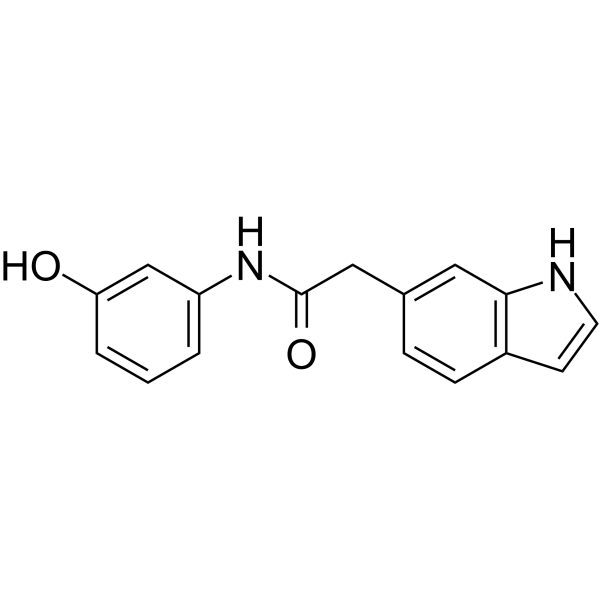
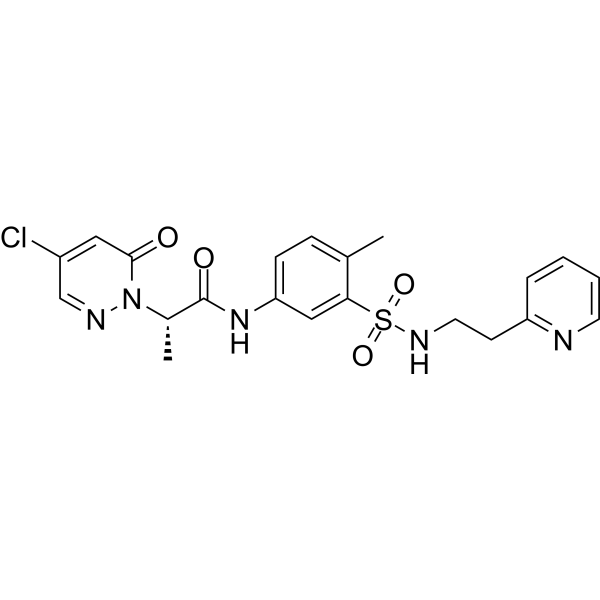
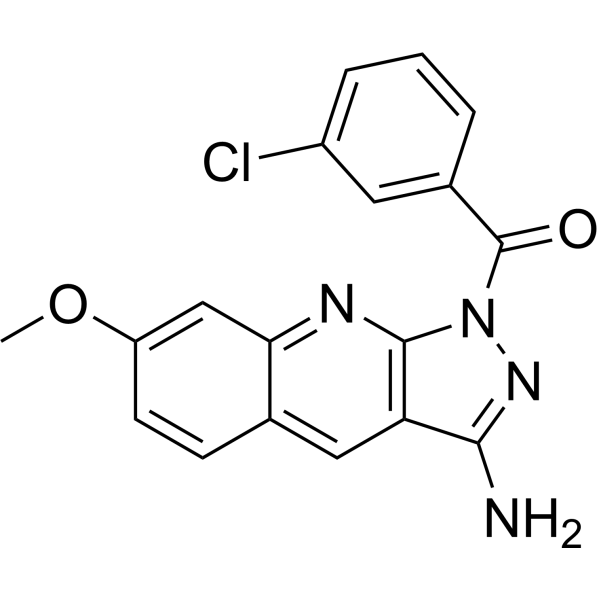
    NLRP3/AIM2-IN-3 (compound 59) is a potent inhibitor with differential species specific effects against NLRP3 and AIM2 inflammasome-dependent pyroptosis. NLRP3/AIM2-IN-3 shows inhibitory efficacy against pyroptosis in THP-1 macrophages stimulated with LPS/nigericin, with an IC50 of 0.077 ± 0.008 μM. NLRP3/AIM2-IN-3 disturbs the interaction of NLRP3 or AIM2 with the adaptor protein ASC and inhibited ASC oligomerization .
    NLRP3/AIM2-IN-3
  • HY-117626
    LP-935509
    1 Publications Verification

    AAK1 Cyclin G-associated Kinase (GAK) SARS-CoV Infection Neurological Disease Inflammation/Immunology
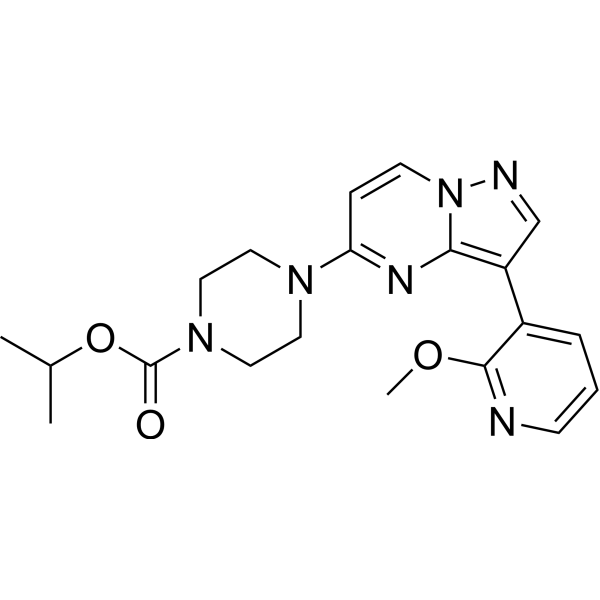
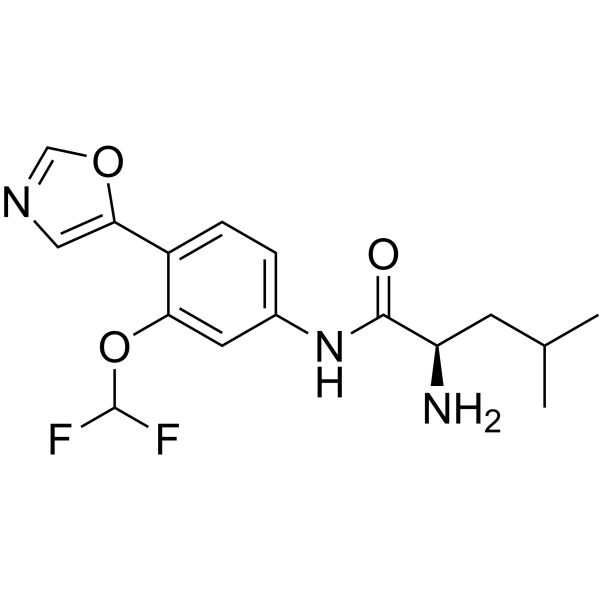
    LP-935509 is an orally active, potent, selective, ATP-competitive and brain-penetrant inhibitor of adaptor protein-2 associated kinase 1 (AAK1) with an IC50 of 3.3 nM and a Ki of 0.9 nM, respectively. LP-935509 is also a potent inhibitor of BIKE (IC50=14 nM) and a modest inhibitor of GAK (IC50=320 nM). LP-935509 shows antinociceptive activity. LP-935509 can be used for neuropathic pain and SARS-CoV-2 research .
    LP-935509
  • HY-134829

    LX-9211; AAK1-IN-1

    AAK1 Neurological Disease
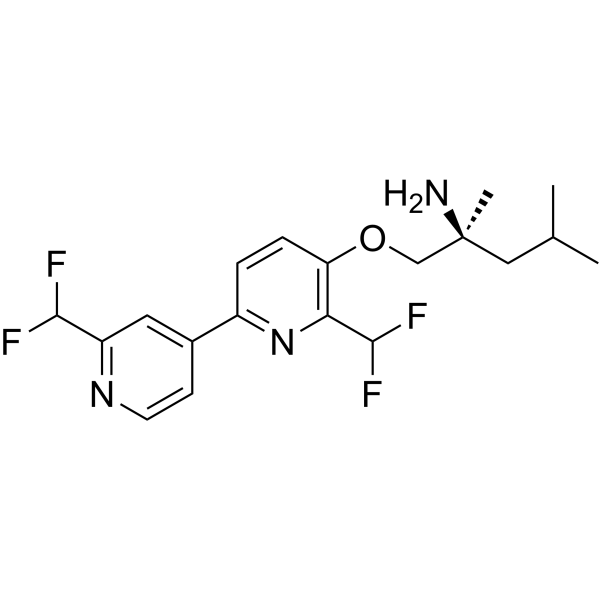
    BMS-986176 (LX-9211) is a highly selective, brain-penetrant, potent AAK1 (adaptor associated kinase 1) inhibitor with an IC50 of 2 nM. BMS-986176 can be used for neurodegenerative diseases research .
    BMS-986176
  • HY-14604
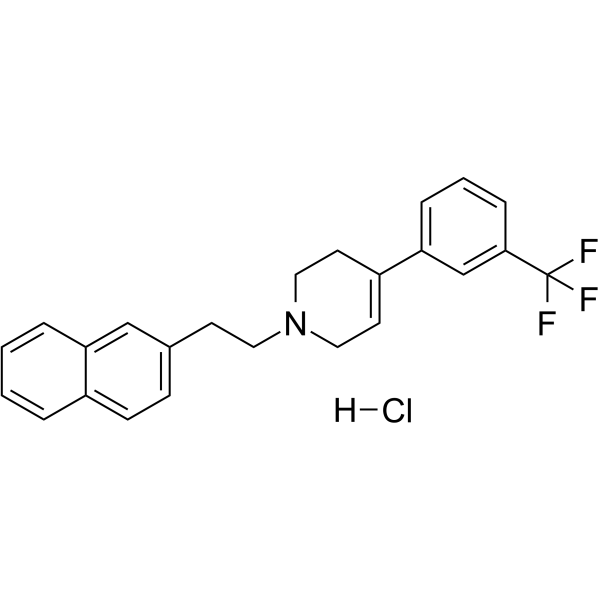
    Xaliproden hydrochloride
    1 Publications Verification

    SR57746A; SR57746 hydrochloride

    5-HT Receptor Dopamine Receptor Trk Receptor PKC ERK Akt JNK Neurological Disease Metabolic Disease
    Xaliproden (SR57746) hydrochloride (SR57746A) is an orally active, highly selective 5-HT1A receptor agonist. Xaliproden hydrochloride activates pertussis toxin-sensitive G protein-coupled signaling cascades, as well as the PKC, ERK1/ERK2, Akt and p21 Ras/MEK-1 pathways. Xaliproden hydrochloride also downregulates the JNK/p66/c-Jun signaling pathway, induces phosphorylation of the shc adaptor protein, regulates extracellular dopamine and 5-HT levels, and induces [ 35S]GTPγS labeling in rat brain structures rich in 5-HT1A receptors. Xaliproden hydrochloride exerts neurotrophic, neuroprotective, renoprotective, anti-inflammatory, anti-apoptotic, anti-fibrotic and analgesic effects. Xaliproden hydrochloride also enhances NGF-induced neurite outgrowth, promotes motor neuron survival, attenuates renal tubular injury and inhibits chemotherapy-induced mechanical allodynia, without activating or altering NGF-induced TrkA receptor activation. Xaliproden hydrochloride can be used in the research of motor neuron disease, diabetic nephropathy, chemotherapy-induced peripheral neuropathy, amyotrophic lateral sclerosis, Alzheimer's disease, acute tonic nociceptive pain, inflammatory pain, depression and anxiety .
    Xaliproden hydrochloride
  • HY-132309
    BRD0639
    1 Publications Verification

    Histone Methyltransferase Cancer
    BRD0639 is a first-in-class inhibitor of the PRMT5-substrate adaptor interaction. BRD0639 is a PRMT5 binding motif (PBM)-competitive agent that can support studies of PBM dependent PRMT5 activities .
    BRD0639
  • HY-115868

    AAK1 Neurological Disease
    BMS-911172 is an adaptor associated kinase 1 (AAK1 kinase) inhibitor (IC50 = 35 nM).
    BMS-911172
  • HY-161166

    Others Others
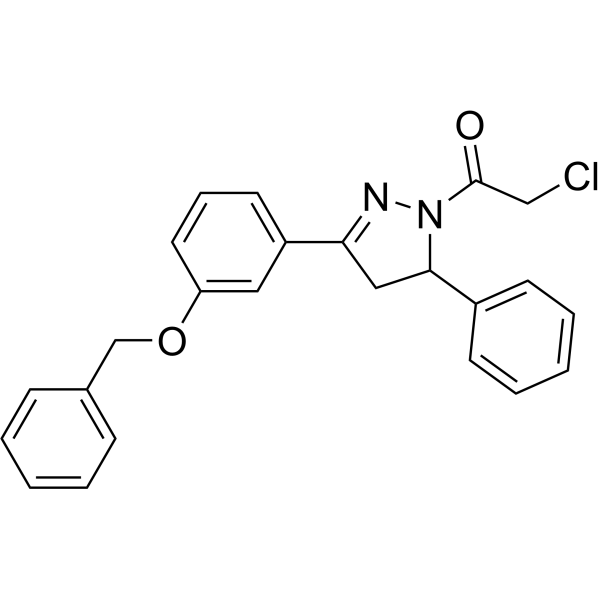
    MM-02-57 is a covalent DDB1 CUL4A adaptor protein recruiter .
    MM-02-57
  • HY-138646

    Poly(dA:dT) sodium

    Cyclic GMP-AMP Synthase STING Inflammation/Immunology
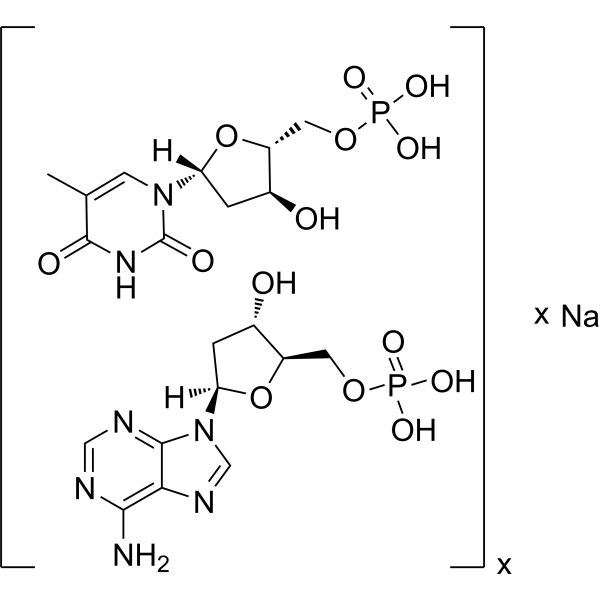
    Poly(deoxyadenylic-thymidylic) acid (Poly(dA:dT)) sodium is a double-stranded DNA stimulant. Poly(deoxyadenylic-thymidylic) acid sodium is recognized by the intracellular DNA sensor DDX41 and activates the innate immune pathway via the adaptor protein STING, inducing the production of cytokines such as type I interferons. Poly(deoxyadenylic-thymidylic) acid sodium also serves as an in vitro transcription template for free RNA polymerase .
    Poly(deoxyadenylic-thymidylic) acid sodium
  • HY-175536

    AAK1 Infection
    AAK1-IN-11 is an AAK1 (adaptor associated kinase 1) inhibitor with an IC50 of 2 nM. AAK1-IN-11 has antiviral activity .
    AAK1-IN-11
  • HY-174312

    NOD-like Receptor (NLR) Pyroptosis Caspase Interleukin Related Inflammation/Immunology
    NLRP3-IN-81 (N102) is a BBB-penetrable inhibitor against NLRP3 inflammasome-dependent pyroptosis with an EC50 of 0.029 μM against cell pyroptosis induced by Nigericin (HY-127019). NLRP3-IN-81 potently inhibits NLRP3-dependent activation of caspase-1 and the release of IL-1β. NLRP3-IN-81 disturbs the interaction of NLRP3 with the adaptor protein ASC and inhibits ASC oligomerization. NLRP3-IN-81 can be used for pyroptosis-related diseases research, such as inflammatory bowel diseases and type 2 diabetes .
    NLRP3-IN-81
  • HY-144301

    AAK1 Neurological Disease
    AAK1-IN-2 (compound (S)-31) is a potent, selective and brain-penetrant inhibitor of Adaptor Protein 2-Associated Kinase 1 (AAK1), with an IC50 of 5.8 nM. AAK1-IN-2 can be used for the research of neuropathic pain .
    AAK1-IN-2
  • HY-144301A

    AAK1 Neurological Disease
    AAK1-IN-2 TFA (compound (S)-31) is a potent, selective and brain-penetrant inhibitor of Adaptor Protein 2-Associated Kinase 1 (AAK1), with an IC50 of 5.8 nM. AAK1-IN-2 TFA can be used for the research of neuropathic pain .
    AAK1-IN-2 TFA
  • HY-144302

    AAK1 Neurological Disease
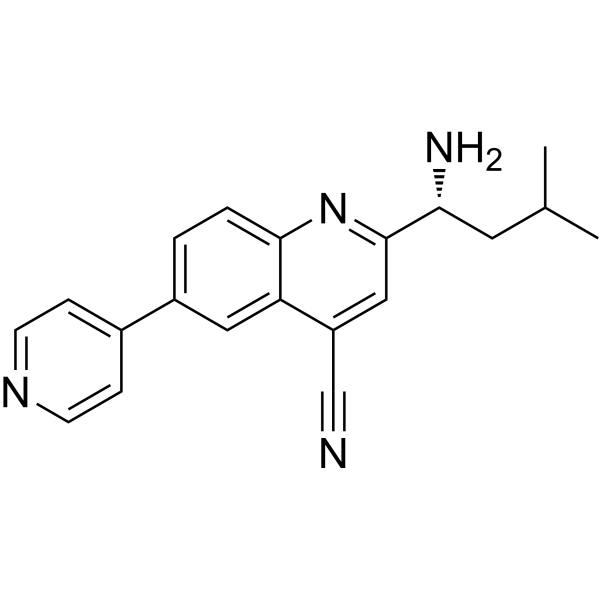
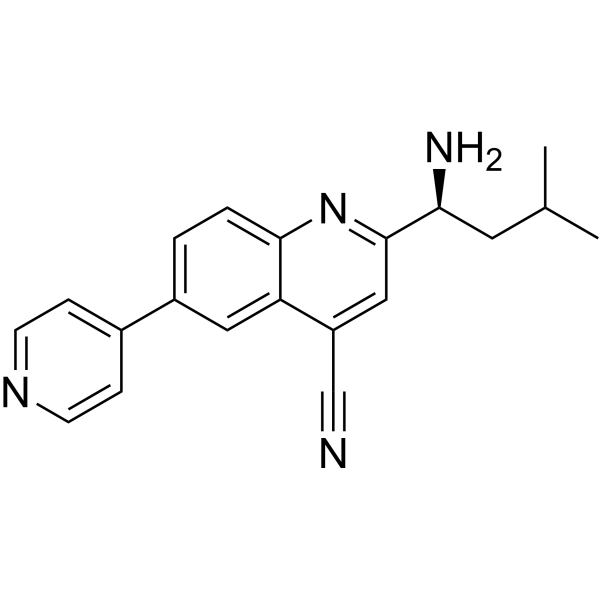
    AAK1-IN-3, a quinoline analogue, is a brain-penetrant adaptor protein 2-associated kinase 1 (AAK1) inhibitor with an IC50 of 11 nM. AAK1-IN-3 has the potential for neuropathic pain research .
    AAK1-IN-3
  • HY-144302A

    AAK1 Neurological Disease
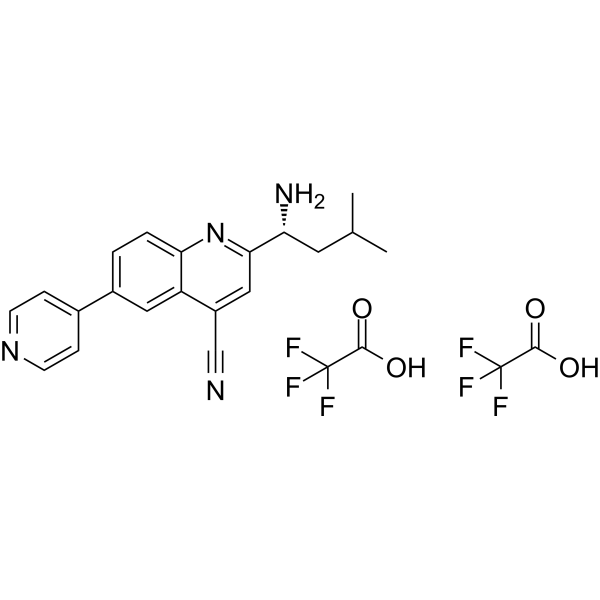
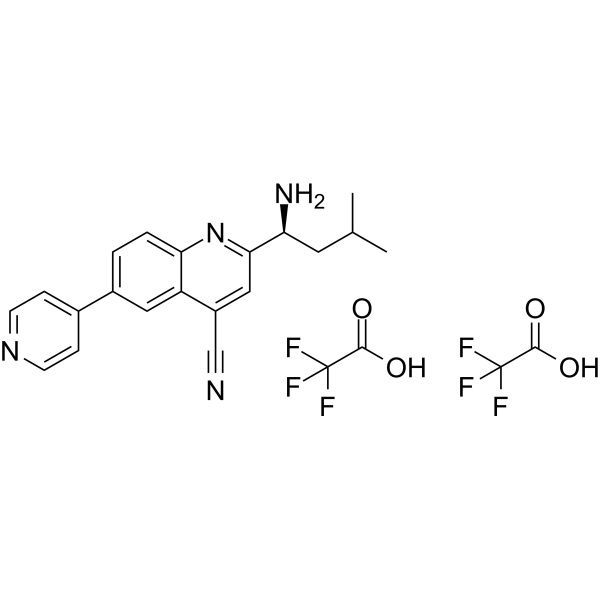
    AAK1-IN-3 TFA, a quinoline analogue, is a brain-penetrant adaptor protein 2-associated kinase 1 (AAK1) inhibitor with an IC50 of 11 nM. AAK1-IN-3 has the potential for neuropathic pain research .
    AAK1-IN-3 TFA
  • HY-169578

    PKC Cancer
    PKC-IN-5 (Compound PKCe2054) is a PKC inhibitor. PKC-IN-5 prevents the interaction between PKCe and its adaptor protein RACK2 .
    PKC-IN-5
  • HY-120092

    AAK1 Neurological Disease
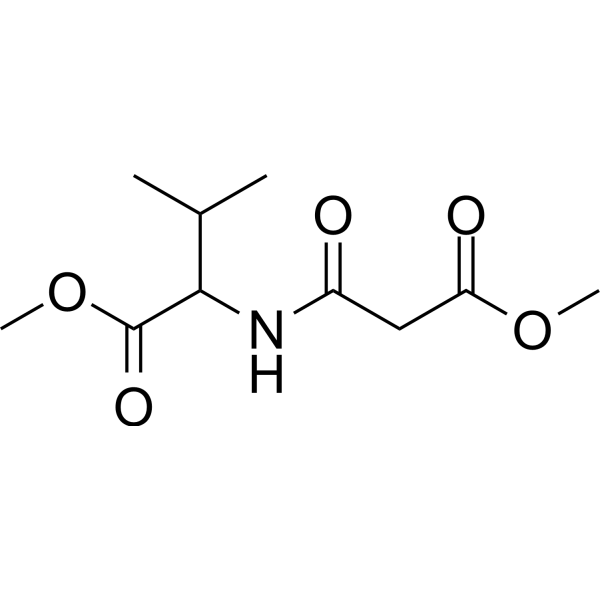
    BMT-046091 is a selective inhibitor of adaptor-associated kinase 1 (AAK1). BMT-046091 inhibits phosphorylation of the μ2 peptide by AAK1 with an IC50 value of 2.8 nM .
    BMT-046091
  • HY-176705

    AAK1 Neurological Disease
    AAK1-IN-9 (Compound 3) is an AAK1 (adaptor associated kinase 1) inhibitor with an IC50 of 10.92 nM. AAK1-IN-9 can be used in the study of neurodegenerative diseases .
    AAK1-IN-9
  • HY-124996

    NO Synthase Neurological Disease Inflammation/Immunology Cancer
    (Rac)-ZLc-002, an inhibitor of nNOS interaction with nitric oxide synthase 1 adaptor protein (NOS1AP), suppresses inflammatory nociception and chemotherapy-induced neuropathic pain and synergizes with Paclitaxel (HY-B0015) to reduce tumor cell viability .
    (Rac)-ZLc-002
  • HY-174514

    mRNA Cancer
    Human TNFRSF4 mRNA encodes the human TNF receptor superfamily member 4 (TNFRSF4) protein, a member of the TNF receptor superfamily. TNFRSF4 has been shown to activate NF-kappaB through its interaction with adaptor proteins TRAF2 and TRAF5.
    Human TNFRSF4 mRNA
  • HY-145838

    AAK1 Neurological Disease
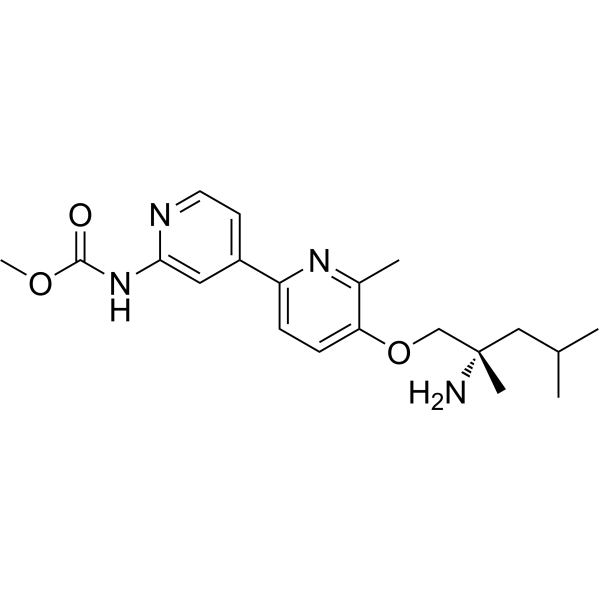
    AAK1-IN-4 is a highly selective, CNS-penetrable, and orally active adaptor protein-2-associated kinase 1 (AAK1) inhibitor (AAK1 IC50 of 4.6 nM, Filt Ki of 0.9 nM, and cell IC50 of 8.6 nM). AAK1-IN-4 has the potential for the research for neuropathic pain .
    AAK1-IN-4
  • HY-145839

    AAK1 Neurological Disease
    AAK1-IN-5 is a highly selective, CNS-penetrable, and orally active adaptor protein-2-associated kinase 1 (AAK1) inhibitor (AAK1 IC50 of 1.2 nM, Filt Ki of 0.05 nM, and cell IC50 of 0.5 nM). AAK1-IN-4 has the potential for the research for neuropathic pain .
    AAK1-IN-5
  • HY-172594

    MAP4K Interleukin Related Inflammation/Immunology Cancer
    HPK1-IN-57 (Compound 10c) is a hematopoietic progenitor kinase 1 (HPK1) inhibitor with an IC50 value of 0.09 nM. HPK1-IN-57 inhibits the activity of HPK1 kinase, hindering the phosphorylation of the downstream adaptor protein SLP76 (IC50 is 33.74 nM) and effectively stimulating the secretion of the T cell activation marker IL-2 (EC50 is 84.24 nM). HPK1-IN-57 is promising for research of tumor immunotherapy .
    HPK1-IN-57
  • HY-119820

    SR57746A free base

    Akt Dopamine Receptor Trk Receptor 5-HT Receptor PKC JNK ERK Neurological Disease
    Xaliproden (SR57746) free base is an orally active, highly selective 5-HT1A receptor agonist. Xaliproden free base activates pertussis toxin-sensitive G protein-coupled signaling cascades, as well as the PKC, ERK1/ERK2, Akt and p21 Ras/MEK-1 pathways. Xaliproden free base also downregulates the JNK/p66/c-Jun signaling pathway, induces phosphorylation of the shc adaptor protein, regulates extracellular dopamine and 5-HT levels, and induces [ 35S]GTPγS labeling in rat brain structures rich in 5-HT1A receptors. Xaliproden free base exerts neurotrophic, neuroprotective, renoprotective, anti-inflammatory, anti-apoptotic, anti-fibrotic and analgesic effects. Xaliproden free base also enhances NGF-induced neurite outgrowth, promotes motor neuron survival, attenuates renal tubular injury and inhibits chemotherapy-induced mechanical allodynia, without activating or altering NGF-induced TrkA receptor activation. Xaliproden free base can be used in the research of motor neuron disease, diabetic nephropathy, chemotherapy-induced peripheral neuropathy, amyotrophic lateral sclerosis, Alzheimer's disease, acute tonic nociceptive pain, inflammatory pain, depression and anxiety .
    Xaliproden free base
  • HY-182597

    Imidazoline Receptor 5-HT Receptor Adrenergic Receptor Neurological Disease
    Tracizoline is an orally active I2-imidazoline receptor agonist. Tracizoline functionally modulates I2-imidazoline receptors, regulates hippocampal FADD cell fate adaptor, attenuates mechanical and thermal hyperalgesia, activates α2A-adrenergic receptors with very weak partial agonism, and induces antidepressant-like activity via 5-HT1A receptor activation. Tracizoline can be used for the research of inflammatory pain, neuropathic pain, and depression .
    Tracizoline
  • HY-181446

    Endogenous Metabolite Others
    PtdIns-(4,5)-P2 (1,2-dipalmitoyl) ammonium (PI(4,5)P2) is a signaling molecule. PtdIns-(4,5)-P2 (1,2-dipalmitoyl) ammonium is critical at multiple stages of endocytosis, where it sequentially recruits adaptor proteins and accessory proteins to endocytic sites. PtdIns-(4,5)-P2 (1,2-dipalmitoyl) ammonium is considered essential for maintaining the structure of the Golgi apparatus and the transport of proteins within the Golgi apparatus .
    PtdIns-(4,5)-P2 (1,2-dipalmitoyl) ammonium
  • HY-P992162

    Orexin Receptor (OX Receptor) Interleukin Related Inflammation/Immunology Cancer
    23ME-00610 is a humanized effector-function-null IgG1 antibody targeting CD200R1, with a Kd of <0.1 nM for hCD200R1. 23ME-00610 blocks the binding of CD200 to CD200R1 and inhibits the recruitment of the downstream adaptor protein DOK2 to CD200R1. 23ME-00610 restores IL-2 production suppressed by CD200. 23ME-00610 induces cytokine production in cells. 23ME-00610 enhances cell-mediated tumor cell killing in vitro. 23ME-00610 can be used for melanoma research .
    23ME-00610
  • HY-14604R

    SR57746A (Standard); SR57746 hydrochloride (Standard)

    Reference Standards Akt Dopamine Receptor Trk Receptor 5-HT Receptor PKC JNK ERK Neurological Disease Cancer
    Xaliproden (hydrochloride) (Standard) is the analytical standard of Xaliproden (hydrochloride). This product is intended for research and analytical applications. Xaliproden (SR57746) hydrochloride (SR57746A) is an orally active, highly selective 5-HT1A receptor agonist. Xaliproden hydrochloride activates pertussis toxin-sensitive G protein-coupled signaling cascades, as well as the PKC, ERK1/ERK2, Akt and p21 Ras/MEK-1 pathways. Xaliproden hydrochloride also downregulates the JNK/p66/c-Jun signaling pathway, induces phosphorylation of the shc adaptor protein, regulates extracellular dopamine and 5-HT levels, and induces [ 35S]GTPγS labeling in rat brain structures rich in 5-HT1A receptors. Xaliproden hydrochloride exerts neurotrophic, neuroprotective, renoprotective, anti-inflammatory, anti-apoptotic, anti-fibrotic and analgesic effects. Xaliproden hydrochloride also enhances NGF-induced neurite outgrowth, promotes motor neuron survival, attenuates renal tubular injury and inhibits chemotherapy-induced mechanical allodynia, without activating or altering NGF-induced TrkA receptor activation. Xaliproden hydrochloride can be used in the research of motor neuron disease, diabetic nephropathy, chemotherapy-induced peripheral neuropathy, amyotrophic lateral sclerosis, Alzheimer's disease, acute tonic nociceptive pain, inflammatory pain, depression and anxiety .
    Xaliproden hydrochloride (Standard)

Inquiry Online

Your information is safe with us. * Required Fields.

Salutation


Country or Region *

Applicant Name *


Organization Name *

Department *


Email Address *


Product Name *

Cat. No.


Requested quantity *

Phone Number *


Remarks

Inquiry Online

Inquiry Information

Product Name:
Cat. No.:
Quantity:
MCE Japan Authorized Agent:

