15 Results for "

allosteric interface

" in MedChemExpress (MCE) Product Catalog:
Products (15)

15 Results for "allosteric interface" in MCE Product Catalog:

1
1 Cited Publications
Cat. No.: HY-107198
CAS No.: 68236-13-5
Purity:  99.84%
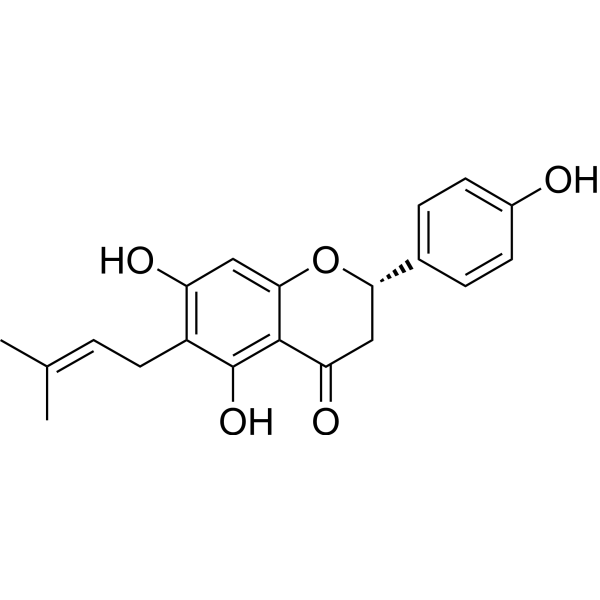
(2S)-6-Prenylnaringenin is the most efficient compound in forebrain. (2S)-6-Prenylnaringenin acts as a GABAA positive allosteric modulator at α+β- binding interface .
loading...
    loading...
Cat. No.: HY-159805
CAS No.: 2813260-27-2
Target:  

CDK

Research Areas:  

Cancer

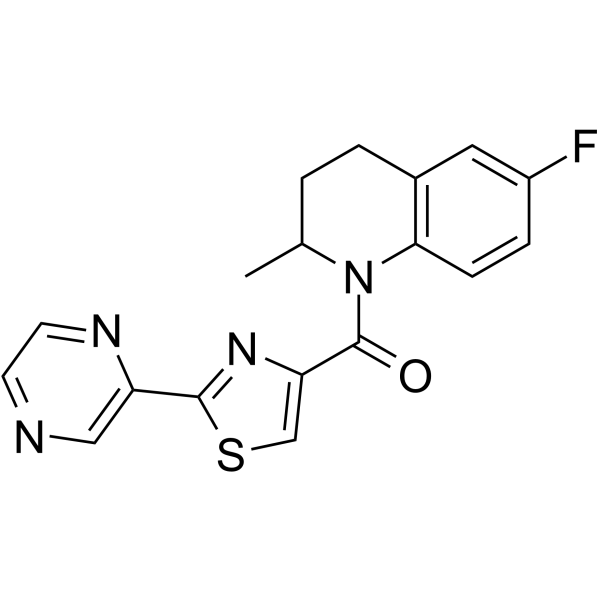
CDK2-IN-31 is a CCNE1:CDK2 complex inhibitor with an IC50 of 0.13 μM. CDK2-IN-31 binds to a cryptic allosteric pocket at the CCNE1:CDK2 interface, inducing structural rearrangements of the CDK2 A-loop that disrupt the kinase's active conformation and interfere with substrate binding. CDK2-IN-31 inhibits phosphorylation of retinoblastoma protein 1 (RB1) in CCNE1-dependent ovarian cancer cells. CDK2-IN-31 impairs coenrichment of protein PRC1 with CCNE1-N112C:CDK2 complexes. CDK2-IN-31 can be used for the research of ovarian cancer .
loading...
    loading...
Cat. No.: HY-P10436
CAS No.: 2411851-64-2
Target:  

Raf

Research Areas:  

Cancer

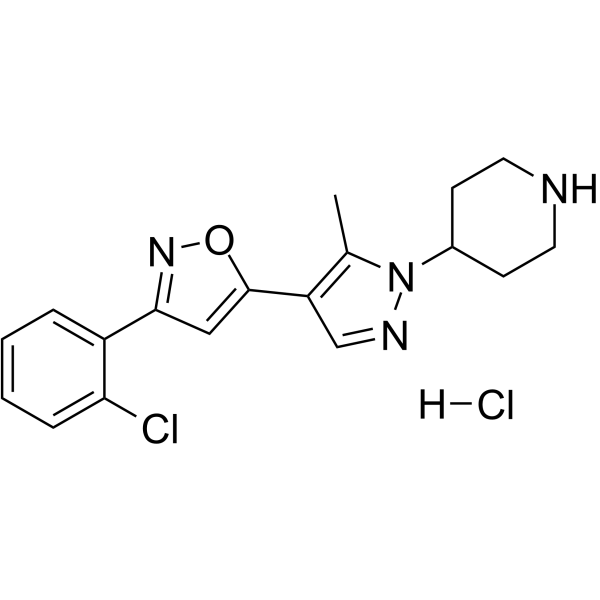
Braftide is an allosteric inhibitor for BRAF kinase by targeting the dimer interface of BRAF kinase and inhibiting the formation of BRAF dimers. Braftide inhibits wild-type BRAF and oncogenic BRAF G469A with IC50 of 364 nM and 172 nM, respectively. Braftide inhibits MAPK signaling pathway, inhibits proliferation of KRAS mutant tumor cells (EC50 is 7.1 and 6.6 μM, for HCT116 and HCT-15), in combination of TAT sequence. Braftide can be used for cancer research .
loading...
    loading...
Cat. No.: HY-169206
CAS No.: 3126204-69-8
Research Areas:  

Others

PF-3166 is a non-covalent allosteric PAD2 inhibitor (human PAD2 IC50 = 150-610 nM and 5.47 μM; Kd = 221 nM). PF-3166 induces a conformational change by binding to the PAD2 dimer interface, causing calcium release from the high-affinity site and masking the other calcium-binding site, thereby preventing catalytic activation. PF-3166 exhibits selectivity for PAD2 over PAD3 and PAD4, and inhibits total cellular citrullination and reduces non-histone H3 citrullination. PF-3166 can be used for research on PAD2-related citrullination .
loading...
    loading...
Cat. No.: HY-122016A
CAS No.: 2119598-24-0
Target:  

Bacterial

Research Areas:  

Infection Inflammation/Immunology

BRD-4592 is an allosteric inhibitor targeting Mycobacterium tuberculosis tryptophan synthase (TrpAB). BRD-4592 binds at the α-β-subunit interface of TrpAB, with an IC50 of 70.9 nM for the α-subunit and 22.6 nM for the β-subunit .
loading...
    loading...
Cat. No.: HY-179241
Target:  

Dopamine Receptor

Research Areas:  

Neurological Disease

UNC10062 is a dopamine D1 receptor (D1R) positive allosteric modulator. UNC10062 specifically binds to the extracellular allosteric pocket (upper pocket) at the interface of transmembrane helices (TM) 1 and 7 of D1R. UNC10062 can increase dopamine potency and D1R-mediated cAMP production. UNC10062 can be used for the research of neurological disease, such as Parkinson's disease .
loading...
    loading...
Cat. No.: HY-168834
CAS No.: 57801-95-3
Target:  

GABA Receptor

Research Areas:  

Neurological Disease

Flubrotizolam is a GABA-A receptor modulator. Flubrotizolam allosterically enhances GABA-induced chloride currents at α1β2γ2 GABA-A receptors through the benzodiazepine binding interface, an effect that is abolished by Flumazenil (HY-B0009). Flubrotizolam undergoes limited metabolism in human hepatocytes, primarily generating metabolites via hydroxylation and glucuronidation .
loading...
    loading...
Cat. No.: HY-131941
CAS No.: 1234977-97-9
Purity:  97.40%
Target:  

GABA Receptor

Research Areas:  

Neurological Disease

SJM-3 is a positive allosteric modulator of different isoforms of the GABAA receptor. SJM-3 binds at the high-affinity benzodiazepine binding site at the α+/γ- subunit interface .
loading...
    loading...
Cat. No.: HY-136258
CAS No.: 2250025-94-4
Target:  

nAChR

Research Areas:  

Neurological Disease

nAChR agonist CMPI hydrochloride is a potent and selective positive allosteric modulator (PAM) of nAChR containing a α4:α4 subunit interface. nAChR agonist CMPI hydrochloride enhances the response of (α4)3(β2)2 nAChR to ACh (10 µM) with an EC50 of 0.26 µM. nAChR agonist CMPI hydrochloride has potential for the research of nicotine dependence and many neuropsychiatric conditions associated with decreased brain cholinergic activity .
loading...
    loading...
Cat. No.: HY-190194
CAS No.: 3140889-82-0
Research Areas:  

Neurological Disease

BIO-1975900 is an allosteric Molecular glue targeting Parkin, with an EC50 of 2.9 µM. BIO-1975900 binds to the RING0/pUb interface to enhance pUb-dependent Parkin activation. BIO-1975900 can be used for research on Parkinson's disease .
loading...
    loading...
Cat. No.: HY-165475
CAS No.: 2231101-34-9
Target:  

iGluR

Research Areas:  

Neurological Disease

TDPAM02 is a potent positive allosteric modulator of the AMPA receptor GluA2 subunit, with an EC50 of 1.4 nM for the GluA2 flop (Q) subunit. TDPAM02 binds at the dimer interface of the GluA2 ligand-binding domain and stabilizes the receptor conformation by simultaneously occupying two allosteric sites, thereby significantly slowing the receptor desensitization process and maintaining rapid excitatory synaptic transmission in the central nervous system. TDPAM02 is also a positive allosteric modulator of the GluK1 receptor. TDPAM02 can be used for research on neurological diseases .
loading...
    loading...
Cat. No.: HY-131570
CAS No.: 1997359-63-3
Target:  

Glycosidase

Research Areas:  

Neurological Disease

JZ-4109 is a β-Glucocerebrosidase (GCase) modulator with an IC50 of 8 nM for wild-type recombinant GCase. JZ-4109 binds to an allosteric site at the GCase dimer interface, stabilizes wild-type and GCase N370S mutant GCase, induces GCase dimerization. JZ-4109 increases GCase protein abundance. JZ-4109 can be used for the research of Parkinson's diseas .
loading...
    loading...
Cat. No.: HY-L942
1,620 compounds

Unlike highly conserved orthosteric sites, allosteric sites exhibit low conservation, high hydrophobicity, weak polarity, confined geometry, and dynamic cryptic properties. Rather than rigid keyhole-like cavities, they typically appear as flexible grooves, subunit interface clefts, or shallow depressions formed by protein conformational changes.

Based on the dynamic, hydrophobic, and elongated nature of allosteric pockets, MCE has carried out targeted fragment modification and screening under strict physicochemical criteria: MW 120–280 Da, HBD ≤ 2, HBA ≤ 3, PSA 30–80 Ų, rotatable bonds ≤ 2, cLogP 1–3.5. High 3D diversity was further ensured by PMI analysis, yielding fragments with excellent shape complementarity to allosteric pockets.

This library contains 1,800 structurally diverse, drug-like fragments, this library supports allosteric drug development and pocket optimization. It significantly improves screening hit rates and enables efficient, precise early-stage R&D of allosteric drugs.

Cat. No.: HY-D3441
Research Areas:  

Others

LumiPK is an environment-sensitive probe that specifically targets the liver isoform of pyruvate kinase (PKL). LumiPK exhibits high affinity for PKL with a Kd of 37 nM. LumiPK integrates the 4-sulfonamido-7-aminobenzoxadiazole (SBD) fluorophore into a phthalazine scaffold, and its fluorescence intensity changes with the polarity of the chemical environment, thereby directly reflecting protein occupancy. LumiPK binds only to the tetrameric form of PKL, with the binding site being an allosteric pocket formed at the subunit interface, and key water-mediated interactions enhance its potency; in polar environments such as buffer, its fluorescence is significantly quenched, whereas upon binding to the nonpolar allosteric pocket of PKL, its fluorescence is enhanced. In fluorescence detection, its excitation/emission wavelengths are Ex/Em = 450/550 nm .
loading...
    loading...
Cat. No.: HY-L944
11028 compounds

MCE 18 stands for Medicinal Chemistry Evolution 2018. This metric was established based on structural data of 28,161 patented lead molecules, 1,370 marketed innovative drugs, and nearly 30,000 investigational candidates from preclinical to Phase III stages across 23 major global pharmaceutical companies from 1950 to 2018. After scaffold clustering analysis, a scoring model was constructed by integrating five three dimensional scaffold characteristics, including aromatic rings (AR), non aromatic heterocycles (NAR), chiral centers (CHIRAL), spirocycles (SPIRO), and the sp³ carbon ratio in cyclic and acyclic moieties, enabling quantitative assessment of molecular scaffold novelty and three dimensional complexity.

According to the score distribution of patented molecules, the top 25% of the original patent dataset was defined as the high novelty region. MCE 18 high scoring compounds selected based on this criterion can effectively avoid scaffold patent conflicts and intellectual property risks from the source. Molecules in this range typically feature a high sp³ carbon ratio, abundant chiral centers, spirocycles, and fused heterocycles with prominent three dimensional conformations. Their spatial properties allow precise matching to complex non traditional undruggable target pockets such as PPI interfaces and allosteric sites, making them ideal structural types for early stage screening of First in class drugs.

MCE‑18 Novelty Focused drug‑Like library strictly selects molecules from the aforementioned high scoring range, containing more than 10,000 premium drug like molecules with highly diverse scaffolds and rich 3D diversity. It can be used for high throughput screening of well established targets such as kinases, GPCRs, and proteases, and is especially suitable for hit identification in allosteric modulation, protein–protein interactions, and various undruggable orphan targets, fully supporting early stage drug discovery for cutting edge innovat

  • 1

