1. Search Result
Search Result
Results for "

aqueous

" in MedChemExpress (MCE) Product Catalog:

405

Inhibitors & Agonists

3

Screening Libraries

83

Fluorescent Dye

84

Biochemical Assay Reagents

9

Peptides

26

Natural
Products

14

Isotope-Labeled Compounds

39

Click Chemistry

39

Oligonucleotides

Cat. No. Product Name Target Research Areas Chemical Structure
  • HY-Y0332B

    Environmental Pollutants Biochemical Assay Reagents Others
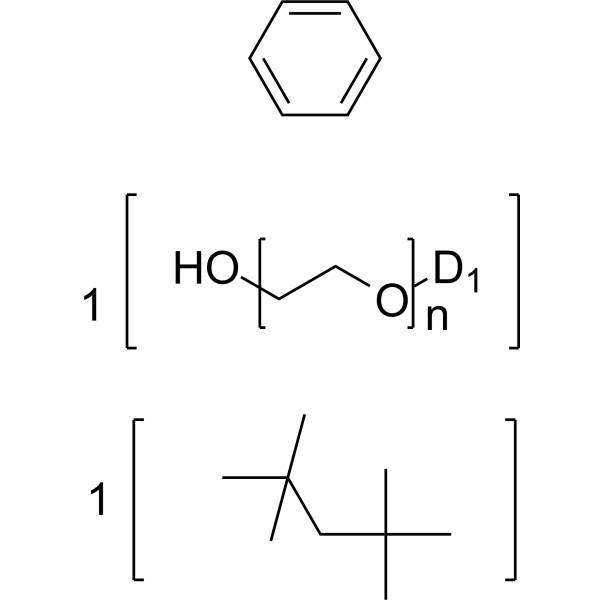
    Potassium phosphate monobasic (DiA) is a commonly used in biological assay buffers. Potassium phosphate monobasic is moderate to highly concentrated aqueous solutions of potassium phosphate monobasic for the production of phosphate buffers and other laboratory applications .
    Potassium dihydrogen phosphate, AR,99.5%
  • HY-D1730
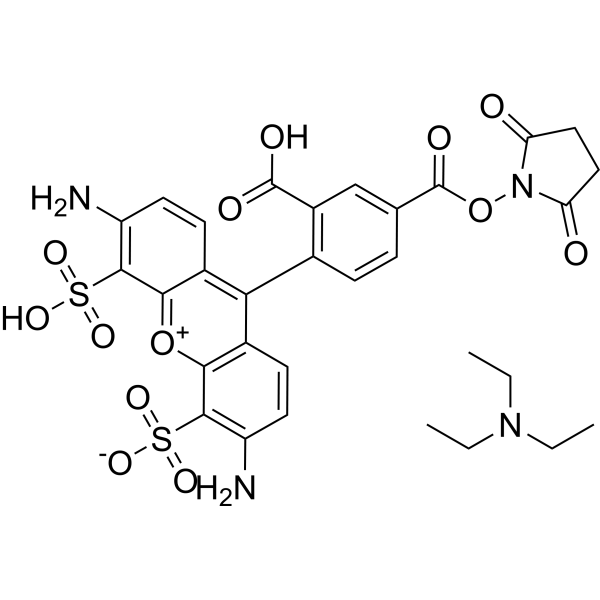
    AF488 NHS ester
    1 Publications Verification

    Fluorescent Dye Others
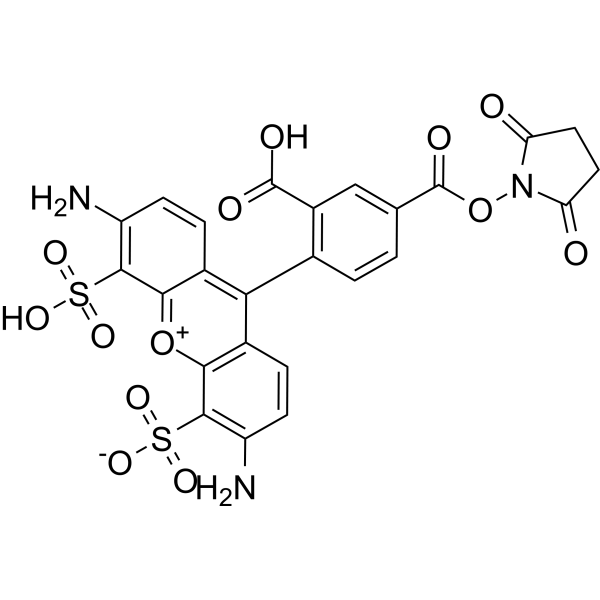
    AF488 NHS ester is an amine specific fluorescence probe (Em=525 nm). AF488 NHS ester reacts with sulfhydryl groups and amines in aqueous and biological samples then change their chemical structure and fluorescence properties after derivatization .
    AF488 NHS ester
  • HY-12489

    Acid Red 112

    Fluorescent Dye Others
    Ponceau S (Acid Red 112) is a non-specific protein dye commonly used as a stain for Western blot. Ponceau S is used in an acidic aqueous solution that is compatible with antibody-antigen binding and dyes the proteins on the membrane red .
    Ponceau S
  • HY-W099535

    Biochemical Assay Reagents Others
    Lithium dodecyl sulfate is an anionic hydrocarbon surfactant with both surface tension reduction and interfacial adsorption capabilities. Lithium dodecyl sulfate induces low surface viscosity; it forms micelles in aqueous solutions through entropy-driven (low temperature) and enthalpy-driven (high temperature) mechanisms. When acting synergistically with tetrabutylammonium bromide, Lithium dodecyl sulfate exhibits cloud point behavior due to micelle aggregation and phase separation. Lithium dodecyl sulfate can form an adsorption layer at the air-water interface with quantifiable surface excess and minimum area per molecule, and it has higher equilibrium surface tension and foamability compared to other dodecyl sulfate counterion variants. The foam stability of Lithium dodecyl sulfate above its critical micelle concentration is low, and its dynamic surface tension pattern changes dynamically with bubble frequency .
    Lithium dodecyl sulfate
  • HY-12798
    Netarsudil
    1 Publications Verification

    AR-13324

    Monoamine Transporter ROCK Cardiovascular Disease Neurological Disease
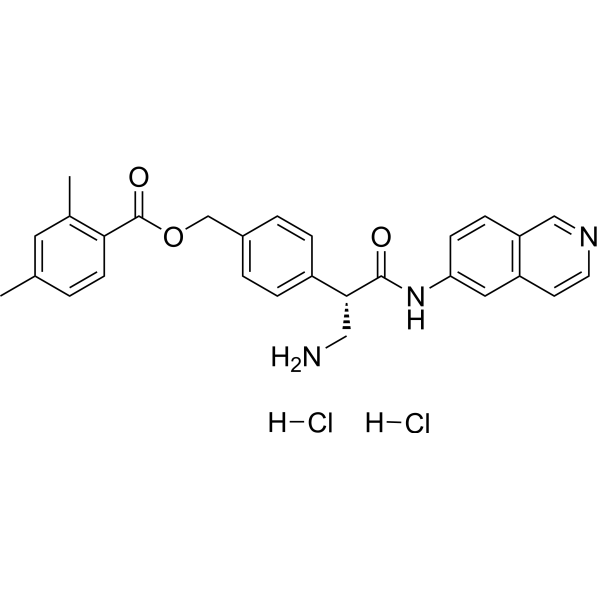
    Netarsudil (AR-13324) is a competitive inhibitor of Rho-associated protein kinases (ROCK I and ROCK II) and a reversible inhibitor of the norepinephrine transporter (NET). Netarsudil reduces intraocular pressure by inhibiting ROCK, causing relaxation of trabecular meshwork cells and dilation of episcleral veins, thereby increasing the ease of aqueous humor outflow, while inhibiting NET to reduce aqueous humor production. Netarsudil is mainly used in the study of ocular hypertension and primary open-angle glaucoma .
    Netarsudil
  • HY-W127776

    Ethylenediaminetetraacetic acid zinc disodium tetrahydrate

    Biochemical Assay Reagents Others
    Zn(II)-EDTA (Ethylenediaminetetraacetic acid zinc) disodium tetrahydrate is a coordinating agent. Zn(II)-EDTA disodium tetrahydrate coordinates with Zn 2+ to modify its solvated structure, provides pre-synthesized EDTA-Zn complexes that release Zn 2+ to repair zinc anode defects under interfacial electric field, adsorbs onto zinc anode surface to block oxygen and water molecules, inhibits corrosion and hydrogen evolution reactions, promotes uniform Zn 2+ deposition, suppresses zinc dendrite formation, and modulates the hydrogen bonding network within the electrolyte. Zn(II)-EDTA disodium tetrahydrate acts as an electrolyte additive to enhance reversibility and stability of zinc anodes in aqueous zinc-ion batteries .
    Zn(Ⅱ)-EDTA disodium tetrahydrate
  • HY-12798B
    Netarsudil hydrochloride
    1 Publications Verification

    AR-13324 hydrochloride

    ROCK Cardiovascular Disease Neurological Disease
    Netarsudil (AR-13324) hydrochloride is a competitive inhibitor of Rho-associated protein kinases (ROCK I and ROCK II) and a reversible inhibitor of the norepinephrine transporter (NET). Netarsudil hydrochloride reduces intraocular pressure by inhibiting ROCK, causing relaxation of trabecular meshwork cells and dilation of episcleral veins, thereby increasing the ease of aqueous humor outflow, while inhibiting NET to reduce aqueous humor production. Netarsudil hydrochloride is mainly used in the study of ocular hypertension and primary open-angle glaucoma .
    Netarsudil hydrochloride
  • HY-125815
    Reactive Blue 4
    3 Publications Verification

    Fluorescent Dye Others
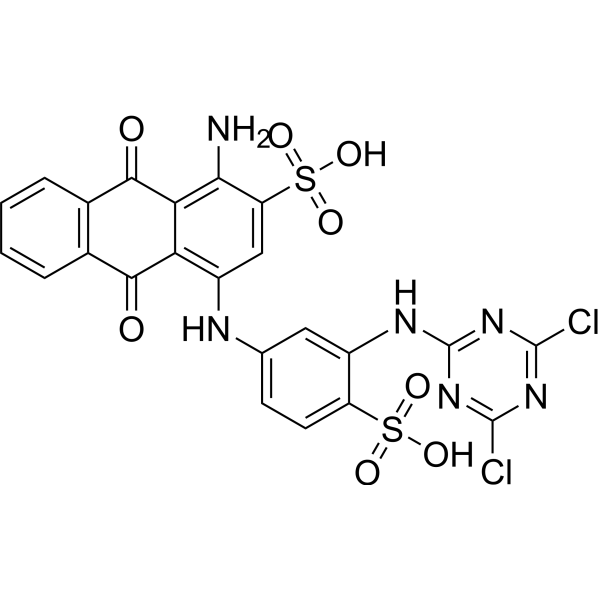
    Reactive Blue 4 is an anthraquinone dye used extensively in the textile industry. Reactive Blue 4 is a single colorimetric chemosensor for sequential determination of multiple analytes with different optical responses in aqueous media .
    Reactive Blue 4
  • HY-19518

    NCX116; LBN

    Prostaglandin Receptor Neurological Disease
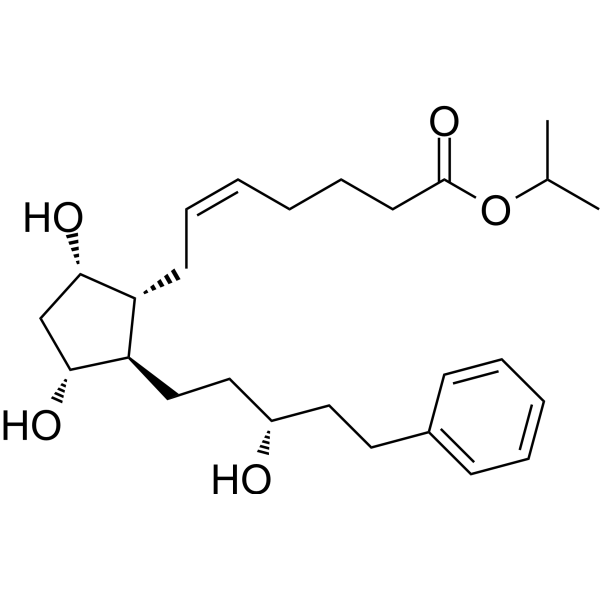
    Latanoprostene bunod (NCX116; LBN) is a nitric oxide-releasing prostaglandin F2α analog. Latanoprostene bunod is a prodrug that, upon instillation into the eye, is hydrolyzed by corneal esterases into two active metabolites: Latanoprost (HY-B0577) and NO. Latanoprost activates the prostaglandin FP receptor to increase the outflow of aqueous humor through the uveoscleral pathway. NO increases aqueous humor drainage through the trabecular meshwork pathway, achieving synergistic enhancement targeting the dual pathways of aqueous humor outflow. Latanoprostene bunod can be used in research related to open-angle glaucoma and ocular hypertension .
    Latanoprostene bunod
  • HY-W096983

    Dodecyltrimethylammonium chloride,for IPC,≥99%

    Environmental Pollutants Biochemical Assay Reagents Others
    DTAC (Dodecyltrimethylammonium chloride), for IPC, ≥99% is a quaternary ammonium cationic surfactant. DTAC, for IPC, ≥99% can form micelles in aqueous media, which interact with and encapsulate Diclofenac sodium (HY-15037) molecules; the micellization process is entropy-driven at lower temperatures and enthalpy-driven at higher temperatures .
    DTAC,for IPC,≥99%
  • HY-D0874

    Biochemical Assay Reagents Others
    HEPPSO is a zwitterionic Good's buffer suitable for physiological pH conditions. HEPPSO forms high-order oligomers in aqueous solutions and can form a 1:1 complex with Cu 2+ via its hydroxyalkyl and tertiary amine groups. However, HEPPSO contains a structurally similar trace impurity lacking an alkanesulfonic acid side chain. The complex formed by this impurity and Cu 2+ has a very low Ka; therefore, HEPPSO may interfere with studies on copper speciation analysis in natural water bodies .
    HEPPSO
  • HY-W923198

    Methacryloyloxy fluorescein

    Fluorescent Dye Others
    Fluorescein O-methacrylate (Methacryloyloxy fluorescein) is a pH-responsive fluorescent monomeric dye. Fluorescein O-methacrylate exhibits pH-responsive fluorescence properties: its fluorescence is activated under alkaline conditions and quenched under neutral or acidic conditions; reversible switching of fluorescence is achievable by adjusting the pH of the solution. Fluorescein O-methacrylate can be used as a monomer for the synthesis of amphiphilic fluorescein polymers. These polymers can self-assemble into stable polymer nanoparticles with enhanced aqueous-phase fluorescence, and also enable the conjugation of nanoparticles with amine-containing biomolecules to support sensitive optical detection of biomarkers (Ex/Em = 490/520 nm) .
    Fluorescein O-methacrylate
  • HY-101394
    Spermine NONOate
    2 Publications Verification

    NO Synthase Others
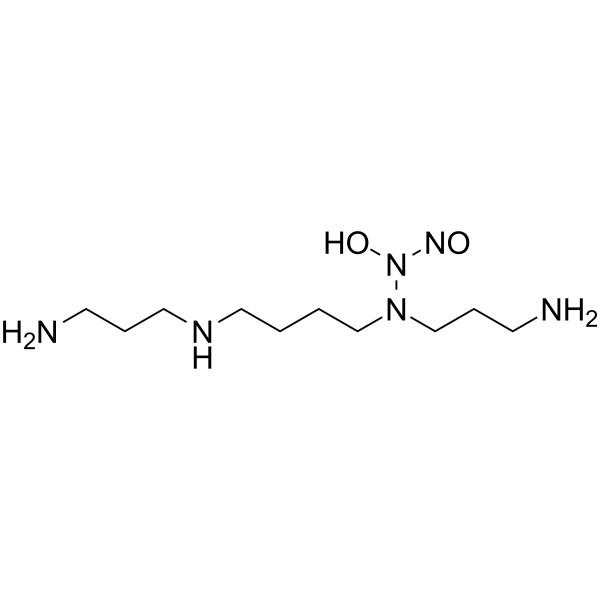
    Spermine NONOate is a complex of nitric oxide (NO) with spermine and acts as a NO donor. Spermine NONOate can be used for NO aqueous solutions preparing .
    Spermine NONOate
  • HY-12798A
    Netarsudil dimesylate
    1 Publications Verification

    AR-13324 dimesylate

    ROCK Cardiovascular Disease Neurological Disease
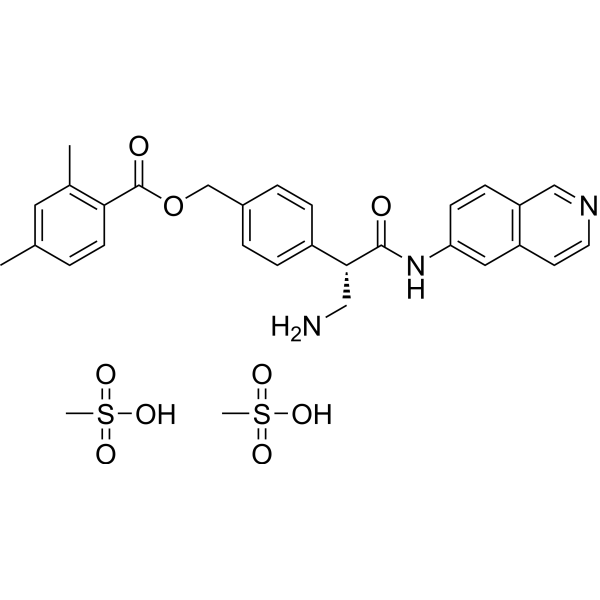
    Netarsudil (AR-13324) dimesylate is a competitive inhibitor of Rho-associated protein kinases (ROCK I and ROCK II) and a reversible inhibitor of the norepinephrine transporter (NET). Netarsudil dimesylate reduces intraocular pressure by inhibiting ROCK, causing relaxation of trabecular meshwork cells and dilation of episcleral veins, thereby increasing the ease of aqueous humor outflow, while inhibiting NET to reduce aqueous humor production. Netarsudil dimesylate is mainly used in the study of ocular hypertension and primary open-angle glaucoma .
    Netarsudil dimesylate
  • HY-N7055

    Trierucoylglycerol

    Drug Derivative Metabolic Disease
    Trierucin (Trierucoylglycerol) is a triester formed by glycerol and erucic acid, which serves as an occlusive skin conditioning agent and non-aqueous thickener in cosmetics. Long-term feeding of Trierucin to rats induces chronic toxicities such as cardiac lipid deposition and fibrosis .
    Trierucin
  • HY-W013275
    MCLA hydrochloride
    1 Publications Verification

    Reactive Oxygen Species (ROS) Others
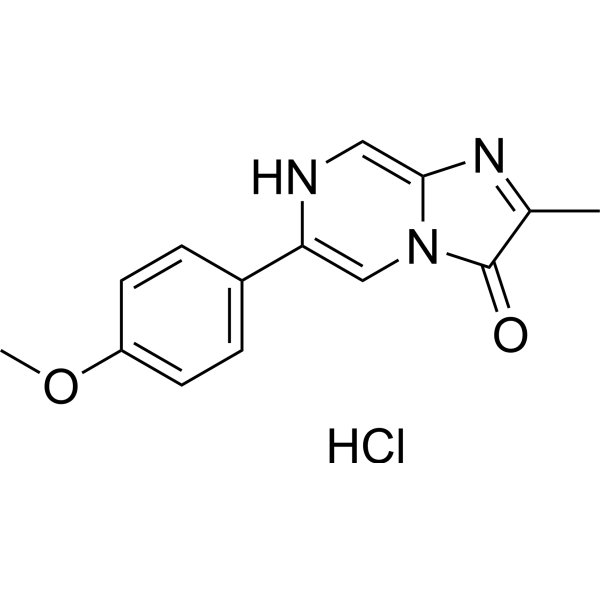
    MCLA hydrochloride is a chemiluminescent reagent which can be used to quantify aqueous concentrations of superoxide.
    MCLA hydrochloride
  • HY-D1196

    Fluorescent Dye
    Direct Blue 71 is a good dyeing agent for cotton fabrics and can be adsorbed by palm ash and removed from the aqueous solution.
    Direct Blue 71
  • HY-D0813

    Fluorescent Dye Others
    Zincon sodium is an excellent colorimetric reagent for the detection of zinc and copper ions in aqueous solution. Zincon sodium can be used for the determination of zinc, copper, and cobalt ions in metalloproteins .
    Zincon sodium
  • HY-W038786

    Environmental Pollutants Fluorescent Dye Others
    2,4,6-Trimethylphenol is a probe compound shown to react mainly with organic matter ( 3DOM *). 2,4,6-Trimethylphenol is rapidly oxidized by singlet oxygen in aqueous solution .
    2,4,6-Trimethylphenol
  • HY-W440914

    Fluorescent Dye Others
    DSPE-PEG1000-FITC is an amphiphile PEG polymer which has unsaturated lipid tails. The polymer can form micelles in an aqueous solution and can be used to prepare liposome/nano particles for drug nanocarriers. . Reagent grade, for research use only.
    DSPE-PEG1000-FITC
  • HY-W014861

    Tetramethyl-ammoniuiodide

    Biochemical Assay Reagents Others
    Tetramethylammonium iodide (Tetramethyl-ammoniuiodide) is a capillary active agent and weakly capillary active quasi-simple salt. Tetramethylammonium iodide decreases aqueous solution surface tension with increasing concentration and exhibits surface accumulation of constituent ions at liquid-vapor interfaces .
    Tetramethylammonium iodide
  • HY-P4637

    H-Ile-Phe-OH

    Amyloid-β Others
    Ile-Phe is a dipeptide that self-associates in aqueous solution to form a transparent thermoreversible gel formed by a network of fibrillar nanostructures. It may be involved in triggering self-assembly processes such as amyloid formation.
    Ile-Phe
  • HY-116420

    ROCK Neurological Disease
    ROCK2-IN-8 (Compound 1) is an orally active ROCK2 inhibitor, with an IC50 of 7.2 nM. ROCK2-IN-8 can be used for the research of aqueous humor outflow in porcine eyes and myosin light chain phosphorylation .
    ROCK2-IN-8
  • HY-21170E

    Zinc(II) Triflate

    Biochemical Assay Reagents Others
    Zinc trifluoromethanesulfonate (Zinc (II) Triflate) is a Zn 2+ salt commonly used in potentiometric titration to determine the stability constants of Zn 2+-quinoline sulfonamide complexes. Aqueous solutions of Zinc trifluoromethanesulfonate form micellar structures, which result in poor desolvation kinetics of Zn 2+ and induce dendrite growth on zinc anodes, failing to support long-term cycling of zinc anodes .
    Zinc trifluoromethanesulfonate
  • HY-B2144N

    Biochemical Assay Reagents Infection Cancer
    Chitosan (≥98% deacetylated,mushroom) is a biochemical reagent that can be used as a flocculant, protein precipitant, encapsulation agent, and aqueous thickener .
    Chitosan (≥98% deacetylated,mushroom)
  • HY-D1129

    Coumarin 40

    Fluorescent Dye
    Basic yellow 40 is an alkaline dye that can be removed from aqueous solutions in intermittent adsorption systems using tree ferns as biosorbents.
    Basic yellow 40
  • HY-D0492

    Fluorescent Dye
    C.I. Basic blue 41 is an alkaline dye that can be removed from aqueous solutions in intermittent adsorption systems using tree ferns as biosorbents.
    C.I. Basic blue 41
  • HY-D0478

    Fluorescent Dye
    C.I. Basic red 14 is an alkaline dye that can be removed from aqueous solutions in intermittent adsorption systems using tree ferns as biosorbents.
    C.I. Basic red 14
  • HY-117245

    Reactive Oxygen Species (ROS) Fungal Others
    Pallidol is a potent and selective singlet oxygen quencher. Pallidol shows antioxidant and antifungal activities .
    Pallidol
  • HY-W440895

    Biochemical Assay Reagents Others
    DSPE-PEG1000-SH is an amphiphilic poly-PEG that can form lipid bilayers in water. This amphiphilic polymer can form lipid bilayers in aqueous solution and can be used to embed active molecules for drug delivery systems such as mRNA vaccines.
    DSPE-PEG1000-SH
  • HY-W440834

    Liposome Others
    DSPE-PEG5000-azide is a click chemistry reactive phospholipid polyPEG which forms lipid bilayer or micelles in an aqueous solution. The polymer can be used to prepare liposomes or nanoparticles used for delivering nutrients or therapeutic agents, for example mRNA or DNA vaccine.
    DSPE-PEG5000-azide
  • HY-P4389

    GLP Receptor Metabolic Disease
    (Asp28)-Glucagon (1-29) (human, rat, porcine) is an optimized structure of glucagon, the 28th position is replaced by aspartic acid (Asp) which significantly increases the aqueous solubility of glucagon in a physiological pH buffer, has the same activity as glucagon .
    (Asp28)-Glucagon (1-29) (human, rat, porcine)
  • HY-P3218A

    Drug Derivative Endocrinology
    [Glu4]-Oxytocin acetate is an appropriate derivative of oxytocin for conducting a comprehensive investigation by a variety of methods of the conformation of oxytocin-like molecules in aqueous solution .
    [Glu4]-Oxytocin acetate
  • HY-W707056

    Biochemical Assay Reagents Others
    Latanoprost acid-d4 is used as the internal standard in the HPLC-MS/MS analysis to determine the level of Latanoprost acid (HY-113756A) in aqueous humor samples of eyes .
    Latanoprost acid-d4
  • HY-W020780C

    mPEG3400-Maleimide

    Biochemical Assay Reagents Others
    mPEG3400-Mal is a PEG derivative used for thiol pegylation of protein molecules. Its maleimide group (-Mal) degrades in aqueous media and finds application in drug delivery studies.
    mPEG3400-Mal
  • HY-Y0332BS

    Isotope-Labeled Compounds Others
    Phosphate monobasic-d2 (potassium) is the deuterium labeled Potassium phosphate monobasic . Potassium phosphate monobasic (DiA) is a commonly used in biological assay buffers. Potassium phosphate monobasic is moderate to highly concentrated aqueous solutions of potassium phosphate monobasic for the production of phosphate buffers and other laboratory applications.
    Phosphate monobasic-d2 potassium
  • HY-Y1810

    Environmental Pollutants Biochemical Assay Reagents Others
    Diethylene glycol diethyl ether is an electrolyte solvent for a non-aqueous lithium-air cell. Diethylene glycol diethyl ether can facilitate the reversible reduction and oxidation processes at the porous carbon electrode without a catalyst .
    Diethylene glycol diethyl ether
  • HY-D0374

    Fluorescent Dye Others
    Reactive Blue 4 sodium is an anthraquinone dye used extensively in the textile industry. Reactive Blue 4 sodium is a single colorimetric chemosensor for sequential determination of multiple analytes with different optical responses in aqueous media .
    Reactive Blue 4 sodium
  • HY-W440927

    Liposome Others
    Stearic acid-PEG2000-NHS is an amphiphatic PEG polymer which forms micelles in an aqueous solution for drug-loaded nanoparticles. The NHS ester is reactive with amine to form a stable amide bond. Reagent grade, for research purpose.
    Stearic acid-PEG2000-NHS
  • HY-155901

    Maleimide-NH-PEG2000-amine TFA

    Biochemical Assay Reagents Others
    Mal-NH-PEG2000-NH2TFA is a PEG derivative that may be used for thiol PEGylation of protein molecules. Its maleimide group (-Mal) degrades in aqueous media and finds application in drug delivery studies.
    Mal-NH-PEG2000-NH2 TFA
  • HY-D0640

    Fluorescent Dye
    Acid Orange 116 is an azo dye that can be removed from aqueous solutions by metal ions.
    Acid Orange 116
  • HY-D1214

    Cationic Red X-GRL

    Fluorescent Dye
    Basic Red 46 is an alkaline dye that can be removed from aqueous solutions in intermittent adsorption systems using tree ferns as biosorbents.
    Basic Red 46
  • HY-D0651

    Fluorescent Dye
    Acid red 119 is an acid red dye that can be removed from aqueous solutions when polyaluminum chloride (PAC) and polyaluminum chloride sludge (PACS) are used as coagulants.
    Acid red 119
  • HY-D1036

    Fluorescent Dye
    Basic red 18 (acetate) is an alkaline dye that can be removed from aqueous solutions in intermittent adsorption systems using tree ferns as biosorbents.
    Basic red 18 acetate
  • HY-D0724

    Fluorescent Dye
    Basic violet 16 (phosphate) is an alkaline dye that can be removed from aqueous solutions in intermittent adsorption systems using tree ferns as biosorbents.
    Basic violet 16 phosphate
  • HY-19518R

    NCX116 (Standard); LBN (Standard)

    Reference Standards Prostaglandin Receptor Neurological Disease
    Latanoprostene bunod (NCX116; LBN) (Standard) is the analytical standard of Latanoprostene bunod. This product is intended for research and analytical applications. Latanoprostene bunod is a nitric oxide-releasing prostaglandin F2α analog. Latanoprostene bunod is a prodrug that, upon instillation into the eye, is hydrolyzed by corneal esterases into two active metabolites: Latanoprost (HY-B0577) and NO. Latanoprost activates the prostaglandin FP receptor to increase the outflow of aqueous humor through the uveoscleral pathway. NO increases aqueous humor drainage through the trabecular meshwork pathway, achieving synergistic enhancement targeting the dual pathways of aqueous humor outflow. Latanoprostene bunod can be used in research related to open-angle glaucoma and ocular hypertension.
    Latanoprostene bunod (Standard)
  • HY-P3218

    Oxytocin Receptor Endocrinology
    [Glu4]-Oxytocin is an appropriate derivative of oxytocin for conducting a comprehensive investigation by a variety of methods of the conformation of “oxytocin-like” molecules in aqueous solution .
    [Glu4]-Oxytocin
  • HY-169799

    CGamF

    Endogenous Metabolite Fluorescent Dye Metabolic Disease
    Cholylglycylamidofluorescein (CGamF) is a fluorescent probe for hepatic bile acid transport. Cholylglycylamidofluorescein is composed of Cholic acid conjugated via a glycylamino linkage to fluorescein. (Ex/Em = 492/515 nM in Aqueous)
    Cholylglycylamidofluorescein
  • HY-W705140A

    Hydroxymelphalan hydrochloride

    Drug Metabolite Cancer
    Monohydroxy melphalan hydrochloride (Hydroxymelphalan hydrochloride) is a degradation product of Melphalan (HY-17575), obtained through the hydrolysis of Melphalan in aqueous solutions (including cell culture media and human plasma) .
    Monohydroxy melphalan hydrochloride
  • HY-138547

    Diaminopropanoltetraacetic acid

    Biochemical Assay Reagents Others
    DHPTA (compound 3) can directly combine with lanthanide elements (Tb 3+, Ho 3+, Lu 3+) to form a strong chelating effect,in aqueous solution with a pH of 2.0-7.0 .
    DHPTA

Inquiry Online

Your information is safe with us. * Required Fields.

Salutation


Country or Region *

Applicant Name *


Organization Name *

Department *


Email Address *


Product Name *

Cat. No.


Requested quantity *

Phone Number *


Remarks

Inquiry Online

Inquiry Information

Product Name:
Cat. No.:
Quantity:
MCE Japan Authorized Agent:

