

1. Search Result
Search Result
Results for "

associated

" in MedChemExpress (MCE) Product Catalog:

1788

Inhibitors & Agonists

47

Screening Libraries

18

Fluorescent Dye

46

Biochemical Assay Reagents

150

Peptides

2

MCE Kits

69

Inhibitory Antibodies

262

Natural
Products

456

Recombinant Proteins

114

Isotope-Labeled Compounds

470

Antibodies

10

Click Chemistry

50

Oligonucleotides

1

GMP Molecules

Cat. No. Product Name Target Research Areas Chemical Structure
  • HY-110078
    Eeyarestatin I
    10+ Cited Publications

    p97 Apoptosis Cancer
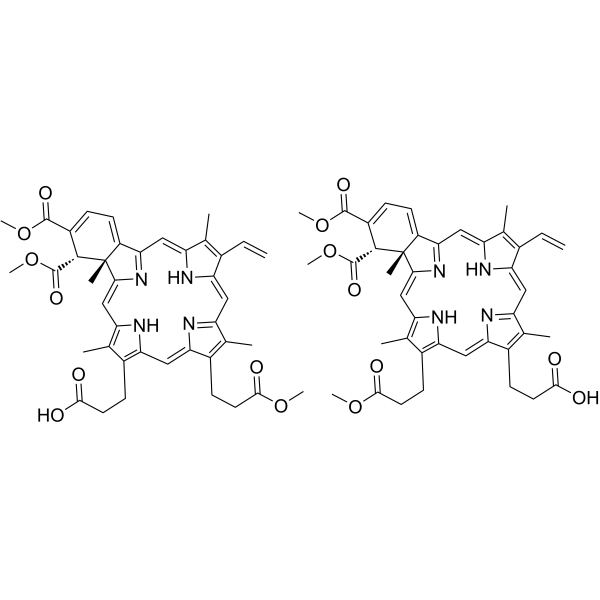
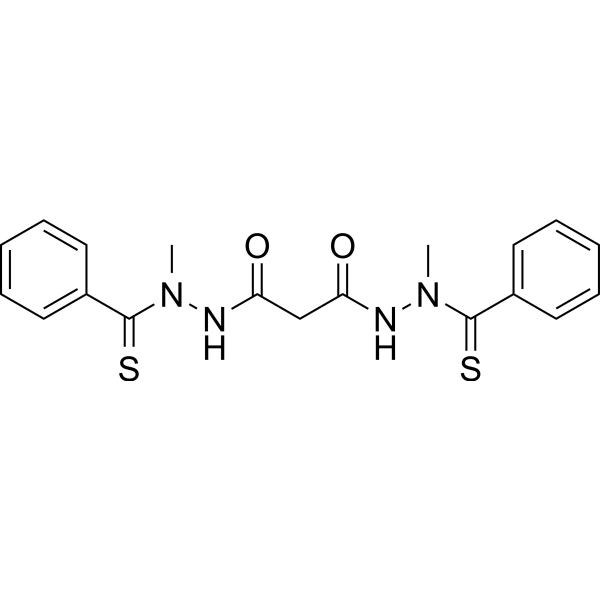
    Eeyarestatin I, a potent endoplasmic reticulum-associated protein degradation (ERAD) inhibitor, is a potent protein translocation inhibitor. Eeyarestatin I inhibits Sec61 translocon. Eeyarestatin I targets the p97-associated deubiquitinating process (PAD) and inhibits atx3-dependent deubiquitination. Eeyarestatin I interferes at a step prior to proteasomal degradation. Eeyarestatin I induces cell death via the proapoptotic protein NOXA and has anticancer effects .
    Eeyarestatin I
  • HY-W014787
    Decanedioic acid
    1 Publications Verification

    Sebacic acid

    Environmental Pollutants Endogenous Metabolite Metabolic Disease
    Decanedioic acid is a straight-chain dicarboxylic acid. Dodecanedioic acid overcomes metabolic inflexibility in type 2 diabetes. Decanedioic acid prevents and reverses metabolic-associated liver disease and obesity. Decanedioic acid is associated with carnitine-acylcarnitine translocase deficiency and medium chain acyl-CoA dehydrogenase deficiency .
    Decanedioic acid
  • HY-109171

    NT-814; BAY3427080

    Neurokinin Receptor Cardiovascular Disease Neurological Disease
    Elinzanetant is an orally active and selective NK-1 and NK-3 receptor antagonist. Elinzanetant alleviates menopause-associated vasomotor symptoms, including hot flashes and night sweats. Elinzanetant reduces estradiol and progesterone levels. Elinzanetant can be used for the research of moderate to severe vasomotor and sleep disorders associated with menopause .
    Elinzanetant
  • HY-W015346
    Desaminotyrosine
    2 Publications Verification

    3-(4-Hydroxyphenyl)propionic acid

    Influenza Virus Endogenous Metabolite Infection
    Desaminotyrosine is a microbially associated metabolite protecting from influenza through augmentation of type I interferon signaling.
    Desaminotyrosine
  • HY-107574
    TC-E 5003
    3 Publications Verification

    Histone Methyltransferase AP-1 NF-κB PKA Metabolic Disease Inflammation/Immunology Cancer
    TC-E 5003 is a selective protein arginine methyltransferase 1 (PRMT1) inhibitor with an IC50 of 1.5 µM against hPRMT1. TC-E 5003 modulates the lipopolysaccharide (LPS) (HY-D1056)-induced AP-1 and NF-κB signaling pathways with anti-inflammatory properties. TC-E 5003 also upregulates the expression of Ucp1 and Fgf21, activates protein kinase A signaling and lipolysis in primary subcutaneous adipocytes from both mouse and humans. TC-E 5003 is promising for research of obesity and associated metabolic disorders, oxidative stress, inflammation and cancers .
    TC-E 5003
  • HY-103638
    3-Methoxytyramine hydrochloride
    3 Publications Verification

    3-O-methyl Dopamine hydrochloride

    Drug Metabolite Endogenous Metabolite Neurological Disease
    3-Methoxytyramine hydrochloride is an metabolite of dopamine which can activate trace amine associated receptor 1 (TAAR1).
    3-Methoxytyramine hydrochloride
  • HY-113080
    N-Acetylornithine
    1 Publications Verification

    Others Metabolic Disease
    N-Acetylornithine is a precursor of ornithine. N-Acetylornithine is associated with type 2 diabetes .
    N-Acetylornithine
  • HY-113162
    Bovinic acid
    1 Publications Verification

    Keap1-Nrf2 Ferroptosis Reactive Oxygen Species (ROS) SOD Metabolic Disease Cancer
    Bovinic acid is an orally active anti-inflammatory agent. Bovinic acid inhibits oxidative stress and ferroptosis by regulating the Keap1-Nrf2 signaling pathway. Bovinic acid exerts hepatoprotective effects against alcohol-associated liver disease. Bovinic acid can be used for the research of alcohol-associated liver disease .
    Bovinic acid
  • HY-123940
    SGC-AAK1-1
    1 Publications Verification

    Wnt AAK1 Cancer
    SGC-AAK1-1, a chemical probe, is a potent and selective AAK1 (AP2 associated kinase 1) inhibitor with an IC50 of 270 nM and a Ki of 9 nM. SGC-AAK1-1 also potently inhibits BMP2K. SGC-AAK1-1 is used to study Wnt pathway related to AAK1 .
    SGC-AAK1-1
  • HY-111101

    IRAK Cancer
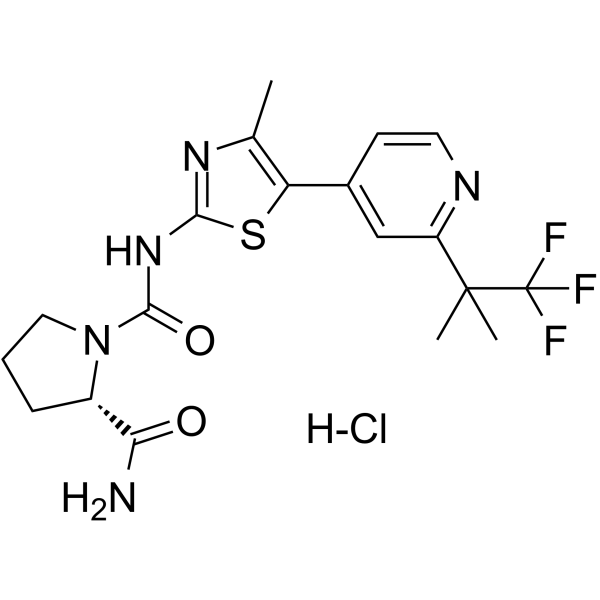
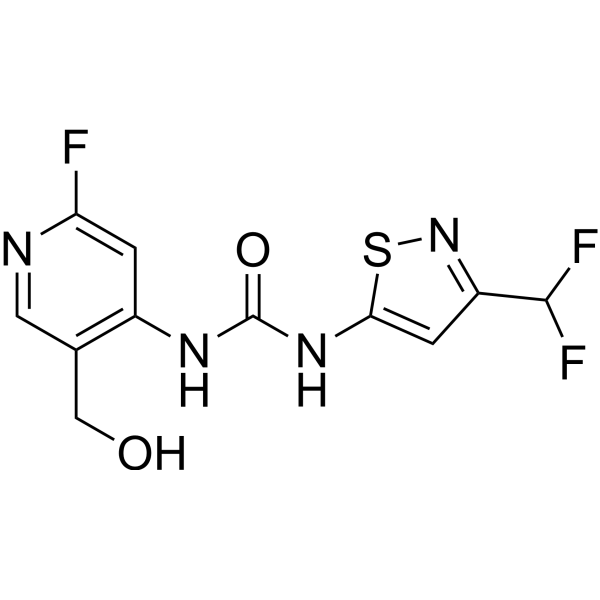
    AZ1495, a weak base, is a potent orally active interleukin-1 receptor associated kinase 4 (IRAK4) inhibitor. AZ1495 has a favorable physicochemical and kinase selectivity for IRAK4 and IRAK1 with IC50 values of 0.005 μM and 0.023 μM, respectively. AZ1495 has IRAK4 inhibition with a Kd value of 0.0007 μM. AZ1495 can be used for the research of diffuse large B-cell lymphoma (DLBCL) .
    AZ1495
  • HY-P4808

    Amyloid-β Autophagy Neurological Disease
    PHF6 (VQIVYK) is a self-assembly sequence capable of initiating the full-length tau protein aggregation and is mapped to the third microtubule-binding repeat region of the tau protein .
    PHF6
  • HY-175188

    BPN-0027490

    Myosin Neurological Disease
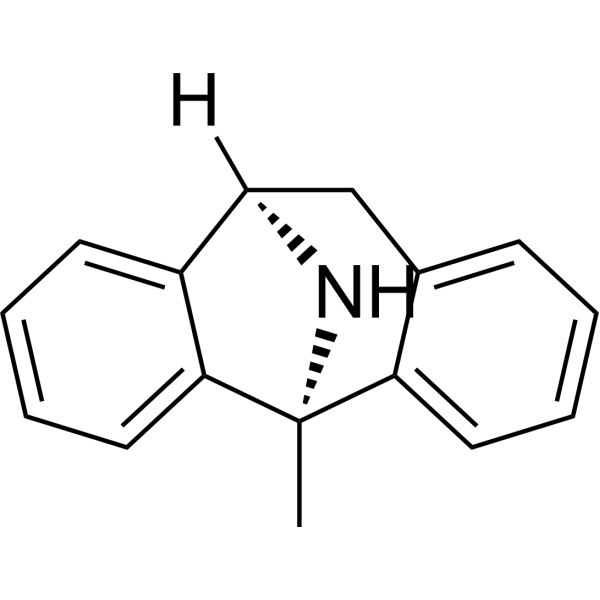
    MT-110 (BPN-0027490) is a non-muscle myosin NMIIB-selective inhibitor with high brain penetration and favorable safety profile. MT-110 specifically disrupts NMIIB-dependent actin dynamics in dendritic spines, while it exerts no significant adverse effects on cardiac myosin II and cardiac functions (such as cardiac output and heart rate) at tested concentrations. A single administration of MT-110 produces long-lasting (sustained for several weeks) blockade of methamphetamine motivation associated with environmental cues. MT-110 exhibits extremely high specificity, with no interference with cocaine motivation, hippocampus-dependent memory, fear memory, or locomotor and anxiety-like behaviors. MT-110 serves as a valuable tool compound for investigating the mechanisms of methamphetamine use disorder .
    MT-110
  • HY-N8441

    17β-Neriifolin

    Atg8/LC3 Na+/K+ ATPase Apoptosis Beclin1 Cardiovascular Disease Inflammation/Immunology Cancer
    Neriifolin, a CNS-penetrating cardiac glycoside, is an inhibitor of the Na +, K +-ATPase. Neriifolin can target beclin 1, inhibits the formation of LC3-associated phagosomes and ameliorates experimental autoimmune encephalomyelitis (EAE) development. Neriifolin induces cell cycle arrest and apoptosis in human hepatocellular carcinoma HepG2 cells [2.
    Neriifolin
  • HY-15847
    HS38
    3 Publications Verification

    DAPK Cardiovascular Disease
    HS38 is a potent, selective, and ATP-competitive inhibitor of death-associated protein kinase 1 (DAPK1) and zipper-interacting protein kinase (ZIPK, also called DAPK3), with Kds of 300 nM and 280 nM, respectively. HS38 is also a PIM3 inhibitor with an IC50 of 200 nM. HS38 can be used for the research of smooth muscle related disorders .
    HS38
  • HY-P2076

    SGX942

    p62 Bacterial Infection Cancer
    Dusquetide (SGX942) is a first-in-class innate defense regulator (IDR). Dusquetide modulates the innate immune response to both PAMPs and DAMPs by binding to p62. Dusquetide shows activity in both reducing inflammation and increasing clearance of bacterial infection . DAMPs: damage-associated molecular patterns; PAMPs: pathogen-associated molecular patterns
    Dusquetide
  • HY-105099

    KRM-1648; ABI-1648

    Antibiotic DNA/RNA Synthesis Bacterial Infection Inflammation/Immunology
    Rifalazil (KRM-1648; ABI-1648), a rifamycin derivative, inhibits the bacterial DNA-dependent RNA polymerase and kills bacterial cells by blocking off the β-subunit in RNA polymerase . Rifalazil (KRM-1648; ABI-1648) is an antibiotic, exhibits high potency against mycobacteria, gram-positive bacteria, Helicobacter pylori, C. pneumoniae and C. trachomatis with MIC values from 0.00025 to 0.0025 μg/ml . Rifalazil (KRM-1648; ABI-1648) has the potential for the treatment of Chlamydia infection, Clostridium difficile associated diarrhea (CDAD), and tuberculosis (TB) .
    Rifalazil
  • HY-113144

    Endogenous Metabolite Metabolic Disease
    L-Hexanoylcarnitine is an acylcarnitine and is found to be associated with celiac disease.
    L-Hexanoylcarnitine
  • HY-103032

    PDGFR c-Kit Bcr-Abl Cancer
    Multi-kinase inhibitor 1 is a potent multi-kinase inhibitor. Multi-kinase inhibitor 1 has the potential for diseases or disorders associated with abnormal or deregulated tyrosine kinase activity, particularly diseases associated with the activity of PDGF-R, c-Kit and Bcr-abl .
    Multi-kinase inhibitor 1
  • HY-B1514
    Allantoic acid
    1 Publications Verification

    Endogenous Metabolite Others
    Allantoic acid is a degradative product of uric acid and associated with purine metabolism .
    Allantoic acid
  • HY-W006566

    5-Aminoisoquinolin-1-one

    PARP Cancer
    5-AIQ (5-Aminoisoquinolin-1-one) is a PARP-1 inhibitor. 5-AIQ is an important functional group in various drugs. 5-AIQ reduces the tissue injury associated with ischemia-reperfusion of the liver, it can be used for the research of the research conditions associated with ischemia-reperfusion of the liver .
    5-AIQ
  • HY-147088

    YAP Cancer
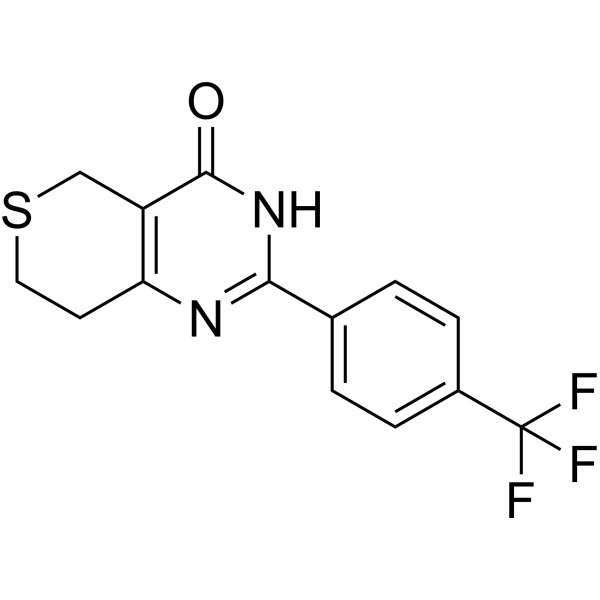
    TEAD-IN-2 is a novel, orally active inhibitor of transcriptional enhancer associate domain (TEAD) and modulates TEAD by ubiquitination and/or degradation by compounds. TEAD-IN-2 can be used for the research of a variety of diseases, disorders or conditions associated with TEAD .
    TEAD-IN-2
  • HY-123854

    IRAK Inflammation/Immunology
    PF-06426779 is a potent and selective inhibitor of interleukin 1 receptor associated kinase 4 (IRAK4), with an IC50 of 0.3 nM .
    PF-06426779
  • HY-21045

    L-5-Fluorotryptophan

    EAAT Neurological Disease
    5-Fluoro-L-tryptophan is a competitive vesicular glutamate transporter (VGLUT) inhibitor. 5-Fluoro-L-tryptophan is promising for research of diseases associated with the neurotransmitter systems .
    5-Fluoro-L-tryptophan
  • HY-14227

    LIM Kinase (LIMK) ROCK Others
    LIMK-IN-1 (Compound 14) is an inhibitor of LIM-Kinase (LIMK), with IC50s of 0.5 nM and 0.9 nM for LIMK1 and LIMK2, respectively. LIMK-IN-1 can be used for ocular hypertension and associated glaucoma research .
    LIMK-IN-1
  • HY-P1174

    GnRH Receptor Endocrinology
    GnRH Associated Peptide (GAP) (1-13), human is an amino acid peptide fragment derived from GnRH. GAP can increase the secretion of luteinizing hormone (LH) and follicle-stimulating hormone (FSH) in rat anterior pituitary cells. GAP also inhibit the secretion of prolactin .
    GnRH Associated Peptide (GAP) (1-13), human
  • HY-101290A

    Cyclin G-associated Kinase (GAK) AAK1 Neurological Disease
    BMT-090605 hydrochloride is a potent, selective the adapter protein-2 associated kinase 1 (AAK1) inhibitor with an IC50 value of 0.6 nM. BMT-090605 hydrochloride shows antinociceptive activity. BMT-090605 hydrochloride inhibits BMP-2-inducible protein kinase (BIKE) and Cyclin G-associated kinase (GAK) with IC50 values of 45 nM and 60 nM, respectively. BMT-090605 hydrochloride can be used for the research of neuropathic pain .
    BMT-090605 hydrochloride
  • HY-113408
    Tiglyl carnitine
    1 Publications Verification

    Endogenous Metabolite Metabolic Disease
    Tiglyl carnitine is found to be associated with celiac disease and mitochondrial acetoacetyl-CoA thiolase (T2) deficiency.
    Tiglyl carnitine
  • HY-115868

    AAK1 Neurological Disease
    BMS-911172 is an adaptor associated kinase 1 (AAK1 kinase) inhibitor (IC50 = 35 nM).
    BMS-911172
  • HY-138843A
    FTO-IN-1 TFA
    1 Publications Verification

    Fat Mass and Obesity-associated Protein (FTO) Metabolic Disease Cancer
    FTO-IN-1 TFA is a fat mass and obesity-associated enzyme (FTO) inhibitor extracted from patent WO2018157843A1, compound 32, with an IC50 of <1 μM. FTO-IN-1 TFA can be used for the research of cancer .
    FTO-IN-1 TFA
  • HY-118363

    mAChR Neurological Disease
    Lu AE51090 is selective muscarinic M1 receptor agonist with blood-brain barrier penetration. Lu AE51090 activates human M1 receptor with EC50 of 61 nM, while showing no significant agonism at M2-M5 receptors. Lu AE51090 exerts procognitive effects in mice. Lu AE51090 can be used for the study of Alzheimer’s disease (AD) and cognitive impairment associated with schizophrenia (CIAS) .
    Lu AE51090
  • HY-P4808A

    Amyloid-β Autophagy Neurological Disease
    PHF6 (VQIVYK) TFA is a self-assembly sequence capable of initiating the full-length tau protein aggregation. PHF6 TFA is mapped to the third microtubule-binding repeat region of the tau protein .
    PHF6 TFA
  • HY-157176

    Bcl-2 Family Others
    BAX-IN-1 is a potential, selective inhibitor of Bcl-2-associated X protein (BAX).
    BAX-IN-1
  • HY-160426

    Glycosidase Neurological Disease
    Gcase activator 3 (compound 9Q) is a glucosidase (Glucosidase, GCase) activator that can partially stabilize GCase and increase its activity. Gcase activator 3 reduces mutant GCase protein misfolding and degradation in fibroblasts and dopaminergic midbrain neurons. Gcase activator 3 can be used in the study of Parkinson's disease (PD) and related synucleinopathies .
    Gcase activator 3
  • HY-113006

    Endogenous Metabolite Cardiovascular Disease Metabolic Disease Cancer
    3-Methylglutarylcarnitine is a biomarker of disease associated with compromised mitochondrial energy metabolism .
    3-Methylglutarylcarnitine
  • HY-113069

    Endogenous Metabolite Metabolic Disease
    Decanoylcarnitine is a fatty ester lipid and an acylcarnitine derivative, which is a metabolite associated with impaired fatty acid metabolism in the elderly population .
    Decanoylcarnitine
  • HY-138843

    Fat Mass and Obesity-associated Protein (FTO) Metabolic Disease Cancer
    FTO-IN-1 is a fat mass and obesity-associated enzyme (FTO) inhibitor extracted from patent WO2018157843A1, compound 32, with an IC50 of <1 μM. FTO-IN-1 can be used for the research of cancer .
    FTO-IN-1
  • HY-P3605

    GAP (25-53), human

    GnRH Receptor Endocrinology
    GnRH Associated Peptide (GAP) (25-53), human is the human gonadotropin-releasing hormone-associated peptide (GAP) 25-53 fragment (hGAP-25-53), can be used as immunogen to generate antiseras including MC-1, MC-2, and MC-3. GAP is joined to the luteinizing hormone-releasing hormone (LH-RH) sequence by a 3 amino acid processing site .
    GnRH Associated Peptide (25-53), human
  • HY-124040

    Integrin Inflammation/Immunology
    BI-1950 is a lymphocyte function-associated antigen 1 (LFA-1) inhibitor. BI-1950 regulates immune system function through interaction with LFA-1. BI-1950 can be used in the research of inflammatory diseases .
    BI-1950
  • HY-169004

    TGF-beta/Smad Interleukin Related Neurological Disease Inflammation/Immunology
    CBT-295 is an orally active autotaxin (ATX) inhibitor. CBT-295 exhibits a significant reduction in inflammatory cytokines like TGF-β, TNF-α and IL-6 levels, also reduced bile duct proliferation marker CK-19 and lowered liver fibrosis. The reversal of liver fibrosis with CBT-295 led to a reduction in blood and brain ammonia levels. CBT-295 also reduced neuroinflammation induced by ammonia. CBT-295 is promising for research of liver cirrhosis and associated encephalopathy .
    CBT-295
  • HY-155128

    HSV Infection
    LANA-DNA-IN-2 (Compound 20) is a latency-associated nuclear antigen (LANA)-DNA interaction inhibitor. LANA-DNA-IN-2 can be used for research of Kaposi’s sarcoma-associated herpesvirus (KSHV) infection .
    LANA-DNA-IN-2
  • HY-P1258
    PSI
    2 Publications Verification

    Proteasome Inhibitor 1; Z-Ile-Glu(OtBu)-Ala-Leu-CHO

    Proteasome Infection Cancer
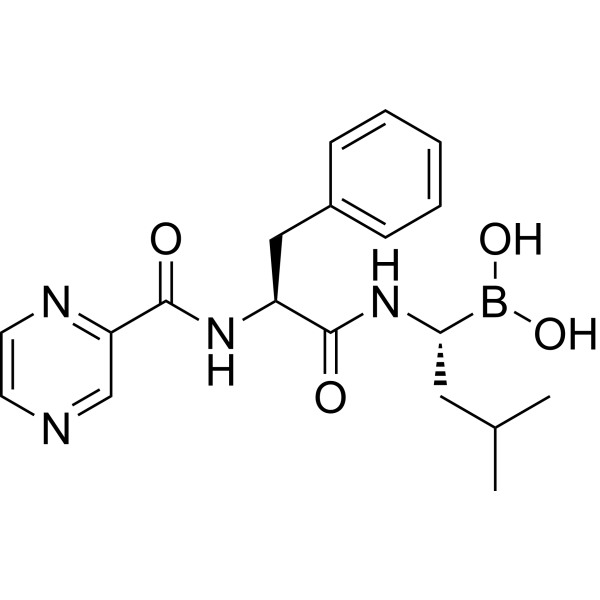
    PSI (Proteasome Inhibitor 1) is a potent proteasome inhibitor. PSI inhibits the proliferation of primary effusion lymphoma (PEL) cells. PSI has the potential for the research of Kaposi’s sarcoma-associated herpesvirus (KSHV) infection and KSHV-associated lymphomas .
    PSI
  • HY-P991649

    SAR566658 antibody

    Mucin ADC Antibody Cancer
    Anti-CA6 Antibody (huDS6) is a Mucin 1-associated sialoglycotope (CA6) targeting humanized monoclonal antibody. Anti-CA6 Antibody (huDS6) can be used for synthesis of ADCs .
    Anti-CA6 Antibody (huDS6)
  • HY-101290

    AAK1 Cyclin G-associated Kinase (GAK) Neurological Disease
    BMT-090605 is a potent, selective the adapter protein-2 associated kinase 1 (AAK1) inhibitor with an IC50 value of 0.6 nM. BMT-090605 shows antinociceptive activity. BMT-090605 inhibits BMP-2-inducible protein kinase (BIKE) and Cyclin G-associated kinase (GAK) with IC50 values of 45 nM and 60 nM, respectively. BMT-090605 can be used for the research of neuropathic pain .
    BMT-090605
  • HY-W042216

    Sodium 4-aminobenzenesulfonate

    Biochemical Assay Reagents Inflammation/Immunology
    Sodium Sulphanilate is a biochemical indice of inflammation-associated acute-phase response .
    Sodium Sulphanilate
  • HY-145238

    Fat Mass and Obesity-associated Protein (FTO) Others
    FTO-IN-6 is a selective fat mass and obesity associated protein (FTO) inhibitor.
    FTO-IN-6
  • HY-139821

    Fat Mass and Obesity-associated Protein (FTO) Neurological Disease Cancer
    FTO-IN-5 is a potent and selective inhibitor of fat mass obesity-associated protein (FTO).
    FTO-IN-5
  • HY-P5964A

    GABA Receptor Neurological Disease
    K1 peptide TFA is a high-affinity peptide ligand for GABAA receptor-associated protein (GABARAP) .
    K1 peptide TFA
  • HY-W1113770

    STAT Inflammation/Immunology
    STAT6-IN-8 (Compound 9) is a STAT6 inhibitor with potential anti-inflammatory and anti-allergic effects. STAT6-IN-8 can be used for the study of STAT6-associated diseases, including inflammatory diseases (atopic dermatitis, bronchial asthma) and allergic diseases (allergic rhinitis, chronic sinusitis) .
    STAT6-IN-8
  • HY-13278
    IRAK inhibitor 4
    1 Publications Verification

    IRAK Inflammation/Immunology
    IRAK inhibitor 4 is an interleukin-1 receptor associated kinase 4(IRAK4) inhibitor.
    IRAK inhibitor 4
  • HY-E70617

    Lipocalin Family Inflammation/Immunology
    Neutrophil Gelatinase Associated Lipocalin (NGAL), Human (EC 6.1.1.3) belongs to the lipocalin family and is primarily secreted by activated neutrophils. The connection of Neutrophil Gelatinase Associated Lipocalin (NGAL), Human to MMP-9 increases the activity of MMP-9 and protects against its degradation. Neutrophil Gelatinase Associated Lipocalin (NGAL), Human is known mainly as a biomarker of acute kidney injury and is released after tubular damage and during renal regeneration processes .
    Neutrophil Gelatinase Associated Lipocalin (NGAL), Human

Inquiry Online

Your information is safe with us. * Required Fields.

Salutation


Country or Region *

Applicant Name *


Organization Name *

Department *


Email Address *


Product Name *

Cat. No.


Requested quantity *

Phone Number *


Remarks

Inquiry Online

Inquiry Information

Product Name:
Cat. No.:
Quantity:
MCE Japan Authorized Agent:

