1. Search Result
Search Result
Results for "

catastrophe

" in MedChemExpress (MCE) Product Catalog:

26

Inhibitors & Agonists

1

Screening Libraries

3

Peptides

1

Isotope-Labeled Compounds

Cat. No. Product Name Target Research Areas Chemical Structure
  • HY-18174
    Prexasertib
    Maximum Cited Publications
    33 Publications Verification

    LY2606368

    Checkpoint Kinase (Chk) Apoptosis Cancer
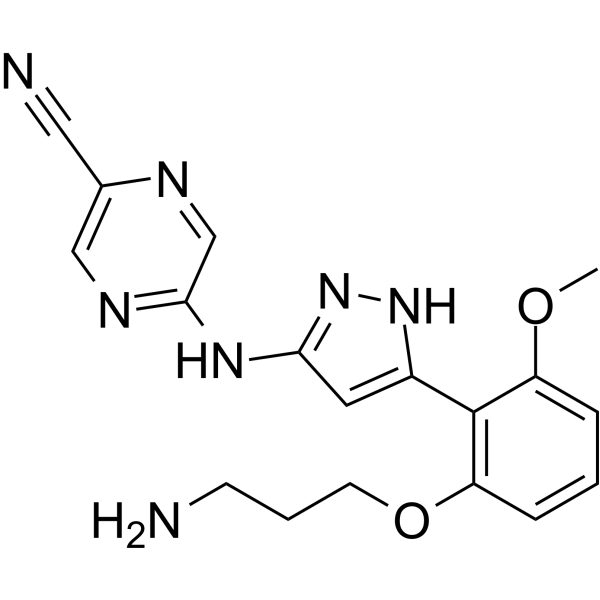
    Prexasertib (LY2606368) is a selective, ATP-competitive second-generation checkpoint kinase 1 (CHK1) inhibitor with a Ki of 0.9 nM and an IC50 of <1 nM. Prexasertib inhibits CHK2 (IC50=8 nM) and RSK1 (IC50=9 nM). Prexasertib causes double-stranded DNA breakage and replication catastrophe resulting in apoptosis. Prexasertib shows potent anti-tumor activity .
    Prexasertib
  • HY-18174A
    Prexasertib dihydrochloride
    Maximum Cited Publications
    33 Publications Verification

    LY2606368 dihydrochloride

    Checkpoint Kinase (Chk) Apoptosis Cancer
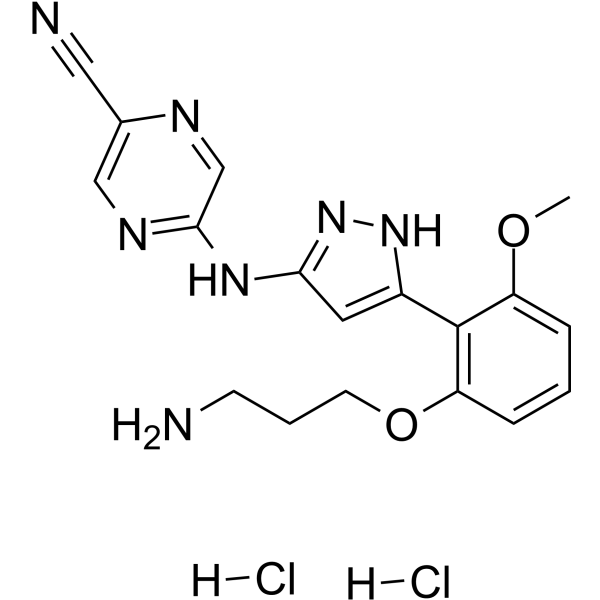
    Prexasertib dihydrochloride (LY2606368 dihydrochloride) is a selective, ATP-competitive second-generation checkpoint kinase 1 (CHK1) inhibitor with a Ki of 0.9 nM and an IC50 of <1 nM. Prexasertib dihydrochloride inhibits CHK2 (IC50=8 nM) and RSK1 (IC50=9 nM). Prexasertib dihydrochloride causes double-stranded DNA breakage and replication catastrophe resulting in apoptosis. Prexasertib dihydrochloride shows potent anti-tumor activity .
    Prexasertib dihydrochloride
  • HY-15217
    CHR-6494
    5+ Cited Publications

    Haspin Kinase Cancer
    CHR-6494 is a potent inhibitor of haspin, with an IC50 of 2 nM. CHR-6494 inhibits histone H3T3 phosphorylation. CHR-6494 can be used in the research of cancer .
    CHR-6494
  • HY-P1103
    CTCE-9908
    1 Publications Verification

    CXCR Cancer
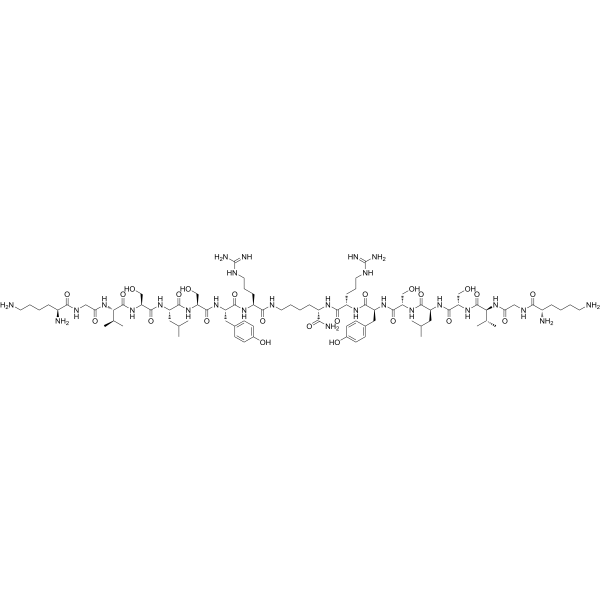
    CTCE-9908 is a potent and selective CXCR4 antagonist. CTCE-9908 induces mitotic catastrophe, cytotoxicity and inhibits migration in CXCR4-expressing ovarian cancer cells .
    CTCE-9908
  • HY-U00177
    GDP366
    2 Publications Verification

    Survivin Cancer
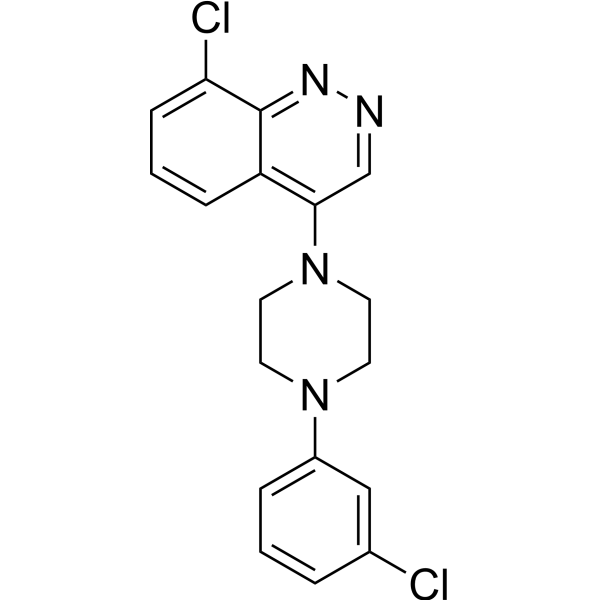
    GDP366, a dual inhibitor of survivin and Op18, induces cell growth inhibition, cellular senescence and mitotic catastrophe in human cancer cells.
    GDP366
  • HY-18174E
    Prexasertib dimesylate
    Maximum Cited Publications
    33 Publications Verification

    LY2606368 dimesylate

    Checkpoint Kinase (Chk) Apoptosis Cancer
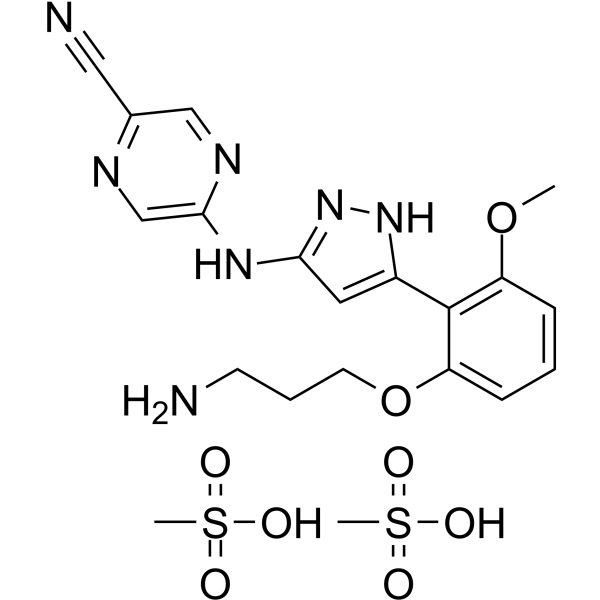
    Prexasertib dimesylate (LY2606368 dimesylate) is a selective, ATP-competitive second-generation checkpoint kinase 1 (CHK1) inhibitor with a Ki of 0.9 nM and an IC50 of <1 nM. Prexasertib dimesylate inhibits CHK2 (IC50=8 nM) and RSK1 (IC50=9 nM). Prexasertib dimesylate causes double-stranded DNA breakage and replication catastrophe resulting in apoptosis. Prexasertib dimesylate shows potent anti-tumor activity .
    Prexasertib dimesylate
  • HY-124757
    FiVe1
    1 Publications Verification

    Proteasome Mitosis Cancer
    FiVe1 is a vimentin (VIM) inhibitor. FiVe1 binds to the rod domain of VIM, causing metaphase VIM disassembly and hyperphosphorylation at Ser56, ultimately leading to mitotic catastrophe, multinucleation, and loss of stemness. FiVe1 has anticancer activity against soft tissue sarcomas. FiVe1 increases the sensitivity of ovarian cancer to Cisplatin (HY-17394). FiVe1 can be used for researches of mesenchymal cancers (including breast cancer and soft tissue sarcoma) and ovarian cancers .
    FiVe1
  • HY-13737
    R1530
    1 Publications Verification

    Apoptosis VEGFR FGFR Mitosis Cancer
    R1530 is a highly potent, orally active, dual-acting mitosis/angiogenesis inhibitor, with anti-tumor and anti-angiogenic activities. R1530 is a multikinase inhibitor which binds to 31 kinases with Kd values of <500 nM. R1530 inhibits VGFR2 and FGFR1 with IC50 of 10 nM and 28 nM, respectively. R1530 triggers apoptosis (mitotic catastrophe) or senescence .
    R1530
  • HY-172807

    p38 MAPK MAPKAPK2 (MK2) CDK Wee1 Cancer
    p38α-IN-9 (Compound 2015) is a p38α inhibitor and blocks p38α’s enzymatic activity with an IC50 lower than 20 nM. p38α-IN-9 inhibits MK2 T334 phosphorylation. p38α-IN-9 activates Cdc25b and Cdc25c and simultaneously inactivates Wee1, leading to mitotic catastrophe, aneuploidy or polyploidy and DNA damage. p38α-IN-9 Inhibits colorectal cancer (CRC) metastasis .
    p38α-IN-9
  • HY-18174H

    LY2606368 lactate

    Checkpoint Kinase (Chk) Apoptosis DNA/RNA Synthesis Cancer
    Prexasertib lactate (LY2606368 lactate) is the lactate form of Prexasertib (HY-18174). Prexasertib lactate is a selective, ATP-competitive second-generation checkpoint kinase 1 (CHK1) inhibitor with a Ki of 0.9 nM and an IC50 of <1 nM. Prexasertib lactate inhibits CHK2 (IC50=8 nM) and RSK1 (IC50=9 nM). Prexasertib lactate causes double-stranded DNA breakage and replication catastrophe resulting in apoptosis. Prexasertib lactate shows potent anti-tumor activity .
    Prexasertib lactate
  • HY-110350

    Haspin Kinase Cancer
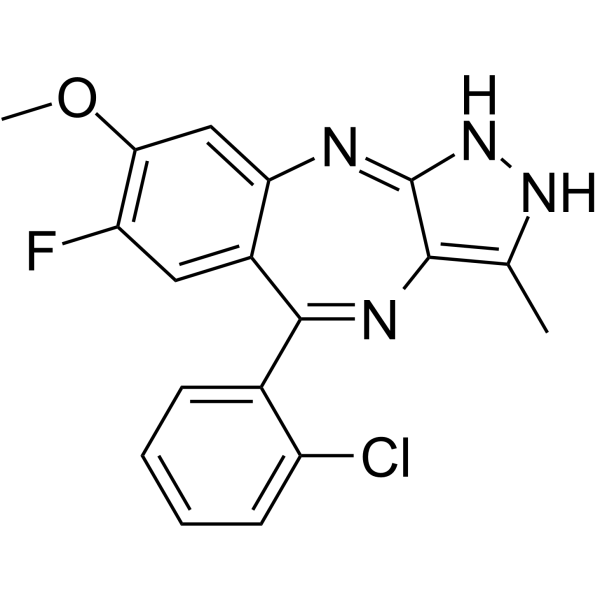
    CHR-6494 TFA is a potent inhibitor of haspin, with an IC50 of 2 nM. CHR-6494 TFA inhibits histone H3T3 phosphorylation. CHR-6494 TFA induces the apoptosis of cancer cells, including melanoma and breast cancer. CHR-6494 TFA can be used in the research of cancer .
    CHR-6494 TFA
  • HY-P1103A

    CXCR Cancer
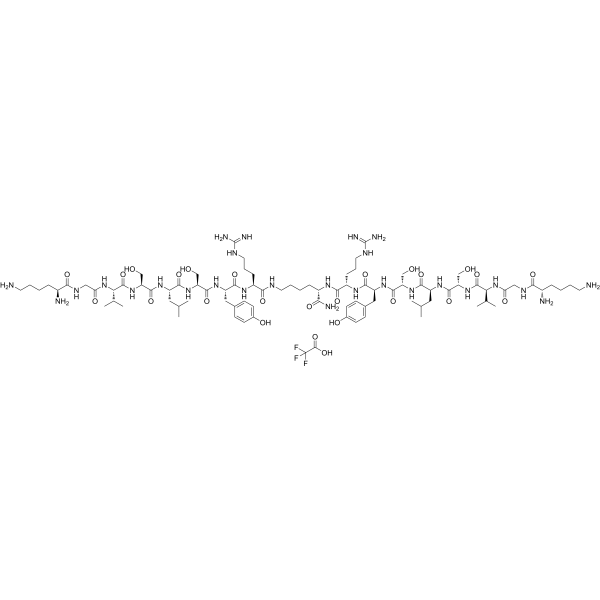
    CTCE-9908 TFA is a potent and selective CXCR4 antagonist. CTCE-9908 TFA induces mitotic catastrophe, cytotoxicity and inhibits migration in CXCR4-expressing ovarian cancer cells .
    CTCE-9908 TFA
  • HY-164501

    Apoptosis Mps1 Mitosis Cancer
    Mps-BAY1 is an MPS1 inhibitor with anticancer activity. Mps-BAY1 inhibits cell proliferation and induces apoptosis by activating mitotic catastrophe in cancer cells, generating global aneuploidy and polyploidy. Mps-BAY1 can be used in the study of colorectal cancer and cervical cancer .
    Mps-BAY1
  • HY-161521

    Polo-like Kinase (PLK) Cancer
    PLK1-IN-10 (Compound 4Bb) is an orally active PLK1 PBD (polo-box domain) inhibitor. PLK1-IN-10 blocks the interaction of PLK1 with the cell division regulator protein 1 (PRC1) and decreases the protein expression of the CDK1-Cyclin B1 complex. PLK1-IN-10 reacts with glutathione (GSH) to increase cellular oxidative stress, ultimately leading to cell death .
    PLK1-IN-10
  • HY-18174B

    LY2606368 Mesylate Hydrate; LY2940930

    Checkpoint Kinase (Chk) Apoptosis Cancer
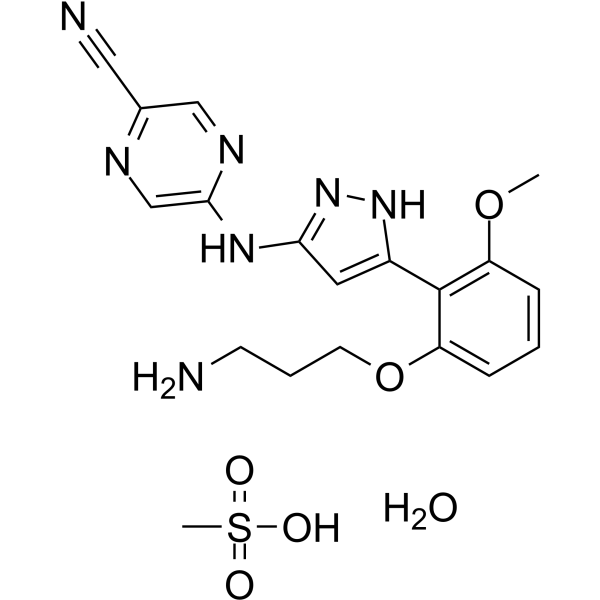
    Prexasertib Mesylate Hydrate (LY2606368 Mesylate Hydrate) is a selective, ATP-competitive second-generation checkpoint kinase 1 (CHK1) inhibitor with a Ki of 0.9 nM and an IC50 of <1 nM. Prexasertib Mesylate Hydrate inhibits CHK2 (IC50=8 nM) and RSK1 (IC50=9 nM). Prexasertib Mesylate Hydrate causes double-stranded DNA breakage and replication catastrophe resulting in apoptosis. Prexasertib Mesylate Hydrate shows potent anti-tumor activity .
    Prexasertib Mesylate Hydrate
  • HY-18174C

    LY2606368 mesylate

    Checkpoint Kinase (Chk) DNA/RNA Synthesis Apoptosis Cancer
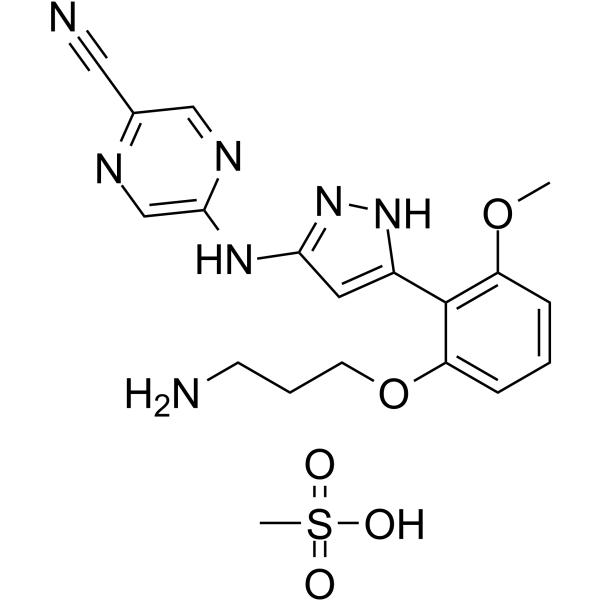
    Prexasertib mesylate (LY2606368 mesylate) is a selective, ATP-competitive second-generation checkpoint kinase 1 (CHK1) inhibitor with a Ki of 0.9 nM and an IC50 of <1 nM. Prexasertib mesylate inhibits CHK2 (IC50=8 nM) and RSK1 (IC50=9 nM). Prexasertib mesylate causes double-stranded DNA breakage and replication catastrophe resulting in apoptosis. Prexasertib mesylate shows potent anti-tumor activity .
    Prexasertib mesylate
  • HY-179525

    c-Myc Microtubule/Tubulin Apoptosis Cancer
    DL78 is an effective anti-mitotic agent. DL78 induces mitotic arrest, mitotic catastrophe and apoptosis in cancer cells by disrupting the interaction between Myc and α-tubulin. DL78 exhibits broad anti-cancer activity, especially against cancer cells with chromosomal instability and excessive expression of MYC. DL78 significantly reduces tumor burden in the OV81.2 xenograft model. DL78 can be used for the study of ovarian cancer .
    DL78
  • HY-10919

    Topoisomerase Mitosis Cancer
    C-1311 shows to inhibit the catalytic activity of DNA topoisomerase II in vitro and in tumour cells. C-1311 prolongs G2 arrest followed by G2 to M transit and cell death during mitosis in the process of mitotic catastrophe .
    C-1311
  • HY-18174S

    LY2606368-d4

    Isotope-Labeled Compounds Checkpoint Kinase (Chk) Apoptosis Cancer
    Prexasertib-d4 (LY2606368-d4) is the deuterium labeled Prexasertib (HY-18174). Prexasertib (LY2606368) is a selective, ATP-competitive second-generation checkpoint kinase 1 (CHK1) inhibitor with a Ki of 0.9 nM and an IC50 of <1 nM. Prexasertib inhibits CHK2 (IC50=8 nM) and RSK1 (IC50=9 nM). Prexasertib causes double-stranded DNA breakage and replication catastrophe resulting in apoptosis. Prexasertib shows potent anti-tumor activity .
    Prexasertib-d4
  • HY-179466

    Microtubule/Tubulin Apoptosis Caspase Cancer
    BKT300 is a potent and selective protein regulator of cytokinesis 1 (PRC1) inhibitor. BKT300 inhibits PRC1 dephosphorylation at T481, disrupts actin and microtubule formation, induces G2/M cell cycle arrest, triggers mitotic catastrophe, and promotes apoptosis, thereby inhibiting proliferation and migration of acute myeloid leukemia (AML) cells while sparing normal cells. BKT300 inhibits tumor growth in mouse xenograft AML models. BKT300 can be used for the research of AML .
    BKT300
  • HY-182391

    MASTL Apoptosis Aurora Kinase PARP Caspase Cancer
    MKI-3 is a selective microtubule-associated serine/threonine kinase-like (MASTL) inhibitor with an IC50 of 5.72 nM and a Kd of 1.89 nM. MKI-3 disrupts the MASTL-ENSA-Aurora A signaling axis. MKI-3 induces chromosomal instability, mitotic catastrophe and apoptosis (apoptosis) in cancer cells. MKI-3 is applicable to research related to triple-negative breast cancer .
    MKI-3
  • HY-185310

    MASTL c-Myc DNA/RNA Synthesis Cancer
    MKI-2 is a selective MASTL inhibitor with an IC50 of 37.44 nM. MKI-2 induces mitotic catastrophe resulting from the modulation of the MASTL-PP2A axis in breast cancer cells. MKI-2 reduces phospho-ENSA, total, phospho-c-Myc levels. MKI-2 inhibts cancer cells proliferation, migration and induces DNA damage. MKI-2 inhibits germinal vesicle breakdown in mouse oocytes. MKI-2 can be used for the research of cancer, such as breast cancer .
    MKI-2
  • HY-181442

    Casein Kinase Survivin Epigenetic Reader Domain Akt Apoptosis Caspase MDM-2/p53 Neurological Disease Cancer
    CK2-TN03 is an ATP-competitive casein kinase 2 (CK2) inhibitor, with an IC50 of 165 nM and a Ki of 20 nM. CK2-TN03 inhibits CK2-mediated survivin activation and reduces CK2-dependent phosphorylation levels of BRD4/MYCN and AKT1. CK2-TN03 exerts anti-neuroblastoma effects by inhibiting survivin, leading to mitotic catastrophe and apoptosis of cancer cells. CK2-TN03 can be used in studies related to neuroblastoma .
    CK2-TN03
  • HY-W162436

    Polo-like Kinase (PLK) Akt Apoptosis Necroptosis Autophagy Cancer
    MCC1019 is a selective PLK1 PBD inhibitor with an IC50 of 16.4 μmol/L. MCC1019 inactivates the AKT signaling pathway in cancer cells, and induces Apoptosis, Necroptosis and Autophagy. MCC1019 exhibits anticancer activity against lung cancer and prostate cancer .
    MCC1019
  • HY-P11770

    Microtubule/Tubulin Others
    α-Tubulin (residues 440-451) (α-Tubulin Tail) is a Microtubule growth inhibitor. α-Tubulin (residues 440-451) transiently interacts with the longitudinal polymerization interface of α-tubulin, regulating the apparent association and dissociation rates of tubulin at the microtubule growing end. α-Tubulin (residues 440-451) inhibits microtubule growth .
    α-Tubulin (residues 440–451)
  • HY-183118

    CDK Apoptosis Neurological Disease Cancer
    CID-078 is an orally active macrocyclic cyclin A and cyclin B inhibitor. CID-078 binds cyclin hydrophobic patches, disrupting interactions of cyclin A-Cdk2 with E2F1 and cyclin B-Cdk1 with Myt1, and selectively targets RxL binding motifs to block complex-substrate interactions. CID-078 induces DNA damage, G2/M cell cycle arrest, apoptosis, mitotic catastrophe, spindle assembly checkpoint activation, and neomorphic cyclin B-CDK2 complex formation, driving synthetic lethality in E2F-driven cancer cells. CID-078 can be used for the research of small cell lung cancer, non-small cell lung cancer, triple negative breast cancer, advanced solid tumors, luminal HR +/HER 2- breast cancer, RB1-altered solid tumors, and neuroblastoma .
    CID-078

Inquiry Online

Your information is safe with us. * Required Fields.

Salutation


Country or Region *

Applicant Name *


Organization Name *

Department *


Email Address *


Product Name *

Cat. No.


Requested quantity *

Phone Number *


Remarks

Inquiry Online

Inquiry Information

Product Name:
Cat. No.:
Quantity:
MCE Japan Authorized Agent:

