

17 Results for "

defensive

" in MedChemExpress (MCE) Product Catalog:
Products (17)

17 Results for "defensive" in MCE Product Catalog:

7
7 Cited Publications
Cat. No.: HY-14127
CAS No.: 195055-03-9
Purity:  99.66%
Synonyms: NBI30775
Target:  

CRFR

Research Areas:  

Neurological Disease Endocrinology

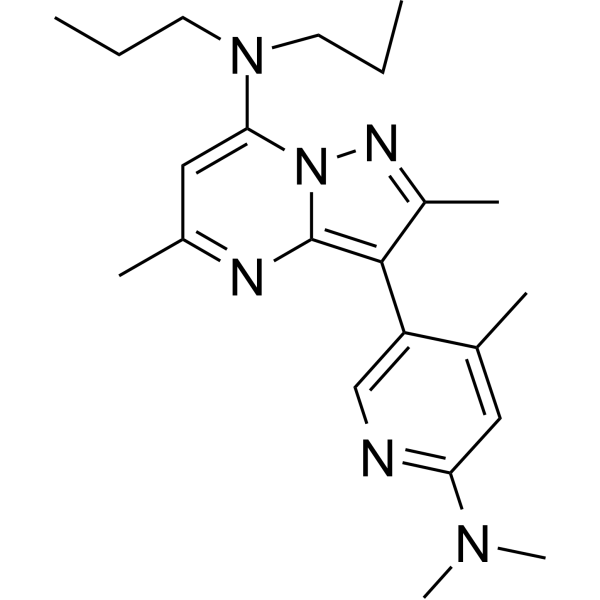
R121919 (NBI30775) is a potent and selective CRF1R antagonist with a Ki of 2 to 5 nM. R121919 has antidepressant and anxiolytic effects. R121919 alleviates defensive withdrawal in rats .
loading...
    loading...
Cat. No.: HY-B0758
CAS No.: 30751-05-4
Target:  

Calcium Channel

Research Areas:  

Inflammation/Immunology

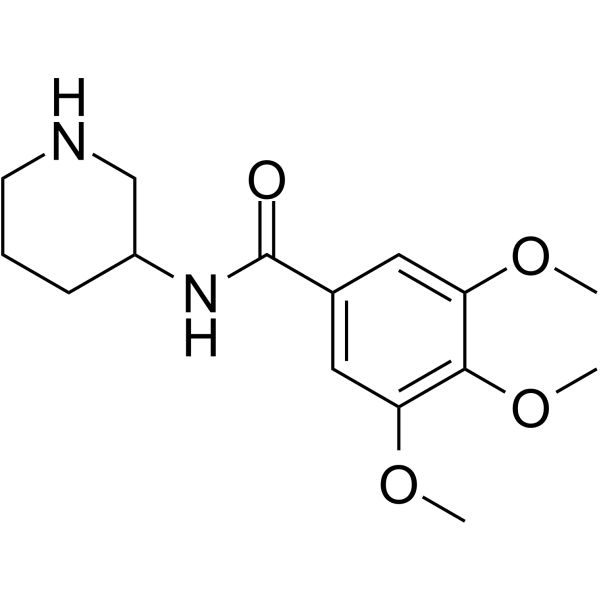
Troxipide is an orally active defensive factor-enhancing therapeutic agent for gastritis and gastric ulcer (GU). Troxipide is a non-antisecretory gastro protective agent with antiulcer, anti-inflammatory and mucus-secreting properties .
loading...
    loading...
Cat. No.: HY-P0279
CAS No.: 137181-56-7
Systemin, an 18-amino acid polypeptide, has been isolated from tomato leaves that is a powerful inducer of over 15 defensive genes.
loading...
    loading...
Cat. No.: HY-W250120
CAS No.: 37220-17-0
Konjac glucomannan (Viscosity≥15000mPa.s) is an orally active acetylated (1-4)-β-D-glucomannan with multiple biological activities including anti-diabetic, anti-obesity, anti-inflammatory effects, as well as film-forming and gelling properties. Konjac glucomannan (Viscosity≥15000mPa.s) forms a defensive coating on the intestinal surface, reducing levels of blood glucose, cholesterol, triglycerides and blood pressure; it is specifically degraded by colonic β-mannanase produced by human colonic bacteria. Konjac glucomannan (Viscosity≥15000mPa.s) can be used as a food additive, dietary supplement and excipient for oral colon-targeted drug delivery systems. Konjac glucomannan (Viscosity≥15000mPa.s) is applicable to research related to various diseases such as type 2 diabetes, obesity, atopic dermatitis and metabolic syndrome, as well as research in fields including biotechnology, pharmaceuticals and tissue engineering .
loading...
    loading...
Cat. No.: HY-133620
CAS No.: 18684-55-4
Purity:  99.67%
Target:  

Insecticide

Research Areas:  

Infection

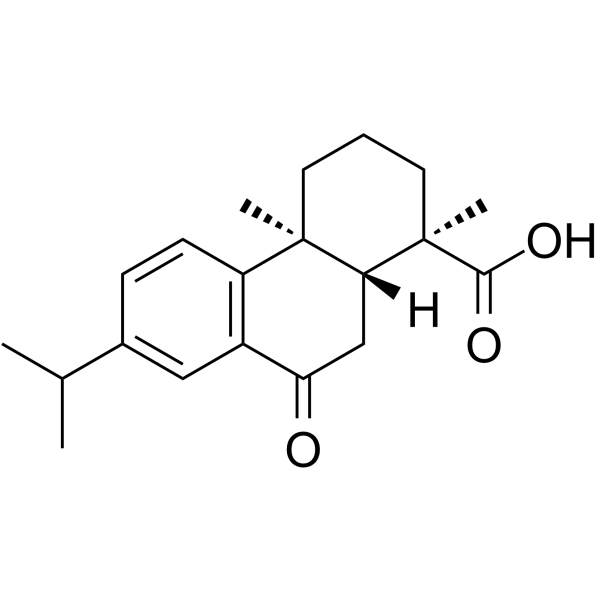
7-Oxodehydroabietic acid is a diterpene resin acid isolated from the roots of the pine Pinus densiflora. 7-Oxodehydroabietic acid play a defensive role against herbivorous insects via insect endocrine-disrupting activity .
loading...
    loading...
Cat. No.: HY-W698586
CAS No.: 534-67-8
Target:  

Drug Isomer

Research Areas:  

Others

(R)-Lotaustralin is a cyanogenic compound derived from Manihot Utilissima, playing a role in the plant's biological defense mechanism. When plant tissue is damaged, (R)-Lotaustralin is hydrolyzed by enzymes such as linamarase, releasing cyanide and thereby exerting a toxic defensive effect .
loading...
    loading...
Cat. No.: HY-N16472
CAS No.: 685554-68-1
Echiumine N-oxide, a pyrrolizidine alkaloid related N-oxides (PANOs), is a plant secondary metabolite. Echiumine N-oxide can be isolated from Echium plantagineum. Echiumine N-oxide acts as a defensive role in plants, prevent plants from tissue death .
loading...
    loading...
Cat. No.: HY-B0758R
CAS No.: 30751-05-4
Troxipide (Standard) is the analytical standard of Troxipide. This product is intended for research and analytical applications. Troxipide is an orally active defensive factor-enhancing therapeutic agent for gastritis and gastric ulcer (GU). Troxipide is a non-antisecretory gastro protective agent with antiulcer, anti-inflammatory and mucus-secreting properties .
loading...
    loading...
Cat. No.: HY-115645
CAS No.: 195055-66-4
Synonyms: NBI30775 hydrochloride
Target:  

CRFR

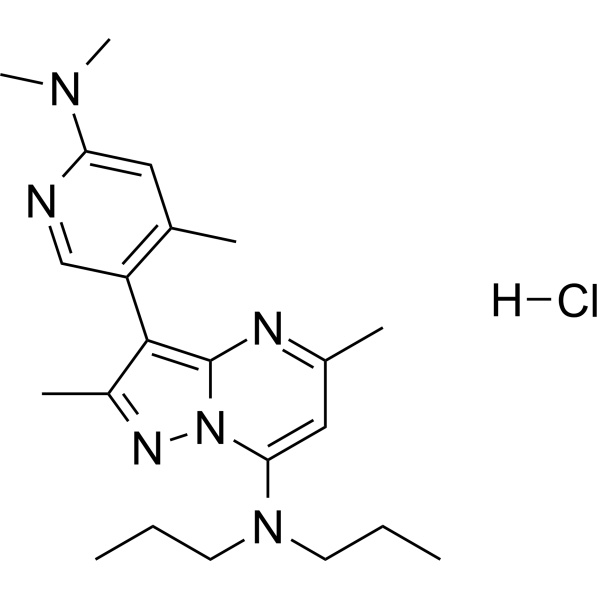
R121919 (NBI30775) hydrochloride is a potent and selective CRF1R antagonist with a Ki of 2 to 5 nM. R121919 hydrochloride has antidepressant and anxiolytic effects. R121919 hydrochloride alleviates defensive withdrawal in rats .
loading...
    loading...
Cat. No.: HY-114735
CAS No.: 4242-46-0
Target:  

Antibiotic

Research Areas:  

Infection

Mandelonitrile benzoate is a defensive secretion of millipedes that releases other chemicals during the cyanidation process in addition to hydrocyanic acid (HCN) and benzaldehyde. Several families of millipedes, including Polydesmidae, Paradoxosomatidae, and Euryuridae, have been shown to secrete phenols and guaiaeol, with one Paradoxosomatid also producing ethylbenzoic acid and benzoic acid. In addition, members of the Xystodesmidae family commonly produce three compounds: benzoic acid, mandelonitrile benzoate, and benzoyl cyanide. Benzoyl cyanide has not been previously discovered as a natural product. These additional natural products are discussed as defensive antipredator and antibiotic agents. Benzoyl cyanide appears to have anesthetic properties for some predators. The study provides a preliminary chemotaxonomic basis for distinguishing various taxonomic groups of millipedes.
loading...
    loading...
Cat. No.: HY-14127R
CAS No.: 195055-03-9
Synonyms: NBI30775 (Standard)
R121919 (Standard) is the analytical standard of R121919. This product is intended for research and analytical applications. R121919 (NBI30775) is a potent and selective CRF1R antagonist with a Ki of 2 to 5 nM. R121919 has antidepressant and anxiolytic effects. R121919 alleviates defensive withdrawal in rats .
loading...
    loading...
Cat. No.: HY-E71103
Research Areas:  

Others

(R)-Mandelonitrile oxidase (EC 1.1.3.49) , characterized from the millipede Chamberlinius hualienensis, is segregated from its substrate, which is contained in special sacs. The sacs are ruptured during defensive behavior, allowing the enzyme and substrate to mix in special reaction chambers leading to production of the defensive chemical benzoyl cyanide.
loading...
    loading...
Cat. No.: HY-W995298
CAS No.: 6418-41-3
Category:  

Natural Products Animals

Target:  

Sex Pheromone

3-Methyltridecane is a secretion of metathoracic scent gland in Tessaratoma papillosa. 3-Methyltridecane has volatility. 3-Methyltridecane may serve as defensive allogens, alarm pheromones, and aggregation pheromones .
loading...
    loading...
Cat. No.: HY-L059
1,972 compounds

Programmed cell death pathways, including apoptosis, pyroptosis and necroptosis, are regulated by unique sets of host proteins that coordinate a variety of biological outcomes. Pyroptosis is a highly inflammatory form of programmed cell death that occurs most frequently upon infection with intracellular pathogens and is likely to form part of the antimicrobial response. This process promotes the rapid clearance of various bacterial, viral, fungal and protozoan infections by removing intracellular replication niches and enhancing the host's defensive responses. Pyroptosis has been widely studied in inflammatory and infection disease models. Recently, there are growing evidences that pyroptosis also plays an important role in the development of cancer, cardiovascular diseases and Metabolic disorder, etc.

MCE designs a unique collection of 1,972 pyroptosis-related compounds mainly focusing on the key targets in the pyroptosis signaling pathway and can be used in the research of pyroptosis signal pathway and related diseases.

Cat. No.: HY-105857
CAS No.: 5845-26-1
Target:  

GABA Receptor

Research Areas:  

Neurological Disease

Thiazesim is a CNS-penetrant GABAA receptor inhibitor, exerting anticonvulsant and antidepressant effects. Thiazesim depresses amygdala output, disrupts conditioned avoidance response in rats. Thiazesim can be used for the research of depression and epilepsy .
loading...
    loading...
Cat. No.: HY-105857A
CAS No.: 3122-01-8
Target:  

GABA Receptor

Research Areas:  

Neurological Disease

Thiazesim hydrochloride is a CNS-penetrant GABAA receptor inhibitor, exerting anticonvulsant and antidepressant effects. Thiazesim hydrochloride depresses amygdala output, disrupts conditioned avoidance response in rats. Thiazesim hydrochloride can be used for the research of depression and epilepsy .
loading...
    loading...
Cat. No.: HY-182588
CAS No.: 20905-50-4
Target:  

Bacterial HIV Dengue Virus

Research Areas:  

Infection

Circulin B is a macrocyclic plant cyclopeptide. Circulin B functions as a plant defense peptide and exhibits antibacterial and anti-HIV activities. Circulin B has high binding affinity for the envelope protein of dengue virus, showing potential anti-dengue virus activity. Circulin B can be used in studies related to dengue virus infection, human immunodeficiency virus infection and microbial infection .
loading...
    loading...
  • 1

