





From 11:00 pm to 12:00 pm EST ( 8:00 pm to 9:00 pm PST ) on January 6th, the website will be under maintenance. We are sorry for the inconvenience. Please arrange your schedule properly.
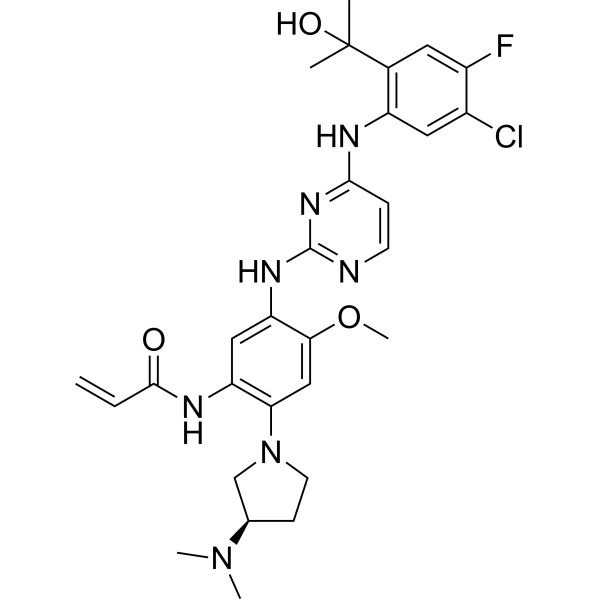
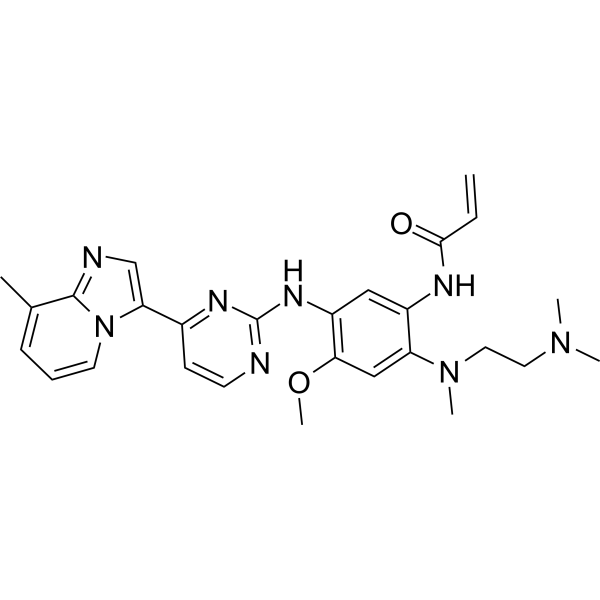
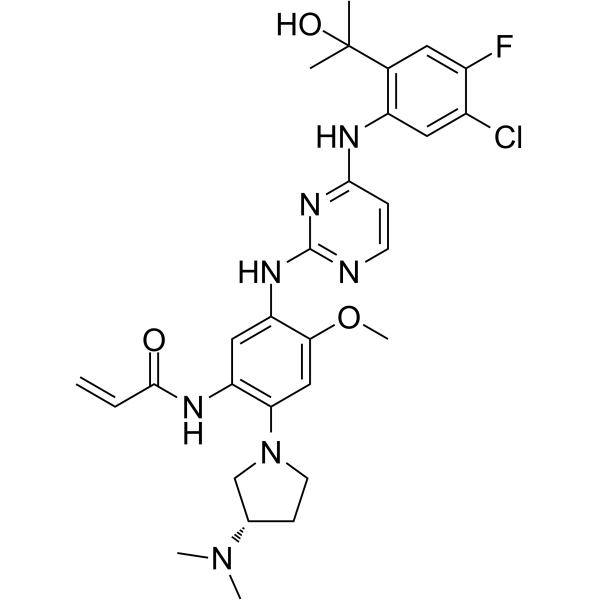
Sunvozertinib (DZD9008) is a potent ErbBs (EGFR, Her2, especially mutant forms) and BTK inhibitor. Sunvozertinib shows IC50s of 20.4, 20.4, 1.1, 7.5, and 80.4 nM for EGFR exon 20 NPH insertion, EGFR exon 20 ASV insertion, EGFR L858R and T790M mutations, and Her2 Exon20 YVMA, and EGFR WT A431, respectively (patent WO2019149164A1, example 52) .
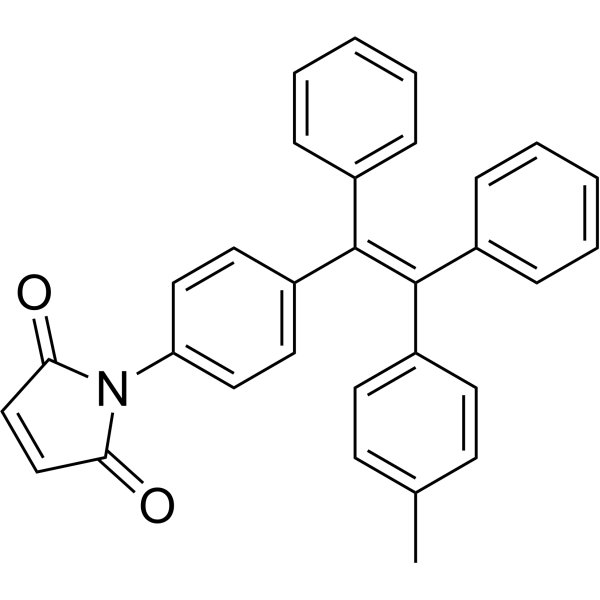
TPE-MI (Tetraphenylethene maleimide) is a thiol probe for measuring unfolded protein load and proteostasis in cells (the excitation wavelength is 350 nm and the emission wavelength is 470 nm). TPE-MI can report imbalances in proteostasis in induced pluripotent stem cell models of Huntington disease, as well as cells transfected with mutant Huntington exon 1 before the formation of visible aggregates. TPE-MI also detects protein damage following dihydroartemisinin research of the malaria parasites Plasmodium falciparum .
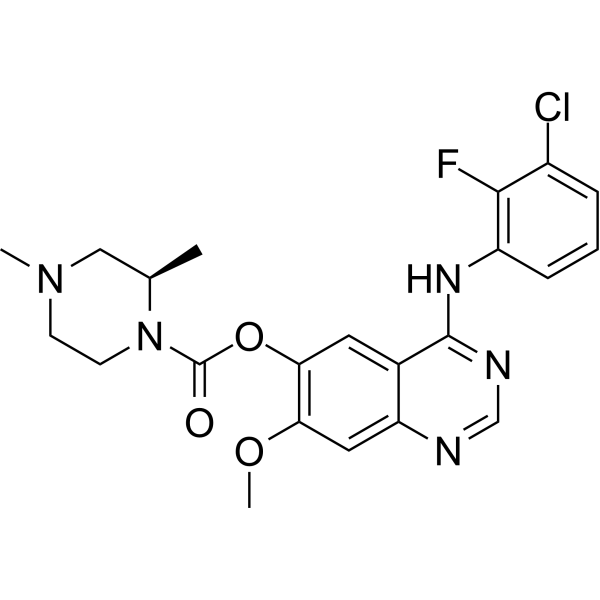
Zorifertinib (AZD3759) is a potent, orally active, BBB-penetrant, EGFR inhibitor. At Km ATP concentrations, the IC50s are 0.3, 0.2, and 0.2 nM for EGFR wt, EGFR L858R, and EGFR exon 19Del, respectively. Zorifertinib induces cancer cell apoptosis. Zorifertinib has antitumor activity, and can be used for NSCLC, HCC etc. research .
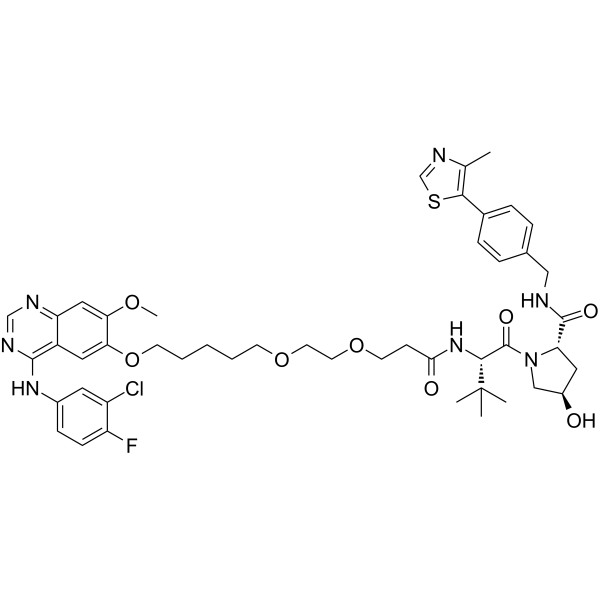
Gefitinib-based PROTAC 3, conjugating an EGFR binding element to a von Hippel-Lindau ligand via a linker, induces EGFR degradation with DC50s of 11.7 nM and 22.3 nM in HCC827(exon 19 del) and H3255 (L858R mutantion) cells, respectively .
Golodirsen (SRP-4053) is an antisense oligonucleotide of the phophorodiamidate morpholino oligomer (PMO). Golodirsen restores the reading frame of the Duchenne muscular dystrophy (DMD) gene by modifying the splicing process of the pre-mRNA, skipping exon 53. Golodirsen can restore the expression of the anti-myostatin protein. Golodirsen can be used for the research of duchenne muscular dystrophy (DMD) .
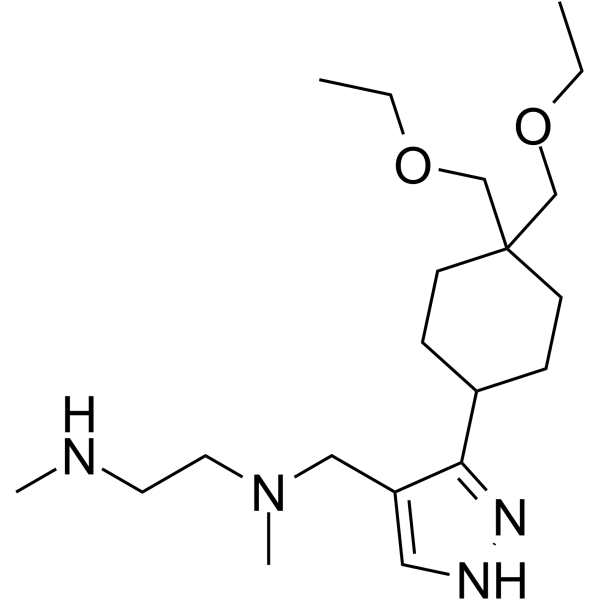
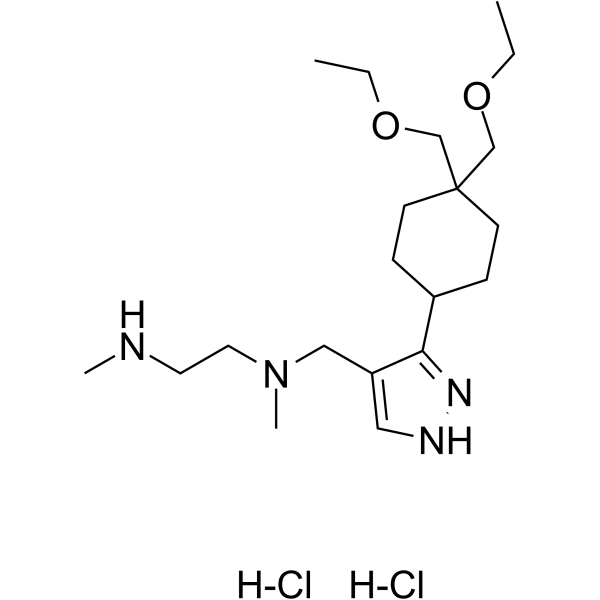
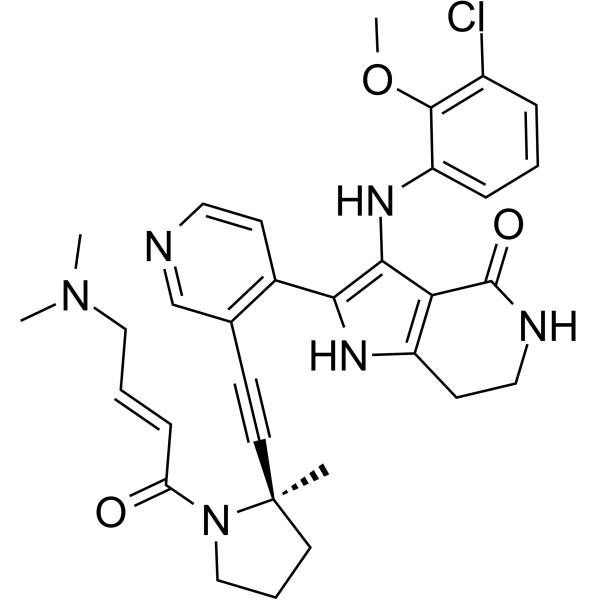
Tuxobertinib (BDTX-189) is a potent, orally active and selective inhibitor of allosteric EGFR and HER2 oncogenic mutations, including EGFR/HER2 exon 20 insertion mutants. Tuxobertinib shows KDs of 0.2, 0.76, 13 and 1.2 nM for EGFR, HER2, BLK and RIPK2, reapectively. Anticancer activity .
Delpacibart is a humanized IgG1κ monoclonal antibody targeting the transferrin receptor TFRC. Delpacibart can be conjugated with the phosphorodiamidate morpholino oligonucleotide (PMO) Zotadirsen (HY-177972), which targets exon 44 of the dystrophin gene, to synthesize the antibody-oligonucleotide conjugate (AOC) Delpacibart zotadirsen (HY-177564). Delpacibart is suitable for use in Duchenne muscular dystrophy (DMD44) research .
Viltolarsen (NS-065/NCNP-01) is a phosphorodiamidate morpholino antisense oligonucleotide. Viltolarsen binds to exon 53 of the dystrophin mRNA precursor and restores the amino acid open-reading frame by skipping exon 53, resulting in the production of a shortened dystrophin protein that contains essential functional portions. Viltolarsen has the potential for Duchenne muscular dystrophy (DMD) research .
BLU-945 is a potent, highly selective, reversible and orally active epidermal growth factor receptor (EGFR) tyrosine kinase inhibitor (TKIs). BLU-945 can effectively inhibit EGFR with L858R and/or exon 19 deletion mutation, T790M mutation and C797S mutation. BLU-945 can be used for the research of lung cancer including non-small cell lung cancer (NSCLC) .
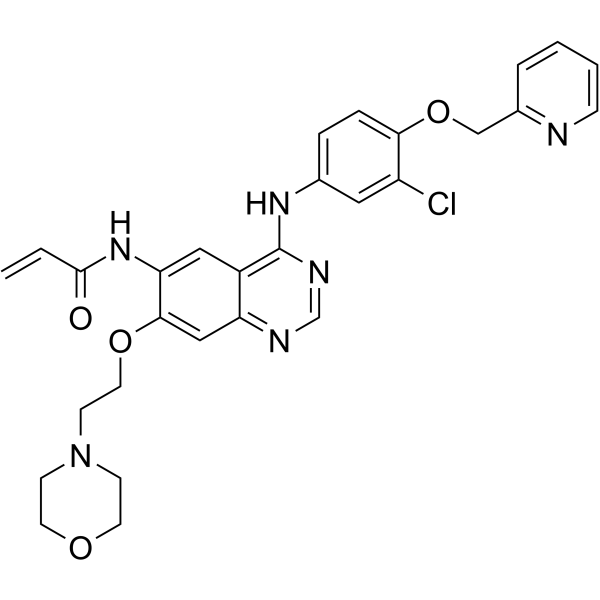
Enozertinib (ORIC-114) is an orally active, CNS-penetrant, highly selective and irreversible dual EGFR/HER2 inhibitor that exhibits potent and targeted inhibition of exon 20 insertion mutations. Enozertinib exhibits high kinome selectivity for the EGFR family of receptors to reduce off-target kinase liabilities. Enozertinib induces tumor regression and demonstrates antitumor activity in central nervous system and non-small cell lung cancer (NSCLC) tumor models. Enozertinib can be used for the research of solid tumors and NSCLC .
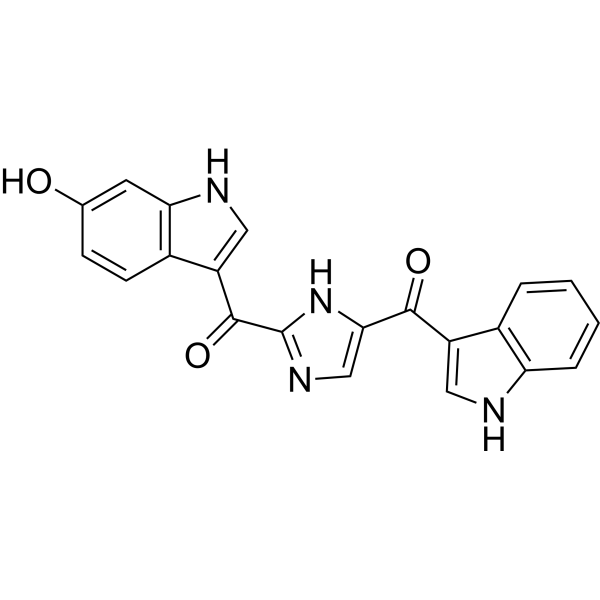
Homocarbonyltopsentin (PK4C9) is a small-molecule TSL2-binding compound, binds to pentaloop conformations of TSL2 and promotes a shift to triloop conformations that display enhanced SMN2 exon 7 (E7) splicing with EC50 value of 16 μM .
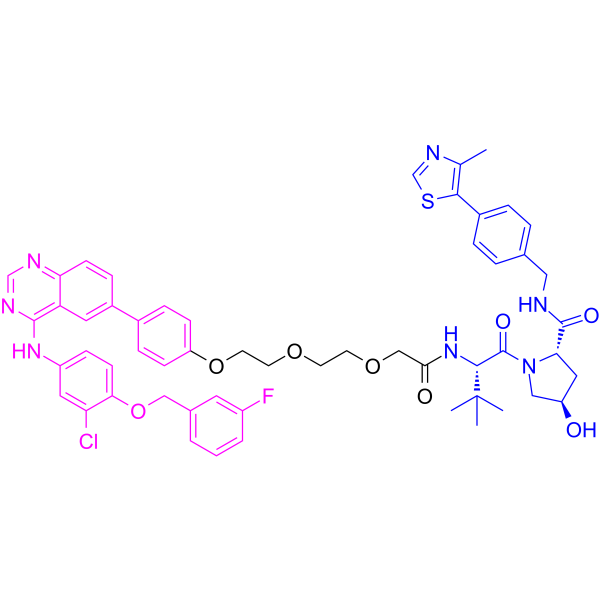
SJF-1528 (PROTAC 1) is a potent EGFR PROTAC degrader with DC50 values of 39.2 nM and 736.2 nM for wild-type EGFR in OVCAR8 cells and Exon 20 Ins mutant EGFR in HeLa cells. SJF-1528 also degrades HER2. SJF-1528 promotes ubiquitination and degradation of EGFR and can be used in breast cancer research (Pink: ligand for target protein (HY-159047); Black: linker Tos-PEG2-CH2-Boc (HY-130532); Blue: ligand for E3 ligase (S,R,S)-AHPC (HY-125845)) .
Drisapersen (Kyndrisa) is a 2 '-O-methyl phosphorothioate RNA antisense oligonucleotide that induces exon 51 skipping. Drisapersen induces skipping of exon 51 during Dystrophin pre-mRNA splicing, allowing the synthesis of partially functional Dystrophin. Drisapersen can be used in research related to Duchenne muscular dystrophy .
Baliforsen (ISIS 5987690) is an antisense oligonucleotide (ASO) that inhibits DMPK mRNA. Baliforsen binds within exon 9 of the human DMPK transcript to promote RNase H1-mediated degradation Baliforsen can be used for the research of myotonic dystrophy type 1 .
STX-721 is an orally active, irreversible, covalent EGFRexon 20 insertion (ex20ins) inhibitor that selectively targets ex20ins-mutant dynamic protein states. STX-721 potently inhibits the kinase activity of EGFR ex20ins mutants (NPG, ASV, SVD). STX-721 inhibits phosphorylation of EGFR (pEGFR Y1068) and downstream ERK (pERK Thr202/Tyr204), and suppresses proliferation of ex20ins-mutant Ba/F3 cells and human NSCLC cell lines (NCI-H2073 ASV KI, CUTO-14 ASV). STX-721 induces tumor regression in EGFR ex20ins-mutant PDX/CDX models. STX-721 can be used for the study of non-small cell lung cancer (NSCLC) harboring EGFR or HER2 ex20ins mutations .
(S)-Sunvozertinib ((S)-DZD9008), the S-enantiomer of Sunvozertinib, shows inhibitory activity against EGFRexon 20 NPH and ASV insertions, EGFR L858R/T790M mutation and Her2 exon20 YVMA insertion (IC50=51.2 nM, 51.9 nM, 1 nM, and 21.2 nM, respectively). (S)-Sunvozertinib also inhibits BTK .
Golodirsen (SRP-4053) sodium is an antisense oligonucleotide of the phophorodiamidate morpholino oligomer (PMO). Golodirsen sodium restores the reading frame of the Duchenne muscular dystrophy (DMD) gene by modifying the splicing process of the pre-mRNA, skipping exon 53. Golodirsen sodium can restore the expression of the anti-myostatin protein. Golodirsen sodium can be used for the research of duchenne muscular dystrophy (DMD) .
BAY 2476568 is a potent and mutant-selective inhibitor targeting EGFR exon20 insertion variants. BAY 2476568 potently inhibits the kinase activity of EGFR exon20 insertion mutants (insASV, insSVD, insNPG) with IC50 values of 0.09 nM, 0.21 nM, and 0.11 nM, respectively. BAY 2476568 inhibits EGFR (Y1068) phosphorylation and reduces the phosphorylation of ERK1/2 and Akt (S473) in Ba/F3 cells expressing EGFR exon20 insertion mutants (insASV, insSVD). BAY 2476568 can be used for the study of non-small cell lung cancer (NSCLC) driven by EGFR exon20 insertion mutations .
BPN-15477 is a potent SMC (splicing modulator compound) that restores correct splicing of ELP1 (Elongator complex protein 1) exon 20. BPN-15477 corrects splicing of the ELP1 transcript, significantly increases the level of functional protein in vivo in all tissues, including brain. BPN-15477 can be used for frontotemporal dementia research .
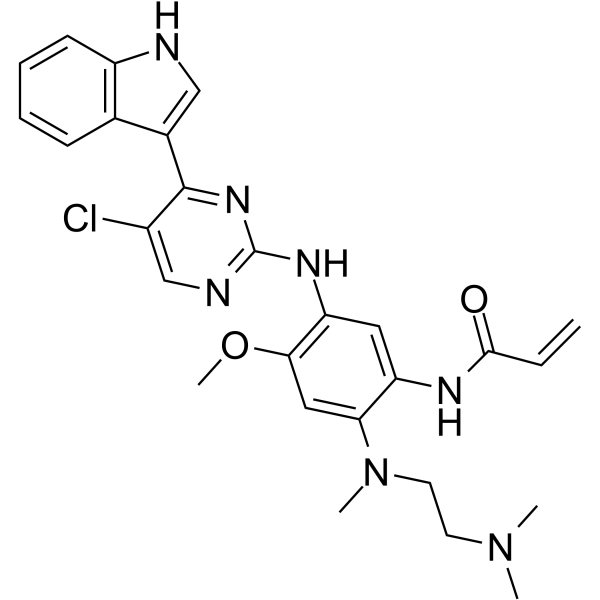
NT-1 (EGFR mutant-IN-3) is a potent mutant EGFR inhibitor and an analog of Osimertinib (HY-15772). This mutant EGFR inhibitor suppresses FGFR WT with an IC50 of 0.4 nM. NT-1 also inhibits EGFR L858R, EGFR Exon 19 deletion and EGFR T790M. NT-1 exerts deeper inhibition on p-EGFR and p-ERK, and induces tumor cell apoptosis. NT-1 can be used in colorectal cancer research .
Enozertinib (ORIC-114) hemihydrate is an orally active, CNS-penetrant, highly selective and irreversible dual EGFR/HER2 inhibitor that exhibits potent and targeted inhibition of exon 20 insertion mutations. Enozertinib hemihydrate exhibits high kinome selectivity for the EGFR family of receptors to reduce off-target kinase liabilities. Enozertinib hemihydrate induces tumor regression and demonstrates antitumor activity in central nervous system and non-small cell lung cancer (NSCLC) tumor models. Enozertinib hemihydrate can be used for the research of solid tumors and NSCLC .
Viltolarsen (NS-065/NCNP-01) sodium is a phosphorodiamidate morpholino antisense oligonucleotide. Viltolarsen sodium binds to exon 53 of the dystrophin mRNA precursor and restores the amino acid open-reading frame by skipping exon 53, resulting in the production of a shortened dystrophin protein that contains essential functional portions. Viltolarsen sodium has the potential for Duchenne muscular dystrophy (DMD) research .
Ultevursen (QR-421a) is a splice-modulating antisense oligonucleotide targeting exon 13 of the USH2A gene, which restores the functional expression of Usherin protein by inducing exon skipping. Ultevursen binds to USH2A pre-mRNA and modulates the splicing process to specifically skip exon 13 carrying the pathogenic mutation c.2299delG, generating an in-frame transcript and a truncated yet functionally normal protein. Ultevursen exhibits concentration-dependent exon skipping activity in human cells and retinal organoid models, and restores Usherin expression and retinal function in zebrafish and gene-edited mouse models. Ultevursen can be used for related research on type 2 Usher syndrome and non-syndromic retinitis pigmentosa .
RNA splicing modulator-4 is an RNA splicing modulator. RNA splicing modulator-4 controls the inclusion or exclusion of specific exons in precursor mRNA (pre-mRNA) by regulating alternative splicing events, thereby altering the coding sequence and function of mature mRNA. RNA splicing modulator-4 shows promise for research into neurodegenerative diseases (such as Huntington's disease) and cancers .
CD33 splicing modulator 1 (Compound 1) is a CD33 splicing modulator. CD33/Siglec 3 is a myeloid lineage cell surface receptor that is known to regulate microglia activity. CD33 splicing modulator 1 increases exon 2 skipping in cellular mRNA pools. CD33 splicing modulator 1 has the potential for the research of neurodegenerative disease including Alzheimer's disease .
NVS-SM2 is a potent, orally active and brain-penetrant SMN2 splicing enhancer with an EC50 of 2 nM for SMN. NVS-SM2 enhances U1-pre-mRNA association. NVS-SM2 promotes exon 7 inclusion and restores normal survival motor neuron (SMN) protein expression. NVS-SM2 can be used for spinal muscular atrophy (SMA) research .
Donidalorsen (ISIS-721744; IONIS-PKK-LRX) sodium is an antisense oligonucleotide targeting prekallikrein (PKK). Donidalorsen sodium inhibits kallikrein activity and reduces the production of Bradykinin (HY-P0206) by specifically binding to and degrading PKK mRNA in the liver. Donidalorsen sodium can be used in the research of hereditary angioedema .
TG693 is an orally active inhibitor of CLK1. TG693 regulates the mutated exon 31 of the dystrophin gene in vivo. TG693 is used in Duchenne muscular dystrophy (DMD) research .
Pebezertinib (BLU 451) is an orally active inhibitor for EGFR. Pebezertinib exhibits the ability to penetrate the central nervous system (CNS). Pebezertinib can be used for research about non-small cell lung cancer carrying EGFR exon 20 insertion .
YK-029A is an orally active inhibitor of mutant EGFR,targeting to both the T790M mutations (EGFR T790M) and exon 20 insertion of EGFR (EGFRex20ins). YK-029A exhibits significant antitumor activity,and results tumor regression in EGFRex20ins-driven PDX models .
mHTT-IN-2 (compound 27) is a potent inhibitor (EC50=0.066 μM) of mutant huntingtin (mHTT). mHTT-IN-2 reduces canonical splicing of HTT RNA exons [49-50] and is a splicing regulator of the huntingtin (HTT) gene. mHTT-IN-2 exhibits inhibitory activity in vitro and in vivo in human HD stem cells and mouse BACHD models. mHTT-IN-2 may be used in the study of branaplam-related peripheral neuropathy .
Delpacibart zotadirsen (Del-zota), an antibody oligonucleotide conjugate (AOC), consists of a monoclonal antibody (Delpacibart) (HY-P990051) that binds to the transferrin receptor 1 (TfR1) conjugated to a phosphorodiamidate morpholino conjugate (PMO), Delpacibart zotadirsen is designed to deliver phosphorodiamidate morpholino oligomers (PMOs) to skeletal muscle and heart tissue to specifically skip exon 44 of the dystrophin gene and enable production of near-full length dystrophin. Delpacibart zotadirsen is used for the study of myotonic dystrophy type 1 (DM1) .
HTT-D3 is an orally active, blood-brain barrier penetrant splicing modulator of huntingtin (HTT). HTT-D3 promotes the inclusion of a pseudo-exon containing a premature termination codon into HTT pre-mRNA, triggers nonsense-mediated mRNA degradation and reduces HTT protein levels. HTT-D3 induces dose-dependent, comparable reductions in mutant HTT protein in both the brain and peripheral tissues of transgenic mouse models. HTT-D3 can be used for the research of Huntington's disease .
Brogidirsen (NS 089; NCNP 02) is a a dual-targeting antisense oligonucleotide. Brogidirsen can induce dystrophin protein experession. Brogidirsen can be used for the research of Duchenne muscular dystrophy .
TAU-IN-3 (Compound 2) is an orally active TAU inhibitor. TAU-IN-3 inhibits the expression of MAPT exon 10 DDPAC mutant gene in HeLa cells (IC50: 0.6 µM). TAU-IN-3 reduces the 4R/3R MAPT mRNA ratio in HeLa cells transfected with WT or DDPAC minigenes. TAU-IN-3 inhibits the insertion of endogenous MAPT exon 10 and the production of 4R tau protein in cells. TAU-IN-3 modulates tau splicing in htau mice and improves the associated behavioral phenotypes. TAU-IN-3 can be used to study neurodegenerative diseases .
Anti-GPC-2 Antibody (CT3) is a kind of mouse IgG1 κ chimeric antibody, targeting to human GPC-2. Anti-GPC-2 Antibody (CT3) reacts with tumor-associated exons 3 and 10 of glypicans-2 (GPC2). Anti-GPC-2 Antibody (CT3) can be used for the research of cancer, such as neuroblastoma .
TPE-MI (Tetraphenylethene maleimide) (solution) is a thiol probe for measuring unfolded protein load and proteostasis in cells (the excitation wavelength is 350 nm and the emission wavelength is 470 nm). TPE-MI can report imbalances in proteostasis in induced pluripotent stem cell models of Huntington disease, as well as cells transfected with mutant Huntington exon 1 before the formation of visible aggregates. TPE-MI also detects protein damage following dihydroartemisinin research of the malaria parasitesPlasmodium falciparum . Solvent and concentration: DMSO: 10 mM
EGFR-IN-99 (compound 1a) is a potent EGFR and HER2Exon 20 insertion mutant inhibitor. EGFR-IN-99 has excellent antiproliferative activity against DFCI127 cells, with an EC50 of 11.5 nM. EGFR-IN-99 can be used for the research of non-small cell lung cancer (NSCLC) .
Activated DPG Subunit can be used in the synthesis of exon jumping oligomer conjugates. The oligomer conjugates complement selected target sites in the human anti-muscular atrophy protein gene and induce exon 51 jumping. It can be used for research of muscular dystrophy .
Activated T Subunit can be used in the synthesis of exon jumping oligomer conjugates. The oligomer conjugates complement selected target sites in the human anti-muscular atrophy protein gene and induce exon 51 jumping. Activated T subunit can be used for research of muscular dystrophy .
KIN-8741 is a highly selective Type IIb c-Met inhibitor. KIN-8741 has broad activity against c-Met kinase mutations. KIN-8741 shows antitumor activity in MET gene amplified and exon 14 deleted non-small cell lung cancer models. KIN-8741 can be used in the research of c-Met driven cancers, especially advanced tumors carrying MET exon 14 jump mutations, acquired drug resistance mutations, etc .
Dexamethasone metasulfobenzoate (sodium) (Standard) is the analytical standard of Dexamethasone metasulfobenzoate (sodium). This product is intended for research and analytical applications. Dexamethasone metasulfobenzoate sodium is a SARS-CoV-2 exonuclease (ExoN) inhibitor that binds to the catalytic site of ExoN .
Zorifertinib (AZD3759) hydrochloride is a potent, orally active, BBB-penetrant, EGFR inhibitor (IC50s: 0.3, 0.2, and 0.2 nM for EGFR wt, EGFR L858R, and EGFR exon 19Del, respectively). Zorifertinib hydrochloride induces cancer cell apoptosis. Zorifertinib hydrochloride has antitumor activity, and can be used for NSCLC, HCC etc. research .
HER2-IN-17 (Compound 2) is an inhibitor for HER2, which inhibits the Her YVMA exon 20 insertion mutation (HER2 YVMA) with an IC50 <200 nM. HER2-IN-17 inhibits proliferation of HER2 YVMA mutated BaF3 cells with an IC50 <200 nM and amliorates non-small-cell lung cancer (NSCLC) .
CD33 splicing modulator 1 (Compound 1) hydrochloride is a CD33 splicing modulator. CD33/Siglec 3 is a myeloid cell surface receptor known to regulate microglial activity. CD33 splicing modulator 1 hydrochloride increases exon 2 skipping in the cellular mRNA pool and can be used to study neurodegenerative diseases including Alzheimer's disease .
The whole IGF axis constitutes an interactive network composed of the peptide-ligands IGF1, IGF2 and insulin, and the receptors IGF1R, IGF2R and insulin receptor (INSR) as IGF binding proteins (IGFBPs). The INSR itself appears in two isoforms, INSRA and INSRB differing in 12 amino acids encoded by exon 11. INSR Recombinant Human Active Protein Kinase is a recombinant INSR protein that can be used to study INSR-related functions .
Mesenchymal-to-epithelial transition (MET) is a receptor tyrosine kinase for hepatocyte growth factor (HGF). MET overactivation is strongly associated with angiogenesis, cellular motility, growth, and invasion. Aberrant MET signaling can drive tumorigenesis in several cancer types through various molecular mechanisms, including MET amplification, MET exon 14 skipping mutation, MET overexpression, and MET fusions. MET Y1235D is a mutant of MET. MET Y1235D Recombinant Human Active Protein Kinase is a recombinant MET Y1235D protein that can be used to study MET Y1235D-related functions .
Mesenchymal-to-epithelial transition (MET) is a receptor tyrosine kinase for hepatocyte growth factor (HGF). MET overactivation is strongly associated with angiogenesis, cellular motility, growth, and invasion. Aberrant MET signaling can drive tumorigenesis in several cancer types through various molecular mechanisms, including MET amplification, MET exon 14 skipping mutation, MET overexpression, and MET fusions. MET G1163R is a mutant of MET. MET G1163R Recombinant Human Active Protein Kinase is a recombinant MET G1163R protein that can be used to study MET G1163R-related functions .
SJF-1528 (PROTAC 1) hemihydrate is a potent EGFR PROTAC degrader with DC50 values of 39.2 nM and 736.2 nM for wild-type EGFR in OVCAR8 cells and Exon 20 Ins mutant EGFR in HeLa cells. SJF-1528 hemihydrate also degrades HER2. SJF-1528 hemihydrate promotes ubiquitination and degradation of EGFR and can be used in breast cancer research (Pink: ligand for target protein (HY-159047); Black: linker Tos-PEG2-CH2-Boc (HY-130532); Blue: ligand for E3 ligase (S,R,S)-AHPC (HY-125845)) .
MAP2K1 (also known as MEK1) is downstream of the RAF family and activation results in ERK1/2 activation. Activating mutations in MAP2K1 have been reported almost exclusively in exons 1 and 2 in both hematologic malignancies. MAP2K1 L115P is a mutant of MAP2K1. MAP2K1 L115P Recombinant Human Active Protein Kinase is a recombinant MAP2K1 L115P protein that can be used to study MAP2K1 L115P-related functions .
Activated A Subunit can be used in the synthesis of exon jumping oligomer conjugates. The oligomer conjugates complement selected target sites in the human anti-muscular atrophy protein gene and induce exon 51 jumping. It can be used for research of muscular dystrophy .
Activated C Subunit can be used in the synthesis of exon jumping oligomer conjugates. The oligomer conjugates complement selected target sites in the human anti-muscular atrophy protein gene and induce exon 51 jumping. It can be used for research of muscular dystrophy .
SSOe26 sodium is a 15mer antisense oligonucleotide targeting?HER4. SSOe26 sodium induces exon 26 skipping, leading to the generation of a novel mRNA transcript that excludes exon 26 (CYT2 isoform). SSOe26 sodium decreases tumour growth in mouse xenografts.
NCP2 Anchor can be used in the synthesis of exon jumping oligomer conjugates. The oligomer conjugates complement selected target sites in the human anti-muscular atrophy protein gene and induce exon 52 jumping. NCP2 Anchor can be used for research of muscular dystrophy .
Rimigorsen sodium is an antisense oligonucleotide that induces skipping of exon 44 of the pre-mRNA encoding dystrophin in a Duchenne muscular dystrophy (DMD)
SSO111 sodium, a 20mer fully modified antisense oligonucleotide, targets the oncogene?HER2. SSO111 sodium induces exon 15 skipping during splicing, leading to the generation of a novel mRNA transcript that excludes exon 15. SSO111 sodium downregulated HER2 mRNA, which resulted in the inhibition of proliferation and induction of apoptosis in HER2-overexpressing tumor cells.
AZ14133346 (compound 36) is a potent and selective inhibitor of EGFRExon20 insertions, with the IC50 of 85 nM. AZ14133346 plays an important role in cancer research .
LDC0496 is a potent and selective EGFR inhibitor. LDC0496 possesses intense inhibitory potency toward EGFR and Her2 exon20 insertion mutations, as well as selectivity over wild type EGFR and within the kinome .
FITC-labeled Drisapersen (sodium) is Drisapersen labeled with FITC. Drisapersen, a antisense oligonucleotide, induces exon 51 skipping during dystrophin pre-mRNA splicing and allows synthesis of partially functional dystrophin in Duchenne muscular dystrophy (DMD) patients with amenable mutations.
HER2-IN-16 (Compound 14) is an inhibitor for HER2, which inhibits the Her YVMA exon 20 insertion mutation (HER2 YVMA) with an IC50 <200 nM. HER2-IN-16 inhibits proliferation of HER2 YVMA mutated BaF3 cells with an IC50 <200 nM and amliorates non-small-cell lung cancer (NSCLC) .
HER2-IN-15 (Compound 1) is an inhibitor for HER2, which inhibits the Her YVMA exon 20 insertion mutation (HER2 YVMA) with an IC50 <200 nM. HER2-IN-15 inhibits proliferation of HER2 YVMA mutated BaF3 cells with an IC50 <200 nM and amliorates non-small-cell lung cancer (NSCLC) .
SARS-CoV-2 RdRp-IN-1 (Compound PAP-2) is a potent SARS-CoV-2 RdRp inhibitor, with an EC50 of 1.11 μM. SARS-CoV-2 RdRp-IN-1 can bind directly to SARS-CoV-2 RdRp, fully resistance to the exoribonuclease (ExoN) and exhibit broad spectrum anti-CoV activities .
GSK3368715 (EPZ019997) hydrochloride is an orally active, reversible, SAM-noncompetitive type I protein arginine methyltransferase (PRMT) inhibitor with IC50 values of 3.1 nM (PRMT1), 48 nM (PRMT3), 1148 nM (PRMT4), 5.7 nM (PRMT6), and 1.7 nM (PRMT8). GSK3368715 hydrochloride induces a shift in arginine methylation states, alters exon usage, and exhibits potent anticancer activity .
EGFR-IN-91 (compound 9) is an orally available EGFR inhibitor with blood-brain barrier penetrability. EGFR-IN-91 inhibits EGFR L858R/C797S and EGFR exon 19del/C797S, inducing tumor regression in xenograft (PDX) mouse models. EGFR-IN-91 has the potential to inhibit localized and metastatic non-small cell lung cancer (NSCLC) driven by EGFR mutants .
Mesenchymal-to-epithelial transition (MET) is a receptor tyrosine kinase for hepatocyte growth factor (HGF). MET overactivation is strongly associated with angiogenesis, cellular motility, growth, and invasion. Aberrant MET signaling can drive tumorigenesis in several cancer types through various molecular mechanisms, including MET amplification, MET exon 14 skipping mutation, MET overexpression, and MET fusions. MET Y1230A is a mutant of MET. MET Y1230A Recombinant Human Active Protein Kinase is a recombinant MET Y1230A protein that can be used to study MET Y1230A-related functions .
Mesenchymal-to-epithelial transition (MET) is a receptor tyrosine kinase for hepatocyte growth factor (HGF). MET overactivation is strongly associated with angiogenesis, cellular motility, growth, and invasion. Aberrant MET signaling can drive tumorigenesis in several cancer types through various molecular mechanisms, including MET amplification, MET exon 14 skipping mutation, MET overexpression, and MET fusions. MET L1195V is a mutant of MET. MET L1195V Recombinant Human Active Protein Kinase is a recombinant MET L1195V protein that can be used to study MET L1195V-related functions .
Mesenchymal-to-epithelial transition (MET) is a receptor tyrosine kinase for hepatocyte growth factor (HGF). MET overactivation is strongly associated with angiogenesis, cellular motility, growth, and invasion. Aberrant MET signaling can drive tumorigenesis in several cancer types through various molecular mechanisms, including MET amplification, MET exon 14 skipping mutation, MET overexpression, and MET fusions. MET Y1230C is a mutant of MET. MET Y1230C Recombinant Human Active Protein Kinase is a recombinant MET Y1230C protein that can be used to study MET Y1230C-related functions .
Mesenchymal-to-epithelial transition (MET) is a receptor tyrosine kinase for hepatocyte growth factor (HGF). MET overactivation is strongly associated with angiogenesis, cellular motility, growth, and invasion. Aberrant MET signaling can drive tumorigenesis in several cancer types through various molecular mechanisms, including MET amplification, MET exon 14 skipping mutation, MET overexpression, and MET fusions. MET D1228N is a mutant of MET. MET D1228N Recombinant Human Active Protein Kinase is a recombinant MET D1228N protein that can be used to study MET D1228N-related functions .
Mesenchymal-to-epithelial transition (MET) is a receptor tyrosine kinase for hepatocyte growth factor (HGF). MET overactivation is strongly associated with angiogenesis, cellular motility, growth, and invasion. Aberrant MET signaling can drive tumorigenesis in several cancer types through various molecular mechanisms, including MET amplification, MET exon 14 skipping mutation, MET overexpression, and MET fusions. MET D1228H is a mutant of MET. MET D1228H Recombinant Human Active Protein Kinase is a recombinant MET D1228H protein that can be used to study MET D1228H-related functions .
Mesenchymal-to-epithelial transition (MET) is a receptor tyrosine kinase for hepatocyte growth factor (HGF). MET overactivation is strongly associated with angiogenesis, cellular motility, growth, and invasion. Aberrant MET signaling can drive tumorigenesis in several cancer types through various molecular mechanisms, including MET amplification, MET exon 14 skipping mutation, MET overexpression, and MET fusions. MET Y1230D is a mutant of MET. MET Y1230D Recombinant Human Active Protein Kinase is a recombinant MET Y1230D protein that can be used to study MET Y1230D-related functions .
Mesenchymal-to-epithelial transition (MET) is a receptor tyrosine kinase for hepatocyte growth factor (HGF). MET overactivation is strongly associated with angiogenesis, cellular motility, growth, and invasion. Aberrant MET signaling can drive tumorigenesis in several cancer types through various molecular mechanisms, including MET amplification, MET exon 14 skipping mutation, MET overexpression, and MET fusions. MET Y1230H is a mutant of MET. MET Y1230H Recombinant Human Active Protein Kinase is a recombinant MET Y1230H protein that can be used to study MET Y1230H-related functions .
Mesenchymal-to-epithelial transition (MET) is a receptor tyrosine kinase for hepatocyte growth factor (HGF). MET overactivation is strongly associated with angiogenesis, cellular motility, growth, and invasion. Aberrant MET signaling can drive tumorigenesis in several cancer types through various molecular mechanisms, including MET amplification, MET exon 14 skipping mutation, MET overexpression, and MET fusions. MET M1250T is a mutant of MET. MET M1250T Recombinant Human Active Protein Kinase is a recombinant MET M1250T protein that can be used to study MET M1250T-related functions .
Cy3 labled Ultevursen sodium is a Cy3 labled Ultevursen sodium (HY-147412A). Ultevursen sodium (QR-421a) is a splice-modulating antisense oligonucleotide targeting exon 13 of the USH2A gene, which restores the functional expression of Usherin protein by inducing exon skipping. Ultevursen sodium binds to USH2A pre-mRNA and modulates the splicing process to specifically skip exon 13 carrying the pathogenic mutation c.2299delG, generating an in-frame transcript and a truncated yet functionally normal protein. Ultevursen sodium exhibits concentration-dependent exon skipping activity in human cells and retinal organoid models, and restores Usherin expression and retinal function in zebrafish and gene-edited mouse models. Ultevursen sodium can be used for related research on type 2 Usher syndrome and non-syndromic retinitis pigmentosa .
FAM labled Ultevursen sodiumis a FAM labled Ultevursen sodium (HY-147412A). Ultevursen sodium (QR-421a) is a splice-modulating antisense oligonucleotide targeting exon 13 of the USH2A gene, which restores the functional expression of Usherin protein by inducing exon skipping. Ultevursen sodium binds to USH2A pre-mRNA and modulates the splicing process to specifically skip exon 13 carrying the pathogenic mutation c.2299delG, generating an in-frame transcript and a truncated yet functionally normal protein. Ultevursen sodium exhibits concentration-dependent exon skipping activity in human cells and retinal organoid models, and restores Usherin expression and retinal function in zebrafish and gene-edited mouse models. Ultevursen sodium can be used for related research on type 2 Usher syndrome and non-syndromic retinitis pigmentosa .
(rac)-Activated T subunit is the racemate of Activated T Subunit (HY-153406). Activated T Subunit can be used in the synthesis of exon jumping oligomer conjugates. The oligomer conjugates complement selected target sites in the human anti-muscular atrophy protein gene and induce exon 51 jumping. (rac)-Activated T subunit can be used for research of muscular dystrophy .
EGFR-IN-204 (Example 1) is a HER2exon 20 mutation inhibitor with selectivity for wild-type EGFR. EGFR-IN-204 exerts antiproliferative effects on cells dependent on HER2 exon 20 YVMA insertion mutation and wild-type HER2, and shows strong selectivity over cells dependent on wild-type EGFR. EGFR-IN-204 is applicable to non-small cell lung cancer research .
AZ14289671 is an orally active, blood-brain barrier-penetrant tyrosine kinase (tyrosine kinase) inhibitor (TKI) that specifically targets non-small cell lung cancer (NSCLC) harboring EGFRexon 20 insertion mutations (EGFR Exon20Ins), while largely sparing wild-type EGFR to reduce off-target toxicities such as rash and diarrhea. AZ14289671 inhibits the downstream MAPK/ERK/AKT pathway, suppressing tumor cell proliferation, survival and migration. AZ14289671 can be used for NSCLC research .
EGFR-IN-202 is an epidermal growth factor receptor (EGFR) inhibitor that selectively targets EGFR exon 20 insertion mutations. EGFR-IN-202 can be used in research related to non-small cell lung cancer .
Anti-CD19 Antibody (FMC63) is an anti-human CD19 antibody. Anti-CD19 Antibody (FMC63)recognizes an epitope in CD19 that is located between exons 2 and 4. Recommend Isotype Controls: Human IgG1 kappa, Isotype Control (HY-P99001) .
Zotadirsen, one of the components of the AOC Delpacibart zotadirsen (HY-177564), is composed of a phosphorodiamidate morpholino oligomers (PMOs) and SMCC linker (HY-42360). Zotadirsen specifically skip exon 44 of the dystrophin gene and enable production of near-full length dystrophin. Zotadirsen can be used to synthesize AOC drugs. Zotadirsen can also be used in the research of Duchenne muscular dystrophy (DM) .
c-Kit-IN-14 (Compound 1) is a c-kit kinase inhibitor. c-Kit-IN-14 inhibits the phosphorylation of wild-type c-kit, with an IC50 of 0.4 nM for pKIT. c-Kit-IN-14 inhibits Exon 11 KIT, with an IC50 of 0.4 nM. c-Kit-IN-14 can be used in the research of mast cell-mediated diseases such as urticaria .
c-Kit-IN-13 (Compound I) is a c-kit kinase inhibitor. c-Kit-IN-13 inhibits the autophosphorylation of wild-type c-kit, with an IC50 of 0.3 nM for pKIT. c-Kit-IN-13 inhibits Exon 11 KIT, with an IC50 of 0.9 nM. c-Kit-IN-13 can be used in the research of mast cell-mediated diseases such as urticaria .
Mesenchymal-to-epithelial transition (MET) is a receptor tyrosine kinase for hepatocyte growth factor (HGF). MET overactivation is strongly associated with angiogenesis, cellular motility, growth, and invasion. Aberrant MET signaling can drive tumorigenesis in several cancer types through various molecular mechanisms, including MET amplification, MET exon 14 skipping mutation, MET overexpression, and MET fusions. MET F1200I is a mutant of MET. MET F1200I Recombinant Human Active Protein Kinase is a recombinant MET F1200I protein that can be used to study MET F1200I-related functions .
PF-03475952 is a fully human IgG2 monoclonal antibody targeting CD44. PF-03475952 binds an epitope in CD44’s constant exons, blocks CD44-hyaluronic acid interaction, reduces cell surface CD44, and does not cross-react with rodent CD44 or LYVE-1. PF-03475952 induces cancer cell apoptosis, inhibits LPS (HY-D1056)-induced leukocyte cytokine release and cancer metastasis, and reduces CD44 expression on circulating CD3+ lymphocytes in cynomolgus monkeys. PF-03475952 can be used for the research of rheumatoid arthritis and hepatocellular carcinoma .
TPE-MI (Tetraphenylethene maleimide) is a thiol probe for measuring unfolded protein load and proteostasis in cells (the excitation wavelength is 350 nm and the emission wavelength is 470 nm). TPE-MI can report imbalances in proteostasis in induced pluripotent stem cell models of Huntington disease, as well as cells transfected with mutant Huntington exon 1 before the formation of visible aggregates. TPE-MI also detects protein damage following dihydroartemisinin research of the malaria parasites Plasmodium falciparum .
TPE-MI (Tetraphenylethene maleimide) (solution) is a thiol probe for measuring unfolded protein load and proteostasis in cells (the excitation wavelength is 350 nm and the emission wavelength is 470 nm). TPE-MI can report imbalances in proteostasis in induced pluripotent stem cell models of Huntington disease, as well as cells transfected with mutant Huntington exon 1 before the formation of visible aggregates. TPE-MI also detects protein damage following dihydroartemisinin research of the malaria parasitesPlasmodium falciparum . Solvent and concentration: DMSO: 10 mM
Delpacibart is a humanized IgG1κ monoclonal antibody targeting the transferrin receptor TFRC. Delpacibart can be conjugated with the phosphorodiamidate morpholino oligonucleotide (PMO) Zotadirsen (HY-177972), which targets exon 44 of the dystrophin gene, to synthesize the antibody-oligonucleotide conjugate (AOC) Delpacibart zotadirsen (HY-177564). Delpacibart is suitable for use in Duchenne muscular dystrophy (DMD44) research .
Anti-GPC-2 Antibody (CT3) is a kind of mouse IgG1 κ chimeric antibody, targeting to human GPC-2. Anti-GPC-2 Antibody (CT3) reacts with tumor-associated exons 3 and 10 of glypicans-2 (GPC2). Anti-GPC-2 Antibody (CT3) can be used for the research of cancer, such as neuroblastoma .
Anti-CD19 Antibody (FMC63) is an anti-human CD19 antibody. Anti-CD19 Antibody (FMC63)recognizes an epitope in CD19 that is located between exons 2 and 4. Recommend Isotype Controls: Human IgG1 kappa, Isotype Control (HY-P99001) .
PF-03475952 is a fully human IgG2 monoclonal antibody targeting CD44. PF-03475952 binds an epitope in CD44’s constant exons, blocks CD44-hyaluronic acid interaction, reduces cell surface CD44, and does not cross-react with rodent CD44 or LYVE-1. PF-03475952 induces cancer cell apoptosis, inhibits LPS (HY-D1056)-induced leukocyte cytokine release and cancer metastasis, and reduces CD44 expression on circulating CD3+ lymphocytes in cynomolgus monkeys. PF-03475952 can be used for the research of rheumatoid arthritis and hepatocellular carcinoma .
The ORF1ab gene is a specifically expressed gene of SARS-CoV-2 and can be quickly and sensitively detected to indirectly indicate the level of SARS-CoV-2. The ORF1ab protein is associated with viral replication and transcription, inhibition of host translation machinery, and suppression of host immune responses. SARS-CoV-2 Guanine-N7 methyltransferase Protein (His) is the recombinant Virus-derived SARS-CoV-2 Guanine-N7 methyltransferase protein, expressed by E. coli , with N-6*His labeled tag.
The BTK protein is a key non-receptor tyrosine kinase that is essential for B lymphocyte development and signaling. After BCR activation, BTK initiates a cascade reaction, phosphorylates PLCG2 and activates downstream pathways, affecting calcium mobilization and PKC activation. BTK Protein, Human (Active, sf9, GST, C481S) is the recombinant human-derived BTK protein, expressed by Sf9 insect cells, with N-GST labeled tag.
The BTK protein is a key non-receptor tyrosine kinase that is essential for B lymphocyte development and signaling. After BCR activation, BTK initiates a cascade reaction, phosphorylates PLCG2 and activates downstream pathways, affecting calcium mobilization and PKC activation. BTK Protein, Human (Active, sf9, GST) is the recombinant human-derived BTK protein, expressed by Sf9 insect cells, with N-GST labeled tag.
The BTK protein is a key non-receptor tyrosine kinase that is essential for B lymphocyte development and signaling. After BCR activation, BTK initiates a cascade reaction, phosphorylates PLCG2 and activates downstream pathways, affecting calcium mobilization and PKC activation. BTK Protein, Human (Active, sf9, GST, M437R) is the recombinant human-derived BTK protein, expressed by Sf9 insect cells, with N-GST labeled tag.
The BTK protein is a key non-receptor tyrosine kinase that is essential for B lymphocyte development and signaling. After BCR activation, BTK initiates a cascade reaction, phosphorylates PLCG2 and activates downstream pathways, affecting calcium mobilization and PKC activation. BTK Protein, Human (Active, sf9, GST, T316A) is the recombinant human-derived BTK protein, expressed by Sf9 insect cells, with N-GST labeled tag.
The BTK protein is a key non-receptor tyrosine kinase that is essential for B lymphocyte development and signaling. After BCR activation, BTK initiates a cascade reaction, phosphorylates PLCG2 and activates downstream pathways, affecting calcium mobilization and PKC activation. BTK Protein, Human (Active, sf9, GST, T474I) is the recombinant human-derived BTK protein, expressed by Sf9 insect cells, with N-GST labeled tag.
The BTK protein is a key non-receptor tyrosine kinase that is essential for B lymphocyte development and signaling. After BCR activation, BTK initiates a cascade reaction, phosphorylates PLCG2 and activates downstream pathways, affecting calcium mobilization and PKC activation. BTK Protein, Human (Active, sf9, GST, T474S) is the recombinant human-derived BTK protein, expressed by Sf9 insect cells, with N-GST labeled tag.
The BTK protein is a key non-receptor tyrosine kinase that is essential for B lymphocyte development and signaling. After BCR activation, BTK initiates a cascade reaction, phosphorylates PLCG2 and activates downstream pathways, affecting calcium mobilization and PKC activation. BTK Protein, Human (Active, sf9, C-His) is the recombinant human-derived BTK protein, expressed by sf9 insect cells , with C-His labeled tag.
Adenylate cyclase stimulating G alpha protein antibody; AHO antibody; Alternative gene product encoded by XL exon antibody; C20orf45 antibody; dJ309F20.1.1 antibody; dJ806M20.3.3 antibody; Extra large alphas protein antibody; GNAS antibody; GNAS complex locus antibody; GNAS1 antibody
WB, IHC-P, ICC/IF
Human, Mouse, Rat
GNAS Antibody (YA7045) is a Mouse-derived and non-conjugated IgG2b monoclonal antibody, targeting to GNAS.
EGFR-IN-202 is an epidermal growth factor receptor (EGFR) inhibitor that selectively targets EGFR exon 20 insertion mutations. EGFR-IN-202 can be used in research related to non-small cell lung cancer .
Golodirsen (SRP-4053) is an antisense oligonucleotide of the phophorodiamidate morpholino oligomer (PMO). Golodirsen restores the reading frame of the Duchenne muscular dystrophy (DMD) gene by modifying the splicing process of the pre-mRNA, skipping exon 53. Golodirsen can restore the expression of the anti-myostatin protein. Golodirsen can be used for the research of duchenne muscular dystrophy (DMD) .
Viltolarsen (NS-065/NCNP-01) is a phosphorodiamidate morpholino antisense oligonucleotide. Viltolarsen binds to exon 53 of the dystrophin mRNA precursor and restores the amino acid open-reading frame by skipping exon 53, resulting in the production of a shortened dystrophin protein that contains essential functional portions. Viltolarsen has the potential for Duchenne muscular dystrophy (DMD) research .
Drisapersen (Kyndrisa) is a 2 '-O-methyl phosphorothioate RNA antisense oligonucleotide that induces exon 51 skipping. Drisapersen induces skipping of exon 51 during Dystrophin pre-mRNA splicing, allowing the synthesis of partially functional Dystrophin. Drisapersen can be used in research related to Duchenne muscular dystrophy .
Baliforsen (ISIS 5987690) is an antisense oligonucleotide (ASO) that inhibits DMPK mRNA. Baliforsen binds within exon 9 of the human DMPK transcript to promote RNase H1-mediated degradation Baliforsen can be used for the research of myotonic dystrophy type 1 .
Golodirsen (SRP-4053) sodium is an antisense oligonucleotide of the phophorodiamidate morpholino oligomer (PMO). Golodirsen sodium restores the reading frame of the Duchenne muscular dystrophy (DMD) gene by modifying the splicing process of the pre-mRNA, skipping exon 53. Golodirsen sodium can restore the expression of the anti-myostatin protein. Golodirsen sodium can be used for the research of duchenne muscular dystrophy (DMD) .
Eteplirsen (AVI 4658) sodium is a synthetic antisense oligonucleotide that induces dystrophin production. Eteplirsen (AVI 4658) sodium promotes exon 51 skipping in Duchenne muscular dystrophy patients and can be used in Duchenne muscular dystrophy research .
Viltolarsen (NS-065/NCNP-01) sodium is a phosphorodiamidate morpholino antisense oligonucleotide. Viltolarsen sodium binds to exon 53 of the dystrophin mRNA precursor and restores the amino acid open-reading frame by skipping exon 53, resulting in the production of a shortened dystrophin protein that contains essential functional portions. Viltolarsen sodium has the potential for Duchenne muscular dystrophy (DMD) research .
Ultevursen (QR-421a) is a splice-modulating antisense oligonucleotide targeting exon 13 of the USH2A gene, which restores the functional expression of Usherin protein by inducing exon skipping. Ultevursen binds to USH2A pre-mRNA and modulates the splicing process to specifically skip exon 13 carrying the pathogenic mutation c.2299delG, generating an in-frame transcript and a truncated yet functionally normal protein. Ultevursen exhibits concentration-dependent exon skipping activity in human cells and retinal organoid models, and restores Usherin expression and retinal function in zebrafish and gene-edited mouse models. Ultevursen can be used for related research on type 2 Usher syndrome and non-syndromic retinitis pigmentosa .
Donidalorsen (ISIS-721744; IONIS-PKK-LRX) sodium is an antisense oligonucleotide targeting prekallikrein (PKK). Donidalorsen sodium inhibits kallikrein activity and reduces the production of Bradykinin (HY-P0206) by specifically binding to and degrading PKK mRNA in the liver. Donidalorsen sodium can be used in the research of hereditary angioedema .
Brogidirsen (NS 089; NCNP 02) is a a dual-targeting antisense oligonucleotide. Brogidirsen can induce dystrophin protein experession. Brogidirsen can be used for the research of Duchenne muscular dystrophy .
Drisapersen sodium, a antisense oligonucleotide, induces exon 51 skipping during dystrophin pre-mRNA splicing and allows synthesis of partially functional dystrophin in Duchenne muscular dystrophy (DMD) patients with amenable mutations.
Activated DPG Subunit can be used in the synthesis of exon jumping oligomer conjugates. The oligomer conjugates complement selected target sites in the human anti-muscular atrophy protein gene and induce exon 51 jumping. It can be used for research of muscular dystrophy .
Ultevursen sodium (QR-421a) is a splice-modulating antisense oligonucleotide targeting exon 13 of the USH2A gene, which restores the functional expression of Usherin protein by inducing exon skipping. Ultevursen sodium binds to USH2A pre-mRNA and modulates the splicing process to specifically skip exon 13 carrying the pathogenic mutation c.2299delG, generating an in-frame transcript and a truncated yet functionally normal protein. Ultevursen sodium exhibits concentration-dependent exon skipping activity in human cells and retinal organoid models, and restores Usherin expression and retinal function in zebrafish and gene-edited mouse models. Ultevursen sodium can be used for related research on type 2 Usher syndrome and non-syndromic retinitis pigmentosa .
MDM4-targeting ASO sodium is a 25mer antisense oligonucleotide targeting MDM4. MDM4-targeting ASO sodium induced exon 6 skipping, leading to nonsense-mediated decay of the mRNA transcript that excludes exon-6. In multiple human melanoma cell lines and in melanoma patient-derived xenograft (PDX) mouse models, MDM4-targeting ASO-mediated skipping of exon 6 decreased MDM4 abundance, inhibited melanoma growth, and enhanced sensitivity to MAPK-targeting therapeutics.
Activated C Subunit can be used in the synthesis of exon jumping oligomer conjugates. The oligomer conjugates complement selected target sites in the human anti-muscular atrophy protein gene and induce exon 51 jumping. It can be used for research of muscular dystrophy .
SSOe26 sodium is a 15mer antisense oligonucleotide targeting?HER4. SSOe26 sodium induces exon 26 skipping, leading to the generation of a novel mRNA transcript that excludes exon 26 (CYT2 isoform). SSOe26 sodium decreases tumour growth in mouse xenografts.
Rimigorsen sodium is an antisense oligonucleotide that induces skipping of exon 44 of the pre-mRNA encoding dystrophin in a Duchenne muscular dystrophy (DMD)
SSO111 sodium, a 20mer fully modified antisense oligonucleotide, targets the oncogene?HER2. SSO111 sodium induces exon 15 skipping during splicing, leading to the generation of a novel mRNA transcript that excludes exon 15. SSO111 sodium downregulated HER2 mRNA, which resulted in the inhibition of proliferation and induction of apoptosis in HER2-overexpressing tumor cells.
FITC-labeled Drisapersen (sodium) is Drisapersen labeled with FITC. Drisapersen, a antisense oligonucleotide, induces exon 51 skipping during dystrophin pre-mRNA splicing and allows synthesis of partially functional dystrophin in Duchenne muscular dystrophy (DMD) patients with amenable mutations.
Cy3 labled Ultevursen sodium is a Cy3 labled Ultevursen sodium (HY-147412A). Ultevursen sodium (QR-421a) is a splice-modulating antisense oligonucleotide targeting exon 13 of the USH2A gene, which restores the functional expression of Usherin protein by inducing exon skipping. Ultevursen sodium binds to USH2A pre-mRNA and modulates the splicing process to specifically skip exon 13 carrying the pathogenic mutation c.2299delG, generating an in-frame transcript and a truncated yet functionally normal protein. Ultevursen sodium exhibits concentration-dependent exon skipping activity in human cells and retinal organoid models, and restores Usherin expression and retinal function in zebrafish and gene-edited mouse models. Ultevursen sodium can be used for related research on type 2 Usher syndrome and non-syndromic retinitis pigmentosa .
FAM labled Ultevursen sodiumis a FAM labled Ultevursen sodium (HY-147412A). Ultevursen sodium (QR-421a) is a splice-modulating antisense oligonucleotide targeting exon 13 of the USH2A gene, which restores the functional expression of Usherin protein by inducing exon skipping. Ultevursen sodium binds to USH2A pre-mRNA and modulates the splicing process to specifically skip exon 13 carrying the pathogenic mutation c.2299delG, generating an in-frame transcript and a truncated yet functionally normal protein. Ultevursen sodium exhibits concentration-dependent exon skipping activity in human cells and retinal organoid models, and restores Usherin expression and retinal function in zebrafish and gene-edited mouse models. Ultevursen sodium can be used for related research on type 2 Usher syndrome and non-syndromic retinitis pigmentosa .
Inquiry Online
Your information is safe with us. * Required Fields.
Western blot analysis of extracts from THP-1(lane 2(20μg), Jurkat (lane 3(20μg) and NIH3T3(lane 4(20μg) using FOXO1A (HY-P80132) Rabbit mAb. Proteins were transferred
to a PVDF membrane and blocked with 5% non-fat milk in TBST for 2 hour at room temperature. The primary antibody (1/1000) and Loading control antibody (Beta Actin, HY-P80438, 1/10000) was
used in 5% non-fat milk in TBST at 4°C overnight. Goat Anti-Mouse/Rabbit IgG-HRP Secondary Antibody (1/10000) was used for 1 hour at room temperature.
Western blot analysis of extracts from THP-1(lane 2(20μg), Jurkat (lane 3(20μg) and NIH3T3(lane 4(20μg) using FOXO1A (HY-P80132) Rabbit mAb. Proteins were transferred
to a PVDF membrane and blocked with 5% non-fat milk in TBST for 2 hour at room temperature. The primary antibody (1/1000) and Loading control antibody (Beta Actin, HY-P80438, 1/10000) was
used in 5% non-fat milk in TBST at 4°C overnight. Goat Anti-Mouse/Rabbit IgG-HRP Secondary Antibody (1/10000) was used for 1 hour at room temperature.
Western blot analysis of extracts from THP-1(lane 2(20μg), Jurkat (lane 3(20μg) and NIH3T3(lane 4(20μg) using FOXO1A (HY-P80132) Rabbit mAb. Proteins were transferred
to a PVDF membrane and blocked with 5% non-fat milk in TBST for 2 hour at room temperature. The primary antibody (1/1000) and Loading control antibody (Beta Actin, HY-P80438, 1/10000) was
used in 5% non-fat milk in TBST at 4°C overnight. Goat Anti-Mouse/Rabbit IgG-HRP Secondary Antibody (1/10000) was used for 1 hour at room temperature.
Western blot analysis of extracts from THP-1(lane 2(20μg), Jurkat (lane 3(20μg) and NIH3T3(lane 4(20μg) using FOXO1A (HY-P80132) Rabbit mAb. Proteins were transferred
to a PVDF membrane and blocked with 5% non-fat milk in TBST for 2 hour at room temperature. The primary antibody (1/1000) and Loading control antibody (Beta Actin, HY-P80438, 1/10000) was
MedchemExpress Validation 03
Western blot analysis of extracts from THP-1(lane 2(20μg), Jurkat (lane 3(20μg) and NIH3T3(lane 4(20μg) using FOXO1A (HY-P80132) Rabbit mAb. Proteins were transferred
MedchemExpress Validation 04
Western blot analysis of extracts from THP-1(lane 2(20μg), Jurkat (lane 3(20μg) and NIH3T3(lane 4(20μg) using FOXO1A (HY-P80132) Rabbit mAb. Proteins were transferred
to a PVDF membrane and blocked with 5% non-fat milk in TBST for 2 hour at room temperature. The primary antibody (1/1000) and Loading control antibody (Beta Actin, HY-P80438, 1/10000) was
used in 5% non-fat milk in TBST at 4°C overnight. Goat Anti-Mouse/Rabbit IgG-HRP Secondary Antibody (1/10000) was used for 1 hour at room temperature.
MedchemExpress Validation
Western blot analysis of extracts from THP-1(lane 2(20μg), Jurkat (lane 3(20μg) and NIH3T3(lane 4(20μg) using FOXO1A (HY-P80132) Rabbit mAb. Proteins were transferred
to a PVDF membrane and blocked with 5% non-fat milk in TBST for 2 hour at room temperature. The primary antibody (1/1000) and Loading control antibody (Beta Actin, HY-P80438, 1/10000) was
used in 5% non-fat milk in TBST at 4°C overnight. Goat Anti-Mouse/Rabbit IgG-HRP Secondary Antibody (1/10000) was used for 1 hour at room temperature.
Western blot analysis of extracts from THP-1(lane 2(20μg), Jurkat (lane 3(20μg) and NIH3T3(lane 4(20μg) using FOXO1A (HY-P80132) Rabbit mAb. Proteins were transferred
to a PVDF membrane and blocked with 5% non-fat milk in TBST for 2 hour at room temperature. The primary antibody (1/1000) and Loading control antibody (Beta Actin, HY-P80438, 1/10000) was
used in 5% non-fat milk in TBST at 4°C overnight. Goat Anti-Mouse/Rabbit IgG-HRP Secondary Antibody (1/10000) was used for 1 hour at room temperature.
MedchemExpress Validation
Western blot analysis of extracts from THP-1(lane 2(20μg), Jurkat (lane 3(20μg) and NIH3T3(lane 4(20μg) using FOXO1A (HY-P80132) Rabbit mAb. Proteins were transferred
to a PVDF membrane and blocked with 5% non-fat milk in TBST for 2 hour at room temperature. The primary antibody (1/1000) and Loading control antibody (Beta Actin, HY-P80438, 1/10000) was
used in 5% non-fat milk in TBST at 4°C overnight. Goat Anti-Mouse/Rabbit IgG-HRP Secondary Antibody (1/10000) was used for 1 hour at room temperature.
MedchemExpress Validation
Western blot analysis of extracts from THP-1(lane 2(20μg), Jurkat (lane 3(20μg) and NIH3T3(lane 4(20μg) using FOXO1A (HY-P80132) Rabbit mAb. Proteins were transferred
to a PVDF membrane and blocked with 5% non-fat milk in TBST for 2 hour at room temperature. The primary antibody (1/1000) and Loading control antibody (Beta Actin, HY-P80438, 1/10000) was
used in 5% non-fat milk in TBST at 4°C overnight. Goat Anti-Mouse/Rabbit IgG-HRP Secondary Antibody (1/10000) was used for 1 hour at room temperature.
MedchemExpress Validation
Western blot analysis of extracts from THP-1(lane 2(20μg), Jurkat (lane 3(20μg) and NIH3T3(lane 4(20μg) using FOXO1A (HY-P80132) Rabbit mAb. Proteins were transferred
to a PVDF membrane and blocked with 5% non-fat milk in TBST for 2 hour at room temperature. The primary antibody (1/1000) and Loading control antibody (Beta Actin, HY-P80438, 1/10000) was
used in 5% non-fat milk in TBST at 4°C overnight. Goat Anti-Mouse/Rabbit IgG-HRP Secondary Antibody (1/10000) was used for 1 hour at room temperature.
MedchemExpress Validation
Western blot analysis of extracts from THP-1(lane 2(20μg), Jurkat (lane 3(20μg) and NIH3T3(lane 4(20μg) using FOXO1A (HY-P80132) Rabbit mAb. Proteins were transferred
to a PVDF membrane and blocked with 5% non-fat milk in TBST for 2 hour at room temperature. The primary antibody (1/1000) and Loading control antibody (Beta Actin, HY-P80438, 1/10000) was
used in 5% non-fat milk in TBST at 4°C overnight. Goat Anti-Mouse/Rabbit IgG-HRP Secondary Antibody (1/10000) was used for 1 hour at room temperature.
MedchemExpress Validation
Western blot analysis of extracts from THP-1(lane 2(20μg), Jurkat (lane 3(20μg) and NIH3T3(lane 4(20μg) using FOXO1A (HY-P80132) Rabbit mAb. Proteins were transferred
to a PVDF membrane and blocked with 5% non-fat milk in TBST for 2 hour at room temperature. The primary antibody (1/1000) and Loading control antibody (Beta Actin, HY-P80438, 1/10000) was
used in 5% non-fat milk in TBST at 4°C overnight. Goat Anti-Mouse/Rabbit IgG-HRP Secondary Antibody (1/10000) was used for 1 hour at room temperature.
MedchemExpress Validation
Western blot analysis of extracts from THP-1(lane 2(20μg), Jurkat (lane 3(20μg) and NIH3T3(lane 4(20μg) using FOXO1A (HY-P80132) Rabbit mAb. Proteins were transferred
to a PVDF membrane and blocked with 5% non-fat milk in TBST for 2 hour at room temperature. The primary antibody (1/1000) and Loading control antibody (Beta Actin, HY-P80438, 1/10000) was
used in 5% non-fat milk in TBST at 4°C overnight. Goat Anti-Mouse/Rabbit IgG-HRP Secondary Antibody (1/10000) was used for 1 hour at room temperature.
MedChemExpress values your privacy and your trust is important to us. We use cookies to enhance your website experience. Some cookies are necessary to run the website.
Privacy and Cookie Policy

