
1. Search Result
Search Result
Results for "

gram-negative bacilli

" in MedChemExpress (MCE) Product Catalog:

11

Inhibitors & Agonists

1

Natural
Products

Cat. No. Product Name Target Research Areas Chemical Structure
  • HY-113678

    Polymyxin E

    Antibiotic Bacterial Infection
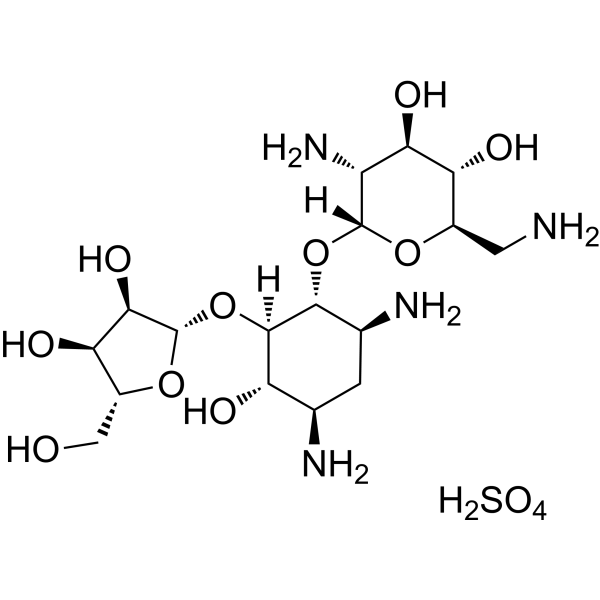
    Colistin is an orally active polypeptide antibiotic. Colistin has excellent activity against various Gram-negative rod-shaped bacteria, including multidrug-resistant Pseudomonas aeruginosa, Acinetobacter baumannii and Klebsiella pneumoniae. Colistin is associated with nephrotoxicity. Colistin can be used for the research of infections caused by Gram-negative bacilli .
    Colistin
  • HY-B1128A

    Cephamandole sodium

    Antibiotic Bacterial Infection
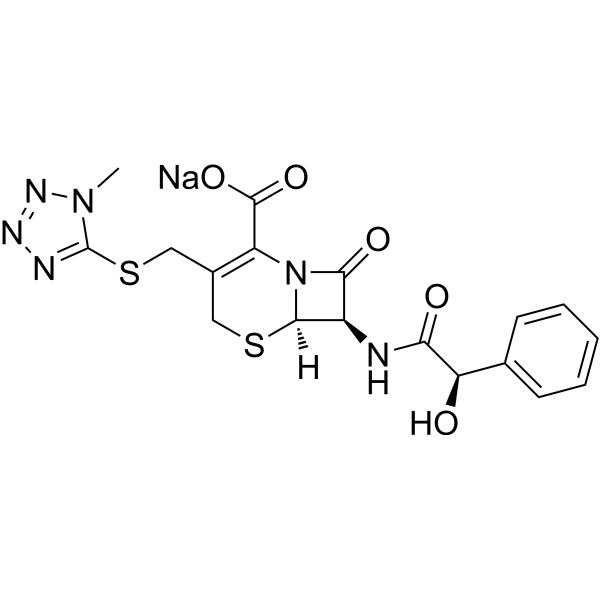
    Cefamandole (Cephamandole) sodium is a semi-synthetic second-generation cephalosporin antibiotic with broad-spectrum antimicrobial activity. Cefamandole sodium is resistant to hydrolysis by β-lactamases produced by some Gram-negative bacteria. Cefamandole sodium kills Gram-positive cocci and various Gram-negative bacilli mainly by inhibiting cell wall synthesis, but it is inactive against Pseudomonas, Proteus vulgaris and Providencia stuartii, and its efficacy is affected by inoculum size. The plasma elimination half-life of Cefamandole sodium in rats is only 0.4 h, it is mainly excreted in urine in biologically active form, and it hardly penetrates the non-inflamed blood-brain barrier. Cefamandole sodium is widely used in studies related to bacterial infections .
    Cefamandole sodium
  • HY-19882

    Bacterial Infection
    BAL-30072, a siderophore sulfactam, is a monocyclic beta-lactam antibiotic, with activity against multiresistant gram-negative bacilli. BAL30072 shows MIC90 values of 4 μg/mL for MDR Acinetobacter spp. and 8 μg/mL for MDR P. aeruginosa, respectively .
    BAL-30072
  • HY-125654A

    Bacterial Infection
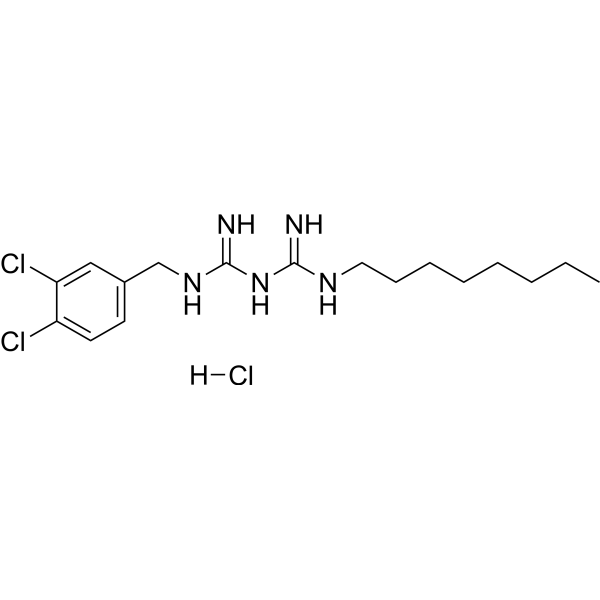
    Olanexidine hydrochloride is a monobiguanide compound with bactericidal activity. Olanexidine probably binds to the cell membrane, destroys membrane integrity. Olanexidine hydrochloride is active against a wide range of bacteria, including Gram-positive and Gram-negative bacteria. Olanexidine exhibits the bactericidal concentration of 109 μg/mL for Gram-positive bacilli .
    Olanexidine hydrochloride
  • HY-B1128

    Cephamandole

    Antibiotic Bacterial Infection
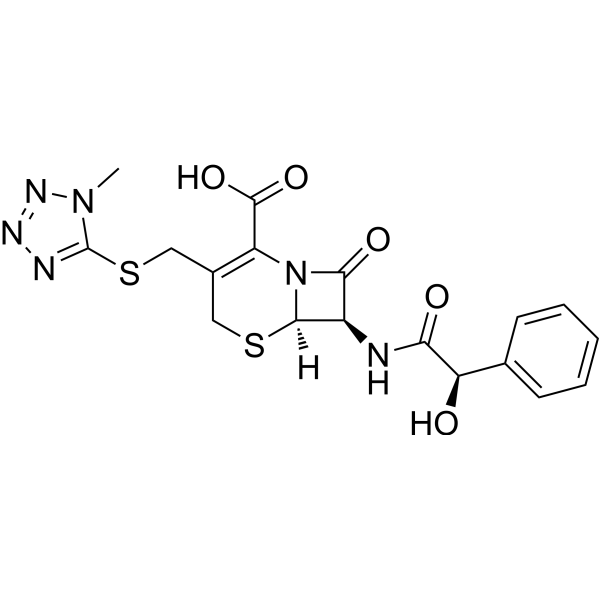
    Cefamandole (Cephamandole) is a semi-synthetic second-generation cephalosporin antibiotic with broad-spectrum antimicrobial activity. Cefamandole is resistant to hydrolysis by β-lactamases produced by some Gram-negative bacteria. Cefamandole kills Gram-positive cocci and various Gram-negative bacilli mainly by inhibiting cell wall synthesis, but it is inactive against Pseudomonas, Proteus vulgaris and Providencia stuartii, and its efficacy is affected by inoculum size. The plasma elimination half-life of Cefamandole in rats is only 0.4 h, it is mainly excreted in urine in biologically active form, and it hardly penetrates the non-inflamed blood-brain barrier. Cefamandole is widely used in studies related to bacterial infections .
    Cefamandole
  • HY-113703

    Antibiotic Cancer
    PD117588 is a quinolone antibacterial agent with a broad range of antibacterial activity. PD117588 exhibits excellent activity against a variety of Gram-positive and Gram-negative bacteria from cancer patients, especially against all Gram-positive strains, including methicillin-resistant Staphylococcus aureus, coagulase-negative Staphylococci, and Enterococci. PD117588 is also very effective against most Gram-negative bacilli, although ciprofloxacin shows stronger activity against Pseudomonas aeruginosa. Compared with other quinolone antibiotics, the minimum inhibitory concentration of PD117588 outperforms most of the tested microorganisms, including imipenem and ceftazidime .
    PD117588
  • HY-B1128B

    Cephamandole lithium

    Antibiotic Bacterial Infection
    Cefamandole (Cephamandole) lithium is a semi-synthetic second-generation cephalosporin antibiotic with broad-spectrum antimicrobial activity. Cefamandole lithium is resistant to hydrolysis by β-lactamases produced by some Gram-negative bacteria. Cefamandole lithium kills Gram-positive cocci and various Gram-negative bacilli mainly by inhibiting cell wall synthesis, but it is inactive against Pseudomonas, Proteus vulgaris and Providencia stuartii, and its efficacy is affected by inoculum size. The plasma elimination half-life of Cefamandole lithium in rats is only 0.4 h, it is mainly excreted in urine in biologically active form, and it hardly penetrates the non-inflamed blood-brain barrier. Cefamandole lithium is widely used in studies related to bacterial infections .
    Cefamandole lithium
  • HY-B1128AR

    Cephamandole sodium (Standard)

    Reference Standards Antibiotic Bacterial Infection
    Cefamandole (sodium) (Standard) is the analytical standard of Cefamandole (sodium). This product is intended for research and analytical applications. Cefamandole (Cephamandole) sodium is a semi-synthetic second-generation cephalosporin antibiotic with broad-spectrum antimicrobial activity. Cefamandole sodium is resistant to hydrolysis by β-lactamases produced by some Gram-negative bacteria. Cefamandole sodium kills Gram-positive cocci and various Gram-negative bacilli mainly by inhibiting cell wall synthesis, but it is inactive against Pseudomonas, Proteus vulgaris and Providencia stuartii, and its efficacy is affected by inoculum size. The plasma elimination half-life of Cefamandole sodium in rats is only 0.4 h, it is mainly excreted in urine in biologically active form, and it hardly penetrates the non-inflamed blood-brain barrier. Cefamandole sodium is widely used in studies related to bacterial infections .
    Cefamandole sodium (Standard)
  • HY-125579

    Bacterial Infection
    Ro 25-0534 is an antimicrobial compound against Pseudomonas. Ro 25-0534 is active against Enterobacteriaceae (MIC90: 0.06-2 μg/mL), Oxacillin (HY-B0465)-susceptible staphylococci, β-hemolytic streptococci, and penicillin-susceptible pneumococci (MIC90: 1-2 μg/mL), Haemophilus influenzae (MIC90: 0.25-0.5 μg/mL), Moraxella catarrhalis (MIC90: 0.5 μg/mL), and most nonenteric Gram-negative bacilli (MIC90: 2-4 μg/mL) .
    Ro 25-0534
  • HY-182396

    Penicillin-binding protein (PBP) Bacterial Infection
    YU253434 is a PBP3 inhibitor with an IC50 of 2.5 μM against Pseudomonas aeruginosa PBP3. YU253434 contains a siderophore domain that facilitates its uptake into the periplasmic space of Gram-negative bacilli. YU253434 exhibits antibacterial activity against multidrug-resistant Gram-negative bacilli. YU253434 can be used in studies of multidrug-resistant Gram-negative bacterial infections .
    YU253434
  • HY-106705

    PC-904 sodium

    Bacterial Infection
    Apalcillin (PC-904) (sodium) is an antibacterial agent. Apalcillin (sodium) is active against carbenicillin- and ampicillin-resistant strains of gram-negative bacilli .
    Apalcillin sodium

Inquiry Online

Your information is safe with us. * Required Fields.

Salutation


Country or Region *

Applicant Name *


Organization Name *

Department *


Email Address *


Product Name *

Cat. No.


Requested quantity *

Phone Number *


Remarks

Inquiry Online

Inquiry Information

Product Name:
Cat. No.:
Quantity:
MCE Japan Authorized Agent:

