
1. Search Result
Search Result
Results for "

gram-negative bacterial

" in MedChemExpress (MCE) Product Catalog:

346

Inhibitors & Agonists

4

Fluorescent Dyes

7

Biochemical Assay Reagents

39

Peptides

5

MCE Kits

53

Natural
Products

21

Isotope-Labeled Compounds

2

Click Chemistry

Targets Recommended:
Cat. No. Product Name Target Research Areas Chemical Structure
  • HY-17628
    Cefiderocol
    15+ Cited Publications

    S-649266

    Bacterial Antibiotic Infection
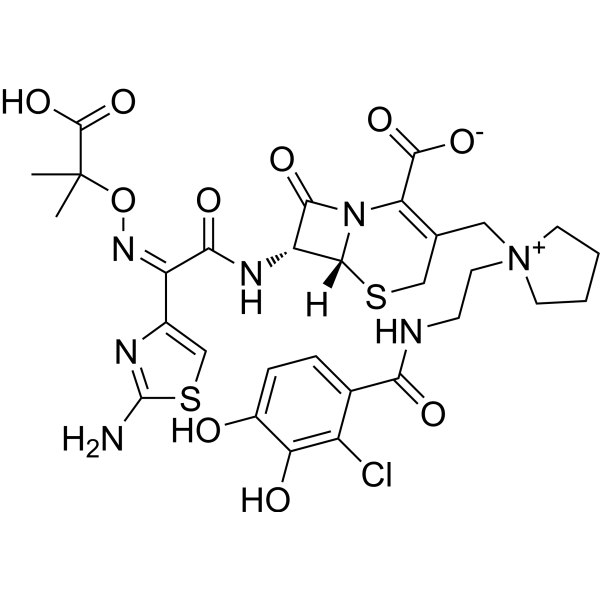
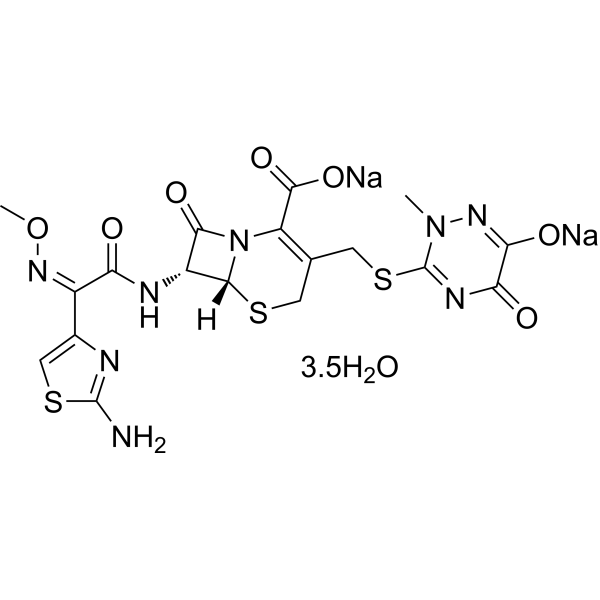
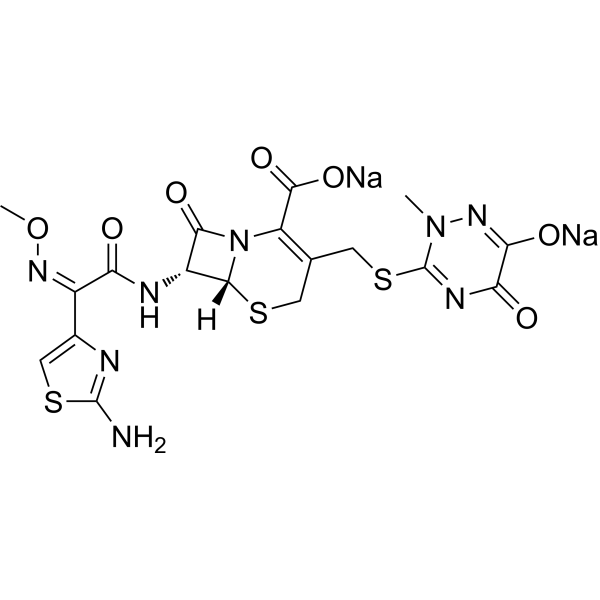
    Cefiderocol (S-649266) is a siderophore cephalosporin which has a potent activity against a broad range of aerobic Gram-negative bacterial species with MIC50s of 2 μg/mL or less.
    Cefiderocol
  • HY-A0248
    Polymyxin B Sulfate
    20+ Cited Publications

    Antibiotic Bacterial Infection
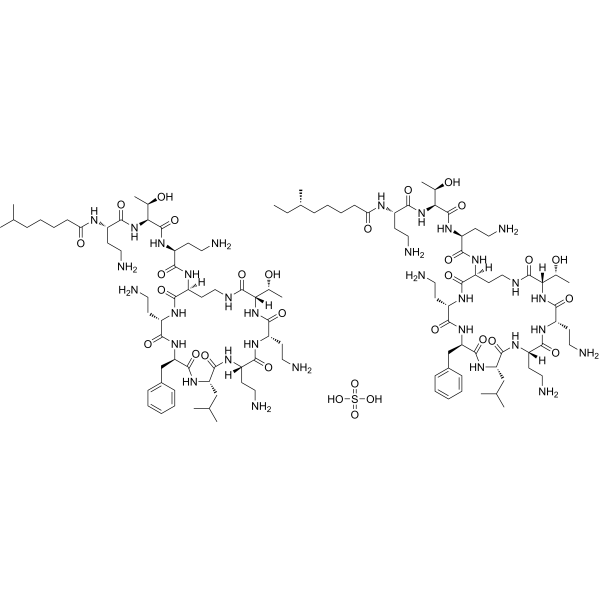
    Polymyxin B Sulfate is an antibiotic. Polymyxin B Sulfate inhibits Gram-negative infections by binding to the LPS of the bacterial wall with high affinity. Polymyxin B Sulfate neutralizes the effect of endotoxin. Polymyxin B Sulfate induces bacterial death by increasing its permeability. Polymyxin B Sulfate is used in endotoxemia research .
    Polymyxin B Sulfate
  • HY-B0438
    Spectinomycin dihydrochloride
    3 Publications Verification

    Bacterial Antibiotic Infection
    Spectinomycin dihydrochloride is a broad-spectrum antibiotic and inhibits the growth of a variety of gram-positive and gram-negative organisms. Spectinomycin dihydrochloride acts by selectively targeting to the bacterial ribosome and interrupting protein synthesis. Spectinomycin dihydrochloride is also a noncompetitive inhibitor of td intron RNA with an Ki value of 7.2 mM - .
    Spectinomycin dihydrochloride
  • HY-149179
    Polymyxin B
    20+ Cited Publications

    Antibiotic Bacterial Infection
    Polymyxin B is an antibiotic. Polymyxin B inhibits Gram-negative infections by binding to the LPS of the bacterial wall with high affinity. Polymyxin B neutralizes the effect of endotoxin. Polymyxin B induces bacterial death by increasing its permeability. Polymyxin B is used in endotoxemia research .
    Polymyxin B
  • HY-A0256
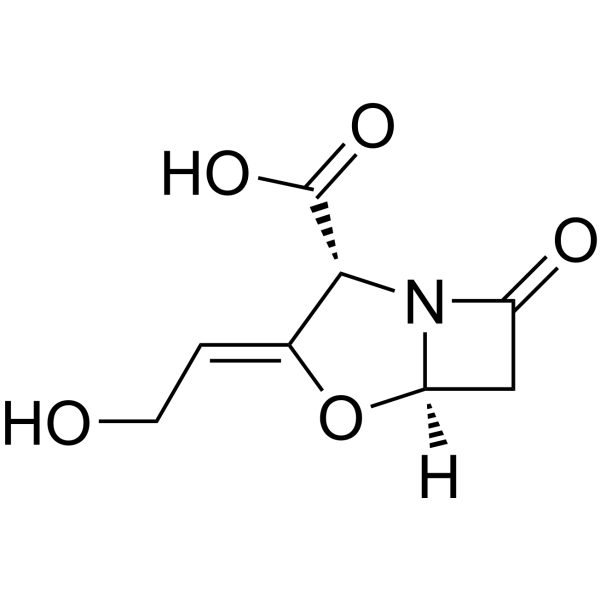
    Clavulanic acid
    5+ Cited Publications

    Beta-lactamase Antibiotic Bacterial Infection Inflammation/Immunology
    Clavulanic acid is a naturally occurring powerful bacterial β-lactamases inhibitor for research of infections caused by bacteria, including infections of the ears. Clavulanic acid is active against a wide spectrum of gram-positive and gram-negative bacterias .
    Clavulanic acid
  • HY-B1174

    Kanamycin B

    Antibiotic Bacterial Infection
    Bekanamycin (Kanamycin B) is an aminoglycoside antibiotic produced by Streptomyces kanamyceticus, against an array of Gram-positive and Gram-negative bacterial strain .
    Bekanamycin
  • HY-13234
    Rifaximin
    5+ Cited Publications

    Bacterial Antibiotic DNA/RNA Synthesis Infection Cancer
    Rifaximin, a gastrointestinal-selective antibiotic, binds the β-subunit of bacterial DNA-dependent RNA polymerase, resulting in inhibition of bacterial RNA synthesis. Rifaximin susceptibility is higher against Gram-positive strains (MIC: 0.03-5 mg/ml) compared to Gram-negative bacteria (MIC: 8-50 mg/mL) .
    Rifaximin
  • HY-B1828A

    Spectinomycin hydrochloride hydrate

    Bacterial Antibiotic Infection
    Spectinomycin dihydrochloride pentahydrate is a broad-spectrum antibiotic and inhibits the growth of a variety of gram-positive and gram-negative organisms. Spectinomycin dihydrochloride pentahydrate acts by selectively targeting to the bacterial ribosome and interrupting protein synthesis. Spectinomycin dihydrochloride pentahydrate is also a noncompetitive inhibitor of td intron RNA with an Ki value of 7.2 mM - .
    Spectinomycin dihydrochloride pentahydrate
  • HY-W012669

    Phthaldialdehyde

    Environmental Pollutants Biochemical Assay Reagents Infection
    Phthalaldehyde (Phthaldialdehyde) reacts with proteins containing primary amines and blocked amino-terminal peptides of amino acids. Phthalaldehyde stabilizes bacterial outer membranes and cell walls, increases the optical density of bacterial cell suspensions, and inhibits bacterial lysis induced by ethylenediaminetetraacetic acid and sodium dodecyl sulfate. Phthalaldehyde exhibits bactericidal activity against Gram-negative vegetative bacteria .
    Phthalaldehyde
  • HY-B1085
    Cinoxacin
    1 Publications Verification

    Compound 64716

    Bacterial Antibiotic DNA/RNA Synthesis Infection
    Cinoxacin (Compound 64716), a synthetic antimicrobial related to the quinolone class of orally active antibacterial agent. Cinoxacin has antibacterial activity against many gram-negative aerobic bacteria and inhibits bacterial DNA synthesis. Cinoxacin can be used for the research of urinary tract infections and bacterial prostatitis .
    Cinoxacin
  • HY-B1118
    Secnidazole
    1 Publications Verification

    RP-14539; PM-185184

    Bacterial Parasite Infection
    Secnidazole (RP-14539) is an orally active azole antibiotic and a imidazole mitigator of Serratia marcescens virulence. Secnidazole, as an analog of acylhomoserine lactones, effectively inhibits QS resulting in the attenuation of Pseudomonas aeruginosa pathogenesis. Secnidazole has antimicrobial activity against many anaerobic Gram-negative and Gram-positive bacterial species in vitro. Secnidazole can be used for the research of various diseases, such as amoebiasis and giardiasis, and bacterial vaginitis .
    Secnidazole
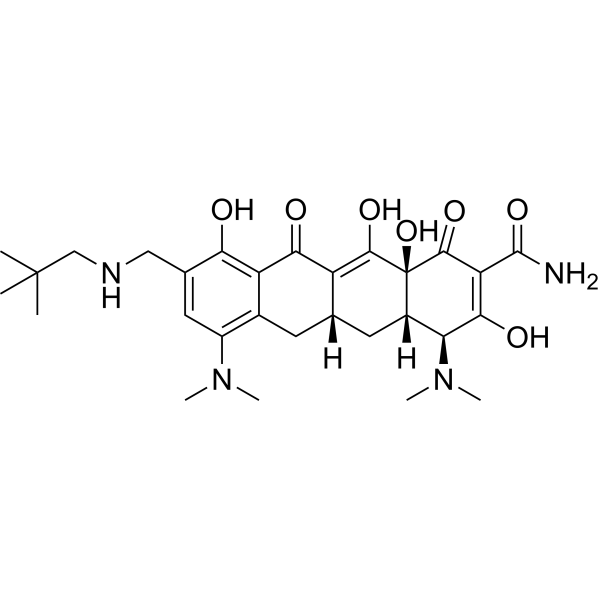
  • HY-14865
    Omadacycline
    30+ Cited Publications

    PTK 0796; Amadacycline

    Bacterial Antibiotic Infection
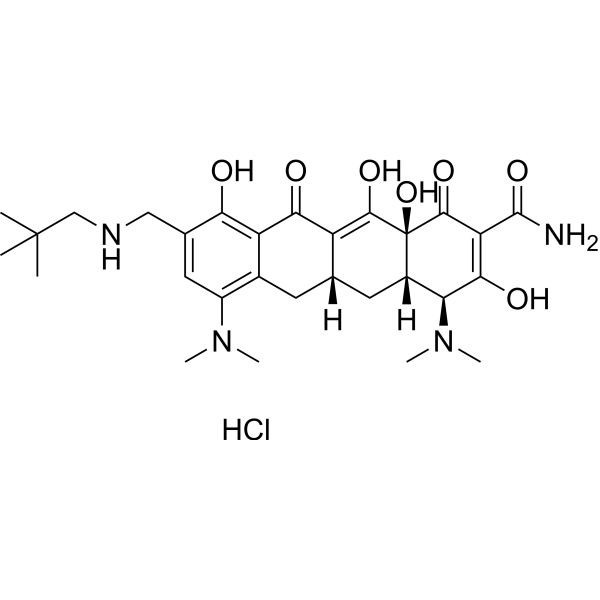
    Omadacycline (PTK 0796), a first-in-class orally active aminomethylcycline antibacterial, is a member of the tetracycline class of antibiotics. Omadacycline acts through the inhibition of bacterial protein synthesis by binding to the 30S ribosomal subunit. Omadacycline possesses broad-spectrum antibacterial activity against aerobic and anaerobic Gram-positive and Gram-negative bacteria, as well as atypical bacteria. Omadacycline can be used for the research of acute bacterial skin and skin-structure infections, community-acquired pneumonia, and urinary tract infections .
    Omadacycline
  • HY-30219

    D-3-Phenyllactic acid

    Bacterial Endogenous Metabolite Bcl-2 Family Infection
    D-​(+)​-​Phenyllactic acid is an anti-bacterial agent, excreted by Geotrichum candidum, inhibits a range of Gram-positive from humans and foodstuffs and Gram-negative bacteria found in humans .
    D-​(+)​-​Phenyllactic acid
  • HY-A0253

    Cephacetrile; Cephacetril

    Bacterial Antibiotic Infection
    Cefacetrile (Cephacetrile) is a broad-spectrum antibiotic that is effective in gram-positive and gram-negative bacterial infection .
    Cefacetrile
  • HY-142127
    Ribostamycin
    1 Publications Verification

    Vistamycin; SF-733

    Bacterial Antibiotic PDI Infection
    Ribostamycin (Vistamycin) is a broad-spectrum aminoglycoside antibiotic. Ribostamycin is effective against Gram-Negative and Gram-Positive bacterial infection. Ribostamycin also inhibits the chaperone activity of PDI .
    Ribostamycin
  • HY-N7139

    Benzylpenicillin

    Antibiotic Bacterial Infection
    Penicillin G is a potent penicillinantibiotic. Penicillin G can be used for bacterial infection. Penicillin G has potent activity against all Gram-positive bacteria and Gram-negative cocci .
    Penicillin G
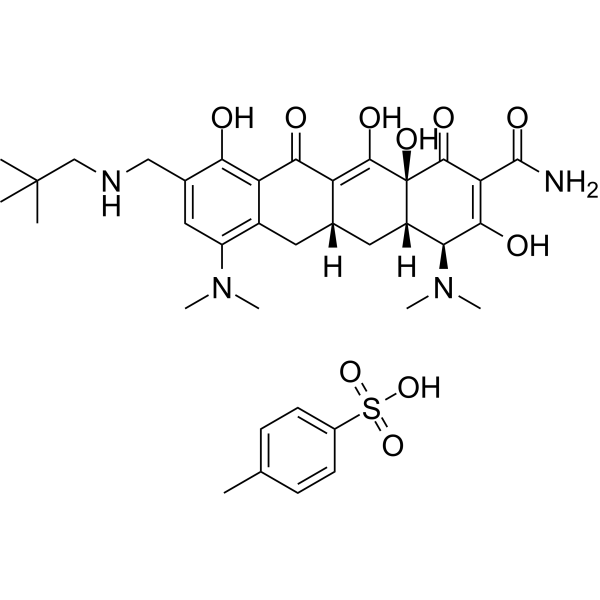
  • HY-14865B
    Omadacycline tosylate
    30+ Cited Publications

    PTK 0796 tosylate; Amadacycline tosylate

    Bacterial Antibiotic Infection
    Omadacycline (PTK 0796) tosylate, a first-in-class orally active aminomethylcycline antibacterial, is a member of the tetracycline class of antibiotics. Omadacycline tosylate acts through the inhibition of bacterial protein synthesis by binding to the 30S ribosomal subunit. Omadacycline tosylate possesses broad-spectrum antibacterial activity against aerobic and anaerobic Gram-positive and Gram-negative bacteria, as well as atypical bacteria. Omadacycline tosylate can be used for the research of acute bacterial skin and skin-structure infections, community-acquired pneumonia, and urinary tract infections .
    Omadacycline tosylate
  • HY-B1828

    Antibiotic Bacterial Infection
    Spectinomycin is a broad-spectrum antibiotic and inhibits the growth of a variety of gram-positive and gram-negative organisms. Spectinomycin acts by selectively targeting to the bacterial ribosome and interrupting protein synthesis. Spectinomycin is also a noncompetitive inhibitor of td intron RNA .
    Spectinomycin
  • HY-N7066

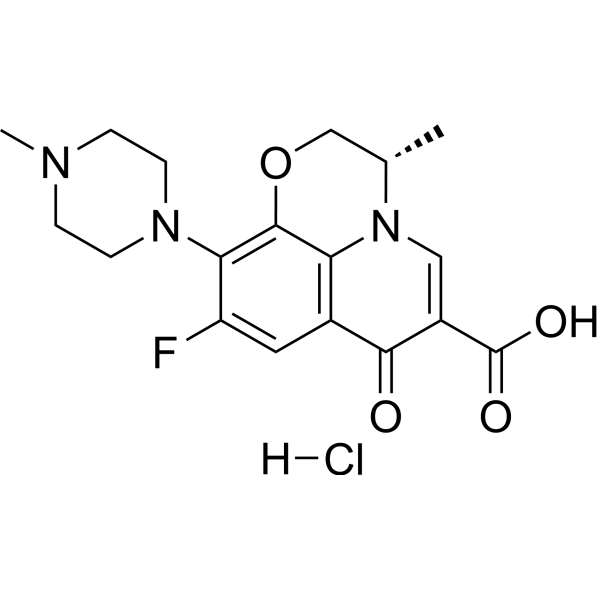
    A-56619 hydrochloride

    Bacterial DNA/RNA Synthesis Infection
    Difloxacin hydrochloride (A-56619 hydrochloride) is an orally active bactericidal agent. Difloxacin hydrochloride inhibits bacterial DNA gyrase. Difloxacin hydrochloride exhibits concentration-dependent bactericidal activity. Difloxacin hydrochloride shows strong in vitro activity against a variety of Gram-positive and Gram-negative bacteria. Difloxacin hydrochloride can be used in research related to colibacillosis and *Staphylococcus aureus* infections .
    Difloxacin hydrochloride
  • HY-14865C
    Omadacycline hydrochloride
    30+ Cited Publications

    PTK0796 hydrochloride; Amadacycline hydrochloride

    Bacterial Antibiotic Infection
    Omadacycline (PTK 0796) hydrochloride, a first-in-class orally active aminomethylcycline antibacterial, is a member of the tetracycline class of antibiotics. Omadacycline hydrochloride acts through the inhibition of bacterial protein synthesis by binding to the 30S ribosomal subunit. Omadacycline hydrochloride possesses broad-spectrum antibacterial activity against aerobic and anaerobic Gram-positive and Gram-negative bacteria, as well as atypical bacteria. Omadacycline hydrochloride can be used for the research of acute bacterial skin and skin-structure infections, community-acquired pneumonia, and urinary tract infections .
    Omadacycline hydrochloride
  • HY-B1282
    Sulfaquinoxaline
    2 Publications Verification

    Environmental Pollutants Antibiotic Parasite Bacterial Infection
    Sulfaquinoxaline is an antimicrobial for veterinary use, with activity against a broad spectrum of Gram-negative and Gram-positive bacteria. Sulfaquinoxaline is used to prevent coccidiosis and bacterial infections .
    Sulfaquinoxaline
  • HY-B1824
    Cefpirome sulfate
    1 Publications Verification

    HR-810 sulfate

    Bacterial Antibiotic Infection
    Cefpirome (HR-810) sulfate is a cephalosporin antibiotic that can cross cell membranes and the blood-brain barrier. Cefpirome sulfate binds to penicillin-binding proteins with high affinity, thereby inhibiting bacterial cell wall synthesis. Cefpirome sulfate exhibits bactericidal and growth-inhibitory activities against Gram-negative bacteria, Gram-positive bacteria, and susceptible anaerobic bacteria (including some β-lactamase-producing strains) .
    Cefpirome sulfate
  • HY-B1466

    BAY-f 1353 sodium

    Bacterial Antibiotic Infection
    Mezlocillin (BAY-f 1353) sodium is a β-lactam antibiotic, a semisynthetic and extended-spectrum antibiotic. Mezlocillin sodium is active against both gram-negative and gram-positive bacteria. Mezlocillin sodium can be used in bacterial infection research .
    Mezlocillin sodium
  • HY-130379

    ADC Linker PROTAC Linkers Bacterial Infection Cancer
    Propargyl-PEG8-acid is a PEG-based PROTAC linker can be used in the synthesis of PROTACs. Propargyl-PEG8-acid is a cleavable ADC linker used in the synthesis of antibody-drug conjugates (ADCs). The ADCs can be used in bacterial infections caused by Gram-negative bacteria . Propargyl-PEG8-acid is a click chemistry reagent, it contains an Alkyne group and can undergo copper-catalyzed azide-alkyne cycloaddition (CuAAc) with molecules containing Azide groups.
    Propargyl-PEG8-acid
  • HY-14456A
    MAC13243
    2 Publications Verification

    Bacterial Infection
    MAC13243, an antibacterial agent, is an inhibitor of bacterial lipoprotein targeting chaperone, LolA. MAC13243 is an antibacterial agent with Gram-negative selectivity .
    MAC13243
  • HY-B1596A
    Ceftizoxime sodium
    1 Publications Verification

    SKF-88373

    Penicillin-binding protein (PBP) Bacterial Antibiotic Infection
    Ceftizoxime sodium (SKF-88373) is third generation cephalosporin effective against Gram-negative and Gram-positive bacteria. It binds penicillin-binding proteins (PBPs) and inhibits the bacterial cell wall synthesis.
    Ceftizoxime sodium
  • HY-123515

    Infection
    Clorobiocin is an antibacterial agent with an IC50 of 0.21 μM against the B subunit of E. coli DNA gyrase. Clorobiocin targets the mLaC protein of Gram-negative bacteria. Clorobiocin potently inhibits bacterial DNA replication. Clorobiocin can be used in studies on Gram-negative bacterial infections, such as Acinetobacter baumannii and E. coli infections .
    Clorobiocin
  • HY-B1282A
    Sulfaquinoxaline sodium salt
    2 Publications Verification

    Bacterial Parasite Antibiotic Infection
    Sulfaquinoxaline sodium salt is an antimicrobial for veterinary use, with activity against a broad spectrum of Gram-negative and Gram-positive bacteria. Sulfaquinoxaline is used to prevent coccidiosis and bacterial infections .
    Sulfaquinoxaline sodium salt
  • HY-106257A
    Ceftolozane TFA
    2 Publications Verification

    Antibiotic Bacterial Infection
    Ceftolozane TFA is a cephalosporin antibiotic that can be used to inhibit Gram-negative bacterial infections. Ceftolozane TFA can be used to synthesize new antibiotic that are more potent and safer .
    Ceftolozane TFA
  • HY-B1466A

    BAY-f 1353

    Antibiotic Bacterial Infection
    Mezlocillin (BAY-f 1353) is a β-lactam antibiotic, a semisynthetic and extended-spectrum antibiotic. Mezlocillin is active against both gram-negative and gram-positive bacteria. Mezlocillin can be used in bacterial infection research .
    Mezlocillin
  • HY-125604

    Beta-lactamase Bacterial Infection Inflammation/Immunology
    WCK-4234 is a diazabicyclooctane β-lactamase inhibitor and susceptibility restorer. WCK-4234 lacks direct antibacterial activity. WCK-4234 inhibits class A, C, D β-lactamases and extended-spectrum β-lactamases to potentiate Imipenem (HY-B1369A) and Meropenem (HY-13678) activity against Gram-negative pathogens. WCK-4234 can be used for the research of gram-negative bacterial infections and β-lactamase-mediated carbapenem-resistant bacterial infections .
    WCK-4234
  • HY-149734

    Bacterial Infection
    MA220607 is a FtsZ protein inhibitor with activity against both Gram-positive and Gram-negative bacteria. MA220607 inhibits bacterial growth and shows low bacterial resistance frequency. MA220607 increases bacterial membrane permeability and alters proton gradients. MA220607 blocks the formation of bacterial biofilms. MA220607 can be used in studies of bacterial infections .
    MA220607
  • HY-B1118R

    RP-14539 (Standard); PM-185184 (Standard)

    Reference Standards Bacterial Parasite Infection
    Secnidazole (Standard) is the analytical standard of Secnidazole. This product is intended for research and analytical applications. Secnidazole (RP-14539) is an orally active azole antibiotic and a imidazole mitigator of Serratia marcescens virulence. Secnidazole, as an analog of acylhomoserine lactones, effectively inhibits QS resulting in the attenuation of Pseudomonas aeruginosa pathogenesis. Secnidazole has antimicrobial activity against many anaerobic Gram-negative and Gram-positive bacterial species in vitro. Secnidazole can be used for the research of various diseases, such as amoebiasis and giardiasis, and bacterial vaginitis .
    Secnidazole (Standard)
  • HY-175595

    ADEP26

    ClpP Bacterial Infection
    ADEP-14 (ADEP26) is a ClpP activator. ADEP-14 exhibits antibacterial activity against Gram-negative and Gram-positive bacteria. ADEP-14 can be used in studies related to bacterial infections .
    ADEP-14
  • HY-117778B

    Enolase Bacterial Antibiotic ATP Synthase Infection Cancer
    SF2312 ammonium is a phosphonate Antibiotic and Enolase inhibitor, with an IC50 of 18.4 nM against E. coli enolase. SF2312 ammonium reduces intracellular ATP levels and inhibits glycolytic flux. SF2312 ammonium exhibits activity against both Gram-positive and Gram-negative bacteria, and exerts synergistic effects against E. coli when combined with Fosfomycin (HY-B1075A). SF2312 ammonium shows selective toxicity toward gliomas with ENO1 gene knockout. SF2312 ammonium can be used in research related to bacterial infections and gliomas .
    SF2312 ammonium
  • HY-P10980

    DNA/RNA Synthesis Bacterial Infection
    Citrocin is a potent bacterial RNA polymerase (RNAP) inhibitor. Citrocin shows significant inhibitory activity against Escherichia coli RNAP with an MIC range of 16-125 μM. Citrocin specifically binds to and inhibits RNA polymerase to block bacterial transcription and enters cells mainly through inner membrane protein SbmA. Citrocin is promising for research of Gram-negative bacterial infections, such as enterohemorrhagic E. coli .
    Citrocin
  • HY-19581

    Antibiotic Bacterial Infection
    Baquiloprim, an antibiotic, is a selective inhibitor of bacterial dihydrofolate reductases. Baquiloprim possesses in vitro bacteriostatic activity against both Gram-negative and Gram-positive bacteria .
    Baquiloprim
  • HY-12888

    Topoisomerase Bacterial Infection
    AZD5099, an antibacterial agent, is a potent and selective bacterial topoisomerase II inhibitor. AZD5099 potently inhibits the infections caused by Gram-positive and fastidious Gram-negative bacteria .
    AZD5099
  • HY-139798

    Bacterial Infection
    Iboxamycin is a potent antibiotic candidate bearing a fused bicyclic amino acid residue. Iboxamycin is orally bioavailable, safe and effective in researching both Gram-positive and Gram-negative bacterial infections in mice .
    Iboxamycin
  • HY-124712

    Bacterial Infection
    Divin, a potent chelator of iron, is a potent inhibitor of bacterial cell division with bacteriostatic effect in Gram-negative and Gram-positive bacteria. Divin disrupts the assembly of late division proteins, reduces peptidoglycan remodeling at the division site, and blocks compartmentalization of the cytoplasm .
    Divin
  • HY-14865BR

    PTK 0796 tosylate (Standard); Amadacycline tosylate (Standard)

    Reference Standards Bacterial Antibiotic Infection
    Omadacycline (tosylate) (Standard) is the analytical standard of Omadacycline (tosylate). This product is intended for research and analytical applications. Omadacycline (PTK 0796) tosylate, a first-in-class orally active aminomethylcycline antibacterial, is a member of the tetracycline class of antibiotics. Omadacycline tosylate acts through the inhibition of bacterial protein synthesis by binding to the 30S ribosomal subunit. Omadacycline tosylate possesses broad-spectrum antibacterial activity against aerobic and anaerobic Gram-positive and Gram-negative bacteria, as well as atypical bacteria. Omadacycline tosylate can be used for the research of acute bacterial skin and skin-structure infections, community-acquired pneumonia, and urinary tract infections .
    Omadacycline tosylate (Standard)
  • HY-B1149

    Drug Derivative Bacterial Antibiotic Infection
    Bacampicillin is an orally active semi-synthetic aminopenicillin derivative, prodrug and bactericide that is readily inactivated by β-lactamases. Bacampicillin is hydrolyzed by carboxylester hydrolases and non-specific esterases in the gastrointestinal wall and plasma to form Ampicillin (HY-B0522), and produces higher levels of Ampicillin in rodents in vivo. Bacampicillin exhibits bactericidal activity against Gram-positive and Gram-negative bacteria. Bacampicillin can be used in studies related to bacterial infections .
    Bacampicillin
  • HY-B1282S

    Isotope-Labeled Compounds Bacterial Parasite Antibiotic Infection
    Sulfaquinoxaline-d4 is the deuterium labeled Sulfaquinoxaline. Sulfaquinoxaline is an antimicrobial for veterinary use, with activity against a broad spectrum of Gram-negative and Gram-positive bacteria. Sulfaquinoxaline is used to prevent coccidiosis and bacterial infections .
    Sulfaquinoxaline-d4
  • HY-179396

    Bacterial Infection
    T-1228 is a highly selective LpxC inhibitor. T-1228 can effectively block the synthesis of LPS (HY-D1056), causing defects in the bacterial outer membrane structure, increasing membrane permeability, and ultimately leading to bacterial cell death. T-1228 can be used for the study of Gram-negative bacterial infections .
    T-1228
  • HY-158682

    Bacterial Infection
    LpxC-IN-13 (Compound 13) is a LpxC inhibitor, with an IC50 18.06 nM. LpxC-IN-13 effectively inhibits Gram-negative bacterial infection .
    LpxC-IN-13
  • HY-A0253R

    Cephacetrile (Standard); Cephacetril (Standard)

    Reference Standards Bacterial Antibiotic Infection
    Cefacetrile (Standard) is the analytical standard of Cefacetrile. This product is intended for research and analytical applications. Cefacetrile (Cephacetrile) is a broad-spectrum antibiotic that is effective in gram-positive and gram-negative bacterial infection .
    Cefacetrile (Standard)
  • HY-161689

    Bacterial Infection
    Antibacterial agent 220 is a potent antibacterial agent that can directly destroy bacterial cell membranes. Antibacterial agent 220 effectively combats Gram-positive and and Gram-negative pathogens, including drug-resistant strains .
    Antibacterial agent 220
  • HY-B1466R

    BAY-f 1353 sodium (Standard)

    Reference Standards Bacterial Antibiotic Infection
    Mezlocillin (sodium) (Standard) is the analytical standard of Mezlocillin (sodium). This product is intended for research and analytical applications. Mezlocillin (BAY-f 1353) sodium is a β-lactam antibiotic, a semisynthetic and extended-spectrum antibiotic. Mezlocillin sodium is active against both gram-negative and gram-positive bacteria. Mezlocillin sodium can be used in bacterial infection research[1][2].
    Mezlocillin sodium (Standard)
  • HY-B1118A

    RP-14539 hemihydrate; PM-185184 hemihydrate

    Bacterial Parasite Infection
    Secnidazole (RP-14539) hemihydrate is an orally active azole antibiotic and a imidazole mitigator of Serratia marcescens virulence. Secnidazole hemihydrate, as an analog of acylhomoserine lactones, effectively inhibits QS resulting in the attenuation of Pseudomonas aeruginosa pathogenesis. Secnidazole hemihydrate has antimicrobial activity against many anaerobic Gram-negative and Gram-positive bacterial species in vitro. Secnidazole hemihydrate can be used for the research of various diseases, such as amoebiasis and giardiasis, and bacterial vaginitis .
    Secnidazole hemihydrate
  • HY-W928617

    Antibiotic Bacterial Infection
    Spectinomycin sulfate hydrate is a broad-spectrum antibiotic and inhibits the growth of a variety of gram-positive and gram-negative organisms. Spectinomycin sulfate hydrate acts by selectively targeting to the bacterial ribosome and interrupting protein synthesis. Spectinomycin sulfate hydrate is also a noncompetitive inhibitor of td intron RNA with an Ki value of 7.2 mM - .
    Spectinomycin sulfate hydrate

Inquiry Online

Your information is safe with us. * Required Fields.

Salutation


Country or Region *

Applicant Name *


Organization Name *

Department *


Email Address *


Product Name *

Cat. No.


Requested quantity *

Phone Number *


Remarks

Inquiry Online

Inquiry Information

Product Name:
Cat. No.:
Quantity:
MCE Japan Authorized Agent:

