Search Result
Results for "
grasses
" in MedChemExpress (MCE) Product Catalog:
1
Biochemical Assay Reagents
22
Isotope-Labeled Compounds
| Cat. No. |
Product Name |
Target |
Research Areas |
Chemical Structure |
-
- HY-N7091
-
|
|
Environmental Pollutants
Herbicide
|
Metabolic Disease
Cancer
|
|
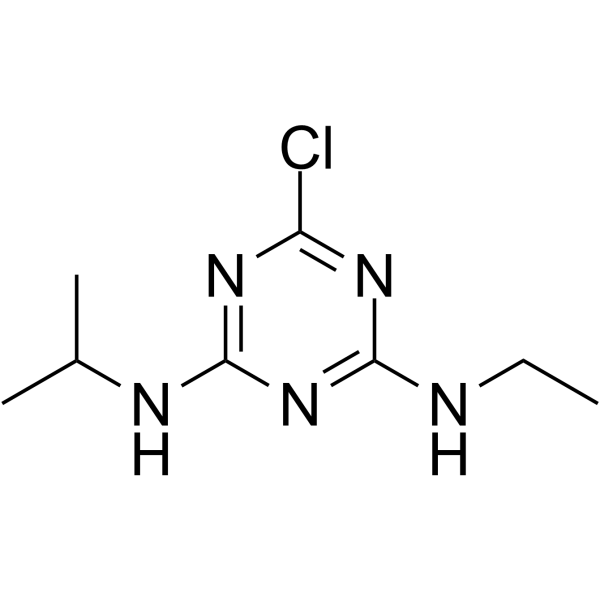
Atrazine, a triazine herbicide, is principally used for control of certain annual broadleaf and grass weeds. Atrazine inhibits photophosphorylation but typically does not result in lethality or permanent cell damage in the short term .
|
-
-
- HY-N7083
-
-
-
- HY-B0420A
-
|
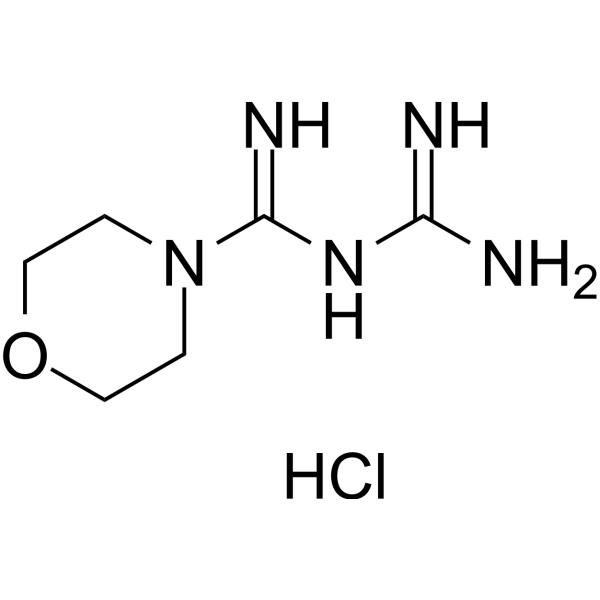
ABOB hydrochloride
|
Influenza Virus
HCV
HSV
Apoptosis
Caspase
|
Infection
|
|
Moroxydine (ABOB) hydrochloride is a broad-spectrum agent with multi-antiviral activities against DNA and RNA viruses, including influenza virus, herpes simplex, varicella zoster, measles, mumps disease, hepatitis C virus, etc. Moroxydine hydrochloride exhibits excellent antiviral activity and shows low cytotoxicity to cells infected by dsRNA viruses (grass carp reovirus, GCRV) and large DNA viruses (giant salamander iridovirus, GSIV). Moroxydine hydrochloride blocks the GCRV-induced cytopathic effects and eliminates nucleocapsids in ctenopharyngodon idella kidney (CIK) cells to keep the normal morphological structure. Moroxydine hydrochloride significantly inhibits the apoptosis, the caspase 3 activity, Bax expression and down-regulates Bcl-2 levels .
|
-
-
- HY-118742
-
|
|
Environmental Pollutants
HPPD
|
Others
|
|
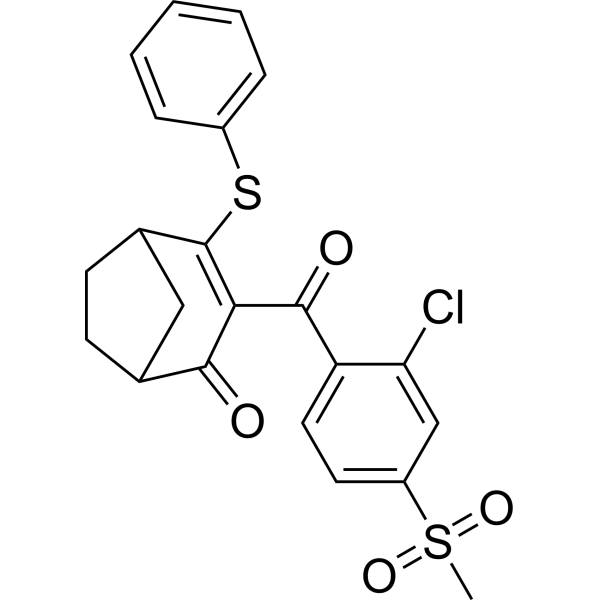
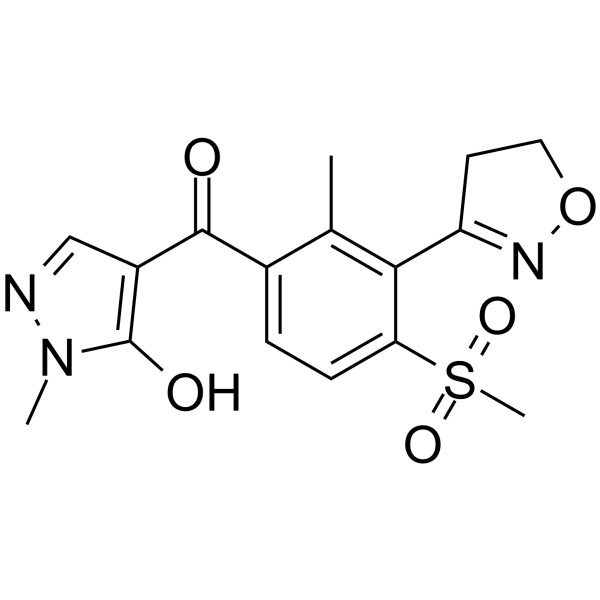
Benzobicyclon is a 4-HPPD inhibitor and herbicide that reacts with water to form a hydrolysate of the active herbicide benzobicycline, causing bleaching and death of weeds. Benzobicyclon is effective against grass, sedge and broadleaf weeds. Benzobicyclon effectively targets sulfonylurea herbicide-resistant biotypes as well as wild-type weeds .
|
-
-
- HY-B0869A
-
|
|
Environmental Pollutants
SOD
Acetolactate Synthase (ALS)
Herbicide
|
Metabolic Disease
|
|
Bispyribac sodium is a selective, orally active, systemic and post-emergence herbicide. Bispyribac sodium reduces SOD levels and inhibits ALS activity. Bispyribac sodium blocks the biosynthesis of branched-chain amino acids, resulting in growth retardation, chlorosis and necrosis of weeds. Bispyribac sodium exerts herbicidal activity against grass, sedge and broadleaf weeds in rice fields. Bispyribac sodium is hepatotoxic and genotoxic .
|
-
-
- HY-B0862
-
-
-
- HY-116954
-
|
|
DNA/RNA Synthesis
|
Others
|
|
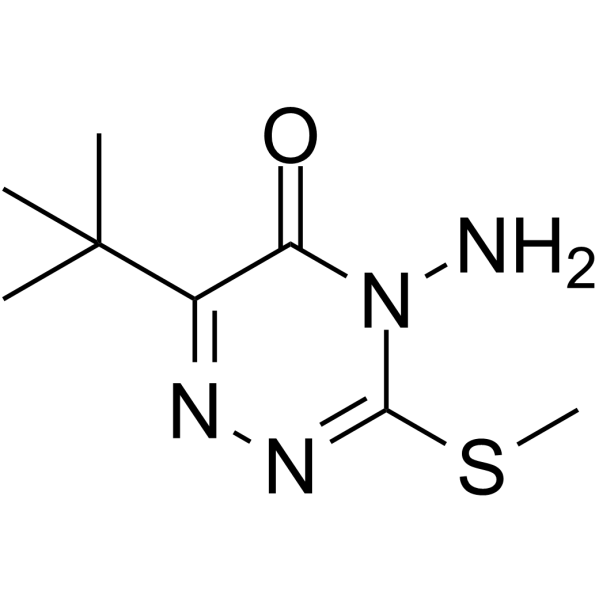
Metribuzin is a low-cost non-selective herbicide belonging to the chemical class of triazinones. Metribuzin inhibits plant DNA synthesis and acts on photosystem II, ultimately suppressing photosynthesis. Metribuzin provides excellent control of important annual grass and broadleaf weeds .
|
-
-
- HY-136633
-
|
|
Environmental Pollutants
Herbicide
|
Others
|
|
Pyroxasulfone is a broad-spectrum pyrazole Herbicide. Pyroxasulfone is effective against a variety of annual grass weeds and some broadleaf weeds. Pyroxasulfone causes reduced plant height, decreased above-ground dry weight and yield loss in pinto beans and red Mexican beans .
|
-
-
- HY-119176
-
|
|
Environmental Pollutants
Protoporphyrinogen IX oxidase
Herbicide
|
Others
|
|
Oxyfluorfen is a pre- and post-emergence diphenyl ether herbicide to control annual broad-leaved and grass weeds. Oxyfluorfen is a protoporphyrinogen oxidase inhibitor and inhibits photosynthesis by blocking chlorophyll synthesis. Oxyfluorfen can inhibit cell growth. Oxyfluorfen induces DNA damage and exhibits toxicity toward aquatic organisms such as Paramisgurnus dabryanus. Oxyfluorfen has genome-level deleterious effects on fish that can lead to stunted skeletal growth. Oxyfluorfen induces transverse limb deficiency or craniosynostosis .
|
-
-
- HY-B1871S
-
|
|
Isotope-Labeled Compounds
|
Others
|
|
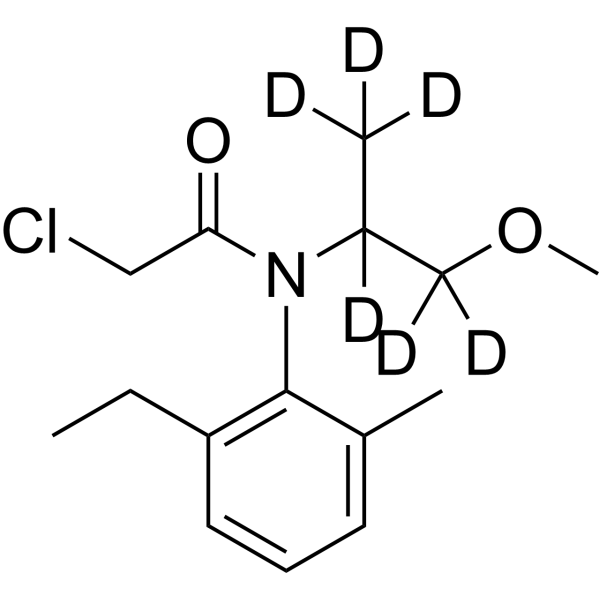
Metolachlor-d6 is the deuterium labeled Metolachlor . Metolachlor is a pre-emergent selective, chloroacetanilide herbicide for the control of a variety of annual grass and broad leaf weeds in corn and other crops. Metolachlor is a chiral herbicide consisting of four stereoisomers .
|
-
-
- HY-144900
-
-
-
- HY-N7091S2
-
|
|
Isotope-Labeled Compounds
|
Metabolic Disease
|
|
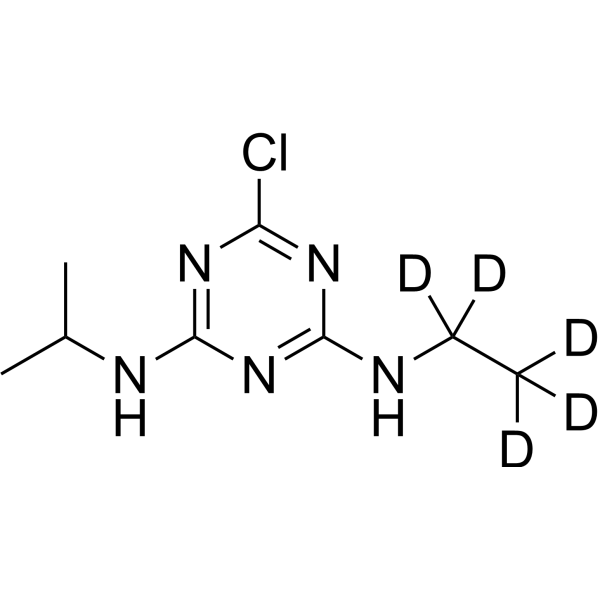
Atrazine-d5 is deuterium labeled Atrazine. Atrazine is principally used for control of certain annual broadleaf and grass weeds. Atrazine inhibits photophosphorylation but typically does not result in lethality or permanent cell damage in the short term .
|
-
-
- HY-Y1129
-
|
|
Photosensitizer
Apoptosis
|
Inflammation/Immunology
|
|
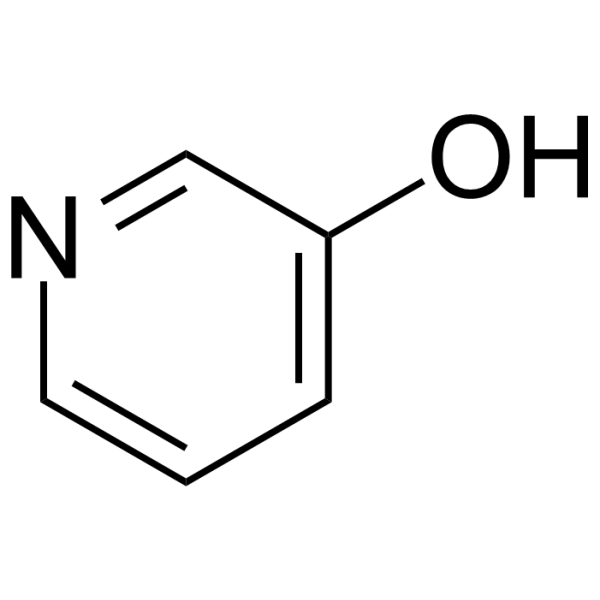
3-Hydroxypyridine is a compound that can be isolated from bamboo grass. As an endogenous photosensitizer present in human skin, 3-hydroxypyridine can mediate oxidative stress, proliferation inhibition and apoptosis of skin cells through UVA/UVB excitation .
|
-
-
- HY-B1856
-
|
|
Environmental Pollutants
Acetyl-CoA Carboxylase
|
Cancer
|
|
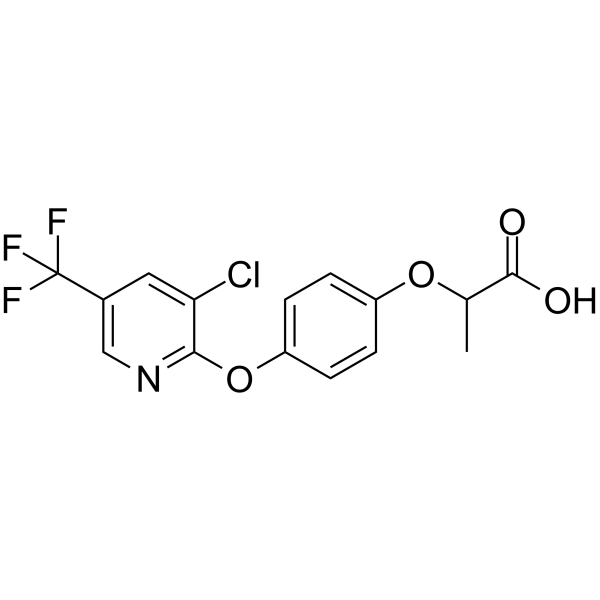
Haloxyfop is an aryloxyphenoxypropionic acid herbicide and is widely used in grass weeds in broad-leaf crops . Haloxyfop inhibits the acetyl coenzyme A carboxylase (EC 6.4.1.2) from corn seedling chloroplasts with an IC50 of 0.5 μM, but has no effect on this enzyme in pea .
|
-
-
- HY-B1859
-
|
|
Environmental Pollutants
Herbicide
|
Others
|
|
Isoproturon belongs to the phenylurea herbicide family and is a systemic and selective herbicide. Isoproturon is widely applied for killing weeds in farmland, which can be used in the control of annual grasses and broad-leaved weeds in spring and winter wheat, winter rye and spring and winter barley .
|
-
-
- HY-B1860
-
-
-
- HY-W425676
-
|
|
Herbicide
|
Others
|
|
Pinoxaden, a member of the phenylpyrazolines class, is a selective post-emergence herbicide extensively utilized to control various annual grass weeds.
|
-
-
- HY-136375
-
-
-
- HY-W014793
-
|
|
Herbicide
|
Others
|
|
Metamitron is a triazone herbicide that can be used for pre- and post-emergence weed control of broadleaf weeds and grasses in sugar beet .
|
-
-
- HY-B0866
-
-
-
- HY-B1871
-
|
|
Environmental Pollutants
Herbicide
|
Others
|
|
Metolachlor is a pre-emergent selective, chloroacetanilide herbicide for the control of a variety of annual grass and broad leaf weeds in corn and other crops. Metolachlor is a chiral herbicide consisting of four stereoisomers .
|
-
-
- HY-N7091R
-
|
|
Herbicide
Reference Standards
|
Metabolic Disease
|
|
Atrazine (Standard) is the analytical standard of Atrazine. This product is intended for research and analytical applications. Atrazine is principally used for control of certain annual broadleaf and grass weeds. Atrazine inhibits photophosphorylation but typically does not result in lethality or permanent cell damage in the short term .
|
-
-
- HY-17515
-
|
|
Herbicide
|
Others
|
|
Ipfencarbazone is a herbicide used to control weeds such as water grass in rice.
|
-
-
- HY-133188
-
-
-
- HY-119417
-
-
-
- HY-B2045
-
|
|
Environmental Pollutants
Herbicide
|
Others
|
|
Benfluralin is a kind of herbicide and an agrochemical which can be used as a pre-emergence herbicide used for the control of grass and other weeds in a range of food and non-food crops.
|
-
-
- HY-B0862R
-
|
|
Herbicide
Reference Standards
|
Others
|
|
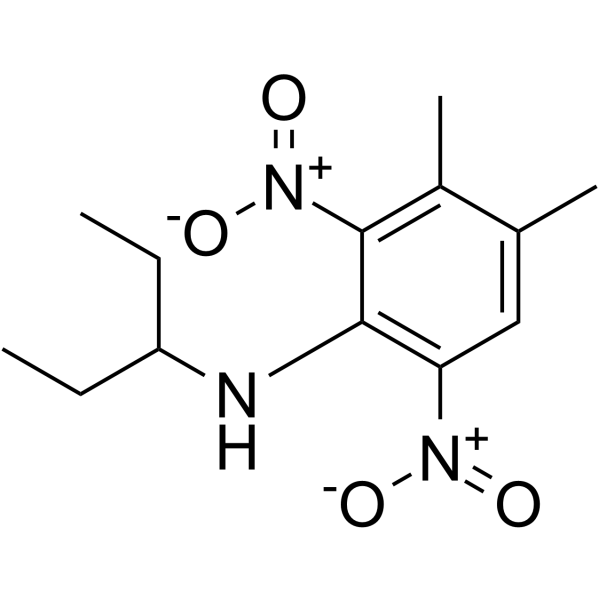
Pendimethalin (Standard) is the analytical standard of Pendimethalin. This product is intended for research and analytical applications. Pendimethalin is an herbicide that controls annual grasses and certain broadleaf weeds. Pendimethalin inhibits cell division and cell elongation .
|
-
-
- HY-119635
-
|
|
Others
|
Cancer
|
|
Albicanol is a sesquiterpenoid with potent antioxidant and antagonistic activities against heavy metal toxicity. Albicanol shows cytotoxicity. Albicanol suppress Profenofos (HY-B0832) induced genotoxicity in grass carp hepatocytes .
|
-
-
- HY-17528
-
|
Cyhalofop acid
|
Drug Metabolite
|
Others
|
|
Cyhalofop (Cyhalofop acid), the primary metabolite of Cyhalofop-butyl (HY-B0861) in susceptible grasses, is the herbicidally active metabolite. Cyhalofop-butyl is an aryloxyphenoxypropionate post-emergence herbicide widely used around the world in agriculture .
|
-
-
- HY-B1869
-
|
|
Environmental Pollutants
Herbicide
|
Others
|
|
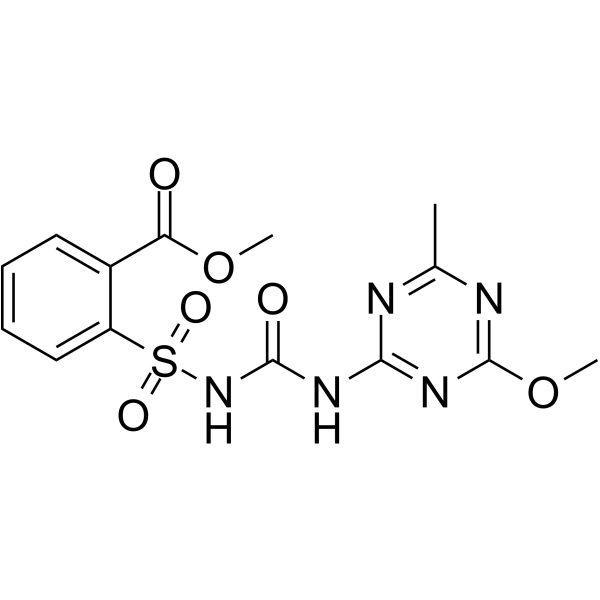
Metsulfuron-methyl is a systemic sulfonylurea herbicide that has been widely used to control broadleaf weeds and annual grasses in rice, corn, wheat, and barley. Metsulfuron-methyl exhibits high herbicidal activity and low mammalian toxicity, with an LD50 for rats exceeding 5000 mg/kg .
|
-
-
- HY-116489
-
|
LGC-40863
|
Herbicide
|
Others
|
|
Pyribenzoxim (LGC-40863) is a broad-spectrum herbicide. Pyribenzoxim has a higher safety level in bentgrass and a stronger herbicidal activity on grass weeds .
|
-
-
- HY-116706
-
|
|
Environmental Pollutants
Herbicide
|
Others
|
|
Lenacil is a selective uracil substituted herbicide used for control of both annual grasses, broad leafed weeds and some perennial weeds in sugarcane, apples, alfalfa, peaches, peacans, peppermints (Mentha piperita) and sugar beets. Lenacil can inhibit photosynthesis .
|
-
-
- HY-135745
-
|
|
Environmental Pollutants
Herbicide
|
Others
|
|
Sulfentrazone is a phenyl triazolinone herbicide used for control of certain broadleaf and grass weed species. Sulfentrazone inhibits protoporphyrinogen oxidase, resulting in the disruption of lipid cell membranes .
|
-
-
- HY-B0862S
-
|
|
Isotope-Labeled Compounds
|
Others
|
|
Pendimethalin-d5 is the deuterium labeled Pendimethalin . Pendimethalin is an herbicide that controls annual grasses and certain broadleaf weeds. Pendimethalin inhibits cell division and cell elongation .
|
-
-
- HY-W725473
-
|
|
Isotope-Labeled Compounds
|
Others
|
|
Oxyfluorfen-d5 is deuterated labeled Oxyfluorfen (HY-119176) Oxyfluorfen is a pre- and post-emergence diphenyl ether herbicide to control annual broad-leaved and grass weeds. Oxyfluorfen is a protoporphyrinogen oxidase inhibitor and inhibits photosynthesis by blocking chlorophyll synthesis.
|
-
-
- HY-N16517
-
|
|
Drug Derivative
|
Others
|
|
(2E)-Decenoylpiperidide (Compound 12) is a Sarmentine (HY-W099725) analogue. (2E)-Decenoylpiperidide shows phytotoxicity on barnyard grass .
|
-
-
- HY-136633R
-
|
|
Herbicide
Reference Standards
|
Others
|
|
Pyroxasulfone (Standard) is the analytical standard of Pyroxasulfone. This product is intended for research and analytical applications. Pyroxasulfone is a broad-spectrum pyrazole herbicide used primarily for all-season residual weed control in corn and soybeans. Pyroxasulfone is active against a variety of annual grasses and some broad-leaved weeds, and can be absorbed through roots and stems to inhibit early seedling growth of sensitive plants. Pyroxasulfone can be used to study herbicide effects and weed resistance .
|
-
-
- HY-116954R
-
|
|
Reference Standards
DNA/RNA Synthesis
|
Others
|
|
Metribuzin (Standard) is the analytical standard of Metribuzin. This product is intended for research and analytical applications. Metribuzin is a low-cost non-selective herbicide that belongs to the chemical class of triazinones. Metribuzin hinders DNA synthesis in treated plants and acts on photosystem II, ultimately inhibiting photosynthesis. Metribuzin provides good control of important annual grass and broad-leaf weeds .
|
-
-
- HY-144900R
-
|
|
Reference Standards
Reactive Oxygen Species (ROS)
|
Others
|
|
Topramezone (Standard) is the analytical standard of Topramezone. This product is intended for research and analytical applications. Topramezone is a potent 4-hydroxyphenylpyruvate dioxygenase (4-HPPD) inhibitor. Topramezone is a herbicide, used for the post-emergence control of broadleaf and grass weeds in corn .
|
-
-
- HY-B1882
-
|
|
Endogenous Metabolite
|
Others
|
|
Propazine is a triazine herbicide that effectively manages broad-leaved weeds and annual grasses in sweet sorghum cultivation.
|
-
-
- HY-B1874
-
|
Dosanex; Purivel; SAN 6602; SAN 7102
|
Endogenous Metabolite
|
Others
|
|
Metoxuron (Dosanex) is a phenylurea herbicide that effectively targets and controls annual grasses and broadleaf weeds in wheat, barley, and carrot crops.
|
-
-
- HY-133085
-
-
-
- HY-W286307
-
|
|
Environmental Pollutants
Herbicide
|
Others
|
|
Haloxyfop-methyl is a high-efficacy herbicide. Haloxyfop-methyl selectively controls several annual and perennial grasses in soybeans and other dicotyledenous crops .
|
-
-
- HY-N13247
-
|
|
Notch
Wnt
|
Metabolic Disease
|
|
Ajuga Turkestanica Extract is a muscle grass extract. Ajuga Turkestanica Extract can increase Notch and Wnt signaling in triceps brachii, and has potential skeletal muscle protection. .
|
-
-
- HY-W422402
-
|
|
Acetolactate Synthase (ALS)
Herbicide
|
Others
|
|
Foramsulfuron is a postemergence herbicide used for selective control of grass and some broadleaved weeds in maize (Zea mays L.). Foramsulfuron is a sulfonylurea herbicide that exerts its herbicidal activity by inhibiting acetolactate synthase (ALS), a key enzyme in the biosynthesis of branched chain amino acids .
|
-
-
- HY-168496
-
|
|
Herbicide
Phytohormone
|
Others
|
|
Herbicidal agent 8 (Compound 9w) targets the auxin indole-3-acetic acid (IAA, IC50=4.389 μM), disrupting the physiological activities of plant cells and eventually causing plant death. Herbicidal agent 8 exhibits herbicidal activity against broadleaf weeds and grass weeds .
|
-
-
- HY-N12884
-
|
Z11,E13-16:OH
|
Others
|
Others
|
|
(11Z,13E)-Hexadecadien-1-ol (Z11,E13-16:OH) is a insect sex pheromone, which could be secreted by adult females of the grass web moth (Herpetogramma licarsisalis) .
|
-
-
- HY-B1859R
-
|
|
Herbicide
Reference Standards
|
Others
|
|
Isoproturon (Standard) is the analytical standard of Isoproturon. This product is intended for research and analytical applications. Isoproturon belongs to the phenylurea herbicide family and is a systemic and selective herbicide. Isoproturon is widely applied for killing weeds in farmland, which can be used in the control of annual grasses and broad-leaved weeds in spring and winter wheat, winter rye and spring and winter barley .
|
-
-
- HY-116706R
-
|
|
Herbicide
Reference Standards
|
Others
|
|
Lenacil (Standard) is the analytical standard of Lenacil. This product is intended for research and analytical applications. Lenacil is a selective uracil substituted herbicide used for control of both annual grasses, broad leafed weeds and some perennial weeds in sugarcane, apples, alfalfa, peaches, peacans, peppermints (Mentha piperita) and sugar beets. Lenacil can inhibit photosynthesis .
|
-
-
- HY-B0869AR
-
|
|
Reference Standards
Acetolactate Synthase (ALS)
SOD
|
Metabolic Disease
|
|
Bispyribac (sodium) (Standard) is the analytical standard of Bispyribac sodium (HY-B0869A). This product is intended for research and analytical applications. Bispyribac sodium is a selective, orally active, systemic and post-emergence herbicide. Bispyribac sodium reduces SOD levels and inhibits ALS activity. Bispyribac sodium blocks the biosynthesis of branched-chain amino acids, resulting in growth retardation, chlorosis and necrosis of weeds. Bispyribac sodium exerts herbicidal activity against grass, sedge and broadleaf weeds in rice fields. Bispyribac sodium is hepatotoxic and genotoxic .
|
-
- HY-119176R
-
|
|
Herbicide
Reference Standards
Protoporphyrinogen IX oxidase
|
Others
|
|
Oxyfluorfen (Standard) is the analytical standard of Oxyfluorfen. This product is intended for research and analytical applications. Oxyfluorfen is a pre- and post-emergence diphenyl ether herbicide to control annual broad-leaved and grass weeds. Oxyfluorfen is a protoporphyrinogen oxidase inhibitor and inhibits photosynthesis by blocking chlorophyll synthesis. Oxyfluorfen can inhibit cell growth. Oxyfluorfen induces DNA damage and exhibits toxicity toward aquatic organisms such as Paramisgurnus dabryanus. Oxyfluorfen has genome-level deleterious effects on fish that can lead to stunted skeletal growth. Oxyfluorfen induces transverse limb deficiency or craniosynostosis .
|
-
- HY-121427
-
-
- HY-W076490
-
|
IPO 4328; N-Methyl-N'-phenylurea; 1-Methyl-3-phenylurea
|
Herbicide
|
Others
|
|
Defenuron (IPO 4328) is a herbicide for controlling undesirable grasses and broad-leaved plants in a variety of crops .
|
-
- HY-B0420AR
-
|
ABOB hydrochloride (Standard)
|
Influenza Virus
HCV
HSV
Apoptosis
Caspase
Reference Standards
|
Infection
|
|
Moroxydine (ABOB) hydrochloride (Standard) is the analytical standard of Moroxydine (ABOB) hydrochloride (HY-B0420A). Moroxydine (ABOB) hydrochloride is a broad-spectrum agent with multi-antiviral activities against DNA and RNA viruses, including influenza virus, herpes simplex, varicella zoster, measles, mumps disease, hepatitis C virus, etc. Moroxydine hydrochloride exhibits excellent antiviral activity and shows low cytotoxicity to cells infected by dsRNA viruses (grass carp reovirus, GCRV) and large DNA viruses (giant salamander iridovirus, GSIV). Moroxydine hydrochloride blocks the GCRV-induced cytopathic effects and eliminates nucleocapsids in ctenopharyngodon idella kidney (CIK) cells to keep the normal morphological structure. Moroxydine hydrochloride significantly inhibits the apoptosis, the caspase 3 activity, Bax expression and down-regulates Bcl-2 levels.
|
-
- HY-121220
-
|
Legurame
|
Herbicide
|
Others
|
|
Carbetamide (Legurame) is a soil active herbicide which controls annual grasses and suppresses some broadleaf weeds in a range of dicotyledonous crops .
|
-
- HY-N7007R
-
|
|
Drug Intermediate
Reference Standards
|
Metabolic Disease
|
|
Fluazifop (Standard) is the analytical standard of Fluazifop. This product is intended for research and analytical applications. Fluazifop is a grass-selective herbicide via inhibiting acetyl-CoA carboxylase .
|
-
- HY-121427R
-
|
|
Reference Standards
Acetyl-CoA Carboxylase
|
Others
|
|
Fluazifop (Standard) is the analytical standard of Fluazifop. This product is intended for research and analytical applications. Fluazifop is a grass-selective herbicide via inhibiting acetyl-CoA carboxylase .
|
-
- HY-121362R
-
-
- HY-136375S
-
|
|
Isotope-Labeled Compounds
|
Others
|
|
Cyanazine-d5 is deuterium labeled Cyanazine. Cyanazine, a triazine herbicide cyanazine, is used to control a variety of grass weeds and broadleaf weed. Cyanazine is proved non-genotoxic .
|
-
- HY-B1882R
-
|
|
Endogenous Metabolite
Reference Standards
|
Others
|
|
Propazine (Standard) is the analytical standard of Propazine. This product is intended for research and analytical applications. Propazine is a triazine herbicide that effectively manages broad-leaved weeds and annual grasses in sweet sorghum cultivation.
|
-
- HY-133085S
-
|
DPX-E9636-d6
|
Isotope-Labeled Compounds
|
Others
|
|
Rimsulfuron-d6 is deuterium labeled Rimsulfuron. Rimsulfuron (DPX-E9636) is a sulfonylurea herbicide for postemergence use in maize to control grasses and some broadleaf weeds .
|
-
- HY-W425676R
-
|
|
Endogenous Metabolite
Reference Standards
|
Others
|
|
Pinoxaden (Standard) is the analytical standard of Pinoxaden. This product is intended for research and analytical applications. Pinoxaden, a member of the phenylpyrazolines class, is a selective post-emergence herbicide extensively utilized to control various annual grass weeds.
|
-
- HY-66011BR
-
|
(Rac)-BAY 12-8039 free base (Standard)
|
Bacterial
Antibiotic
Reference Standards
|
Infection
|
|
Pinoxaden (Standard) is the analytical standard of Pinoxaden. This product is intended for research and analytical applications. Pinoxaden, a member of the phenylpyrazolines class, is a selective post-emergence herbicide extensively utilized to control various annual grass weeds.
|
-
- HY-136375R
-
|
|
Herbicide
Reference Standards
|
Others
|
|
Cyanazine (Standard) is the analytical standard of Cyanazine. This product is intended for research and analytical applications. Cyanazine, a triazine herbicide cyanazine, is used to control a variety of grass weeds and broadleaf weed. Cyanazine is proved non-genotoxic .
|
-
- HY-133188R
-
|
|
Herbicide
Reference Standards
|
Others
|
|
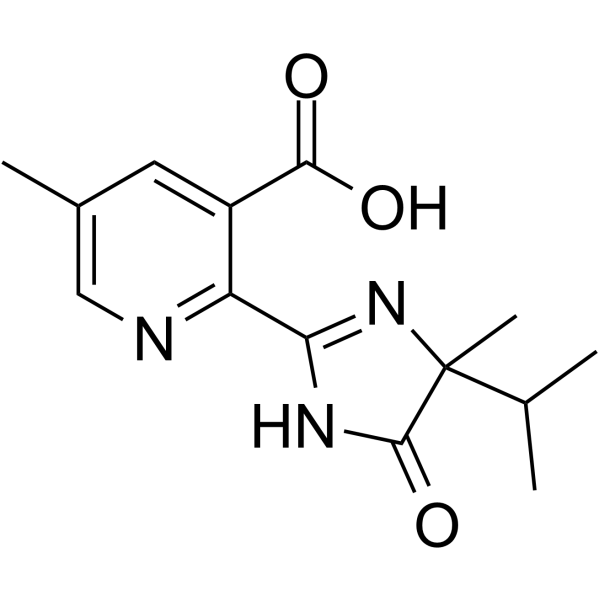
Imazethapyr (Standard) is the analytical standard of Imazethapyr. This product is intended for research and analytical applications. Imazethapyr is an imidazolinone herbicide used in crops. Imazethapyr can protect crops from damage by weeds and annual grasses .
|
-
- HY-133085R
-
|
DPX-E9636 (Standard)
|
Herbicide
Reference Standards
|
Others
|
|
Rimsulfuron (Standard) is the analytical standard of Rimsulfuron. This product is intended for research and analytical applications. Rimsulfuron (DPX-E9636) is a sulfonylurea herbicide for postemergence use in maize to control grasses and some broadleaf weeds .
|
-
- HY-121220R
-
|
Legurame (Standard)
|
Herbicide
Reference Standards
|
Others
|
|
Carbetamide (Standard) is the analytical standard of Carbetamide. This product is intended for research and analytical applications. Carbetamide (Legurame) is a soil active herbicide which controls annual grasses and suppresses some broadleaf weeds in a range of dicotyledonous crops .
|
-
- HY-N7091S
-
|
|
Isotope-Labeled Compounds
|
Metabolic Disease
|
|
Atrazine- 15N is the 15N-labeled Atrazine. Atrazine is principally used for control of certain annual broadleaf and grass weeds. Atrazine inhibits photophosphorylation but typically does not result in lethality or permanent cell damage in the short term .
|
-
- HY-119417R
-
|
|
Herbicide
Reference Standards
|
Others
|
|
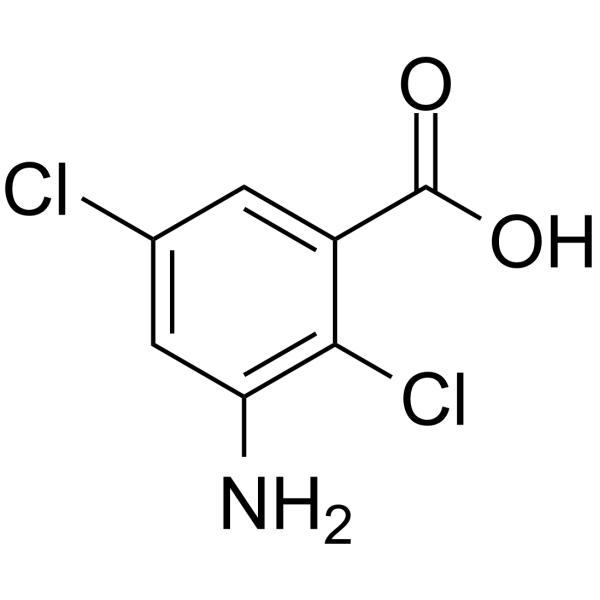
Chloramben (Standard) is the analytical standard of Chloramben. This product is intended for research and analytical applications. Chloramben (3-Amino-2,5-dichlorobenzoic acid) is a pre-emergence herbicide used to control the seedlings of annual grasses and broadleaf weeds .
|
-
- HY-B2045R
-
|
|
Herbicide
Reference Standards
|
Others
|
|
Benfluralin (Standard) is the analytical standard of Benfluralin. This product is intended for research and analytical applications. Benfluralin is a kind of herbicide and an agrochemical which can be used as a pre-emergence herbicide used for the control of grass and other weeds in a range of food and non-food crops.
|
-
- HY-135745R
-
|
|
Herbicide
Reference Standards
|
Others
|
|
Sulfentrazone (Standard) is the analytical standard of Sulfentrazone. This product is intended for research and analytical applications. Sulfentrazone is a phenyl triazolinone herbicide used for control of certain broadleaf and grass weed species. Sulfentrazone inhibits protoporphyrinogen oxidase, resulting in the disruption of lipid cell membranes .
|
-
- HY-B0866S
-
|
|
Isotope-Labeled Compounds
|
Metabolic Disease
|
Ametryn- 13C,d3 is the 13C- and deuterium labeled Ametryn. Ametryn, a member of the Triazine chemical family, is a herbicide which inhibits photosynthesis and other enzymatic processes. Ametryn is effective against annual broadleaf weeds and grasses .
|
-
- HY-117142
-
|
|
Acetyl-CoA Carboxylase
|
Others
|
|
Quizalofop-P is absorbed through weed stems and leaves, conducts upward and downward in plants, accumulates at the top and intermediate meristems, inhibits cellular fatty acid synthesis, and makes weeds necrotic. Quizalofop-P is highly selective between grass weeds and dicotyledonous crops .
|
-
- HY-B1871R
-
|
|
Herbicide
Reference Standards
|
Others
|
|
Metolachlor (Standard) is the analytical standard of Metolachlor. This product is intended for research and analytical applications. Metolachlor is a pre-emergent selective, chloroacetanilide herbicide for the control of a variety of annual grass and broad leaf weeds in corn and other crops. Metolachlor is a chiral herbicide consisting of four stereoisomers .
|
-
- HY-W713975
-
|
|
Isotope-Labeled Compounds
Herbicide
|
Others
|
|
Metolachlor-d11 is the deuterium labeled Metolachlor (HY-B1871). Metolachlor is a pre-emergent selective, chloroacetanilide herbicide for the control of a variety of annual grass and broad leaf weeds in corn and other crops. Metolachlor is a chiral herbicide consisting of four stereoisomers .
|
-
- HY-136380S
-
|
|
Isotope-Labeled Compounds
Herbicide
|
Others
|
|
Clodinafop-propargyl- 13C6 is the 13C-labeled Clodinafop-propargyl (HY-136380). Clodinafop-propargyl, an aryloxyphenoxy-propionate herbicide, is used for postemergence control of annual grasses in cereals. Clodinafop-propargyl has organ toxicity and developmental toxicity .
|
-
- HY-14397AR
-
|
Indometacin sodium hydrate (Standard)
|
Reference Standards
COX
Bacterial
Influenza Virus
Antibiotic
|
Inflammation/Immunology
Cancer
|
|
Dimethenamide-P (Standard) is the analytical standard of Dimethenamide-P. This product is intended for research and analytical applications. Dimethenamide-P is an amide herbicide effective for the pre-emergence management of annual grasses, small-seeded broadleaf weeds, and sedges in ornamental plants, functioning by inhibiting the synthesis of long-chain fatty acids.
|
-
- HY-114604
-
|
|
Bacterial
|
Others
|
|
Propioxatin B is a tricyclic sesquiterpenoid compound isolated from the root of vetiver grass. It has anti-tuberculosis activity and inhibitory effects on a variety of drug-resistant mutants of Mycobacterium tuberculosis. In computer simulation docking studies, it showed binding affinity with bacterial DNA gyrase and has a certain safety in vivo.
|
-
- HY-17528R
-
|
Cyhalofop acid (Standard)
|
Drug Metabolite
Reference Standards
|
Others
|
|
Cyhalofop (Standard) is the analytical standard of Cyhalofop. This product is intended for research and analytical applications. Cyhalofop (Cyhalofop acid), the primary metabolite of Cyhalofop-butyl (HY-B0861) in susceptible grasses, is the herbicidally active metabolite. Cyhalofop-butyl is an aryloxyphenoxypropionate post-emergence herbicide widely used around the world in agriculture .
|
-
- HY-W874850
-
|
|
Herbicide
|
|
|
Fluorodifen is a selective herbicide with the activity of inhibiting weed growth. Fluorodifen can effectively control the growth of various annual and perennial broadleaf weeds and some grass weeds, and is widely used in the field management of various crops. By acting on the photosynthesis of plants and the regulation of their growth hormones, Fluorodifen ensures the healthy growth and harvest of crops.
|
-
- HY-15876R
-
|
|
Drug Metabolite
Reference Standards
P2Y Receptor
|
Cardiovascular Disease
|
|
Cyhalofop (Standard) is the analytical standard of Cyhalofop. This product is intended for research and analytical applications. Cyhalofop (Cyhalofop acid), the primary metabolite of Cyhalofop-butyl (HY-B0861) in susceptible grasses, is the herbicidally active metabolite. Cyhalofop-butyl is an aryloxyphenoxypropionate post-emergence herbicide widely used around the world in agriculture .
|
-
- HY-173026
-
|
|
Herbicide
|
Others
|
|
Herbicidal agent 7 (Compound 15c) is the inhibitor for protoporphyrinogen IX oxidase (PPO). Herbicidal agent 7 blocks the plant pigment synthesis, exhibiting herbicidal activity against broadleaf weeds (such as Z. elegans and A. theophrasti) and grass weeds (such as S. glauca and E. crusgalli) .
|
-
- HY-W841955
-
|
SSH-41
|
Herbicide
|
Others
|
|
Monisouron (SSH-41) is a herbicide. Monisouron shows post-emergence control effects on various broad-leaved and grass weeds, and selectivity for barley, pea and maize. Monisouron is promising for research of weed control .
|
-
- HY-158986
-
|
|
Phytohormone
|
Others
|
|
(E,E)-2,4-Undecadien-8,10-diynoic acid isobutylamide is a natural compound found in Acmella oleracea and is a plant growth inhibitor. (E,E)-2,4-Undecadien-8,10-diynoic acid isobutylamide inhibits the growth of cress roots and shoots and barnyard grass roots .
|
-
- HY-W721333
-
|
|
Herbicide
Acetolactate Synthase (ALS)
|
Others
|
|
Pyrimisulfan is a potent acetolactate synthase (ALS) inhibitor and a broad‑spectrum herbicide. Pyrimisulfan selectively inhibits plant acetolactate synthase. Pyrimisulfan controls a wide spectrum of paddy weeds including annual grasses, sedges, broadleaf weeds, and sulfonylurea‑resistant biotypes pre‑ and postemergence, with long residual activity and excellent rice safety. Pyrimisulfan can be used for research on paddy herbicides .
|
-
- HY-121576
-
|
|
Endogenous Metabolite
|
Others
|
|
Butenachlor is a selective herbicide that is applied to soil for the effective control of grass and certain broad-leaved weeds.
|
-
- HY-138156
-
|
|
Herbicide
|
Others
|
|
Iodosulfuron-methyl sodium is a sulfonylurea herbicide. Iodosulfuron-methyl sodium controls grass weeds in winter wheat and winter barley .
|
-
- HY-30318
-
|
HCG 004
|
Herbicide
|
Others
|
|
Clofop (HCG 004), a once-utilized post-emergence herbicide, was employed to manage annual grasses in various crop fields.
|
-
- HY-121427S
-
-
- HY-N15443
-
|
|
Herbicide
|
Others
|
|
Mevalocidin is a phytotoxin. Mevalocidin can inhibit the growth of many broadleaf and grass plants, showing significant herbicidal activity against weeds. Mevalocidin is promising for research of bioherbicides .
|
-
- HY-W683412
-
|
|
Drug Isomer
|
Others
|
|
(Rac)-Clodinafop-propargyl is the racemic form of Clodinafop-propargyl (HY-136380). Clodinafop-propargyl is an arylphenoxypropionic acid herbicide that can be used to control the emergence of annual grasses .
|
-
- HY-W540176
-
|
|
Others
|
Others
|
|
2,6-Dimethyloctane is a type of straight-chain alkanoid volatile component isolated and identified from the essential oil of lemon grass (Cymbopogon citratus (DC) Stapf) leaves .
|
-
- HY-W669241
-
|
|
Herbicide
|
Others
|
|
Dimethenamide-P is an amide herbicide effective for the pre-emergence management of annual grasses, small-seeded broadleaf weeds, and sedges in ornamental plants, functioning by inhibiting the synthesis of long-chain fatty acids.
|
-
- HY-B0866R
-
|
|
Herbicide
Reference Standards
|
Metabolic Disease
|
Ametryn (Standard) is the analytical standard of Ametryn. This product is intended for research and analytical applications. Ametryn, a member of the Triazine chemical family, is a herbicide which inhibits photosynthesis and other enzymatic processes. Ametryn is effective against annual broadleaf weeds and grasses .
|
-
- HY-W286307R
-
|
|
Herbicide
Reference Standards
|
Others
|
|
Haloxyfop-methyl (Standard) is the analytical standard of Haloxyfop-methyl. This product is intended for research and analytical applications. Haloxyfop-methyl is a high-efficacy herbicide. Haloxyfop-methyl selectively controls several annual and perennial grasses in soybeans and other dicotyledenous crops .
|
-
- HY-W014793R
-
|
|
Herbicide
Reference Standards
|
Others
|
|
Metamitron (Standard) is the analytical standard of Metamitron (HY-W014793). This product is intended for research and analytical applications. Metamitron is a triazone herbicide that can be used for pre- and post-emergence weed control of broadleaf weeds and grasses in sugar beet .
|
-
- HY-113947
-
|
|
Herbicide
Acetyl-CoA Carboxylase
|
Others
|
|
Metamifop is a post-emergence lipid synthesis inhibitor herbicide, with an IC50 of 41.1 nM against the carboxyltransferase (CT) domain of chloroplast acetyl-CoA carboxylase (ACCase) in barnyard grass (Echinochloa crus-galli). Metamifop inhibits the activity of the CT domain, thereby blocking fatty acid biosynthesis .
|
-
- HY-W669241R
-
|
|
Endogenous Metabolite
Reference Standards
|
Others
|
|
Dimethenamide-P (Standard) is the analytical standard of Dimethenamide-P. This product is intended for research and analytical applications. Dimethenamide-P is an amide herbicide effective for the pre-emergence management of annual grasses, small-seeded broadleaf weeds, and sedges in ornamental plants, functioning by inhibiting the synthesis of long-chain fatty acids.
|
-
- HY-136380R
-
|
|
Herbicide
Reference Standards
|
Others
|
|
Clodinafop-propargyl (Standard) is the analytical standard of Clodinafop-propargyl (HY-136380). This product is intended for research and analytical applications. Clodinafop-propargyl, an aryloxyphenoxy-propionate herbicide, is used for postemergence control of annual grasses in cereals. Clodinafop-propargyl has organ toxicity and developmental toxicity .
|
-
- HY-135713
-
|
|
Herbicide
Acetolactate Synthase (ALS)
Fungal
|
Infection
|
|
Penoxsulam is an acetolactate synthase (ALS) inhibitor herbicide. Penoxsulam inhibits Candida auris acetohydroxyacid synthase (AHAS) with a Ki value of <32 nM. Penoxsulam can be used for postemergence control of annual grasses, sedges, and broadleaf weeds in rice culture. Penoxsulam can be used for the study of Candida auris infections .
|
-
- HY-N7091S1
-
|
|
Isotope-Labeled Compounds
|
Metabolic Disease
|
|
Atrazine- 13C3, 15N3 is the 13C-labeled and 15N-labeled Atrazine. Atrazine is principally used for control of certain annual broadleaf and grass weeds. Atrazine inhibits photophosphorylation but typically does not result in lethality or permanent cell damage in the short term .
|
-
- HY-W1115537
-
|
|
HPPD
Herbicide
|
Others
|
|
Flusulfinam is a HPPD inhibitor and herbicide, with an IC50 of 0.0181 μM against Arabidopsis thaliana HPPD. Flusulfinam inhibits the catalytic activity of recombinant Arabidopsis thaliana HPPD. Flusulfinam exhibits potent herbicidal activity against barnyard grass (Echinochloa crus-galli). Flusulfinam inhibits the growth of Digitaria sanguinalis .
|
-
- HY-B1859S1
-
|
|
Isotope-Labeled Compounds
|
Others
|
|
Isoproturon-d3 is the deuterium labeled Isoproturon . Isoproturon belongs to the phenylurea herbicide family and is a systemic and selective herbicide. Isoproturon is widely applied for killing weeds in farmland, which can be used in the control of annual grasses and broad-leaved weeds in spring and winter wheat, winter rye and spring and winter barley .
|
-
- HY-B1856S
-
|
|
Isotope-Labeled Compounds
Acetyl-CoA Carboxylase
|
Cancer
|
|
Haloxyfop-d4 is deuterium labeled Haloxyfop. Haloxyfop is an aryloxyphenoxypropionic acid herbicide and is widely used in grass weeds in broad-leaf crops . Haloxyfop inhibits the acetyl coenzyme A carboxylase (EC 6.4.1.2) from corn seedling chloroplasts with an IC50 of 0.5 μM, but has no effect on this enzyme in pea .
|
-
- HY-W422402R
-
|
|
Reference Standards
Acetolactate Synthase (ALS)
|
Others
|
|
Foramsulfuron (Standard) is the analytical standard of Foramsulfuron. This product is intended for research and analytical applications. Foramsulfuron is a postemergence herbicide used for selective control of grass and some broadleaved weeds in maize (Zea mays L.). Foramsulfuron is a sulfonylurea herbicide that exerts its herbicidal activity by inhibiting acetolactate synthase (ALS), a key enzyme in the biosynthesis of branched chain amino acids .
|
-
- HY-B1856R
-
|
|
Reference Standards
Acetyl-CoA Carboxylase
|
Cancer
|
|
Haloxyfop (Standard) is the analytical standard of Haloxyfop. This product is intended for research and analytical applications. Haloxyfop is an aryloxyphenoxypropionic acid herbicide and is widely used in grass weeds in broad-leaf crops . Haloxyfop inhibits the acetyl coenzyme A carboxylase (EC 6.4.1.2) from corn seedling chloroplasts with an IC50 of 0.5 μM, but has no effect on this enzyme in pea .
|
-
- HY-N7083R
-
|
|
Reference Standards
Apoptosis
Aldehyde Dehydrogenase (ALDH)
|
Inflammation/Immunology
Cancer
|
|
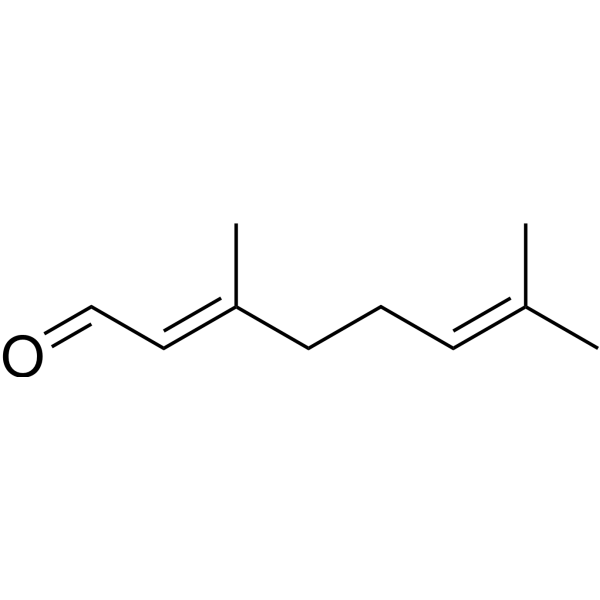
Citral (Standard) is the analytical standard of Citral. This product is intended for research and analytical applications. Citral is an orally active monoterpene compound in lemon grass essential oil and a natural ALDH1A inhibitor, which can induce apoptosis and cycle arrest in breast cancer cell lines, and has analgesic, anti-injurious and anti-inflammatory effects .
|
-
- HY-12853R
-
|
|
Reference Standards
Reactive Oxygen Species (ROS)
|
Others
|
|
Mesotrione (Standard) is the analytical standard of Mesotrione. This product is intended for research and analytical applications. Mesotrione is a herbicide belongs to the benzoylcyclohexanedione family. Mesotrione is a potent and competitive and reversible inhibitor of HPPD enzyme. Mesotrione is selective to maize due to rapid metabolism and relative high tolerance by the susceptible crop plant .
|
-
- HY-12853
-
|
|
Environmental Pollutants
Reactive Oxygen Species (ROS)
|
Others
|
|
Mesotrione is a herbicide belongs to the benzoylcyclohexanedione family. Mesotrione is a potent and competitive and reversible inhibitor of HPPD enzyme. Mesotrione is selective to maize due to rapid metabolism and relative high tolerance by the susceptible crop plant .
|
-
- HY-N12235
-
|
|
Caspase
|
Inflammation/Immunology
|
|
Sarglaroids F (compound 6) is an anti-inflammatory agent isolated from the roots of Grass Coral. Sarglaroids F inhibits LPS/ATP-induced IL-1β release by affecting K+ efflux and reducing Caspase-1(P20) levels. Sarglaroids F is not cytotoxic to RAW264.7 cells .
|
-
- HY-W721637
-
|
|
Isotope-Labeled Compounds
Acetolactate Synthase (ALS)
|
Others
|
|
Foramsulfuron-d6-1 is the deuterium labeled Foramsulfuron (HY-W422402). Foramsulfuron is a postemergence herbicide used for selective control of grass and some broadleaved weeds in maize (Zea mays L.). Foramsulfuron is a sulfonylurea herbicide that exerts its herbicidal activity by inhibiting acetolactate synthase (ALS), a key enzyme in the biosynthesis of branched chain amino acids .
|
-
- HY-117142R
-
|
|
Acetyl-CoA Carboxylase
Reference Standards
|
Others
|
|
Quizalofop-P (Standard) is the analytical standard of Quizalofop-P. This product is intended for research and analytical applications. Quizalofop-P is absorbed through weed stems and leaves, conducts upward and downward in plants, accumulates at the top and intermediate meristems, inhibits cellular fatty acid synthesis, and makes weeds necrotic. Quizalofop-P is highly selective between grass weeds and dicotyledonous crops .
|
-
- HY-126563
-
|
|
Others
|
Others
|
|
Phyllospadine (Compound I) is a flavonoidal alkaloid found in the sea-grass Phyllospadix iwatensis. Flavonoids constitute a class of plant secondary metabolites characterized by a polyphenolic structure; they possess antioxidant, anti-inflammatory, anti-mutagenic, and anti-carcinogenic properties, as well as the capacity to modulate the functions of key cellular enzymes, finding application in the treatment of diseases such as cancer, Alzheimer's disease, and atherosclerosis .
|
-
- HY-B1859S2
-
|
|
Isotope-Labeled Compounds
Herbicide
|
Others
|
|
Isoproturon-d6-1 is the deuterium labeled Isoproturon (HY-B1859). Isoproturon belongs to the phenylurea herbicide family and is a systemic and selective herbicide. Isoproturon is widely applied for killing weeds in farmland, which can be used in the control of annual grasses and broad-leaved weeds in spring and winter wheat, winter rye and spring and winter barley .
|
-
- HY-Y1129S
-
|
|
Isotope-Labeled Compounds
Photosensitizer
Apoptosis
|
Inflammation/Immunology
|
|
3-Hydroxypyridine-d4 is the deuterium labeled 3-Hydroxypyridine (HY-Y1129). 3-Hydroxypyridine is a compound that can be isolated from bamboo grass. As an endogenous photosensitizer present in human skin, 3-hydroxypyridine can mediate oxidative stress, proliferation inhibition and apoptosis of skin cells through UVA/UVB excitation .
|
-
- HY-136830
-
|
Adenosine-5'-diphosphoglucose disodium
|
Biochemical Assay Reagents
|
Others
|
|
ADP-Glucose disodiumIs an immediate precursor for the biosynthesis of storage polysaccharides in plants, green algae and cyanobacteria, and structural polysaccharides in some bacteria, by the addition of glucose. It is used to produce amylose, amylopectin, starch and other polysaccharides by amylose synthase or starch synthase in plastids. ADPGUsually produced in plastids, although it can be biosynthesized in the cytoplasm of some grasses and imported into plastids by membrane-bound transporters .
|
-
- HY-W746295
-
|
|
Isotope-Labeled Compounds
Apoptosis
Photosensitizer
|
Inflammation/Immunology
|
|
3-Hydroxypyridine-d5 is the deuterium labeled 3-Hydroxypyridine (HY-Y1129). 3-Hydroxypyridine is a compound that can be isolated from bamboo grass. As an endogenous photosensitizer present in human skin, 3-hydroxypyridine can mediate oxidative stress, proliferation inhibition and apoptosis of skin cells through UVA/UVB excitation .
|
-
- HY-118742R
-
|
|
HPPD
Reference Standards
|
Others
|
|
Benzobicyclon (Standard) is the analytical standard of Benzobicyclon. This product is intended for research and analytical applications. Benzobicyclon is a 4-HPPD inhibitor and herbicide that reacts with water to form a hydrolysate of the active herbicide benzobicycline, causing bleaching and death of weeds. Benzobicyclon is effective against grass, sedge and broadleaf weeds. Benzobicyclon effectively targets sulfonylurea herbicide-resistant biotypes as well as wild-type weeds .
|
-
- HY-W874850R
-
|
|
Endogenous Metabolite
Reference Standards
|
|
|
Fluorodifen (Standard) is the analytical standard of Fluorodifen. This product is intended for research and analytical applications. Fluorodifen is a selective herbicide with the activity of inhibiting weed growth. Fluorodifen can effectively control the growth of various annual and perennial broadleaf weeds and some grass weeds, and is widely used in the field management of various crops. By acting on the photosynthesis of plants and the regulation of their growth hormones, Fluorodifen ensures the healthy growth and harvest of crops.
|
-
- HY-W020215
-
|
|
Mitochondrial Metabolism
Endogenous Metabolite
|
Metabolic Disease
|
|
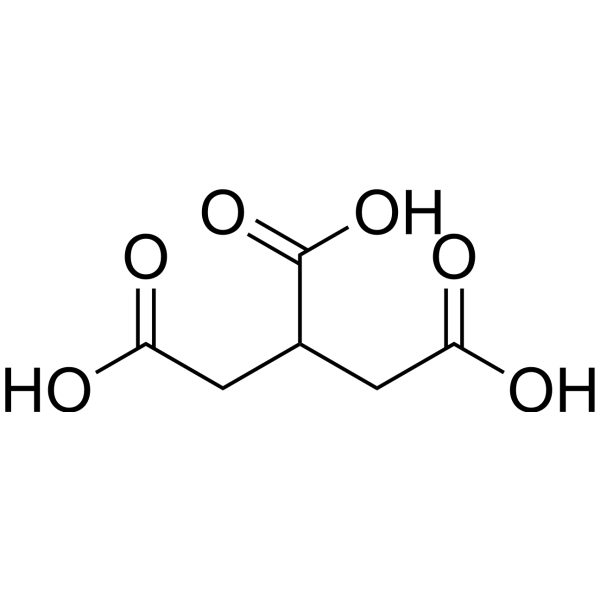
Tricarballylic acid is an orally active compound that can be produced by rumen microorganisms and has the activity of chelating magnesium. Tricarballylic acid is also a competitive inhibitor of aconitate hydratase, with a Ki value of 0.52 mM. Tricarballylic acid can inhibit the oxidation of acetate in the citric acid cycle and can be used in the research of ruminant tissue metabolism and grass tetany syndrome. In addition, Tricarballylic acid can be used to synthesize specific complexes and produce plasticizers .
|
-
- HY-B1866R
-
|
|
Reference Standards
Androgen Receptor
|
Endocrinology
|
|
Linuron (Standard) is the analytical standard of Linuron. This product is intended for research and analytical applications. Linuron is a phenylurea herbicide that is widely used to control the growth of grass and weeds in various agriculture crops and in orchards. Linuron is a photosystem II inhibitor. Linuron is also a competitive androgen receptor (AR) antagonist with a Ki of 100 μM. Linuron shows reproductive toxicity in animals that acts as an endocrine disruptor .
|
-
- HY-B1869R
-
|
|
Herbicide
Reference Standards
|
Others
|
|
Metsulfuron-methyl (Standard) is the analytical standard of Metsulfuron-methyl. This product is intended for research and analytical applications. Metsulfuron-methyl is a systemic sulfonylurea herbicide that has been widely used to control broadleaf weeds and annual grasses in rice, corn, wheat, and barley. Metsulfuron-methyl exhibits high herbicidal activity and low mammalian toxicity, with an LD50 for rats exceeding 5000 mg/kg .
|
-
- HY-B1866S
-
|
|
Androgen Receptor
Isotope-Labeled Compounds
|
Others
|
|
Linuron-d6 is the deuterium labeled Linuron (HY-B1866). Linuron is a phenylurea herbicide that is widely used to control the growth of grass and weeds in various agriculture crops and in orchards. Linuron is a photosystem II inhibitor. Linuron is also a competitive androgen receptor (AR) antagonist with a Ki of 100 μM. Linuron shows reproductive toxicity in animals that acts as an endocrine disruptor .
|
-
- HY-Y1129R
-
|
|
Photosensitizer
Reference Standards
Apoptosis
|
Inflammation/Immunology
|
|
3-Hydroxypyridine (Standard) is the analytical standard of 3-Hydroxypyridine (HY-Y1129). This product is intended for research and analytical applications. 3-Hydroxypyridine is a compound that can be isolated from bamboo grass. As an endogenous photosensitizer present in human skin, 3-hydroxypyridine can mediate oxidative stress, proliferation inhibition and apoptosis of skin cells through UVA/UVB excitation .
|
-
- HY-136380
-
|
|
Herbicide
|
Others
|
|
Clodinafop-propargyl, a main member of aryloxyphenoxy-propionate herbicides, is used for postemergence control of annual grasses in cereals, including Avena, Lolium, Setaria, Phalaris and Alopecurus spp . Clodinafop-propargyl is a click chemistry reagent, it contains an Alkyne group and can undergo copper-catalyzed azide-alkyne cycloaddition (CuAAc) with molecules containing Azide groups. Clodinafop-propargyl has developmental toxicity to zebrafish embryos .
|
-
- HY-B1866
-
Linuron
1 Publications Verification
|
Environmental Pollutants
Androgen Receptor
Herbicide
|
Infection
Metabolic Disease
Cancer
|
|
Linuron is a phenylurea herbicide widely used to control the growth of grasses and weeds in various crops and orchards. Linuron acts as a photosystem II inhibitor. It also functions as a competitive androgen receptor (AR) antagonist, with an EC50 of 200 μM and a Ki of 100 μM against rat AR, and an EC50 of 20 μM against human AR. Linuron exhibits reproductive toxicity in animals and acts as an endocrine disruptor .\n
|
-
- HY-B2050
-
|
|
Environmental Pollutants
Herbicide
Microtubule/Tubulin
|
Others
|
|
Trifluralin is a selective, preemergence, soil-applied herbicide providing control of many important annual grass and broadleaf weed species. Trifluralin prevents weed growth by inhibiting root development through the interruption of mitosis. Trifluralin binds to tubulin and results in the failure of spindle apparatus and cell plate formation. Trifluralin inhibits radicle development on roots. Trifluralin inhibits cell mitosis. Trifluralin is considered to be neurotoxic and haematotoxic .
|
-
- HY-B0860
-
Diuron
2 Publications Verification
|
Environmental Pollutants
Reactive Oxygen Species (ROS)
Herbicide
MDM-2/p53
|
Cancer
|
|
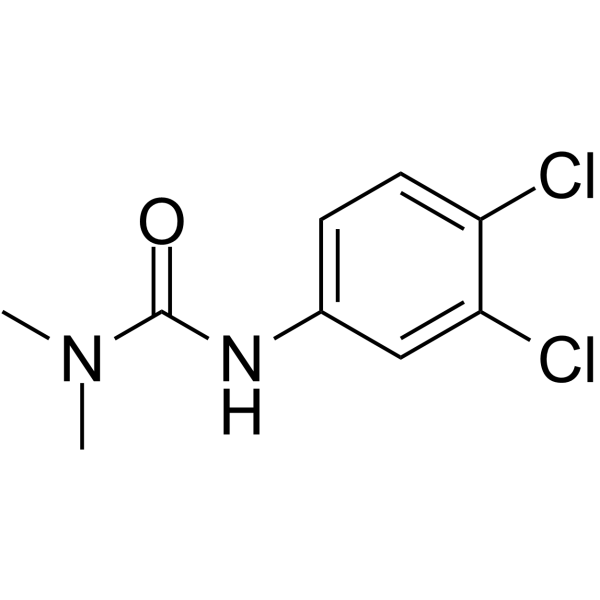
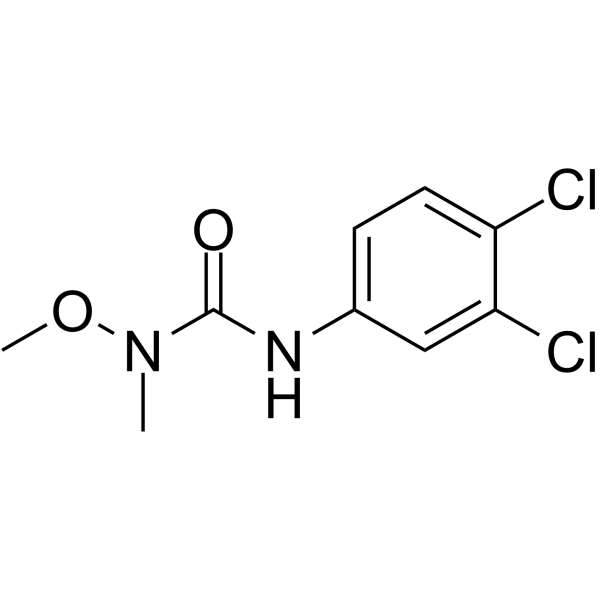
Diuron is an orally active phenylurea herbicide. Diuron inhibits photosynthesis in plants by blocking the formation of ATP and NADH. Diuron increases the production of ROS. Diuron increases expression of p53 in certain cell lines. Diuron has herbicidal activity against annual and perennial broadleaf weeds and grass weeds. Diuron promotes DMBA/BBN-induced bladder cancer. Diuron can be used in breast cancer research .
|
-
- HY-W040194
-
|
|
Environmental Pollutants
Herbicide
|
Metabolic Disease
|
|
Clomazone is a broad spectrum herbicide, mainly used to control annual broadleaf weeds and grass weeds in various crops such as rice, soybeans, and peanuts. Clomazone inhibits carotenoid biosynthesis, and treated plants show typical "albinism" symptoms due to the destruction of chloroplast membrane structure leading to chlorophyll degradation. Clomazone exhibits multiple toxic effects on non-target organisms, including aquatic lethality, developmental malformations, liver damage, mitochondrial dysfunction, and hematotoxicity .
|
-
- HY-B2050S
-
|
|
Isotope-Labeled Compounds
Microtubule/Tubulin
|
Others
|
|
Trifluralin-d14 is the deuterium labeled Trifluralin. Trifluralin is a selective, preemergence, soil-applied herbicide providing control of many important annual grass and broadleaf weed species. Trifluralin prevents weed growth by inhibiting root development through the interruption of mitosis. Trifluralin binds to tubulin and results in the failure of spindle apparatus and cell plate formation. Trifluralin inhibits radicle development on roots. Trifluralin inhibits cell mitosis. Trifluralin is considered to be neurotoxic and haematotoxic .
|
-
- HY-W020215R
-
|
|
Reference Standards
Mitochondrial Metabolism
Endogenous Metabolite
|
Metabolic Disease
|
|
Tricarballylic acid (Standard) is the analytical standard of Tricarballylic acid (HY-W020215). This product is intended for research and analytical applications. Tricarballylic acid is an orally active compound that can be produced by rumen microorganisms and has the activity of chelating magnesium. Tricarballylic acid is also a competitive inhibitor of aconitate hydratase, with a Ki value of 0.52 mM. Tricarballylic acid can inhibit the oxidation of acetate in the citric acid cycle and can be used in the research of ruminant tissue metabolism and grass tetany syndrome. In addition, Tricarballylic acid can be used to synthesize specific complexes and produce plasticizers .
|
-
- HY-122308
-
|
|
NF-κB
Apoptosis
Interleukin Related
COX
Reactive Oxygen Species (ROS)
|
Inflammation/Immunology
|
|
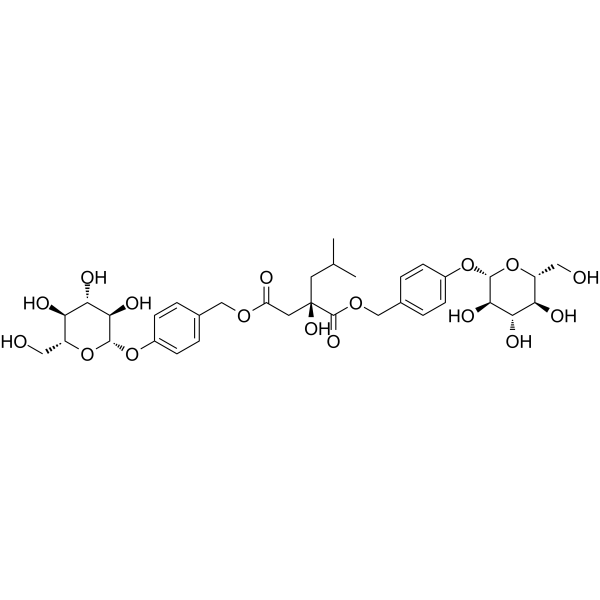
Militarine is a plant growth inhibitor and anti-inflammatory agent. Militarine inhibits the elongation of radicles and hypocotyls in seedlings of lettuce, Italian ryegrass and timothy grass. Militarine alleviates PM2.5-induced inflammatory injury and inhibits cell migration in human alveolar epithelial A549 cells by inhibiting the NF-κB signaling pathway, reducing oxidative stress and the release of inflammatory factors. Militarine can be used in studies related to PM2.5-induced pulmonary diseases .
|
-
- HY-B2050R
-
|
|
Reference Standards
Microtubule/Tubulin
Herbicide
|
Others
|
|
Trifluralin (Standard) is the analytical standard of Trifluralin. This product is intended for research and analytical applications. Trifluralin is a selective, preemergence, soil-applied herbicide providing control of many important annual grass and broadleaf weed species. Trifluralin prevents weed growth by inhibiting root development through the interruption of mitosis. Trifluralin binds to tubulin and results in the failure of spindle apparatus and cell plate formation. Trifluralin inhibits radicle development on roots. Trifluralin inhibits cell mitosis. Trifluralin is considered to be neurotoxic and haematotoxic .
|
-
- HY-B0860S
-
|
|
Isotope-Labeled Compounds
Herbicide
Reactive Oxygen Species (ROS)
MDM-2/p53
|
Cancer
|
|
Diuron-d6 is the deuterium labeled Diuron (HY-B0860). Diuron is an orally active phenylurea herbicide. Diuron inhibits photosynthesis in plants by blocking the formation of ATP and NADH. Diuron increases the production of ROS. Diuron increases expression of p53 in certain cell lines. Diuron has herbicidal activity against annual and perennial broadleaf weeds and grass weeds. Diuron promotes DMBA/BBN-induced bladder cancer. Diuron can be used in breast cancer research .
|
-
- HY-172151
-
|
|
Herbicide
Protoporphyrinogen IX oxidase
|
Others
|
|
PPO-IN-17 (Compound 6R) is the inhibitor protoporphyrinogen IX oxidase (PPO) that inhibits Nicotiana tobacco PPO (NtPPO) with Ki of 30.34 nM. PPO-IN-17 exhibits herbicidal activity that inhibits barnyardgrass (E. crus-galli), foxtail grass (D. sanguinalis), alfalfa (M. sativa) and Canada cocklebur (C. canadensis) (>95% inhibition rate at a concentration of 37.5 g/hm 2). PPO-IN-17 exhibits no toxicity on rice (at a concentration of 75 g/hm 2) or on honeybees (at a concentration of 6400 mg/kg) .
|
-
- HY-111664
-
|
(+)-Citronellal
|
Bacterial
Fungal
Insecticide
Taste Receptor
Opioid Receptor
|
Infection
Neurological Disease
Inflammation/Immunology
|
|
(R)-(+)-Citronellal ((+)-Citronellal) is a monoterpenoid compound and is one of the main components of essential oils from plants such as lemon grass. (R)-(+)-Citronellal has antibacterial, antifungal, and insecticidal activities. (R)-(+)-Citronellal alleviates the bitterness of caffeine by antagonizing the bitter taste receptors Tas2r43 (IC50 = 84 μM) and Tas2R46. (R)-(+)-Citronellal generates analgesic activity by activating the opioid receptor (broad-spectrum opioid receptor) pathway, and its effect is particularly significant for inflammatory pain .
|
-
- HY-W040194R
-
|
|
Herbicide
Reference Standards
|
Metabolic Disease
|
|
Clomazone (Standard) is the analytical standard of Clomazone (HY-W040194). This product is intended for research and analytical applications. Clomazone is a broad spectrum herbicide, mainly used to control annual broadleaf weeds and grass weeds in various crops such as rice, soybeans, and peanuts. Clomazone inhibits carotenoid biosynthesis, and treated plants show typical "albinism" symptoms due to the destruction of chloroplast membrane structure leading to chlorophyll degradation. Clomazone exhibits multiple toxic effects on non-target organisms, including aquatic lethality, developmental malformations, liver damage, mitochondrial dysfunction, and hematotoxicity.
|
-
- HY-B0860R
-
|
|
Herbicide
Reference Standards
Reactive Oxygen Species (ROS)
MDM-2/p53
|
Cancer
|
|
Diuron (Standard) is the analytical standard of Diuron (HY-B0860). This product is intended for research and analytical applications. Diuron is an orally active phenylurea herbicide. Diuron inhibits photosynthesis in plants by blocking the formation of ATP and NADH. Diuron increases the production of ROS. Diuron increases expression of p53 in certain cell lines. Diuron has herbicidal activity against annual and perennial broadleaf weeds and grass weeds. Diuron promotes DMBA/BBN-induced bladder cancer. Diuron can be used in breast cancer research .
|
-
- HY-W714178
-
|
|
Herbicide
|
Others
|
|
Aziprotryne is a post-emergence selective herbicide active against broadleaf weeds. When tank-mixed with Alachlor (HY-B2014), Aziprotryne provides longer-term weed control in field-grown cabbage plots .
|
-
- HY-122308R
-
|
|
Reference Standards
Others
|
Inflammation/Immunology
|
|
Militarine (Standard) is the analytical standard of Militarine (HY-122308). This product is intended for research and analytical applications. Militarine is a plant growth inhibitor and anti-inflammatory agent. Militarine inhibits the elongation of radicles and hypocotyls in seedlings of lettuce, Italian ryegrass and timothy grass. Militarine alleviates PM2.5-induced inflammatory injury and inhibits cell migration in human alveolar epithelial A549 cells by inhibiting the NF-κB signaling pathway, reducing oxidative stress and the release of inflammatory factors. Militarine can be used in studies related to PM2.5-induced pulmonary diseases .
|
-
- HY-W016937
-
|
ABOB
|
Influenza Virus
HSV
HCV
Apoptosis
Caspase
|
Infection
Inflammation/Immunology
|
|
Moroxydine (ABOB) is a broad-spectrum agent with multi-antiviral activities against DNA and RNA viruses, including influenza virus, herpes simplex, varicella zoster, measles, mumps disease, hepatitis C virus, etc. Moroxydine exhibits excellent antiviral activity and shows low cytotoxicity to cells infected by dsRNA viruses (grass carp reovirus, GCRV) and large DNA viruses (giant salamander iridovirus, GSIV). Moroxydine blocks the GCRV-induced cytopathic effects and eliminates nucleocapsids in ctenopharyngodon idella kidney (CIK) cells to keep the normal morphological structure. Moroxydine significantly inhibits the apoptosis, the caspase 3 activity, Bax expression and down-regulates Bcl-2 levels [1][2][3].
|
-
- HY-N10625A
-
|
5α-Cyprinol
|
Phosphatase
|
Metabolic Disease
|
|
Cyprinol (5α-Cyprinol) is an orally active bile salt and xenochemical pheromone . Cyprinol impairs renal function and increases plasma ALP activity in rats, induces diel vertical migration in Daphnia spp., enhances the permeability of the rectal mucosa to water-soluble compounds, and aids lipid digestion in fish. Cyprinol can be used in studies of fish toxicity and acute renal failure .
|
-
- HY-121139
-
|
2,2,3,3-Tetrafluoropropionic acid; 3H-Tetrafluoropropionic acid
|
Herbicide
|
Others
|
|
Flupropanate (2,2,3,3-Tetrafluoropropionic acid; 3H-Tetrafluoropropionic acid) is a soil-active selective herbicide and plant growth inhibitor that acts by inhibiting radicle growth and lipid biosynthesis in sensitive plants. Flupropanate exhibits high-efficiency control of Stipa weeds (such as Nassella neesiana and N. trichotoma) in pastures, and reduces the coverage of the invasive species Eragrostis curvula. Meanwhile, Flupropanate is sensitive to gramineous plants like ryegrass, but shows good selective tolerance to plantain, chicory and some leguminous plants. Studies show that in the protected area with Mediterranean climate in southwestern Australia, Flupropanate produces no significant non-target effects on native plant communities, functional groups or the endangered species Grevillea curviloba, indicating high ecological safety .
|
-
- HY-N17336
-
-
- HY-W713297
-
|
ABOB hydrochloride-d8
|
Influenza Virus
Isotope-Labeled Compounds
HCV
HSV
Apoptosis
Caspase
|
Infection
|
|
Moroxydine hydrochloride-d8 (ABOB hydrochloride-d8) is the deuterium labeled Moroxydine (ABOB) hydrochloride (HY-B0420A). Moroxydine hydrochloride is a broad-spectrum agent with multi-antiviral activities against DNA and RNA viruses, including influenza virus, herpes simplex, varicella zoster, measles, mumps disease, hepatitis C virus, etc. Moroxydine hydrochloride exhibits excellent antiviral activity and shows low cytotoxicity to cells infected by dsRNA viruses (grass carp reovirus, GCRV) and large DNA viruses (giant salamander iridovirus, GSIV). Moroxydine hydrochloride blocks the GCRV-induced cytopathic effects and eliminates nucleocapsids in ctenopharyngodon idella kidney (CIK) cells to keep the normal morphological structure. Moroxydine hydrochloride significantly inhibits the apoptosis, the caspase 3 activity, Bax expression and down-regulates Bcl-2 levels [1][2][3].
|
-
- HY-W040206
-
|
|
Environmental Pollutants
Acetolactate Synthase (ALS)
Herbicide
|
Others
|
|
Diflufenican is a Herbicide. Diflufenican inhibits phytoene desaturase (PDS) in the carotenoid synthesis pathway. Diflufenican suppresses the production of PDS, blocks carotenoid biosynthesis, thereby inducing chlorophyll destruction and cell membrane rupture, and ultimately causes the death of broadleaf weeds. The combination of Diflufenican and Flufenacet can be used to control Lolium rigidum populations resistant to ALS/ACCase .
|
-
- HY-185169
-
|
Quicaotong; Quinotrione; Y 13161
|
Herbicide
|
Others
|
|
Benquitrione (Quicaotong) is a highly selective herbicide. Benquitrione is used to control several common harmful weeds in sorghum fields .
|
-
- HY-W587839
-
|
|
Pregnane X Receptor (PXR)
|
Endocrinology
|
|
4,8-Dioxa-3H-perfluorononanoic acid is an ether-substituted polyfluoroalkyl compound and also a ligand of human pregnane X receptor (hPXR), which binds to the ligand-binding domain of hPXR. 4,8-Dioxa-3H-perfluorononanoic acid targets Arg-410, Lys-210, Lys-226, Met-323 and His-327 residues. Its binding process relies on long-range electrostatic interactions, and no significant hydrogen bonds form with hPXR residues. 4,8-Dioxa-3H-perfluorononanoic acid is used as a substitute for PFOA in Germany. 4,8-Dioxa-3H-perfluorononanoic acid is detectable in environmental matrices such as river water near fluoride production plants, accumulates in organisms including grass, deer liver and locusts, and is present in plasma samples of populations in southern Germany .
|
-
- HY-W008484
-
|
|
Environmental Pollutants
Herbicide
|
Infection
|
|
Aminopyralid is a synthetic auxin herbicide. Aminopyralid provides foliar and soil residual weed control, and also increases forage yield in bahiagrass pastures. When present as a soil residue, Aminopyralid causes phytotoxicity, reduced plant height, decreased flower number and fruit yield loss in rotated vegetable crops. Aminopyralid is registered for the control of annual and perennial broadleaf weeds in pastures, permanent grasslands and non-cropped areas .
|
-
| Cat. No. |
Product Name |
Type |
-
- HY-136830
-
|
Adenosine-5'-diphosphoglucose disodium
|
Biochemical Assay Reagents
|
|
ADP-Glucose disodiumIs an immediate precursor for the biosynthesis of storage polysaccharides in plants, green algae and cyanobacteria, and structural polysaccharides in some bacteria, by the addition of glucose. It is used to produce amylose, amylopectin, starch and other polysaccharides by amylose synthase or starch synthase in plastids. ADPGUsually produced in plastids, although it can be biosynthesized in the cytoplasm of some grasses and imported into plastids by membrane-bound transporters .
|
| Cat. No. |
Product Name |
Category |
Target |
Chemical Structure |
| Cat. No. |
Product Name |
Chemical Structure |
-
- HY-B1871S
-
|
|
|
Metolachlor-d6 is the deuterium labeled Metolachlor . Metolachlor is a pre-emergent selective, chloroacetanilide herbicide for the control of a variety of annual grass and broad leaf weeds in corn and other crops. Metolachlor is a chiral herbicide consisting of four stereoisomers .
|
-
-
- HY-N7091S2
-
|
|
|
Atrazine-d5 is deuterium labeled Atrazine. Atrazine is principally used for control of certain annual broadleaf and grass weeds. Atrazine inhibits photophosphorylation but typically does not result in lethality or permanent cell damage in the short term .
|
-
-
- HY-B1866S
-
|
|
|
Linuron-d6 is the deuterium labeled Linuron (HY-B1866). Linuron is a phenylurea herbicide that is widely used to control the growth of grass and weeds in various agriculture crops and in orchards. Linuron is a photosystem II inhibitor. Linuron is also a competitive androgen receptor (AR) antagonist with a Ki of 100 μM. Linuron shows reproductive toxicity in animals that acts as an endocrine disruptor .
|
-
-
- HY-B0860S
-
|
|
|
Diuron-d6 is the deuterium labeled Diuron (HY-B0860). Diuron is an orally active phenylurea herbicide. Diuron inhibits photosynthesis in plants by blocking the formation of ATP and NADH. Diuron increases the production of ROS. Diuron increases expression of p53 in certain cell lines. Diuron has herbicidal activity against annual and perennial broadleaf weeds and grass weeds. Diuron promotes DMBA/BBN-induced bladder cancer. Diuron can be used in breast cancer research .
|
-
-
- HY-B0862S
-
|
|
|
Pendimethalin-d5 is the deuterium labeled Pendimethalin . Pendimethalin is an herbicide that controls annual grasses and certain broadleaf weeds. Pendimethalin inhibits cell division and cell elongation .
|
-
-
- HY-W725473
-
|
|
|
Oxyfluorfen-d5 is deuterated labeled Oxyfluorfen (HY-119176) Oxyfluorfen is a pre- and post-emergence diphenyl ether herbicide to control annual broad-leaved and grass weeds. Oxyfluorfen is a protoporphyrinogen oxidase inhibitor and inhibits photosynthesis by blocking chlorophyll synthesis.
|
-
-
- HY-B1859S1
-
|
|
|
Isoproturon-d3 is the deuterium labeled Isoproturon . Isoproturon belongs to the phenylurea herbicide family and is a systemic and selective herbicide. Isoproturon is widely applied for killing weeds in farmland, which can be used in the control of annual grasses and broad-leaved weeds in spring and winter wheat, winter rye and spring and winter barley .
|
-
-
- HY-136375S
-
|
|
|
Cyanazine-d5 is deuterium labeled Cyanazine. Cyanazine, a triazine herbicide cyanazine, is used to control a variety of grass weeds and broadleaf weed. Cyanazine is proved non-genotoxic .
|
-
-
- HY-133085S
-
|
|
|
Rimsulfuron-d6 is deuterium labeled Rimsulfuron. Rimsulfuron (DPX-E9636) is a sulfonylurea herbicide for postemergence use in maize to control grasses and some broadleaf weeds .
|
-
-
- HY-N7091S
-
|
|
|
Atrazine- 15N is the 15N-labeled Atrazine. Atrazine is principally used for control of certain annual broadleaf and grass weeds. Atrazine inhibits photophosphorylation but typically does not result in lethality or permanent cell damage in the short term .
|
-
-
- HY-B0866S
-
|
|
Ametryn- 13C,d3 is the 13C- and deuterium labeled Ametryn. Ametryn, a member of the Triazine chemical family, is a herbicide which inhibits photosynthesis and other enzymatic processes. Ametryn is effective against annual broadleaf weeds and grasses .
|
-
-
- HY-W713975
-
|
|
|
Metolachlor-d11 is the deuterium labeled Metolachlor (HY-B1871). Metolachlor is a pre-emergent selective, chloroacetanilide herbicide for the control of a variety of annual grass and broad leaf weeds in corn and other crops. Metolachlor is a chiral herbicide consisting of four stereoisomers .
|
-
-
- HY-136380S
-
|
|
|
Clodinafop-propargyl- 13C6 is the 13C-labeled Clodinafop-propargyl (HY-136380). Clodinafop-propargyl, an aryloxyphenoxy-propionate herbicide, is used for postemergence control of annual grasses in cereals. Clodinafop-propargyl has organ toxicity and developmental toxicity .
|
-
-
- HY-N7091S1
-
|
|
|
Atrazine- 13C3, 15N3 is the 13C-labeled and 15N-labeled Atrazine. Atrazine is principally used for control of certain annual broadleaf and grass weeds. Atrazine inhibits photophosphorylation but typically does not result in lethality or permanent cell damage in the short term .
|
-
-
- HY-B1856S
-
|
|
|
Haloxyfop-d4 is deuterium labeled Haloxyfop. Haloxyfop is an aryloxyphenoxypropionic acid herbicide and is widely used in grass weeds in broad-leaf crops . Haloxyfop inhibits the acetyl coenzyme A carboxylase (EC 6.4.1.2) from corn seedling chloroplasts with an IC50 of 0.5 μM, but has no effect on this enzyme in pea .
|
-
-
- HY-W721637
-
|
|
|
Foramsulfuron-d6-1 is the deuterium labeled Foramsulfuron (HY-W422402). Foramsulfuron is a postemergence herbicide used for selective control of grass and some broadleaved weeds in maize (Zea mays L.). Foramsulfuron is a sulfonylurea herbicide that exerts its herbicidal activity by inhibiting acetolactate synthase (ALS), a key enzyme in the biosynthesis of branched chain amino acids .
|
-
-
- HY-B1859S2
-
|
|
|
Isoproturon-d6-1 is the deuterium labeled Isoproturon (HY-B1859). Isoproturon belongs to the phenylurea herbicide family and is a systemic and selective herbicide. Isoproturon is widely applied for killing weeds in farmland, which can be used in the control of annual grasses and broad-leaved weeds in spring and winter wheat, winter rye and spring and winter barley .
|
-
-
- HY-Y1129S
-
|
|
|
3-Hydroxypyridine-d4 is the deuterium labeled 3-Hydroxypyridine (HY-Y1129). 3-Hydroxypyridine is a compound that can be isolated from bamboo grass. As an endogenous photosensitizer present in human skin, 3-hydroxypyridine can mediate oxidative stress, proliferation inhibition and apoptosis of skin cells through UVA/UVB excitation .
|
-
-
- HY-B2050S
-
|
|
|
Trifluralin-d14 is the deuterium labeled Trifluralin. Trifluralin is a selective, preemergence, soil-applied herbicide providing control of many important annual grass and broadleaf weed species. Trifluralin prevents weed growth by inhibiting root development through the interruption of mitosis. Trifluralin binds to tubulin and results in the failure of spindle apparatus and cell plate formation. Trifluralin inhibits radicle development on roots. Trifluralin inhibits cell mitosis. Trifluralin is considered to be neurotoxic and haematotoxic .
|
-
-
- HY-W713297
-
|
|
|
Moroxydine hydrochloride-d8 (ABOB hydrochloride-d8) is the deuterium labeled Moroxydine (ABOB) hydrochloride (HY-B0420A). Moroxydine hydrochloride is a broad-spectrum agent with multi-antiviral activities against DNA and RNA viruses, including influenza virus, herpes simplex, varicella zoster, measles, mumps disease, hepatitis C virus, etc. Moroxydine hydrochloride exhibits excellent antiviral activity and shows low cytotoxicity to cells infected by dsRNA viruses (grass carp reovirus, GCRV) and large DNA viruses (giant salamander iridovirus, GSIV). Moroxydine hydrochloride blocks the GCRV-induced cytopathic effects and eliminates nucleocapsids in ctenopharyngodon idella kidney (CIK) cells to keep the normal morphological structure. Moroxydine hydrochloride significantly inhibits the apoptosis, the caspase 3 activity, Bax expression and down-regulates Bcl-2 levels [1][2][3].
|
-
-
- HY-121427S
-
|
|
|
Fluazifop-d3 is the deuterium labeled Fluazifop (HY-121427). Fluazifop is a grass-selective herbicide via inhibiting acetyl-CoA carboxylase .
|
-
-
- HY-W746295
-
|
|
|
3-Hydroxypyridine-d5 is the deuterium labeled 3-Hydroxypyridine (HY-Y1129). 3-Hydroxypyridine is a compound that can be isolated from bamboo grass. As an endogenous photosensitizer present in human skin, 3-hydroxypyridine can mediate oxidative stress, proliferation inhibition and apoptosis of skin cells through UVA/UVB excitation .
|
-
| Cat. No. |
Product Name |
|
Classification |
-
- HY-136380
-
|
|
|
Alkynes
|
|
Clodinafop-propargyl, a main member of aryloxyphenoxy-propionate herbicides, is used for postemergence control of annual grasses in cereals, including Avena, Lolium, Setaria, Phalaris and Alopecurus spp . Clodinafop-propargyl is a click chemistry reagent, it contains an Alkyne group and can undergo copper-catalyzed azide-alkyne cycloaddition (CuAAc) with molecules containing Azide groups. Clodinafop-propargyl has developmental toxicity to zebrafish embryos .
|
-
- HY-136380S
-
|
|
|
Alkynes
|
|
Clodinafop-propargyl- 13C6 is the 13C-labeled Clodinafop-propargyl (HY-136380). Clodinafop-propargyl, an aryloxyphenoxy-propionate herbicide, is used for postemergence control of annual grasses in cereals. Clodinafop-propargyl has organ toxicity and developmental toxicity .
|
-
- HY-158986
-
|
|
|
Alkynes
|
|
(E,E)-2,4-Undecadien-8,10-diynoic acid isobutylamide is a natural compound found in Acmella oleracea and is a plant growth inhibitor. (E,E)-2,4-Undecadien-8,10-diynoic acid isobutylamide inhibits the growth of cress roots and shoots and barnyard grass roots .
|
-
- HY-W683412
-
|
|
|
Alkynes
|
|
(Rac)-Clodinafop-propargyl is the racemic form of Clodinafop-propargyl (HY-136380). Clodinafop-propargyl is an arylphenoxypropionic acid herbicide that can be used to control the emergence of annual grasses .
|
-
- HY-W714178
-
|
|
|
Azide
|
|
Aziprotryne is a post-emergence selective herbicide active against broadleaf weeds. When tank-mixed with Alachlor (HY-B2014), Aziprotryne provides longer-term weed control in field-grown cabbage plots .
|
Your information is safe with us. * Required Fields.
Inquiry Information
- Product Name:
- Cat. No.:
- Quantity:
- MCE Japan Authorized Agent:

