




1. Search Result
Search Result
Results for "

human islet

" in MedChemExpress (MCE) Product Catalog:

27

Inhibitors & Agonists

1

Fluorescent Dyes

12

Peptides

1

Inhibitory Antibodies

1

Natural
Products

12

Recombinant Proteins

2

Antibodies

3

Oligonucleotides

Cat. No. Product Name Target Research Areas Chemical Structure
  • HY-P3375

    IBI-362; LY-3305677; OXM-3

    GCGR GLP Receptor Metabolic Disease
    Mazdutide (IBI-362; LY-3305677) is a long-acting synthetic oxyntomodulin analog. Mazdutide is also a co-agonist of glucagon-like peptide (GLP-1R) and glucagon receptor (GCGR). Mazdutide binds human and mouse GCGR (Ki: 17.7 nM and 15.9 nM, respectively) and GLP-1R (Ki: 28.6 nM and 25.1 nM, respectively) and stimulates insulin secretion from mouse islets (EC50: 5.2 nM). Mazdutide is used in studies of obesity and type 2 diabetes (T2D) .
    Mazdutide
  • HY-150105

    BMF-219; Menin-MLL inhibitor 21

    Epigenetic Reader Domain Metabolic Disease Inflammation/Immunology Cancer
    Icovamenib (BMF-219) is a selective, orally active, irreversible Menin inhibitor. Icovamenib forms a stable and irreversible covalent bond with Menin. Icovamenib promotes selective and controlled proliferation of beta cells and improvement of beta cell function in ex vivo human islet cultures. Icovamenib enhances glycemic control in animal diabetic models. Icovamenib induces a dose-dependent enhancement in insulin secretion potentiated by the GLP-1 RA. Icovamenib can be used for the study of multiple hematologic malignancies, solid tumors, and diabetes mellitus, such as diffuse large B-cell lymphoma (DLBCL), multiple myeloma (MM) and chronic lymphocytic leukemia and type 2 diabetes .
    Icovamenib
  • HY-15671

    Glucokinase Metabolic Disease
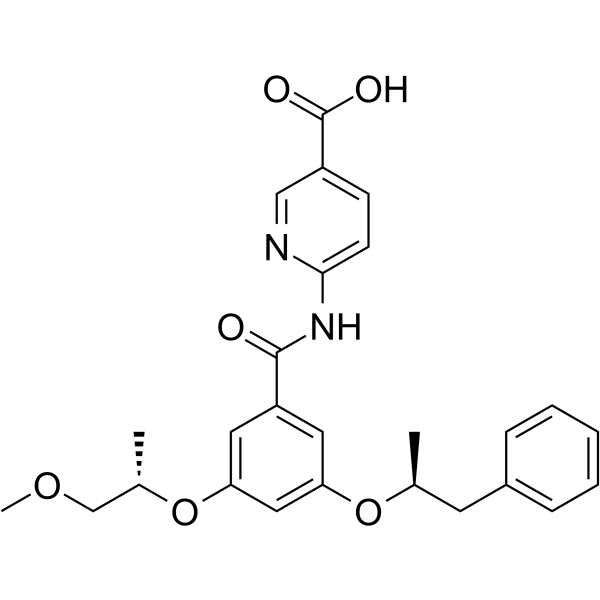
    GKA50 is a potent glucokinase activator (EC50=33 nM at 5 mM glucose). GKA50 stimulates insulin release from mouse islets of Langerhans. GKA50 is a glucose-like activator of beta-cell metabolism in rodent and human islets and a Ca 2+-dependent modulator of insulin secretion. GKA50 shows significant glucose lowering in high fat fed female rats .
    GKA50
  • HY-P3375A

    IBI-362 TFA; LY-3305677 TFA; OXM-3 TFA

    GCGR GLP Receptor Metabolic Disease
    Mazdutide (IBI-362; LY-3305677) TFA is a long-acting synthetic oxyntomodulin analog. Mazdutide is also a co-agonist of glucagon-like peptide (GLP-1R) and glucagon receptor (GCGR). Mazdutide TFA binds human and mouse GCGR (Ki: 17.7 nM and 15.9 nM, respectively) and GLP-1R (Ki: 28.6 nM and 25.1 nM, respectively) and stimulates insulin secretion from mouse islets (EC50: 5.2 nM). Mazdutide TFA is used in studies of obesity and type 2 diabetes (T2D) .
    Mazdutide TFA
  • HY-19694

    Insulin Receptor Endocrinology
    BRD7552, a potent PDX1 transcription factor inducer, upregulates PDX1 expression in both primary human islets and ductal cells, and induces epigenetic changes in the PDX1 promoter consistent with transcriptional activation. BRD7552 increases insulin expression. PDX1 is a key transcription factor involved in pancreas development and β cell function .
    BRD7552
  • HY-12462

    Keap1-Nrf2 Inflammation/Immunology
    WS3 is a novel proliferative molecule that promotes pancreatic β cell proliferation in rodent and human primary islets. WS3 can be used for the research of type 1 diabetes .
    WS3
  • HY-106288

    PTHR Cancer
    Human PTHrP-(1-36) is a secretory form of PTHrP with anticalciuric effects. Human PTHrP-(1-36) enhances beta cell function and proliferation. Human PTHrP-(1-36) can be used in the research of humoral hypercalcemia of malignancy (HHM) and hyperparathyroidism .
    Human PTHrP-(1-36)
  • HY-120565

    G protein-coupled Bile Acid Receptor 1 Metabolic Disease
    WB403 is an orally active TGR5 activator with an EC50 of 5.5 μM against human TGR5. WB403 activates TGR5 to stimulate downstream signaling pathways, promote GLP-1 secretion, improve glucose tolerance in mice with type 2 diabetes, and reduce levels of fasting blood glucose, postprandial blood glucose and HbA1c. WB403 increases pancreatic β-cell mass and restores the distribution of α-cells and β-cells in islets. WB403 is applicable to the research of type 2 diabetes .
    WB403
  • HY-P2632

    RADA16

    Biochemical Assay Reagents Neurological Disease
    RAD16-I (RADA16) is a non-directed self-assembling peptide hydrogel. Under physiological conditions, RAD16-I spontaneously forms a three-dimensional nanofiber network that mimics the extracellular matrix, and possesses excellent properties such as high water content, biocompatibility and degradability. RAD16-I serves as an ideal scaffold for three-dimensional cell culture. RAD16-I not only maintains cell viability and induces self-organization, but also supports cell adhesion, proliferation, differentiation and insulin secretion, effectively stabilizes islet clusters and promotes directed differentiation of the cardiac lineage. RAD16-I can construct a cell-friendly nano-microenvironment for research related to diseases such as myocardial infarction and diabetes .
    RAD16-I
  • HY-P2612

    TNF Receptor RANKL/RANK Apoptosis Inflammation/Immunology
    WP9QY is an inhibitor targeting TNFα and RANKL, which blocks the TNFα-TNFR1 interaction and inhibits TNFα-mediated apoptosis, cytotoxicity and bone destruction. WP9QY inhibits osteoclastogenesis and promotes osteoblast differentiation, induces chondrocyte proliferation and glycosaminoglycan production, and synergizes with TGF-β3 to promote chondrogenesis. WP9QY effectively repairs full-thickness articular cartilage defects in rabbits via intra-articular injection, and inhibits methylmercury-induced reduction of NeuN-positive cells in mouse brain slices. WP9QY can be applied to the research of diseases related to methylmercury-induced neuronal death, cartilage injury, osteoarthritis and bone loss .
    WP9QY
  • HY-125662A

    Reactive Oxygen Species (ROS) Apoptosis Metabolic Disease
    BMX-001, a novel redox-active metalloporphyrin, improves islet function and engraftment in a murine transplant model. BMX-001 reduces apoptosis in human and murine islets. BMX-001 significantly improves static-glucose stimulated insulin secretion (sGSIS) responses in murine islets. BMX-001 can significantly restore euglycemia in murine islet studies in the presence of the MnSOD. BMX-001 reduces the generation of ROS in a murine islet isolation and culture model .
    BMX-001
  • HY-P5074

    GCGR Metabolic Disease
    GRPP (human) is a 30 amino acid Gcg-derived peptide. GRPP (human) causes slight increases in plasma insulin and decreases in plasma glucagon. GRPP (human) does not affect insulin secretion in rat islets .
    GRPP (human)
  • HY-P3926

    hIAPP (8-37)

    Amylin Receptor Metabolic Disease
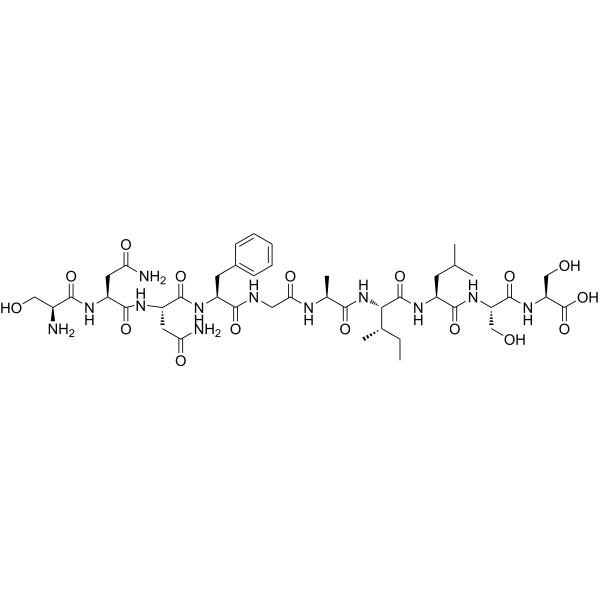
    Amylin (8-37) (human) (hIAPP (8-37)) is a 8-37 fragment of human islet amyloid polypeptide (IAPP). The duplex folding structure in the Amylin (8-37) (human) assembly has a hairpin structure .
    Amylin (8-37) (human)
  • HY-P991455

    TNF Receptor Cancer
    PTX-35 is a human IgG monoclonal antibody (mAb) targeting TNFRSF25. PTX-35 reduces the suppressive activity of regulatory T cells and enhances CD4+ T cell effector responses in a mouse melanoma model. PTX-35 can be used in Islet cell transplant rejection and Solid tumours research. Recommended isotype control: Human IgG1 lambda2, Isotype Control (HY-P990096) .
    PTX-35
  • HY-P3864

    Insulin Receptor Metabolic Disease
    Pancreastatin (37-52), human is a pancreastatin fragment. Pancreastatin a CgA-derived peptide (CgA residues 250–301) with biological activity, inhibited the releasing of insulin by islet beta cells .
    Pancreastatin (37-52), human
  • HY-P11043

    GLP Receptor Neuropeptide Y Receptor Arrestin Metabolic Disease
    GEP44 is a peptide biased triple agonist targeting Glucagon-like peptide 1 receptor (GLP-1R), neuropeptide Y1 Receptor (Y1-R), and neuropeptide Y2 Receptor (Y2-R). GEP44 induces Y1-R antagonist-controlled, GLP-1R-dependent stimulation of insulin secretion in both rat and human pancreatic islets by counteracting effects of Y1-R and GLP-1R agonism. GEP44 promotes insulin-independent Y1-R-mediated glucose uptake in muscle tissue and significantly reduces food intake and body weight in diet-induced obese rat models. GEP44 can be used for obesity and type 2 diabetes mellitus research .
    GEP44
  • HY-174557

    mRNA Metabolic Disease
    Human PAX6 mRNA encodes the human paired box 6 (PAX6) protein, a member of the paired box (PAX) family. PAX6 may play an important role in the development of the eye, nose, central nervous system and pancreas. It is also required for the differentiation of pancreatic islet alpha cells.
    Human PAX6 mRNA
  • HY-16673

    GPR119 Metabolic Disease
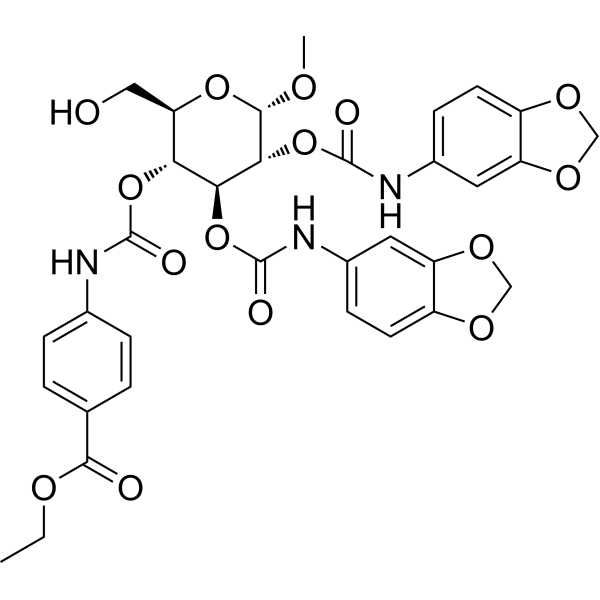
    PSN632408, a selective, orally active GPR119 agonist, shows similar potency to OEA at both recombinant mouse and human GPR119 receptors (EC50=5.6 and 7.9 uM, respectively). PSN632408 can stimulate β-cell replication and improve islet graft function. PSN632408 has the potential for the research of obesity and related metabolic disorders .
    PSN632408
  • HY-15671A

    Glucokinase Metabolic Disease
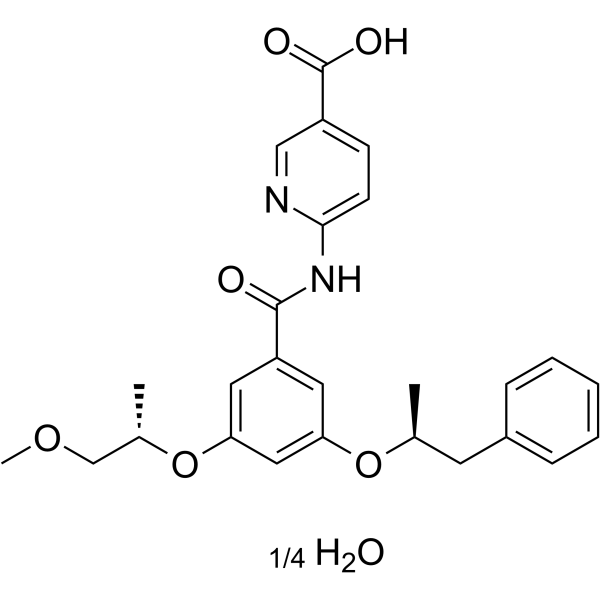
    GKA50 quarterhydrate is a potent glucokinase activator (EC50=33 nM at 5 mM glucose) and stimulates insulin release from mouse islets of Langerhans. GKA50 quarterhydrate is a glucose-like activator of beta-cell metabolism in rodent and human islets and a Ca 2+-dependent modulator of insulin secretion. GKA50 quarterhydrate shows significant glucose lowering in high fat fed female rats .
    GKA50 quarterhydrate
  • HY-174559

    mRNA Metabolic Disease
    Human PAX4 mRNA encodes the human paired box 4 (PAX4) protein, a member of the paired box (PAX) family. PAX4 is involved in pancreatic islet development and mouse studies have demonstrated a role for this gene in differentiation of insulin-producing beta cells.
    Human PAX4 mRNA
  • HY-P4873

    Amylin Receptor Neurological Disease
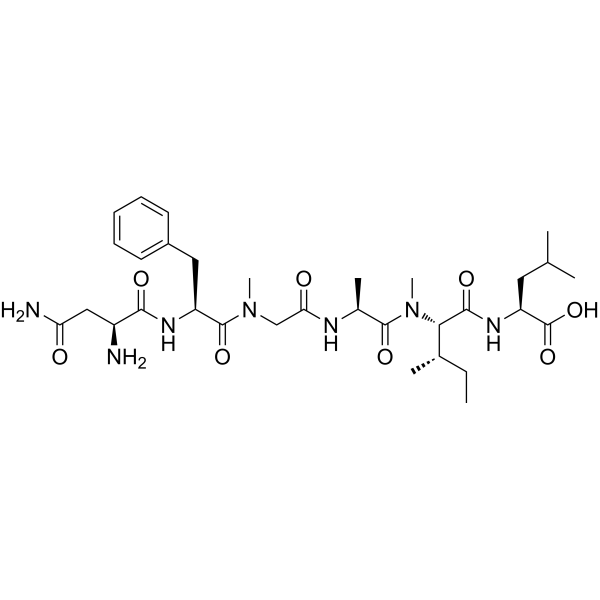
    Amylin (20-29) (human) is the fragment of human islet amyloid polypeptide (hIAPP) or Amylin. Amylin is a 37-residue hormone. Amylin (20-29) (human) is responsible for the amyloidogenic propensities of the full length protein. Amylin (20-29) (human) can be transformed into its corresponding peptoid and retropeptoid sequences, to obtain beta-sheet breaker peptides as amyloid inhibitors .
    Amylin (20-29) (human)
  • HY-174547

    mRNA Metabolic Disease
    Human PDX1 mRNA encodes the human pancreatic and duodenal homeobox 1 (PDX1) protein, a transcriptional activator of several genes, including insulin, somatostatin, glucokinase, islet amyloid polypeptide, and glucose transporter type 2. PDX1 may be involved in the early development of the pancreas. It also plays a major role in glucose-dependent regulation of insulin gene expression.
    Human PDX1 mRNA
  • HY-113513

    Others Cancer
    5(S)-HEPE is an active metabolite of eicosapentaenoic acid. It is formed from EPA by 5-lipoxygenase (5-LO). 5(S)-HEPE is an agonist of G protein-coupled receptor 119 (GPR119). It increases cAMP accumulation in CHO-K1 cells expressing human GPR119 when used at a concentration of 10 μM. 5(S)-HEPE increases glucose-induced insulin secretion from MING6 insulinoma pancreatic islets and glucagon-like peptide 1 (GLP-1) secretion from HuTu 80 adenocarcinoma cells when used at a concentration of 10 μM. Serum levels of 5(S)-HEPE are elevated in patients with hyperlipidemia.
    5-HEPE
  • HY-180425

    Amylin Receptor Apoptosis Metabolic Disease
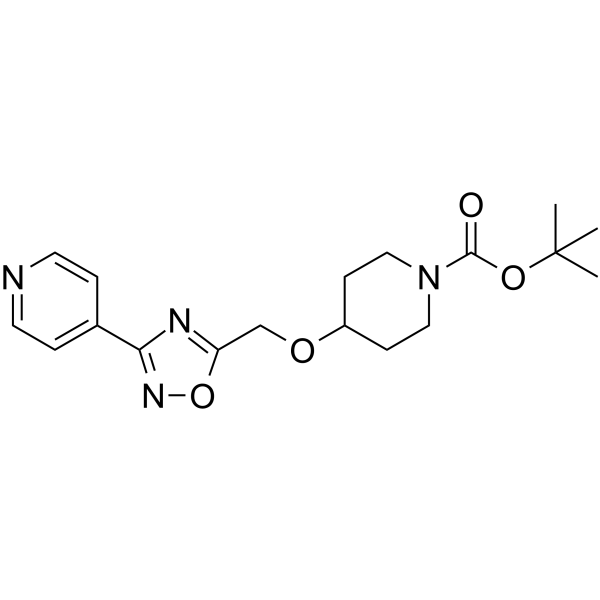
    Cloridarol is a human islet amyloid peptide (hIAPP) inhibitor that prevents its abnormal misfolding and aggregation. Cloridarol can increase cell viability, inhibit apoptosis, and protect islet β-cells from hIAPP-induced cell toxicity. Cloridarol can be used for the research of type 2 diabetes (T2D) .
    Cloridarol
  • HY-D3174

    Fluorescent Dye Metabolic Disease Inflammation/Immunology
    PiF is a fluorescent probe with high specificity for pancreatic β-cells (Ex/Em = 535 nm/565 nm), and its fluorescence signal increases significantly with elevated insulin concentrations in in vitro experiments. PiF enables visualization of rat and human islets transplanted via the portal vein in mouse livers with low liver background signals. The fluorine atom of PiF can be replaced by radioactive 18F to prepare a PET tracer. PiF can be used for research on type 1 diabetes .
    PiF
  • HY-106288R

    PTHR Reference Standards Cancer
    Human PTHrP-(1-36) (Standard) is the analytical standard of Human PTHrP-(1-36) (HY-106288). This product is intended for research and analytical applications. Human PTHrP-(1-36) is a secretory form of PTHrP with anticalciuric effects. Human PTHrP-(1-36) enhances beta cell function and proliferation. Human PTHrP-(1-36) can be used in the research of humoral hypercalcemia of malignancy (HHM) and hyperparathyroidism .
    Human PTHrP-(1-36) (Standard)
  • HY-164111

    JAK Neurological Disease
    JNK-IN-17 (Compound 9J) is a selective and potent JNK inhibitor with IC50 values of 0.039, 0.079 μM for JNK1 and JNK3. JNK-IN-17 can inhibit c-Jun phosphorylation with an IC50 of 0.082 μM in Streptozotocin (HY-13753)-infuced INS-1 pancreatic islet β cells. JNK-IN-17 shows inhibition rate ≤ 33% on the four main P450 subtypes (2C9, 2D6, 3A4, 1A2) in human liver microsomes, indicating a relatively low risk of drug interactions. JNK-IN-17 can be used for researches of neurological and metabolic disease, such as Parkinson's disease .
    JNK-IN-17

Inquiry Online

Your information is safe with us. * Required Fields.

Salutation


Country or Region *

Applicant Name *


Organization Name *

Department *


Email Address *


Product Name *

Cat. No.


Requested quantity *

Phone Number *


Remarks

Inquiry Online

Inquiry Information

Product Name:
Cat. No.:
Quantity:
MCE Japan Authorized Agent:

