19 Results for "

human melanoma cell lines

" in MedChemExpress (MCE) Product Catalog:
Products (19)

19 Results for "human melanoma cell lines" in MCE Product Catalog:

2
2 Cited Publications
Cat. No.: HY-119272
CAS No.: 342808-40-6
Purity:  99.34%
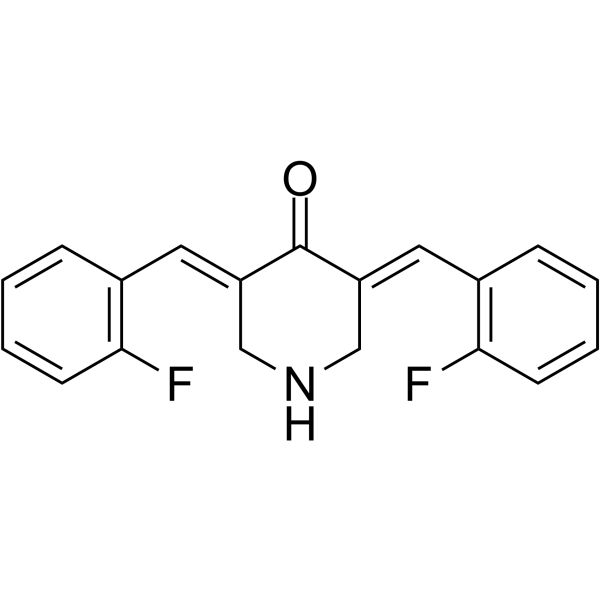
EF24, a curcumin analogue, is an NF-kB inhibitor with great anti-tumor efficacy and oral bioavailability via deactivation of the MAPK/ERK signaling pathway in oral squamous cell carcinoma (OSCC). EF24 is active against melanoma and breast cancer cell lines with GI50 values of 0.7 μM and 0.8 μM, respectively. EF24 induces cell cycle arrest and apoptosis in MDA-MB-231 human breast cancer cells and DU-145 human prostate cancer cells. EF24 increases the levels of activated caspase 3 and 9, and decreases the phosphorylated forms of MEK1 and ERK .
loading...
    loading...
1
1 Cited Publications
Cat. No.: HY-N2466
CAS No.: 75921-69-6
Synonyms: MT-I; [Nle4,D-Phe7]-α-MSH
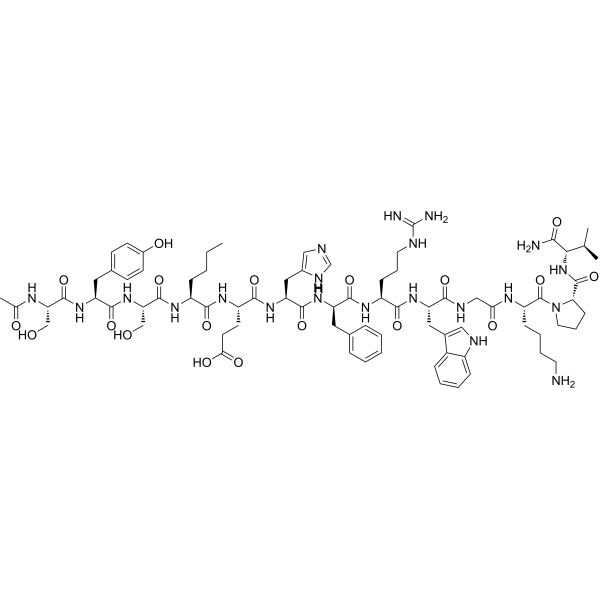
Melanotan I (MT-I; [Nle4,D-Phe7]-α-MSH) is an α-MSH (HY-P0252) analog, synthetic melanotropic peptide, and melanocortin receptor (MCR) agonist. Melanotan I induces skin tanning by mimicking the action of α-MSH on the melanocortin 1 receptor (MC1R) in melanocytes. As an appetite suppressant, Melanotan I impairs the ability of insulin to inhibit endogenous glucose production, suppresses leptin secretion from adipose tissue, and thereby reduces voluntary feed intake in ewes. Melanotan I can be used in research related to UV-induced skin damage, polymorphic light eruption, ruminant feeding, and sexual dysfunction .
loading...
    loading...
1
1 Cited Publications
Cat. No.: HY-N2466A
CAS No.: 1566590-77-9
Synonyms: MT-I acetate; [Nle4,D-Phe7]-α-MSH acetate
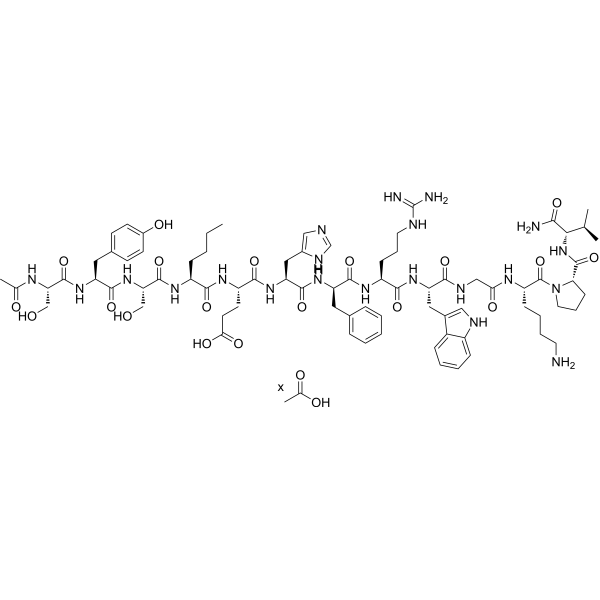
Melanotan I (MT-I; [Nle4,D-Phe7]-α-MSH) acetate is an α-MSH (HY-P0252) analog, synthetic melanotropic peptide, and melanocortin receptor (MCR) agonist. Melanotan I acetate induces skin tanning by mimicking the action of α-MSH on the melanocortin 1 receptor (MC1R) in melanocytes. As an appetite suppressant, Melanotan I acetate impairs the ability of insulin to inhibit endogenous glucose production, suppresses leptin secretion from adipose tissue, and thereby reduces voluntary feed intake in ewes. Melanotan I acetate can be used in research related to UV-induced skin damage, polymorphic light eruption, ruminant feeding, and sexual dysfunction .
loading...
    loading...
Cat. No.: HY-100948
CAS No.: 1861449-70-8
Purity:  98.16%
Target:  

Myosin

Research Areas:  

Cancer

ATM-3507 is a potent tropomyosin inhibitor with IC50s from 3.83-6.84 μM in human melanoma cell lines.
loading...
    loading...
Cat. No.: HY-121382
CAS No.: 639-14-5
Purity:  99.51%
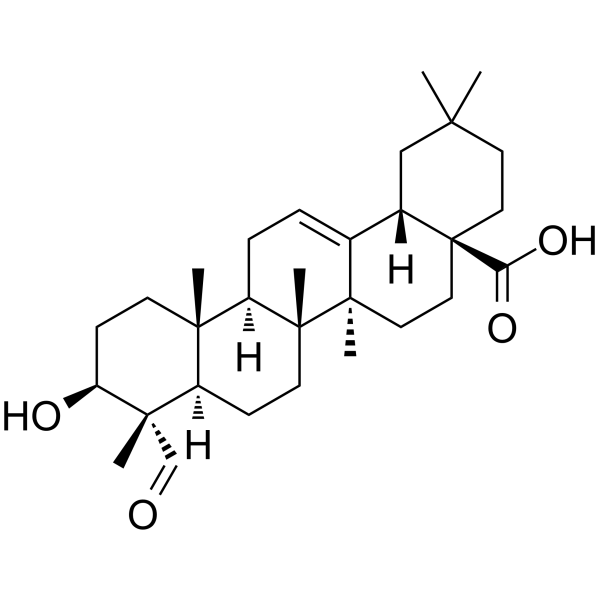
Gypsogenin is a selective mixed-type BChE inhibitor (Ki=19.99 μM) that also exhibits significant cytotoxicity against various human cancer cell lines. Gypsogenin inhibits tumor growth by inducing cell cycle arrest and triggering apoptosis. Gypsogenin displays antibacterial activity against bacteria such as Bacillus subtilis and Bacillus thuringiensis, and often serves as a key parent nucleus for the synthesis of anticancer compounds. Gypsogenin is widely used in research on Alzheimer's disease and various cancers including colon cancer, melanoma, and leukemia .
loading...
    loading...
Cat. No.: HY-N10423
CAS No.: 18423-69-3
Synonyms: (-)-Cubebin
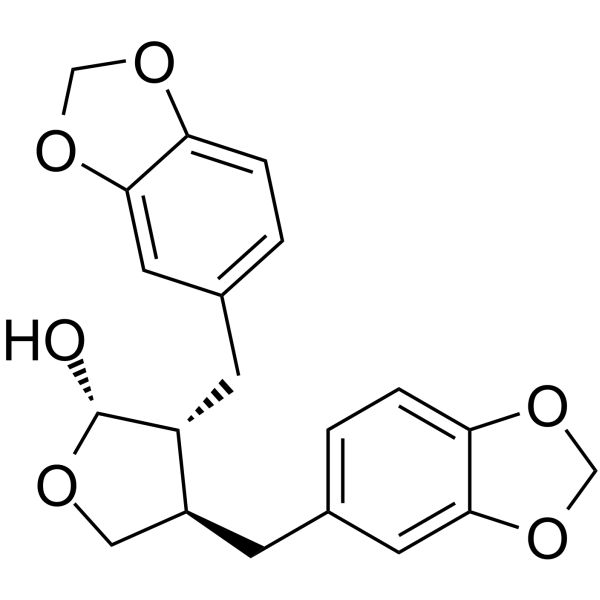
Cubebin ((-)-Cubebin), a dibenzyl butyrolactone lignan, is an orally active AChE inhibitor. Cubebin binds to active sites of NF-κB, TNF-α, and TGF-β1 via hydrogen and hydrophobic interactions, obstructing critical residues to inhibit pro-inflammatory or renal fibrosis-related activity. Cubebin enhances p38 MAPK phosphorylation to increase tyrosinase gene expression, stimulating melanogenesis via elevated tyrosinase activity, expression, and mRNA levels. Cubebin reduces oxidative stress via enhanced endogenous antioxidant enzyme activity and inhibited lipid peroxidation, regulates lipid metabolism, improves glycemic control, and exerts renoprotective effects via reduced renal dysfunction markers and improved renal architecture. Cubebin shows antimicrobial activity. Cubebin exerts larvicidal activity against Angiostrongylus cantonensis larvae, with no cytotoxicity toward monkey or human cell lines or Caenorhabditis elegans. Cubebin can be used for the research of diabetic nephropathy, melanoma, colon adenocarcinoma, neuroangiostrongyliasis, Alzheimer’s disease (AD) and depression .
loading...
    loading...
Cat. No.: HY-100948B
CAS No.: 2438679-30-0
Target:  

Myosin

Research Areas:  

Cancer

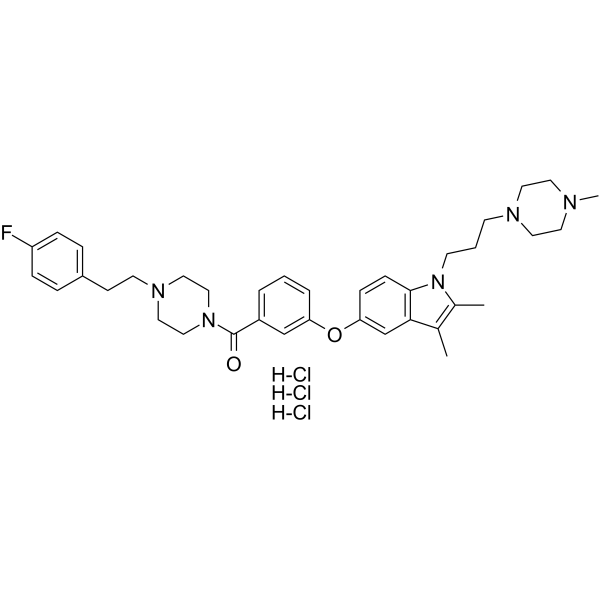
ATM-3507 trihydrochloride is a potent tropomyosin inhibitor with IC50s from 3.83-6.84 μM in human melanoma cell lines.
loading...
    loading...
MDM4-targeting ASO sodium
0 Images
MDM4-targeting ASO (sodium)
Cat. No.: HY-158830
MDM4-targeting ASO sodium is a 25mer antisense oligonucleotide targeting MDM4. MDM4-targeting ASO sodium induced exon 6 skipping, leading to nonsense-mediated decay of the mRNA transcript that excludes exon-6. In multiple human melanoma cell lines and in melanoma patient-derived xenograft (PDX) mouse models, MDM4-targeting ASO-mediated skipping of exon 6 decreased MDM4 abundance, inhibited melanoma growth, and enhanced sensitivity to MAPK-targeting therapeutics.
loading...
    loading...
Cat. No.: HY-N12834
CAS No.: 1887196-18-0
Ecdysoside B (compound 6b) is a pregnanoside compound isolated from the plant Ecdysanthera rosea. Ecdysoside B and its derivatives and isomers shows anticancer, immunosuppressive and anti-inflammatory activities. Ecdysoside B shows cytotoxicity to a variety of human tumor cell lines, including PANC-1 (human pancreatic cancer cells), A375 (human melanoma cells) and U87 (brain glioma U87 cells). Ecdysoside B can be used for research in the areas of cancer, immunomodulation and anti-inflammato .
loading...
    loading...
Cat. No.: HY-W854934
CAS No.: 114231-14-0
Target:  

Microtubule/Tubulin

Research Areas:  

Cancer

IKP-104 is a microtubule/tubulin inhibitor (IC50 = 1.31 μM). IKP-104 arrests cells in mitosis and the M phase by inhibiting microtubule polymerization and inducing cytoskeletal microtubule depolymerization. IKP-104 inhibits the growth of mouse and human tumor cell lines. IKP-104 exhibits anti-tumor effects in mouse ascites tumors and lung cancer models. IKP-104 is useful in the research of cancers such as leukemia, lung cancer and melanoma .
loading...
    loading...
Cat. No.: HY-121382R
CAS No.: 639-14-5
Cinosulfuron (Standard) is the analytical standard of Cinosulfuron. This product is intended for research and analytical applications. Gypsogenin is a selective mixed-type BChE inhibitor (Ki=19.99 μM) that also exhibits significant cytotoxicity against various human cancer cell lines. Gypsogenin inhibits tumor growth by inducing cell cycle arrest and triggering apoptosis. Gypsogenin displays antibacterial activity against bacteria such as Bacillus subtilis and Bacillus thuringiensis, and often serves as a key parent nucleus for the synthesis of anticancer compounds. Gypsogenin is widely used in research on Alzheimer's disease and various cancers including colon cancer, melanoma, and leukemia .
loading...
    loading...
Cat. No.: HY-117991
CAS No.: 1804982-31-7
Target:  

VEGFR

Research Areas:  

Cancer

DW10075 is a highly selective and orally active VEGFR inhibitor targeting the VEGF/VEGFR pathway. DW10075 selectively inhibits VEGFR-1, VEGFR-2, and VEGFR-3, but has no effect on FGFR and PDGFR. DW10075 inhibits VEGF-induced HUVEC proliferation, migration, and tube formation. And DW10075 inhibits angiogenesis in both the rat aortic ring model and the chick chorionic membrane model. DW10075 also exhibits antiproliferative activity against human cancer cell lines, with IC50s of 2.2 μM and 22.2 μM against U87-MG human glioblastoma cells and A375 melanoma cells, respectively. In the nude mouse U87-MG xenograft tumor model, DW10075 (po) significantly inhibits tumor growth and reduces the expression of CD31 and Ki67 in tumor tissues.
loading...
    loading...
Cat. No.: HY-124130
CAS No.: 2170836-81-2
Target:  

Survivin

Research Areas:  

Cancer

MX106 is a survivin inhibitor and an analog of UC-112 (HY-12842). MX106 inhibits the expression of survivin both in vitro and in vivo. MX106 suppresses the proliferation of human melanoma cells, epidermoid carcinoma cells and colon cancer cells, and also exerts inhibitory effects on multidrug-resistant cell lines overexpressing P-glycoprotein .
loading...
    loading...
Cat. No.: HY-100948R
CAS No.: 1861449-70-8
Research Areas:  

Cancer

ATM-3507 (Standard) is the analytical standard of ATM-3507 (HY-100948). This product is intended for research and analytical applications. ATM-3507 is a potent tropomyosin inhibitor with IC50s from 3.83-6.84 μM in human melanoma cell lines.
loading...
    loading...
Cat. No.: HY-D3140
MB-m-borate is a double-locked near-infrared fluorescence-activated probe (Ex/Em ≈ 647 nm/684 nm). MB-m-borate undergoes cascade activation by hydrogen peroxide and tyrosinase to release the fluorophore methylene blue, thereby generating a fluorescence activation response. MB-m-borate enables precise detection of melanoma in melanoma cells and mouse models. MB-m-borate can be used for melanoma research .
loading...
    loading...
Cat. No.: HY-189236
CAS No.: 3111620-80-2
Research Areas:  

Cancer

XJ-4-85 is a covalent activator and precursor compound targeting PFKL (EC50=56 μM in human PFKL). XJ-4-85 activates glycolysis, increases FBP production and glycolytic flux, and enhances LPS-stimulated proinflammatory cytokine release in macrophages. XJ-4-85 causes long-chain acylcarnitine accumulation, metabolic stress, and cytotoxicity through the release of the active payload XJ-4-119 targeting CPT2. XJ-4-85 exhibits broad and selective cytotoxicity across multiple cancer cell lines and is useful for melanoma research .
loading...
    loading...
Cat. No.: HY-123859
CAS No.: 1454584-91-8
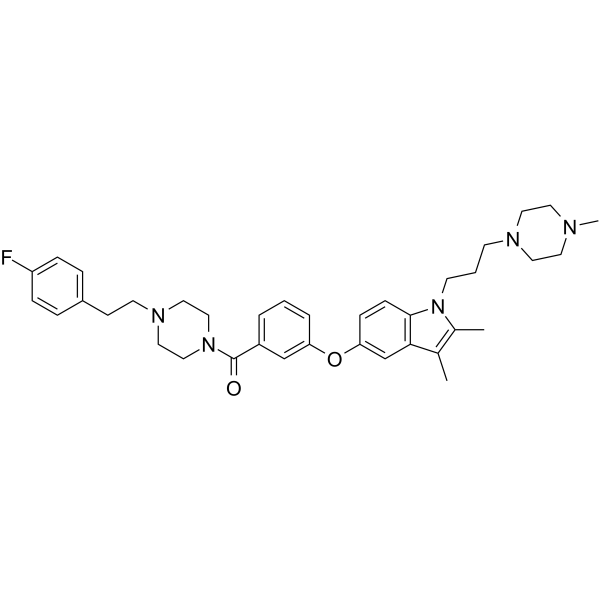
SR-2890 is a highly selective, ATP-competitive inhibitor of casein kinase CK1δ and CK1ε, with IC50 values ​​of 4 nM and 44 nM, respectively, and a Ki of 14 nM for CK1δ. SR-2890 exhibits antiproliferative effects. SR-2890 blocks the serine/threonine kinase activity of CK1δ and weakly inhibits a few off-target kinases such as FLT3, CDK4. SR-2890 has an oral bioavailability of 10% and a blood-brain barrier penetration rate of <1%. SR-2890 demonstrates stable in vitro metabolism and favorable in vivo pharmacokinetic properties, effectively inhibiting the growth of human A375 melanoma cells. SR-2890 can be used in melanoma research and is also a useful compound for studying CK1δ/ε-related diseases such as Alzheimer's disease .
loading...
    loading...
Cat. No.: HY-D3432
WazaGaY-1 is an aza-BODIPY derivative, functions as a NIR-I/NIR-II fluorescent contrast agent. WazaGaY-1 undergoes internalization into tumor cells predominantly via clathrin-coated pits. WazaGaY-1 can be used for the research of glioblastoma, ovarian carcinoma and melanoma (Ex/Em = 685/820 nm) .
loading...
    loading...
Cat. No.: HY-187116
CAS No.: 2390-63-8
Research Areas:  

Cancer

Rhodamine B ethyl ester is a hydrophilic cationic derivative of Rhodamine B (HY-Y0016), belonging to non-selective cytotoxic agents and transporters. Rhodamine B ethyl ester exhibits broad-spectrum in vitro cytotoxicity and exerts cytotoxic effects on human tumor cells. Rhodamine B ethyl ester binds effectively to lipid membranes, undergoes voltage-dependent transport across planar bilayer phosphatidylcholine membranes, and its transport can be determined by current relaxation after voltage jump. Rhodamine B ethyl ester can be used in research related to cancers such as epithelioid melanoma and colorectal adenocarcinoma .
loading...
    loading...
  • 1

