41 Results for "

indications

" in MedChemExpress (MCE) Product Catalog:
Products (41)

41 Results for "indications" in MCE Product Catalog:

28
28 Publications Verification
Cat. No.: HY-15448
CAS No.: 1152311-62-0
Purity:  99.85%
Synonyms: VX-661
Target:  

CFTR

Research Areas:  

Cancer

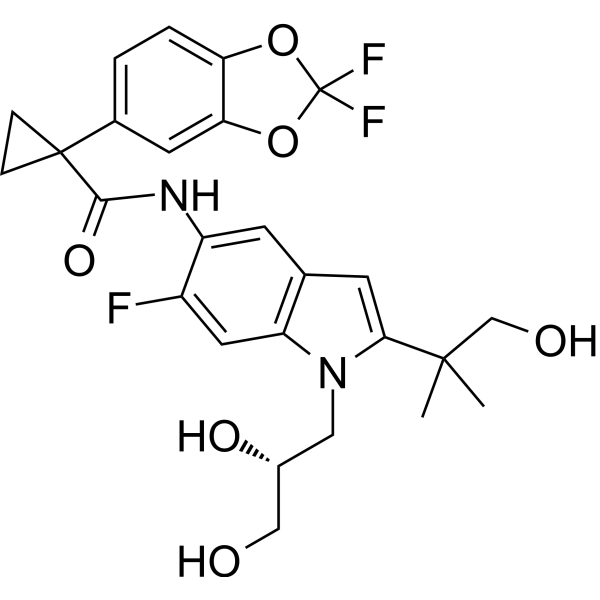
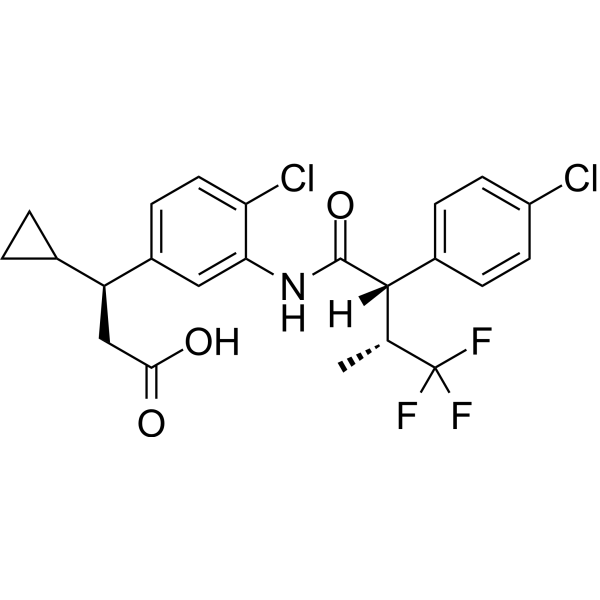
Tezacaftor (VX-661) is a F508del CFTR corrector. It helps CFTR protein reach the cell surface. However, Ivacaftor (VX-770, HY-13017), a CFTR potentiator, helps to prolong the opening time of cell surface CFTR protein channels. Tezacaftor combining with Ivacaftor, shows potent efficacy against cystic fibrosis and diseases with homozygous for the CFTR Phe508del mutation. Moreover, Elexacaftor (VX-445, HY-111772) is also a CFTR corrector. Elexacaftor-Tezacaftor-Ivacaftor aims at with cystic fibrosis (CF) with at least one Phe508del mutation, often avoids the indication for lung transplantation .
loading...
    loading...
2
2 Cited Publications
Cat. No.: HY-103023
CAS No.: 1181083-81-7
Purity:  99.87%
Target:  

Potassium Channel

Research Areas:  

Neurological Disease

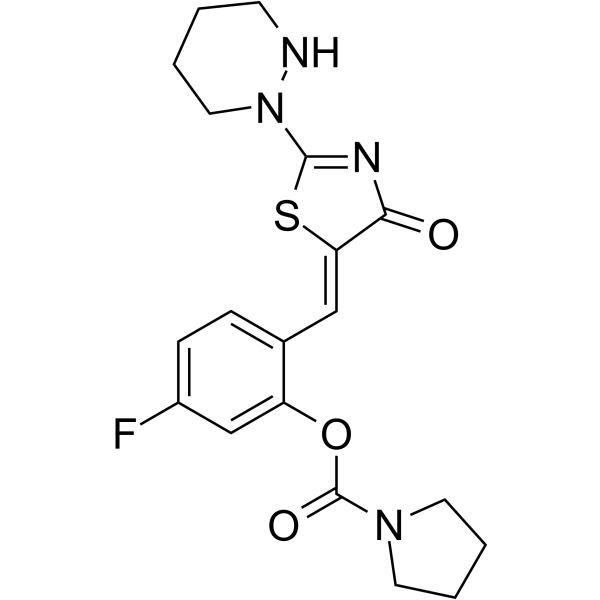
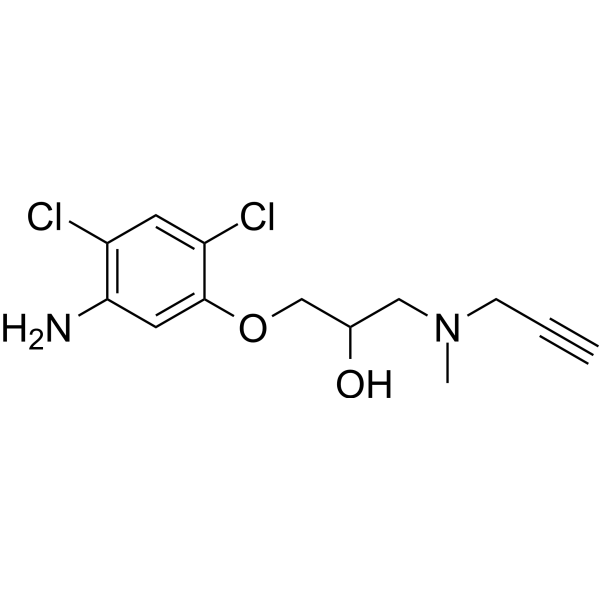
CLP290 is an orally available activator of the neuron-specific K +-Cl - cotransporter KCC2, displays potential for treatment of a wide range of neurological and psychiatric indications. CLP290 can significantly lower blood arginine-vasopressin (AVP) and glucose levels in STZ (HY-13753) rats .
loading...
    loading...
2
2 Cited Publications
Cat. No.: HY-113121
CAS No.: 55-10-7
Purity:  99.67%
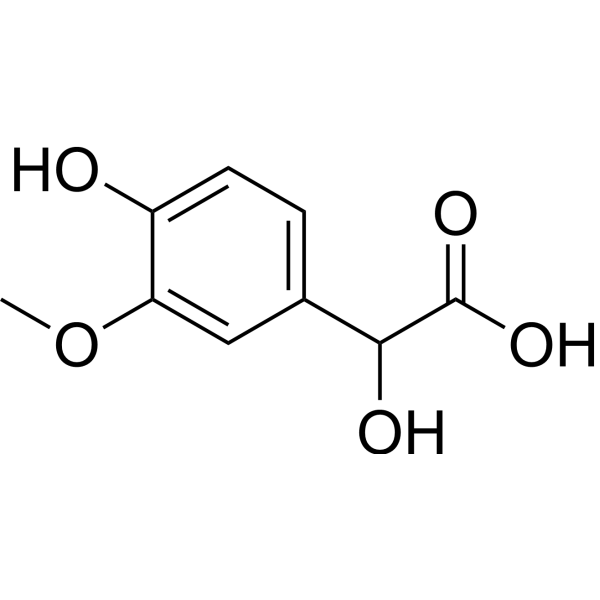
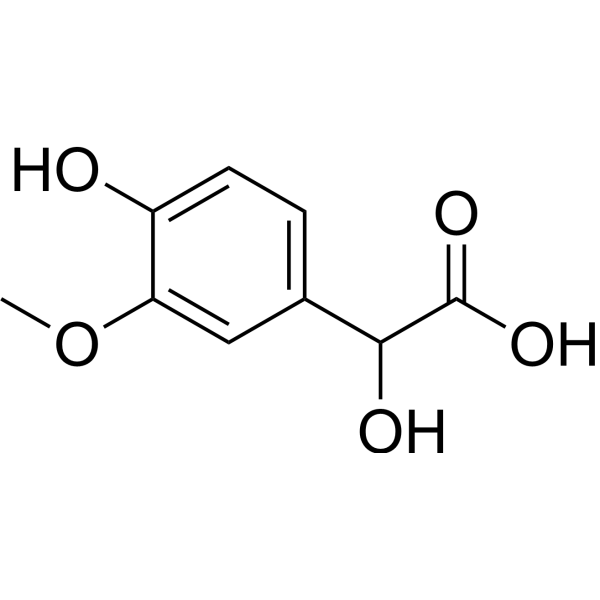
Vanillylmandelic acid is the endproduct of epinephrine and norepinephrine metabolism. Vanillylmandelic acid can be used as an indication of the disorder in neurotransmitter metabolism as well. Vanillylmandelic acid has antioxidant activity towards DPPH radical with an IC50 value of 33 μM .
loading...
    loading...
1
1 Cited Publications
Cat. No.: HY-139346
CAS No.: 1793080-72-4
Purity:  98.36%
Target:  

Sodium Channel

Research Areas:  

Neurological Disease

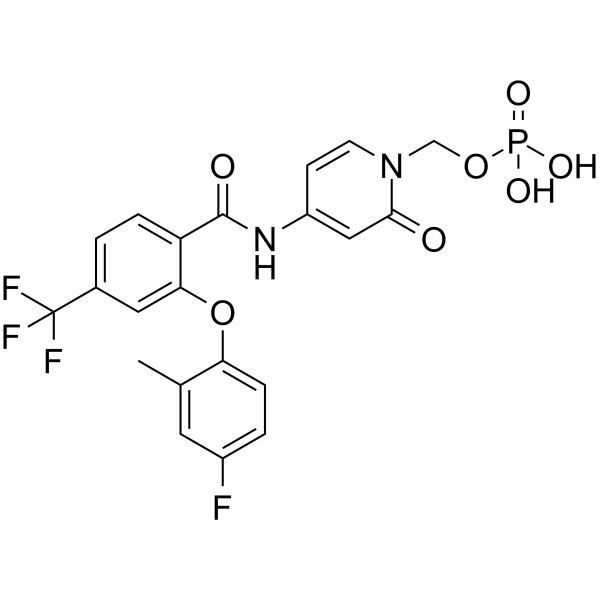
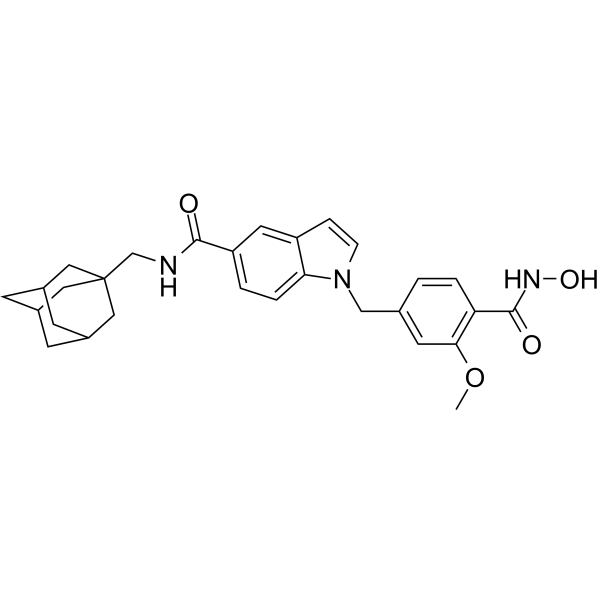
VX-150 is an orally active, highly selective NaV1.8 inhibitor. VX-150 has the potential for various pain indications research .
loading...
    loading...
1
1 Cited Publications
Cat. No.: HY-109136
CAS No.: 1402936-61-1
Purity:  99.31%
Synonyms: BAY 1101042
Runcaciguat (BAY 1101042) is a selective, orally active, allosteric activator of soluble guanylate cyclase (sGC) that specifically targets its oxidized and heme-free form. Runcaciguat binds to sGC in a histidine-dependent manner and restores cyclic guanosine monophosphate (cGMP) production under oxidative stress, independent of nitric oxide (NO) or heme. Runcaciguat exhibits renoprotective and cardioprotective activities, such as reduced proteinuria and improved renal function. Runcaciguat is primarily being studied in chronic kidney disease (CKD) associated with hypertension, diabetes, and metabolic disorders, as well as potential cardiovascular indications such as heart failure with preserved ejection fraction (HFpEF) .
loading...
    loading...
Cat. No.: HY-149766
CAS No.: 3032970-74-1
Purity:  97.04%
Target:  

HDAC

Research Areas:  

Neurological Disease

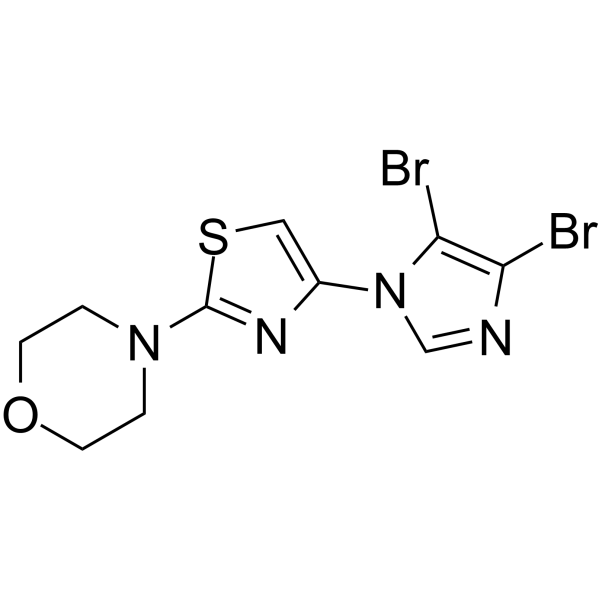
PB94 is a selective HDAC11 inhibitor (IC50=108 nM). PB94 can be radiolabeled as [11C]-PB94 for use in positron emission tomography (PET), as well as brain uptake and metabolic properties in administered live animals. PB94 improves neuropathic pain in mice and could be used to study neurological indications .
loading...
    loading...
Cat. No.: HY-145709
CAS No.: 2230880-25-6
Purity:  98.02%
Target:  

Androgen Receptor

Research Areas:  

Cancer

Ar-V7-IN-1 is a potent inhibitor of Ar-V7. Ar-V7-IN-1 inhibits the transcriptional activity of androgen receptor (AR) and the secretion of prostate-specific antigen (PSA) with an eGFP IC50 of 1232 nM and the PSA IC50 of 1391 μM. Ar-V7-IN-1 has the potential for the research of various indications, in particular cancers such as prostate cancer .
loading...
    loading...
Cat. No.: HY-175649
CAS No.: 3024011-99-9
Research Areas:  

Cancer

LATS1/2-IN-1 is a potent and selective LATS1 and LATS2 inhibitor. LATS1/2-IN-1 exhibits potent inhibitory activity against LATS1 and LATS2 with IC50 values of 4.4 nM and 5.5 nM as determined via r 33P functional assay. LATS1/2-IN-1 displays cellular IC50 values of 136 nM for LATS1 and 36.0 nM for LATS2 as determined via NanoBRET assay. LATS1/2-IN-1 reduces phosphorylation of YAP1 in mouse liver. LATS1/2-IN-1 demonstrates wound healing activity in HT-1080 scratch assay and in vivo SKH1 mouse punch biopsy model. LATS1/2-IN-1 can be used for the study of regenerative medicine indications such as wound healing .
loading...
    loading...
Cat. No.: HY-113121S
CAS No.: 74495-70-8
Purity:  ≥98.0%
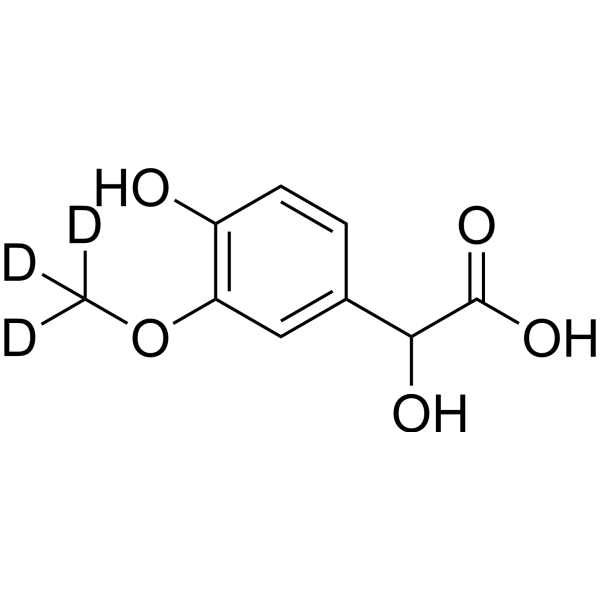
Vanillylmandelic acid-d3 is the deuterium labeled Vanillylmandelic acid. Vanillylmandelic acid is the endproduct of epinephrine and norepinephrine metabolism. Vanillylmandelic acid can be used as an indication of the disorder in neurotransmitter metabolism as well. Vanillylmandelic acid has antioxidant activity towards DPPH radical with an IC50 value of 33 μM .
loading...
    loading...
Cat. No.: HY-113121R
CAS No.: 55-10-7
Vanillylmandelic acid (Standard) is the analytical standard of Vanillylmandelic acid. This product is intended for research and analytical applications. Vanillylmandelic acid is the endproduct of epinephrine and norepinephrine metabolism. Vanillylmandelic acid can be used as an indication of the disorder in neurotransmitter metabolism as well. Vanillylmandelic acid has antioxidant activity towards DPPH radical with an IC50 value of 33 μM .
loading...
    loading...
Cat. No.: HY-149408
Target:  

Monoamine Oxidase

Research Areas:  

Cancer

MAOA-IN-1 (compound 15) is an orally active MAOA inhibitor with cytotoxicity against prostate cancer cells. MAOA-IN-1 has Caco-2 permeability and lower CNS permeability. MAOA-IN-1 can be further used in the research of anti-cancer and anti-inflammatory indications .
loading...
    loading...
Cat. No.: HY-16449
CAS No.: 937273-04-6
Synonyms: CT-1578
Target:  

JAK FLT3

Research Areas:  

Inflammation/Immunology

SB1578 (CT-1578) is a selective JAK2 and FLT3 inhibitor with an IC50 of 46 nM and 60 nM, respectively. SB1578 exhibits high selectivity for other kinase targets. SB1578 can be used for the study of non-oncology indication rheumatoid arthritis .
loading...
    loading...
Cat. No.: HY-N13241
Target:  

PINK1/Parkin

Research Areas:  

Metabolic Disease

Rhodiola Rosea Extract is a rhodiola rosea extract, and its components include: Salidroside. Rhodiola Rosea Extract can affect the release of stress hormones, promote energy metabolism, and can be used in the study of "stress" indications. .
loading...
    loading...
Cat. No.: HY-D0009
CAS No.: 62625-32-5
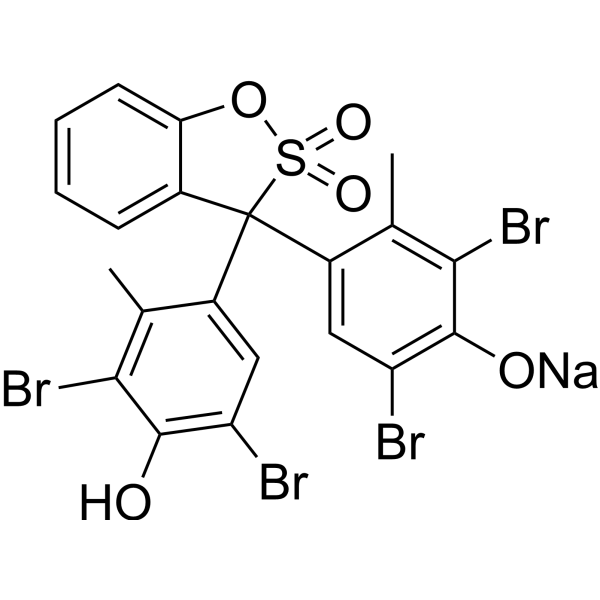
Bromocresol green sodium is an anionic dye. Bromocresol green sodium can be used for pH indication and DNA agarose gel electrophoresis. Bromocresol green sodium is also used in mammalian albumin measurement. Bromocresol green sodium deprotonates and produces the monoanionic form of yellow colour at lower pH (acidic condition), and produces dianionic blue colour at the basic condition .
loading...
    loading...
Cat. No.: HY-155319
CAS No.: 2378397-91-0
Target:  

Opioid Receptor

Research Areas:  

Neurological Disease

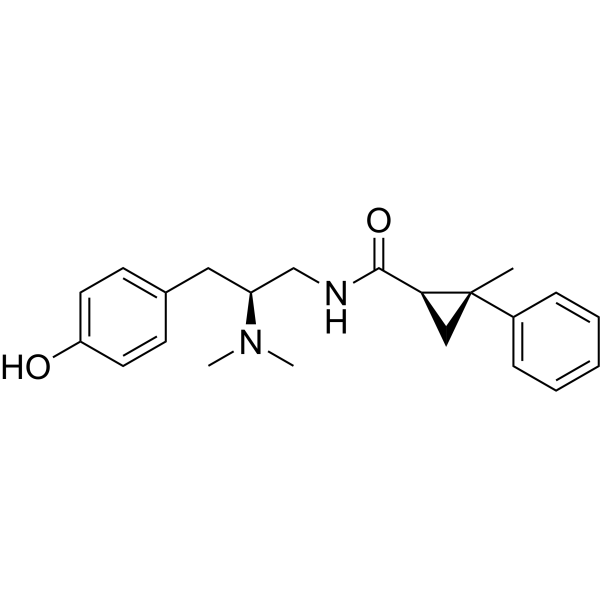
μ opioid receptor agonist 3 (compound 20) is a potent μ opioid receptor (µOR) agonist with an EC50 of 0.87 nM. μ opioid receptor agonist 3 has the potential for pain and neuropsychiatric indications research .
loading...
    loading...
Cat. No.: HY-108346
CAS No.: 349087-34-9
Target:  

p38 MAPK

Research Areas:  

Inflammation/Immunology

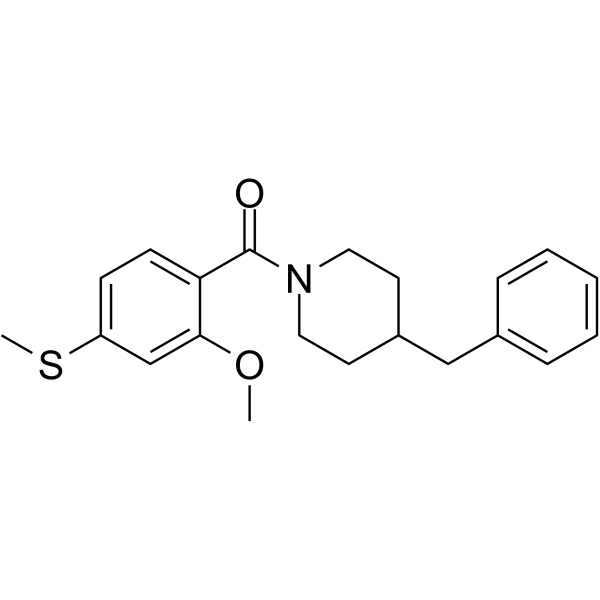
JX401 is a potent inhibitor of p38alpha, containing a 4-benzylpiperidine motif. p38alpha is hyperactive in inflammatory diseases, and various indications suggest that its inhibition would reverse inflammation. JX401 has the potential for the research of inflammation .
loading...
    loading...
Cat. No.: HY-11056
CAS No.: 1010382-72-5
Target:  

Dopamine Receptor

Research Areas:  

Neurological Disease

PF-04363467 is a highly preferring D3R antagonist. PF-04363467 produces dose-dependent changes in the EEG profile of freely moving rats. PF-4363467 attenuates opioid drug-seeking behavior without concomitant D2 side effects. PF-04363467 can be used for the study of addiction, cognitive and mental illness .
loading...
    loading...
Cat. No.: HY-15448R
CAS No.: 1152311-62-0
Synonyms: VX-661 (Standard)
Research Areas:  

Cancer

Tezacaftor (Standard) is the analytical standard of Tezacaftor. This product is intended for research and analytical applications. Tezacaftor (VX-661) is a F508del CFTR corrector. It helps CFTR protein reach the cell surface. However, Ivacaftor (VX-770, HY-13017), a CFTR potentiator, helps to prolong the opening time of cell surface CFTR protein channels. Tezacaftor combining with Ivacaftor, shows potent efficacy against cystic fibrosis and diseases with homozygous for the CFTR Phe508del mutation. Moreover, Elexacaftor (VX-445, HY-111772) is also a CFTR corrector. Elexacaftor-Tezacaftor-Ivacaftor aims at with cystic fibrosis (CF) with at least one Phe508del mutation, often avoids the indication for lung transplantation .
loading...
    loading...
Cat. No.: HY-15448S1
CAS No.: 1961280-94-3
Synonyms: VX-661-d6
Tezacaftor-d6 (VX-661-d6) is deuterium labeled Tezacaftor. Tezacaftor (VX-661) is a F508del CFTR corrector. It helps CFTR protein reach the cell surface. However, Ivacaftor (VX-770, HY-13017), a CFTR potentiator, helps to prolong the opening time of cell surface CFTR protein channels. Tezacaftor combining with Ivacaftor, shows potent efficacy against cystic fibrosis and diseases with homozygous for the CFTR Phe508del mutation. Moreover, Elexacaftor (VX-445, HY-111772) is also a CFTR corrector. Elexacaftor-Tezacaftor-Ivacaftor aims at with cystic fibrosis (CF) with at least one Phe508del mutation, often avoids the indication for lung transplantation .
loading...
    loading...
Cat. No.: HY-L140
232 compounds

Withdrawal or delisting drugs refer to drugs that are recalled or discontinued from the market due to low efficiency, serious side effects, financial and regulatory problems and other reasons. Once the drug is withdrawn from the market, it will cause heavy losses to the original research company that invested a lot of time, finance and other costs to develop the drug.

Adverse drug reaction (ADR) is the main reason for drug withdrawal from the market. ADR refers to the unexpected effects caused by the reasons such as the target-directed interaction during the treatment. However, studying the mechanism of these ADRs may just be a breakthrough in finding new indications. For example, thalidomide, the protagonist of the drug damage event that caused numerous "seal babies" deformed infants, was found to be due to the degradation of a transcription factor - SALL4 after delisting, which made thalidomide have a new clinical application. In 1998, it was approved by FDA for the treatment of leprosy nodular erythema, and in 2006, it was approved for the treatment of multiple myeloma. ADR study of delisted drugs can not only avoid the loss of drug development in advance but also bring hope to new indications.

MCE has sorted out 232 drug compounds withdrawn from the market through FDA, EMA and other authoritative platforms. Each compound has withdrawal records in at least one country/market. It is a useful tool for conducting research on drug side effects or drug toxicity mechanisms and discovering new indications of drugs.

