
37 Results for "

intermolecular synthons

" in MedChemExpress (MCE) Product Catalog:
Products (37)

37 Results for "intermolecular synthons" in MCE Product Catalog:

2
2 Cited Publications
Cat. No.: HY-119523
CAS No.: 23024-29-5
Purity:  ≥97.0%
Synonyms: DSSeb; Sebacic acid bis N-succinimidyl ester
Research Areas:  

Others

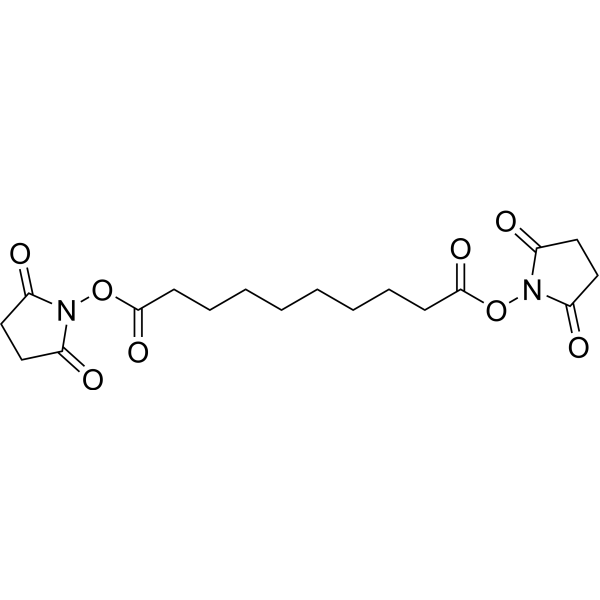
Disuccinimidyl sebacate (DSSeb) is a cross-linker that can be used in the synthesis of the intermolecular cross-linked peptides .
loading...
    loading...
1
1 Cited Publications
Cat. No.: HY-W039897
CAS No.: 617-04-9
Synonyms: α-Methyl-D-mannoside
Target:  

Bacterial

Research Areas:  

Infection

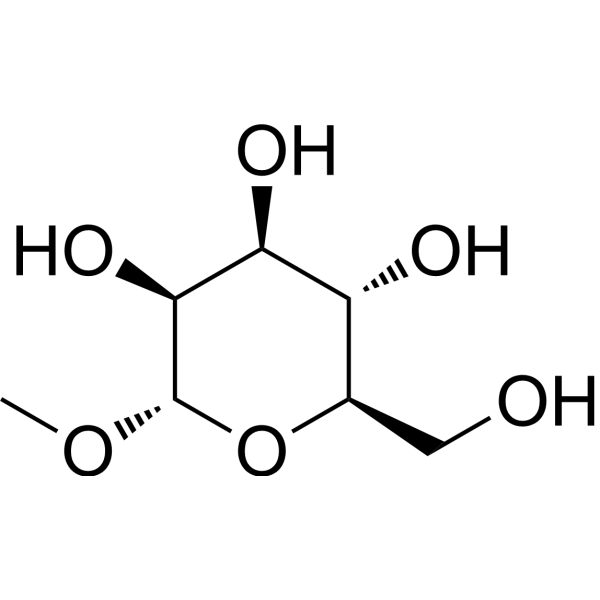
Methyl α-D-mannopyranoside (α-Methyl-D-mannoside) is a methyl glycoside derivative and conformational stabilizer of α-D-mannopyranose. The glycosidic bond conformation of Methyl α-D-mannopyranoside is significantly affected by the environment. In aqueous solution, Methyl α-D-mannopyranoside stabilizes into a trans conformation via intermolecular hydrogen bonds; in the gas phase, however, steric interactions drive Methyl α-D-mannopyranoside to prefer a clockwise gauche conformation. Methyl α-D-mannopyranoside also serves as a major component of secondary cell wall polymers in some bacteria and an active precursor site for virus-targeted glycoproteins. Methyl α-D-mannopyranoside acts as an acceptor substrate for alternansucrase, mediating the transfer of D-glucopyranosyl groups to generate a variety of glycosylated oligosaccharide products, with methyl α-D-glucopyranosyl-(1→6)-α-D-mannopyranoside as the main component. Methyl α-D-mannopyranoside is applicable to studies on bacterial pathogenic mechanisms associated with mannose-specific fimbrial lectins .
loading...
    loading...
Cat. No.: HY-145942
CAS No.: 26680-54-6
Purity:  99.69%
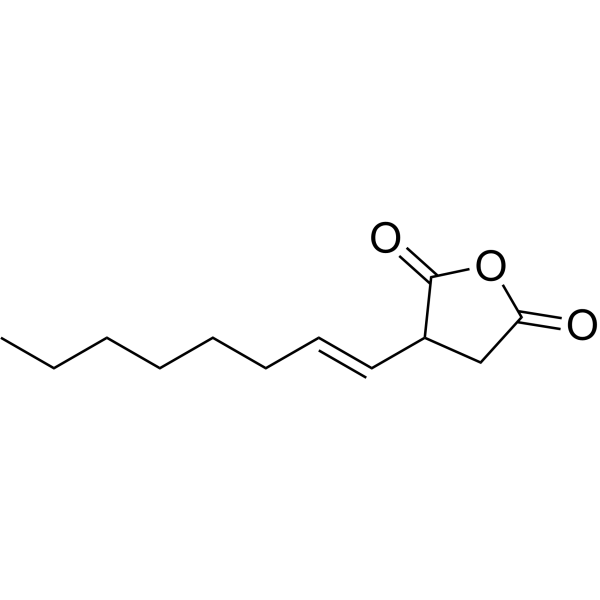
Octenyl succinic anhydride is a versatile chemical intermediate. Octenyl succinic anhydride can undergo esterification with polysaccharides such as starch and Inulin (HY-N7075). Octenyl succinic anhydride affects the intermolecular interactions on the outer surfaces of two starch granules by altering the molecular surface structure. Octenyl succinic anhydride modifies the properties of polysaccharides. Octenyl succinic anhydride can be used for starch esterification to produce OS-starch, an amphiphilic hydrocolloid .
loading...
    loading...
Cat. No.: HY-W012944
CAS No.: 765-69-5
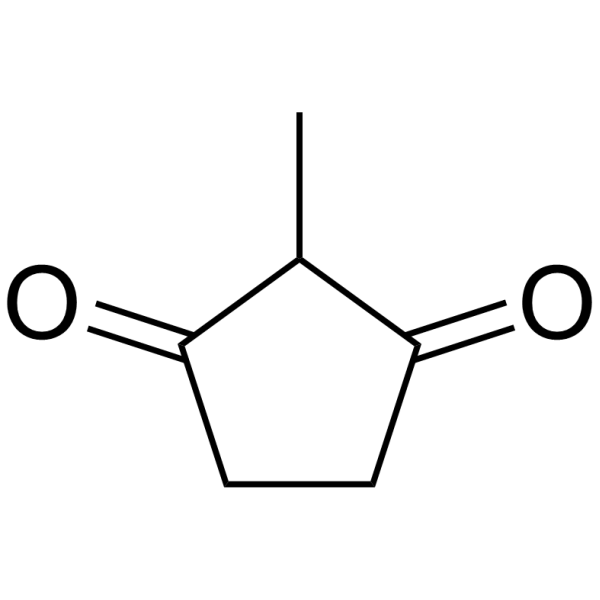
2-Methylcyclopentane-1,3-dione is a synthon . 2-Methylcyclopentane-1,3-dione can be used for the synthesis of (±)-α-cuparenone .
loading...
    loading...
Cat. No.: HY-W016618
CAS No.: 1603-79-8
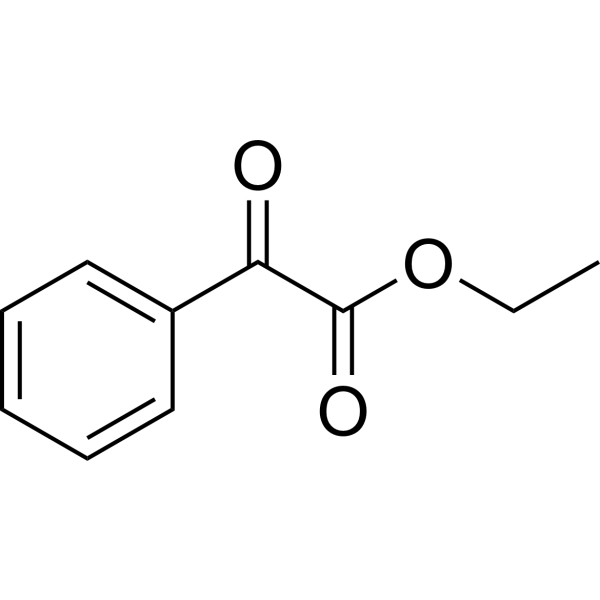
Synonyms: Ethyl benzoylformate; Phenylglyoxylic acid ethyl ester
Ethyl phenylglyoxylate (Ethyl benzoylformate), the ethyl ester of phenylglyoxylic acid, is used as a synthetic reagent. Ethyl phenylglyoxylate is also a poor substrate but a potent inhibitor of chicken liver carboxylesterase. Additionally, Ethyl phenylglyoxylate exhibits photoreactivity, where its excited triplet carbonyl can initiate intermolecular hydrogen abstraction, radical coupling and cross-linking reactions .
loading...
    loading...
Cat. No.: HY-121138
CAS No.: 81-55-0
Purity:  98.00%
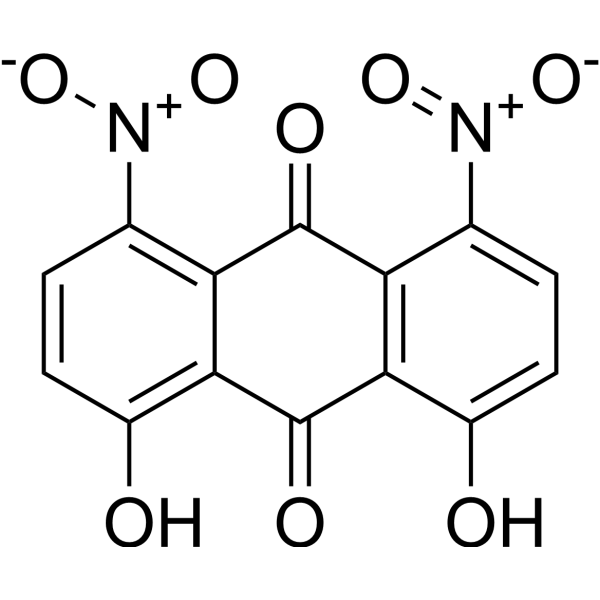
Synonyms: ARDP0006; DHDNE
Research Areas:  

Infection

1,8-Dihydroxy-4,5-dinitroanthraquinone (ARDP0006; DHDNE) is a potent inhibitor of serine proteinase NS2B/3, the dengue viral protein. 1,8-Dihydroxy-4,5-dinitroanthraquinone has intermolecular proteinase activity and viral inhibition ability with IC50s of 432 μM and 4.2 μM, respectively. Meanwhile 1,8-Dihydroxy-4,5-dinitroanthraquinone inhibits NS2B/3 cleavage in BHK-21 cells at a dose ranging from 4.2 μM to 432 μM .
loading...
    loading...
Cat. No.: HY-W352344
CAS No.: 14365-45-8
Target:  

HBV

Research Areas:  

Infection

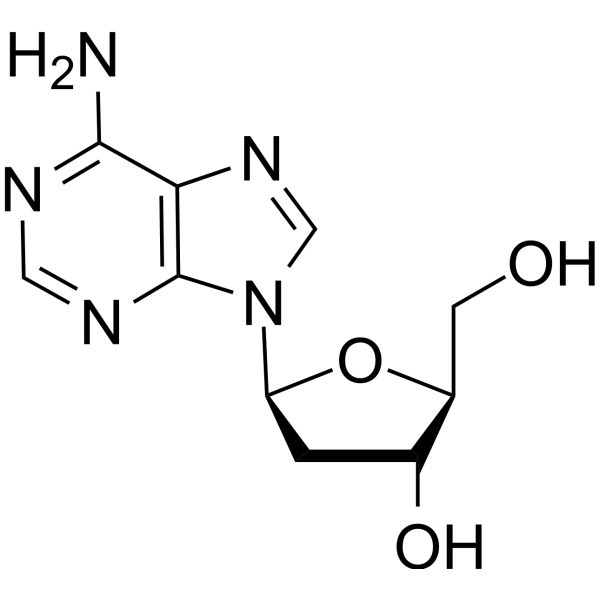
2'-Deoxy-L-adenosine is an orally active synthon for modified oligodeoxyribonucleotides. 2'-Deoxy-L-adenosine is a potent, specific and selective inhibitor of the replication of hepatitis B virus (HBV) as well as the closely related duck and woodchuck hepatitis viruses (WHV) .
loading...
    loading...
Cat. No.: HY-151672
CAS No.: 1264662-85-2
Purity:  99.09%
Target:  

ADC Linkers

Research Areas:  

Others

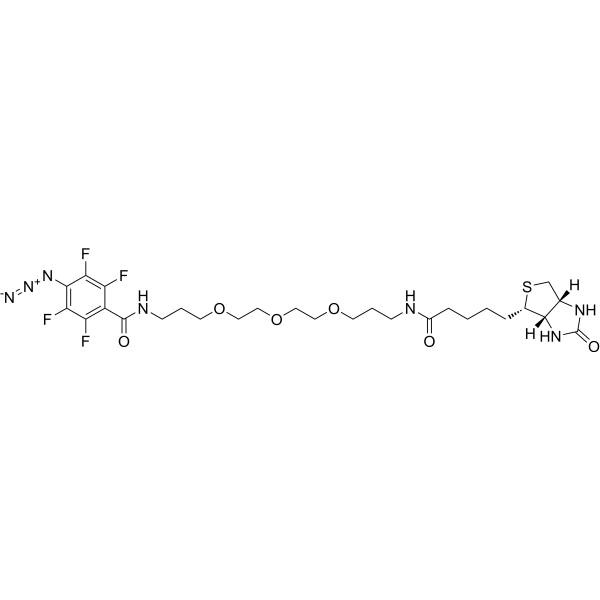
Biotin-TEG-ATFBA is a click chemistry reagent containing a perfluorophenylazide group. Biotin-TEG-ATFBA forms a highly stable azene intermediate that undergoes insertion and addition reactions (non-intermolecular rearrangement) in moderate to good yields after photolysis. It contains an azide group and can undergo copper-catalyzed azide-alkyne cycloaddition (CuAAc) with molecules containing alkyne groups. It can also undergo ring strain-promoted alkyne-azide cycloaddition (SPAAC) with molecules containing DBCO or BCN groups.
loading...
    loading...
Cat. No.: HY-W001189
CAS No.: 505-23-7
1,3-Dithiane is a protected formaldehyde anion equivalent and a sulfur-containing Maillard reaction product. 1,3-Dithiane is found in cooked beef extracts. 1,3-Dithiane is a potent mutagenic agent against S. typhimurium TA98 and TA100. 1,3-Dithiane can be used as a useful marker synthon .
loading...
    loading...
Cat. No.: HY-W013396
CAS No.: 619-58-9
Research Areas:  

Others

4-Iodobenzoic acid is a 4-iodobenzoic acid that crystallizes as a dimer in the monoclinic space group P21/n, with a phase transition center temperature of 230.77 K, and exhibits intermolecular iodine-iodine van der Waals interactions. 4-Iodobenzoic acid can be used in studies of hydrogen bonding, crystal packing and solid-state phase transitions .
loading...
    loading...
Cat. No.: HY-E70421
Target:  

Angiotensin Receptor

Research Areas:  

Others

Peptide ligase is an Asx-specific asparaginyl endopeptidase (AEP) ligase and cyclase that can be isolated from the pods of butterfly pea (Clitoria ternatea). Peptide ligase mediates traceless intramolecular cyclization of polypeptides. Peptide ligase mediates intermolecular ligation of polypeptides or proteins. Peptide ligase can be used to cyclize food-derived angiotensin-converting enzyme (ACE) inhibitory peptides, thereby enhancing the stability and biological activity of ACE inhibitory peptides. Peptide ligase is applicable to relevant research in the fields of food and biopharmaceuticals .
loading...
    loading...
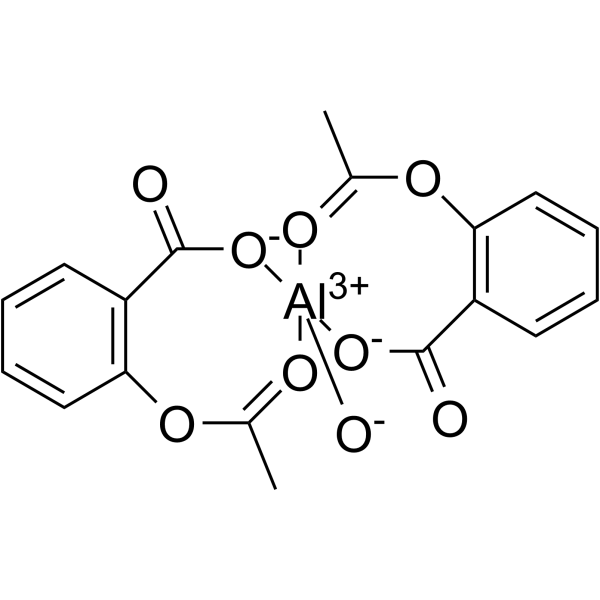
Cat. No.: HY-B2175
CAS No.: 23413-80-1
Synonyms: Aluminum diacetylsalicylate
Research Areas:  

Inflammation/Immunology

Aspirin Aluminum is a novel intermolecular compound which can inhibit gastrointestinal mucosal disorders induced by NSAIDs (non-steroidal anti-inflammatory agents) extracted from patent WO 2010064441 A1.
loading...
    loading...
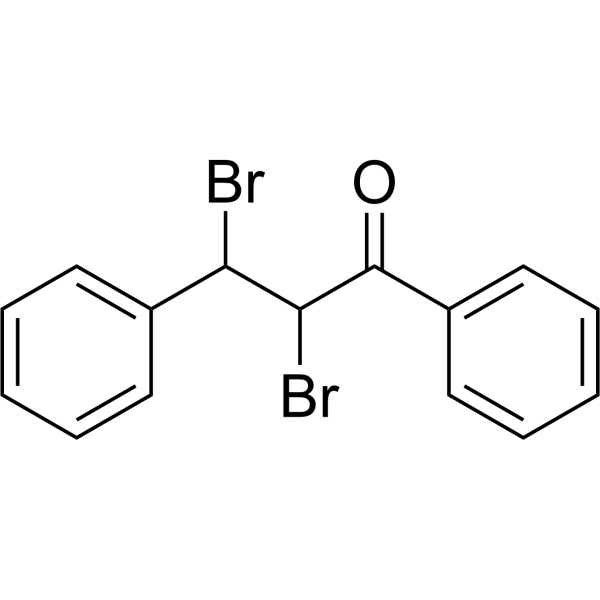
Cat. No.: HY-W023983
CAS No.: 611-91-6
Target:  

Drug Derivative

Research Areas:  

Cancer

Chalcone dibromide is a useful synthon in the synthesis of a large number of bioactive molecules such as pyrazolines, hydroxy pyrazolines, isoxazoles etc. Chalcone dibromide possesses antioxidant effects against tumor cells by inhibiting superoxide production and lipid peroxidation. Chalcone dibromide can be used for cancer disease research .
loading...
    loading...
Cat. No.: HY-133022
CAS No.: 15790-94-0
Purity:  98.90%
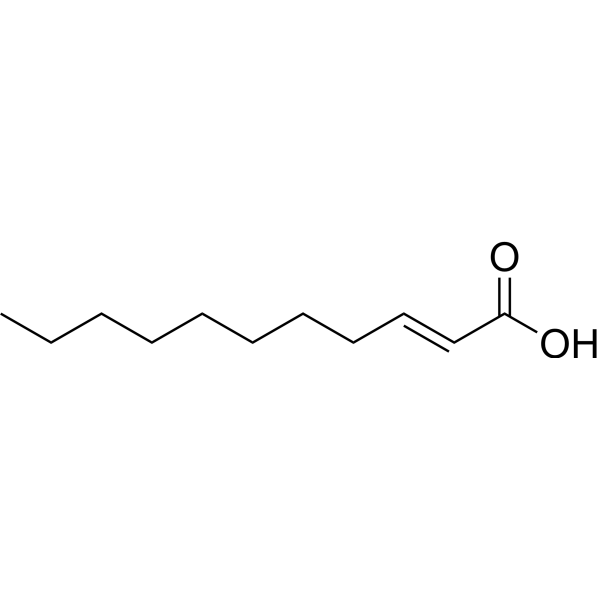
Synonyms: (E)-2-Undecenoic acid; (E)-Undec-2-enoic acid
Target:  

Drug Isomer

Research Areas:  

Metabolic Disease

trans-2-Undecenoic acid ((E)-2-Undecenoic acid) is an α,β-unsaturated carboxylic acid and is characterized by acid dimers. The corresponding dimers are connected via intermolecular hydrogen bonds of the carboxylic groups C=O···H-O .
loading...
    loading...
Cat. No.: HY-W009986
CAS No.: 779-02-2
9-Methylanthracene is a photoreactive agent. 9-Methylanthracene induces intramolecular and intermolecular [4+4] cycloaddition reactions via photochemical reactions to form dimers. 9-Methylanthracene is promising for research of photomechanical materials and light-responsive crystal dynamics .
loading...
    loading...
Cat. No.: HY-117293
CAS No.: 19792-91-7
Target:  

Drug Intermediate

Research Areas:  

Others

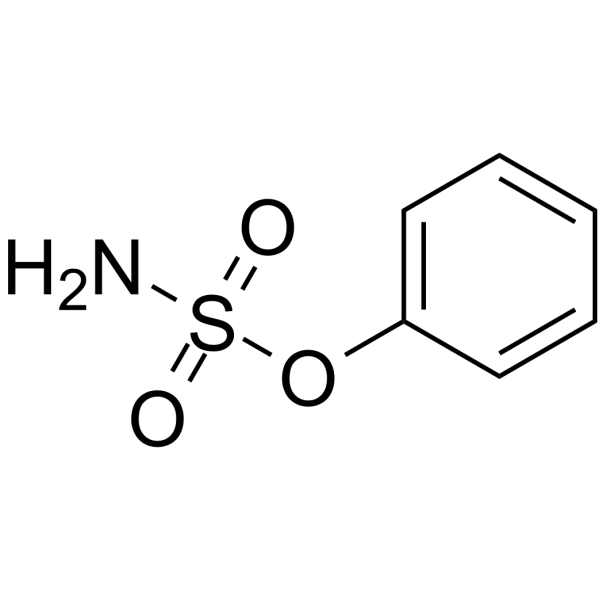
Phenyl sulfamate is a nitrogen source that can be used in the amination of intermolecular .
loading...
    loading...
Cat. No.: HY-144646
CAS No.: 2768010-39-3
Purity:  99.79%
Research Areas:  

Infection

SP-471 is a potent dengue virus (DENV) protease inhibitor with IC50 value of 18 μM. SP-471 inhibits both intermolecular and intramolecular protease processes of DENV .
loading...
    loading...
Cat. No.: HY-151738
CAS No.: 1935981-35-3
Target:  

ADC Linkers

Research Areas:  

Others

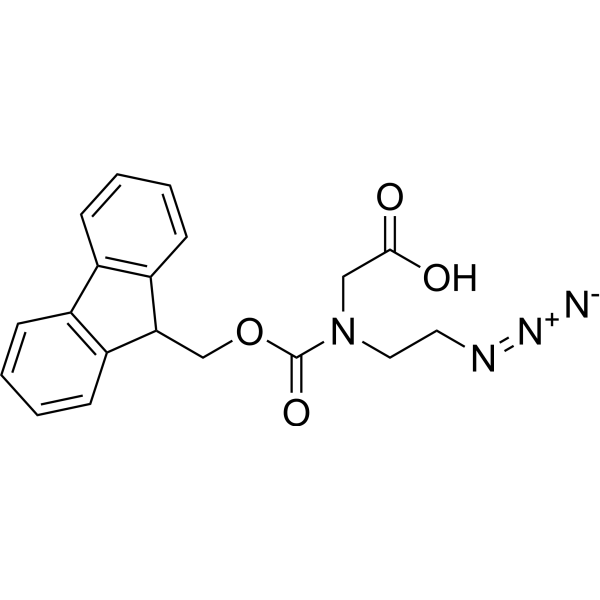
Fmoc-Aeg(N3)-OH is a click chemistry reagent containing an Azide. Alkylating the Nitrogen of an amide bond results in peptoid structures, which leads to conformational restrains, like N-methylation and allows backbone derivatisation. Altering cytotoxicity, bacterial cell selectivity and receptor pharmacology through formation of peptoid derivatives have been published for Cilengitide, Piscidin 1, and MC3, MC4 and MC5 receptor agonist. This building block enables design of macrocycles through intermolecular crosslinking or backbone stabilization through intermolecular ring-closure. This compound is a potential building block for the construction of (customized) peptide nucleic acids (PNAs) and for peptoid synthesis . Fmoc-Aeg(N3)-OH is a click chemistry reagent, it contains an Azide group and can undergo copper-catalyzed azide-alkyne cycloaddition reaction (CuAAc) with molecules containing Alkyne groups. It can also undergo strain-promoted alkyne-azide cycloaddition (SPAAC) reactions with molecules containing DBCO or BCN groups.
loading...
    loading...
Cat. No.: HY-121125
CAS No.: 64274-28-8
Aucubigenin, the aglycone of the iridoid glycoside aucubin, has been characterized through X-ray diffraction analysis. Its crystal structure reveals monoclinic symmetry with specific conformations adopted by its cyclopentane and pyran rings. The study also determined the absolute configurations of both aucubin and aucubigenin. Significant O-H O hydrogen bonding interactions were observed in the crystal lattices of both compounds, highlighting their structural stability and potential for intermolecular interactions .
loading...
    loading...
Cat. No.: HY-120286
CAS No.: 108890-90-0
K-13 is a cyclic peptide compound synthesized by a specific organozinc reagent. Its synthesis process involves intermolecular and intramolecular Negishi cross-coupling reactions and is one of the shortest routes reported for the synthesis of such cyclic peptides.
loading...
    loading...

