15 Results for "

intestinal structure

" in MedChemExpress (MCE) Product Catalog:
Products (15)

15 Results for "intestinal structure" in MCE Product Catalog:

7
7 Publications Verification
Cat. No.: HY-B0294
CAS No.: 31430-15-6
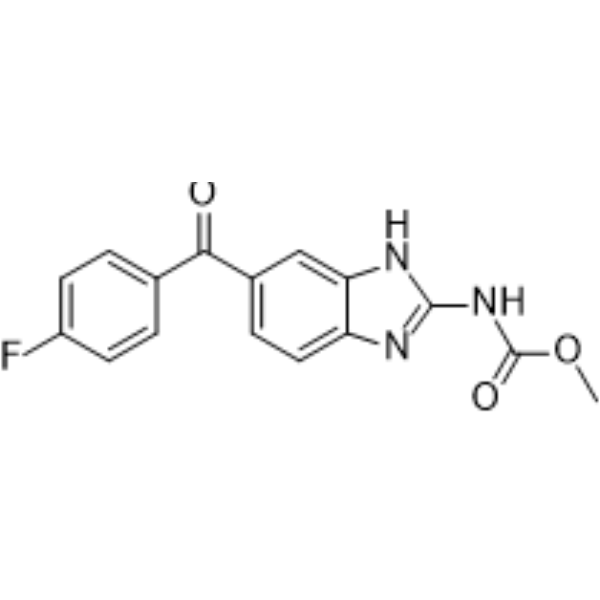
Flubendazole is an anthelmintic drug based on altering microtubule structure, inhibition of tubulin polymerization and disruption of microtubule function. Flubendazole induces apoptosis in human colorectal cancer (CRC) by blocking the STAT3 signaling axis and activation of autophagy. Flubendazole induces P53 expression and reduced Cyclin B1 and p-cdc2 expression. Flubendazole is an antitumor agent. Flubendazole can be used for worm and intestinal parasites .
loading...
    loading...
1
1 Cited Publications
Cat. No.: HY-N9448
CAS No.: 14116-68-8
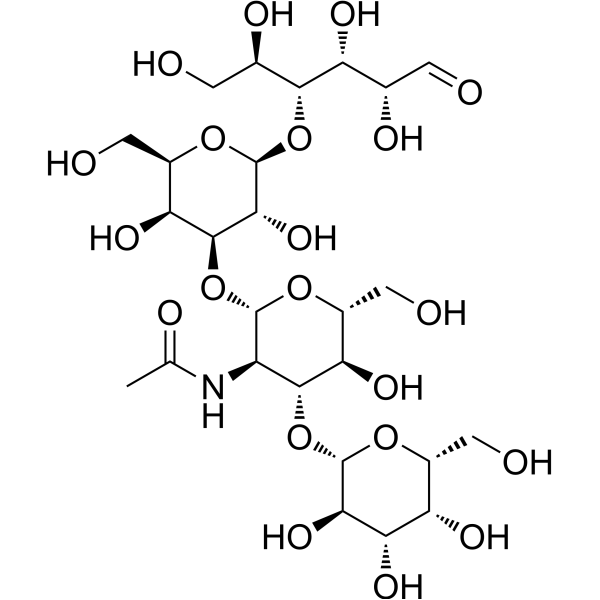
Lacto-N-tetraose is the significant core structure of human milk oligosaccharides (HMOs) naturally existing in human milk. Lacto-N-tetraose is consist of galactose, N-acetylglucosamine, and glucose moieties. Lacto-N-tetraose has prebiotic effect, immune regulatory effect, anti-inflammatory effects, intestinal cell responses regulatory effect, antibacterial activity and antiviral activity. Lacto-N-tetraose has been widely added to infant formula .
loading...
    loading...
1
1 Cited Publications
Cat. No.: HY-B1172
CAS No.: 4618-18-2
Synonyms: 4-O-β-D-Galactopyranosyl-D-fructose
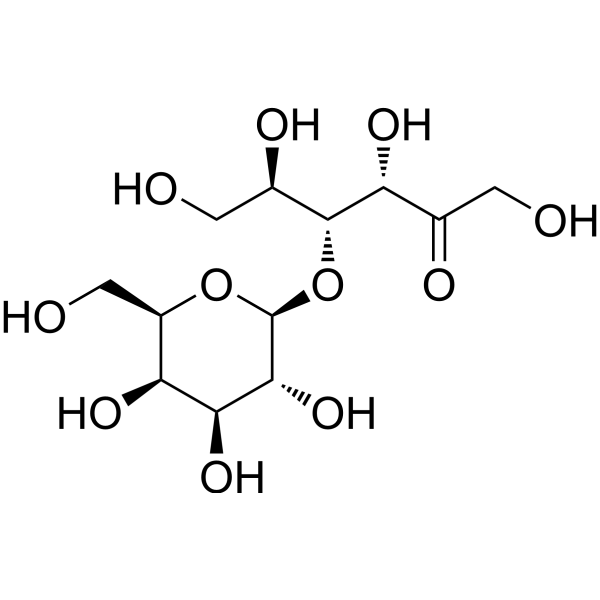
Lactulose is an orally active galactose-fructose disaccharide. Lactulose suppresses upregulation of TNF-α and IL-6. Lactulose decreases the degree of DNA damage. Lactulose exhibits many of the properties of other oligosaccharides, including increasing the numbers of Bifidobacteria in feces. Lactulose restores the structure and composition of the intestinal microbiota, mitigates inflammation, and suppresses inflammatory tumorigenesis in mice with colitis-associated cancer. Lactulose can be used in the research of constipation .
loading...
    loading...
Cat. No.: HY-D1736
CAS No.: 158757-82-5
BODIPY FL-C16 is a BODIPY-labeled analog of Palmitic acid (HY-N0830), which serves as a fluorescent lipid tracer. BODIPY FL-C16 also acts as a ligand for liver fatty acid-binding protein (L-FABP) and intestinal fatty acid-binding protein (I-FABP) , with Kd values of 270 nM and 330 nM, respectively. BODIPY FL-C16 is rapidly taken up by cells, and after metabolic conversion to phospholipids, it is incorporated into the membrane structures of intracellular organelles and extracellular vesicles .
loading...
    loading...
Cat. No.: HY-Y0079
CAS No.: 673-06-3
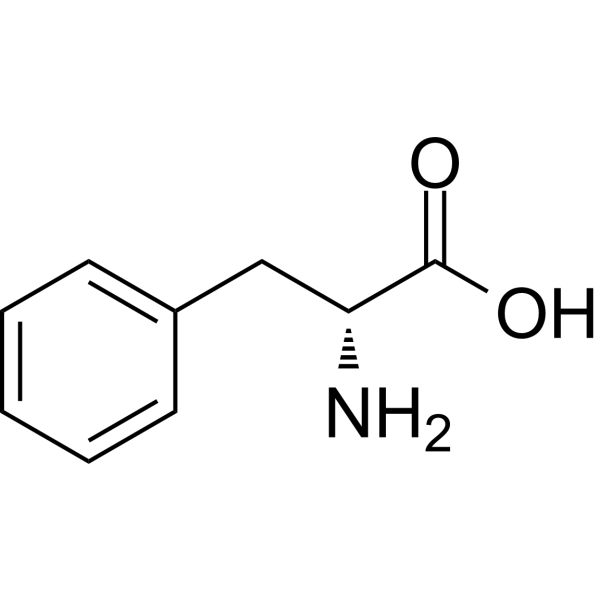
D-Phenylalanine is an atypical D-amino acid and an inhibitor of bacterial biofilm formation. D-Phenylalanine mainly replaces D-alanine (D-Ala) by incorporating into the fourth and fifth positions of bacterial peptidoglycan (PG), changing the cell wall structure, enhancing bacterial acid resistance and affecting biofilm formation. D-Phenylalanine may promote the secretion of peptide tyrosine tyrosine (PYY) in mammals by activating the intestinal GPR109B receptor. D-Phenylalanine can inhibit the maturation of microbial biofilms and promote the release of specific hormones. It can be used for antibacterial preservation, improving the yield of probiotics in the food industry, and studying appetite regulation and blood sugar control in metabolic diseases such as diabetes .
loading...
    loading...
Cat. No.: HY-D1056A2
Synonyms: LPS, from Escherichia coli (O127:B8)
Lipopolysaccharides, from E. coli O127:B8 (LPS, from Escherichia coli (O127:B8)) are endotoxins and TLR4 activators extracted from Escherichia coli (E. coli O127:B8) and are classified as S (smooth) type LPS. Lipopolysaccharides, from E. coli O127:B8 possess the typical three-part structure: O-antigen, R3-type core oligosaccharide, and lipid A. Lipopolysaccharides, from E. coli O127:B8 activate TLR-4 in immune cells, can induce inflammatory responses and ileal contractility, and can be used to construct intestinal inflammation models .
It is recommended to prepare a solution with concentration ≥2 mg/mL. Vortex thoroughly for more than 10 minutes. Due to the adsorption characteristics of LPS, silanized container or low adsorption centrifuge tubes should be used for aliquoting and storage, and mix thoroughly before use.
loading...
    loading...
Cat. No.: HY-B2162D
CAS No.: 9007-28-7
Synonyms: Chondroitin polysulfate (from chicken)
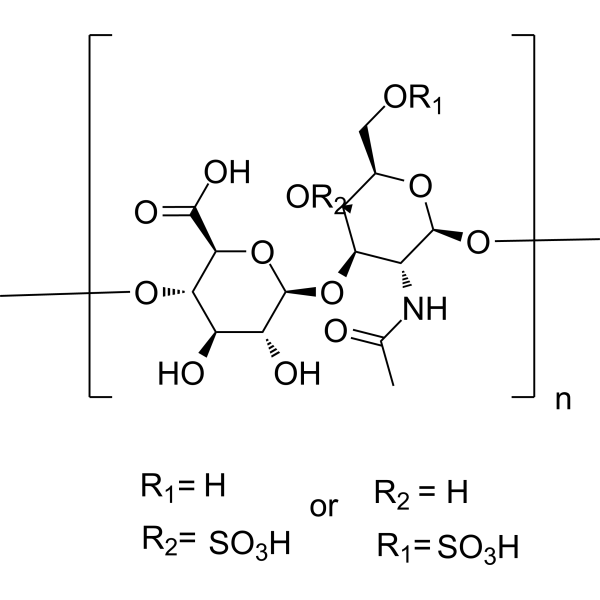
Chondroitin sulfate (from chicken) (Chondroitin polysulfate (from chicken)) is an orally active, sulfated linear polysaccharide extracted from chickens, which belongs to glycosaminoglycans. Chondroitin sulfate (from chicken) reduces the phosphorylation levels of ERK1/2 and p38MAPK, inhibits the expression of inflammatory cytokines and MMP, and downregulates the levels of IL-1β, IL-6, TNF-α and PGE2. Chondroitin sulfate (from chicken) improves motor function, protects cartilage tissue, reverses chondrocyte aggregation, and regulates the structure of intestinal flora. Chondroitin sulfate (from chicken) can be used in research related to osteoarthritis .
loading...
    loading...
Cat. No.: HY-148447
CAS No.: 1402931-85-4
Pureté:  99.92%
Domaines de recherche:  

Cancer

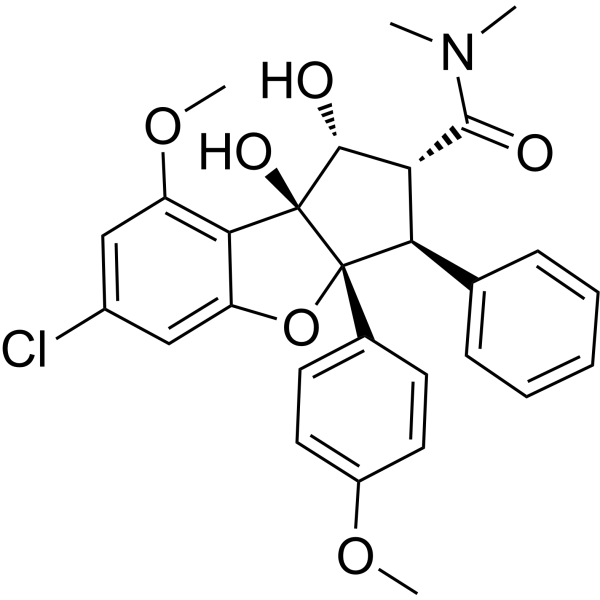
eIF4A-IN-3, Silvestrol (HY-13251) analogue, is an eIF4A inhibitor. eIF4A-IN-3 blocks protein translation initiation by interfering with eIF4F complex assembly, preferentially inhibiting translation of mRNAs with long, highly structured 5'-untranslated regions. eIF4A-IN-3 inhibits proliferation of human breast cancer cells. eIF4A-IN-3 has moderate apical to basolateral permeability in intestinal cell monolayers and a low efflux ratio .
loading...
    loading...
Cat. No.: HY-W011165
CAS No.: 52123-30-5
Synonyms: L-Lysyl-L-lysine dihydrochloride
Domaines de recherche:  

Metabolic Disease Inflammation/Immunology

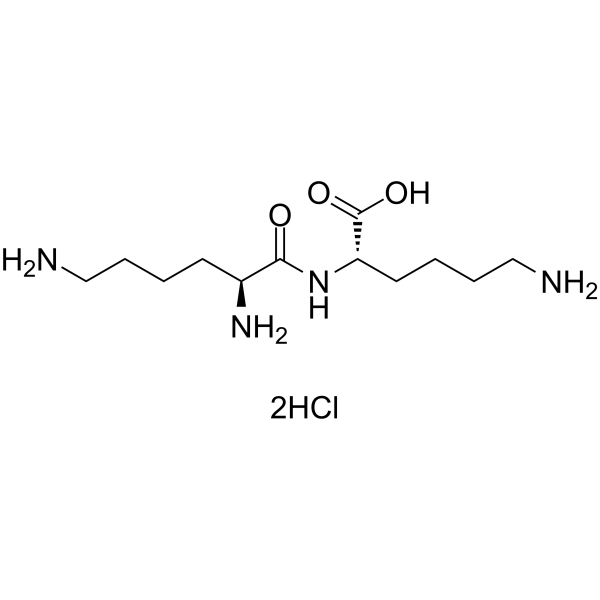
Lysyllysine dihydrochloride (L-Lysyl-L-lysine dihydrochloride) is an orally active PepT1 substrate. Lysyllysine dihydrochloride enhances whole-body protein synthesis, improves intestinal structure, alleviates intestinal mucosal inflammation, and exhibits higher lysine bioavailability in neonatal piglets with PN-induced intestinal atrophy. Lysyllysine dihydrochloride inhibits the growth of axenic cyanobacterial strains and induces their cell lysis. Lysyllysine dihydrochloride can be used in studies related to intestinal atrophy and metabolism .
loading...
    loading...
Cat. No.: HY-W276164
CAS No.: 1120-04-3
Synonyms: Sodium stearyl sulfate
Sodium octadecyl sulfate (Sodium stearyl sulfate) is a long-chain alkyl sodium sulfate that functions as an emulsifier, crosslinking agent, and regulator. Sodium octadecyl sulfate has high safety, with a LD50 greater than 3.00 Gm./Kg for both intraperitoneal injection in mice and oral administration in rats. Sodium octadecyl sulfate enhances continuous contraction of the gastrocnemius muscle in frogs and boosts intestinal smooth muscle activity in albino rats. However, Sodium octadecyl sulfate exerts no significant effect on isolated tortoise myocardium and does not alter the conduction function of frog sciatic nerves. Sodium octadecyl sulfate can also be used to coat the surface of starch aggregates, promote crosslinking and increase aggregate size through hydrophobic and electrostatic interactions, and further form a coexistent B-V type crystalline structure with acid-hydrolyzed gelatinized starch, thereby effectively modifying the structure and surface properties of high-starch systems .
loading...
    loading...
Cat. No.: HY-B0294R
CAS No.: 31430-15-6
Flubendazole (Standard) is the analytical standard of Flubendazole. This product is intended for research and analytical applications. Flubendazole is an anthelmintic drug based on altering microtubule structure, inhibition of tubulin polymerization and disruption of microtubule function. Flubendazole induces apoptosis in human colorectal cancer (CRC) by blocking the STAT3 signaling axis and activation of autophagy. Flubendazole induces P53 expression and reduced Cyclin B1 and p-cdc2 expression. Flubendazole is an antitumor agent. Flubendazole can be used for worm and intestinal parasites .
loading...
    loading...
Cat. No.: HY-120791
CAS No.: 13184-13-9
Synonyms: L-Lysyl-L-lysine
Domaines de recherche:  

Metabolic Disease Inflammation/Immunology

Lysyllysine (L-Lysyl-L-lysine ) is an orally active PepT1 substrate. Lysyllysine enhances whole-body protein synthesis, improves intestinal structure, alleviates intestinal mucosal inflammation, and exhibits higher lysine bioavailability in neonatal piglets with PN-induced intestinal atrophy. Lysyllysine inhibits the growth of axenic cyanobacterial strains and induces their cell lysis. Lysyllysine can be used in studies related to intestinal atrophy and metabolism .
loading...
    loading...
Cat. No.: HY-120791A
CAS No.: 73343-51-8
Synonyms: L-Lysyl-L-lysine trihydrochloride
Domaines de recherche:  

Metabolic Disease Inflammation/Immunology

Lysyllysine trihydrochloride (L-Lysyl-L-lysine trihydrochloride) is an orally active PepT1 substrate. Lysyllysine trihydrochloride enhances whole-body protein synthesis, improves intestinal structure, alleviates intestinal mucosal inflammation, and exhibits higher lysine bioavailability in neonatal piglets with PN-induced intestinal atrophy. Lysyllysine trihydrochloride inhibits the growth of axenic cyanobacterial strains and induces their cell lysis. Lysyllysine trihydrochloride can be used in studies related to intestinal atrophy and metabolism .
loading...
    loading...
Cat. No.: HY-DY1102
CAS No.: 158757-82-5
BODIPY FL-C16 (solution) is a BODIPY-labeled analog of Palmitic acid (HY-N0830), which serves as a fluorescent lipid tracer. BODIPY FL-C16 (solution) also acts as a ligand for liver fatty acid-binding protein (L-FABP) and intestinal fatty acid-binding protein (I-FABP) , with Kd values of 270 nM and 330 nM, respectively. BODIPY FL-C16 (solution) is rapidly taken up by cells, and after metabolic conversion to phospholipids, it is incorporated into the membrane structures of intracellular organelles and extracellular vesicles .
Solvent and concentration: DMSO: 5 mM
loading...
    loading...
Cat. No.: HY-175991S
Synonyms: Sodium stearyl sulfate sulfate-d37
Sodium octadecyl sulfate-d37 (Sodium stearyl sulfate-d37) is the deuterium labeled Sodium octadecyl sulfate (HY-W276164). Sodium octadecyl sulfate (Sodium stearyl sulfate) is a long-chain alkyl sodium sulfate that functions as an emulsifier, crosslinking agent, and regulator. Sodium octadecyl sulfate has high safety, with a LD50 greater than 3.00 Gm./Kg for both intraperitoneal injection in mice and oral administration in rats. Sodium octadecyl sulfate enhances continuous contraction of the gastrocnemius muscle in frogs and boosts intestinal smooth muscle activity in albino rats. However, Sodium octadecyl sulfate exerts no significant effect on isolated tortoise myocardium and does not alter the conduction function of frog sciatic nerves. Sodium octadecyl sulfate can also be used to coat the surface of starch aggregates, promote crosslinking and increase aggregate size through hydrophobic and electrostatic interactions, and further form a coexistent B-V type crystalline structure with acid-hydrolyzed gelatinized starch, thereby effectively modifying the structure and surface properties of high-starch systems .
loading...
    loading...
  • 1

