


1. Search Result
Search Result
Results for "

intracellular cyclic adenosine monophosphate

" in MedChemExpress (MCE) Product Catalog:

18

Inhibitors & Agonists

1

Fluorescent Dyes

2

Biochemical Assay Reagents

3

Natural
Products

2

GMP Molecules

Cat. No. Product Name Target Research Areas Chemical Structure
  • HY-B0764
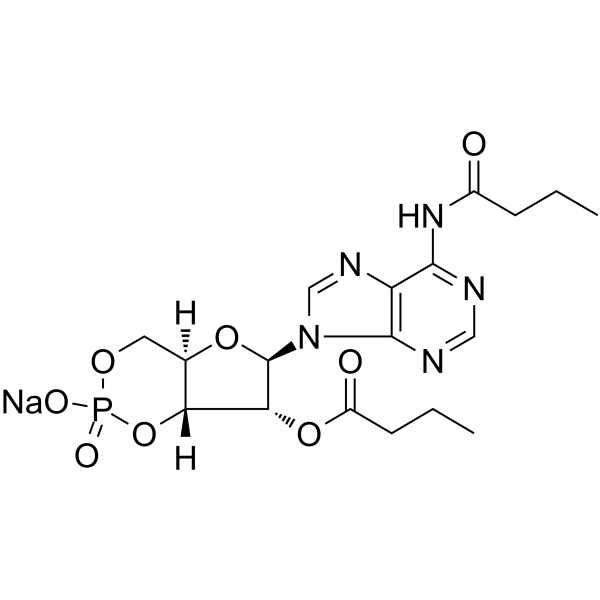
    Bucladesine sodium
    Maximum Cited Publications
    41 Publications Verification

    Dibutyryl cAMP sodium; DBcAMP sodium

    PKA Reactive Oxygen Species (ROS) Apoptosis Neurological Disease Inflammation/Immunology Cancer
    Bucladesine (Dibutyryl cAMP; DBcAMP) sodium is a membrane-permeable 3′, 5′-cyclic adenosine monophosphate (cAMP) analog. Bucladesine selectively activates cAMP dependent protein kinase (PKA) by increasing the intracellular level of cAMP. Bucladesine significantly attenuates MDMA-induced increases in hippocampal mitochondrial ROS formation, mitochondrial outer membrane damage, cytochrome c release, and hippocampal ADP/ATP ratio, thereby improving spatial learning and memory impairments. Bucladesine exhibit anti-nociceptive and anti-inflammation effect. Bucladesine can inhibit cancer cells proliferation, induce apoptosis. Bucladesine can be used for the researches of neurological disease, cancer, inflammation .
    Bucladesine sodium
  • HY-B1511
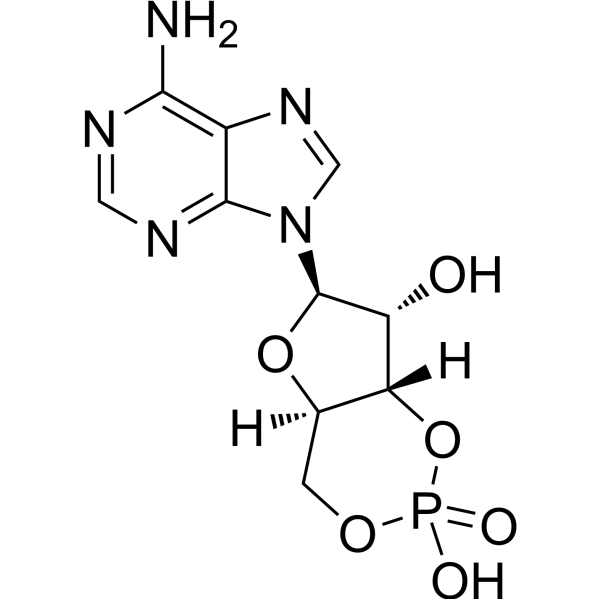
    Cyclic AMP
    Maximum Cited Publications
    25 Publications Verification

    cyclic adenosine monophosphate; adenosine cyclic 3', 5'-monophosphate; cAMP

    Endogenous Metabolite Neurological Disease Metabolic Disease Cancer
    Cyclic AMP (Cyclic adenosine monophosphate), adenosine triphosphate derivative, is an intracellular signaling molecule responsible for directing cellular responses to extracellular signals. Cyclic AMP is an important second messenger in many biological processes .
    Cyclic AMP
  • HY-B1511A
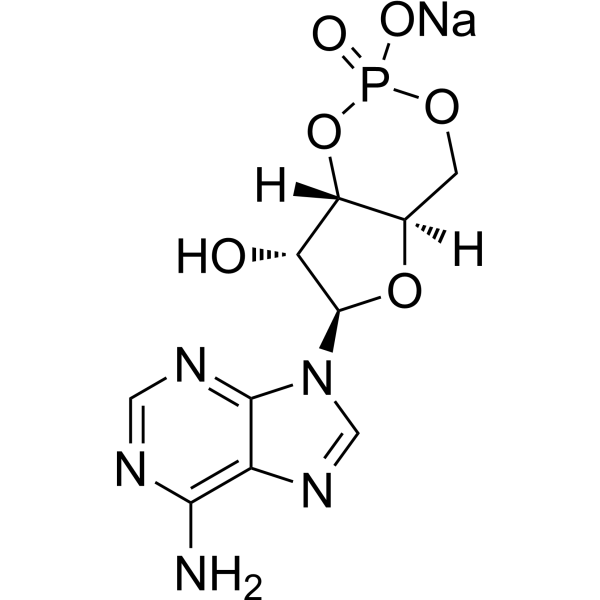
    Cyclic AMP sodium
    20+ Cited Publications

    cyclic adenosine monophosphate sodium; adenosine cyclic 3', 5'-monophosphate sodium; cAMP sodium

    Biochemical Assay Reagents Neurological Disease Metabolic Disease Cancer
    Cyclic AMP (Cyclic adenosine monophosphate) sodium, adenosine triphosphate derivative, is an intracellular signaling molecule responsible for directing cellular responses to extracellular signals. Cyclic AMP sodium is an important second messenger in many biological processes .
    Cyclic AMP sodium
  • HY-B0764A
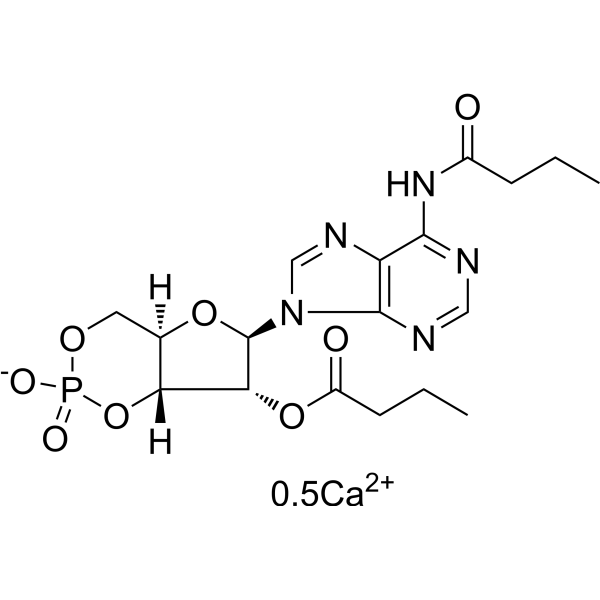
    Bucladesine hemicalcium
    Maximum Cited Publications
    41 Publications Verification

    Dibutyryl cAMP hemicalcium; DBcAMP hemicalcium

    PKA Apoptosis Reactive Oxygen Species (ROS) Neurological Disease Cancer
    Bucladesine (Dibutyryl cAMP; DBcAMP) hemicalcium is a membrane-permeable 3′, 5′-cyclic adenosine monophosphate (cAMP) analog. Bucladesine selectively activates cAMP dependent protein kinase (PKA) by increasing the intracellular level of cAMP. Bucladesine significantly attenuates MDMA-induced increases in hippocampal mitochondrial ROS formation, mitochondrial outer membrane damage, cytochrome c release, and hippocampal ADP/ATP ratio, thereby improving spatial learning and memory impairments. Bucladesine exhibit anti-nociceptive and anti-inflammation effect. Bucladesine can inhibit cancer cells proliferation, induce apoptosis. Bucladesine can be used for the researches of neurological disease, cancer, inflammation .
    Bucladesine hemicalcium
  • HY-N0126
    Xanthone
    3 Publications Verification

    Environmental Pollutants Calcium Channel Monoamine Oxidase Cardiovascular Disease Neurological Disease
    Xanthone is a monoamine oxidase A (MAO-A) inhibitor with an IC50 of 0.84 µM. Xanthon inhibits Norepinephrine (HY-13715) and high-K +-induced vasoconstriction with IC50 values of 60.26 μM and 82.9 μM, respectively. Xanthon increases intracellular cyclic adenosine 3′,5′-monophosphate (cAMP) content and blocks Ca 2+ channels. Xanthone is the scaffold of several pharmacologically active compounds .
    Xanthone
  • HY-B1511R

    cyclic adenosine monophosphate (Standard); adenosine cyclic 3', 5'-monophosphate (Standard); cAMP (Standard)

    Endogenous Metabolite Reference Standards Cancer
    Cyclic AMP (Standard) is the analytical standard of Cyclic AMP. Cyclic AMP (Cyclic adenosine monophosphate), adenosine triphosphate derivative, is an intracellular signaling molecule responsible for directing cellular responses to extracellular signals. Cyclic AMP is an important second messenger in many biological processes .
    Cyclic AMP (Standard)
  • HY-B0764B

    Dibutyryl cAMP; DBcAMP

    PKA Reactive Oxygen Species (ROS) Apoptosis Neurological Disease Inflammation/Immunology Cancer
    Bucladesine (Dibutyryl cAMP; DBcAMP) is a membrane-permeable 3′, 5′-cyclic adenosine monophosphate (cAMP) analog. Bucladesine selectively activates cAMP dependent protein kinase (PKA) by increasing the intracellular level of cAMP. Bucladesine significantly attenuates MDMA-induced increases in hippocampal mitochondrial ROS formation, mitochondrial outer membrane damage, cytochrome c release, and hippocampal ADP/ATP ratio, thereby improving spatial learning and memory impairments. Bucladesine exhibit anti-nociceptive and anti-inflammation effect. Bucladesine can inhibit cancer cells proliferation, induce apoptosis. Bucladesine can be used for the researches of neurological disease, cancer, inflammation .
    Bucladesine
  • HY-B0764G

    Dibutyryl cAMP sodium; DBcAMP sodium

    PKA Reactive Oxygen Species (ROS) Apoptosis Neurological Disease Inflammation/Immunology Cancer
    Bucladesine (Dibutyryl cAMP; DBcAMP) sodium (GMP) is a Bucladesine sodium (HY-B0764) produced by using GMP guidelines. Bucladesine (Dibutyryl cAMP; DBcAMP) is a membrane-permeable 3′, 5′-cyclic adenosine monophosphate (cAMP) analog. Bucladesine selectively activates cAMP dependent protein kinase (PKA) by increasing the intracellular level of cAMP. Bucladesine significantly attenuates MDMA-induced increases in hippocampal mitochondrial ROS formation, mitochondrial outer membrane damage, cytochrome c release, and hippocampal ADP/ATP ratio, thereby improving spatial learning and memory impairments. Bucladesine exhibit anti-nociceptive and anti-inflammation effect. Bucladesine can inhibit cancer cells proliferation, induce apoptosis. Bucladesine can be used for the researches of neurological disease, cancer, inflammation .
    Bucladesine sodium
  • HY-P2867

    3′-Exonuclease

    Phosphodiesterase (PDE) Neurological Disease
    Phosphodiesterase II (EC 3.1.16.1), namely phosphodiesterase 2, is mainly involved in the hydrolysis of the important second messengers cyclic adenosine monophosphate (cAMP) and cyclic guanosine monophosphate (cGMP), and is often used in biochemical research. Phosphodiesterase II is expressed in a variety of tissues, such as the adrenal medulla, brain, heart, platelets, macrophages and endothelial cells, and is involved in the regulation of many different intracellular processes .
    Phosphodiesterase II, Bovine Spleen
  • HY-114727

    Phosphodiesterase (PDE) Inflammation/Immunology
    PDE7-IN-4 is a phosphodiesterase 7 (PDE7) inhibitor with activity that increases intracellular cyclic adenosine monophosphate (cAMP) levels. PDE7-IN-4 shows potential inhibitory effects in neurotransmission and anti-inflammatory applications. PDE7-IN-4 exerts its biological activity by acting on the cAMP/cAMP response element binding protein (CREB) pathway. The development of PDE7-IN-4 aims to improve its pharmacokinetic characteristics to more effectively target neurodegenerative diseases and other inflammation-related diseases .
    PDE7-IN-4
  • HY-B0764R

    Dibutyryl cAMP sodium (Standard); DBcAMP sodium (Standard)

    Reference Standards PKA Reactive Oxygen Species (ROS) Apoptosis Neurological Disease Inflammation/Immunology Cancer
    Bucladesine (Dibutyryl cAMP; DBcAMP) sodium (Standard) is the analytical standard of Bucladesine sodiumn (HY-B0764). This product is intended for research and analytical applications. Bucladesine is a membrane-permeable 3′, 5′-cyclic adenosine monophosphate (cAMP) analog. Bucladesine selectively activates cAMP dependent protein kinase (PKA) by increasing the intracellular level of cAMP. Bucladesine significantly attenuates MDMA-induced increases in hippocampal mitochondrial ROS formation, mitochondrial outer membrane damage, cytochrome c release, and hippocampal ADP/ATP ratio, thereby improving spatial learning and memory impairments. Bucladesine exhibit anti-nociceptive and anti-inflammation effect. Bucladesine can inhibit cancer cells proliferation, induce apoptosis. Bucladesine can be used for the researches of neurological disease, cancer, inflammation .
    Bucladesine sodium (Standard)
  • HY-N0126R
    Xanthone (Standard)
    3 Publications Verification

    Reference Standards Monoamine Oxidase Calcium Channel Cardiovascular Disease Neurological Disease
    Xanthone (Standard) is the analytical standard of Xanthone (HY-N0126). This product is intended for research and analytical applications. Xanthone is a monoamine oxidase A (MAO-A) inhibitor with an IC50 of 0.84 µM. Xanthon inhibits Norepinephrine (HY-13715) and high-K +-induced vasoconstriction with IC50 values of 60.26 μM and 82.9 μM, respectively. Xanthon increases intracellular cyclic adenosine 3′,5′-monophosphate (cAMP) content and blocks Ca 2+ channels. Xanthone is the scaffold of several pharmacologically active compounds .
    Xanthone (Standard)
  • HY-117181

    Phosphodiesterase (PDE) Adrenergic Receptor Cardiovascular Disease
    UK-1745 is a cardiotonic agent with vasodilating and antiarrhythmic properties. It increases intracellular levels of cyclic adenosine monophosphate (cAMP) in cardiomyocytes by inhibiting phosphodiesterase III, thereby enhancing myocardial contractility. Additionally, UK-1745 exhibits β-adrenergic receptor blocking activity, which helps reduce the oxygen consumption of the heart and prevent calcium overload. These characteristics make UK-1745 a promising candidate for research in congestive heart failure .
    UK-1745
  • HY-176520

    Phosphodiesterase (PDE) Inflammation/Immunology
    PDE4-IN-29 (Compound 55) is an orally active and selective PDE4 inhibitor (including subtypes such as PDE4A1, PDE4B2, PDE4D3) with IC50s of <5 nM against PDE4D3. PDE4-IN-29 inhibits the degradation of cyclic adenosine monophosphate (cAMP), increases intracellular cAMP levels, suppressing the release of inflammatory factors such as TNF-α. PDE4-IN-29 is promising for research of inflammatory diseases including psoriasis, atopic dermatitis, and chronic obstructive pulmonary disease .
    PDE4-IN-29
  • HY-125646

    GPR119 Metabolic Disease
    YH18968 is an orally active GPR119 agonist with an EC50 of 2.8 nM for inducing cAMP accumulation. YH18968 activates GPR119, elevates intracellular cyclic adenosine monophosphate levels, stimulates glucagon-like peptide-1 secretion from intestinal L cells, and triggers glucose-dependent insulin secretion from pancreatic β cells. YH18968 improves glucose tolerance in normal mice and diet-induced obese mice. YH18968 can be used for the research of type 2 diabetes .
    YH18968
  • HY-B1511G

    cyclic adenosine monophosphate; adenosine cyclic 3', 5'-monophosphate; cAMP

    Endogenous Metabolite Neurological Disease Metabolic Disease Cancer
    Cyclic AMP (GMP) (Cyclic adenosine monophosphate (GMP)) is Cyclic AMP (HY-B1511) produced by using GMP guidelines. GMP small molecules works appropriately as an auxiliary reagent for cell therapy manufacture. Cyclic AMP (Cyclic adenosine monophosphate), adenosine triphosphate derivative, is an intracellular signaling molecule responsible for directing cellular responses to extracellular signals. Cyclic AMP is an important second messenger in many biological processes .
    Cyclic AMP
  • HY-106483

    TVX 2706

    Phosphodiesterase (PDE) Neurological Disease Inflammation/Immunology
    Nitraquazone (TVX 2706) is an anti-inflammatory and analgesic agent, belonging to the derivatives of Phenylbutazone (HY-B0230). Nitraquazone inhibits phosphodiesterase and enhances the elevation of intracellular cyclic adenosine monophosphate levels. Nitraquazone can be used in research related to anti-inflammation and analgesia .
    Nitraquazone
  • HY-180142

    Vasopressin Receptor Endocrinology
    XYDC2050 (Compound 29) is a selective vasopressin V2 receptor (V2R) antagonist with an IC50 of 27 nM and a Ki of 2.8 nM. XYDC2050 shows a Ki of 420.7 nM (SI = 162 fold) for V1R. XYDC2050 can inhibit Vasopressin (HY-B1811)-induced intracellular cyclic adenosine monophosphate (cAMP) accumulation with an IC50 of 12 nM. XYDC2050 can inhibit the growth of renal cysts, reduce the ratio of kidney weight to body weight and decrease the area of cysts and the cystic index. XYDC2050 can be used for the research of autosomal dominant polycystic kidney disease (ADPKD) .
    XYDC2050

Inquiry Online

Your information is safe with us. * Required Fields.

Salutation


Country or Region *

Applicant Name *


Organization Name *

Department *


Email Address *


Product Name *

Cat. No.


Requested quantity *

Phone Number *


Remarks

Inquiry Online

Inquiry Information

Product Name:
Cat. No.:
Quantity:
MCE Japan Authorized Agent:

